
NEWS
Stakeholders Explore Potential in New EIA Initiative

Stakeholders in the environmental sector have explored the potential of a new Environmental Impact Assessment (EIA) initiative in Nigeria.
The stakeholders said this at the Inclusive Environment Nigeria Workshop organised by the University of Derby, Renevlyn Development Initiative and the Environmental Defenders Network on Tuesday in Lagos.
The initiative aims to address long-standing issues of community exclusion and environmental injustice in development projects across the country.
It is anchored on findings from a 12-month research led by Dr. Eghosa Ekhator of the University of Derby and other scholars.
The 2023 research adopted co-production principles through extensive engagement with communities and key stakeholders.
The outcome is the Inclusive Environments (Environmental Justice) Framework designed to promote equitable environmental decision-making.
Speaking at the workshop, Ekhator said the framework provides a structured approach for inclusive and accountable environmental governance.
He said the tool draws from equality impact assessment models but tailored for environmental sustainability challenges.
Ekhator added that the framework is flexible and can be adapted to different national and institutional contexts, including Nigeria.
The Executive Director of Renevlyn Development Initiative, Philip Jakpor, who moderated the workshop, said the failure to involve communities in decision-making around development projects remains a “sore point” nationwide.
Jakpor noted that although EIAs are legally required for projects with significant environmental impact—such as oil and gas exploration, mining, and large-scale construction—implementation in Nigeria is often flawed.
“Community people are supposed to be part and parcel of the process. Their views should inform whether a project goes forward or not.
“Where projects must proceed despite concerns, safeguards should be agreed upon with the communities,” Jakpor said.
He, however, lamented that in practice, communities are largely sidelined.
“What we see in Nigeria is limited or no community involvement in EIA processes and a total lack of transparency by project implementers. In many cases, the so-called EIA reports cannot even be found,” he said.
Jakpor cited several examples across the country—from the Niger Delta to northern mining regions—where communities claim projects were imposed on them without consultation.
“The process is treated as a mere formality. Companies only inform communities instead of engaging them as stakeholders whose views matter,” he added.
He stressed that the exclusion of communities makes it difficult for them to seek justice when their environmental rights are violated, noting that companies are rarely penalised for breaching EIA requirements.
“These gaps are largely responsible for the environmental degradation we see across the country,” Jakpor said.
An Ogoni environmental activist, Chief Eric Dooh, decried what he described as a long-standing conspiracy between government authorities and oil companies, which has left host communities to bear the brunt of environmental damage.
Dooh said there was little or no consultation with communities before the commencement of oil exploration activities in Ogoniland.
“There were no discussions with the people who own the environment. What we saw was a high-level arrangement between the government and companies, without considering the impact on communities,” he said.
Dooh recounted his personal journey in environmental advocacy, which began after taking over from his father, who had initiated legal battles against oil companies over environmental pollution.
“My father had taken Shell to court several times. When he became too weak, I took over the struggle. It has not been easy—seeking justice in Nigeria is very difficult,” he said.
He noted that decades of oil exploration have devastated the local economy, which once thrived on fishing and farming.
“That environment sustained us before—it supported fishing and farming. Today, it was destroyed. We have lost so much,” he lamented.
The activist called for a more inclusive approach to resource management, urging the government and companies to actively involve communities in decision-making processes.
“If development must continue, then communities must be carried along. They should be involved in project planning, empowerment programmes, and environmental management.
That is the only way to ensure peace and sustainability,” he said.
The workshop brought together policymakers, academics, community representatives and civil society organisations.
Participants called for stronger collaboration among government, civil society and host communities.
They stressed that development must not marginalised vulnerable populations but ensure equitable outcomes.
From Dan Amasingha, Minna
Nearly a year after a devastating flood displaced residents of Mokwa in Niger State, the community has been struck again by disaster as a violent rainstorm destroyed homes and property between Sunday night and Monday morning.
The storm, which was accompanied by heavy rainfall, reportedly claimed the lives of two persons, while a woman and her five children sustained injuries and are currently receiving treatment at a hospital.
Eyewitnesses said the incident left hundreds of residents’ homeless, many of whom were yet to recover from the impact of last year’s flood.
Several trees were uprooted, while vehicles and other valuables were damaged in the storm.
Residents attributed the severity of the disaster to widespread deforestation and unchecked land degradation in the area.
The Chairman of Mokwa Local Government Area, Alhaji Jibrin Abdullahi Muregi, confirmed the incident in a telephone interview, describing the situation as “colossal” and calling for urgent intervention from the Niger State Government and relevant agencies.
Also confirming the development, the Public Relations Officer of the Niger State Emergency Management Agency (NSEMA), Dr. Abdullahi Hussaini, said officials of the agency had been deployed to the affected community for on-the-spot assessment.
“Our men have been on ground since yesterday carrying out assessments,” Hussaini said, adding that while there were reports of two fatalities, the agency would only confirm the figure after a comprehensive evaluation.
He further disclosed that the Director-General of the agency and other top officials departed Minna early Tuesday to join field operatives in Mokwa as part of ongoing response efforts.
The latest incident has heightened concerns over environmental management and disaster preparedness in vulnerable communities across the state.

Sudan has accused neighbouring Ethiopia and the United Arab Emirates (UAE) of orchestrating drone strikes on its main airport, describing the assault as “Direct aggression”.
The international airport, located in the capital, was hit on Monday, along with military installations in the Greater Khartoum area.
Recent drone strikes have shattered a period of relative calm in Khartoum, which came after the paramilitary Rapid Support Forces (RSF) was pushed out by the Sudanese military last year.
Ethiopia has said accusations that it was involved in the airport attack are “Baseless”.
The UAE has not yet commented, but has previously denied involvement in the Sudanese conflict.Sudan has recalled its ambassador to Ethiopia for “Consultations” over the attack, Foreign Minister Mohieddin Salem said.
No-one was wounded in the attack, Sudan’s information minister told the Reuters news agency.
Sudan’s army said it had “conclusive evidence” that the drones were launched from Bahir Dar airport in Ethiopia.
Sudanese military officials first accused the RSF of air attacks launched from inside Ethiopian territory in March.
They said they had tracked a drone, identified as Emirati property, entering Sudanese airspace from Ethiopia and eventually shot it down.
A Sudanese army spokesman alleged that they have now connected another drone, launched from the same airport, to Monday’s attack.
The UAE has in the past forcefully rejected claims that it provides military support to the RSF.
The latest attacks came a week after the first direct international commercial flight in three years landed at the airport.
The authorities were forced to announce a 72-hour suspension of operations at the airport following the attacks.
The airport has been a major battleground in the war between the regular army and the RSF, which began in 2023.
In February, Reuters reported that Ethiopia was hosting a camp to train RSF fighters and had upgraded the nearby Asosa airport for drone operations.
It said the move was backed by Ethiopia’s close ally, the United Arab Emirates.
On Monday, witnesses confirmed that they heard blasts and saw smoke rising from an area near the airport.
The attack is reported to have also caused minor damage to an administrative building.
The information ministry said the airport would return to operations after routine safety procedures.
Sudan’s foreign minister alleged that the drones had taken off from Ethiopia, despite Ethiopia being a “brotherly state” to Sudan. He said the UAE and Ethiopia had chosen the “wrong path” and would regret it.
Ethiopia’s foreign ministry said on Tuesday that Sudan and Ethiopia “share a historic and enduring bond of friendship” and had “refrained from publicising the grave violations of Ethiopia’s territorial integrity and national security committed by some belligerents in the Sudanese civil war”.
The ministry called for dialogue between the warring parties in Sudan.
Since the war in Sudan started, more than 150,000 people have died. Twelve million have fled their homes in what the UN has called the world’s largest humanitarian crisis.
The three-year civil war has also led to a famine and claims of a genocide in the western Darfur region.
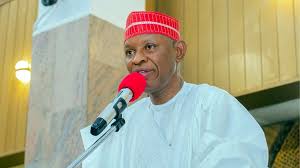
From Rabiu Sanusi, Kano
In a ceremony rich in symbolism and political significance the Governor of Abba Kabir Yusuf presided over the swearing-in of the new Deputy Governor, Murtala Sule Garo at the Government House in Kano, marking what observers describe as a defining moment in the state’s evolving leadership structure.
The event which was held at the Ante Chamber of the Government House attracted a distinguished gathering of top government functionaries, influential party stakeholders, traditional rulers and a wide cross-section of well-wishers.
The large turnout underscored both the importance of the occasion and the heightened expectations placed on the new deputy governor as the administration seeks to consolidate its governance agenda.
The oath of office was administered by the Chief Judge of Kano State, Dije Abdu Aboki in a solemn ceremony that reaffirmed the constitutional underpinnings of leadership and public service.
The moment formally entrusted the new deputy governor with responsibilities central to the smooth running of government and the advancement of the state development priorities.
In his remarks, Governor Yusuf delivered a measured but firm address charging his deputy to uphold the Constitution and discharge his duties with integrity, discipline and an unwavering sense of accountability.
He emphasized that public office demands not only loyalty but also transparency and a deep commitment to the welfare of the people.
The governor further stressed that governance is a continuous process of service, sacrifice and responsiveness to public needs.
He reiterated his administration’s focus on delivering tangible dividends of democracy through improvements in critical sectors such as infrastructure, education and healthcare, urging the new deputy governor to align fully with these priorities to ensure effective policy implementation.
Highlighting the importance of unity, Governor Yusuf underscored that the success of his administration hinges on teamwork and collective responsibility.
He called for sustained collaboration across all levels of government, noting that inclusive governance and mutual understanding among stakeholders remain essential ingredients for stability and long-term progress in Kano State.
In his acceptance remarks, Deputy Governor Murtala Sule Garo expressed deep appreciation to the governor and the people of Kano State for the confidence reposed in him, describing his appointment as both an honour and a call to greater service.
He pledged unwavering loyalty to the administration and a firm commitment to advancing its developmental agenda.
Garo noted that the task ahead requires diligence, experience and a clear sense of purpose, assuring that he would deploy his expertise to support the governor in strengthening governance and improving service delivery.
He emphasized that effective leadership must translate policies into real benefits for citizens, particularly at the grassroots level.
He also reaffirmed his commitment to fostering peace, stability, and inclusive growth, stressing that sustainable development can only thrive in an atmosphere of unity and cooperation.
The deputy governor pledged to remain accessible and responsive, while working closely with stakeholders to address emerging challenges and promote shared prosperity across the state.
Adding a broader political perspective, former Kano State Governor and ex-national chairman of the APC Abdullahi Umar Ganduje expressed confidence in the capacity of the new deputy governor to contribute meaningfully to the state development.
He described the development as a strategic reinforcement of leadership that would strengthen governance and institutional continuity.
Ganduje further observed that the expectations of the people are high, urging the new deputy governor to remain focused, resilient and committed to policies that will improve living standards and expand economic opportunities.
He stressed the need for consistency in governance and the importance of building on existing frameworks to achieve sustainable results.
He also called for unity among political actors, noting that cooperation and mutual respect within the leadership space are critical for maintaining peace and driving progress.
According to him, Kano State stands to gain significantly when leaders prioritize collective interest above partisan considerations.
The event, according to Government House correspondent Adamu Dabo, represents a significant milestone in Kano political trajectory, reinforcing the administration’s resolve to strengthen governance structures and accelerate development efforts.
As proceedings drew to a close, the atmosphere was marked by cautious optimism, with many stakeholders expressing hope that the new deputy governor tenure would usher in greater stability, enhanced coordination in governance and measurable progress in improving the lives of the people of Kano State.

Rainstorm Kills Two, Renders Hundreds Homeless in Niger Community
ShareFrom Dan Amasingha, Minna Nearly a year after a devastating flood displaced residents of Mokwa in Niger State, the community has been struck again...


NPFL Slams Warri Wolves with N6m Fine
ShareThe Nigeria Premier Football League (NPFL), has slammed Warri Wolves with a fine of N6m for the improper conduct of their fans in the matchday 36...

Sudan Accuses Ethiopia, UAE of Orchestrating Drone Attacks on Airport
ShareSudan has accused neighbouring Ethiopia and the United Arab Emirates (UAE) of orchestrating drone strikes on its main airport, describing the assault as “Direct aggression”. The international airport, located in...

Yusuf Swears in Murtala Garo as Deputy Governor
ShareFrom Rabiu Sanusi, Kano In a ceremony rich in symbolism and political significance the Governor of Abba Kabir Yusuf presided over the swearing-in of the...

Plateau Targets 50,000 Jobs in Digital Economy
ShareFrom Jude Dangwam, Jos The Plateau State Government has strengthened its development communication strategy on job creation and digital inclusion by formalising a strategic partnership with...
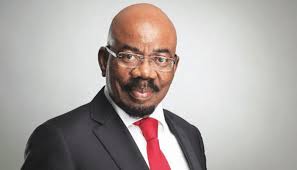

Jim Ovia Retires as Zenith Bank Chairman after 12 Years
ShareBy Tony Obiechina, Abuja Zenith Bank has announced the retirement of its Founder and Group Chairman, Jim Ovia, following the...

ACF Headquarters under Police Siege Ahead NEC Meeting
ShareBy David Torough, Abuja Tension has gripped the headquarters of the Arewa Consultative Forum (ACF) following allegations of police siege,...

NASS Rises Against Xenophobia, Seeks Protection for Nigerians Abroad
ShareBy Eze Okechukwu Godson and Ubong Ukpong, Abuja Nigeria’s National Assembly yesterday delivered a unified but multi-pronged response to renewed...
Kogi Community Marks Annual Festival, Calls for Unity amongst Indigenes
ShareFrom Joseph Amedu, Lokoja The Odo-Ape community in Kabba-Bunu Local Government Area of Kogi state came alive last Saturday as indigenes at home and abroad gathered...


Spain Deploys over 13,000 Officers for Pope’s June Visit
ShareSpain will deploy more than 13,000 police officers to stave off “Multiple” potential threats to Pope Leo XIV’s visit from June 6 to 12, the interior minister said on Monday. The pope is due to...