
NEWS
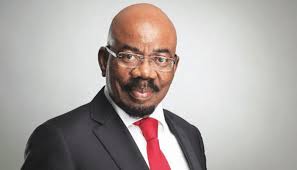
Jim Ovia Retires as Zenith Bank Chairman after 12 Years

By Tony Obiechina, Abuja
Zenith Bank has announced the retirement of its Founder and Group Chairman, Jim Ovia, following the expiration of his regulatory tenure.
In a corporate notice issued in Lagos yesterday, the bank said Ovia completed the mandatory 12-year tenure allowed under corporate governance guidelines for financial holding companies, non-interest banks, and payment service banks in Nigeria.
The Board praised Ovia for his pivotal role in the institution’s evolution, crediting him with strong leadership, strategic direction, and effective oversight that significantly strengthened Zenith Bank’s market position and reputation in Nigeria’s financial sector.
According to the bank, Ovia’s dedication to governance excellence and stakeholder value creation helped shape Zenith Bank into one of the country’s leading financial institutions.
To ensure continuity, the Board appointed Mustafa Bello as the new Chairman of the Group.
Bello, who joined Zenith Bank’s Board on December 29, 2017, is currently its longest-serving director. The bank described him as an experienced leader with deep corporate governance expertise, strategic oversight capabilities, and a proven record of organisational growth.
Zenith Bank noted that Bello’s integrity, independence, and sound judgment during his years on the Board positioned him to guide the institution through its next phase of growth.
The appointment has received approval from the Central Bank of Nigeria.
Under Ovia’s chairmanship, Zenith Bank consistently recorded strong financial performance despite economic and regulatory challenges.
For the 2025 full-year financial period, the Group posted a pre-tax profit of N1.26trn, representing a slight 4.78 percent decline, largely due to compliance with the CBN’s directive on the liquidation of COVID-19-related forbearance liabilities.
Interest income, however, surged significantly to N3.6trn from N2.7trn in 2024, supported by robust earnings from loans and advances, which generated N1.8trn, and treasury bills, which contributed N1.1trn.
After tax, profit stood at N1.04trn while earnings per share declined to N25.32 from N32.87.
Zenith Bank also began 2026 on a positive trajectory, reporting an unaudited pre-tax profit of N360.92bn for the first quarter ended March 31, 2026, reflecting a 2.87 percent year-on-year increase from N350.82Bn recorded in Q1 2025.
Profit after tax rose by 0.69 percent to N314.02bn, demonstrating resilience despite higher loan impairments and continued cost pressures.
The leadership transition is expected to provide stability as Zenith Bank continues to pursue its strategic objectives amid evolving regulatory and market conditions.
Ovia completed the mandatory 12-year tenure permitted under corporate governance guidelines for financial holding companies, non-interest banks, and payment service banks in Nigeria.
As the founder of Zenith Bank, he has been a central figure in its growth trajectory and was credited by the Board for providing strong leadership, strategic direction, and effective oversight throughout his time as chairman.
The Board noted that his commitment to governance standards and stakeholder value creation significantly enhanced the Group’s positioning and reputation in the financial services sector.
Until he was appointed Chairman, Bello was a non-executive director in the bank.
PROFILE:
Engr. Mustafa Bello graduated with B.Engr. (Civil Engineering), from the Ahmadu Bello University (ABU), Zaria, in 1978 with Second Class Upper Division, and won the Shell prize for best project and thesis for Faculty of Engineering in 1978.
He served in the Directorate of Quartering and Engineering Service (Nigerian Army) between 1978 and 1979. He later joined the Niger State Housing Corporation between 1980 and 1983 as a Senior Civil Engineer.
He served as a cabinet Minister of the Federal Republic of Nigeria as the Federal Minister of Commerce between 1999 and 2002. He was subsequently appointed Executive Secretary/Chief Executive Officer of the Nigerian Investments Promotion Commission (NIPC) between November 2003 and February 2014.
He is currently the Chairman of Invest-in-Northern Nig. Limited, a special purpose vehicle for the economic and social transformation of the Northern Nigerian Economy.
He has been involved in several projects in Nigeria, including the CAC online project in 2002, developing a WTO-consistent Trade Policy for the Federal Republic of Nigeria, etc.
He has attended several conferences, missions, and meetings and represented the Federal Government of Nigeria.
By David Torough, Abuja
Tension has gripped the headquarters of the Arewa Consultative Forum (ACF) following allegations of police siege, internal power struggle and threats against members ahead of a crucial National Executive Council (NEC) meeting.
In a strongly worded statement issued yesterday, the Chairman of the NEC and ACF, Mamman Mike Osuman, declared that the ACF head office had effectively been “Cordoned off” by armed police personnel, leaving him and other members “Confined within.
”Osuman emphasized that, under Section 13(1)(a) and (b) of the ACF Constitution, he holds the exclusive authority “to convene all meetings of the National Executive Council and the Working Committee” and “to preside over and direct” such meetings.
He stated that he had lawfully convened a National Working Committee (NWC) meeting, which was successfully held with “overwhelming” member attendance.However, the situation escalated when the Chairman of the Board of Trustees, Bashir Dalhatu, allegedly countermanded the directive and issued threats to members planning to attend the NEC meeting scheduled for Wednesday, May 6.
“Regrettably, Bashir Dalhatu has escalated matters by issuing further threats,” Osuman said, adding that there were claims the NEC meeting “will not be allowed to hold.”
The ACF chairman described the development as a “grave constitutional concern,” citing Section 40 of the Constitution of Nigeria, which guarantees the right to peaceful assembly. He argued that the presence and actions of the police amounted to “unwarranted and excessive interference” with this fundamental right and posed a broader threat to the rule of law.
He further accused the BoT leadership of “personalising” its office in a manner inconsistent with the ACF’s constitutional framework, warning that such actions suggested “the pursuit of personal objectives” detrimental to the collective interest of the region and the nation.
Despite the tension, Osuman noted that ACF members from across Northern Nigeria and beyond had already arrived in Kaduna and remained determined to attend the NEC meeting “despite the prevailing intimidation and security presence.”
In a direct appeal, the chairman called on the Nigeria Police Force, particularly the Inspector-General of Police, to “intervene promptly and decisively in the interest of justice, constitutional order, and public peace.”
He warned that failure to act could “give rise to avoidable tensions and unfortunate consequences” capable of undermining national stability.
The unfolding crisis signals deepening divisions within one of Northern Nigeria’s most influential socio-political bodies, raising concerns over governance, legality, and internal cohesion at a critical time.
By Eze Okechukwu Godson and Ubong Ukpong, Abuja
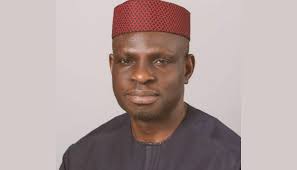
Nigeria’s National Assembly yesterday delivered a unified but multi-pronged response to renewed xenophobic attacks on Nigerians in South Africa and Ghana, condemning the violence while weighing both diplomatic and economic countermeasures.
The Senate and the House of Representatives, in separate but aligned resolutions, described the attacks as barbaric, unlawful and a threat to regional stability, warning that failure to act decisively could strain diplomatic relations across Africa.
At plenary, the Senate adopted a motion of urgent national importance sponsored by Sen. Aniekan Akpan and co-sponsored by Sen.
Osita Izunaso, expressing deep concern over what lawmakers termed a growing pattern of hostility in which Nigerians are profiled and targeted.The upper chamber called on the Federal Government to immediately initiate high-level diplomatic engagements with South Africa and Ghana to secure enforceable guarantees for the safety of Nigerians. It also demanded a transparent, independent investigation into all reported incidents, with a firm insistence that perpetrators and their sponsors be identified and prosecuted.
Beyond immediate responses, the Senate proposed the creation of a comprehensive diaspora protection framework, including early warning systems and coordination centres to address displacement and emergencies involving Nigerians abroad. It further urged ECOWAS and the African Union to strengthen enforcement mechanisms to deter xenophobia across the continent.
Debate in the chamber revealed differing approaches to the crisis. Senator Adams Oshiomhole advocated strong economic retaliation, urging the Federal Government to revoke the operating licences of South African companies such as MTN Nigeria and DStv.
Arguing that diplomacy alone had proven insufficient, Oshiomhole said Nigeria must adopt a reciprocity-based strategy, stressing that decisive economic action would compel respect for Nigerian citizens and interests.
However, Senator Adamu Aliero cautioned against escalating tensions, emphasizing diplomacy and ongoing government engagement. He disclosed that the Minister of Foreign Affairs was already in South Africa for talks with authorities, underscoring efforts to resolve the issue through established diplomatic channels.
In the House of Representatives, lawmakers unanimously condemned the attacks following a motion moved by Rep. Donald Ojogo. The House described the incidents as shameful and called for a review of Nigeria’s bilateral relations with South Africa.
Presiding over the session, Deputy Speaker Benjamin Kalu echoed concerns over the recurring violence, while members urged the Federal Government to reassess tax incentives granted to South African businesses operating in Nigeria.
Lawmakers also highlighted the deteriorating conditions faced by Nigerians in South Africa, noting reports of looting, property destruction, and forced business closures, particularly in the Western Cape. The violence has been linked to high unemployment and rising anti-immigrant sentiment.
Some legislators called for stronger intervention by the African Union, including the possibility of sanctions should the attacks persist, stressing that the incidents should no longer be treated as isolated occurrences.
Across both chambers, there was consensus that the safety and dignity of Nigerians abroad must be safeguarded, with lawmakers pressing for a coordinated response that balances diplomacy, accountability, and, if necessary, economic measures.
From Joseph Amedu, Lokoja
The Odo-Ape community in Kabba-Bunu Local Government Area of Kogi state came alive last Saturday as indigenes at home and abroad gathered for the 2026 Annual Day Festival, a celebration themed “A Celebration of Heritage and Progress” with a call for unity and development of the area.
The event drew a mix of traditional rulers, political leaders, and community members, alongside Mrs.
Folashade Arike Ayoade, Secretary to the Government of Kogi State, who represented Governor Ahmed Usman Ododo.In his address, Jethro Kehinde Ologbonyo, National President of the Odo-Ape Development Association, described the day as both a cultural showcase and a fundraising platform for community development.
He highlighted the community’s rich heritage, pointing to traditions such as the Egungun festival, the Amoja song, the Egunda festival, and the traditional marriage system.Ologbonyo stressed the need to safeguard institutions like Iyeolofosi and Iyeolughonle, which he said embody Odo-Ape’s core values of unity and mutual respect. While commending Governor Ododo for his support through donations and infrastructure projects, he also urged the government to tackle pressing socio-economic challenges, including poor roads, limited healthcare and education access, and persistent insecurity.
He reaffirmed the community’s backing for the APC’s _“Renewed Hope”_ agenda and called on attendees to contribute generously to the fundraising drive aimed at driving local development.
Speaking on behalf of the state government, Ayoade praised Odo-Ape for its resilience despite security challenges in Kogi West. She noted that the Ododo administration is working deliberately to eliminate insecurity and restore peace across the state.
She urged the people to continue supporting government initiatives and to rally behind Hon. Durosinmi Meseko, the Deputy National Publicity Secretary of the APC and a son of Odo-Ape, described him as a proud representative of the state at the national level. “Your support for him is support for the party and for Kogi State’s success,” she said, while promising sustained government backing for the community.
In his keynote address, Hon. Durosinmi Meseko emphasized that cultural preservation must go hand in hand with progress. He described the festival as proof of Odo-Ape’s resilience, wisdom, and potential, and called on the people to embrace unity, hard work, and collective responsibility.
“The event is a call to action,” Meseko said. “We must pool our resources to drive development, equip our children with modern tools, and support one another in the pursuit of progress.” He urged the community to be ambassadors of peace and to keep the flame of culture burning for future generations.
The traditional ruler, Oba Meseko, also expressed gratitude for the peace and unity within the community, praying that the celebration would inspire stronger collective efforts toward a brighter future.
Asiwaju Prince Dr. Olatunji Olusoji, the Asiwaju of Ayere Kingdom and Chief Launcher of the event, was represented by veteran journalist Chief Olugbemi Femi. He emphasized that unity and collective effort remain the foundation for positive change, and commended Odo-Ape for showcasing the rich cultural identity of Okunland.
The celebration featured vibrant cultural displays, traditional music, and colorful attire that reflected the heritage and pride of the Odo-Ape people — a reminder that while the community looks forward to development, it remains firmly rooted in its history.


Jim Ovia Retires as Zenith Bank Chairman after 12 Years
ShareBy Tony Obiechina, Abuja Zenith Bank has announced the retirement of its Founder and Group Chairman, Jim Ovia, following the...
ACF Headquarters under Police Siege Ahead NEC Meeting
ShareBy David Torough, Abuja Tension has gripped the headquarters of the Arewa Consultative Forum (ACF) following allegations of police siege,...

NASS Rises Against Xenophobia, Seeks Protection for Nigerians Abroad
ShareBy Eze Okechukwu Godson and Ubong Ukpong, Abuja Nigeria’s National Assembly yesterday delivered a unified but multi-pronged response to renewed...
Kogi Community Marks Annual Festival, Calls for Unity amongst Indigenes
ShareFrom Joseph Amedu, Lokoja The Odo-Ape community in Kabba-Bunu Local Government Area of Kogi state came alive last Saturday as indigenes at home and abroad gathered...


Spain Deploys over 13,000 Officers for Pope’s June Visit
ShareSpain will deploy more than 13,000 police officers to stave off “Multiple” potential threats to Pope Leo XIV’s visit from June 6 to 12, the interior minister said on Monday. The pope is due to...
Nigeria Validates 10-Year Roadmap to Transform Veterinary Services
ShareBy Raphael Atuu, Abuja The Federal Government of Nigeria has successfully validated the National Roadmap for the Veterinary Services in Nigeria (2026–2036), setting a bold course to modernise animal health...


JAMB Schedules May 11 Policy Meeting to Determine 2026 UTME Cut-Off Marks
ShareThe process for the 2026/2027 tertiary admissions cycle is set to begin in earnest as the Joint Admissions and Matriculation...


Jigawa, Kano, Katsina Top List of Out-of-school Children
ShareJigawa, Kano and Katsina, have been identified as states with the highest number of out-of-school children crisis as UNICEF stressed that urgent investment in early...


NNPCL Signs Fresh Contract for Completion of PH, Warri Refineries
ShareThe Nigerian National Petroleum Company Limited (NNPCL) has signed a Memorandum of Understanding (MoU) with two Chinese companies, Sanjiang Chemical...

Kaduna Inaugurates Disarmament, Demobilisation, C’ttee to Enhance Security
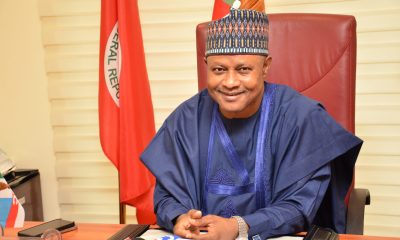
ShareFrom Agbo Emmanuel, Kaduna Governor Uba Sani has inaugurated the Kaduna State Disarmament, Demobilisation and Reintegration(DDR), Peace and Security Committee,...