
Foreign News
Sudan Accuses Ethiopia, UAE of Orchestrating Drone Attacks on Airport

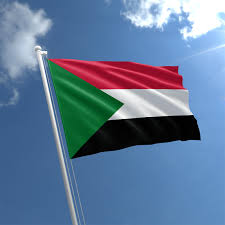
Sudan has accused neighbouring Ethiopia and the United Arab Emirates (UAE) of orchestrating drone strikes on its main airport, describing the assault as “Direct aggression”.
The international airport, located in the capital, was hit on Monday, along with military installations in the Greater Khartoum area.
Recent drone strikes have shattered a period of relative calm in Khartoum, which came after the paramilitary Rapid Support Forces (RSF) was pushed out by the Sudanese military last year.
Ethiopia has said accusations that it was involved in the airport attack are “Baseless”.
The UAE has not yet commented, but has previously denied involvement in the Sudanese conflict.Sudan has recalled its ambassador to Ethiopia for “Consultations” over the attack, Foreign Minister Mohieddin Salem said.
No-one was wounded in the attack, Sudan’s information minister told the Reuters news agency.
Sudan’s army said it had “conclusive evidence” that the drones were launched from Bahir Dar airport in Ethiopia.
Sudanese military officials first accused the RSF of air attacks launched from inside Ethiopian territory in March.
They said they had tracked a drone, identified as Emirati property, entering Sudanese airspace from Ethiopia and eventually shot it down.
A Sudanese army spokesman alleged that they have now connected another drone, launched from the same airport, to Monday’s attack.
The UAE has in the past forcefully rejected claims that it provides military support to the RSF.
The latest attacks came a week after the first direct international commercial flight in three years landed at the airport.
The authorities were forced to announce a 72-hour suspension of operations at the airport following the attacks.
The airport has been a major battleground in the war between the regular army and the RSF, which began in 2023.
In February, Reuters reported that Ethiopia was hosting a camp to train RSF fighters and had upgraded the nearby Asosa airport for drone operations.
It said the move was backed by Ethiopia’s close ally, the United Arab Emirates.
On Monday, witnesses confirmed that they heard blasts and saw smoke rising from an area near the airport.
The attack is reported to have also caused minor damage to an administrative building.
The information ministry said the airport would return to operations after routine safety procedures.
Sudan’s foreign minister alleged that the drones had taken off from Ethiopia, despite Ethiopia being a “brotherly state” to Sudan. He said the UAE and Ethiopia had chosen the “wrong path” and would regret it.
Ethiopia’s foreign ministry said on Tuesday that Sudan and Ethiopia “share a historic and enduring bond of friendship” and had “refrained from publicising the grave violations of Ethiopia’s territorial integrity and national security committed by some belligerents in the Sudanese civil war”.
The ministry called for dialogue between the warring parties in Sudan.
Since the war in Sudan started, more than 150,000 people have died. Twelve million have fled their homes in what the UN has called the world’s largest humanitarian crisis.
The three-year civil war has also led to a famine and claims of a genocide in the western Darfur region.
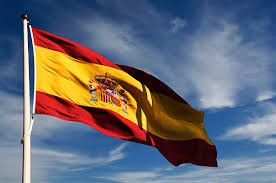
Spain will deploy more than 13,000 police officers to stave off “Multiple” potential threats to Pope Leo XIV’s visit from June 6 to 12, the interior minister said on Monday.
The pope is due to draw huge crowds in the historically deeply Catholic nation when he travels to Madrid, Barcelona and the Canary Islands.
Interior Minister Fernando Grande-Marlaska said that the highest level of a special security plan would be activated throughout the visit, the first by a pope to Spain since 2011.
More than 11,000 police officers and 2,200 Civil Guards would be deployed, while the contribution of additional local forces in the northeastern region of Catalonia that includes Barcelona was to be established, Marlaska added.
Marlaska reeled off a list of “multiple” potential threats, including terrorism, “but also radicalism, other movements such as social movements, which may naturally seize the opportunity to make themselves heard”.
After staying in the capital, Leo will inaugurate the newest and tallest tower of Barcelona’s Sagrada Familia Basilica, 100 years since the death of its Catalan architect Antoni Gaudi.
The Catholic Church declared Gaudi “venerable” in 2025 — the first step on the path to sainthood.
The American pope will then travel to the Canary Islands, an archipelago off the northwestern coast of Africa that is a major route for Europe-bound migrants.
Leo is a vocal defender of migrants, an issue which was also dear to his predecessor Pope Francis.
The fact that the visit “takes place in different territories obviously creates greater complexity for ensuring that it unfolds normally”, as all locations are “very different”, Marlaska said.
Simultaneous major events, such as a series of concerts in Madrid by Puerto Rican superstar Bad Bunny, “do not make it easy”, but Spain “has the resources” to secure all the sites, Marlaska said.

The Ivorian government announced a 25 per cent reduction in passenger and security charges for flights within the Economic Community of West African States (ECOWAS).
Three decrees were adopted to reduce and standardise passenger, security and safety charges for domestic flights, flights within Africa and international flights outside Africa, a government statement said.
According to the statement, the measure is designed to reduce the high cost of air travel, which has often included taxes making up over 60 per cent of total ticket prices.
It also intended to align Cote d’Ivoire’s strategy to boost the competitiveness of national carrier Air Cote d’Ivoire and its public airports with the ECOWAS common aviation charges.
This initiative is an ECOWAS-wide directive aimed at fostering economic integration, trade, and tourism across West Africa, the statement said.

France has urged its citizens to leave Mali “as soon as possible”, after a weekend of co-ordinated attacks by separatist fighters and Islamist militants.
In an update on Wednesday, the advice also warned French citizens not to travel to the West African nation, describing the situation as “extremely volatile”.
Explosions and sustained gunfire were reported across the country, including the capital, Bamako on Saturday.
In Kati, the defence leader Sadio Camara was killed in an apparent suicide bombing by militants, while in the north, separatist forces have taken control of the city of Kidal.Mali’s military leader Gen Assimi Goïta said the security situation in the country was under control.
Speaking in public for the first time on Tuesday evening, he said the army had dealt a “violent blow” to the attackers, and signalled operations were still ongoing.
The spokesperson for one of the rebel groups, the ethnic Tuareg separatist Azawad Liberation Front (FLA), on Wednesday vowed “the regime will fall, sooner or later”.
Speaking during a visit to Paris, Mohamed Elmaouloud Ramadane said the rebels intended to take control of several other northern towns – Gao, Timbuktu and Menaka – following their success in Kidal.


Sudan Accuses Ethiopia, UAE of Orchestrating Drone Attacks on Airport
ShareSudan has accused neighbouring Ethiopia and the United Arab Emirates (UAE) of orchestrating drone strikes on its main airport, describing the assault as “Direct aggression”. The international airport, located in...
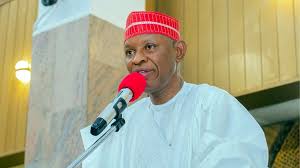

Yusuf Swears in Murtala Garo as Deputy Governor
ShareFrom Rabiu Sanusi, Kano In a ceremony rich in symbolism and political significance the Governor of Abba Kabir Yusuf presided over the swearing-in of the...


Plateau Targets 50,000 Jobs in Digital Economy
ShareFrom Jude Dangwam, Jos The Plateau State Government has strengthened its development communication strategy on job creation and digital inclusion by formalising a strategic partnership with...


Jim Ovia Retires as Zenith Bank Chairman after 12 Years
ShareBy Tony Obiechina, Abuja Zenith Bank has announced the retirement of its Founder and Group Chairman, Jim Ovia, following the...

ACF Headquarters under Police Siege Ahead NEC Meeting
ShareBy David Torough, Abuja Tension has gripped the headquarters of the Arewa Consultative Forum (ACF) following allegations of police siege,...

NASS Rises Against Xenophobia, Seeks Protection for Nigerians Abroad
ShareBy Eze Okechukwu Godson and Ubong Ukpong, Abuja Nigeria’s National Assembly yesterday delivered a unified but multi-pronged response to renewed...
Kogi Community Marks Annual Festival, Calls for Unity amongst Indigenes
ShareFrom Joseph Amedu, Lokoja The Odo-Ape community in Kabba-Bunu Local Government Area of Kogi state came alive last Saturday as indigenes at home and abroad gathered...

Spain Deploys over 13,000 Officers for Pope’s June Visit
ShareSpain will deploy more than 13,000 police officers to stave off “Multiple” potential threats to Pope Leo XIV’s visit from June 6 to 12, the interior minister said on Monday. The pope is due to...
Nigeria Validates 10-Year Roadmap to Transform Veterinary Services
ShareBy Raphael Atuu, Abuja The Federal Government of Nigeria has successfully validated the National Roadmap for the Veterinary Services in Nigeria (2026–2036), setting a bold course to modernise animal health...


JAMB Schedules May 11 Policy Meeting to Determine 2026 UTME Cut-Off Marks
ShareThe process for the 2026/2027 tertiary admissions cycle is set to begin in earnest as the Joint Admissions and Matriculation...