
BUSINESS
Sterling Bank Wins 2021 Best Participating Bank Award Under ACGSF

Sterling Bank Plc, one of Nigeria’s leading commercial bank, has won the Best Participating Financial Institution under the National Farmer of the Year 2021 Award of the Agricultural Credit Guarantee Scheme Fund (ACGSF) of the Central Bank of Nigeria (CBN) at the National Award ceremony held in Abuja over the weekend.
In a letter informing the bank of the award, Secretary to the board of the ACGSF, Mr.
Edwin Nzelu said, “Sterling Bank Plc has distinguished itself under the scheme by its national support to small holder farmers in the year 2021.“It is therefore our pleasure to inform you that Sterling Bank Plc has emerged as the 2021 ACGSF Best Participating Financial Institution of the Year in the National Category and would bepresented with the award at the ceremony.
”The ACGSF explained that Sterling Bank was recognised for its payout of more than N136.88 million to farmers across the country from January 2021 to December 2021 under the ACGSF.
Agriculture is one of the five sectors that Sterling Bank has concentrated investments in since 2018 as part of its HEARTs of Sterling programme in a bid to make significant impact in the economy. The other sectors are Health, Education, Renewable Energy and Transportation.
The ACGSF was established by Act No. 20 of 1977 and started operations in April 1978. Its original share capital and paid-up capital were N100 million and N85.6 million, respectively.
The Federal Government holds 60 percent of the shares while the CBN holds the remaining 40 percent.
The capital base of the Scheme was increased to N3 billion in March 2001. The Fund guarantees credit facilities extended to farmers by banks up to 75 percent of the amount in default net of any security realised.
The fund is managed by the CBN, which handles the day-to-day operations of the Scheme. The Guidelines stipulate the eligible enterprises for which guarantees could be issued under the Scheme.
Between 1978 and 1989 when the government stipulated lending quotas for banks under the scheme, there was consistent increase in the lending portfolios of banks to agriculture, but after the deregulation of the financial system, banks started shying away by reducing their loans to the sector due to the perceived risk.
In order to reverse the declining trend, several innovations and products were introduced under the scheme such as the Self-Help Group Linkage Banking, Trust Fund Model and Interest Draw Back.




The Dangote Petroleum Refinery has finally stopped the sale of Premium Motor Spirit (petrol) to major marketers importing petroleum products into Nigeria.
An official of the refinery confirmed this to our correspondent, saying the refinery would no longer sell petrol to those blending Dangote fuel with imported grades.
Another source told our correspondent that the refinery now prefers to sell its petrol to members of the Independent Petroleum Marketers Association of Nigeria and others not known for importing.
“We are selling to independent marketers and others who are not importing,” he stated.It was learnt that the development informed why some marketers went to court to get an order that the Nigerian Midstream and Downstream Petroleum Regulatory Authority should continue to grant them import licences.
The marketers feared that they might be left stranded if they could not import fuel at a time when the Dangote refinery had halted petrol sales to them. Dangote had earlier threatened to stop transacting business with fuel importers, whom it accused of blending its Euro-5 petrol grade with imported grades.
It is concerned that such practices could make it difficult to distinguish between products supplied directly by the refinery and products subsequently blended or handled by third parties.
Reacting, importers and petroleum marketers kicked against the restriction of petrol sales to marketers who import petrol, describing the move as an attempt to block imports. The marketers also challenged the refinery to provide evidence that imported petrol entering the Nigerian market is below the required quality standard.
The marketers, who preferred not to be mentioned, accused Dangote of trying to prevent the importation of petrol. “We know what Dangote is trying to do. He is just trying to block imports,” one of the marketers said. The marketer argued that a company that sells petrol could not dictate whether a consumer should combine its product with fuel purchased from another supplier.
Using the example of motorists buying petrol from different filling stations, the marketer said Dangote could not prevent consumers from combining products sourced from different suppliers.
Another marketer also argued that the Federal Government had a responsibility to ensure an adequate petrol supply and protect consumers, insisting that imports remain necessary when domestic production drops.
Speaking, the National Vice Chairman of the IPMAN, Hamed Fashola, stated that the Dangote refinery is selective about who it sells petrol to because not all major marketers import.
Clarifying IPMAN’s purchasing position amid market competition, Fashola noted that independent marketers operate flexibly to secure the most competitive pricing, sourcing supply indiscriminately from both local refineries and importers.
Meanwhile, the National Publicity Secretary of the IPMAN, Chinedu Ukadike, expressed the belief that the Dangote refinery is open to doing business with anyone.
Ukadike noted that independent marketers are ready to buy and sell petrol from all suppliers, stressing that they were not currently involved in importing the product.
While saying he would not know if importers truly blend Dangote’s petrol with imported petrol, he concluded that Dangote is in the best position to determine whatever it can do to discourage blending.
“So, if there is any measure to discourage adulteration of petroleum products by Dangote, I think the refinery and its experts know best. They know the best way to deal with that. But our own is to continue to buy and sell to marketers. If there is a way to discourage adulteration of petroleum products, I won’t stop Dangote from doing so,” Ukadike added.
Nigeria has emerged as the biggest climber in Africa’s latest investment risk ranking, rising four places to eighth position as economic reforms implemented by President Bola Tinubu improved the country’s relative attractiveness to investors, a new report by Bloomberg has stated.
Nigeria overtook Rwanda, Tanzania, Kenya and Namibia in the 2026 Bloomberg Economics Investment Risk-O-Meter, which assesses the relative investability of 19 African economies.
Bloomberg, in the report released on Monday, said Nigeria’s improvement was driven by stronger performance in three of the five indicators used in the assessment: economic strength, fiscal strength and external vulnerability.
The development puts Nigeria among the biggest gainers on the continent, despite ongoing concerns about the country’s high public debt, cost of living, inflation, infrastructure deficit and foreign exchange pressures.
Mauritius emerged as the most investable African market in the latest ranking, while Botswana fell two places. South Africa, which topped the ranking in the previous edition, also dropped one place following a weaker economic growth outlook.
Nigeria’s improved position comes more than three years after Tinubu assumed office and embarked on a series of major economic reforms aimed at restructuring the country’s fiscal and monetary environment.
Among the most significant measures were the removal of the petrol subsidy, reforms to the foreign exchange market and changes to electricity tariffs.
The Federal Government has repeatedly defended the reforms as necessary to address distortions that had weighed on public finances, discouraged investment and placed pressure on foreign exchange reserves.
However, the policies have also increased economic hardship for households and businesses, particularly through higher transport, food and energy costs. Despite the adjustment pains, Nigeria’s economy has continued to expand during the period under review.
Real Gross Domestic Product growth rose from 2.54 per cent in the third quarter of 2023 to 3.46 per cent in the fourth quarter of that year.
The economy subsequently grew by an average of 3.19 per cent in 2024 before accelerating to 3.85 per cent in 2025, its strongest annual performance within the period covered by the assessment.
Growth stood at 3.89 per cent in the first quarter of 2026, bringing the average quarterly growth between the third quarter of 2023 and the first quarter of 2026 to about 3.46 per cent.
The stronger growth performance has come alongside efforts by the government to increase revenue, reduce fiscal leakages and attract investment into critical sectors of the economy.
Nigeria’s improved position in the Bloomberg ranking, however, comes against the backdrop of a substantial increase in public debt.
Data from the Debt Management Office showed that Nigeria’s total public debt stood at N87.38tn as of June 30, 2023, shortly after Tinubu took office. By December 31, 2025, the figure had risen to N159.28tn. This represents an increase of N71.90tn, or about 82.3 per cent, in two and a half years.
The increase was driven by new borrowing, foreign exchange adjustments and the securitisation of certain legacy obligations, according to the DMO.
The development is significant for a country that has struggled for years to attract sufficient foreign capital because of concerns over exchange-rate instability, policy uncertainty, weak infrastructure, insecurity and limited fiscal space.
The reforms under the Tinubu administration have sought to address some of these constraints by allowing market forces a greater role in determining fuel prices, foreign exchange rates and electricity tariffs.
The foreign exchange reforms, in particular, were designed to reduce multiple exchange rates and improve transparency in the currency market, while the removal of the petrol subsidy was intended to reduce the government’s fiscal burden.
The electricity tariff reforms were also aimed at improving the financial viability of the power sector and encouraging investment by allowing electricity prices for some customer categories to better reflect supply costs.
Nigeria’s rise in the Bloomberg ranking therefore marks an improvement in its relative position among African investment destinations, even as investors continue to monitor the sustainability of its reforms, debt burden and economic growth.
By Tambaya Julius, Abuja
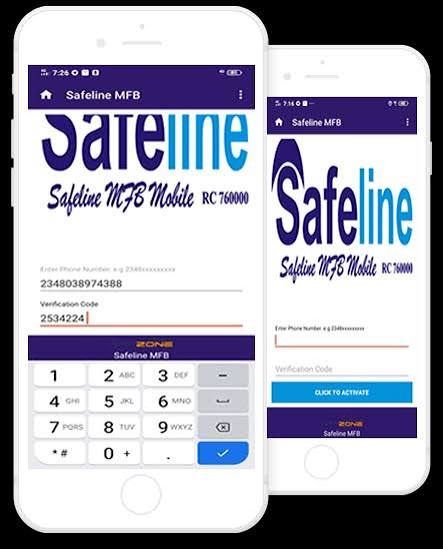
Safeline Microfinance Bank (SMFB), established by the Federal Road Safety Corps (FRSC), has formally transferred its shares to ROBOPAY NIG. LTD., in a move aimed at strengthening the bank’s capital base, technology and capacity for sustainable growth.
The share transfer ceremony took place on Monday, at the bank’s premises in Abuja.
Speaking at the ceremony, Chairman of the Board of Safeline Microfinance Bank, Engr. Ibrahim Babagana, fwc, Deputy Corps Marshal (Rtd.), said the decision followed the Board’s careful assessment of the changing regulatory environment and government policies affecting the microfinance banking sector.
Babagana said the changing financial landscape meant that the bank needed significant additional capital, greater investment in technology and stronger human resources to remain competitive.
He explained that the Board therefore decided to transfer ownership to an investor with the financial capacity and commitment to make the necessary investments and put the bank on a stronger path towards long-term sustainability.
The Board Chairman expressed confidence in ROBOPAY NIG. LTD., saying the company had demonstrated the commitment and vision needed to build on the foundation laid by the FRSC.
He said the new owners had shown particular interest in strengthening the bank’s capital base, introducing modern technology and investing in its workforce.
According to him, these areas would be critical to keeping Safeline Microfinance Bank competitive as the financial services industry becomes increasingly digital.
Responding on behalf of ROBOPAY NIG. LTD., Malam Aliyu Abiodun thanked the Board and Management of Safeline Microfinance Bank for the confidence reposed in the company.
Abiodun described the acquisition as a major milestone and an opportunity to unlock the bank’s existing potential.
He said the institution already had valuable assets, structures and an established foundation which ROBOPAY would build upon through strategic investments in capital, technology and human resources.
He added that ROBOPAY would deploy financial technology (FinTech) solutions to modernise the bank’s operations, improve service delivery and strengthen its position in the financial services market.
Abiodun assured that the company would build on the foundation established by the FRSC while introducing innovative solutions to reposition Safeline Microfinance Bank for the changing demands of Nigeria’s financial sector.
The share transfer marks a new phase for Safeline Microfinance Bank, with the new ownership expected to pursue a more technology-driven and investment-focused approach to the institution’s growth.
Both parties expressed their commitment to ensuring a smooth transition and strengthening the bank’s capacity to deliver sustainable value to its customers and other stakeholders.



2027: Yona Donates APC Campaign Banner, Seeks Constituents Support
ShareBy Tambaya Julius, Abuja The Councillor representing Tattara/Kondoro Electoral Ward and Chief Whip of the Karu Legislative Council, Hon. Barr....

Pope Leo to Have Surgery after Lump Found on Lung
SharePope Leo XIV has announced he will be operated “in the coming days” after a nodule was found on his...


Motorists Express Worry over Non-access to NNPC Petrol Discount
ShareMany motorists said in spite of the discount in pump price of petrol at the Nigerian National Petroleum Company Ltd...


Tuberculosis: Benue Assembly Passes Law, to Protect Patients from Discrimination
ShareBy Laide Akinboade, Abuja The Benue State House of Assembly has passed into law a landmark legislation aimed at eliminating...

President Tinubu’s 30-Day Fuel “Discount” Cannot Repair the Damage of Subsidy Removal
ShareBy Daniel Nduka Okonkwo The Federal Government has issued a stark warning: restoring petrol subsidies could push the exchange rate...


Troops Neutralize Explosive Devices planted in Zamfara Community
ShareFrom Ifeanyichukwu Nwannah, Gusau The troops of Operation Fansan Yamma (OPFY) have neutralised Explosive Devices Planted along Magami–Hannutara–Dansadau road, Maru,...


Mbah Reaffirms Enugu’s Commitment to Trade, Investment, Industrial Growth
ShareFrom Sylvia Udegbunam, Enugu Enugu State Governor, Dr. Peter Mbah, has reaffirmed his administration’s commitment to creating an enabling environment...


Concerns About the 2027 General Elections
ShareBy Jibrin Ibrahim As the countdown to the 2027 elections reached 100 days this week Tuesday, Joash Amupitan, chairman of...
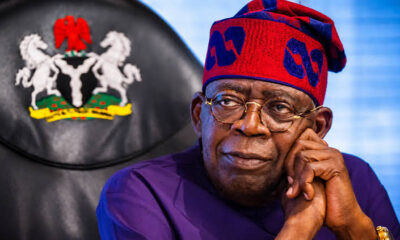

World Bank Report Confirms Economic Reforms Yielding Results – Tinubu
SharePresident Bola Tinubu said the World Bank’s October 2026 Nigeria Development Update confirms his administration’s economic reforms are yielding results...


Bandits Burn Houses, Business Premises in Niger Border Community
ShareFrom Dan Amasingha, Minna Suspected bandits have attacked Kigbera village in Konkoso Ward, Borgu Local Government Area of Niger State,...