
BUSINESS
Subsidy Payment Gulps N131bn in November as NNPC Remits N10bn to Federation Account

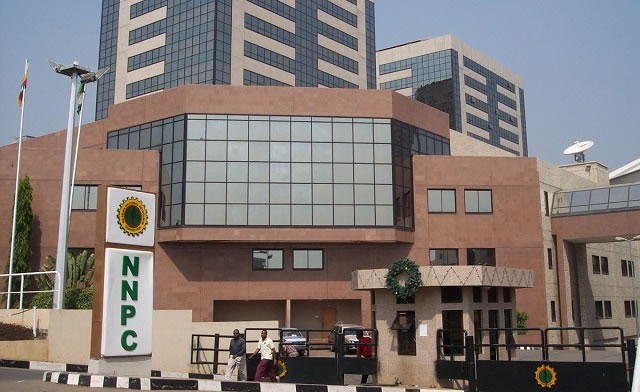
The Nigerian National Petroleum (NNPC) Limited said it paid N131.4 billion as subsidy payment in the month of November 2021. This is however lower than the N173.13 billion it paid in August.
According to an analysis the corporation had been deducting from oil revenue to fund the nationwide unpriced sales of petrol to Nigerians in the last 11 months since the 2021 budget did not cater for subsidy payment.
Also the total contribution of NNPC to the Federation Account dropped to N10.
54 billion in November as subsidy payment gulped a larger share of the revenue.The corporation said this in its monthly crude oil and gas sales presentation to the federation account allocation committee (FAAC).
According to the document, the corporation remittance to the federation amounted to N522 billion so far in this year — recording a shortfall of N1.78 trillion.
In January, the state-owned oil firm recorded the highest remittance to the federation purse for the year at N90.9 billion.
It recorded N64.2 billion and N41.2 billion in February and March this year.
In April, the corporation did not remit revenue to the federation account due to the burden of petroleum shortfall, also known as under-recovery (fuel subsidy).
It recorded N38.6 billion in May.
Further checks showed that the corporation remitted N47.1 billion in June and N67.2 billion in July.
In August, September, October and November, NNPC remitted N80 billion, N67.5 billion, N18.9 billion, and N10.5 billion, respectively.
The document also showed that NNPC had spent N1.16 trillion year-to-date to cater for under-recovery.
In October, fuel subsidy payment stood at N163 billion, culminating in N1.03trn from January to October.
In September, it was 149.28 billion. In August, the under-recovery cost of PMS was N173.13 billion. For July and June, it was N103.28 billion and N164.33, respectively.
In May, the cost of fuel subsidy amounted to N126.29 billion. Also, in April, March, and February, the under-recovery of PMS amounted to N61.96 billion, N60.39 billion, and N25.37 billion.
NNPC did not make provision for subsidy in January.




By Eddy Ochigbo
The Nigerian Content Development Management Board (NCDMB) has reaffirmed its determination to increase the current from 56% to100% local content in Africa between now and next decade, to align with President Ahmed Tinubu’s “Nigeria First” policy, aimed at boosting local production and reducing dependence on imports in critical sectors of national economy.
Director Corporate Services NCDMB, Dr Abdulmalik Halilu who drop the hint during the week at a capacity building workshop for media stakeholders in Abuja, disclosed that NCDMB, was in good stead to attain 100% Local content in less than no time due to impactful steps being taken by the board.
Innovative steps being by the board, be said, were put in place under the leadership of Executive Secretary, Engr. Felix Omatsola Ogbe. While hinging the milestones attained by the board on the establishment of the Nigerian Oil and Gas Industry Development Content Act (NOGICD) – a sole agency of the federal government responsible for driving Nigerian content in the oil and gas industry – Halilu urged Oil and Gas Correspondents to place high premium on the core operations of NCDMB, rather than their day to day reportage of policy matters.The media capacity building workshop themed: The Role of Media and Communications in Sustaining Nigerian Content Development”, challenged the media to deploy its expertise and professionalism to boost Nigeria’s sustained campaign in championing local content development in Africa.
“The media should to do more in the reportage of activities of the board by moving from reporting policy matters, and throw more light on core operations of the Nigerian content performance in the oil and gas industry”, he volunteered.
Meanwhile, NCDMB”s move is to ensure that for every N100 spent in the industry by operators and service companies, N56 is now retained in-country in terms of value addition local assets, goods, expertise to target 70 per cent local content by 2027. The workshop stressed the need for the media to interrogate the board’s activities and keep Nigerians abreast of the ongoing silent revolution in nation’s local content trajectory.
On his part, Dr Obinna Ezeobi, General Manager, Corporate Services, reiterated that the Nigerian content has become so widespread the world over that a good number of African countries are now seeking ways to optimise value from their oil and gas resources, turning to Nigeria’s local implementation as a case study.
Earlier, Mr Azubuike Ishiekwene, Editor-in-Chief of Leadership Newspapers, who delivered a paper on why “Good Journalism is not Enough: Creating Sustainable Income from your Content in Digital Age”, maintained that good journalism is no longer in vogue because of the collapse of traditional newsroom revenue and the under payment and casualisation of Journalists, especially beat reporters. He reasoned that the Journalist as knowledge worker, a trusted interpreter, public educator and a market signaler must live above board because digital age did kill journalism, it killed dependency.
By and large, the media capacity building workshop, among things touched on:
- Formulation and implementation of policies and monitoring its socioeconomic impact;
- Provision of the economic and social capital, necessary for the growth of industries; and
- Provision of enabling business environment to support production and consumption of goods and services by local supply chain.
The Debt Management Office (DMO) said that its World Bank-assisted workshop on borrowing guidelines was designed to intimate subnational entities within Northern Nigeria on proper borrowing ethics.
The Director-General of the DMO, Patience Oniha, said this at the workshop on Borrowing Guidelines organised for top policy makers in Abuja on Tuesday.
He said that the workshop was under the aegis of States Action on Business Enabling Reforms (SABER).
He said it was important to align borrowing practices within the states with that of the Federal Government.
Oniha said that borrowing needed several layers of approvals and debt managers needed to understand why those approvals are required.
“Debt is such an important fiscal variable that involves several stakeholders, that is why we have a diverse group here.
“The objective is that after this workshop, your collaboration with your different states will be stronger.
“We need to keep empowering people with knowledge about creating skills so that work goes on smoothly.
“How do we make the process work? How do we make the subnational governments understand the process of borrowing so that they can raise the funds that they need for development?
“If they have not understood the process, they cannot comply and they cannot raise the funds,” she said.
Oniha said that the idea was to equip the states with all the skills and knowledge they needed, so that each time they want to borrow, they are ready and the process is smooth.
“Ultimately, the expectation is that the funds that they raise will be used for development in the state.”
She commended the World Bank for its interest in activities around public debt management in Nigeria.
“Debt is such an important fiscal variable that we cannot stop talking about it. We must get it right to make it sustainable.
“You can see what has happened to countries that have had to restructure their debts, the problems they went through; the downgrading by the international debt rating agencies; and their inability to borrow.
“Because debt is important, there are laws around borrowing. You want the borrowing process to be transparent, so it is not just one person that took the decision.
“The purpose has to be clear; the loan has to be properly documented; it should be monitored, it should be reported so that you can service it.
“When you do not service it, the consequences are not good. So, let us talk about debt sustainability. How will you know what to do? How will you know when to stop?” Oniha queried.
The Acting Head of Service, Federal Capital Territory (FCT), Nancy Nathan, described the workshop as an intersection of opportunity and responsibility.
Nathan said that the workshop was tied to equipping states and the FCT with the knowledge and tools necessary to navigate the complexity of the borrowing process
According to her, in a rapidly evolving economic landscape, access to finance is not just a necessity but a critical enabler for development.
“This workshop is aimed to demystify the borrowing process and clarify documentation requirements.
“It will empower our top policymakers to make informed decisions that will ultimately enhance our capacity to meet the financial needs of our respective states.
“As we embark on this journey of learning and collaboration, let us engage openly, share our insights, and push past limits that will drive our collective success,” Nathan said.
From Francis Sadhere, Delta
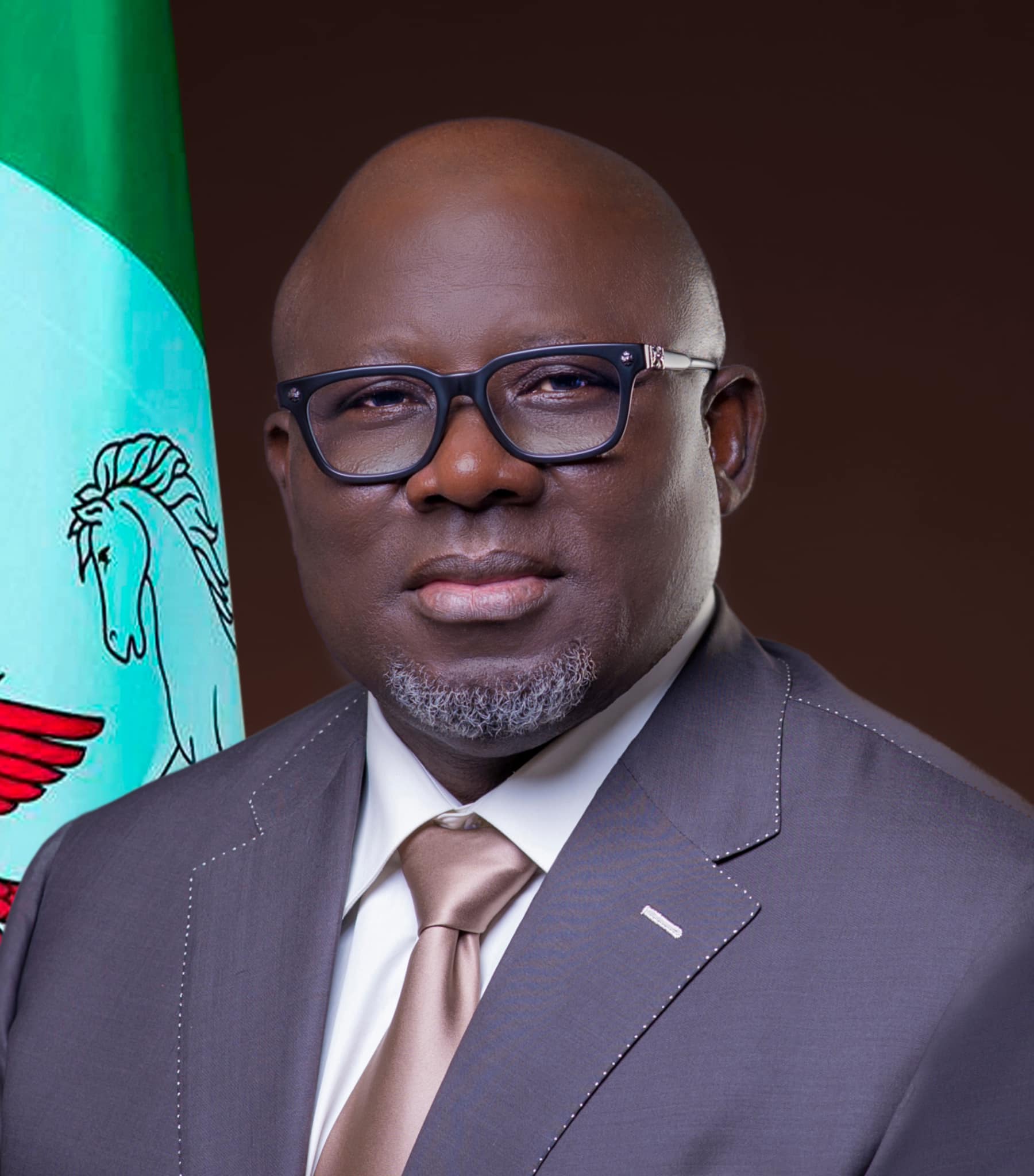
Delta State Governor, Sheriff Oborevwori on Tuesday signed the 2026 Appropriation Bill of N1.729 trillion, tagged “Budget of Accelerating the MORE Agenda,” alongside three other key bills passed by the Delta State House of Assembly into law.
The assent paves the way for accelerated development, improved security and strengthened social welfare across the state.
The three additional laws are the Delta State Social Investment Programme Law, the Delta State Colleges of Education Law, 2025, and the Delta State Anti-Terrorism and Anti-Cultism (Amendment) Law, 2025.
Speaking during the signing ceremony, Governor Oborevwori described the 2026 budget as “not just a budget of figures, but a budget of vision, action and expected deliverables for the next twelve months,” assuring that the state would hit the ground running in 2026 to fast-track development across critical sectors.
The N1,729,881,208,779 budget represents an increase of over 70 per cent compared to the 2025 budget. The Governor said the estimate, though ambitious, was achievable, noting that 70 per cent of the budget is allocated to capital expenditure, while 30 per cent is for recurrent spending. According to him, the spending plan reflects his administration’s commitment to infrastructure-led growth and sustainable development.
Oborevwori said that in 2025, the state intensified investments in infrastructure, security, fiscal discipline and revenue generation, resulting in improved internally generated revenue without placing additional burdens on citizens. He noted that these gains underscore the success of the administration’s reforms and its resolve to further strengthen the state’s economy.
Explaining the significance of the accompanying laws, the Governor said the Social Investment Programme Law provides a legal framework for equitable, grassroots-focused access to resources and services, especially for vulnerable and underserved populations, without discrimination.
He added that the Colleges of Education Law, 2025, standardised the operations of state-owned colleges of education, enabled them to award Nigerian Certificate in Education (NCE) and education degrees concurrently, and expanded their capacity to train more qualified teachers.
On security, Oborevwori said the Anti-Terrorism and Anti-Cultism (Amendment) Law strengthens the legal framework to tackle terrorism, cultism and related crimes, bringing state laws in line with contemporary security realities.
The Governor commended the Speaker, leadership and members of the Delta State House of Assembly, as well as the Clerk and staff of the House, for the timely passage of the budget and other bills, noting the strong synergy between the executive and legislature. He also thanked stakeholders, cabinet members, civil servants and citizens for their contributions, while wishing Deltans a Merry Christmas and a prosperous New Year.
Earlier, Speaker of the Delta State House of Assembly, Rt. Hon. Emomotimi Guwor, said the passage of the four bills followed rigorous legislative engagement, wide consultations and thorough scrutiny in line with the Assembly’s constitutional responsibilities.
Guwor explained that the Social Investment Programme Law institutionalized social intervention initiatives aimed at protecting vulnerable citizens and promoting inclusive growth and social justice. He said the Colleges of Education Law, 2025, establishes a uniform framework to enhance the quality and efficiency of teacher education and reduce disparities among state-owned colleges.
He added that the Anti-Terrorism and Anti-Cultism (Amendment) Law addresses emerging security challenges and corrects gaps in the principal legislation, including the absence of a clear definition of cultism.
On the 2026 Appropriation Law, the Speaker said the House scrutinised the budget sector-by-sector in line with the MORE Agenda before passing the N1.729 trillion estimate.
According to him, the assent to the bills further highlights the cordial and productive relationship between the legislature and the executive, driven by a shared vision for a peaceful, secure and prosperous Delta State, and will significantly advance good governance and socio-economic development in the state.

NCDMB set to Attain 100% Local Content in Africa
ShareBy Eddy Ochigbo The Nigerian Content Development Management Board (NCDMB) has reaffirmed its determination to increase the current from 56%...

The Man Rotimi Makinde: A True Progressive by All Standards
ShareBy Kolapo Ogundare It is impressive to note that many well-meaning Nigerians are now coming out, recounting several good deeds...
FG, NBS Launch Nationwide MICS7 Survey
ShareFrom Francis Sadhere, Delta The Federal Government of Nigeria, through the National Bureau of Statistics (NBS), has officially launched the...
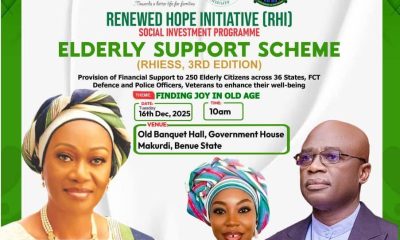

Finding Joy in Old Age: The Renewed Hope Intervention
ShareBy Bridget Tikyaa Getting to the life journey of a senior citizen should ordinarily be a source of pride, a...


CBN Revokes Licenses of Aso Savings, Union Homes Savings, Loans
ShareBy Tony Obiechina, Abuja The Central Bank of Nigeria (CBN) has revoked the operational licences of Aso Savings and Loans...

Dangote Petitions ICPC, Accuses NMDPRA Boss of Corruption, Abuses
ShareBy David Torough, Abuja President of the Dangote Group, Alhaji Aliko Dangote, has petitioned the Independent Corrupt Practices and Other Related Offences Commission...

NDIC Liquidates Aso Savings, Union Homes, Pays N2m Deposits
ShareBy Tony Obiechina, Abuja The Nigerian Deposit Insurance Corporation (NDIC) exercised its appointment as the liquidator of Aso Savings and...


Reps Launch Nationwide Probe into Drug Abuse, Trafficking Crisis
ShareBy Ubong Ukpong, Abuja The House of Representatives has commenced a nationwide investigation into Nigeria’s worsening drug abuse and trafficking...
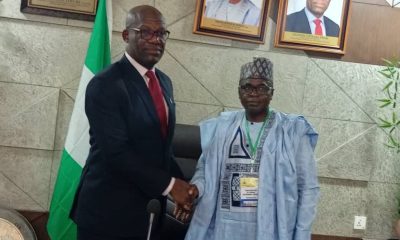

Clement Koko Assumes Office as CIPPON President
ShareBy David Torough, Abuja Clement Koko has been inaugurated as the President and Chairman-in-Council of the Chartered Institute of Professional...

Thousands of Drivers Wrongly Fined for Speeding Since 2021
ShareThousands of drivers could have speeding fines cancelled after a fault saw some cameras falsely triggered on English A roads...