
Oil & Gas
Sylva, NCDMB Host First African Content Roundtable in Bayelsa

From Tayese Mike, Yenagoa
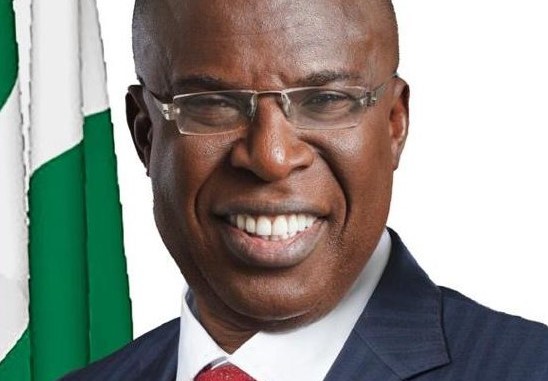
The Minister of State for Petroleum, Chief Timipre Sylva and the Nigerian Content Development Monitoring Board, last Thursday hosted the Ist African Local content Roundtable(ALCR) discussion in Yenagoa, the Bayelsa state capital.
Declaring the ceremony open, the Minister said holding the maiden edition of the African Roundtable discussion in a state where oil and gas was first recorded in commercial quantity in Africa and indeed Nigeria shows that the country was a leading example in content development.
He commended the NCDMB for initiating the Roundtable discussion, saying by this effort, it has set the pace as the premier Local Content regulator in Africa and a worthy example to sister nations that seek guidance to institutionalize Local Content practices in their jurisdictions.
According to him, the partnership with APPO is also commendable as it will provide a sustainable structure for driving regional collaboration on local content matters.
“The objective of this pan-African Roundtable is to institutionalize peer review mechanism among Oil-producing countries on local content as a key development imperative for domestication and sustainable growth of Africa’s hydrocarbon resources”.
“Any country that aspires to achieve rapid and sustainable economic growth must put in place an economic model that enables its human capital to harness its natural resources to create wealth and economic prosperity”.
“Nigeria embraced this model by adopting local content as an economic development model for the oil and gas sector, in view of its abundant hydrocarbon resources estimated at 37 Billion barrels of crude oil and 202 TCF of gas reserves.
We define local content as value added to or created in the Nigerian economy by a systematic development of capacity and capabilities, through deliberate utilization of Nigerian services, human and material resources in the Nigerian oil and gas industry.
Through implementation of local content we have achieved significant growth in-country value addition from less than 5% in 2010 to 35% in 2021 and we have set an ambitious target to achieve 70% local content in the oil and gas sector by 2027.
“Our success story in the oil and gas industry has led to bold step to extend local content to other sectors of the Nigerian economy. As a caring African country, we have also considered it necessary to amplify the benefits of local content to our fellow African countries and that is the essence of the African Local Content Roundtable”.
He said, everyone knows that decades of hydrocarbon production in Africa have not translated to the desired economic growth in our Continent.
According to Sylva, while over 15 African nations are producing and exporting crude oil, the sad reality is that our people have not benefitted maximally from this natural resource, either because we have not managed the proceeds optimally or we failed to domesticate the core operations of the industry.
“We must therefore use the opportunity of this RoundTable to initiate conversations around Local Content, share success stories, challenges and come up with policies that would deepen local participation and domiciliation in our respective countries.
One of the pathways for this desired collaboration and cross-country development is the African Continental Free Trade Area (AfCFTA) and I am pleased that we have a representative of AfCFTA in this forum.
Indeed, AfCFTA provides an opportunity to create a single market through the facilitation of free movement of goods, services and investment within the 54 member states of the Continent, creating access to 1.2 billion customers, with a cumulative Gross Domestic Product (GDP) of over US$3.4 trillion.
It is imperative that African oil-producing countries and their companies cooperate closely in developing and sharing capacities and capabilities to optimize the hydrocarbon deposits and achieve economic growth and development”.
“For example, we established the biggest FPSO integration yard in Lagos, Nigeria and so many other facilities that can be used by other African countries.
It makes better business sense to partner with an Umbilicals producing plant in Angola, or a bolt manufacturing company in Niger Republic instead of going all the way to United States and Norway for the same products.
We must take firm decisions and develop policies and projects that would position our industry competitively and sustain our economy under the emerging energy transition.
The Federal Government of Nigeria took firm steps in this regard very recently, funding two strategic energy projects in Nigeria. A 10,000 tons per day methanol plant and 500 million standard cubic feet per day gas processing plant in Brass, Bayelsa State and the Ammonia and Fertilizer plant in Akwa Ibom State.
“It is my expectation that the ALCR will become a signature event, leveraging on the wonderful foundations already built by APPO and rotating among all the African oil producing countries”.
In his speech, the co-host, Engr Simbi Wabote, who is the Executive Secretary of Nigerian Content Development Monitoring Board (NCDMB) said Africa needed to start discussion on how the continent can use its Hydrocarbon resources to migrate into a renewable energy.
According to Wabote, NCDMB as the leading in the development of local content in the Oil and Gas sector decided to bring all African oil producers together for them to start the discussion. Saying sustainability and continue growth to tackle poverty situation in the continent to bring about energy sustainability for the people is key to African leaders.
” I think its time for African to begin to come together on how to use their resources to migrate into a renewable one. The discussion is about climate change which we believe is somehow renewable and that has become topic all over the world”, he said.
He said with the threat of the climate change, what it portend for Africa is that very soon the natural resources that the continent has not even tapped will not be useful anymore. “Therefore we need to start the discussion on how we can use our hydrocarbons resources to migrate into a renewable energy. That is very important to us”.
Engr Wabote said why the local content roundtable is symbolic is because in Africa continent and the World, everybody knows that Nigeria is leading in local content when it comes to oil and gas sector.
“We have so many African countries that have come to jaw-jaw with us to learn the strategy on how to develop local content in the hydrocarbon sector. For us we feel we are the leader in that sector, we need to bring other African countries together in other to develop the local content since for them they are just discovering hydrocarbon resources and the discussion is how to migrate into energy”.
Wabote, who highlighted the achievements made by Nigeria in the last few years in the implementation of the local content policy, said the per centage of local content participation have been moved from 35 per cent to 70 per cent under his watch,” the local content policy in Nigeria has created indigenous contractors that are capable and strong, we have local participation in the vessels ownership”


The Nigerian Upstream Petroleum Regulatory Commission (NUPRC) has opened discussions with Indonesia on petroleum investments, with Indonesian national oil company Pertamina expressing interest in Nigeria’s 2026 Licensing Round.
The development followed a meeting between the NUPRC Chief Executive, Oritsemeyiwa Eyesan, Indonesia’s Vice Minister of Foreign Affairs, Arif Havas Oegroseno, and Toriq Abdat, Vice President, Upstream Business Development, Pertamina.
Head, Corporate Communications and Media, NUPRC, Eniola Akinkuotu, made this known in a statement on Sunday.
Nigeria and Indonesia shared similar priorities, including energy security, resource utilisation and investments into the sector as both countries seek to increase oil production, with Nigeria targeting three million barrels per day (bpd) by 2030.
Nigeria currently produces about 1.6 million to 1.7 million bpd, while Indonesia produces about 600,000 bpd and is also seeking to increase output.
Abdat said Pertamina had been mandated to expand its operations internationally and was exploring opportunities in countries including Malaysia, Iraq and Nigeria.
“In Indonesia, we are producing only around 600,000 barrels. We are working on exploration towards deepwater but we found more gas than oil.
“That is why we go outside Indonesia, Malaysia, then the Middle East, Iraq and Nigeria,” he said.
Abdat said Pertamina was seeking producing assets, projects nearing production or opportunities ahead of Final Investment Decision (FID).
He said the company was open to both competitive bidding and bilateral arrangements with governments.
“We would like to be in projects with governments, producing assets, near production or before FID.
“Now we are looking at how we can help you reach the three million, and also help us provide more energy for our own consumption,” Abdat said.
He expressed interest in opportunities beyond crude oil and natural gas, particularly in the fertiliser sector, adding that Pertamina was developing a fertiliser plant to reduce Indonesia’s dependence on supplies from the Middle East amid disruptions caused by global conflicts.
He linked food security to the oil and gas sector, noting the importance of phosphate and other elements used in fertiliser production.
Responding, Eyesan said Nigeria’s production target was ambitious, adding that the 2026 Licensing Round was one of the strategies being deployed to achieve it.
“We have very aggressive targets, three million barrels per day by 2030, and today we are at 1.6, 1.7.
“We are committed to the objective and the licensing round is one of the strategies we are utilising,” she said.
Eyesan said licensing rounds had become a recurring exercise in Nigeria rather than an occasional process, following their institutionalisation under the Petroleum Industry Act (PIA) 2021.
She said the most recent commercial bid conference, held in July, featured 50 assets, with 37 awarded.
The NUPRC boss said Nigeria had also reviewed its fiscal terms in response to competition for the same pool of global investment capital.
She said the country had reduced entry barriers, including signature bonuses, to encourage investment in the upstream sector.
Nigeria, in turn, is diversifying its phosphate sources, including through a long-term transatlantic pipeline project with Morocco aimed at serving West Africa.
The meeting ended with both sides agreeing to sustain commercial and diplomatic engagements on potential areas of cooperation.(NAN)

By Tony Obiechina, Abuja
The Revenue Mobilisation Allocation and Fiscal Commission (RMAFC) has inaugurated a Planning Committee to coordinate preparations for the forthcoming Oil and Gas Investment forum scheduled to take place in China later this year.
The Chairman of the Commission Dr.
Mohammed Bello Shehu represented the Investment Monitoring Committee and Federal Commissioner representing Anambra State, Hon. Ekene Enefe, chaired the inaugural meeting held at the Commission’s headquarters in Abuja.In his remarks, Dr. Shehu underscored the importance of strategic planning, effective coordination and strong institutional collaboration in ensuring the successful implementation of the program.
He noted that the forum would provide a credible platform for showcasing Nigeria’s investment opportunities across the oil and gas value chain and attracting meaningful investments into the country.He charged the Planning Committee to develop a comprehensive framework for the event, identify priority investment opportunities, coordinate stakeholder participation, and facilitate strategic engagements with prospective investors and partners in China.
According to him, the Investment forum would feature business-to-business engagements, investment matchmaking, technical presentations and policy dialogue aimed at promoting sustainable partnerships and strengthening cooperation between Nigeria and China in the oil and gas sector.
The Chairman reaffirmed the Commission’s commitment to collaborating with relevant institutions and stakeholders within its constitutional mandate, to support initiatives that strengthen investment, improve revenue generation and promote sustainable economic development.
According to a statement by Maryam Umar Yusuf, Head, Information and Public Relations Unit the inauguration of the Planning Committee marks an important step towards the9 coordinated preparation for the China oil and gas Investment forum aimed at promoting Nigeria’s investment opportunities in the international oil and gas market.
The Committee comprises representatives of the Nigerian Upstream Petroleum Regulatory Commission (NUPRC), Nigerian Midstream and Downstream Petroleum Regulatory Authority (NMDPRA), Nigerian Investment Promotion Commission (NIPC), Federal Ministry of Industry, Trade and Investment, Oil and Gas Free Zone Authority, Nigeria-China Business Council, the Director of the Gas and Investment Department, RMAFC, and staff members of the Department.
Also in attendance were the Federal Commissioner representing Kogi State, Hon. Abdulaziz Idris King and other members of the Investment Monitoring Committee.
The Federal Government is firming an initiative that will boost oil and gas swap plan, embedded with a regulator-mandated netting mechanism, the first of its kind around the world, to enable refiners to bring down refining costs.
The finer details of this complicated swap mechanism, pitched forward by the present administration, are being worked out by the various stakeholders
The spur is volatility in retail petrol prices, which have rocketed more than sixfold since President Bola Tinubu terminated decades-old fuel subsidies on his inauguration day in May 2023, and the promise the move holds for the affordability of the product, and other fuels.
Retail petrol has been defenceless against external pressures that have driven it to extreme price levels in Nigeria, since the US-Iran war started in February, up by 22.7 per cent.
This has continued to weigh on consumer budgets so profoundly that regulators are now stepping up consultations more tenaciously to introduce reforms to ease the pressure on businesses and households.
In August, the idea of a crude oil and gas swap system that pairs domestic producers up with refineries with a view to compressing input costs and delivery time was discussed at a meeting between the midstream sector’s top watchdog and the Nigerian Upstream Petroleum Regulatory Commission (NUPRC) in Abuja.
The structure is in the works. The proposal is currently engaging other players, with Eyesan noting that discussions on the crude oil component of the swap are still rudimentary.
The operational asset-exchange framework of the swap allows two distant producers, who are close to each other’s delivery points (refineries in this case), to switch volumes.
This gives them ample room to leverage the proximity of their bases to such destinations to save the massive logistics expenses involved in shipping crude across the supply chain.
The volume differences, quality API differentials, as well as delivery margins, are then netted off at a proposed commercial clearing house.
At the time, 27 of the 63 companies producing gas in the country had approved quotas to supply the market. However, just 23 of them were actively doing so.
The gas swap framework, on that score, permits operators unable to evacuate their gas for certain technical constraints to get a leg-up from counterparts with the facilities to supply the gas where it is needed.
It raises hope that the savings on logistics the swap is out to guarantee will directly impact the pump price of locally sold petrol, should the plan fly.
The scheme advances to the drafting stage, once consultation is over, where the energy sector’s technical committees will compose the credit-settlement laws, commercial netting-off guidelines and grade quality valuation standards, setting it up for adoption.
Implementation, if reasonably successful, might institutionalise a model from which oil-producing nations, especially those battling spikes in fuel costs internally, could borrow a leaf.
The netting-off feature of the scheme uniquely endows it with a luxury, which similar swap structures in other markets don’t offer.
Under the US crude location/quality swaps, which come closest, midstream operators can exchange cargoes of crude through clearing houses like ICE to avoid physical pipeline backhauls, based on mutual agreements between parties. However, regulation does not obligate such deals.
Dangote Petroleum Refinery, the continent’s largest, based in Lagos, added to the urgency to tame soaring refining costs recently when it revealed that involvement of middlemen raises feedstock costs by USD 3 to USD 4 per barrel in Nigeria.
That is so because crude pricing under Nigeria’s petroleum industry law is tied to Free-on-Board Dated Brent. Producers often claim that not factoring in international freight differentials while selling oil to the home market puts them at a disadvantage, unlike if it is exported.
Much as that is a regulation-backed practice, it unfairly leaves local refiners bearing a cost they are not actually liable for.
Beyond stretching logistics spending for refiners, the pass-on effect of the extra cost on fuel prices complicates affordability for consumers.
The refinery holds the biggest slice of the domestic fuel market, accounting for 87.6 per cent of petrol supply in May, according to the Nigerian Midstream and Downstream Petroleum Regulatory Authority (NMDPRA).
That affirms the overpowering implications a slight rise in the refining expenses of a refinery of that scale can have on the majority of Nigeria’s 242.4 million population, the continent’s largest.
The global costs of processing crude feedstock into finished products are accelerating to unprecedented levels across regions, due to a refining shortfall.
A note by Goldman Sachs, cited by Bloomberg in a report on August 31, suggested that the trouble has been compounded by attacks on refineries in the Middle East and Russia that are driving margins to new highs.
Russia had, in the last week of July, elongated its ban on petrol and diesel exports until January of the year ahead, making the global fuel market tighter.
Diesel is projected to be the worst-hit, with the New York-based investment bank anticipating the refining margins to reach $63 per barrel in the US and an average of USD 49 in the EU in 2027.
It marks a 133.3 per cent surge for US refiners and 157.9 per cent for their EU peers from previous forecasts.
As of August 26, the daily time rates of chartering a tanker from the Middle East to China had surpassed USD 600,000, the second time in history that has happened, Reuters stated, citing LSEG data, pressuring refining costs.
In India, a shortage of physical oil supply is pointing refiners to the expensive spot market as traders request premiums of USD 3 to USD 4 per barrel amid a narrow supply condition that shows no signal of improving soon.
The risk factor of transporting cargoes through troubled maritime routes is giving traders grounds to price crude higher.
Brazil’s state-owned oil company Petrobras, the largest in South America, reported in its half-year 2026 corporate results that average refining cost rose 15.1 per cent to USD 3.21 per barrel, compared to a year ago.




Pope Leo to Have Surgery after Lump Found on Lung
SharePope Leo XIV has announced he will be operated “in the coming days” after a nodule was found on his...


Motorists Express Worry over Non-access to NNPC Petrol Discount
ShareMany motorists said in spite of the discount in pump price of petrol at the Nigerian National Petroleum Company Ltd...


Tuberculosis: Benue Assembly Passes Law, to Protect Patients from Discrimination
ShareBy Laide Akinboade, Abuja The Benue State House of Assembly has passed into law a landmark legislation aimed at eliminating...

President Tinubu’s 30-Day Fuel “Discount” Cannot Repair the Damage of Subsidy Removal
ShareBy Daniel Nduka Okonkwo The Federal Government has issued a stark warning: restoring petrol subsidies could push the exchange rate...


Troops Neutralize Explosive Devices planted in Zamfara Community
ShareFrom Ifeanyichukwu Nwannah, Gusau The troops of Operation Fansan Yamma (OPFY) have neutralised Explosive Devices Planted along Magami–Hannutara–Dansadau road, Maru,...


Mbah Reaffirms Enugu’s Commitment to Trade, Investment, Industrial Growth
ShareFrom Sylvia Udegbunam, Enugu Enugu State Governor, Dr. Peter Mbah, has reaffirmed his administration’s commitment to creating an enabling environment...


Concerns About the 2027 General Elections
ShareBy Jibrin Ibrahim As the countdown to the 2027 elections reached 100 days this week Tuesday, Joash Amupitan, chairman of...

World Bank Report Confirms Economic Reforms Yielding Results – Tinubu
SharePresident Bola Tinubu said the World Bank’s October 2026 Nigeria Development Update confirms his administration’s economic reforms are yielding results...

Bandits Burn Houses, Business Premises in Niger Border Community
ShareFrom Dan Amasingha, Minna Suspected bandits have attacked Kigbera village in Konkoso Ward, Borgu Local Government Area of Niger State,...


Fuel Price Discount and Monetary Policy Recalibration: Communicating Policy Change Without Undermining Reform Credibility
ShareBy Uche Joe Uwaleke Economic reforms are rarely judged solely by their immediate outcomes. They are also assessed by the...