
BUSINESS
TCN Begins 2nd Phase of Compensation for 330KV Mando-Rimin Zakaria Transmission Line

TCN said it has commenced a second phase of compensation for Project Affected Persons (PAPs) affected by the 330kV Double Circuit QUAD Conductor Mando–Rimin Zakara Transmission Line Project in Kaduna State.
Mrs Ndidi Mbah, The Transmission Company of Nigeria (TCN) ‘s General Manager, Public Affairs said that the exercise began on Thursday, in Shika, Zaria, with more than 2,000 claimants receiving compensation.
Mbah said that the exercise commenced with the screening and verification phase, during which affected persons presented original documents for authentication prior to payment.
According to her, the process is designed to ensure that all legitimate claimants were properly identified and duly compensated in line with TCN’s commitment to accountability and due process.
”In line with its standard operational procedures, TCN prioritises the clearing of the Right of Way (RoW) before the commencement of any transmission project.
”This step ensures safety, protects infrastructure integrity, and enables seamless project execution,” she said.
The Project Manager, Omobola Sobo, said that 5,500 PAPs were enumerated for compensation along the Mando–Rimin Zakara transmission corridor, with the second phase covering approximately 2,000 of them.
She commended the district heads and community leaders for their cooperation in sensitising community members on the importance of the project and the compensation.
Sabo also acknowledged the support of the head of TCN, Sule Abdulaziz, and the African Development Bank (AfDB) toward the successful implementation of the process.
In his remarks, the District Head of Rigasa, Muhammed Idris, said that achieving 100 per cent satisfaction may not always be possible but added that TCN had remained transparent and collaborative by engaging community leaders and members throughout the project.
He expressed optimism that the project would improve power supply and stimulate socio-economic development across the affected communities.
Some beneficiaries commended TCN for the transparent conduct of the exercise.
Malam Lawal Abubakar thanked TCN for the initiative and expressed appreciation for the compensation, pledging continued community support and cooperation.
The transmission line will run from the Mando Transmission Substation in Kaduna State to the Rimin Zakara Transmission Substation in Kano State, with a Turn-In Turn-Out (TITO) connection at the new 2×150 Megavolt Ampree (MVA) 330/132/33kV substation in Jaja, Zaria.
The project is being implemented with support from the Federal Government of Nigeria and AfDB. It is one of the major transmission reinforcement projects in Northern Nigeria, connecting critical load centres across the Kaduna, Zaria, and Kano industrial corridors.
The project is also part of broader efforts to expand Nigeria’s transmission wheeling capacity and improve grid reliability and redundancy nationwide.

A Chinese company, Launch Design Shanghai, and Hybrid Motors Nigeria are set to boost electric vehicle manufacturing in Nigeria.
Chief Executive Officer of Hybrid Motors Nigeria, Jubril Arogundade, disclosed this in a statement on Sunday in Abuja.
Arogundade said the partnership would support electric vehicle manufacturing and assembly operations in Lagos and Abuja.
He said both firms signed a strategic cooperation agreement in Shanghai to accelerate production of ‘Acely’.
“Acely is Hybrid Motors Nigeria’s indigenous electric vehicle brand, designed to meet local mobility needs,” he said.
He said the agreement would support technology transfer, workforce training, and gradual development of Nigeria’s electric vehicle supply chain.
Arogundade described the partnership as a major step toward strengthening Nigeria’s automotive future.
“This partnership is more than a business agreement; it is a commitment to building Nigeria’s automotive future.
“With Acely, we are proving world-class vehicles can be designed, engineered, and assembled in Nigeria, by Nigerians, for Nigerians,” he said.
He said the collaboration combined local market understanding with advanced automotive engineering expertise.
According to him, the vehicles would meet international standards while remaining suitable for Nigerian roads and consumers.
Chief Executive Officer of Launch Design Shanghai, Wang Xun, described the partnership as transformative.
“Together, we are not just building vehicles, we are building an industry,” Xun said.
The firms said manufacturing operations would be established in Lagos and Abuja.
They projected a combined annual production capacity of 70,000 units at full operational maturity.
According to the companies, the Lagos facility along the Lekki-Epe corridor would serve as the main production hub.
They said the Lagos plant was projected to produce 50,000 units annually.
The Abuja facility, located within Centenary Economic City, would function as a manufacturing and technology centre.
The companies said the Abuja plant would have an annual production capacity of 20,000 units.
They said the facilities would support job creation, technology transfer, supply chain development, and reduced dependence on imported vehicles.
According to the firms, the initiative aligns with Nigeria’s automotive development plans and cleaner transportation goals.
By Tambaya Julius, Abuja
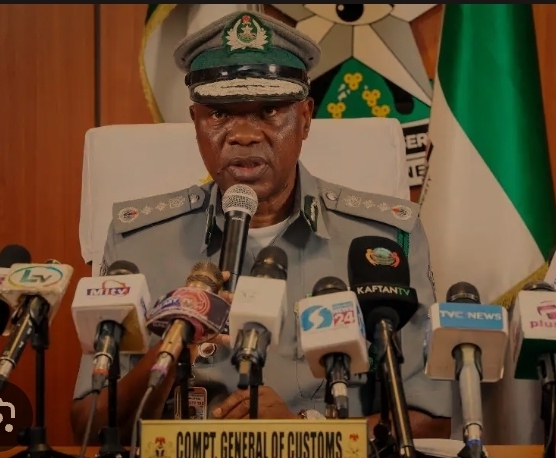
The Nigeria Customs Service (NCS) has stepped up efforts to accelerate its digital transformation drive, urging journalists and media organisations to play a more active role in creating awareness and promoting public understanding on Trade Modernisation Project (TMP).
The Comptroller-General of Customs, Adewale Adeniyi, made the call during a three-day training workshop for journalists held in Abuja over the weekend.
The workshop, themed “Enhancing Media Knowledge, Awareness and Understanding of Customs Modernisation Project,” was designed to strengthen trade facilitation, improve revenue generation, and reinforce border security across the country.
The Comptroller-General of Customs, Adewale Adeniyi, who was represented by the Deputy Comptroller-General of Customs, Timi Bomodi, said the Service was deliberately repositioning itself to align with the realities of modern global trade, which increasingly depends on technology, transparency, efficiency, and data-driven systems.
Adeniyi said the Nigeria Customs Service was committed to repositioning itself in line with the realities of modern global trade, where technology and data-driven systems now define operational success.
He explained that the Trade Modernisation Project remains one of the most strategic pillars of the Service’s reform agenda.
According to him, the project is expected to transform customs operations through the deployment of digital platforms, integrated systems, and automated procedures capable of improving trade facilitation, enhancing border security, and boosting government revenue generation.
Adeniyi noted that the Nigeria Customs Service is determined to build a modern customs administration that aligns with international best practices and global standards.
He said the reforms are designed to eliminate bureaucratic bottlenecks and inefficiencies that have long affected trade processes in the country.
“The Trade Modernisation Project is a comprehensive technology-driven initiative aimed at creating a seamless trading environment for importers, exporters, and other stakeholders,” he said.
He further explained that automation and digital integration would significantly reduce delays associated with cargo clearance, improve transparency in customs operations, and strengthen accountability across the system.
“Through the deployment of modern digital platforms, automation of procedures, and integration of systems, we are building a Customs Service that is efficient, transparent, and globally competitive,” he stated.
The Customs boss stressed that technology and infrastructure alone would not guarantee the success of the modernisation agenda without the active support and understanding of stakeholders, particularly the media.
He described the workshop as a deliberate effort to ensure journalists gain deeper knowledge of customs reforms and the operational objectives of the Trade Modernisation Project.
“The media remains an important bridge between institutions and the public, especially in communicating complex policy initiatives to citizens and stakeholders,” he said
“As key partners in national development, the media shape narratives, influence perception, and provide the platform through which policies and reforms are interpreted and understood,” he added.
Adeniyi also commended Trade Modernisation Project Limited for supporting the implementation of the initiative and partnering with the Nigeria Customs Service to advance institutional reforms.
He described the collaboration as essential to achieving sustainable innovation within the Service and ensuring the successful implementation of the modernisation programme.
According to him, the current Customs administration remains committed to building a technology-driven institution capable of responding effectively to the demands of modern trade and national development.
“Let me assure you that this administration will sustain efforts towards building a Customs Service that is efficient, transparent, technology-driven, and responsive to the needs of the nation,” he said.
In his address, the National Public Relations Officer (POR) of the Nigeria Customs Service, Abdullahi Maiwada, said the workshop was carefully designed to deepen journalists’ understanding of the Trade Modernisation Project and improve engagement between the Service and the media.
Maiwada explained that the training would provide participants with better insight into customs modernisation processes, digital transformation initiatives, and ongoing reforms within the Service.
“This workshop is carefully designed to enhance media knowledge, deepen understanding, and strengthen awareness of the Nigeria Customs Service Trade Modernisation Project,” he said.
He added that improved media awareness would contribute significantly to public education, transparency, and informed reporting on customs-related issues in Nigeria.

Some residents in Lagos State have expressed concern over the recent surge in the price of tomatoes, forcing many households to adopt alternatives.
The residents made their views known in separate interviews on Wednesday in Lagos.
A market survey showed that a 50kg basket of tomatoes now sells between N115,000 and N125,000, compared to between N35,000 and N40,000 recorded last month.
Olachi Igwe, a resident of Ago Palace, said the scarcity and high cost of tomatoes had disrupted her household’s meal plans.
“I contacted my usual vendor, but she said tomatoes were scarce and difficult to source.
“A small bowl we used to buy for between N3,500 and N4,000 now sells for as high as N6,000 to N7,000, when available.
“For now, my family will resort to palm nut stew (ofe akwu) until prices stabilise,” she said.
Another resident, Mercy Okeleye of FESTAC, said although her family prefers fresh tomatoes, rising prices have forced her to consider cheaper options.
“I cannot do without fresh tomatoes because of the taste, but I may have to buy broken ones, popularly called ‘esha’, which are relatively cheaper.
“I do not consider tomato paste a suitable substitute because it is not purely made from tomatoes,” she said.
Also speaking, Tope Babalola from Dopemu, said she might adjust her cooking methods if prices remain high.
“I have not bought tomatoes in over a month, but if the price is still high, I will use more onions and peppers.
“I will not resort to artificial additives; I prefer natural ingredients for my meals,” she said.
Joan Ogugua, another resident, said she had already switched to tomato paste to cope with the situation.
“I asked my son to buy tomato paste for our meals. I cannot justify spending excessively on fresh tomatoes when other basic needs must be met,” she said.
Also, Oge Ugwu, a civil servant at Lekki, said she would resort to cucumber stew with the recent price hike.



Chinese-Nigerian Partnership Targets Electric Vehicle Manufacturing
ShareA Chinese company, Launch Design Shanghai, and Hybrid Motors Nigeria are set to boost electric vehicle manufacturing in Nigeria. Chief...

TCN Begins 2nd Phase of Compensation for 330KV Mando-Rimin Zakaria Transmission Line
ShareTCN said it has commenced a second phase of compensation for Project Affected Persons (PAPs) affected by the 330kV Double...

India’s Anti-terror Campaign and Critical Lessons for Nigeria
ShareBy Sumaila Ogbaje India’s recent commemoration of the first anniversary of Operation Sindoor has again drawn global attention to evolving...


From ‘Ghana Must Go’ to ‘Nigeria Must Go’: Where is the Giant in Nigeria q?
ShareBy Raphael Atuu For decades, Nigeria proudly carried the title of the “Giant of Africa” , a nation respected for...
Season of Conspiracy Politics
ShareBy Chidi Amuta I have fallen victim to two sets of phone calls in recent weeks about political developments in...


FG Okays N4bn to Settle Stranded Nigerian Scholars’ Allowances
ShareThe Federal Government has approved N4bn for the payment of allowances to Nigerian students studying abroad under the Bilateral Education...


NCE Applicants with Four Credits Exempted From UTME – Alausa
ShareThe Federal Government has approved exemption of candidates seeking admission into the National Certificate in Education (NCE) programme with a...

WAEC Unveils Tough Integrity Measures for 1.9m Candidates
ShareThe West African Examinations Council (WAEC) has intensified measures to protect the integrity of the 2026 Computer-Based WASSCE, as 1,959,636...

FG Declares Admissions Outside CAPS Illegal, Warns Institutions of Sanctions
ShareThe Federal Government has declared that any admission conducted outside the Central Admissions Processing System is illegal, warning tertiary institutions...


Minister Pledges Merit-driven, Transparent Tertiary Admission System
ShareThe Minister of State for Education, Prof. Suwaiba Ahmad, has reaffirmed the Federal Government’s commitment to a merit-based, transparent and...