
Metro
Terrorism: Lawyers Differ on Rehabilitation, Reintegration Policy

Some legal practitioners in the country have continued to express divergent views on the best approach to handling the rehabilitation and reintegration of repentant terrorists.
Recall that the Federal Government recently introduced the initiative as part of its strategies to tackle the perennial security challenges plaguing the country through non-kinetic means.
However, the move has since generated widespread debate.
While some Nigerians support the approach, others argue that convicted terrorists should face the full weight of the law rather than be reintegrated into society.
Speaking in an interview on Tuesday in Lagos, Vincent Aminu, Chairman of the Nigerian Bar Association (NBA), Ikare-Akoko Branch, Ondo State, called for strict punishment for terrorists, especially in cases where attacks resulted in loss of lives.
According to him, strong penalties are necessary to deter terrorism and safeguard national security.
Aminu noted that rehabilitation and reintegration should only be considered in exceptional cases where individuals were coerced into joining terrorist groups and may not have fully understood the consequences of their actions.
He advised that such cases should be thoroughly investigated before any rehabilitation programme is approved.
“Rehabilitation is mercy, not justice, and must be measuredly used,” he said.
He stressed that public safety and accountability must remain the government’s priority.
Also speaking, Bayo Akinadé, another legal practitioner, described terrorism as a criminal expression of dissatisfaction by groups seeking to challenge the government.
According to him, the primary aim of terrorism is to create fear and insecurity in society, thereby portraying the government as incapable of protecting its citizens.
Akinadé said confidence in the government’s commitment to fighting terrorism had already been weakened, adding that discussions around the rehabilitation and reintegration of terrorists could further fuel suspicion among citizens.
He argued that in some societies, terrorism had been weaponized by political interests seeking to destabilise governments, adding that introducing rehabilitation measures could be seen as an admission of inability by authorities to confront the challenges.
“The act of terrorism, whether internal or local, is often presented as an agitation to draw government attention to the grievances of those who feel marginalised,” he said.
He maintained that the government should not indulge terrorists in any way and that perpetrators should be dealt with decisively.
On his part, Oladeji Olayemi, another lawyer, said that the Terrorism (Prevention and Prohibition) Act, 2022, criminalises terrorism and all activities connected to it.
He noted that the Constitution guarantees every citizen’s right to life and that such rights should not be unlawfully violated.
According to him, neither the Constitution nor existing anti-terrorism laws provide rehabilitation as a means of absolving terrorists of their criminal activities.
“The supposed rehabilitation and reintegration of repentant terrorists into society is a baffling concept because it has no strict legal backing,” he said.
Olayemi advised that individuals accused of terrorism should be prosecuted before the Federal High Court and made to face the penalties prescribed by law.
He argued that reintegration undermined justice and should not be encouraged by the government.
According to him, allowing terrorists to return to society without facing appropriate consequences could send the wrong signal and encourage others to engage in similar activities.
“The right to life is important and should be safeguarded by the government at all costs,” he said.
Olayemi added that the Terrorism Act, 2022, already provides penalties for terrorism-related offences, including life imprisonment and, in some cases, the death penalty.
“Rehabilitation and reintegration of terrorists undermine justice and fail to provide closure for families who have lost loved ones to terrorist attacks,” he added.
He urged the government to remain accountable to citizens and avoid policies that could be perceived as rewarding acts of terrorism.
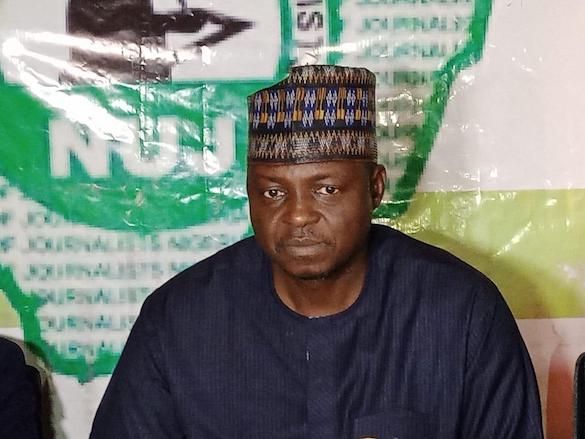
The National Chairman of the All Progressives Congress (APC), Prof. Nentawe Yilwatda, has said that the party is handling the grievances of the aggrieved governorship candidates in Oyo State as a family matter.
Yilwatda stated this on Wednesday in Ibadan during a meeting with party stakeholders, noting that disagreements among members are normal in politics.
He affirmed that members have expressed readiness to work together to ensure victory in 2027, emphasising that the reconciliation process is an ongoing effort rather than a one-day affair.
He stressed that the national leadership remains committed to bringing all aggrieved members on board ahead of the next general elections.
Addressing the recent Osun State governorship election, Yilwatda insisted the outcome was not a failure for the APC.
He noted that despite the state government deploying its full machinery, the APC put up a strong fight and conducted itself with maturity.
According to him, the peaceful conduct of the election and eventual commendation from the opposition demonstrated the party’s high level of sportsmanship.
He added that Osun State Governor, Ademola Adeleke, acknowledged this sportsmanship and even declared support for President Bola Tinubu’s re-election bid.
When asked if the APC had officially accepted the Osun election outcome, Yilwatda explained that no official position has been taken yet, as any final decision requires a formal review involving the National Working Committee and the candidate.
The Chairman of the APC Reconciliation Committee in Oyo State, Senator Olufemi Lanleyin, emphasised that the party must go into the 2027 elections united in order to reclaim power in the state.
Lanleyin acknowledged that while some members were disappointed with the primary outcomes, the party retains the strength, will, and capacity to unite.
He said that the committee is meeting with aggrieved aspirants to present their grievances to the national leadership for resolution.
On the lesson from Osun, Lanleyin noted that unity determines electoral success, promising that the committee will continue its work until Election Day.
He expressed absolute confidence that the APC will sweep Oyo State in 2027, winning the presidency, governorship, three senatorial seats, 14 federal constituencies, and 32 House of Assembly seats.
He appealed to leaders and stakeholders to embrace unity because members do not want to remain out of government for another day.
He added that the party would not take anything for granted and would continue the reconciliation process until Election Day.

The Federal Government has urged Nigerians to dial 112 during emergencies requiring urgent medical assistance, while releasing state emergency call centre numbers.
The National Emergency Medical Service and Ambulance System (NEMSAS), in an update on Wednesday, said 112 serves as a central contact for emergency medical assistance.
It said several states also had dedicated emergency call centre numbers to support faster responses to medical emergencies.
According to NEMSAS, the emergency response system provides fast response, professional care and life-saving services, with first responders available 24 hours daily.
The agency released emergency call centre numbers covering 35 states and the Federal Capital Territory, with most states using 112 alongside dedicated numbers.
For Abia, the listed emergency numbers are 112 and 08000000800, while Adamawa residents can call 112, 1755 or 07011111443.
Akwa Ibom residents can call 112, 08000022322 or 08000022422, while Anambra residents can use 112, 5111, 0800 220 0008 or 112.
For Bauchi, the listed numbers are 112 and 07038636433, while Bayelsa residents can call 112 or 0800 220 0223.
NEMSAS listed Benue’s emergency call centre as “Not Operational,” while Borno residents can call 112 or 08000000033.
Cross River has 112 as its listed emergency number, while Delta residents can call 112, 07041008130 or 07041008131.
For Ebonyi, the listed numbers are 112, 08086446891 and 08086445736, while Edo residents can call 112, 739 or 09037999871.
Ekiti residents can call 112, 08000606606, 08111111-22, -33, -44 or -55, while Enugu residents can use 112, 09074996090 or 07066466429.
Gombe residents can call 112 or 07033825646, while NEMSAS listed Imo’s emergency call centre as “Not Operational.”
Jigawa has 112 as its listed emergency number, while Kaduna residents can call 112 or 08064111599.
For Kano, the listed numbers are 112, 09019999920 and 09049999914, while Katsina and Kebbi each have 112 listed.
Kogi also has 112 as its listed emergency number, while Kwara residents can call 112, 09062010001 or 09062010002.
Lagos residents can call 112 or 767, while Nasarawa residents can use 112 or 08144911269 for emergency assistance.
For Niger, the listed numbers are 112, 0802 242 2953 and 0815 557 7513, while Osun residents can call 112, 08111110532 or 08111110561.
Ogun residents can call 112 or 08112000033, while Ondo residents can use 112 or 08055300300.
For Oyo, the listed emergency numbers are 112 and 615, while Plateau residents can call 112 or 09136982496.
Rivers residents can call 112, 09040222281, 09040222283 or 09040222285, while Sokoto residents can use 112, 07045963318 or 07071765080.
For Taraba, the listed numbers are 112, 07041122777 and 07041100777, while Yobe residents can call 112, 09169981792 or 08000090009.
Zamfara has 112 as its listed emergency number, while residents of the FCT can call 112, 09157892931 or 09157892932.
NEMSAS advised members of the public to save the emergency numbers and use them whenever urgent medical assistance was required.
The agency said its first responders were ready to provide quick response and professional care to help save lives during emergencies.
It urged Nigerians to dial 112 during emergencies, describing the service as available 24 hours daily, seven days weekly.
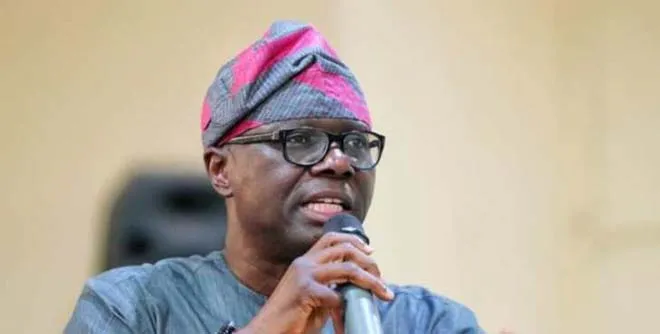
Lagos State Governor, Babajide Sanwo-Olu, on Wednesday awarded N20 million each to LASU’s best graduating students for the 2024-2025 and 2025-2026 sessions.
Sanwo-Olu announced the awards during Lagos State University’s 29th and 30th combined convocation ceremonies at the Buba Marwa Auditorium, Ojo.
Ayilara Olawale, from the Department of Project Management, emerged overall best graduating student for 2024-2025.
Olawale recorded an impressive Cumulative Grade Point Average (CGPA) of 4.96 to emerge top of the graduating cohort.
Similarly, Adebanjo Samuel, from the Department of Aerospace Engineering, emerged overall best graduating student for 2025-2026.
Adebanjo achieved a CGPA of 4.97, earning recognition as the university’s overall best graduating student for the academic session.
Sanwo-Olu congratulated the 20,604 graduands from both academic sessions, describing the cohort as the largest graduating class in LASU’s history.
He noted that the graduands included 494 First Class students, attributing their achievements to their parents, guardians, sponsors and lecturers.
“Your achievements reflect the commitment of your parents, guardians, sponsors and lecturers who supported you throughout your academic journey,” he said.
The governor also congratulated 3,383 postgraduate graduands, including Doctor of Philosophy graduates, urging them to expand knowledge and mentor younger scholars.
He said LASU had recorded remarkable growth since its establishment 43 years ago, describing the institution as a product of Lateef Jakande’s vision.
Sanwo-Olu said LASU had emerged as Nigeria’s most subscribed university for two consecutive years, attracting more than 84,000 first-choice applications.
He added that Times Higher Education ranked LASU Nigeria’s best state university and fourth-best university overall.
According to him, LASU was also rated West Africa’s best university for four consecutive years, from 2022 to 2025.
He noted that the recognition came through the UI GreenMetric World University Ranking, further demonstrating the university’s growing international profile.
Sanwo-Olu said LASU’s selection as South-West host of the N3 billion TETFund Centre for Artificial Intelligence, Robotics and Cyber Sciences reinforced its rising profile.
The governor said his administration prioritised education and technology under the THEMES Plus agenda because both remained central to Lagos’ development.
He listed the Babajide Sanwo-Olu Library Complex, student union building, accommodation facilities, lecture theatres and other infrastructure among achievements recorded at LASU.
Describing the ceremony as his final convocation as Visitor, Sanwo-Olu urged graduands to represent Lagos and Nigeria with competence, character and courage.
“Use your education to serve humanity. Degrees open doors, but service builds lasting legacies,” the governor told the graduands.
He congratulated LASU Vice-Chancellor, Prof. Ibiyemi Olatunji-Bello, on her final convocation and commended her contributions during her five-year tenure.
Sanwo-Olu said Olatunji-Bello had elevated LASU’s profile, adding that history would remember her contributions to the institution’s development.
He also congratulated LASU Chancellor, Oba Olufolarin Ogunsanwo, who presided over his first convocation after recently obtaining a Doctor of Business Administration degree.
Olatunji-Bello said LASU was graduating 20,604 students across diploma, first-degree and higher-degree programmes from the two academic sessions.
She described the ceremony as her fifth and final convocation as vice-chancellor and expressed gratitude to Sanwo-Olu for supporting her administration.
The vice-chancellor said LASU successfully elevated its standing among Nigerian and African universities despite challenges encountered during her five-year tenure.
The university conferred honorary doctorate degrees on Akin Kekere-Ekun, Bola Adesola and Aliko Dangote for contributions to national development, scholarship, business and humanity.
The Pro-Chancellor and Chairman of LASU Governing Council, Babatunde Ogala, said the university would sustain partnerships, research and programmes aligned with Lagos’ strategic position.
He specifically highlighted aviation and maritime studies as areas requiring continued development because of their importance to Lagos’ economy and future.
Ogala announced a strategic partnership between LASU and the University of Illinois Chicago to promote collaboration among students, lecturers and researchers.
He urged the graduands to regard their degrees as a call to deeper intellectual engagement and greater responsibility to society.
The combined convocation marked a significant milestone for Sanwo-Olu and Olatunji-Bello as they prepare to leave their respective positions as Visitor and Vice-Chancellor, respectively.




Precious Adugbo Condemns Alleged Distortion of Pastor Komaiya’s ‘Supernatural Speed’ Sermon
ShareBy David Torough, Abuja Precious Adugbo, a member of The Master’s Place International Church, has condemned what he described as...

Military Rescues 48 Kidnap Victims, 47 Terrorist Family Members Surrender Nationwide – DHQ
ShareBy David Torough, Abuja The Armed Forces of Nigeria (AFN) rescued at least 48 abducted persons, neutralised several terrorists and...

Atiku Slams Tinubu Over Fuel Subsidy Policy
ShareBy David Torough, Abuja Former Vice President Atiku Abubakar has criticised President Bola Tinubu over the removal of petrol subsidy,...

Benue Gov’t Restates Commitment to Protection of AGYW, Non-Discriminatory Healthcare
ShareBy Attah Ede, Makurdi The Benue State Government has reaffirmed its commitment to protecting the dignity and rights of Adolescent...

UNICEF Training: Communication experts charge media practitioners to champion child-rights protection
ShareFrom Attah Ede and Sylvia udegbunam, Port Harcourt Seasoned communication experts and veteran broadcasters, on Thursday, enjoined media practitioners both...


UNICEF Trains Journalists on Ethical Reporting
ShareFrom Attah Ede and Sylvia Udegbunam, Port Harcourt The United Nations Children’s Fund (UNICEF), on Wednesday, opened a two- day...


Grammy-winning Singer, Angelique Kidjo Immortalised on Hollywood Walk of Fame
ShareFive-time Grammy winner, Angelique Kidjo, has become the first African musician to be honoured with a star on the Hollywood...


Singers Wande Coal, Davido Clash over Unreleased Collaboration, ‘Come My Way’
ShareNigerian singers Wande Coal and Davido have clashed on social media over an unreleased collaboration,“Come My Way”. The disagreement was...


Tonto Dikeh to Renovate Churches in Birthday Tribute to Pastor Jerry Eze
ShareActress and humanitarian Tonto Dikeh has announced a church support initiative through The New Wine Prophetic Tabernacle to mark the...


BBNaija S11: Kamsy Reveals Plans after Reality Show Exit
ShareEvicted Big Brother Naija Season 11 housemate, Kamsy Uzoma, has revealed her plans for life after leaving the reality show,...