
Metro
FCDA Indigenous Contractors Protest over Unpaid Fees in Abuja


By Raphael Atuu, Abuja
Concerned indigenous contractors of the Federal Capital Development Authority (FCDA) on Monday staged a protest in Abuja over alleged non-payment for services rendered to the Federal Capital Territory (FCT) Administration more than three years ago.
The contractors claimed that the outstanding payments have severely affected their businesses and the livelihoods of their families.
According to the protesters, they dragged the matter to court but alleged that the Minister of the Federal Capital Territory, Nyesom Wike, failed to appear at any of the court sittings.
They further alleged that security operatives deployed teargas to disperse them during the protest.
The Chairman of the Concerned FCDA Indigenous Contractors said the group subsequently reported the incident to the Assistant Inspector-General of Police (AIG) in charge of the Special Protection Unit (SPU), Femi Haruna, seeking his intervention for a calm and peaceful resolution.
The matter is currently pending before a court of competent jurisdiction.
As of press time, neither the Office of the Minister of the FCT nor the FCDA had issued an official response to the allegations of non-payment, absence from court, or the use of teargas.
The Sokoto State Police Command has warned residents against misuse of social media platforms to circulate unverified information, fake news and harmful rumours capable of causing panic and breaching public peace.
The warning is contained in a statement issued by the Police Public Relations Officer, DSP Ahmad Rufa’i, on Tuesday in Sokoto.
The command also urged residents to shun cyberbullying and other forms of cybercrime, stressing that offenders would face the legal consequences of their actions.
The command issued the warning amidst rising circulation of false narratives, fabricated images and out-of-context photographs, which the command said could threaten public order and social harmony.
The command, Rufa’i said, is working closely with other security agencies in the state to combat violent crimes, including cattle rustling, kidnapping and banditry.
He attributed the recorded operational successes to the support and cooperation of the Sokoto State Government, which he said had continued to prioritise the safety and security of residents through timely interventions and provision of resources.
Rufa’i further urged members of the public to verify information before sharing it and rely on official channels for accurate and credible information.
He reaffirmed the command’s commitment to maintaining law and order and protecting the lives and property of residents.
The command also encouraged residents to report suspicious activities and cyber-related offences to the nearest police station or its Complaint Response Unit.
He called on the residents to call 08032861946 and 09033002739 for any emergency or to report suspicious activities. (NAN)
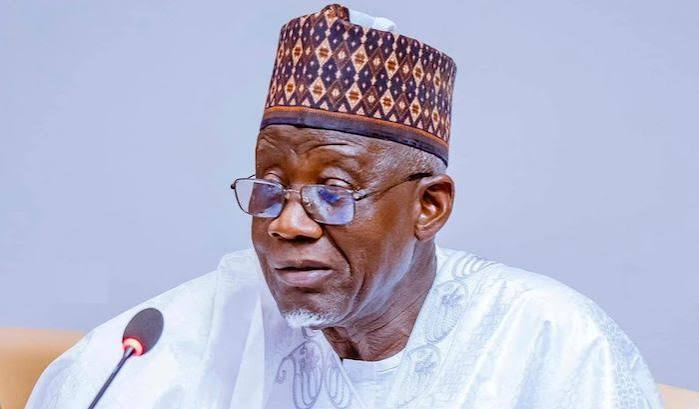
The Federal Government has reaffirmed its commitment to resolving outstanding issues in the health sector Collective Bargaining Agreement (CBA) through dialogue and evidence-based negotiations.
This was contained in a statement signed and issued by Annah Daniel, Head of Press and Public Relations in the Ministry of Labour and Employment, on Wednesday in Abuja.
The Minister of Labour and Employment, Dr.
Muhammad Dingyadi, stated this at a meeting of the Health Sector Collective Bargaining Agreement (CBA) negotiations.Dingyadi said the ongoing job evaluation exercise was critical to achieving a fair, evidence-based and sustainable remuneration structure for health professionals across various cadres.
He said the exercise would provide an objective basis for determining the relative worth, responsibilities, skills and working conditions of health professionals in the public service.
The minister said the exercise was particularly important due to differing positions and historical agreements among health professional groups, which had contributed to longstanding issues of relativity and parity.
He said the National Salaries, Incomes and Wages Commission (NSIWC) was undertaking the exercise to establish appropriate placement for health professionals and cadres in the Public Service.
“The outcome of the job evaluation exercise is expected to provide a credible basis for subsequent discussions on salary adjustments and other outstanding issues under the CBA,” he said.
Dingyadi said the government considered it necessary to allow the technical process to run its course, rather than take decisions that could create fresh disparities or complicate industrial relations.
He stressed that job evaluation should not be interpreted as postponement or abandonment of collective bargaining, but as a strategic step to strengthen negotiations with objective data.
“Government remains committed to ensuring that eventual agreements are equitable, transparent and sustainable, while addressing the concerns of health workers through constructive dialogue and collective bargaining,” Dingyadi said.
He recalled that the Health Sector Collective Bargaining Committee was inaugurated in August 2025 to provide a structured platform for engagement with health sector unions and other stakeholders.
Dingyadi said the negotiations covered remuneration, working conditions, professional development and welfare, adding that the government remained committed to addressing the concerns of health workers.
The minister acknowledged the contributions of doctors, nurses, pharmacists, laboratory scientists, radiographers, physiotherapists and other health professionals to Nigeria’s healthcare system.
He said the government would continue to pursue solutions that promote equity, industrial harmony and uninterrupted healthcare delivery, while strengthening relations with health workers through dialogue.
“Dialogue and collective bargaining remain the preferred mechanisms for resolving outstanding issues in the health sector,” Dingyadi said.
He therefore urged all parties to approach the negotiations in good faith.
He assured health workers and Nigerians that the CBA process remained central to efforts to strengthen industrial relations, improve workforce welfare and build a stable health system.
Also present at the meeting was the Minister of State for Health, Dr Iziaq Salako.(NAN)
By David Torough, Abuja
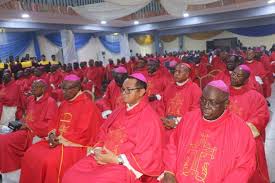
The Charismatic Bishops Conference of Nigeria (CBCN) has endorsed President Bola Tinubu for the 2027 presidential election, while the Minister of Information and National Orientation,
Mohammed Idris, urged church leaders across Nigeria to use their influence to promote peace, national unity, responsible citizenship and peaceful democratic participation ahead of the elections.
Idris made the call on Wednesday in Abuja while delivering the keynote address at the Grand Finale of the 2026 Synod of the Charismatic Bishops Conference of Nigeria (CBCN) and the International Communion of Charismatic Archbishops, Bishops and Apostles (ICCABA), held at the National Christian Centre.
The Minister said Nigeria’s diversity required responsible leadership across all sectors of society, stressing that preserving national unity could not be left to the government alone.
“Keeping this country united requires more than government action. It requires responsible leadership across society, including religious leadership,” he said.
Idris reaffirmed the Federal Government’s commitment to protecting religious freedom, stressing that Christians, Muslims and people of other faiths should be able to worship and live peacefully without discrimination.
He cautioned against portraying Nigeria’s security challenges as a religious war, noting that terrorists and criminal groups had attacked Nigerians across different faiths and backgrounds.
The Minister said the administration of President Bola Tinubu had strengthened intelligence gathering, inter-agency cooperation, military operations and the wider national security architecture, noting that approximately 1,000 terrorist elements, including dozens of their leaders, were eliminated in the first quarter of 2026.
He also cited the August rescue of 308 abducted Nigerians in Niger and Kwara States as evidence of the continued efforts of security agencies.
Idris urged religious leaders to strengthen social cohesion, guide young people away from radicalisation and criminality, support community early-warning mechanisms and promote dialogue, particularly as the country approaches the 2027 elections.
“No election should be allowed to turn Christian against Muslim, Muslim against Christian, North against South, or one ethnic group against another. Nigeria belongs to all of us,” he said.
He also called on religious leaders to keep their pulpits as platforms for truth, peace and responsible citizenship rather than incitement and division.
On the economy, Idris said the Federal Government was implementing reforms while expanding opportunities for young Nigerians through programmes including NELFUND, 3MTT, NYIF, NATEP, SVCG, SUPA and iDICE.
“Nigeria’s greatest resource is not only what lies beneath our soil. It is also the talent and ability of our people,” he said.
The Minister called on churches and other faith-based organisations to deepen their contributions to education, healthcare, skills development, youth empowerment, humanitarian service and community development.
In a major political development at the event, the President General of CBCN, Archbishop Prof. Leonard Bature Kawas, declared the Conference’s support for President Bola Ahmed Tinubu ahead of the 2027 presidential election, citing the administration’s policies and what he described as its efforts to promote national development and inclusivity.
Addressing the gathering, Kawas said the Church had examined the administration’s record and was prepared to continue supporting the President through prayers, advocacy and public engagement.
“We support him now. We support him today, we support him tomorrow, and we support him for as long as he’s willing to be our president,” Kawas said.
He subsequently declared that the position represented the mandate of the gathering, stating: “This house has endorsed him for the 2027 presidency.”
Representing President Bola Ahmed Tinubu at the event, the Secretary to the Government of the Federation (SGF), Senator George Akume, commended the Church for its prayers, humanitarian interventions and contributions to peace, national cohesion and moral formation.
Akume acknowledged the sacrifices Nigerians had made during the ongoing economic reforms, assuring citizens that the government remained focused on improving household incomes, reducing hardship and ensuring that the benefits of reform were increasingly felt across the country.
“We commend our citizens for their patriotism and resilience, and assure them that it will never be in vain, as promised by Mr. President himself,” Akume said.
He also called for stronger collaboration between government and the Church in addressing Nigeria’s security and development challenges, particularly in youth empowerment, education, peacebuilding, civic responsibility and humanitarian service.
“Government needs the moral reach of the Church, and the Church needs an enabling civic environment to thrive. Above all, Nigeria needs us to work together for the common good,” he said.
The SGF assured the gathering that the government welcomed the Church’s prayers, counsel, constructive criticism and partnership in advancing national development.



Talata Mafara Attack: ISN Demands Intelligence Overhaul, Special Courts to Crush Banditry
ShareBy David Torough, Abuja The Institute of Security, Nigeria (ISN) has called for a fundamental overhaul of Nigeria’s approach to...

Lagos Court Nullifies Onise of Ise Installation, Orders Withdrawal of Staff of Office
ShareBy David Torough, Abuja The Lagos State High Court sitting in Lagos has set aside and nullified the purported installation...

Former PDP National Chairman, Bamanga Tukur is dead
ShareFrontline business magnet and former National Chairman of Peoples Democratic Party(PDP), Alhaji Bamanga Tukur is dead. He was aged 90....

NAICOM, NCAA Partner to Strengthen Air Travellers’ Protection
ShareThe National Insurance Commission (NAICOM) and the Nigeria Civil Aviation Authority (NCAA) have signed a Memorandum of Understanding (MoU) to...

Customs Seizes N43.5bn Narcotics, Drones, Expired Goods at Apapa Port
ShareThe Nigeria Customs Service (NCS) has intercepted narcotics, controlled pharmaceuticals, drones and expired goods valued at N43.5 billion at the...


IPMAN Tasks Marketers on Local Refineries for Product Sourcing
ShareThe National President of the Independent Petroleum Marketers Association of Nigeria (IPMAN), Alhaji Abubakar Shettima, has urged independent petroleum marketers...


CBN Bags NES Distinguished Organisation Award for Economic Reforms
ShareBy Tony Obiechina, Abuja The Central Bank of Nigeria (CBN) has received the Nigerian Economic Society’s (NES) Distinguished Organisation Award...


2027: Information Minister Urges Niger APC Leaders to Back Tinubu’s Reforms
ShareBy David Torough, Abuja The Minister of Information and National Orientation, Mohammed Idris, has urged APC leaders in Niger State...

Police Arrest Two Suspected Car Snatchers in Delta
ShareThe Delta State Police Command has arrested two suspected car snatchers and recovered a Toyota Camry in the state. The...

Otti Highlights Seven Investment Priority Sectors in Abia
ShareAbia State Governor, Alex Otti has highlighted seven priority sectors and investment opportunities to drive industrialisation and economic development in...