
OPINION
THE RISE OF ETHNIC RACISM AND BAD LEADERSHIP IN NIGERIA

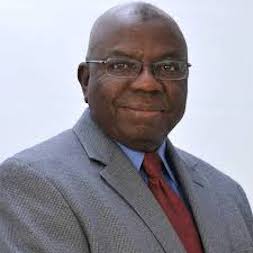
By Prof Iyorwuese Hagher
Introduction
Let me start this lecture by thanking God almighty whose grace has permitted us to stand here
on this podium on this soil to address the staff, students and faculty. Eight decades ago, a young
man stood in this place to acquire education to teach as a VTA and VTB Teacher.
man, Daniel Hagher Gbaaiko became a teacher and a Dutch Reformed Church Missionary. He
was my father I was born at the eastern end of the Mkar mountain. At Mbaamandev. My father
and I benefited from the Christian education that the Dutch Reformed Church Mission offered,
and I went to W.M. Bristow Secondary School, Gboko owned by the Sudan United Mission.
That school and this University are now owned by the same proprietor the NKST. I am
therefore standing here in gratitude to the church for showing me the better way of life through
Christian values and the ability to get a sound education.
I deliberately chose today’s topic because the things that are happening around us are life-
threatening and thinking about them now is critical and necessary, and cannot wait.
Furthermore, there is little conversation about race in politics and in the academy. The
impression is that tribalism and racism is a swear word not to be used in decent society.
There is evidently much to think and say about the existential threat of ethnic racism and bad
leadership that is affecting individual lives in Nigeria. Many lives have continued to crash into
ruin because of ethnic racist policies and individual racist hostilities that we are all exposed to
in our homes, offices on the high-ways and on our farms.
I was born 72 years ago on 25th June 1949 at the Mkar Christian Hospital. I was born with a
status of a British Protected Child. That was before the independence in 1960, when all people
living within the Nigerian space acquired the Nigerian citizenship. I wondered why the British
did not give us British citizenship, and why were we being protected, and from whom? Why
did they colonize us? These questions occupied my mind as I grew up through the various
phases of Nigeria’s development.
The Colonial Experience
As I grew up, I realized that Europe colonized Africa because they could do so. They had the
technological superiority in arms and weaponry to cross the seas and to colonize us. Life under
the British colony was not bad from the eye of a child but I grew up expecting the best.
Independence held so much promise as I dreamed of living in a country, Nigerian, whose
The Rise of Ethnic Racism and Bad Leadership in Nigeria
Prof. Iyorwuese Hagher | A LECTURE Page | 3
independence from Great Britain would lift it from primitivism, deviance and retrogression to
betterment, loftiness, and a higher place of social life than had ever been reached before by any
black society on earth. Haiti the first black nation on earth to be independent through a
revolution that defeated the most powerful person (Napoleon Bonaparte) and his army, was not
doing well despite proximity to the US. I was worried but confident that Nigeria’s story would
be different.
Today after over sixty years of independence Nigeria is in the vortex of rigorous re-
examination of its leadership, and the psychological make-up of the citizens. Nigeria has
become the validation of racist theories of black inferiority. Nigerians who have excelled in
countless endeavors are questioning themselves and the racists are having fun laughing at our
inability to prove the revolutionary ideas that fired the momentum for decolonizing. These were
ideas of Nigeria’s destiny in the context of world history to prove to the world that when black
people are left alone to organize and govern themselves, they can live in peace, and build their
democratic institutions and tolerate their diversity.
Contemporary Times
Nigeria since the advent of democratization in 1999 has fluctuated in fortunes. There is a
fundamental disconnect between the bank profits being posted, the amount of money budgeted
each year and the quality of life of ordinary Nigerians. The score card of the Buhari regime is
extremely high in social interventions as well as the massive infrastructural projects scattered
around Nigeria, from massive borrowings from China. But all this is negated and nullified by
the inability of this government to secure the lives and property of Nigerians as contained in
the Nigerian Constitution. The Constitution is unambiguous that the protection of lives and
property is the cardinal responsibility of state.
This is not the case now and indeed, the reverse is happening. Not only are the lives of
Nigerians at risk, the cement of unity has cracked and there is a threat of disintegration. The
president himself is in a bind. How does he promote the welfare of his ethnicity, the Fulani,
without being an ethnic racist? Should the president be a Fulani president and an ethnic racist
autocrat to the rest of the country? What really is ethnic racism? The ethnic nationalities that
advocate resource control or indeed a break-up of Nigeria into Biafra, Oduduwa, and Arewa
Republics are these ethnic racist warriors or something else? Where exactly does tribalism and
The Rise of Ethnic Racism and Bad Leadership in Nigeria
Prof. Iyorwuese Hagher | A LECTURE Page | 4
ethnocentrism end and ethnic racism begins? Can we separate white racism from ethnic racism
as mutually exclusive or one is cause of the other?
Aims of the Lecture
This lecture hopes to discuss ethnic racism in the context of the intersection between white
racism and its influence on ethnic racism, I hope to show you that the people promoting ethnic
racism are merely replicating the racist models in America and Europe and if we explore this
together we might consider the conclusion that Nigeria is a heavily racist society where the
political ideology of neoliberalism is merely a veneer for entrapment of a racist economic mode
which does not benefit Nigerians except those who have continued to use racist policies.
There is an ominous parallel between the racist policies of white racism in America, and the
policies of the ethnic racists here that benefit certain ethnic groups which have formed a
detribalized hegemony, a rampant upper class of privilege and contemptuous anti-black racists.
The paradox is they are also black.
The aim of my lecture is to instigate a change in the heart of the people so that our religious
sentiments, our duties and obligations will yield to radical change in principles, opinions, and
affections of the people to enable us upholster our hate and wars against one another and permit
peace to exist in our society. It is my conviction that a critical probing of ethnic racism and bad
leadership should be part of out effort to define, express and shape the reality of the type of
country we desire to have, and the type of democracy that can accommodate our hopes and
aspirations and indeed our differences.
I hope we can all join the movement to radically emancipate our students, lecturers, and our
public from the trappings of a neocolonial mentality towards original thinking that proffers
solutions that answer to our problems and needs.
The great Pan-Africanist, Franz Fanon, saw the Question of race as, but a superstructure, a
mantle, an obscure ideological emanation” concealing an economic reality and defined racism
as “the shameless exploitation of one group of men by another which has reached a higher
stage of technical development.1
1 Franz Fanon. Towards the African Revolution. 18.
The Rise of Ethnic Racism and Bad Leadership in Nigeria
Prof. Iyorwuese Hagher | A LECTURE Page | 5
To face racism and its twin brother ethnic racism we must be prepared to face evil. Racism is
bigotry and totally unscientific. It is a dangerous myth.
TRIBALISM AND ETHNIC RACISM
Tribalism is defined by Webster as tribal consciousness and loyalty especially: the exaltation
of the tribe above other groups and strong-in-group loyalty. Ethnicism on the other hand is
prejudice based on ethnic origin. Ethnic racism is the irrational prejudice and malevolence
against others because of differences of ethnicity.
I hope that we can have a discussion about the rise of ethnic racism in Nigeria, and more
importantly, how this racism has created toxicity in our elite and political leaders.
Racism is defined as a belief in the doctrine that inherent differences in human beings, racial
groups determine cultural or individual achievements, usually involving the idea that one’s
own race is superior and has the right to dominate others or that a particular racial group is
superior to the other.
This belief is a fallacy because it is an irrational myth without a scientific basis. Racism is a
misnomer because the breaking of the human genome code on June 26, 2000, proved the
existence of only one human race and not races. Racism is purely political; it has no genetic
and scientific basis. It is proved that human beings irrespective of colour or geography are 99.9
percent the same.
Racism and Ethnic racism are socially constructed. The idea of race is an invented myth which
the European invented to justify the nasty business of buying and selling other human beings
and holding them as chattel slaves. It is a persistent false and poisonous idea. It is the vehicle
by which power, money and hate mongers drive people apart. Racism and ethnic racism are
nasty, nasty businesses that are evolving in their nastiness.
I have searched in vain to see if Nigerian intellectuals have engaged “ethnic racism” as racism
in their discourses. There have been a lot of discussions about identity politics, which I believe
The Rise of Ethnic Racism and Bad Leadership in Nigeria
Prof. Iyorwuese Hagher | A LECTURE Page | 6
is a politically correct way of avoiding to discuss this nasty business of racism and indeed to
take a position that western racists have often taken by assuming that we are in a post racist
world today. Sadly, I do not believe we are in a post racist world. Racism is here everywhere
on earth and it has assumed hegemonies of power and determine what professor Alubo 2003,
states that “identity politics is the basis for determining who is in and who is out.” 2
I hope the
distinguished Professor will find common grounds with me if I paraphrase him to say that in
Nigeria today “Ethnic racism determines who is in and who is out.” Racism sets apart in an
irrational and arbitrary way those who have the right to command and those to obey.
Nigeria needs to embrace nation-building in the face of the present challenges of xenophobia,
and violence that has engulfed the nation, and critically undermines national security and well-
being. Professor Nnnoli had scathing words for ethnicity as;
Nnoli (1982;176) “An image of a struggle among the various ethnic groups for a division of
national resources. It has become a tradition that an average Nigerian especially the poor
believes that unless his or her ethnic brothers or sisters are in government offices the chances
of them having access to the nation’s resources meant for development purposes are slim.”3
Ethnic racism has morphed in contemporary Nigeria to become a piece of overwhelming
machinery for national deprivation. It has exacerbated corruption in governance, undermined
democracy, promoted inefficiency, and created false hierarchies in the way we regard and treat
each other. Ethnic racism is Nigeria’s biggest fault line that is pushing the country to the brink
of civil wars and dissolution. We crush other tribes with hurtful anecdotes, we lack the
backbone to endure and tolerate others.
When we call one a tribalist what do we really mean? Are we describing him or are we swearing
at him; sort of saying, “This is a bad person.” When one claims to be detribalized, does it mean
he will push his tribe under the bus so that another will be at advantage? I believe that when
we claim to be detribalized, we are being ingeniously true racist bigots. People who claim to
be detribalized are touting dangerous neutrality in the face of virulent ethnic racist clashes in
the workplace, in the courtrooms, academia, the armed forces, politics, and even churches and
mosques. Detribalized people are passive racists who pretend neutrality but in reality, are
enablers of bigotry in ethnic racism, sexism, youth, and elderly abusers.
2 Alubo, O. (2004) “Citizenship Crisis and National Integration in Nigeria” Nigerian Journal of Policy and
Strategy, vol. 14 No. 1.
3 Nnoli, O. Ethnic Politics in Nigeria, Enugu: Fourth Dimension Publishers. 176.
The Rise of Ethnic Racism and Bad Leadership in Nigeria
Prof. Iyorwuese Hagher | A LECTURE Page | 7
I enjoin you on this Christian campus to rise to the responsibility of our callings as Christians.
This responsibility, above all else, is to love the Lord our God with our all, and our neighbor
as ourselves. This means that our struggle to be good Christians is by loving God in the spirit
and truth and loving ourselves and our neighbors as human beings. This is the existential
struggle we face living on earth and participating in human activities. There should be no room
for, class, racial, tribal, sexist, old men and women hatred.
Ethnic racism is institutionalized, systematized, and structural in Nigeria. It is the single most
important and dangerous myth that enables haters to discriminate, hate, profile, threaten and
kill. Tribalism is not necessarily bad. To be detribalized means being devoid of tribal affiliation.
This is inhuman and really not real. Tribalism is good, but tribal racism or ethnic racism takes
place when there is a creation of a disadvantage, an inequality through the unfair assistance of
an ethnic group to get wealth, land, power positions and attention to be heard at the expense of
other non-dominant groups.
In his landmark ruling on racial discrimination in the U.S., Supreme Court Justice Harry
Blackmun wrote in 1978. “In order to get beyond racism, we must take account of race. There
is no other way. And in order to treat some persons equally, we must treat them differently.”
History of Racism Worldwide
The United States has made tremendous efforts to end racism. It has equally been made to
entrench racism. Government policies, the legislative houses, and the political parties have
made progressive anti-racist policies and have also re-enforced racist policies. In one of the
landmark cases of the US Supreme Court of March 6, 1857, in the Dred Scot vs Sanford, the
Court ruled that “Black people could not be citizens”.
On January 31, 1865, The House of Representatives in the U.S., passed the Thirteenth
Amendment abolishing slavery. In the same year the Ku Klux Klan the white supremacist terror
group in the US was founded as a social club in Tennessee.
February 27, 1869, The Republican Dominated Congress Passed the Fifteenth amendment to
the United States Constitution forbidding the denial of voting rights on account of race color,
or previous condition of servitude.
The Rise of Ethnic Racism and Bad Leadership in Nigeria
Prof. Iyorwuese Hagher | A LECTURE Page | 8
Ibram Kendi, in his book, “Stamped from The Beginning” stated that after a deep study of
racism in America, he saw, “The anti-racist force of equality and the racist forces of inequality
marching forward, progressing rhetoric, in tactic in policies.” 4
The world stood still when America elected her first black President it seemed then as if
America and the world had reached the destination of post-racism. Typically, Obama’s election
ignited the racist reaction that put Trump into power and these forces seek to roll back
American’s progress on racial equality and whatever happens in America has ramifications for
the rest of the world. Nigerians’ ethnic racism is co-joined with the unbridled capitalist ethos
that has yielded a fertile ecology for corruption, poverty crime, and ethnic and religious wars.
When the Federal Character Commission was established by the Abacha Administration, the
framers of the law (The Constitutional Conference, 1974-75) took account of ethnic disparities
in the public service. Today, that disparity has been ignored and subverted by ethnic racists and
the selling of Federal appointments to the highest bidder. It is our shame that entrants into the
Nigerian security services pay from fifty to hundreds of thousands of naira to secure
recruitment slots.
In his groundbreaking book, “How to be an Anti-racist,” Ibrahim Kendi stated:
“We have been programmed to respond to human differences between us with fear and
loathing and to handle that difference in one of the three ways: ignore it, copy it, or destroy
it.” 5
He concluded that human beings have no pattern for relating across our human differences as
equals. Neither the US, Great Britain, China nor anybody has a permanent solution. The World
Bank and IMF have emphasized good governance and the elimination of corruption but they
have never advised the U.S nor their dependent countries like Nigeria, to enhance ethnic
equality and eliminate ethnic racism as an indication of good governance. Nigerian politicians
who are ethnic racists have generally pretended that ethnic racism does not exist. Yet its effects
are palpable, its disastrous consequences are deeply felt in the economy and in the dissolution
of the national security architectures.
4
Ibram X. Kendi. Stamped from the Beginning. Bold Type Books New York, 2016. x.
5
Ibrahim Kendi, How to be An Anti-Racist. One world, New York. 2019. 23.
The Rise of Ethnic Racism and Bad Leadership in Nigeria
Prof. Iyorwuese Hagher | A LECTURE Page | 9
At this juncture, it is necessary to request all of you my listeners to ask yourself what side of
history do you stand on? Are you an ethnic racist or you are anti-ethnic racist? If you are
detribalized then you are a problem. You are an advocate of white racism that has invidiously
seeped through our subconscious and insidiously batters ethnic groups to the ground in your
rapacious greed looking down on your ethnic group and country for gratification and accolades
for a non-existent objective neutral ground.
Nobody is born a racist, an ethnic racist, or a bigot. These are all learned behaviors. Children
in the nursery and primary schools do not discriminate on the basis of color, tribe, or race. It is
our acculturation process that nurtures our fears, premonitions, our proclivities, and biases from
parents to children and then from peer to peer from generation to generation. We have been
taught to hate the other before, but we do not need to inhabit that space for long. Hate breeds
hate and destroys. We must now un-educate ourselves, and unlearn those racist, and ethnic
racist ideologies.
We practice ethnic racism when we express racist ideas about an ethnic group in support of a
racist policy towards an ethnic group. Ethnic racism like racism itself points to group behavior
instead of policies, as the cause for disparities between groups.
Personal Journey as Ethnic Racist
I was born here at Mkar, I was born a human being for all I cared. It was later I learned to be
Tiv and was happy to be Tiv. To be Tiv feels so good. It is so good. I became a Tiv ethnic
racist, knowing the Tiv creation story of the Tiv God who created Takuruku the father of Tiv
and Uke the non-Tiv, and that, Tiv were the original inhabitants of the Tiv nation, while the
others the sons of Uke were the others scattered across the farmlands of Tiv nation. This
creation story and folklore emphasized Tiv excellence and exceptionalism as against the picture
of ignorant others whose yams, dances, and even appearance, was sub-standard. I did not
realize then that I was being molded in consciousness to be an ethnic racist.
As I entered primary school and came in contact with Christianity, I came across white racism
forcefully in the theology of the Anglo-Saxon creation story in the “Bible” where the Blacks
were the cursed race. I believed this and assimilated my inferiority complex before the white
pastors and followed my parents to genuflect before white missionaries. Soon enough I was
The Rise of Ethnic Racism and Bad Leadership in Nigeria
Prof. Iyorwuese Hagher | A LECTURE Page | 10
removed from my parents into the indulgent hands of my uncle, then into the primary school
boarding school, situated twenty miles away from Gbagir my father’s missionary outpost. The
boarding school at Zaki-Biam was a detribalization process to turn us away from the folktales
and witchcraft and traditional world-views and to instill in us the dominance of Christianity
and white supremacy. My father was supplied with American comics, cartoons, and literature
for the young. I read voraciously. My reading list comprised “Tom Sawyer and Huckleberry
Finn,” “She” and “Alan Quatermain” by Rider Haggard, and “Tarzan of the Apes” series by
Edgar Rice Burrough. “Uncle Tom’s Cabin” stunned me. I was reading about slavery for the
first time and it was so humiliating. I had never heard about slavery but I read about shameful
things done to the slaves. Yet I didn’t want to die like Uncle Tom. I wondered why he didn’t
escape and die fighting?
Reading through these books became a detribalization machine and at the same time, an ethnic
racist consciousness crept over me. I was white. I identified with the white hero and looked
down on the black. I systematically became detribalized but became a white racist through the
power of literature. It is the same racist device employed in the Cowboy films where the lone
white hero takes the world of Indians and Mexicans and these identify with the white hero than
their people who were always being defeated by the gringo. Literature and media are powerful
weapons for subjugating consciousness and at the same time the ultimate weapons for
liberation.
In Nigeria today, ethnic racism encroaches on us relentlessly like the harmattan dust from the
north. Ethnic racism, creates new forms of power. The power to categorize, judge, elevate,
downgrade, include, and exclude. We face this on a daily basis when we go to complain to the
police or are facing a case in court, there is a small space on that complainants or defendants
form where we are asked to fill what tribe we belong to? Once this form is filled, you have
been branded for good or ill. You have permanently made or spoilt your case. Ethnic racist
officers and the judiciary can prejudge you and determine your guilt even before you open your
mouth to speak.
I faced a similar situation in January 2021 recently, at the time I registered to take the COVID
vaccine in the United States. The form asked me if I was White, African American, Caucasian,
Black, Asian or other. I did not waste time to fill I was “other”. I then realized I had categorized
myself as alien, of whom Nobel laureate Toni Morrison questions: “Why should we want to
The Rise of Ethnic Racism and Bad Leadership in Nigeria
Prof. Iyorwuese Hagher | A LECTURE Page | 11
know a stranger when it’s easier to estrange another? Why should we want to close the distance
when we can close the gate.?” 6
We are told that the term race was first used in 1481 by a French Poet, Jacques De Beze. In
human history, this is a significant fact to show that race is a mythical invention, a fallacy but
insidiously dangerous myth. In 1735, Carl Linnaeus in his book, “The Racial Hierarchy of
Human Kind”, named the races as white, yellow Red, and Black and created a hierarchy where
white was on top and black was in the bottom ring. This set the tone for unscientific
hierarchization and categorization. Racist ideas are necessary to perpetuate racism. White
intellectuals in order to justify racism advanced the monogenesis or curse theory. This theory
states that we are all descended from Adam but the black race was the cursed one. Others
advanced another atrocious theory of polygenesis which stated that while the white man
originated from Adam the black people originated elsewhere and indeed may be a species of
non-humans. This gave the license to enslave the black people. Even western enlightenment
arose as the slave trade flourished.
In Nigeria, very often the ethnic racist in the south glibly cast all northerners as inferior by
European cultural standards, values, and traits. All northerners are often cast as uneducated
illiterates and beggars, not minding high literacy in the Arabic script of some Fulani and Hausa
intellectuals. When I first attended my African literature class at the Ahmadu Bello University
in 1971, I was shocked to discover that writers in Nigeria made little effort to develop national
literature. Writers are ethnic champions and Nigerian literature is full of ethnic racism. The
existential challenges faced by the nation are bypassed for mythical forms and consciousness
or couched in unrealistic de-cosmopolitanized settings. The reality is vastly different because
the various ethnic groups of Nigeria have migrated from different regions to others and from
rural to urban settings. Ethnic plays or novels are still engaged in ethnic racist mongering.
The Lugardian agenda in Nigeria was to force feed ethnic racism to the colonized in his racist
indirect rule, which spawned apartheid in South Africa. In Nigeria, the colonial government
set out to partner with the Sokoto Caliphate, and in order to do this, had to invent racist ideas,
historiographers, ethnographers, and anthropologists were recruited to write the history of the
indigenous Nigerian people. They immediately categorized the ethnicities into those who must
6 Toni Morrisson, The Origin of others, Harvard University Press, Cambridge, 2017, 38.
The Rise of Ethnic Racism and Bad Leadership in Nigeria
Prof. Iyorwuese Hagher | A LECTURE Page | 12
rule and those who must obey. Ever since then these racist ideas have dominated the history
department of Universities as ethnic racism is on the rise.
Post-Colonial Ethnic Racism
1966 coup where the majors claimed they were waging a revolution but in reality, the results
of the killings were ethnic racist and consequently countered by anti-racist middle belt officers
who were neither Igbo nor Hausa-Fulani.
Even though Nigeria’s independence was won through concerted nationalist groups from 1861-
1960 by pan-Nigeria and Pan Africanists, Ethnic racism took over soon after independence.
The issue of “indigenes” “settlers” and “native” become constructs of ethno-racism, by the
power elite to dominate, exclude, define and otherize.
Nigeria is becoming more complex with the rapid urbanization of rural to urban areas and a
great majority of Nigerians do not live in places where their ancestors were born. Surprisingly
many Nigerians are denied citizenship of the Nigerian state through subterfuge, in the growth
of the traditional chiefs and local governments where the traditional rulers continue to refer to
the citizens as their subjects. Citizenship is defined as a special status granted by the state to its
members and expresses the equality of all before the state. But ethnic racism has invented
indigene/setter dichotomy as an exclusion device. Indigeneity is exclusive to members of a
particular local ethnic community.
Nigeria has over 470 ethnic groups. This complicates the ethnic racist issues to the dominant
groups that give orders in their hegemonic enclaves and the subordinated ethnicities that obey
them. The Hausa-Fulani, Zango-Kataf crises between the Hausa and the Bujju and Katab, the
Banjo and Kamba in Mambilla Plateau, the Kuteb and Chamba, the Jukun and Chamba, the
Tiv and the Jukun, the Ebirra, Bass and Gbagiji the Ife/Modakeke the Aguleri Umuleri conflict
in Igbo land over the ownership of Otucha land, where the colonial policy favored the Umuleri
against the Aguleri. The Mango-Bokkos feud in Plateau between the Mwangavul and the Ron
people.
The Nigeria constitution is ambiguous on the issue of citizenship and indigeneship. There is a
fierce contest among the Nigeria political elite to acquire political power, acquire property and
The Rise of Ethnic Racism and Bad Leadership in Nigeria
Prof. Iyorwuese Hagher | A LECTURE Page | 13
accumulate capital. This has blurred the ruling class from transcending ethnicity and building
a united Nigeria as a pan-ethnic entity.
One thing is clear, any idea that suggests one ethnic group is in any way inferior or superior to
another is an ethnic racist idea. The present ethnic racist policies of our governments are first
preceded by theoretical assumptions embedded in these ideas that some ethnicities are superior
and ought to command while the others are to obey.
Today’s cyber space is inundated by ethnic racists whose constant verbal and non-verbal rants
send degrading messages to people of other ethnicities. This micro-aggression leads to
insurgency, kidnapping, and ultimately to genocide.
We must consider national and transnational ethnic groups as equal in all differences. White
racism has affected Nigeria in diverse ways, one of the ways has been through “colorism” a
terminology invented by Alice walker, an American Novelist. Colorism has become a pathetic
racial form in Nigeria, where light-skinned people are promoted by the policy of colorism in
the business sector in Nigerian banks and other commercial institutions through a collection of
policies causing inequalities between light-skinned people and dark-skinned people. A multi-
billion naira industry has emerged to promote this policy through the aggressive marketing of
skin-lightening creams in every corner of the country according to Kendi. “Today skin
lighteners are used by 70% of women in Nigeria, 35% in south Africa: 59% in Togo and 40%
in China, Malaysia, the Philippines and south Korea.”
Skin bleaching is a racial death wish, akin to making whitening a destination or dying in the
attempt to become white. Just like skin lightening creams have blossomed so also have
dermatological clinics to repair the damage of abused black skin in which cancer of the skin is
often the prognosis. I remember during the Benue Cement heydays skin lightening Ambi
creams were used literally to enhance colorism by the fashionable women of Gboko, despite
the unfortunate name of the cream “ambi” which is translated as human excreta in Tiv.
The land-grabbing policies of the present administration are ethnic racist policies. They
promote the singular interest of a particular ethnicity the Fulani herders at the expense of the
inconsequential others who must be expropriated or killed by the herdsmen while the
presidency blatantly looks the other way or expresses a pathetic public bias goading the pillage,
The Rise of Ethnic Racism and Bad Leadership in Nigeria
Prof. Iyorwuese Hagher | A LECTURE Page | 14
plunder, and incremental genocide, that has left many homeless. Of all the ethnic racist policies
of this administration, the absolutely worst is the abandoning of displaced persons whose lands
have been taken over by militias of a favored ethnic group.
The administration has unwittingly provoked reverse ethnic racism against the Fulani. This is
unfortunate because many Fulani opposes the ethnic racist land grabbing policies. The country
must not however abandon the real Nigerian cattle herders the “Bororo”Fulani, who have
continued to suffer an outcast status that has made them pathological people. We must face and
counter their pathology through inclusive policies. The Fulani Bororo like the Osu of the Igbo
must be equal to all of us as citizens. They have suffered far too much from ethnic racism, that
profiling them merely adds insult to injury.
The Benue Fulani are indigenous Fulani who have lived in Benue for decades. They speak
Benue Languages and have inter married with venue clans. This is the category that should be
helped to ranch their cattle in accordance with the Benue anti-open grazing law which
disproportionally affected them. This category of Benue Fulani is torn between the support of
the Benue Government or the militancy of the Miyetti Allah a Fulani ethnic racist group that
parodies the white supremacist KKK of the US. In modern civilized society, any group that
wants or needs something should negotiate instead of taking up arms against the large swath
of other ethnic nationalities. All the Fulani who are from other countries seeking to forcefully
enter and occupy space in Nigeria should be shown the way out as illegal immigrants. To do
less is to instigate a racial war the end of which is best left imagined. The president should
disavow and condemn Fulani terrorism as such; without equivocation, and give all Nigerians
the confidence that he is not a Fulani supremacist ethnic racist, but the president of all
Nigerians.
Contemporary ethnic racism is on the rise due to the policies of successive governments since
- We have watched the worsening crash of the naira which has collapsed totally in value
against the dollar. This collapse is certainly anticipated because those who sit at the apex of the
national economy have no sympathy for the nation. These ethnic racists and class racists are
acting true to type they are destroying the only nation with the largest number of blacks to
appease the racist policies of white supremacists who control the UN with veto power and sit
on the boards of IMF, the World Bank, and the World Trade Center. Even if such occupants
The Rise of Ethnic Racism and Bad Leadership in Nigeria
Prof. Iyorwuese Hagher | A LECTURE Page | 15
are black skins, they wear the white racist masquerades; western capitalism and its most
dangerous evolution – neoliberalism.
The economic chaos in Nigeria is a neoliberal paradise. Through this chaos, we will birth new
dollar billionaires but send the ninety-nine precent into economic pain and ruin. Capitalism is
racist. It produces inequality and subservient and dominant classes. No wonder Karl Max
observed that The turning of Africa into a warren for the commercial hunting of black skins,
signalized the rosy era of capitalist production. Ask those advising the president against the
re-valuing of the naira and be told of capitalist market forces, young whites and Asians with
sleek laptops in suits, meet with our government officials and the central bank and talk
endlessly of removing a non-existent subsidy, and ask for the pump price of petrol and demand
for more tariffs for electricity. They are practicing neoliberal capitalism, which they define as
the freedom to exploit the people to economic bankruptcy, to extract taxes on the poor, and
grant tariff exemption to the rich who are “sold” government assets for next to nothing.
Capitalism is designed to make the poor poorer and the rich richer. To invoke the culture of
neoliberal capitalism in Nigeria is to stifle the breath out of the poor and wretched. Capitalism
has produced wars, slave trade, colonies, and depressing wages. Neoliberalism has become a
funnel where highly skilled manpower in Nigeria like Doctors and Nurses is taken away and
relocated in the western nation because our neoliberalism pays depressing wages that do not
support a decent lifestyle for these professionals.
Capitalism in Nigeria is the capitalist’s gold standard. Ethnic racists have sat at the apex of
power and brought out policies that enable the Western nations to benefit at the expense of
Nigeria when I talk about Western nations, I do not direct my gaze at white faces rather to the
percent that own half of the World’s wealth around 42.5 precent while the 70% the 3.5 billion
poorest adults (most of who live in Africa) own 2.7 percent. Martin Luther King Jr. understood
that capitalism is co-joined with racism, exploitation, and wars. He concluded that these are
the three evils that are interrelated.
Nigeria’s unprecedented capitalist growth and the richness of its hydro carbons have enriched
Western Nations and China, and a handful of Nigerians who have killed the national economy
through the taking of loans from Banks that they had no intention of paying. These unpayable
bad debts are passed on to depositors.
The Rise of Ethnic Racism and Bad Leadership in Nigeria
Prof. Iyorwuese Hagher | A LECTURE Page | 16
My views about capitalism and neo-liberalism should not label me as a socialist or
communist. I am neither. My playwright colleague from East Africa, Ngugi Wa Thongo writes
committed good plays. He is listed among the socialist or communists. So also are many of our
intellectual colleagues in Nigeria. I am merely a humanist resisting the twin devils of ethnic
racism and neo-liberalism that have made Nigeria the heaven for the rich, and hell for the poor,
the weak, down trodden workers, peasants, and students.
Ethnic racists seek out easy ways of categorizing their tribes as good while other tribes are bad.
They long to push arguments to become wars. Wars give ethnic racists some meaning in life.
Ethnic racism is based on mutual hatred. This racism negates and rejects the community of
common humanity. It erects boundaries between friends and creates enemies on the basis of
tribe. The ethnic racist mentality is a warrior mentality, which sees life as a battle for scarce
resources which must not be shared. The Ethnic racist upholds competition and dispossession
rather than sharing.
Nigerian politicians are all mostly made of detached individuals. They are de-rooted
individuals who see their constituents not as persons but as votes to be subdued and cajoled for
support. This is why the legislators and other elected politicians instead of visiting their
constituencies invade them with the aid of a military campaign with a full complement of
military officers who are battle-ready for the big man. Our politicians are big detached people
who have been turned by capitalism into monsters. They have turned politics into wars, fighting
for existential survival where every evil is permitted and where if you do not belong to his
party, then you are a stranger and enemy. Our democracy has turned many friends into
implacable enemies.
Some of the present Nigerian leaders come into ethnic racism through the detribalization
process of colonial education which created the imbruted black skins with various white masks
which entitle them to pillage, exclude, categorize, denigrate, the citizens “under” whom they
“serve” as elected officials but instead play God and lord over them.
While studying English at Ahmadu Bello University, I made some great friends; Isa, Umar,
Nasidi, Abdul, Alfa, Mohammed, Abdullahi, Umaru, Lantana, Yelwaji and got to know many
Yorubas and Igbos as well as minorities. We did not think in ethnic racist terms then. We were
The Rise of Ethnic Racism and Bad Leadership in Nigeria
Prof. Iyorwuese Hagher | A LECTURE Page | 17
young post-civil war Nigerians. I had been taught to be an Ethnic racist against the Hausa
Fulani in my primary school days. The UMBC rhetoric for rejecting the NPC was that they
were going to make us all Muslims and then we would have to wash our behinds five or more
times a day. This washing part was the grossest thing and people would scream “no we don’t
want to wash” Our image of Muslims was the dirty kola nut sellers and butchers and their
henna-covered women. At ABU, my roommate at Akenzua hall in the first year was a Muslim,
Abdul Usman from Bauchi state. He was neat, polite, studious, courteous, humorous, and
pious. We shared the same space without offending each other with our religion nor tribal ways.
I knew he washed. I didn’t take offense. It was rather cute. I realized that I also washed.
Everybody washes when we bathe. I was an English major and he was in political science. We
always sat together in our political science and sociology classes. (my minor subjects). Then
we did not think about religion nor tribe. My life-long friends Isa Ahmed and his sister Lantana,
have been friends for decades. They were and are Muslims and I a Christian protestant. Our
children are friends to this day. We imbibed all we could from our lecturers who taught us
critical thinking. Unknown to us we were being programmed by the U.S. and the West to be
the haters of our people and lovers of the Western culture and systems and taste. My own
indoctrination in the department of English to wear white masks through language and
literature was quite exerting in this regard. But we were also now suffused with Marxism and
Socialism. Yakubu Nasidi describes it, as “In the department of English, where intellectual
colonialism was most concentrated as the place where we shifted paradigms due to the arrival
of Marxism (noisily).
7
For most of us who studied in the Nigerian universities or abroad, we were taught to be lovers
of western traditions and assimilated anti-black racism that undergirded their educational and
acculturation systems. Some of us were lucky to escape from both anti-black racism and the
thinking that somehow, we belonged to the white race. I am an antiracist in all forms. I am
Tiv. I love being Tiv and I know that I am not in any way inferior or superior to any other
person whether white, yellow or blue. I believe we are all equals before God and if Nigeria is
a republic, then we are all equal citizens.
7 Yakubu Abdullahi Nasidi, Being Review of Professor Iyorwuese Hagher’s Comrade and Voltage.
https//:www. researchgate.net/publication/353150107.
The Rise of Ethnic Racism and Bad Leadership in Nigeria
Prof. Iyorwuese Hagher | A LECTURE Page | 18
Toxic Leadership
Nigerian leaders are products of nurturing from different backgrounds. Some come from
bloodlines of slave traders whose parents bequeathed to them an unhealthy contempt of other
ethnic groups and an exaggerated and bloated image of their identities. Many have found cruel
grounds to inflict on others fearful trepidation in the pretext of leading them. It is my belief that
leadership can be learned and we could all become better leaders for everyone wins and is
happier when the leadership gets better. There is more knowledge today about what makes
leadership more effective, responsive, responsible, and better.
Nigeria is presently, unfortunately, trapped with toxic leadership in politics, in business, in
government, in the universities, and in the village communities. This month, Nigerians were
made painfully aware of the horrendous kidnap and murder of Pa Dariye, the father of Joshua
Dariye, the former governor of Plateau State. The leaders of the gang and the gang members
who killed him were paraded by the Nigeria police in a self-congratulatory fashion as one of
the very few cases of assassinations and kidnappings when the police have arrested the
perpetrators.
The scene paraded on the television and on social media exemplifies, the emergence, bloom,
and escalation of the toxic leader in our mist. In this macabre scene, the kidnappers confessed
to the kidnapping of the nonagenarian because they claimed they were jobless and poor and
were neighbors of the Dariyes’ whose son Joshua had been governor and senator for many
years, without improving their social conditions. When it was the turn of the leader of the gang,
Mr. Jethro, to speak, as a good leader, he took responsibility for the kidnapping and affirmed
the reasons for the kidnap. He regretted the killing of Pa Dariye which he said was done by his
boys, but he said he was responsible as the leader, then he said “they should not have killed
him after they received the ransom money of eight million naira.” Really? I asked myself here
is a good leader who takes responsibility for the action of these followers but who is totally
toxic because he is leading his followers to commit crimes. Kidnapping for ransom is the new
lucrative business in Nigeria. On the one hand, it is perceived as a legitimate business and an
act of revenge against the rapacious elite; on the other hand, it is the pathway for the
capitalization of criminal gangs across the country. It is a new form of the slave trade where
the slavers re-sell their slaves to his or her family. It has gone beyond the revenge of the
oppressed. It is a palpable dystopia and the ultimate chaos and breakdown of national security,
law, and order due to leadership collapse and leadership toxicity.
The Rise of Ethnic Racism and Bad Leadership in Nigeria
Prof. Iyorwuese Hagher | A LECTURE Page | 19
As to the millions of definitions of leadership, there seems to be an agreement that the leader
chooses a particular course of action and then gets others to go along as followers. Leaders
motivate followers to do what followers need to do to meet their needs, wants, and expectations.
Good leadership is relational, collective, and purposeful towards the achievement of the
common good within ethical standards. Good leaders exercise power in an objective manner
and for positive objectives in satisfying the needs of the followers.
Bad leaders are toxic leaders. They are consumed with the control of things. They lead their
followers like animals to slaughter. The leaders of criminal gangs are leaders too. So also are
religious leaders of extremists who lead their followers to death and then flee to safety. Bad or
toxic leaders exercise power by coercion and in disregard of followers’ needs and motives. Bad
leadership is power-mongering and control of people for personal brute power; to do things
because they can be done and not because they are right. Bad leaders are imbruted, selfish, and
controlling. Bad leaders fall into two categories: they may be ineffective or they may be
unethical. Bad leadership is toxic to the followers.
Mr. Jethro who kidnapped Pa Dariye is effective in leading his group to desired evil goals,
kidnapping for ransom. This is toxic leadership. The goals of his leadership are; unethical,
cruel, brutal, lawless, and savage. Nigerians have suffered from toxic leadership among our
political leaders too. These leaders have weak skills, bad strategies, and bad tactics. The toxic
leader generally falls short of his/her dreams and intentions. Toxic leadership is unethical,
corrupt, evil, lawless, and autocratic. These leaders use their position to do things because they
believe they have the power to do these. Might is right. They are unable to differentiate right
from wrong. It is this type of leadership power that Lord Acton felt “corrupts absolutely.”
Nigeria’s leadership toxicity can best be summarized by Barbara Kellerman who puts bad
leadership as “incompetent, rigid, intemperate, callous, corrupt, insular and evil,”8
and this
view is similarly shared by Joanne Ciulla in her collection of essays, Ethics: The Heart of
Leadership, that “leaders who do not look after the interest of their followers are not only
unethical but ineffective.”9
How can a majority of our presidents, governors, and legislators since the advent of democracy
in 1999, be anything other than toxic leaders when they have made themselves richer and the
8 Barbara Kellerman, Bad leadership: What it is. How it Happen. Why it matters, Harvard Business School
Publishing Boston, Massachusetts. 2004.
9
Joanne B. Ciulla, “Carving leaders from the warped wood of Humanity, “Review Canadienne des Sciences de
l’Administration, Montreal 18, no 4 (December 2001) 313.
The Rise of Ethnic Racism and Bad Leadership in Nigeria
Prof. Iyorwuese Hagher | A LECTURE Page | 20
people poorer? They have secured themselves in bulletproof wagons and opened the people to
be slaughtered in a lawless political ecology. They have destroyed our institutions like the
police, military, judiciary and corrupted the universities, and refused to provide health services
and to pay our highly skilled doctors living wages. Nigerian-trained doctors and nurses are
running away. The Minister of Health Dr. Chukwu has announced that there are at least 5000
Nigerian trained doctors in the U.S. Similarly, there are 5400 Nigerian doctors in the United
Kingdom, and in many other places like Australia, Saudi Arabia, and Asia. Don’t ask me what
the toxic leaders are saying about this. Nothing positive.
Toxic leaders do not love the people they claim to lead. They do not try to uplift them, people,
through education, health, social welfare, and lifting out of critical needs. They love only
themselves and their spouses and close family members and their coterie of friends. The rest
of the followers are mere irritated until the next election circles when they become objects to
be manipulated for more power. These toxic leaders unleash unlimited sadness, terror, and
pain.
Adam Kahane correctly looks at power as generative and degenerative;
“Power has two sides, one generative and the other degenerative. Our power is generative and
amplifying when we realize ourselves while loving and uniting with others. It is degenerative
and constraining when we recklessly abuse, deny or cut off others.” 10
The toxic leaders of Nigeria have unleashed their bad leadership through evil and ineffective
policies which have made Nigeria a fast under-developing state rather than a developing one.
Politicians at all levels have heightened tensions and quarrels instead of resolving them. Power
has been used in a degenerative manner and has led to massive corruption, unprecedented
poverty, and ignorance, and the collapse of safe spaces for citizens to pursue their livelihoods.
One of the most horrifying scenes of toxic leadership I witnessed recently took place on
Thursday 4th September 2019 at the Yar’Adua Centre Abuja. I was invited to attend a peace
meeting under the joint security council meeting of Benue and Taraba states. The drama that
unfolded was one of raw power when the governor of Taraba State rose up to speak. He
condemned the Nigerian Constitution as being beneath the tradition of his ethnic group and
their revered Aku Uka. He and the Aku Uka demanded the expulsion of the Tiv people from
10 Adam Kahane, Power and love, A Theory of Social Change. Barrett Koehler Publishers Inc. San Francisco
2010, 27.
The Rise of Ethnic Racism and Bad Leadership in Nigeria
Prof. Iyorwuese Hagher | A LECTURE Page | 21
Taraba state, where he claimed the Tiv, a powerless farming group that had been “enslaved”
by the governor’s ethnic group had outlived their “visitor” status.
The governor’s vituperation was the most bizarre show of raw power over a powerless group
that was nothing more than vassal slaves to do the bidding of their oppressors. Today, world
attention is needed to focus on the killing fields of Taraba State whose ethnic racism is at its
highest ascent, where the Jukun-Fulani and Tiv are at war, and the government is overtly
waging the Ethnic racist war against the Tiv.
Without love those in power do not try to lift everyone they are given power over to rule. The
people they rule become disposable and victims of raw power as the rulers engage in self-
promotion for themselves but the followers have unlimited sadness, terror, and pain.
As I continued to listen to His Excellency the governor, and His His majesty, whose authority
was above the Nigerian Constitution on which they swore to govern, my eyes caught, seated in
the audience, five retired generals from the middle-belt region. I wondered if they were on the
side of the victims of the ethnic racist champions or on the side of the victims who were not
represented at the “peace” conference. The generals did not say a word. This is where most of
us are situated in the midst of egregious wrongs. We become invisible. We are mute. We say
nothing with words or action, and believe we are neutral. Paulo Freire condemns this action
because washing one’s hands off the conflict between the powerful and the powerless means to
side with the powerful and not neutral.11 A close look at a good leader should discover that
love and power must walk together to be effective. Without love, the leader’s power is
ineffective and unethical, but love without power is nothing but chaotic surrender.
The Rapacious Elite
There are 3 million Nigerians consuming more than 95% of our annual revenue and thus
leaving more than 19 million Nigerians in poverty. These three million comprise the entire
presidency and the national and state assemblies, the state and local government systems with
their bureaucracy of advisers, special and personal assistants. We are further informed that 350
Nigerians or their businesses owe over 4.3 trillion naira in banks across the nation. Nigerian
banking is a massive crime scene. Inside the Bank, vaults are proceeds of crime and terrorists.
the recent sponsors of terrorism in Nigeria launder these proceeds daily to enable them to wage
11 Kwame Anthony Appiah, Cosmopolitanism: Ethics in a world of strangers. www.noiton&company, inc. New
York. 2006. xviii.
The Rise of Ethnic Racism and Bad Leadership in Nigeria
Prof. Iyorwuese Hagher | A LECTURE Page | 22
an endless war. These loans are un-payable, due to the expectations of the borrowers that such
monies would not be paid anyway. and the borrowers are running freely and running their
businesses and demanding more from the neoliberal system that favors them. This is the extent
of the impunity the less than one percent inflicts on the rest.
Colonial Education created in the leaders of today certain types of individuals framed in
ignorance of the harmful ideology of a universal humanism that has relegated the black African
in status This is why despite flag independence, nothing has changed. The whole of Africa does
not deserve a seat at the United Nations and the Central Bank of France controls the economy
of former French colonies, while Nigeria’s existence is tethered to the global markets whose
face is not only white, it is racist, cruel, and unyielding.
The Nigerian toxic leaders are like the prodigal who left home and went into a far country,
where he wasted his substance and character. He is like the famine situation where the village
gave their remaining food to their son to go to a far country, and bring food to save the rest
from starving to death. But the favored son is still in the far country, Abuja, Lagos, and
Overseas. He has not yet summoned the will to take succor and relief to his starving kinsmen
and women in the villages.
As long as there is so much poverty around, those that loot and plunder public wealth to be rich
are surrounded by their poverty. Martin Luther Jr. in his book” The Measure of a Man”
wrote: “We are all interdependent, that we are all in values in a single process, that we are all
somehow caught in an inescapable network of mutuality. Therefore, whatever affects one
directly affects all indirectly.” 12
Capitalism commodifies power. It creates and distributes its political power as currency. The
situation of Nigeria today is the neoliberal haven, where there is militarization to manage the
social consequences of neoliberal fascism. The Nigerian government is ever ready to pull out
the military to sites of demonstrations against anti-people policies of the government. This is
precisely the way power and liberal democracy works.
The Prime Minister of Great Britain, Boris Johnson is quoted to have argued as Tory MP in
2008 that: “The problem is not that we were once in charge, but that we are not in charge
anymore.” There are many world leaders like him who look at Africa with disdain and wish to
recolonize us. Boris Johnson is consoled, there are many black skins with white masks here
12 Martin Luther King Jr. The Measure of a Man. Fortress Press, 1988.
The Rise of Ethnic Racism and Bad Leadership in Nigeria
Prof. Iyorwuese Hagher | A LECTURE Page | 23
who hate the country and plunder it and carry the proceeds to London. Prime rear estates and
deposits in banks of currencies and gold in Great Britain in Europe and America where the
ethnic racists Nigerian elite have hidden their loot should be a consolation to the prime
minister.
When one is wired to getting, getting, getting the love of getting increases by getting. Toxic
leaders with a strong tendency to acquire, to steal, and loot tend to be inconsistent and lacking
in character. Integrity is not a word they cherish.
Every Nigerian President claims to be fighting corruption, but corruption fights always back
with vehemence wearing ethnic racism as armor. It starts with an inner circle of family and
friends who must be exempted from restrictive laws. Soon enough the enablers and
participating rings get wider and wider till corruption becomes endemic. Ethnic looters
compete on who will loot the most, better than the competing ethnicities. They steal from
federal institutions and are canonized in their states. They loot treasuries to be at par with other
looters in other states. After all, their needs are the market forces and these needs are created
by endless ethnic competitions and microaggressions. Corruption will only end when ethnic
racism ends.
Ethnic racists in Nigeria operate by unleashing their domineering temperaments and the
outgrowth of that temperament to enslave others physically or through racist policies that
diminish others. Powerful men consume ethnic racist ideas and then strive by word and deed
to gain absolute political, economic and cultural control over the other.
There are within each dominated ethnic group the contented captives who are content to accept
an inferior status in order to be rewarded by appointments into offices so that they live idly
gloating at those who see everything wrong with race profiling, expropriation, internal
colonization, and enslavement. Ethnic wars are waged by children of hate of warring groups.78
There is a tendency, for ethnic racist journalists, and racist owners of media outlets, to depict
the victims of their racism as criminals and the violent racists as victims. We need to resolve
the ethnic racism question as a moral problem needing morally based persuasive solutions.
The Decomposition of Democracy from 1999-2004
Since we returned to democracy in 1999, we have witnessed a steady decline in our standard
of living. Our economy is woefully down. There was a time during the second republic after
President Shehu Shagari refused to take more loans for the country, and the economy was
down. Shagari’s troubleshooting minister for Transport, Alhaji Umaru Dikko countered critics
The Rise of Ethnic Racism and Bad Leadership in Nigeria
Prof. Iyorwuese Hagher | A LECTURE Page | 24
of the economic failure by saying things could be so bad because Nigerians were not eating out
of garbage cans. I was puzzled then; I had never seen that phenomenon of adults ransacking
dustbins for food. Today, this reality is staggering. Nigerians are eating from dustbins and
dumpsites. They are dying in droves from preventable diseases and from a failed democracy
that is slowly decomposing to a full-blown civilian autocracy.
Democracy that keeps harping on electoral victory and majority rule, risks ignoring the more
salient parts of our republic which are equality, national discourse, freedom of participation,
and self-determination in an atmosphere of non-repression and non-discrimination.
So far, we have got it so bad. Instead of democracy, we have autocrats who cheat, swindle, and
steal their way into offices, where they refuse to be accountable – there is really nobody to hold
them accountable since the masses have been captured. The voting public that expects nothing
tangible from their elected officials in terms of projects. They demand school fees, medical
bills to be paid, contributions to weddings and burials and to be selected to go far annual
pilgrimage to Mecca or Jerusalem. They ask for cash to marry more wives and demand
motorcycles and if they are close enough to power and brave enough could even expect a car
gift.
The poor helpless masses have been swindled to expect sheer tokens of sensual gratification
rather than have concrete policies that change their lives to become more meaningful and
purposeful. They are the living dead, so what do they care? There is little consciousness left in
our prostrate and supine citizens to rise up and demand their rights and dignity as human beings
from their elected officials.
It is a fact that changes in Nigeria against injustice, hatred, and ethnic racism in our country
cannot come as a gift package. They must come from brave and dedicated struggles. The
current attempts by ethnic racists to roll Nigeria back to pre-colonialism and even the slave
trade will never stop. After all, there are still Obas, Emirates, and Kingdoms whose children
proudly look back to the shameful histories as periods to be celebrated and consider themselves
special people. There are ethnic groups in Nigeria today who proudly refer to others as the
abode of their slaves and look at others among them as children of slaves. These pathetic
hubristic children of formers slave traders are still potent and abundantly alive. These big
people, the enslavers, are enemies of the new Nigeria we advocate, a Nigeria united in our
ethnic, cultural, and religious diversity, and standing for each other in brotherhood and
sisterhood.
The Rise of Ethnic Racism and Bad Leadership in Nigeria
Prof. Iyorwuese Hagher | A LECTURE Page | 25
According to Franz Fanon, when a man or woman “takes a stand against a society that is
rigidified, unprogressive, reactionary, without a taste of decency and wallows in corruption, a
dead society, he is a revolutionary.” This country makes us all radicals and revolutionaries out
of our desire and love for the country to march forward instead of marking time and looking
back at the past injustices with nostalgia. We are revolutionary because we dream, we yearn,
and cry out for revolutionary change to make Nigeria great and to lift its institutions of
greatness.
We must not allow the children of slave traders, those who sold us out and denied us nation-
builders, artisans, medicine men, statesmen, warriors, and spiritual leaders who were sold as
property to white racists. The children of ethnic racists must not build us in servitude as
prisoners of history, because we do not seek a destiny on the historical injustices of the past.
The people of a Republic are people of equality, equity and are not subjects to the Sultan, the
Emirates systems, Chiefs, Obas, and Obis. People in a Republic are not subjects of the president
or governors neither are the subjects of any chairman or any other authority. We are citizens
and citizenship is the new monarchy. All else are hired by us through the vote we cast. This is
the truth that has been hidden by those who usurped the power of the citizens.
Nigeria that was born out of colonialism promised “Unity in Diversity”. It promised tolerance
and understanding as we sang “though tribe and tongue may differ in brotherhood we stand”
Islamic top clergy like Sheikh Gumi sent their children to study in Catholic convents in Kaduna
without diminishing their religious standing. Christian youth like Benjamin Kwashi, the
Anglican Archbishop of Jos, studied the Koran in Arabic and could recite Muslim prayers
without diminishing their Christianity. The ethnic racists have infiltrated consciousness and
polluted our minds setting us at each other’s throats in the name of an intolerant Islam, the
Taliban version of Islam. Why can’t we live in harmony and love and give each citizen the gift
of choice of faith?
In Nigeria today, especially in Kaduna, and Jos religion and ethnicity have torn the citizens
apart. Hatred and fear have congealed to make ethnic and religious identities, rigidified, blatant,
and insidious. They live in their apartheid seclusions afraid of each other. I do not want to live
in a part of a city in my country which is not safe for other human beings who were born into
other faiths they had no control over and if I must fight and kill human beings for my God who
is able to do all things by his power and might then my God has become a mini-god.
The Rise of Ethnic Racism and Bad Leadership in Nigeria
Prof. Iyorwuese Hagher | A LECTURE Page | 26
Barriers to Nigerian indigene ship are set up by ethnic-racism in form of indigene ship
certificates which are qualification and hierarchicalization devices indiscriminately wielded by
regional, state, and local government officials, “these indigene ship laws give political leaders
the power to “determine whether citizens can participate in politics, own land, obtain a job or
attend schools. The system is abused widely to garner political support.
Ethnic racism is often tied to the economy and perception of marginalization against ethnic
groups. It led to the Nigerian civil war and the earlier uprising of Isaac Adaka Boro and his
separatist group the Niger Delta Frontiers Force. Boro declared the Niger Delta Republic of
February 23, 1966, but by the beginning of March the secessionists were defeated, routed and
Boro jailed for treason.
In 2013 my Institute the leadership institute in Jos conducted a youth workshop to which we
invited Christians and Muslim youth in secondary schools around Jos. They all joyfully
participated, and moaned and groaned that we the adults have infected them with our religious
bigotry and ethnic racism. They were now to go to schools in safe havens and with new people.
They missed their friends who were now available at the workshop. Pre-colonial ethnic wars
and conquest s real and imagined have been resurrected and hurled through time and space
from the conquests of Usman Dan Fodio to President Buhari. This ethnic racism is fueled by
these foundational ideas and practices that hinder Nigeria’s growth, prosperity, and greatness.
Christians and Muslims are both derived from Judaism and their origin is monogenetically
rooted in their father Abraham their ancient patriarch. Why can’t Nigerian Christians and
Muslima wear the spirit of tolerance?
By situating this lecture at this University is deliberate. I am here to seek for kindred spirits to
embrace the sacred duty to heal Nigeria’s wounds of terror and banditry to which our politicians
have given consent and accent.
I am not addressing a political rally but educated people, who are being thought critical thinking
and have hopefully developed a social conscience to become kind, gentle, and community-
oriented leaders. This is my revolutionary message to you. Our current contemporary
leadership has failed us. You were fooled that you will be the leaders of tomorrow. But where
is that tomorrow which has been stolen from you. I call on you to seize the moment and to lead
now. Tomorrow has arrived now. Start by living right and ethically. As educated people do the
right thing no matter how difficult they may be. When you wake up every morning, after
praying to your God, make your bed and tidy your living space before you go out. Leaders of
The Rise of Ethnic Racism and Bad Leadership in Nigeria
Prof. Iyorwuese Hagher | A LECTURE Page | 27
today who have been fooled all the time to be boys now and wait to be leaders of tomorrow are
still waiting for tomorrow and tomorrow that ebbs away. They are still boys, and slaves of the
system begging for handouts when they can be the bosses controlling what they give. In my
life, I hated dependency because nobody can ever know how to satisfy my needs better than
myself.
Getting a university education means having a good character and knowledge. A graduate
should have the proper conduct of knowing what is right and having the mindset and doing the
right thing over and over, easier and perhaps more rewarding wrong things that could be done.
Educated people prefer conversation to confrontation, consensus over aggression, and civility
over thuggish behavior. Your education should make you anti-ethnic racist politicians, who
would build a better Nigerian society.
There is a need to realize that our Nigerian universities should challenge the neoliberal
capitalism we have here today, that is spreading poverty and death. Remember that capitalism
arose because the slave trade also gave birth to European enlightenment that created a body of
knowledge, to promote white supremacy. They justified and promoted racism. Philosophers
like Hegel justified colonialism, he influenced Soren Kierkegaard, Engels and Karl Marx.
African socialist and Marxist scholars seldom quote Karl Marx who said that African people
were a nation of children in the first stage of human development. The negro is an example of
animal in all his savagery and lawlessness.
The United States celebrates one of its founding fathers, Thomas Jefferson, as the patron saint
of blacks’ liberation from slavery. But Thomas Jefferson was a hypocrite who fathered many
children with his black house slave Sarah Hennings and promoted the idea of sending away
freed blacks in the U.S back to Africa.
The educated Africans today must transcend the ethnic-racists philosophers among us. We
must heed Franz Fanon that:
“Africa will not be free through the mechanical development of material forces, but it is the
hand of the African and his brain that will set in motion and implement the dialectics of the
continent.” 13
Conclusion
13 Franz Fanon. Towards the African Revolution. Grove Press, New York, 1967. 176.
The Rise of Ethnic Racism and Bad Leadership in Nigeria
Prof. Iyorwuese Hagher | A LECTURE Page | 28
Our country’s constitution does not yield protection for the weak in our society. The federal
system is too strong and presidents and governors tend to degenerate to autocracy. Nigeria has
never been so divided, since the advent of democratic rule in 1999. There is a spread of poverty
and growth of inequality. Ethnic racism has risen to unprecedented heights. The Nigerian dollar
elite, class ethnic racists, continue to enjoy their wealth stashed in bank vaults in dollars which
are not affected by the slide of the naira. There is rejoicing in the homes of the dollar elite,
whenever the dollar crashes. It is then when their bank vaults release dollars to be changed at
the (Aboki) alternative markets. Ethnic racism has exacerbated religious and ethnic intolerance.
Hausa-Fulani Muslims consider Yoruba Muslims as less than pure while the ethnic religions
Boko Haram consider the rest as impure Muslims. Leaders of Christian groups specially the
Pentecostals limit their radius of succession at the demise of their leaders to their wives and
family members or tribesmen.
Whole communities have been wiped out in the middle-Belt by terrorist herdsmen who have
rampaged killing non-Fulani Christians around the country. The Nigerian government is unable
to or unwilling to contain them as earlier Muslim-uprisings like Maitasine in Kano and in
Burumkutu were repelled and contained.
Nigeria’s dignity as a nation cannot be restored unless justice and prosecution of criminals are
achieved. Party platforms have made people enemies of one another. The politicians and the
power and business elite feel so entitled. The elite take everything. They are insatiable and
relentless. They take everything, but they are not satisfied. They live in unbelievable luxury
amidst the sea of the squalor of their constituents. But they are not satisfied, they chase the
poor from their dingy hovels to develop shopping malls, service flats, and condominiums.
The only ideology the elite have developed is that of “Everybody fighting everybody to assuage
their mutual greed.” “Share the money” is their slogan. A political semantics of corruption has
evolved around some National Cake that must be shared. How the cake was baked is not a
pleasant question in decent company. Most politicians stand for nothing except to hawk for
positions and plots of land and cash to be shared. It is never about service, but it is their turn to
chop. Human life has become very cheap in Nigeria. The loss of human lives in their dozens
does not evoke sympathetic response from the people nor their leaders. Conversely, money,
positions, lands, and titles are worth killing and dying for.
We have made all Nigerians nomadic. I am not referring to nomadic Fulani’s or nomadic Tiv
farmers. Nomadism is found among the politicians who easily migrate from one party to the
The Rise of Ethnic Racism and Bad Leadership in Nigeria
Prof. Iyorwuese Hagher | A LECTURE Page | 29
other without suffering ideological remorse. All Nigerian political platforms are flat, and more
of the same ideology; everybody for himself in the service of mutual greed. Nigerians are
running round in circles from the past to the present, and back to the past. The Nigerian elite
may look black but the blackness is only skin deep. Inside their bodies under the skin, they are
silk white bodies of de-tribalized comprador white racists who wear the masks of ethnic racism
to be more blatant ethnic racists. The elite are sub-colonizers for the post-colonialists. They are
colonizing out national economies and having suffered from culturecide, are deliberately
spreading the virus of their ethnic racism and stoking ethnic and religious wars that enable
them to sell arms to the terrorists on the one hand and blame the poor helpless victims for
daring to cry that the government is not doing enough to combat insecurity.
In his address to the youth protest on 22nd October, 2010 at Lekki toll gate plaza against police
brutality, reminiscent of Black Lives Matter protests in the United States, President Buhari
menacingly told the youth: “your voice has been heard loud and clear and we are responding.”
In blame avoidance mode the president went on to exonerate his administration “Both our
words and deeds have shown how committed this administration has been to the well -being
and welfare of citizens.” He touted his administration’s record on poverty alleviation citing,
farmer moni, Trader Moni, Market moni, N-Power, N-Tech, and N-Agro among other
incentives. The protesting victims of police-brutality were blamed for sexual violence,
vandalization and destruction of private properties and invasion of palaces and spreading of
deliberate falsehood. How very neoliberal almost like the Black Lives Matter protests in the
US and the high-handed response by the US police. But this is happening in the black country
Nigeria. Ethnic racists use the police to profile the youth as a criminal clan.
In a remarkable show of force Nigeria military descended on the protesters with awesome
brutality, scattering, mauling and killing. In no time the protesters were scattered. The Nigerian
youth are cast in the mind of the ethnic-racist elite as black youth victim protesters they watch
on television who are always portrayed on fox news and other white supremacist television as
nearly always violent, criminal, when all they are requesting is for their humanity to be
respected in their quest for the most basic desire to pursue their lives in liberty and peace.
But in using apartheid-era style, Tianamen square brutality, and the misuse of the military
against Nigerian citizens peacefully protesting ethnic racist policies of the Nigerian state, the
government of Nigeria is hastening the inexorable arms of the revolutionary clock. This
revolution has already started in the minds and hearts of Nigerian patriots. The change they
want is to be Nigerians, to speak English, the universal lingua franca in public places and its
The Rise of Ethnic Racism and Bad Leadership in Nigeria
Prof. Iyorwuese Hagher | A LECTURE Page | 30
Nigerian variant derisively called pidgin. None of the Wazobia languages have demonstrated
sufficient neutrality from ethnic racism to be adopted as national lingua franca. The youth
desire to intermarry, to be free to marry across tribal and religious lines, to be free to worship
any god of their choice or even no god.
This mind revolution was dispersed from the Lekki Toll Gate with massive brutality. The
Government in self-preservation had stuffed wax in its ears and did not hear the pleadings of
the new patriotic youth whose radical shift in principles, opinions, sentiments and affections
were real. While the revolutionary clock is ticking the ethnic racist elite have sunk Nigeria in
debauchery, venality, and infernal quarrels that are fueled by capitalism. The dam is full and
due to burst sooner than later.
As we progress into 2023, the Anti-ethnic racists among us must not just sit and spectate. We
must act fast and put the future of Nigeria in the hands of people committed to building a united
Nigeria where ethnic racism and racist policies will become a relic of the past. The best
examples of countries in Africa, that have transcended tribal and ethnic racism are Ghana and
Rwanda. In these countries, the citizens don’t identify themselves as tribesmen. They are
Ghanaians and Rwandans. Their template ought to be our template for a greater Nigeria.
Voters across the length and breadth of Nigeria need to be educated and persuaded to defend
their right to vote. The toxic leaders who have left our poor and downtrodden to live lives that
are no better than wild animals will stop at nothing to retain power. The people must also stop
at nothing to defend their votes. People seeking recruitment to public offices should be
recruited on track record. If a person has not demonstrated skills nor ability in organizational
efficiency, and ethical character, he/she should be denied the vote. There are others who are
best known for evil. They should be shunned and not elected.
Our choices are very limited to ousting the ethnic racists from power. As long as ethnic racism
benefits those in power in Nigeria, they will never be persuaded or educated to eliminate it.
They will never self-sacrifice, from their self-interests, nor be persuaded by reason. We the
people must oust them out. We need leaders to pursue a single Nigerianness consciousness,
and not those who heedlessly march to the absurd drumbeats of ethnic racist violence.
We need a massive Pan-Nigerian, Peace, Truth, and Reconciliation program set up by the
Federal Government in all the Local governments in the country. Democracy is fast eluding
cash strapped Local Governments across the nation. In most Local governments there is state
collapse, and traditional rulers, bandits and ethnic racists fill in the vacuum created by the
The Rise of Ethnic Racism and Bad Leadership in Nigeria
Prof. Iyorwuese Hagher | A LECTURE Page | 31
absence of state presence by providing a security and legal structure. There have been systemic
injustices at the Local government levels that need to be discussed and put behind, as we move
on to a united Nigeria.
What is to be done: Recommendations
- All Nigerians living in IDP camps be resettled and each family be paid a lump sum of
15 million Naira towards their resettlement. No Nigerian should suffer displacement
due to ethnic racism or religious bigotry. - The nation should apologize to the Igbo for the civil war. General Yakubu Gowon
should lead thirty-one elders drawn from each of the non-Igbo States of the Federation
for this exercise, to end all misgivings about the civil war. And the Igbo likewise should
be willing to accept the apology without conditions. - Nigeria should lead ECOWAS and African Union to apologize to the Blacks in the
diaspora for the slave trade. Nigeria should demand for an apology from the children
of white ancestor owners of slaves for their roles in the shameful acts of denigrating
and dehumanizing fellow human beings as property. Financial resettlement and
reparation should be made as well as debt forgiveness of African nations struggling
with treadmill debts. - Nigeria should formally remove all non-Nigerian Fulani or any other groups that have
illegally entered Nigeria and set up a Judiciary investigation of those who were
clandestinely registered to vote in our elections and those who received our national
Identification documents and passports. All those who committed crimes should be
prosecuted. - The National Assembly should enact a law, to expunge the provision in all our official
documents of the “Tribe” categorization. - A law should be enacted making it illegal for anyone to be discriminated against on
grounds of ethnic origin; in appointments, promotions, recruitment, or in the denial of
goods and services. There should be legal remedies for infringement. - All caste systems in Nigeria be abrogated. All Nigerians are citizens and are equal to
everybody else. These include the Fulani Bororo and the Igbo Usu castes. Human rights
abuses of these categories be prosecuted in courts of law. - Two-term presidents and two-term governorship positions in the constitution should be
abrogated. In its place is recommended a one 5-year term. Governance is continuous
The Rise of Ethnic Racism and Bad Leadership in Nigeria
Prof. Iyorwuese Hagher | A LECTURE Page | 32
and if an elected president or governor is unable to achieve distinction in five years, he
shouldn’t be expected to do anything better in ten years. The present two terms
provision is a very long time to endure poor governance and corrupt, evil, and inept
leadership.
- Zoning has failed us. In its practice, we have been saddled with sectional presidents and
governors who represented their ethnic groups and heightened ethnic racism, and it-is-
our-turn-to-chop syndrome. It should be abrogated by all the political parties and
instead all Nigerians should compete at the Federal and the State levels. All the citizens
of the state should contest for the governor’s position. Only the best should emerge on
the basis of sound intellect, experience, and character.
Hagher, President, African Leadership Institute, USA presented this Distinguished Persons Lecture at University of Mkar, Benue State, Nigeria.








By Mukhtar Dambatta
In Nigeria, an accusation of theft can turn a calm crowd into a dangerous mob within minutes.
Someone shouts, “Ole!” “Barawo!” “Onyeoshi!” or “Thief!” and people begin to gather.
Before anyone asks what happened or whether the allegation is true, sticks, stones, and other objects may become weapons.By the time the police arrive, the accused person may already be badly injured or dead.
Jungle justice, or mob violence, is an illegal act where a crowd bypasses the legal system to punish a suspect without a fair trial or formal proof of guilt
The practice has continued in spite of the existence of courts, police and other institutions established to investigate crimes and administer justice.
One of the cases that brought the issue sharply into national focus was the killing of the “Aluu Four”.
In October 2012, four students of the University of Port Harcourt, Chiadika Biringa, Ugonna Obuzor, Lloyd Toku and Tekena Elkanah were attacked and killed in Aluu community, Rivers, after they were accused of stealing.
They were beaten and set ablaze by a mob. Images of the incident circulated widely, prompting public outrage and renewed calls for an end to mob justice.
But similar incidents have continued.
In March 2025, 16 travellers were killed by a mob in Uromi, Edo, after being accused of being kidnappers.
Reports identified the victims as hunters travelling from the South to the North.
President Bola Tinubu condemned the killings and directed security agencies to investigate the incident and prosecute those responsible.
The Uromi killings again raised concerns about what can happen when suspicion and fear replace investigation.
On July 26, 25-year-old Ibrahim Mbaya, popularly known as “Ibee”, was allegedly attacked by a mob in Jos, Plateau, after being accused of stealing an iPhone 12.
He was later taken to the Jos University Teaching Hospital, where he was confirmed dead.
The Police Command in Plateau announced the arrest of suspects in connection with the incident.
Recently, the Inspector-General of Police (I-G), Mr Olatunji Disu, gave a directive that jungle justice would be treated as homicide.
A security advocacy group, the Security Situation Room (SSR) backed the group described mob action as an invitation to anarchy.
The President of SSR, Mr Douglas Ogbankwa, said perpetrators of extra-judicial killings must be held accountable for their actions.
He said that the directive was timely, considering the spate of mob attacks and extra-judicial killings in the country.
“Of course, this directive is timely. Allowing people to resort to strong-arm tactics in solving criminal activities is an invitation to anarchy.
“It is like taking the country to the Hobbesian state of nature, where life was nasty, brutish and short.”
Ogbankwa said the existence of government could be traced to the social contract theory, under which citizens surrendered certain liberties to enable constituted authorities to govern and protect them.
He said allowing individuals to take the law into their hands would undermine the purpose of government and the rule of law.
“The reason we have a government is traceable to the social contract theory, where the people agree to have people who will govern, protect them and take care of their welfare.
“So, if individuals are allowed to have the liberty of taking the law into their hands, then that is simply taking us to the Stone Age without laws,” he said.
The convener noted that every society was governed by laws, adding that the 1999 Constitution of the Federal Republic of Nigeria (as amended) provided lawful avenues for resolving grievances.
He said the Police Act 2020 empowered the police to detect and investigate crimes and arrest those suspected of committing offences within their jurisdiction.
Ogbankwa consequently called for strict adherence to the I-G’s directive, adding that individuals must learn to be personally accountable for their actions or inactions.
On a similar note, a security analyst, Ahmed Umar, said the response to suspected crime should begin with reporting and investigation rather than punishment by a crowd.
“Allowing people to take the law into their own hands could result in the killing of innocent people who might later be found not to have committed any offence,’’ he said.
More so, a legal practitioner, Yusuf Aliyu Yusuf, said an accusation was not the same as proof of guilt.He said the responsibility of determining whether a person had committed a crime belonged to the appropriate institutions established by law.
In his submission, Barau Kawu, a community leader, said communities also had a role to play in preventing mob attacks by discouraging rumours and immediately reporting suspected criminal activities to security agencies.
“Community members should avoid taking action based solely on allegations or information received from others,’’ he said.
Getting an accurate national figure for deaths resulting from jungle justice is difficult.
Human rights organisations and other researchers have documented hundreds of cases over the years, but the actual number is difficult to establish.
Many incidents, particularly in communities far from major towns, may never reach the police, courts or mainstream media.
Analysts say a major factor behind the practice is public distrust of law enforcement institutions.
Where citizens believe that suspects may escape justice or that criminal cases will not be handled effectively, some may become tempted to punish accused persons themselves.
The country’s worsening insecurity has also made people more suspicious of strangers and unfamiliar situations.
Kidnapping, banditry and other violent crimes have affected communities across the country. In such an environment, suspicion can spread quickly.
Section 33 of the 1999 Constitution protects the right to life, subject to the exceptions stated in the Constitution.
The law provides for allegations to be investigated and suspects to be tried in court.
That process cannot be replaced by a crowd.
The danger is that the person being attacked may not even be responsible for the alleged offence.
“A stolen phone may have been misplaced; a misunderstanding may have been mistaken for criminal behaviour; a person may have been wrongly identified.
“Once a mob attack begins, however, there is often little opportunity for the truth to emerge; ending jungle justice will require more than condemning each incident after it happens.
“It will require proper investigations, prosecution of those responsible and greater confidences in the justice system.
“Citizens also need to understand that reporting a suspected crime is different from punishing a suspect.
“The police and courts have the responsibility to investigate allegations and determine guilt according to the law,’’ a social commentator said.
For communities, the challenge is to resist acting on rumours and accusations before the facts are known.
Experts agree that criminal accusations must be legally investigated and tried in court. When justice is taken into the streets, a mere accusation can instantly become an irreversible death sentence.(NAN)
By Dovish Okojie
Whether you are buying food in the market, renting a house, importing goods, securing a contract, or even seeking employment, there is often someone standing between the producer and the consumer, the seller and the buyer, the opportunity and the beneficiary.
In many ways, Nigeria has become a nation of intermediaries and nowhere is this more evident than in the food supply chain.
Across markets, consumers are confronted daily by rising food prices, which has forced many households to adjust their spending habits and dietary choices.When Nigerians ask why food is so expensive, the answers usually point to inflation, fuel costs, insecurity, exchange rate, climate change, poor infrastructure, and government policies.
Yet another recurring explanation often emerges from market conversations and public debates: the activities of middlemen.For many Nigerians, middlemen have become the visible face of an invisible economic problem. Farmers accuse them of exploitation, consumers blame them for price increases, policymakers frequently identify them as contributors to food inflation.
But are middlemen truly the villains of Nigeria’s economic story, or are they merely products of deeper structural failures? The answer is far more complex than many assume. Nigeria’s agricultural sector provides perhaps the clearest illustration of the role intermediaries play in the economy.
Millions of farmers across the country cultivate crops and raise livestock. Yet despite their hard work, many struggle to earn sustainable incomes. At the same time, consumers often complain about the high cost of food. Somewhere between the farmer and the family dinner table lies a long chain of traders, transporters, brokers, wholesalers, aggregators and retailers. Each participant performs a function.
Each adds a cost and seeks a profit. Consequently, by the time a basket of tomatoes harvested in Kaduna reaches a kitchen in Abuja, or a bag of rice produced in Kebbi arrives at a market in Lagos, its price may have increased substantially.
This creates a paradox that defines much of Nigeria’s economic reality: the farmer earns too little, the consumer pays too much, and yet everyone in the value chain insists they are barely surviving. To understand why this occurs, one must first understand the circumstances under which many Nigerian farmers operate.
Imagine a tomato farmer in northern Nigeria. After months of preparing the land, planting, irrigating, applying fertilizer and protecting crops from pests, harvest season arrives. The farmer’s greatest challenge is no longer production but preservation because tomatoes are highly perishable. Without access to cold storage facilities, modern processing centers or efficient transportation networks, harvested produce can begin deteriorating within days. Faced with the prospect of losing an entire harvest, many farmers have little choice but to sell immediately.
That is where the middleman enters the picture. Armed with cash and transportation arrangements, the trader purchases produce directly from farmers, often at prices significantly lower than those eventually paid by urban consumers. Critics argue that this disparity demonstrates exploitation. Supporters counter that the trader assumes risks associated with transportation, spoilage, market fluctuations and storage. In reality, both arguments contain elements of truth.
The middleman is not merely purchasing produce; he is purchasing urgency. He understands that farmers often lack alternatives. The bargaining power therefore rests largely with the buyer rather than the producer.
This imbalance fuels resentment throughout the agricultural sector. Many farmers believe they bear the greatest production risks while receiving the smallest share of profits. Consumers, on the other hand, see food prices rising beyond their purchasing power and conclude that someone in the middle must be benefiting excessively and the middleman becomes the convenient target.
Yet focusing exclusively on middlemen risks overlooking the deeper issues that create opportunities for their dominance. The truth is that middlemen thrive where systems fail.
In countries with efficient agricultural ecosystems, farmers have access to storage facilities, processing plants, organized cooperatives, real-time market information, affordable transportation, and direct access to buyers. These systems reduce dependence on intermediaries because producers possess alternatives.
Nigeria’s situation is markedly different because poor road networks increase transportation costs, inadequate storage facilities contribute to substantial post-harvest losses, insecurity disrupts farming activities and supply routes, rising fuel prices make logistics more expensive, limited access to financing constrains investment across the value chain. These deficiencies create economic gaps that intermediaries step in to fill.
Where storage facilities are absent, traders provide temporary storage. Where transportation networks are unreliable, they organize logistics. Where information is scarce, they become information brokers. Where farmer cooperatives are weak, they aggregate produce from multiple sources.
Economics rarely tolerates a vacuum. Whenever institutions fail to perform essential functions, private actors emerge to fill the void. This reality explains why attempts to eliminate middlemen altogether are unlikely to succeed.
The issue is not their existence but the extent of dependence on them. Indeed, Nigeria’s culture of intermediation extends far beyond agriculture. Real estate agents connect landlords and tenants, procurement contractors connect suppliers and government agencies, clearing agents connect importers and ports, political brokers connect citizens to power structures, recruitment consultants connect employers to job seekers.
In many sectors, Nigerians have become accustomed to operating through intermediaries. This phenomenon reflects both entrepreneurial ingenuity and institutional weakness.
The more difficult a system becomes to navigate, the more valuable those who understand it become. In this sense, the Nigerian middleman is not simply an economic actor. He is a symptom. He represents the inefficiencies embedded within the broader system.
Fortunately, change may already be underway because the rapid growth of digital technology is beginning to challenge traditional patterns of intermediation. Mobile payment platforms, digital marketplaces, agricultural technology solutions and online trading networks are increasingly connecting producers directly with consumers and businesses.
Farmers can now access market information that was once available only to traders, consumers can compare prices across locations, businesses can source products directly from producers, digital platforms are gradually reducing information asymmetry and increasing transparency.
However, technology alone cannot solve Nigeria’s structural problems. A mobile application cannot repair a damaged highway, an online marketplace cannot preserve perishable crops without cold storage, a smartphone cannot eliminate transportation bottlenecks. Technology works best when supported by functional infrastructure.
Ultimately, the debate about middlemen is not merely an economic discussion. It is a conversation about fairness, opportunity and national development. Behind every statistic lies a human story; the farmer struggling to recover production costs, the transporter battling rising fuel prices, the trader managing market uncertainty, the salary earner whose income can no longer sustain a family’s food needs, the mother forced to reduce the quantity or quality of meals she serves her children. Food inflation is not simply a number reported by economists.
It is a lived reality affecting millions of Nigerians every day. Addressing this challenge requires more than blaming intermediaries. It requires rebuilding the systems that make excessive intermediation necessary in the first place.
Nigeria must invest aggressively in rural infrastructure, modern storage facilities, agricultural processing centers, transportation networks and market information systems. Farmer cooperatives should be strengthened, supply chains should become more transparent, and competition should be encouraged across the value chain.
The objective should not be to eliminate middlemen but to ensure that every participant in the chain earns income through genuine value creation rather than through control of access. The Nigerian middleman is often portrayed as a villain.
In reality, he is neither hero nor villain. He is a mirror reflecting the strengths and weaknesses of the economy. Where institutions function effectively, his influence diminishes. Where systems fail, his importance grows.
For too long, public discourse has focused on the symptoms rather than the causes. The high cost of food in Nigeria is not the result of a single actor or group. It is the cumulative consequence of inadequate infrastructure, fragmented markets, information gaps, transportation challenges, post-harvest losses and broader economic pressures.
The path forward therefore lies not in declaring war on middlemen but in building an economy where producers have greater bargaining power, consumers enjoy fairer prices, and intermediaries compete on efficiency rather than scarcity. When that day comes, Nigeria’s farmers will earn more, families will spend less on food, and the nation’s vast agricultural potential will finally translate into shared prosperity. Until then, the middleman will remain exactly what he has always been: a reflection of the Nigeria we have built, and perhaps a reminder of the Nigeria we still need to create.
Dovish Okojie is a Management Consultant, Data Scientist, and Public Affairs Analyst. He writes from Abuja and can be reached through dovishokojie@gmail.com
By Raphael Atuu, Abuja
Since assuming office as Minister of the Federal Capital Territory in August 2023, former Rivers State Governor Nyesom Wike has remained one of the most visible and politically consequential figures in Nigeria’s current administration.
His tenure in the FCT has been marked by an aggressive emphasis on infrastructure, the revival of abandoned projects, road construction and administrative reforms.
The Federal Capital Territory Administration itself lists Wike as the incumbent minister, having assumed office in 2023.From the early months of his administration, Wike adopted a project-driven approach, meeting contractors and setting completion deadlines for ongoing road projects.
Contemporary reporting also documented his efforts to strengthen the FCT civil service and secure greater financial flexibility for the administration.Infrastructure as the Measure
One of the defining features of Wike’s tenure has been the scale of attention given to infrastructure.
The minister inherited projects from previous administrations and continued several of them, while also initiating and accelerating others. Roads linking different districts and satellite communities have received particular attention, alongside projects involving healthcare, security, public institutions and urban development.
President Bola Ahmed Tinubu has publicly acknowledged the infrastructure drive in Abuja. In March 2025, the President explained that the decision to remove the FCT Administration from the Treasury Single Account was intended to give the administration greater flexibility and speed in financing development projects. Tinubu specifically credited Wike with presenting the proposal and subsequently driving its implementation.
In July 2026, the Federal Government again defended the TSA exemption, saying it had increased the FCT Administration’s financial flexibility and accelerated infrastructure delivery. At the same event, Tinubu described the scale of infrastructure and urban renewal under Wike as substantial.
These developments have made project delivery one of the central arguments in assessments of Wike’s tenure.
More Than Roads
Wike’s administration has also involved institutional changes.
The FCT Administration has established a Civil Service Commission and created additional administrative structures, while the minister has pushed for reforms intended to make the administration more responsive.
The TSA issue is particularly significant. Rather than simply being a financial technicality, it became part of the broader debate about how the FCT should fund major capital projects. Wike has argued that the change provided the resources and flexibility required to accelerate development, while the Presidency has similarly defended the decision as necessary for faster delivery.
The FCT’s unique constitutional and administrative position also means that the minister operates in a role different from that of an ordinary state governor. According to the FCTA, the President serves as the equivalent of governor of the FCT, delegating administrative powers to the minister, while the National Assembly performs legislative functions for the territory.
The Political Dimension
Beyond infrastructure, Wike’s political activities have attracted perhaps even greater national attention.
The former Rivers governor remains associated with the Peoples Democratic Party while serving in an administration led by the All Progressives Congress. His political position became particularly prominent after members of the former G5 governors supported Bola Tinubu in the 2023 presidential election despite remaining within the PDP political space.
That cross-party positioning has continued into the preparations for 2027.
In 2025 and 2026, Wike promoted what he calls the Rainbow Coalition, a cross-party political arrangement intended to mobilise support for President Tinubu’s re-election. In September 2026, Wike again stated that the coalition was supporting Tinubu but was not an APC organisation and that politicians could retain their individual party identities.
This is where the question of Wike’s political influence becomes particularly relevant.
Where Were the APC Governors?
The emergence of the Rainbow Coalition has also exposed a disagreement between Wike and some APC governors.
In September 2026, the APC Governors Forum stated that the governors remained committed to the APC’s own political structure and would not endorse arrangements that could create divided loyalty or competing structures ahead of the 2027 elections.
Wike, however, has maintained that his coalition has a different objective: mobilising support for Tinubu across party lines while allowing politicians to contest other elections under their respective parties.
That distinction is important. The political argument is no longer simply about whether politicians belong to the APC or PDP. It is increasingly about whether influence can be organised across party boundaries.
A Different Kind of Political Capital
Wike’s political capital comes from several stages of his career: local government administration, service in Rivers State, federal ministerial experience, eight years as Rivers governor and his subsequent role as FCT minister.
His political network has also extended beyond a single political party.
The Rainbow Coalition represents an attempt to translate that network into a broader political structure. Wike has described the coalition as involving politicians from different parties who share a common objective regarding the 2027 presidential election.
There is, however, disagreement over how broad that coalition actually is. In January 2026, the Inter-Party Advisory Council rejected claims that all political parties were part of Wike’s proposed coalition, stressing that individual parties must make their own decisions through their constitutional structures.
That disagreement illustrates the limits as well as the reach of Wike’s political influence.
Performance and Political Alignment
The Wike phenomenon therefore rests on two separate but connected developments.
The first is his record of project execution in Abuja, which has received public commendation from President Tinubu and has been accompanied by significant administrative and financial reforms.
The second is his unusual political position: a PDP figure operating within an APC-led federal government while openly supporting the incumbent president’s re-election.
That combination has made Wike an unusual figure in contemporary Nigerian politics.
Whether his political network will translate into electoral influence in 2027 remains a matter for voters and the political process to determine. What is already clear is that his activities have become significant enough to generate public disagreements with both opposition actors and some members of the ruling party.
For a politician who has spent much of his career operating within the traditional party system, the Rainbow Coalition represents another chapter in Wike’s long-running experiment with political organisation across party boundaries.
And as the 2027 elections approach, the central question may not simply be which party Wike belongs to, but how much influence a politician can exercise while standing between the formal structures of one party and the governing machinery of another.



Jonathan Receives Bayelsa East APC Candidates
ShareFrom Mike Tayese, Yenagoa Former President of Nigeria, His Excellency, Dr. Goodluck Ebele Jonathan, has commended the quality, experience and...


2027: Delta APC Inaugurates Support Groups for Tinubu, Oborevwori
ShareFrom Francis Sadhere, Delta The Delta State chapter of the All Progressives Congress (APC) has inaugurated two political support groups...

‘Transformative Agenda to Critical Sectors are My Rescue Mission’ – Dauda
ShareFrom Ifeanyichukwu Nwannah, Gusau. Governor Dauda Lawal of Zamfara State, Dauda Lawal has declared that his administration’s rescue mission is...

Yari Urges Northerners to Honour Power Rotation, Back Tinubu’s Eight-Years Presidency
ShareFrom Rabiu Sanusi Kano Former Zamfara State Governor and Director-General of the All Progressives Congress (APC) Presidential Campaign Council, Senator...

Otu Reinstates 3,000 Sacked LG Workers
ShareFrom Ene Asuquo, Calabar Cross River State Governor, Senator Prince Bassey Edet Otu, has approved the restoration of about 3,000...


First Lady Mobilises Women for Tinubu’s Re-election
ShareNigeria’s First Lady, Sen. Oluremi Tinubu, is set to host more than 20,000 women stakeholders in Abuja today as part...
NAFDAC Seeks International Support to Revive Vaccine Manufacturing in Nigeria
ShareThe National Agency for Food and Drug Administration and Control (NAFDAC) has solicited international partners’ support for establishing vaccine manufacturing...


IOM Empowers IDPs with Skills, Cash in Zamfara
ShareFrom Ifeanyichukwu Nwannah, Gusau Over one hundred residents, persons with disabilities, Internally Displaced Persons (IDPs), and other vulnerable groups in...
Diagnosis at 66: Nigeria’s Healthcare Landscape
ShareBy Racheal Abujah When Nigeria gained independence on Oct. 1, 1960, it held immense promise. Sixty-six years later, healthcare delivery...


Flight Delays, Cancellations: Assessing Nigeria’s Efforts to Improve Air Travel
ShareBy Gabriel Agbeja In spite of arriving on time, checking in, and waiting at the boarding gate, many air travelers...