
NEWS
Tinubu Reiterates Nigeria’s plans to Build Digital Market

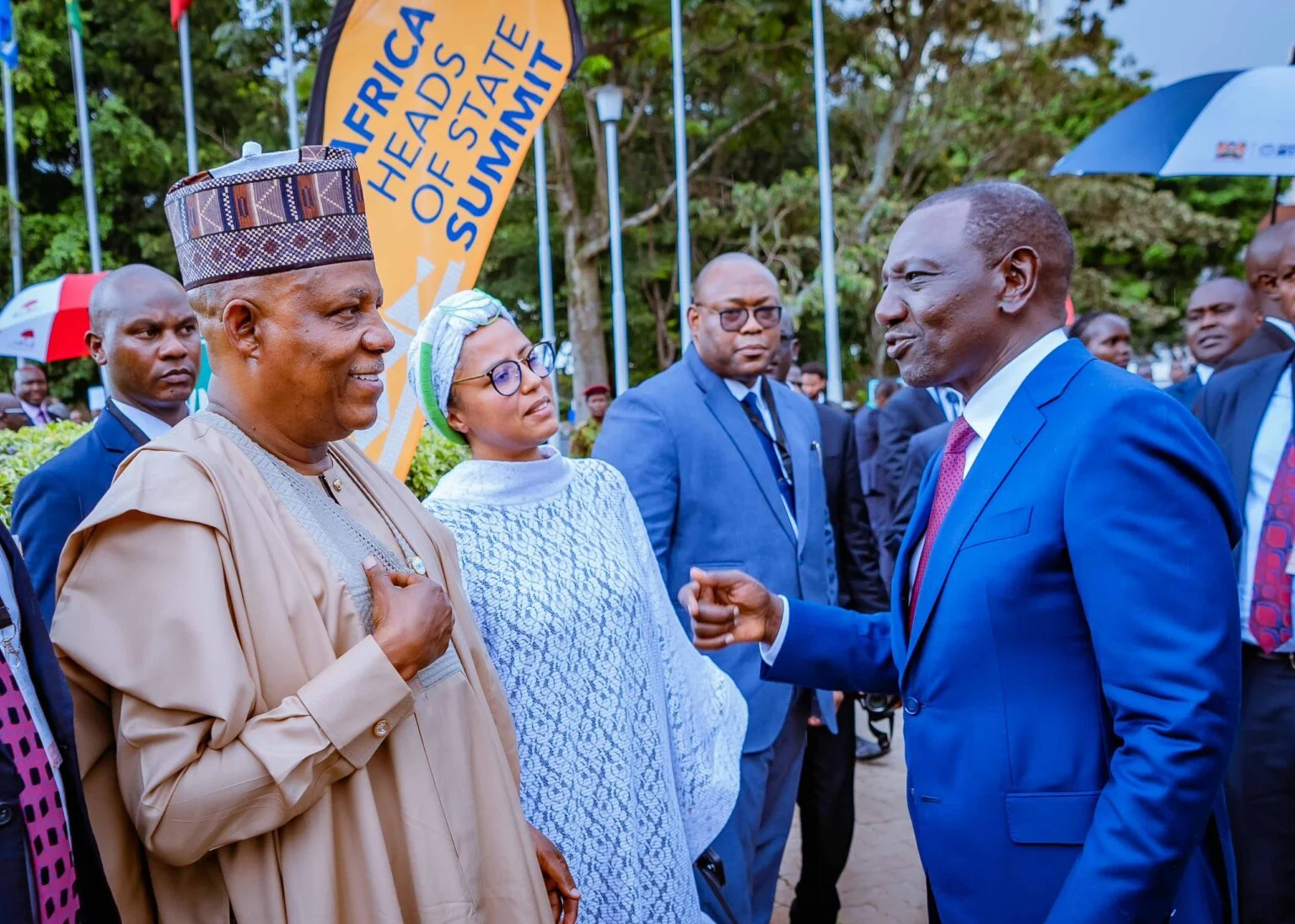
President Bola Tinubu has reiterated Nigeria’s plans to build a vast digital market capable of absorbing cutting-edge innovations and technologies.
This is stated in a statement issued by Mr Stanley Nkwocha, Senior Special Assistant to The President on Media and Communications, Office of The Vice President, on Monday in Abuja.
Tinubu, represented by Vice-President Kashim Shettima, spoke at the meeting of African Heads of State and Government on the 21st Replenishment of the International Development Association (IDA21) in Nairobi.
The President declared that Nigeria is set to harness the potential of its youthful population to transform into a global digital economy powerhouse.
He also hinted at the nation’s plans to become a global hub for outsourcing talent within the digital and creative economy.
“Being a young country with a median age of about 18, our interventions in the digital economy have been so extensive that we are no longer boasting of having the most unicorns.
“But preparing to serve as a global hub for outsourcing talents.”
He informed other African leaders of the sweeping reforms implemented by his administration to curb illicit activities and currency manipulation that had long hindered the nation’s progress.
“Since assuming office, President Tinubu has remained steadfast in fulfilling his promise to end the reign of economic saboteurs who have long exploited and hindered the progress of our nation.
” I am pleased to report that our economy has escaped the phase of sabotage.”
President Tinubu said Nigeria was committed to prioritising climate resilience and becoming an attractive destination for carbon market investments.
“The tensions resulting from climate-induced disruptions serve as a pressing call to action.
“The profound impact of climate change on our continent’s security underscores our dedication to transforming innovative concepts from conference discussions into tangible actions.
“We aim to become an investment-friendly destination for carbon market investments.”
He expressed Nigeria’s belief that the summit’s communiqué would reflect the collective needs of African and IDA countries, capturing their “nuances, consensus, dreams, and projections”.
Tinubu listed key priorities for Nigeria’s economic recovery in his administration’s Renewed Hope Agenda, anchored on poverty alleviation, to include economic expansion, job creation, enhanced access to capital, food security, and inclusivity.
He also stressed the importance of regional economic integration through instruments like the African Continental Free Trade Area (AfCFTA) Agreement to dismantle investment barriers and facilitate access to international markets.
“Our path to the future depends on nurturing strategic partnerships with other nations and development organizations.
“Therefore, we will utilise our absolute and comparative advantages to establish partnerships across borders,” the President said.
Earlier, the President of Kenya, William Ruto, said the summit was urgent because it was “convened at a critical juncture facing a convergence of global crises.
“The crisis include escalating geopolitical tensions that challenge international unity, a deepening development and debt crisis that threatens our economic stability.
“And an urgent climate emergency that demands immediate and collective action for our planet’s survival.”
He gave instances of the devastating impact of severe flooding in the East African region which, according to him, has displaced thousands in Nairobi.
He also decried the vulnerability of the continent to extreme weather patterns, which points to the critical role of the IDA in financing Africa’s development and stability.
“This new normal demands our immediate and united action to safeguard our collective future.
This underscores the critical role of IDA for Africa Summit as a cornerstone for financing for Africa.
“IDA has directed 75 per cent of its total commitment which is nearly 26 billion dollars to Africa in the last fiscal year with African countries comprising 8 of IDA’s top 10 borrowers.
“This support is not just financial but it’s a lifeline for development and stability,” President Ruto said.
Also, the World Bank President, Ajay Banga, expressed optimism about Africa’s potential.
Banga said, ” it’s very easy to feel hopeful when we’re together anywhere in Africa, you feel the infectious energy of young people.”
He affirmed the IDA’s commitment to accelerating progress on the continent, vowing to “move with urgency and purpose”, while making the institution more efficient and impactful.
“We stand at the crossroads of a new era of growth and prosperity for Africa,” he said.
At the end of the Summit, African Heads of State and Government adopted a joint communique committing countries on the continent to accelerate the continent’s economic transformation.
They also agreed to strengthened implementation capacities, mobilising domestic resources, and partnering effectively with IDA.
They also called for an ambitious replenishment of the International Development Association (IDA) to support the continent’s development goals. (NAN)
President Volodymyr Zelensky is holding talks with Donald Trump’s top envoys, in their first visit to Ukraine since Russia’s full-scale invasion.
The Ukrainian leader greeted Steve Witkoff and Jared Kushner at Kyiv’s St Sophia Cathedral, close to where a Russian drone hit the headquarters of Ukraine’s security services on Friday.
Ahead of the meeting, Zelensky said Ukraine was ready to talk about bringing “the end of the war closer”.
But he said security guarantees would be required as well as a dignified post-war peace.On Saturday, the two envoys met Vladimir Putin in Moscow for talks on ending the war that were described as “frank” and “constructive” by the Kremlin.
The envoys travelled to Kyiv by train after flying to Poland – Zelensky told the media that it was not possible for them to land their plane despite preparations.
Putin and Zelensky agreed to halt strikes on each other’s capitals for three days while the negotiators carry out their trip.
While Witkoff and Kushner were in talks at the Kremlin on Saturday, Zelensky said he and his team were “ready for a substantive conversation”.
On Sunday, Zelensky wrote on social media that his country “has always been and will remain constructive”.
“We are interested in bringing the end of the war closer. Peace is needed. Security guarantees are needed.
“A dignified character of the postwar peace is needed. Our proposals are ready,” he said.
Overnight, Russian and Ukrainian forces continued to exchange strikes, with Ukraine confirming they struck an oil refinery, an airfield, and two air defence systems.
The country’s defence ministry said they targeted the Ryazan oil refinery, which supplies the Russian army, and an airfield in Rostov-on-Don.
Earlier, Ukraine’s Air Force reported that Russia attacked Ukraine with 108 long-range drones and small cruise missiles.
The country’s air defences downed 82 drones and six missiles, but 11 locations were hit, with debris falling at a further seven sites.
Saturday’s talks in Moscow lasted three hours and were held behind closed doors in Putin’s official residence in the heart of the Russian capital, according to Russian state media.
Details are still emerging, but both sides have given broadly positive remarks without going into specifics.
Putin adviser Yuri Ushakov described the talks as “constructive, extremely frank”.
“The talks were not limited to an exchange of views on resolving the Ukrainian crisis – economic issues and potential major, mutually beneficial Russian-American projects were discussed in considerable detail,” he said.
Ushakov also said “note was made of the Russian army’s tangible advances in the combat zone” and that there was acknowledgement that talks needed to address “the root causes of the conflict”.
Despite an escalation of Russian missile and drone strikes on Ukrainian cities including Kyiv, Russian ground forces have made very slow advances for most of the conflict, incurring enormous casualties. Russia still controls about one-fifth of Ukrainian territory – areas that it seized back in 2022.
The talks come after Russia and Ukraine have intensified aerial attacks in recent months.
Ukraine says it has struggled to repel ballistic missile attacks due to a lack of interceptor missiles, while Kyiv has focused its strikes on Russian economic infrastructure targets, notably oil installations.

Egyptian television presenter Sarah Khalifa and 11 other people have been sentenced to death by hanging after being convicted of drug charges.
According to state-owned al-Ahram newspaper, they were part of a criminal gang which imported ingredients used to make drugs with the intent of selling them.
They also had illegal firearms and munitions.
Khalifa, 39, is best known for her TV programme Mission Impossible which dealt with crime issues. She has denied the charges.
Nine fellow defendants have been sentenced to life imprisonment, while seven have been acquitted.
Khalifa’s lawyer said she would appeal the death sentence.
The verdict was first announced last month.
However, it was only confirmed a month later after the court obtained a religious opinion from the grand mufti of Egypt – a legal requirement in death sentence cases.
During the trial, the court heard that authorities had seized more than 750kg (1,653lbs) of narcotics and the imported raw materials to make them.
Twenty witnesses had given statements to the prosecutors, al-Ahram said, in addition to electronic evidence that included conversations and video clips.
According to the state-run Akhbar al-Youm newspaper, when asked by the judge about her alleged role during a court appearance last September, Khalifa said she had never seen any drugs until she was photographed with them inside the anti-narcotics authority offices.
According to a 2025 Amnesty International report, there were 492 death sentences in the course of the year, 23 of which were carried out.
The defendants were found guilty of drug trafficking and rape, “crimes that did not amount to ‘intentional killing’ to which the use of the death penalty must be restricted under international law and standards”, the report said.
By Osmund Agbo
It was in late spring of 1964, just a day after graduating from high school, that a diminutive farm girl packed her belongings and bade farewell to the life she had known in the Smoky Mountains of rural Tennessee.
Her destination? Nashville, the undisputed Mecca of country music. She left behind the two-bedroom cottage where she had lived with her parents and eleven siblings, carrying little more than a dream and the audacious belief that she could make something of herself.Like most people who dare to pursue improbable dreams, Dolly Parton wandered through a period of uncertainty, chasing fame and fortune while occasionally wondering whether she had made the right choice.
Then, three years later, her fortunes changed dramatically. Country music star Porter Wagoner invited the twenty one year old Dolly to become the “girl singer” on his immensely popular, nationally syndicated television program, The Porter Wagoner Show.Wagoner had been searching for someone to replace his female vocalist, Norma Jean, who had left the program after marrying and moving away. He recognized something in Dolly that others had not yet fully appreciated and gave the young singer what was, at that stage of her career, an invaluable gift: a national platform. Dolly repaid his confidence with exceptional songwriting, musicianship, charisma, and a full stage presence. Together, they became one of the most consequential partnerships in country music.
But Dolly Parton was never destined to remain someone else’s “girl singer.” Before long, the protégé was emerging as a formidable artist in her own right. Eventually, the student had to outgrow the teacher. In 1974, after seven years on the program, Dolly concluded that the time had come to leave.
To articulate what she was feeling, she wrote Porter a song: “I Will Always Love You.” What began as a deeply personal farewell would, decades later, become one of the most recognizable songs in the history of popular music, when Whitney Houston’s rendition transformed it into a global phenomenon. But we’ll return to that later.
Porter did not receive Dolly’s departure graciously. Their relationship soured, and he eventually sued her for breach of contract, seeking $3 million in damages. The dispute was ultimately settled out of court for $1 million, which Dolly paid in installments because she could not satisfy the obligation in a single payment.
For many people, such an episode might have marked the definitive end of a relationship. Not Dolly. The lawsuit was undoubtedly painful, but she refused to allow one painful chapter to obliterate all the chapters that had preceded it.
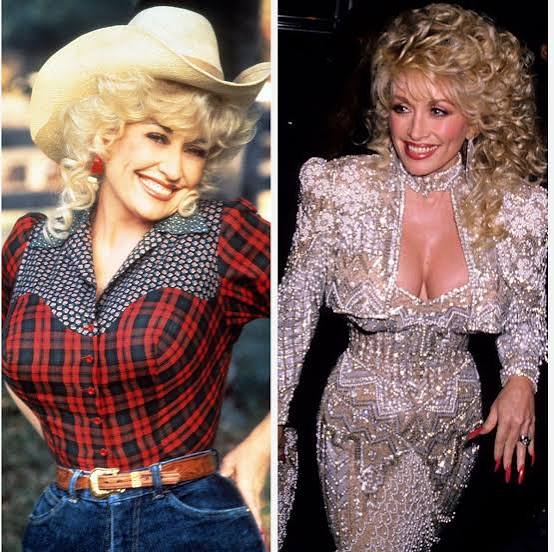
Some people become famous because they master the art of giving the world precisely what it wants. Dolly Parton became extraordinary because she seemed remarkably uninterested in conforming to anyone else’s expectations of who she should be. She gave the world Dolly, unfiltered and unapologetic, adorned in rhinestones, crowned with towering hair, wrapped in extravagant femininity, and possessed of a heart as enormous as her public persona. Beneath all the glitter, millions of people recognized something far more enduring: authenticity.
Long before Dolly Parton became a global icon, she had already begun constructing the woman she would eventually become. Dolly once recounted how, as a young girl, she became fascinated by a woman in her community who was regarded with considerable disdain and described as promiscuous, even a prostitute. Yet Dolly noticed something beyond the gossip. The woman was always impeccably presented, with carefully styled hair, manicured nails, and clothing that announced her presence.
Young Dolly looked beyond the judgment and saw the glamour. She decided that when she grew up, she wanted to look just like that woman. And she did.
There is something profoundly revealing about that story. Dolly understood at an extraordinarily young age that other people’s judgments did not have to dictate the boundaries of her identity. She would totally define herself.
And so she embraced the towering hair, extravagant makeup, acrylic nails, plunging dresses, impossibly high heels, and, of course, rhinestones. She also openly acknowledged her cosmetic procedures. Dolly Parton quite literally fashioned herself into the woman she wanted to be, and the world had plenty to say about it.
People mocked her appearance. They speculated about the extent of her cosmetic surgery. They questioned why any woman would deliberately cultivate such an exaggerated, artificial, and unapologetically feminine image. Dolly’s response was remarkably simple: she liked it. She famously quipped that it costs a fortune to look this cheap.
Yet for all the glitz, glamour, fame, and fortune associated with Dolly Parton, there was one quality that elevated her above many of her contemporaries: her extraordinary humanity and almost inexhaustible instinct to find people in distress and do something meaningful to alleviate their suffering. And remarkably, she often did so without seeking the spotlight.
In November 2016, devastating wildfires swept through Sevier County, Tennessee, the very region where Dolly had been born and raised. Fourteen people died, and thousands of structures were destroyed or damaged. Dolly did not merely issue a statement of sympathy. She acted.
Within forty eight hours of the disaster, Dolly and the Dollywood Foundation established the My People Fund. Families whose primary residences had been destroyed or rendered uninhabitable were promised $1,000 every month for six months. Ultimately, 921 families benefitted.
For Dolly, this was not charity performed from a comfortable distance. These were her people, from the mountains that had shaped her childhood and given her the identity she carried into the world.
Then there was the song. Dolly wrote “I Will Always Love You” when she was still a young songwriter. Nearly two decades later, Whitney Houston recorded it for The Bodyguardand transformed it into something almost otherworldly. The song Dolly had written as an intimate farewell became an international cultural phenomenon.
Because Dolly had retained her songwriting and publishing rights, Whitney’s extraordinary success generated enormous royalties for her, reportedly about $10 million in the 1990s alone. What Dolly did with that fortune is one of the most touching footnotes in music history.
She purchased a substantial office and studio complex in a predominantly Black neighborhood in Nashville, an area that was then considerably removed from the traditional center of the city’s music establishment. She could have invested her money anywhere. Instead, she chose to invest in a community that was overwhelmingly Black and gave the property a name that was both humorous and deeply affectionate: “The House That Whitney Built.”
Dolly explained that she loved being there because it was Whitney’s community, and, in her words, it was also her community. That instinct to give rather than merely accumulate was evident even in her complicated relationship with Porter Wagoner.
Decades after their famous professional partnership had dissolved acrimoniously, Porter found himself in serious financial difficulty. The IRS was pursuing him for unpaid taxes, and he began liquidating his assets to address his debts. Among the assets he contemplated selling was a small publishing catalog containing songs he had accumulated over the years. Dolly could easily have watched from a distance. After all, this was the same man who had once sued her. Instead, she intervened.
Dolly Parton purchased the publishing company that owned Porter Wagoner’s songs, providing him with desperately needed financial relief. Then she did something extraordinary: she gave the company back to him. She understood the sentimental and historical value those songs held for Porter. She wanted him to retain them and, ultimately, to pass them on to his children. That is vintage Dolly Parton.
There are countless other acts of generosity that she championed, both in public and far from the glare of cameras. Through her Imagination Library, Dolly has promoted childhood literacy on an extraordinary scale, providing free, high quality books to children from birth to age five, irrespective of their families’ financial circumstances.
When Dolly partnered with the Herschend family in 1986, the existing Silver Dollar City attraction in Pigeon Forge was transformed into Dollywood. Her motivation was not merely commercial. She wanted the world to discover the beauty of the Smoky Mountains she had loved since childhood, while simultaneously creating meaningful employment and economic opportunity for the people of her native community.
In more ways than one, Dolly’s story has always felt strangely familiar to me. I, too, grew up among eight siblings in a small village tucked away in the hinterland of Eastern Nigeria, where we lived largely from the harvest of the family farm. Like Dolly’s hometown, it was a place where dreams could sometimes appear impossibly distant, yet somehow remained tantalisingly within reach.
After coming to America, I spent considerable time working in the coal country of Appalachia, a rugged and beautiful part of the country that bears more than a passing resemblance to the Smoky Mountains where Dolly was born and raised. Perhaps that is why her story resonates so deeply with me.
Beneath the rhinestones, the towering hair, the fame, the fortune, and the larger than life persona lies a story I recognize. It is the story of a child born into modest circumstances who refused to allow the limitations of her beginnings to determine the magnitude of her dreams. Dolly Parton did not merely escape poverty. She transcended it without becoming ashamed of where she came from. She did not abandon her people when success finally arrived. She went back for them.
Success can make a person famous. Wealth can make a person powerful. But neither necessarily makes a person generous. Dolly Parton managed to become all three while remaining recognizably human.
Dolly Parton, we are forever grateful for the love, laughter, music, generosity, and humanity you shared with the world.
Now that you have your wings, we wish you all the best as you join the rest of Heaven’s Angels. There will never be another Dolly Parton, and we will always love you.
Osmund Agbo is a medical doctor, author, and the 2026 recipient of the Thabo Mbeki Prize for Scholarship and Public Service.


US Envoys Meet Zelensky in Ukraine after Talks with Putin in Russia
SharePresident Volodymyr Zelensky is holding talks with Donald Trump’s top envoys, in their first visit to Ukraine since Russia’s full-scale...


Court Sentences TV Presenter, 11 Others to Death in Egypt Drugs Case
ShareEgyptian television presenter Sarah Khalifa and 11 other people have been sentenced to death by hanging after being convicted of...
Amusan Misses Podium as Russell Wins Diamond League Crown
ShareAmerican hurdler Masai Russell claimed the Diamond League title in the women’s 100m hurdles after clocking a meet record of...
Fencing: Brou Wins 2026 FIE Satellite Sabre Viking Cup
ShareNigeria’s Inkosi Brou has won the 2026 FIE Satellite Sabre Viking Cup in Iceland, adding another international medal to the...
McColgan Wins London Big Half after Five Months Out
ShareEilish McColgan claimed her fourth victory at the Big Half in London on Sunday after returning to action following five...
Makinde Approves 32-seater, 18-seater Buses for Shooting Stars
ShareOyo State Governor, Seyi Makinde has approved the immediate release of two buses, a 32-seater and an 18-seater, to Shooting...
Ex-Leicester Striker Vardy Joins Burnley
ShareFormer Leicester City and England striker Jamie Vardy has joined Burnley until the end of the season. The 39-year-old, who...
Former Golden Eaglets Captain Tijani Joins Slovakian Club on Loan
ShareFormer Golden Eaglets captain Samson Tijani has joined Slovakian club FK Železiarne Podbrezová on loan for the 2026/27 season. The...
U-20 WWC: Falconets Ready to Make Big Statement— Aduku
ShareFalconets head coach Moses Aduku said his players are determined to make a big impact at the 2026 FIFA U-20...


FG Restates Commitment to Regional Trade Integration through ETLS
ShareThe Federal Government has restated its commitment to deepening regional trade integration and promoting exports through the ECOWAS Trade Liberalisation...