
NEWS
Dolly Parton: Another Candle in the Wind

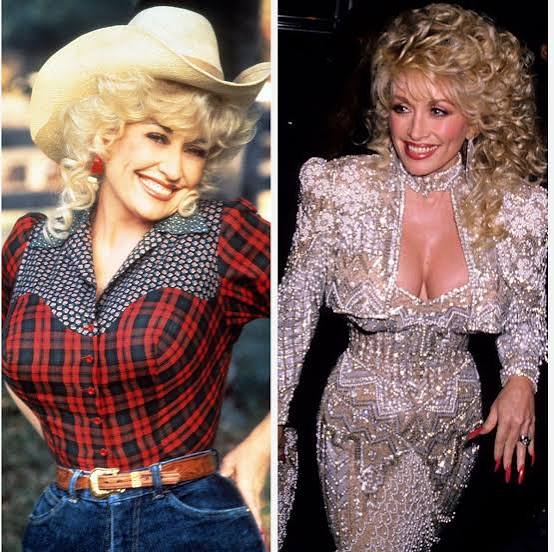
By Osmund Agbo
It was in late spring of 1964, just a day after graduating from high school, that a diminutive farm girl packed her belongings and bade farewell to the life she had known in the Smoky Mountains of rural Tennessee.
Her destination? Nashville, the undisputed Mecca of country music. She left behind the two-bedroom cottage where she had lived with her parents and eleven siblings, carrying little more than a dream and the audacious belief that she could make something of herself.Like most people who dare to pursue improbable dreams, Dolly Parton wandered through a period of uncertainty, chasing fame and fortune while occasionally wondering whether she had made the right choice.
Then, three years later, her fortunes changed dramatically. Country music star Porter Wagoner invited the twenty one year old Dolly to become the “girl singer” on his immensely popular, nationally syndicated television program, The Porter Wagoner Show.Wagoner had been searching for someone to replace his female vocalist, Norma Jean, who had left the program after marrying and moving away. He recognized something in Dolly that others had not yet fully appreciated and gave the young singer what was, at that stage of her career, an invaluable gift: a national platform. Dolly repaid his confidence with exceptional songwriting, musicianship, charisma, and a full stage presence. Together, they became one of the most consequential partnerships in country music.
But Dolly Parton was never destined to remain someone else’s “girl singer.” Before long, the protégé was emerging as a formidable artist in her own right. Eventually, the student had to outgrow the teacher. In 1974, after seven years on the program, Dolly concluded that the time had come to leave.
To articulate what she was feeling, she wrote Porter a song: “I Will Always Love You.” What began as a deeply personal farewell would, decades later, become one of the most recognizable songs in the history of popular music, when Whitney Houston’s rendition transformed it into a global phenomenon. But we’ll return to that later.
Porter did not receive Dolly’s departure graciously. Their relationship soured, and he eventually sued her for breach of contract, seeking $3 million in damages. The dispute was ultimately settled out of court for $1 million, which Dolly paid in installments because she could not satisfy the obligation in a single payment.
For many people, such an episode might have marked the definitive end of a relationship. Not Dolly. The lawsuit was undoubtedly painful, but she refused to allow one painful chapter to obliterate all the chapters that had preceded it.
Some people become famous because they master the art of giving the world precisely what it wants. Dolly Parton became extraordinary because she seemed remarkably uninterested in conforming to anyone else’s expectations of who she should be. She gave the world Dolly, unfiltered and unapologetic, adorned in rhinestones, crowned with towering hair, wrapped in extravagant femininity, and possessed of a heart as enormous as her public persona. Beneath all the glitter, millions of people recognized something far more enduring: authenticity.
Long before Dolly Parton became a global icon, she had already begun constructing the woman she would eventually become. Dolly once recounted how, as a young girl, she became fascinated by a woman in her community who was regarded with considerable disdain and described as promiscuous, even a prostitute. Yet Dolly noticed something beyond the gossip. The woman was always impeccably presented, with carefully styled hair, manicured nails, and clothing that announced her presence.
Young Dolly looked beyond the judgment and saw the glamour. She decided that when she grew up, she wanted to look just like that woman. And she did.
There is something profoundly revealing about that story. Dolly understood at an extraordinarily young age that other people’s judgments did not have to dictate the boundaries of her identity. She would totally define herself.
And so she embraced the towering hair, extravagant makeup, acrylic nails, plunging dresses, impossibly high heels, and, of course, rhinestones. She also openly acknowledged her cosmetic procedures. Dolly Parton quite literally fashioned herself into the woman she wanted to be, and the world had plenty to say about it.
People mocked her appearance. They speculated about the extent of her cosmetic surgery. They questioned why any woman would deliberately cultivate such an exaggerated, artificial, and unapologetically feminine image. Dolly’s response was remarkably simple: she liked it. She famously quipped that it costs a fortune to look this cheap.
Yet for all the glitz, glamour, fame, and fortune associated with Dolly Parton, there was one quality that elevated her above many of her contemporaries: her extraordinary humanity and almost inexhaustible instinct to find people in distress and do something meaningful to alleviate their suffering. And remarkably, she often did so without seeking the spotlight.
In November 2016, devastating wildfires swept through Sevier County, Tennessee, the very region where Dolly had been born and raised. Fourteen people died, and thousands of structures were destroyed or damaged. Dolly did not merely issue a statement of sympathy. She acted.
Within forty eight hours of the disaster, Dolly and the Dollywood Foundation established the My People Fund. Families whose primary residences had been destroyed or rendered uninhabitable were promised $1,000 every month for six months. Ultimately, 921 families benefitted.
For Dolly, this was not charity performed from a comfortable distance. These were her people, from the mountains that had shaped her childhood and given her the identity she carried into the world.
Then there was the song. Dolly wrote “I Will Always Love You” when she was still a young songwriter. Nearly two decades later, Whitney Houston recorded it for The Bodyguardand transformed it into something almost otherworldly. The song Dolly had written as an intimate farewell became an international cultural phenomenon.
Because Dolly had retained her songwriting and publishing rights, Whitney’s extraordinary success generated enormous royalties for her, reportedly about $10 million in the 1990s alone. What Dolly did with that fortune is one of the most touching footnotes in music history.
She purchased a substantial office and studio complex in a predominantly Black neighborhood in Nashville, an area that was then considerably removed from the traditional center of the city’s music establishment. She could have invested her money anywhere. Instead, she chose to invest in a community that was overwhelmingly Black and gave the property a name that was both humorous and deeply affectionate: “The House That Whitney Built.”
Dolly explained that she loved being there because it was Whitney’s community, and, in her words, it was also her community. That instinct to give rather than merely accumulate was evident even in her complicated relationship with Porter Wagoner.
Decades after their famous professional partnership had dissolved acrimoniously, Porter found himself in serious financial difficulty. The IRS was pursuing him for unpaid taxes, and he began liquidating his assets to address his debts. Among the assets he contemplated selling was a small publishing catalog containing songs he had accumulated over the years. Dolly could easily have watched from a distance. After all, this was the same man who had once sued her. Instead, she intervened.
Dolly Parton purchased the publishing company that owned Porter Wagoner’s songs, providing him with desperately needed financial relief. Then she did something extraordinary: she gave the company back to him. She understood the sentimental and historical value those songs held for Porter. She wanted him to retain them and, ultimately, to pass them on to his children. That is vintage Dolly Parton.
There are countless other acts of generosity that she championed, both in public and far from the glare of cameras. Through her Imagination Library, Dolly has promoted childhood literacy on an extraordinary scale, providing free, high quality books to children from birth to age five, irrespective of their families’ financial circumstances.
When Dolly partnered with the Herschend family in 1986, the existing Silver Dollar City attraction in Pigeon Forge was transformed into Dollywood. Her motivation was not merely commercial. She wanted the world to discover the beauty of the Smoky Mountains she had loved since childhood, while simultaneously creating meaningful employment and economic opportunity for the people of her native community.
In more ways than one, Dolly’s story has always felt strangely familiar to me. I, too, grew up among eight siblings in a small village tucked away in the hinterland of Eastern Nigeria, where we lived largely from the harvest of the family farm. Like Dolly’s hometown, it was a place where dreams could sometimes appear impossibly distant, yet somehow remained tantalisingly within reach.
After coming to America, I spent considerable time working in the coal country of Appalachia, a rugged and beautiful part of the country that bears more than a passing resemblance to the Smoky Mountains where Dolly was born and raised. Perhaps that is why her story resonates so deeply with me.
Beneath the rhinestones, the towering hair, the fame, the fortune, and the larger than life persona lies a story I recognize. It is the story of a child born into modest circumstances who refused to allow the limitations of her beginnings to determine the magnitude of her dreams. Dolly Parton did not merely escape poverty. She transcended it without becoming ashamed of where she came from. She did not abandon her people when success finally arrived. She went back for them.
Success can make a person famous. Wealth can make a person powerful. But neither necessarily makes a person generous. Dolly Parton managed to become all three while remaining recognizably human.
Dolly Parton, we are forever grateful for the love, laughter, music, generosity, and humanity you shared with the world.
Now that you have your wings, we wish you all the best as you join the rest of Heaven’s Angels. There will never be another Dolly Parton, and we will always love you.
Osmund Agbo is a medical doctor, author, and the 2026 recipient of the Thabo Mbeki Prize for Scholarship and Public Service.
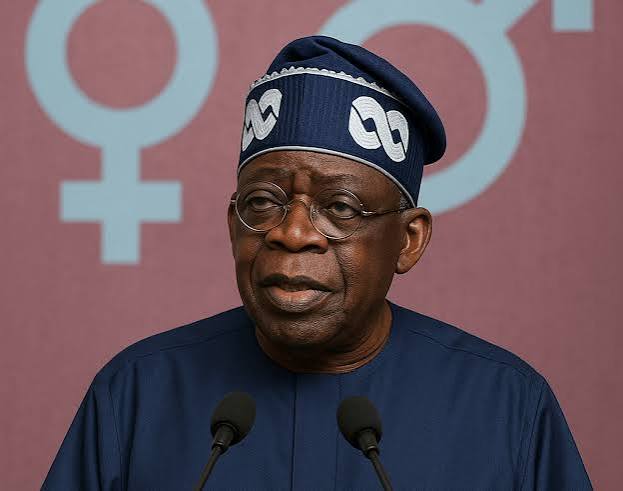
President Bola Tinubu has authorised the disbursement of the Cabotage Vessel Financing Fund (CVFF), with the Minister of Marine and Blue Economy, Dr. Adegboyega Oyetola, directing the Nigeria Maritime Administration and Safety Agency (NIMASA) and 12 Primary Lending Institutions (PLIs) to fast-track the process.
Oyetola said the directive was aimed at ending more than 20 years of delays in accessing the fund and unlocking investment, growth and job opportunities in Nigeria’s maritime sector.
The minister said this in a statement issued on Sunday by his Special Adviser, Dr Bolaji Akinola.
He said NIMASA had received 92 funding applications under the CVFF, adding that 20 had been submitted to the PLIs, while one had been reviewed and forwarded for final approval.
Oyetola said the move to operationalise the CVFF marked a major milestone in the Federal Government’s efforts to strengthen indigenous participation in coastal and offshore shipping.
He recalled that in April 2025, he directed NIMASA to begin the disbursement of the fund, ending years of administrative stagnation and paving the way for the repositioning of Nigeria’s indigenous shipping capacity.
He said the momentum continued with the launch of the CVFF Application Portal in Lagos on Jan. 22, to provide transparent and structured access to eligible shipowners.
According to him, the number of PLIs was subsequently increased from five to 12 to expand access and reduce bottlenecks in loan processing.
The minister said the CVFF had accumulated for more than two decades without being accessed and was designed to provide low-interest, long-term financing for vessel acquisition.
He said the fund would enable Nigerian shipowners to compete for coastal shipping contracts, reduce dependence on foreign vessels and retain more value within the Nigerian economy.
Oyetola projected that the initiative could generate more than 30,000 direct and indirect jobs in shipyards, marine engineering firms and maritime logistics companies across the country.
He said the disbursement followed President Tinubu’s authorisation to address long-standing financing challenges and unlock the economic potential of Nigeria’s blue economy.
Beyond financing, Oyetola said the ministry was also investing in seafarer development through NIMASA by expanding training, certification and welfare initiatives for maritime professionals.
He disclosed that 222 seafarers had received free training in basic and advanced courses, while 333 cadets had completed academic training and been awarded degrees.
“Under the Nigerian Seafarers Development Programme, 135 cadets successfully completed the programme and obtained Certificates of Competency,” he said.
Oyetola added that 7,059 Nigerian seafarers had been placed onboard vessels to gain the required sea-time experience for career progression.
He said the interventions reflected the government’s commitment to building a competitive maritime workforce and ensuring that Nigerians benefited directly from opportunities in the blue economy.(NAN)
By David Torough, Abuja
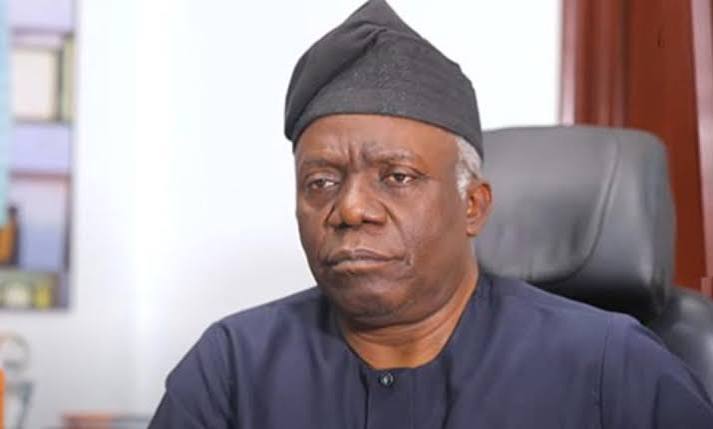
Human rights lawyer and Senior Advocate of Nigeria, Femi Falana, has called on the Economic and Financial Crimes Commission to investigate the alleged failure to account for N33.75 billion earmarked as cash transfers for millions of vulnerable Nigerians.
Falana, who chairs the Alliance on Surviving COVID-19 and Beyond (ASCAB), also urged the anti-graft agency to collaborate with the Auditor-General for the Federation to recover the funds if investigations confirm that they were diverted.
He made the call in a statement on Sunday, following concerns raised by the Auditor-General for the Federation, Shaakaa Kanyitor Chira, in his 2024 Annual Report on Non-Compliance/Internal Control Weaknesses in federal ministries, departments and agencies.
The report questioned the Federal Government’s inability to provide sufficient evidence showing that N33.75 billion in cash transfers reached genuine beneficiaries.
According to Falana, the money was meant for more than 3.29 million vulnerable households under the National Social Investment Programme.
He expressed concern that the alleged failure to account for the funds occurred despite measures introduced by the government to improve beneficiary tracking and prevent the inclusion of fictitious recipients.
The National Social Investment Programme Agency (NSIPA), established under the 2022 NSIPA Act, is responsible for implementing key social intervention schemes, including N-Power, the National Home-Grown School Feeding Programme, the National Cash Transfer Programme and the National Social Safety Net Programme.
Falana said the agency had nevertheless been dogged by allegations of financial impropriety involving some of its officials.
He recalled that former Minister of Humanitarian Affairs, Disaster Management and Social Development, Sadiya Umar Farouq, was investigated by the EFCC over alleged money laundering involving more than N37.1 billion.
He also cited the suspension of former Humanitarian Affairs Minister Betta Edu after a December 2023 memo sought the transfer of N585 million in public intervention funds to a private bank account.
The former NSIPA Chief Executive Officer, Halima Shehu, was similarly suspended and questioned over alleged suspicious movement of funds.
Falana urged the EFCC to conclude investigations into the various allegations and make its findings public.
“The Economic and Financial Crimes Commission should liaise with the Auditor-General of the Federation with a view to recovering the missing N33.75 billion,” he said.
He further called for the immediate investigation of what he described as a serious allegation involving the criminal diversion of funds meant for poor and vulnerable Nigerians.
“All the characters involved in the shameful conduct should be arrested and prosecuted without any delay,” Falana said.
The rights lawyer also expressed concern over the implementation of a $3.05 billion development package unveiled by President Bola Tinubu in July 2026.
The World Bank-supported programme is designed to deepen poverty reduction, strengthen human capital and expand economic opportunities across Nigeria.
Falana called on the Federal Government to strengthen accountability measures to ensure that funds allocated for poverty reduction reach their intended beneficiaries.
He also proposed the creation of an oversight body comprising credible civil society organisations to monitor the disbursement and implementation of the development funds.
Falana maintained that stronger transparency and accountability mechanisms were essential to prevent the diversion or abuse of public funds intended to support Nigeria’s poorest and most vulnerable citizens.
By Tony Obiechina, Abuja
The Federal Government has reaffirmed Nigeria’s commitment to strengthening bilateral relations with São Tomé and Príncipe, with focus on maritime security, the Nigeria-São Tomé and Príncipe Joint Development Zone (JDZ), trade and investment.
The Minister of State for Defence, Dr.
Bello Muhammad Matawalle, disclosed this while representing President Bola Ahmed Tinubu at the Presidential Inauguration of President Carlos Manuel Vila Nova for a second five-year term.Speaking on behalf of Mr.President, Matawalle commended the people of São Tomé and Príncipe for conducting a peaceful, credible and transparent election.
“Your victory reflects the confidence of the people in your leadership. Nigeria commends the Government, the National Electoral Commission, Political Parties, and the people of São Tomé and Príncipe for strengthening democratic institutions in your country,” he said.
President Tinubu added: “Nigeria values the longstanding friendship between our two countries. I therefore look forward to deepening cooperation in maritime security, the Nigeria-São Tomé and Príncipe JDZ, trade and investment, and other areas of mutual interest.”
The event, which was held at the country’s Parliament Building, was attended by several African and European leaders and other dignitaries. In addition to Minister Bello Matawalle, who represented President Bola Ahmed Tinubu, other leaders who graced the swearing-in ceremony included the President of the Republic of Congo, President Denis Sassou Nguesso, the President of the Gabonese Republic, Brice Oligui Nguema, the Prime Minister of Mozambique, Mrs. Maria Benvinda Levy, the representative of the Angolan Head of State and Angola’s Foreign Minister, Téte António, and the Prime Minister of Morocco, Aziz Akhannouch, among other dignitaries.
Dr. Matawalle said Nigeria remains committed to peace, security and development in the Gulf of Guinea region. He expressed Nigeria’s readiness to re-establish and strengthen closer ties with São Tomé and Príncipe for mutual benefit.
“His Excellency President Tinubu’s participation through representation reflects the historic ties of friendship, fraternity, solidarity and cooperation that continue to define relations between Nigeria and São Tomé and Príncipe,” the Minister said



Dolly Parton: Another Candle in the Wind
ShareBy Osmund Agbo It was in late spring of 1964, just a day after graduating from high school, that a...
Kaduna APC Consensus Aspirants Mobilise Structures for Tinubu, Sani Victory
ShareKaduna State All Progressives Congress (APC) Consensus Aspirants Forum has pledged to deploy its political structures for grassroots mobilisation and...


APC Stakeholders Resolve Southern Kaduna Political Issues, Vow 2027 Victory
ShareThe All Progressives Congress (APC) stakeholders in Kaduna South Senatorial Zone have resolved to address challenges affecting Southern Kaduna politics...
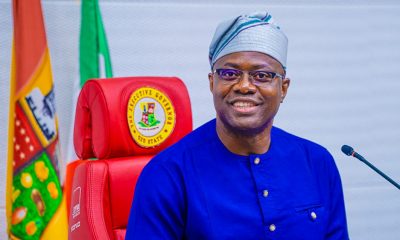

Makinde Cautions Traditional Rulers against Partisan Politics
ShareOyo State Governor, Seyi Makinde has admonished traditional rulers in the state to be apolitical, insisting that the throne must...

INEC Guidelines: Necessary Reform or Incomplete Solution?
ShareBy Ayodele Babalola The inclusion of Alternative Dispute Resolution provisions in the Independent National Electoral Commission Regulations and Guidelines for...


Alake Urges OAU to Develop World Class Mining Centre
ShareThe Minister of Solid Minerals Development, Dele Alake, has charged the authorities of Obafemi Awolowo University (OAU) to leverage its...
FCCPC Probes Uber’s Exit
ShareThe Federal Competition and Consumer Protection Commission has begun examining Uber’s exit from Nigeria, particularly whether the ride-hailing company left...
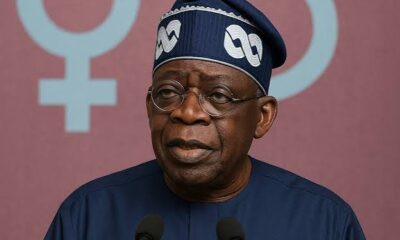

Tinubu Approves CVFF Disbursement as Oyetola Directs Faster Loan Processing
SharePresident Bola Tinubu has authorised the disbursement of the Cabotage Vessel Financing Fund (CVFF), with the Minister of Marine and...

NDLEA Seizes N1.1bn Drugs, Busts Traffickers in Nationwide Sweep
ShareBy David Torough, Abuja The National Drug Law Enforcement Agency (NDLEA) has intensified its nationwide crackdown on illicit drugs, intercepting...
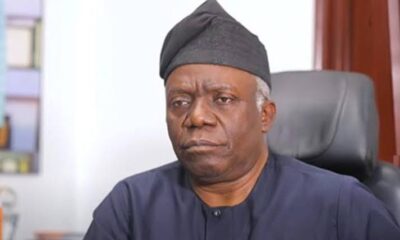

Falana Raises the Alarm over Missing N33.75bn Meant for Poor Nigerians
ShareBy David Torough, Abuja Human rights lawyer and Senior Advocate of Nigeria, Femi Falana, has called on the Economic and...