
NEWS
Top-Ranked Ireland Universities For Nigerian Students | September and January Intake Opportunities

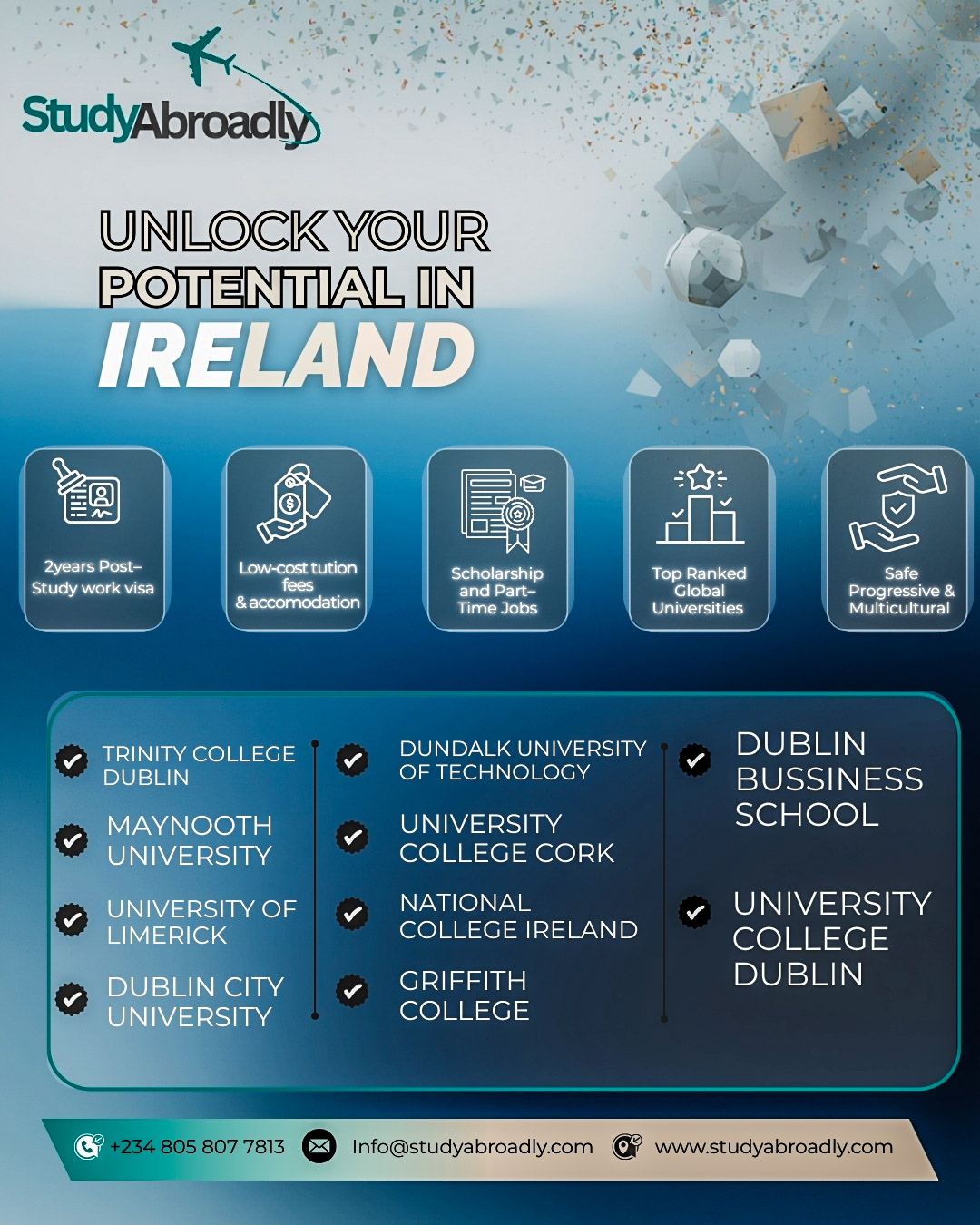
Ireland has quietly become one of the most attractive study destinations for Nigerian students, and the numbers back it up. A post-study work visa of up to 24 months, a thriving economy, and a welcoming academic culture have made it a compelling alternative to the UK and Canada.
Whether you are targeting a September or January intake, this guide covers ten of Ireland’s leading universities and colleges, what they are known for, and when you can apply.Why Nigerian Students Are Choosing Ireland
Beyond the quality of education, Ireland offers practical advantages. The post-study work visa gives graduates up to two years to gain professional experience after completing their degree.
English is the primary language of instruction, the cost of living outside Dublin is manageable, and Irish degrees are globally respected. For Nigerian students who want a European education with a clear path to work experience, Ireland makes a compelling case.Top Irish Universities and Colleges for Nigerians
Trinity College Dublin (TCD)
Trinity College Dublin is Ireland’s highest-ranked university and a member of the elite group of ancient universities, placing it in the same historic category as Oxford and Cambridge. It is globally recognised for Law, English Literature, and Research, and carries a prestige that opens doors internationally. Intake at TCD is primarily in September, and admission is highly competitive. It does not offer a major January intake for degree programmes, so applicants need to plan well ahead for the September window.
University College Dublin (UCD)
Known as Ireland’s Global University, UCD is a large, research-led institution with the biggest international student community in the country. It excels in Business through its renowned Smurfit School, as well as in Engineering and Science. September is the standard intake for the vast majority of programmes. Some specific postgraduate Science and Engineering conversion courses occasionally open in January, but Nigerian students should treat September as the primary target when applying to UCD.
University College Cork (UCC)
Situated in the south of Ireland, UCC is a leader in Sustainability, Food Science, and Medicine. It offers a high quality of life with costs that are noticeably lower than Dublin, making it an appealing option for budget-conscious applicants who do not want to compromise on academic quality. Full degree programmes at UCC run almost exclusively on a September intake, so early preparation is advised.
Dublin City University (DCU)
Dublin City University has built a reputation around enterprise and employability, performing well in U-Multirank assessments that measure graduate outcomes and international reach. It is a top choice for students interested in Journalism, Communications, and Business, and has a track record of linking students with industry during their studies. September is the standard entry point for DCU programmes.
University of Limerick (UL)
The University of Limerick is famous for two things: its beautiful riverside campus and its Cooperative Education programme, which integrates structured work placements directly into degree courses. This focus on real-world experience has earned UL the highest graduate employability rate in Ireland, a statistic that carries weight for Nigerian students thinking about their career prospects after graduation. September is the broad intake window, with January options limited to specific research or study abroad programmes.
Maynooth University
Located just outside Dublin, Maynooth University is the fastest-growing university in Ireland and has developed a well-regarded reputation for Computer Science, Education, and the Humanities. Its proximity to the capital gives students access to Dublin’s professional networks while enjoying a slightly quieter campus environment. September is the primary entry point for undergraduate and most postgraduate degrees at Maynooth.
National College of Ireland (NCI)
NCI is one of the most strategically positioned institutions on this list, sitting inside Dublin’s Financial Services Centre (IFSC), one of Europe’s leading financial hubs. It specialises in Data Analytics, Cybersecurity, Cloud Computing, and Human Resources, making it an excellent fit for Nigerian students targeting technology and finance careers. NCI is also one of the most flexible institutions in Ireland for international applicants, offering both September and January intakes, which makes it a particularly practical choice for students who miss the autumn window.
Dundalk Institute of Technology (DkIT)
Dundalk Institute of Technology sits roughly halfway between Dublin and Belfast, offering students an affordable cost of living compared to the capital while remaining well connected to both cities. DkIT has practical strengths in Creative Media, Engineering, and Health Sciences, and takes a hands-on approach to learning. It offers September starts for its main programmes, with some pathway and foundation options available in January for students who need an alternative route in.
Griffith College
Griffith College is Ireland’s largest independent third-level institution, with campuses in Dublin, Cork, and Limerick. It is widely recognised for Law, Journalism, and Professional Accountancy, and has built a long track record of serving international students well. For Nigerian applicants, Griffith College stands out for its intake flexibility, offering major entry windows in both September and January across a wide range of programmes.
Dublin Business School (DBS)
Dublin Business School is a private, career-focused college that has carved out a clear niche in professional postgraduate education. It is particularly popular for its MBA and Master’s programmes in Fintech and Data Analytics, two fields with growing demand in Nigeria and across the global economy. DBS is the most flexible institution on this list, offering start dates in September, January, and April or May, making it a reliable option for Nigerian students at any stage of their application journey.
StudyAbroadly: Ireland Study Abroad Agency
StudyAbroadly is a dedicated study abroad agency helping Nigerian students build a future in Ireland and beyond. Here is exactly what they do:
- Admissions Support: StudyAbroadly helps you identify the right institution and programme for your academic background and career goals. They handle your application documents, personal statement, and every stage of the admissions process so your application is as competitive as possible.
- Scholarship Guidance: Many Nigerian students miss out on funding simply because they do not know what is available. StudyAbroadly identifies scholarship and bursary opportunities that match your profile and helps you put together applications that stand out.
- Visa Assistance: The Irish study visa process involves careful documentation and meeting specific financial requirements. StudyAbroadly provides hands-on support to help you build a complete, accurate application and steer clear of the common errors that cause delays or refusals.
Ireland’s combination of academic excellence, post-study work opportunities, and intake flexibility makes it one of the smartest study destinations available to Nigerians.
By David Torough, Abuja
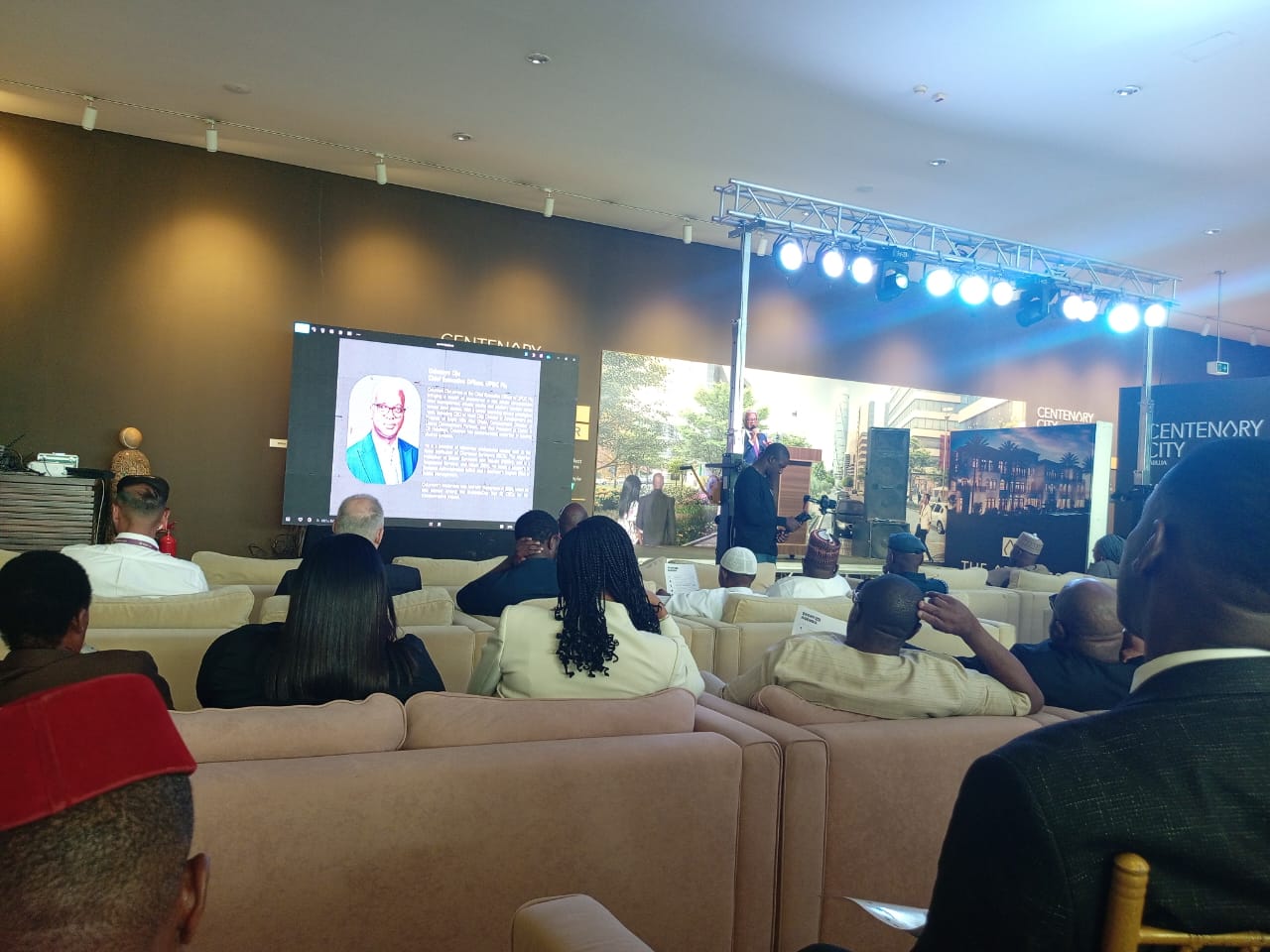
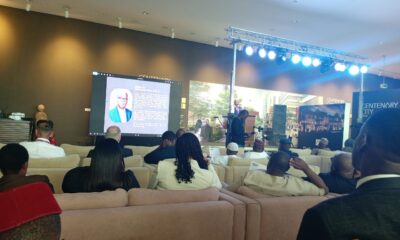
Centenary City has renewed its drive to position Abuja as one of Africa’s leading smart urban destinations, with Managing Director Dr. Odenigwe Ike Michaels announcing a fresh commitment to delivering the long-delayed mega development as a global investment hub.
Speaking during an investors’ engagement session in Abuja, Michaels described the project as a modern 15-minute smart city that will integrate luxury living, commerce, tourism, technology, sustainability and economic growth within a single urban ecosystem.
According to him, the development spans about 1,300 hectares, with more than 1,000 hectares designated for active construction.
He noted that the project was designed to compete with some of the world’s leading mixed-use cities.Michaels said Centenary City represents more than a real estate development, calling it a national economic vision aimed at transforming how Nigerians live, work and invest.
The project is being driven by a consortium of over 40 local and international investors under Centenary City Plc, with participation from the Federal Government through Abuja Investment Company Limited.
He added that the master plan was developed by Emaar Chairman Sheikh Mohammed Alabbar, while Eagle Hills International serves as a strategic partner.
He further revealed that the city operates under Free Zone status, offering investors and international businesses globally competitive operating conditions.
Michaels explained that the development prioritises sustainability, connectivity and economic resilience, noting that integrated mixed-use cities represent the future of urban expansion.
Planned infrastructure within the city includes five-star hotels, luxury residences, an International Commerce Centre, convention facilities, the Mall of Africa, golf and polo estates, safari parks, industrial parks and healthcare institutions.
He also praised the Minister of the Federal Capital Territory, Nyesom Wike, for supporting structured urban development and boosting investor confidence in Abuja.
To accelerate infrastructure delivery, Michaels said Centenary City has strengthened partnerships with Julius Berger and global engineering consultants, Dar Al-Handasah.
A representative of Julius Berger, Johnny Houchan, disclosed that key infrastructure works have already reached 47 per cent completion within six months.
He said the ongoing construction includes a 4.3-kilometre four-lane carriageway alongside underground wastewater systems, drainage networks, power infrastructure and telecommunications conduits.
Director of Sales at Centenary City, Kenneth Njoku, urged investors to seize what he described as a “first movers advantage,” comparing the project’s current stage to the early development phases of Banana Island and Maitama.
Njoku announced incentives for investors, including zero-premium joint venture arrangements, 40 per cent discounts on outright land purchases and flexible payment plans aimed at encouraging rapid development.
He described Centenary City as a once-in-a-generation opportunity for investors seeking long-term value in a future-focused smart city project.

From Atta Edeh, Makurdi
Residents of Buruku Local Government Area of Benue State have expressed deep appreciation to the Governor of Benue State, Hyacinth Alia, for the ongoing construction and rehabilitation of township roads project aimed at transforming infrastructure, easing transportation challenges, and improving the socio-economic wellbeing of residents.
The commendation was made during an inspection visit and stakeholders’ engagement session attended by the Executive Chairman of Buruku Local Government Area, Hon.
Raymond Hondoakura Zege, the Managing Director/Chief Executive Officer of Tratcom Limited, Chief Joseph Tarfa Ihuman, whose company is handling the construction project, as well as Engineer Gumji, representing the Commissioner for Works in Benue State. Also present at the event was the Head of Department (HOD) Works, Buruku Local Government Area, Bitto Godwin.Speaking during the engagement, Hon. Raymond Aondoakura Zege praised Governor Reverend Hyacinth Alia for his visionary leadership and unwavering commitment to infrastructural development across the state. He described the road project as a landmark intervention that would significantly improve mobility, commercial activities, and the overall living conditions of the people of Buruku.
According to the Chairman, the administration of His Excellency, Rev. Father Hyacinth Alia, has demonstrated sincerity of purpose by embarking on projects that directly impact the lives of ordinary citizens. He noted that the 5KM township road would open up the area for greater economic opportunities, enhance accessibility, and further strengthen confidence in government at the grassroots level.
Hon. Zege further stated that the ongoing road rehabilitation initiative by Governor Alia is fully in line with the Renewed Hope Agenda of the President of the Federal Republic of Nigeria, Bola Ahmed Tinubu, particularly in the critical area of road infrastructure and economic development. He emphasized that the project reflects the shared commitment of both the Federal and State Governments toward improving the welfare of Nigerians through sustainable infrastructure renewal and grassroots development.
Community leaders, traders, transport operators, youths, and residents also applauded the Governor Reverend Alia for what they described as a people-oriented administration focused on delivering meaningful development to communities across Benue State.
They stated that the road project would bring relief to residents who have endured years of poor road conditions and transportation difficulties.
The Managing Director/CEO of Tratcom Limited, Chief Joseph Tarfa Ihuman, assured the people of Buruku of the company’s commitment to delivering a durable and high-quality project in accordance with approved engineering standards. He commended Governor Rev. Fr. Hyacinth Alia for prioritizing infrastructure development and creating an enabling environment for contractors to execute projects efficiently.
Chief Ihuman further noted that the Governor’s developmental strides across the state continue to inspire hope and confidence among the people, adding that the administration’s commitment to road infrastructure would have lasting economic and social benefits for future generations.
Engineer Gumji, representing the Commissioner for Works, equally lauded Hyacinth Alia for his dedication to infrastructural renewal and sustainable development. He assured residents that the Ministry of Works would continue to supervise the project closely to ensure quality delivery and timely completion.
Also speaking, the HOD Works of Buruku Local Government Area, Bitto Godwin, expressed satisfaction with the pace and quality of work being carried out on the project. He described the initiative as a major boost to local development and appreciated the state government for remembering the people of Buruku through impactful infrastructure projects.
The people of Buruku Local Government Area offered prayers for continued wisdom, strength, and success for Hyacinth Alia as he continues to provide purposeful leadership for Benue State. They also reaffirmed their confidence in the administration and expressed optimism that more developmental projects would be attracted to Buruku and other communities across the state.
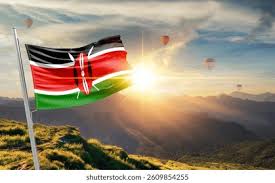
Transport operators in Kenya have suspended their nationwide strike following talks with the government over rising fuel prices.
The operators said the suspension will remain in place until next Tuesday to allow for further negotiations with the government.
The move comes after the nationwide strike, which brought the capital Nairobi and other cities to a standstill, entered a second day on Tuesday.
At least four people were killed and 30 injured in Monday’s protests, with more than 700 arrested nationwide, according to the authorities.
On Tuesday, Interior Minister Kipchumba Murkomen said the deal to end the strike came after consultations with public transport representatives, and negotiations “at a higher level” would be conducted within the next week.
“We have had a breakthrough not because we are satisfied, but because we want to give negotiations a chance,” said Edwin Mukabane, the national chairman of the Federation of Public Transport Sector.
“If this is not taken seriously within the seven days, the strike will be back on,” he added
Major roads in Nairobi were still largely empty on Tuesday morning with businesses shut and schools closed.
Like the previous day, many Kenyans were forced to walk to their destinations, although a small number of public transport vehicles reportedly resumed services on some routes.
Police were patrolling parts of the city to maintain security amid reports of protesters blocking some routes.
Police urged demonstrators to remain peaceful, and not to loot and destroy properties.
The Directorate of Criminal Investigations said investigations into Monday’s demonstrations were ongoing, with many of the suspects already arraigned in court.
Kenyan rights group Vocal Africa denounced “the use of lethal force by law enforcement”.
The state-funded Kenya National Commission on Human Rights (KNCHR) called for immediate investigations into the violence and destruction of property, and urged the police to exercise restraint.
In the coastal city of Mombasa, a sense of normality was reported to have returned, with public transport services resuming.
On Monday, groups representing the transport sector held a meeting with the government.
Energy Minister Opiyo Wandayi announced they had agreed to reduce the price of diesel, which had risen to a high of 242 shillings ($1.8; £1.4).
The energy regulator subsequently reduced its cost by 10 shillings while retaining the cost of petrol at 214 shillings.
The reduction, however, fell short of protesters’ demands and the transport sector representatives insisted the strike would continue.
At the end of a subsequent meeting on Tuesday morning, Wandayi said the government would continue to be “sensitive to the plight of petrol consumers” and thanked the transport operators for agreeing to suspend the strike.
The operators are calling for a fuel price cut of up to 46 shillings, to levels last seen before the US-Israel war with Iran that began on 28 February.
Like many other African nations, Kenya relies on fuel from the Gulf, which has been disrupted by the conflict.
Although a ceasefire has been declared, prices remain high as the Strait of Hormuz, where a fifth of the global oil supply passes through, remains blocked.
Last month, the government cut VAT on fuel from 16% to 8% until July but there have been calls for it to do more.



Top-Ranked Ireland Universities For Nigerian Students | September and January Intake Opportunities
ShareIreland has quietly become one of the most attractive study destinations for Nigerian students, and the numbers back it up....

Centenary City Revives Abuja’s Ambitious Smart City Vision
ShareBy David Torough, Abuja Centenary City has renewed its drive to position Abuja as one of Africa’s leading smart urban...

Buruku Residents Commend Alia Over Township Roads Project
ShareFrom Atta Edeh, Makurdi Residents of Buruku Local Government Area of Benue State have expressed deep appreciation to the Governor of...

Kenya Suspends Strike after Transport Paralysis over High Fuel Prices
ShareTransport operators in Kenya have suspended their nationwide strike following talks with the government over rising fuel prices. The operators said the suspension will remain in place...


Centenary City: Nigeria’s Bold Leap into a Smarter Future
ShareBy David Torough, Abuja Across history, there are projects that transcend skylines to redefine national destiny. Nigeria’s Centenary City is one of them...
Arsenal Champions as Man City Draw at Bournemouth
ShareArsenal’s 22-year wait for the Premier League title is over after rivals Manchester City drew at Bournemouth, in what is expected to be...

Dangote Refinery Reduces Jet Fuel Price to N1,650 Per Litre
ShareDangote Petroleum Refinery has reduced the price of aviation fuel, also known as Jet A1, from N1,750 to N1,650 per litre. The company said the move is aimed at reducing the...


NRS Targets N40trn Revenue in 2026
ShareBy Tony Obiechina, Abuja The Nigeria Revenue Service (NRS) said it is targeting N40 trillion in tax revenue for the country in 2026. The Executive...

Nigerian Troops-US Joint Offensive Decimate ISIS Strongholds, Says DHQ
ShareBy David Torough, Abuja The Defence Headquarters (DHQ) yesterday announced major gains in ongoing counter-terrorism operations, revealing that a joint...
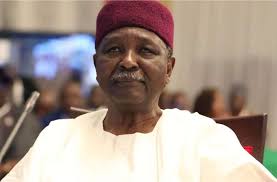

2027: Gowon, Jonathan at Book Launch, Renew Plea for National Unity
ShareBy David Torough, Abuja Former Head of State, General Yakubu Gowon, yesterday declared that Nigeria would survive its present political,...