
Foreign News
UK MPs Urge Action against Israel over Journalist Killings

British MPs have urged the government to take tougher action against Israel after an investigation by The Independent and Independent Arabia raised questions over possible war crimes in an attack on Gaza’s Nasser Medical Complex that killed more than 20 people, including five journalists.
The attack, on Aug.
25, 2025, in Khan Younis, killed Independent Arabia correspondent Mariam Abu Dagga and Hussam Al-Masri, a cameraman from Reuters.According to The Independent, the investigation was based on 17 eyewitness accounts, two Israeli whistleblowers, weapons experts and international law specialists.
It found that an initial Israeli tank strike killed Al-Masri while he was operating a Reuters live camera from an external stairwell at the hospital.
Eight minutes later, as journalists, medics and first responders gathered at the scene, further tank rounds struck the same area, killing more than 20 people.
The Israeli military said it regretted harm to uninvolved individuals and denied deliberately targeting journalists. It said troops had identified a camera it believed had been positioned by Hamas to monitor Israeli forces, and claimed six militants were killed.
However, The Independent reported that the camera was a Reuters live-feed camera routinely used by journalists.
The investigation also said two of the six people described by Israel as militants were a hospital employee and a civil defense worker involved in the rescue operation.
Kevin Jon Heller, professor of international law at the University of Copenhagen’s Centre for Military Studies, told The Independent that a prosecutor could “reasonably conclude” that the evidence pointed to the possible war crimes of intentionally attacking civilians and launching a disproportionate attack, particularly in relation to the second strike.
The Israeli military declined to respond to the investigation’s individual findings, saying its review remained ongoing under its General Staff Fact-Finding and Assessment Mechanism.
The findings prompted calls for stronger action from British lawmakers.
Sarah Champion, Labour MP and chair of the International Development Committee, said the international community had a responsibility to uphold the Geneva Conventions.
“Where is our outrage over journalists seemingly becoming a legitimate target?” she told The Independent.
Liberal Democrat MP Layla Moran said the findings strengthened the case for international legal scrutiny and urged the UK to hand over any relevant evidence requested by international courts.
Labour MP Rachael Maskell called on the government to increase sanctions and cease trade with Israel.
“The evidence continues to mount of the war crimes that have been committed, and justice must be served through the international courts,” she said.
Lawyer Helena Kennedy also called for an international inquiry into the deaths of journalists in Gaza, Lebanon and the West Bank.
A UK government spokesperson described the Nasser Hospital attack as “horrific” and said civilians, journalists and humanitarian workers must be protected.
The government pointed to its recognition of Palestine, suspension of trade negotiations with Israel and diplomatic pressure over the humanitarian situation in Gaza.
At least 72 civilians who had been prospecting for gold in a border region of Sudan have been killed in air strikes, a regional rights group said.
Emergency Lawyers, based in the Sudanese capital, Khartoum, said jets targeted the so-called artisanal miners at a popular gold mining site on Saturday.
Neither the Egyptian government nor the de facto Sudanese authorities have so far commented.
Cairo has previously faced accusations of deadly strikes on gold prospectors as part of a crackdown on illicit activity along its southern border.
Emergency Lawyers noted the previous alleged attacks and said they represented not only a violation of Sudan’s sovereign territory but demonstrated the government’s lack of control over the region.
“The deliberate targeting of unarmed civilians violates international humanitarian law and the right to life,” it said in a statement on Sunday. “These acts may constitute war crimes.”
It noted that its death toll was provisional and could rise.
The Paris-based Sudan Tribune reported that the death toll could far exceed the number reported by Emergency Lawyers, citing a survivor of Saturday’s attack who said many more people had been injured.
Eyewitnesses said the attack began around 06:00 local time (04:00 GMT), with the aircraft firing more than five missiles directly at the miners’ camps, destroying them and excavation pits with people still inside, the newspaper wrote.
The Sudan Tribune reported claims in June that Egyptian forces had used drones and artillery to target artisanal mining sites in the same region, killing several, after sporadic incidents of Egyptian border guards of burning equipment, torching temporary shelters, and firing live ammunition to disperse mine workers.
Days later, Egypt’s border agency announced that it and the military had begun a sweeping security campaign along the border to foil illegal migration, drug smuggling and illegal mining.
At the same time, Sudan’s de facto leader announced an investigation into the alleged strikes, which were said to have killed dozens.
Gold lies at the core of the border tensions.
Sudan’s ongoing civil war has led to a surge in artisanal mining – and often risky practice conducted by civilians with rudimentary tools and without official permission – particularly in remote areas near its borders.
Gold-rich areas lie along porous borders in terrain historically associated with cross-border smuggling routes, with artisanally mined gold potentially feeding into those channels.
Egypt’s border force said in June that it had seized 86 tonnes of gold ore along with amateur prospecting equipment.
Artisanal mining has also reportedly continued in Sudan’s conflict zones and smuggled gold may be a source of income for armed insurgent groups.
This has raised concerns of illicit Sudanese gold undermining the legitimate Egyptian gold market.
Several German fighter jets will take part in the Northern Atlantic Treaty Organisation (NATO) annual nuclear defence exercise this week as troops from 17 countries take part in the Steadfast Noon drill.
The German Air Force said three Tornado jets will take part in the exercise hosted by Italy, which starts Tuesday and runs for about a week and a half.
The jets are normally stationed in Büchel in the German state of Rhineland-Palatinate.
NATO has not revealed the exercise scenario but said its scale would be comparable to last year’s drill, which involved around 2,000 personnel and more than 70 aircraft.
Last week, NATO’s head of nuclear policy, Nassima Barrows, said the exercise was designed to demonstrate the alliance’s readiness and ability to defend its territory.
No real nuclear weapons will be used, she added.
NATO said the exercise was not linked to current events or directed at any specific country.
Military experts say the drills, held regularly in October, include practising the safe transport of weapons from underground storage facilities to aircraft and mounting them on fighter jets.
Only practice bombs without real nuclear warheads are used during the drills.
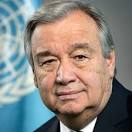
UN Secretary General Antonio Guterres has called on governments, the private sector, civil society, and community leaders to scale up investment in proven solutions, and ensure they reach every girl, everywhere.
Guterres made the call in his message to mark the 2026 International Day of the Girl Child under the theme “End child marriage and invest in girls’ rights!”
International Day of the Girl, celebrated annually on October 11, is a global moment to celebrate girls everywhere, amplifying their voices, actions and leadership.
The UN chief, however, used the 2026 celebration to call for end to child marriage.
“Together, let us defend the right of all girls to a childhood, and ensure every daughter, every sister, grows up free to shape her own future,’’ he said.
According to him, every three seconds, child marriage cuts a girl’s childhood short and one in five girls worldwide is married before the age of 18.
“Child marriage compromises the education, health, and safety of millions of girls across the globe. Fundamentally, it is rooted in poverty.
“The risk goes up in times of conflict, climate shocks, and displacement, leaving families with fewer options for their daughters.”
Guterres said educating girls and providing economic opportunities for their families would halt the harmful practice.
“But we know how to halt this harmful practice. Keeping girls in school, improving economic opportunities for families, enhancing social and legal protections, and challenging discriminatory gender norms all help girls reclaim their agency.
“Over the past 25 years, such solutions have prevented an estimated 68 million child marriages.
“Yet recent funding cuts threaten progress. At the rate we’re going, it will take centuries to eliminate child marriage,’’ he said.



Adeniyi, JAMB Registrar Seek Operational Synergy
ShareBy Tambaya Julius, Abuja The Nigeria Customs Service (NCS) and the Joint Admissions and Matriculation Board (JAMB) are considering areas...


NLC Suspends FCT Indefinite Strike
ShareThe Nigeria Labour Congress (NLC), Federal Capital Territory (FCT) Council, has suspended its indefinite strike and directed all affected workers,...


APC Dismisses Alleged Plot to Assassinate Atiku
ShareThe All Progressives Congress (APC) Presidential Campaign Council (PCC) has dismissed allegations that the Federal Government is plotting to assassinate...


2027: We’ll Deliver Rivers, FCT for Tinubu – Wike
ShareBy Laide Akinboade, Abuja The Minister of the Federal Capital Territory (FCT), Nyesom Wike, has declared that the All Progressives...


Tinubu’s Three Bills and the Burden of Government
ShareBy Tom Chiahemen A government that asks its citizens to endure the pain of economic reform must demonstrate a corresponding...

DMO Raises N2.02trn As FGN Bond Yields Rise To 17.29 Per Cent
ShareBy Tony Obiechina, Abuja Yields on Federal Government of Nigeria (FGN) bonds increased by as much as 50 basis points...


Anxiety Grips FCT Residents As FG Confirms Ebola Disease Case
ShareBy Laide Akinboade, Abuja The Federal Government (FG), on yesterday confirmed one case of Ebola disease in the Federal Capital...


Again, Tinubu Rules Out Return to Petrol Subsidy Regime
ShareBy Tambaya Julius, Abuja President Bola Ahmed Tinubu has ruled out a return to petrol subsidy, insisting that his administration...


Former Delta Governor Uduaghan Dies at 70
ShareFrom Francis Sadhere, Delta Former Governor of Delta State, Dr. Emmanuel Eweta Uduaghan, has died. Uduaghan, who governed the state...


Customs Opens Review for Disqualified Recruits, Flags 397 Applicants
ShareBy Tambaya Julius, Abuja The Nigeria Customs Service (NCS) has opened a review process for applicants disqualified during its recent...