
POLITICS
Wakil Commends Bala, Makinde, Turaki’s Courage, Political will at Party National Party Secretariat

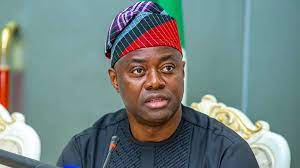
From Ajiya Ayuba, Bauchi
The 2023 general elections candidate of the People’s Democratic Party (PDP) for Bogoro, Dass and Tafawa-Balewa federal constituency, Iliya Godiya Wakil, said that the courage of Governor, Bala Mohammed Abdulkadir, at the Wadata Plaza National party Secretariat, safeguarded the party and the Nigerian democracy.
In an interview with our correspondent, Wakil said that the governor emerged as a beacon of stability, anchoring his loyalty to the legitimately constituted leadership of the great party. He said that Bala’s resolute posture, marked by dignified composure and unwavering adherence to procedural rectitude, effectively neutralised escalating disorder and reaffirmed the inviolability of the democratic institutions at a moment of acute volatility.He further said that Bala’s intervention transcended mere conflict management; it exemplified authentic statesmanship rooted in integrity, vision, and an unyielding commitment to democratic continuity.According to him, said that “Governor Bala Mohammed’s valor in championing legitimacy over subversion, unity over Balkanization, and transparency over clandestine power-play fortified not only the structural cohesion of the PDP but also the broader democratic fabric of our nation”Adding that “As one who seeks to serve my constituency with the same elevated sense of purpose, I hold his exemplary conduct as a political compass proving that leadership, at its highest form, demands courage, conviction, and an unshakeable dedication to the collective destiny of our people”“As an aspiring representative committed to principled leadership, I am profoundly inspired by the extraordinary courage and political sophistication displayed by Senator Bala Abdulkadir Mohammed (Kauran Bauchi) during today’s tumultuous events at the PDP National Secretariat”Honorable Iliya Godiya Wakil, also commended the efforts of Governor Seyi Makinde of Oyostate and the newly elected National Chairman of the party, Honorable Kabiru Tanimu Turaki and other supporters.












The Independent National Electoral Commission (INEC) has restated its commitment to an inclusive electoral process.
The Resident Electoral Commissioner (REC) in Oyo State, Prof. Adeniran Tella, stated this on Wednesday in Ibadan at a training programme for Persons with Disabilities (PWDs) ahead of the 2027 general election.
Tella noted that persons with one form of disability or another constitute an important segment of the society.
He said such individuals are citizens with equal rights, responsibilities, aspirations and contributions to make towards the development of the country.
He said: “The commission recognises that electoral inclusion goes beyond permitting PWDs to register and vote.
“It also involves ensuring that they have access to reliable electoral information, understand electoral procedures, can access polling units and are able to participate in other aspects of the electoral process.”
Tella said the commission would provide relevant assistive devices such as magnifying glasses, Braille guides and posters for voters with hearing impairments at polling units to give Persons with Disabilities a more pleasant voting experience on election days.
He added that INEC guidelines and regulations provide that priority should be accorded to PWDs at polling units without them having to wait in long queues during voting.
He further said that eligible PWDs would be engaged and trained as ad-hoc staff during the elections.
The REC explained that the objective of the commission was to ensure that eligible PWDs in the state were not discouraged, excluded or prevented by avoidable barriers from exercising their franchise during the elections.
He further asserted that “democracy is stronger when every eligible citizen has a fair opportunity to participate in shaping its future.”
He urged PWDs across the state to cooperate with the commission to remove avoidable barriers, promote electoral awareness and encourage peaceful participation.
The state Chairman of the Joint National Association of Persons with Disabilities (JONAPWD), Oluwaranti Abiodun, commended INEC for giving special consideration to PWDs ahead of the forthcoming general election.
Abiodun urged the electoral body to give priority to the plights of Persons with Disabilities when planning its activities towards the conduct of the elections.
He demanded that more consideration should be given to eligible PWDs who are interested in working as ad-hoc staff.
He also called on members of the association to support INEC and be ready to perform their civic responsibilities during the 2027 elections. (NAN)
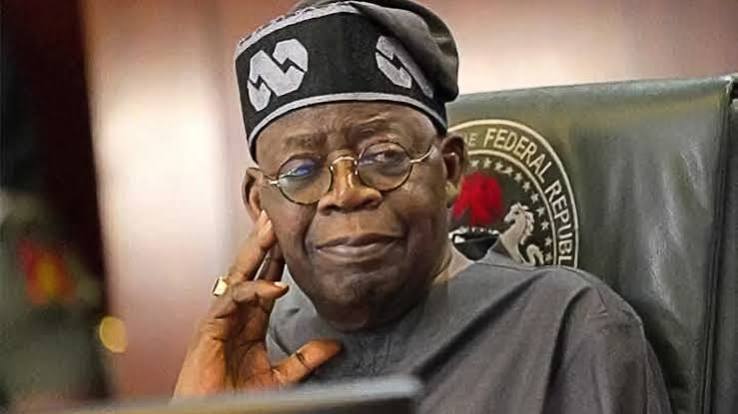
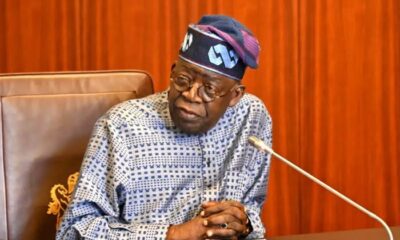
President Bola Tinubu has assured Nigerians that governance will not take a backseat to electioneering ahead of the 2027 presidential election.
Tinubu gave the assurance on Wednesday while inaugurating the All Progressives Congress (APC) Presidential Campaign Council (PCC) at the State House, Abuja.
He said the responsibilities of his office would continue uninterrupted, stressing that the country required sustained attention to its pressing national priorities.
“The responsibility of this office does not pause,” the president declared.
Tinubu said he would continue engaging Nigerians on his administration’s achievements and development agenda but would leave the Council to coordinate campaign activities across states and local government areas.
“I will still make time to speak directly with Nigerians, even as you lead the campaign in the states and local government areas.
“So you will excuse me from going everywhere with you. We have bills to pay,” he said.
The President said the government had financial obligations to meet and needed to attract investors to support the country’s economic growth and future development.
“The job must go on. We have bills to pay. The American creditors cannot wait. We want those investors to come in, be here to stay, to invest for the future of our children,” Tinubu said.
He declared the APC ready for the 2027 elections, describing the inauguration as a renewal of the party’s commitment to Nigerians and its responsibilities as the governing party.
“The APC is ready. We have not gathered merely to inaugurate a council.
“We have gathered to renew a covenant, a covenant with Nigerian people and the historic responsibility they have entrusted to us as Nigeria’s governing party.
“We promise we will not let them down,” he said.
Tinubu urged members of the Council to take the party’s vision, record of achievements and development agenda to Nigerians across the country, including communities and wards.
“Let the word go out from this hall to every corner of our nation. The APC is ready.
He charged party members to remain steadfast in nation-building, citing his record as Lagos governor, when he spearheaded measures to tackle the looming threat of Atlantic Ocean flooding.
“There is no limit to daring. You must dare, you must be determined,” he said.
The President also cautioned APC governors, lawmakers and other party leaders against taking previous electoral efforts for granted, urging them to demonstrate commitment ahead of the 2027 elections.
The event was witnessed by Vice-President Kashim Shettima, Senate President Godswill Akpabio, Speaker Tajudeen Abass, governors, top politicians, and APC youth and women groups, among other dignitaries.
The APC Presidential Campaign Council, led by Director-General Sen. Abdulaziz Yari, is set to kick off its presidential campaign in Kaduna on October 24. (NAN)
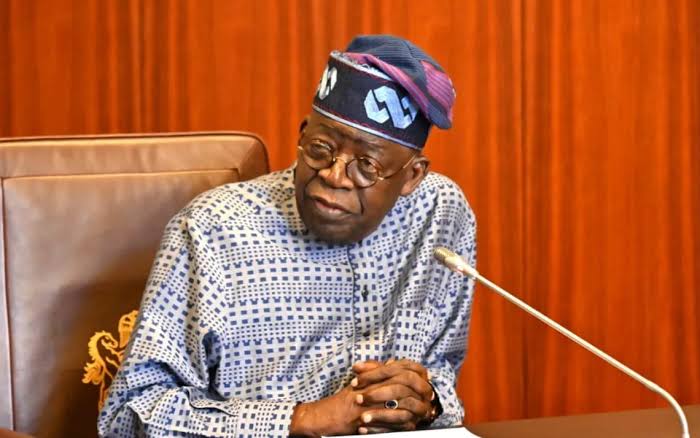
By Tambaya Julius, Abuja
President Bola Ahmed Tinubu has said he will not allow political campaigns ahead of the 2027 general elections to distract him from governing the country, stressing that national responsibilities must remain a priority.
Tinubu stated this on Wednesday while inaugurating the All Progressives Congress (APC) Presidential Campaign Council (PCC) at the State House Conference Centre, Abuja.
He said the responsibility of running the country would continue regardless of campaign activities, adding that he would focus on governance while party leaders and campaign officials coordinate the APC’s activities across the country.
“The responsibility of this office does not pause,” the President declared.
Tinubu said he would still make time to address Nigerians on his administration’s achievements and plans, but would not be able to attend every campaign engagement across the states and local government areas.
“However, I will still make time to speak directly with Nigerians, even as you lead the campaign in the states and local government areas. So you will excuse me from going everywhere with you. We have bills to pay,” he said.
The President also declared the APC ready for the 2027 elections, describing the inauguration of the Campaign Council as an opportunity for the party to renew its commitment to Nigerians.
He said the party’s responsibility went beyond setting up a campaign structure, noting that it must remain mindful of the trust Nigerians had placed in it as the ruling party.
“The APC is ready. We have not gathered merely to inaugurate a council. We have gathered to renew a covenant, a covenant with Nigerian people and the historic responsibility they have entrusted to us as Nigeria’s governing party. We promise we will not let them down,” Tinubu said.
He charged members of the council to take the party’s message, its record and development agenda to Nigerians across the country.
The President urged them to ensure that the APC’s campaign reaches communities and wards nationwide as the party prepares for the 2027 general elections.


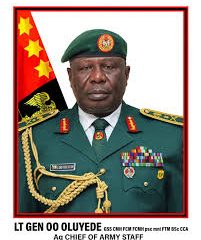

Economic Independence: CDS Empowers Veterans with Skills
ShareThe Chief of Defence Staff (CDS), Gen. Olufemi Oluyede, has reaffirmed the commitment of the Defence Headquarters (DHQ) to improving...


Beyond 23 Per Cent MPR, Should CBN Reconsider 45 Per Cent CRR to Unlock Credit?
ShareBy Blaise Udunze The last Monetary Policy Committee (MPC) meeting of the Central Bank of Nigeria (CBN) was its 307th...
Shame of a Nation: Cacophony Trails Igbokoba Naf Aircraft Crash
ShareThe tragic crash of a Nigerian Air Force (NAF) ATR-42 aircraft, registration number NAF 931, in the swampy terrain of...
CBN: Nigeria’s Foreign Reserves hit $58.81bn, Highest in 18 Years
ShareBy Tony Obiechina Abuja Nigeria’s foreign exchange reserves rose to $58.81 billion on October 12, 2026, their highest level since...

INEC Engages PWDs, Reaffirms Commitment to Inclusive Electoral Process
ShareThe Independent National Electoral Commission (INEC) has restated its commitment to an inclusive electoral process. The Resident Electoral Commissioner (REC)...


2027: Governance Won’t Take Back Seat to Campaigns –Tinubu
SharePresident Bola Tinubu has assured Nigerians that governance will not take a backseat to electioneering ahead of the 2027 presidential...


NYSC DG Task Corps Members on Safety, Networking
ShareFrom Mike Tayese, Yenagoa The Director-General of the National Youth Service Corps (NYSC), Brigadier General O. O. Nafiu, has urged...


Nigeria, EU, Euro Bank Sign €14m Grant Agreement on Fibre-Optic Infrastructure
ShareBy Tony Obiechina, Abuja The Federal Government of Nigeria, the European Union (EU) and the European Bank for Reconstruction and...

Tinubu: I Won’t Abandon Governance for 2027 Campaigns
ShareBy Tambaya Julius, Abuja President Bola Ahmed Tinubu has said he will not allow political campaigns ahead of the 2027...
El-Rufai, Associates Earmark $600,000 to Pay EFCC Officials, DSS Tells Court
ShareBy Tambaya Julius, Abuja A forensic investigator with the Department of State Service (DSS), Segun Kayode, on Tuesday told a...