
Foreign News
WHO Commends Senegal for Eliminating Trachoma


The World Health Organization (WHO) has validated Senegal’s elimination of trachoma as a public health problem, making it the ninth country in WHO’s African Region to have achieved the feat.
WHO Director-General Tedros Ghebreyesus, in a statement, lauded the country for freeing its population of the disease.
“This milestone is yet another sign of the remarkable progress being made against neglected tropical diseases globally, and offers hope to other countries still working to eliminate trachoma.
”Trachoma has been known in Senegal since the early 1900s and was confirmed as a major cause of blindness through surveys in the 1980s and 1990s.
Senegal joined the WHO Alliance for the Global Elimination of Trachoma in 1998, conducted its first national survey in 2000, and completed full disease mapping by 2017 with support from the Global Trachoma Mapping Project and Tropical Data.
Trachoma control was consistently integrated into national eye health programmes – first under the National Programme for Blindness Prevention (PNLC) and later through the National Programme for the Promotion of Eye Health (PNPSO).
The country’s consistent integration of trachoma control into its national eye health programmes positioned it to significantly maintain its commitment to the elimination of the disease.
“Today we celebrate our victory against trachoma, 21 years after the one against dracunculiasis”, Dr Ibrahima Sy, Senegal’s Minister of Health and Social Action, said.
“This new milestone reminds us that our overarching goal remains a Senegal free from neglected tropical diseases.
“We are fully committed to this, and we are making good progress, notably against human African trypanosomiasis (sleeping sickness) and onchocerciasis”.
Senegal implemented the WHO-recommended SAFE strategy to eliminate trachoma with the support of partners, reaching 2.8 million people who needed them across 24 districts.
These activities included the provision of surgery to treat the late blinding stage of the disease and conducting antibiotic mass drug administration of azithromycin donated by Pfizer through the International Trachoma Initiative.
Similarly, public awareness campaigns were carried out to promote facial cleanliness and improvement in access to water supply and sanitation.
Trachoma is the second neglected tropical disease to be eliminated in Senegal. In 2004, the country was certified free of dracunculiasis (Guinea-worm disease) transmission.
Senegal now joins 24 other countries that have been validated by WHO for eliminating trachoma.
The 24 countries are Benin, Burundi, Cambodia, China, Gambia, Islamic Republic of Iran, Lao People’s Democratic Republic, Ghana, India, Iraq, Malawi, and Mali.
The others are Mauritania, Mexico, Morocco, Myanmar, Nepal, Oman, Pakistan, Papua New Guinea, Saudi Arabia, Togo, Vanuatu, and Vietnam.
These countries are part of a wider group of 57 countries that have eliminated one or more neglected tropical diseases.
WHO is supporting Senegal’s health authorities to closely monitor communities in which trachoma was previously endemic, to ensure there is no resurgence of the disease.
“Trachoma has cast a shadow over communities in Senegal for more than a century.
“This long-awaited validation is not only a milestone for public health but a powerful tribute to the tireless dedication of frontline health workers, communities, government leaders, and partners who never gave up,” Dr. Jean-Marie Vianny Yameogo, WHO Representative in Senegal, said.
“Today, we close a chapter that began over a hundred years ago, united with pride, gratitude and resolve. WHO remains committed to supporting Senegal as the country continues to lead in sustaining this hard-earned achievement.”
Trachoma remains a public health problem in 32 countries, with an estimated 103 million people living in areas requiring interventions against the disease.
Trachoma is found mainly in the poorest and most rural areas of Africa, Central and South America, Asia, the Western Pacific and the Middle East.
WHO’s African Region is disproportionately affected by trachoma, with 93 million people living in at-risk areas in April 2024, representing 90% of the global trachoma burden.
Significant progress has been made in the fight against trachoma over the past few years, and the number of people requiring antibiotic treatment for trachoma in the African Region fell by 96 million from 189 million in 2014 to 93 million as of April 2024, representing a 51 percent reduction.
There are currently 20 countries in WHO’s African Region that are known to require intervention for trachoma elimination.
They are Algeria, Angola, Burkina Faso, Cameroon, Central Africa Republic, Chad, Côte d’Ivoire, Democratic Republic of the Congo, Eritrea, Ethiopia, and Guinea.
The others are Kenya, Mozambique, Niger, Nigeria, South Sudan, the United Republic of Tanzania, Uganda, Zambia, and Zimbabwe.
A further 3 countries in the Region (Botswana, Guinea-Bissau and Namibia) claim to have achieved the prevalence targets for elimination.
At least 72 civilians who had been prospecting for gold in a border region of Sudan have been killed in air strikes, a regional rights group said.
Emergency Lawyers, based in the Sudanese capital, Khartoum, said jets targeted the so-called artisanal miners at a popular gold mining site on Saturday.
Neither the Egyptian government nor the de facto Sudanese authorities have so far commented.
Cairo has previously faced accusations of deadly strikes on gold prospectors as part of a crackdown on illicit activity along its southern border.
Emergency Lawyers noted the previous alleged attacks and said they represented not only a violation of Sudan’s sovereign territory but demonstrated the government’s lack of control over the region.
“The deliberate targeting of unarmed civilians violates international humanitarian law and the right to life,” it said in a statement on Sunday. “These acts may constitute war crimes.”
It noted that its death toll was provisional and could rise.
The Paris-based Sudan Tribune reported that the death toll could far exceed the number reported by Emergency Lawyers, citing a survivor of Saturday’s attack who said many more people had been injured.
Eyewitnesses said the attack began around 06:00 local time (04:00 GMT), with the aircraft firing more than five missiles directly at the miners’ camps, destroying them and excavation pits with people still inside, the newspaper wrote.
The Sudan Tribune reported claims in June that Egyptian forces had used drones and artillery to target artisanal mining sites in the same region, killing several, after sporadic incidents of Egyptian border guards of burning equipment, torching temporary shelters, and firing live ammunition to disperse mine workers.
Days later, Egypt’s border agency announced that it and the military had begun a sweeping security campaign along the border to foil illegal migration, drug smuggling and illegal mining.
At the same time, Sudan’s de facto leader announced an investigation into the alleged strikes, which were said to have killed dozens.
Gold lies at the core of the border tensions.
Sudan’s ongoing civil war has led to a surge in artisanal mining – and often risky practice conducted by civilians with rudimentary tools and without official permission – particularly in remote areas near its borders.
Gold-rich areas lie along porous borders in terrain historically associated with cross-border smuggling routes, with artisanally mined gold potentially feeding into those channels.
Egypt’s border force said in June that it had seized 86 tonnes of gold ore along with amateur prospecting equipment.
Artisanal mining has also reportedly continued in Sudan’s conflict zones and smuggled gold may be a source of income for armed insurgent groups.
This has raised concerns of illicit Sudanese gold undermining the legitimate Egyptian gold market.
Several German fighter jets will take part in the Northern Atlantic Treaty Organisation (NATO) annual nuclear defence exercise this week as troops from 17 countries take part in the Steadfast Noon drill.
The German Air Force said three Tornado jets will take part in the exercise hosted by Italy, which starts Tuesday and runs for about a week and a half.
The jets are normally stationed in Büchel in the German state of Rhineland-Palatinate.
NATO has not revealed the exercise scenario but said its scale would be comparable to last year’s drill, which involved around 2,000 personnel and more than 70 aircraft.
Last week, NATO’s head of nuclear policy, Nassima Barrows, said the exercise was designed to demonstrate the alliance’s readiness and ability to defend its territory.
No real nuclear weapons will be used, she added.
NATO said the exercise was not linked to current events or directed at any specific country.
Military experts say the drills, held regularly in October, include practising the safe transport of weapons from underground storage facilities to aircraft and mounting them on fighter jets.
Only practice bombs without real nuclear warheads are used during the drills.
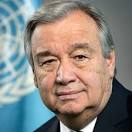
UN Secretary General Antonio Guterres has called on governments, the private sector, civil society, and community leaders to scale up investment in proven solutions, and ensure they reach every girl, everywhere.
Guterres made the call in his message to mark the 2026 International Day of the Girl Child under the theme “End child marriage and invest in girls’ rights!”
International Day of the Girl, celebrated annually on October 11, is a global moment to celebrate girls everywhere, amplifying their voices, actions and leadership.
The UN chief, however, used the 2026 celebration to call for end to child marriage.
“Together, let us defend the right of all girls to a childhood, and ensure every daughter, every sister, grows up free to shape her own future,’’ he said.
According to him, every three seconds, child marriage cuts a girl’s childhood short and one in five girls worldwide is married before the age of 18.
“Child marriage compromises the education, health, and safety of millions of girls across the globe. Fundamentally, it is rooted in poverty.
“The risk goes up in times of conflict, climate shocks, and displacement, leaving families with fewer options for their daughters.”
Guterres said educating girls and providing economic opportunities for their families would halt the harmful practice.
“But we know how to halt this harmful practice. Keeping girls in school, improving economic opportunities for families, enhancing social and legal protections, and challenging discriminatory gender norms all help girls reclaim their agency.
“Over the past 25 years, such solutions have prevented an estimated 68 million child marriages.
“Yet recent funding cuts threaten progress. At the rate we’re going, it will take centuries to eliminate child marriage,’’ he said.




Senator Abba Moro: It is Time to Go Home
ShareBy Cleopas Agada For seven years in the National Assembly, what has Benue South actually felt? For a man who...


NCDs Fastest-growing Disease Burden in Nigeria — Pate
ShareThe Coordinating Minister of Health and Social Welfare, Prof. Muhammad Pate, said Non-Communicable Diseases (NCDs) have become one of the...


2027: Adeleke Inaugurates Aare Asejere’s Campaign Council
ShareFrom Ayinde Akintade, Osogbo The Governor of Osun State, Senator Ademola Adeleke, yesterday charged newly inaugurated members of the Osun...


INEC Seeks Stakeholders’ Collaboration for Credible, Peaceful Elections
ShareThe Independent National Electoral Commission (INEC) has reaffirmed its commitment to strengthen collaboration with the National Orientation Agency (NOA), security...
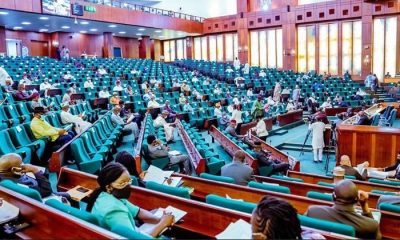

Reps Reject Child Marriage, Demand Protection of Girl Child
ShareBy Ubong Ukpong, Abuja The House of Representatives on Thursday unanimously called for urgent and coordinated actions to protect Nigerian...


Court Awards N125, 000 Cost against Odumodublvck
ShareAn Abuja High Court on Wednesday awarded N125, 000 against a rapper, Tochukwu Ojogwu, popularly known as “Odumodublvck”, for asking...


Hunger Changed My Mind, Timini Egbuson on Embracing YouTube movies
ShareNollywood actor Timini Egbuson has reflected on his changing perception of YouTube movies, joking that he might have struggled financially...


Peller Announces Livestream with Peter Obi
SharePopular Nigerian TikTok streamer, Hamzat Adelaja, popularly known as Peller, has announced an upcoming livestream with the presidential candidate of...

Nigeria’s inflation drops from 15.39 Per Cent to 14.63 Per Cent in September
ShareBy Tony Obiechina, Abuja The National Bureau of Statistics (NBS) on Thursday disclosed that Nigeria’s inflation has eased from 15.39...


Senate Oders Investigation into Corps Member’s Death in Enugu
ShareBy Tambaya Julius, AbujaThe Senate has ordered an investigation into the death of a National Youth Service Corps (NYSC) member,...