
OPINION
WHO DARES RECHRISTEN THE UNIVERSITY OF ILORIN?


By Tunde Olusunle
Whenever I’m privileged to visit Ilorin the Kwara State capital, I include in my itinerary a visit to the University of Ilorin, Unilorin, as is popularly abbreviated. My passion, maybe obsession with the institution is informed by a number of reasons.
Principal among these is the fact that I had two academic excursions to the revered school, during which I obtained a bachelors honours and a masters degree in English, respectively. I was graciously offered a place on the doctorate programme by the university but had to weigh up the cost of shuttling between my home in Abuja and Ilorin. This was years before information technology truly broke down physical hedges and activated the options of real-time, virtual communication. What with Skype, zoom, video call, and similar possibilities?The security situation in Nigeria hadn’t degenerated as much back then, but I had to give consideration to the long drive from Abuja to Ilorin before the latter day restoration of flights in and out of Ilorin. But who dares to shuttle by air between Abuja and Ilorin today with the preposterous costs of air tickets across the country? You will equally excuse my attachment to Unilorin for the cogent reason that it was on the earth and dust of the primordial “mini-campus” of the institution that I met my beloved friend and wife, when I was a postgraduate student 36 years ago! I should equally add that four of my siblings attended the same institution at various times. Not forgetting the fact that many of my most enduring friendships and acquaintances were cultivated in Unilorin.
And so on my visit to Ilorin in August this year, I undertook my usual tour of Unilorin. Chauffeured by my good friend, Segun Sobogun, I observed to the right side of the road as we approached the densely developed section of the campus, a novel signboard which popped up in my eyes. Inscribed on the signage was *Centre for Ilorin Studies, (CIS).* My curiosity was aroused. Why such an institute in a tertiary institution wholly established and funded by the federal government? Does Unilorin intend to create such centres for as many ethnicities and cultures as are represented in the university community? I mean, should my kith in the Okun country in Kogi State, one of the principal catchments of Unilorin expect such a creation in my *alma mater* sometime soon? Impulsively, I turned to Sobogun who is also a “stakeholder” in the institution. His wife, Bukola schooled in the university. Segun himself received a masters in business administration from Unilorin. *Man mi,* I asked him in Yoruba. “What are you guys up to here?” He is from Lagos State but resident in Ilorin. He was as bemused as I was at that discovery.
Signs of looming attempts at the wholesale appropriation of the sociopolitical space in the old Kwara State by a specific tendency were already evident several decades ago. I’ve referenced elsewhere how I was denied a job as “current affairs officer” at the erstwhile Kwara State Broadcasting Corporation, aliased as “Radio Kwara” back in 1986, four decades ago.The chairman of the panel which interviewed me told me for a fact that I led the pack of post-NYSC applicants on that occasion. The fact of being of the Christian faith with the biblical name “Emmanuel,” however, was my albatross. The Okun people who straddle six of the 21 local government areas in present day Kogi State, were enthusiastic at their excision from the old Kwara State and incorporation into the new geo-polity. They presumably fled from the stranglehold of the proverbial “Egypt,” the dominant ethnicity in the former state, during the August 1991 states creation exercise. That the Okun people are worse off today, 32 years after exiting Kwara, and wilfully trampled upon by the Igala and Ebira respectively, is stuff for another expository.
It emerged on “Boxing Day,” December 26, 2023, that an association which goes by the name “Ilorin Emirates Descendants Progressives Union,” (IEDPU), has called for the renaming of the University of Ilorin after the founder of the Alimi Dynasty, Sheikh Alimi ibn Solihu ibn Janta. President of the IEDPU, Aliyu Otta-Uthman made the admonition at the 58th national conference of the union in Ilorin. Otta-Uthman noted that the request for the rechristening of the university is made as a mark of honour to Sheikh Alimi, founder of the Alimi dynasty. He alluded to the former University of Sokoto which is now “Uthman Danfodio University” after the founder of the Sokoto caliphate, and the Modibbo Adama University, Yola, named after Adama ibn Ardo Hassana, founder of the Adamawa Emirate. Otta-Uthman enjoined the Kwara State government to work with its federal parliamentarians towards the actualization of this desire. Otta-Uthman equally requested an official directive to all ministries, departments and agencies, (MDAs) in the “Ilorin Emirate” to display, henceforth, the portrait of the Emir of Ilorin, Ibrahim Sulu-Gambari, alongside those of the president and governor, in their offices!
Of all the concerns which should engage Nigerians at a time like this, it is amusing that mundane issues like the change of a brand of 50 years is what pre-occupies the mind of Otta-Uthman. Spiralling inflationary trends; pervading economic dysfunctions; real and crippling hunger;
festering insecurity; decrepit infrastructure and mass despondency among others aside, the leader of the IEDPU is principally concerned about the renaming of Unilorin. While Otta-Uthman has alluded to federal universities in Sokoto and Yola, he is definitely oblivious of the fact that most federal universities actually still retain the names they had at inception.
*Jeremiah Obafemi Awolowo* the charismatic Yoruba leader was deservedly honoured with the rechristening of the former University of Ife after him. This was in acknowledgement of his visionary endeavour in conceptualising and developing of that iconic institution which once held the record of arguably the most beautiful university campus in Africa. The erstwhile University of Ife, was one of Awolowo’s several heroics in the consummation of the growth of the old Western region. Students and stakeholders of the University of Lagos, resisted and rebelled against the attempt by the government of former President Goodluck Jonathan, to re-designate the school after Moshood Kashimawo Olawale Abiola in 2012. They voted loud and clear for the retention of the preexisting name and brand.
What does Otta-Uthman have to say about the University of Ibadan; University of Nigeria Nsukka, (UNN); University of Benin; University of Calabar; University of Jos; University of Maiduguri; University of Port Harcourt, and so on? For his pioneering role in perspectivising African literature, why has UNN not been renamed *Chinua Achebe University?* Why hasn’t the University of Ibadan changed name to *Wole Soyinka University* an alumnus of the citadel for being the very first African recipient of the coveted Nobel Prize for Literature? Despite the dominance of the *Binis* in the ethnocultural life of Edo State, why hasn’t there been a request for the change of the name of the University of Benin, to that of the *Oba of Benin?* Why haven’t the federal government-owned universities in Jos, Abeokuta or Minna been re-labelled after Yakubu Gowon, Olusegun Obasanjo and Ibrahim Babangida respectively for their various roles in national development?
Aren’t there sufficient institutions within the sphere of the Ilorin Emirate which can be baptised after Sheikh Alimi? There is the Kwara State University, (KWASU); Kwara State Polytechnic and Kwara State College of Education, among others. There are conversations around the imminent establishment of a “Kwara State University of Education” even as Otta-Uthman also canvasses the establishment of a “Kwara State University of Science and Technology.” Left to him all these proposed institutions should be sited within Ilorin Emirate, without a thought about the continuing marginalisation of other sections of Kwara State. Indeed, questions are not being asked about the capacity of the state government to adequately fund these spawning citadels on a sustainable basis. This is the specie of powdery thinking, exclusivity, greed and avarice consuming this country.
That the very same Otta-Uthman also advocates the display of the portrait of the Emir side-by-side with those of the president and the governor of Kwara State is another laughable distraction. In what way does the hoisting or not of the Emir’s portrait, impact the prices of foodstuffs in *Ogbondoroko,* *Baboko,* *Eiyenkorin,* *Ganmo,* *Opo Malu,* *Gaa Akanbi,* *Mararaba* and similar outlets within Ilorin Emirate? How does it positively affect the socioeconomic development of the Ilorin Emirate and Kwara State at large? Will it boost the gross domestic product, (GDP) of the state or improve the per capita income of Kwarans? We need to get serious in this country away from needless drift into the outrightly absurd, comical, farcical, even idiotic.
Dreamers and conjurers of whatever scheme it is to baptise the University of Ilorin, our own *Better By Far* citadel, better perish the thought. It won’t happen. The last time I checked, that institution has produced and blessed the whole wide world with over 300,000 well trained and properly skilled manpower. “Great *Unilorites”* as we hail ourselves will be found excelling across callings and professions, across all continents of the world. The denominator we all know is the University of Ilorin. It stays at that. Ours is a global designer brand which cannot, on the eve of its golden jubilee in two years time, be minimised into a local archetype. If push comes to shove, Senior Advocates of Nigeria, (SANs) in our ranks and their very experienced professional colleagues will lead the way to the courtrooms. Sanity and status quo should be maintained, please.
Tunde Olusunle, PhD, FANA, poet, journalist, scholar and author is a Fellow of the Association of Nigerian Authors, (ANA)
By Nafisat Bello
“Ghosts are supposed to haunt abandoned buildings, not government payrolls. They do not possess bank accounts, collect monthly salaries, pay taxes or operate ATMs. Yet, in Nigeria, our ghosts have become some of the country’s highest-paid ‘public servants.
’”Nothing better illustrates the tragedy of Nigeria’s public finance than the persistent menace of ghost workers.
It is perhaps one of the most absurd forms of corruption ever conceived — a crime in which people who neither exist nor render any service continue to receive salaries month after month and year after year, while hospitals lack essential equipment, schools struggle for funding, and genuine civil servants wait endlessly for promotions and improved welfare.The recent final forfeiture of ₦941.9 million recovered by the Independent Corrupt Practices and Other Related Offences Commission (ICPC) from an Integrated Personnel and Payroll Information System (IPPIS) fraud is therefore far more than another anti-corruption success story. It is a sobering reminder that Nigeria’s greatest fiscal enemies are not invisible ghosts, but real people exploiting institutional weaknesses for personal gain.
The funds were recovered during the ICPC’s investigation into payroll fraud within the IPPIS. On 13 July, Justice Binta Fatima Nyako of the Federal High Court in Abuja ordered the permanent forfeiture of the money to the Federal Government, concluding one of the Commission’s most significant payroll fraud investigations in recent years.
Court documents show that the investigation traced suspicious payroll-related transactions to 909 bank accounts spread across 17 financial institutions, including Access Bank, First Bank, GTBank, UBA, Zenith Bank, Polaris Bank, Stanbic IBTC, Fidelity Bank, Wema Bank, Jaiz Bank, Union Bank, Unity Bank, FCMB, Sterling Bank, Ecobank, Keystone Bank, and NPF Microfinance Bank.
Investigators also discovered that several suspects operated multiple accounts across different banks — a pattern commonly associated with money laundering and the layering of illicit funds. Those implicated reportedly came from diverse professional backgrounds, including individuals linked to the security sector.
The funds, initially preserved in the ICPC Recovery Account, were found to be proceeds of unlawful activities involving payroll manipulation, ghost-worker schemes, and unauthorised salary payments under the IPPIS platform.
While the forfeiture marks a major legal victory, it also raises deeper questions about accountability, institutional integrity, and the resilience of Nigeria’s public financial management systems.
The uncomfortable truth is that ghost workers do not create themselves.
Behind every fictitious employee is a network of real people — officials who create fake identities, supervisors who approve payroll entries, administrators who process payments, accountants who ignore obvious irregularities, and beneficiaries who quietly withdraw salaries for jobs that are never performed.
Ghost workers are not software errors. They are products of organised human collusion.
That is why payroll fraud should never be dismissed as a mere administrative lapse. It is organised financial crime perpetrated from within institutions entrusted with safeguarding public resources.
Perhaps the most revealing aspect of this case is not the amount recovered but the sheer scale of the financial network uncovered.
How did suspicious transactions involving 909 accounts across numerous financial institutions continue for so long without triggering stronger compliance mechanisms? Why were unusual transaction patterns apparently not detected much earlier? Could more robust anti-money laundering controls, transaction monitoring systems, and Know-Your-Customer (KYC) procedures have disrupted the scheme before it reached this magnitude?
These questions should not be interpreted as accusations against the banks involved. Processing transactions does not automatically imply complicity.
However, financial institutions occupy a critical position in Nigeria’s anti-corruption architecture. They are expected to detect suspicious financial activities, report unusual transactions, and maintain compliance systems capable of identifying abnormal patterns before they become national scandals.
If a payroll fraud investigation ultimately involved hundreds of accounts spread across multiple banks, then the financial sector must also examine whether its monitoring systems are sufficiently proactive rather than merely reactive.
Fighting corruption is not the exclusive responsibility of anti-graft agencies. It is a shared obligation involving regulators, financial institutions, auditors, public institutions, and every stakeholder entrusted with protecting public resources.
Ironically, one of the greatest lessons from this scandal is that the very platform established to eliminate payroll fraud became the target of one of the country’s largest payroll manipulation schemes.
The Integrated Personnel and Payroll Information System was introduced to centralise salary administration, eliminate ghost workers, and improve transparency in government payroll management. To a considerable extent, it has delivered significant savings over the years.
Yet this investigation demonstrates a timeless reality: technology can close loopholes, but it cannot eliminate corruption where individuals retain the ability to manipulate systems, abuse privileged access, or collude across institutions.
Digital platforms strengthen governance, but they cannot replace integrity.
As corruption evolves, oversight must evolve even faster.
Nigeria often celebrates recovered assets with understandable enthusiasm. Every forfeiture order, every confiscated property, and every recovered account is presented as evidence that anti-corruption agencies are making progress.
Indeed, recovery matters. It reassures citizens that stolen public funds can be traced and reclaimed, while sending a powerful message that crime does not always pay.
But recovery should never become the principal measure of success.
The real benchmark is how much public money never gets stolen in the first place.
Recovering ₦941.9 million is commendable. Preventing its diversion altogether would have been far more valuable.
Every naira stolen creates immediate consequences that cannot simply be reversed by a later court order. Delayed salaries, abandoned infrastructure projects, underfunded hospitals, overcrowded classrooms, and declining public services all represent the hidden costs of corruption — costs citizens bear long before any stolen funds are eventually recovered.
Justice delayed may still be justice. Public service delayed is often irreversible.
The judgment also highlights the indispensable role of the judiciary in the fight against corruption. Investigations alone do not recover public funds; asset recovery ultimately depends on judicial scrutiny and due process.
By granting the final forfeiture order after carefully evaluating the ICPC’s evidence, the Federal High Court reaffirmed an important principle: recovered assets must become public property only through lawful judicial processes.
That strengthens confidence in Nigeria’s justice system while protecting legitimate property rights from arbitrary state action.
The ICPC deserves commendation for painstakingly tracing illicit funds across hundreds of accounts and securing judicial approval for their forfeiture. Such investigations demand sophisticated financial analysis, inter-agency collaboration, and meticulous legal work.
Yet Nigerians deserve more than celebrated recoveries.
They deserve answers.
What institutional failures enabled this fraud? Have the loopholes been permanently closed? Have those who facilitated the scheme been prosecuted where evidence exists? What additional safeguards have been introduced to prevent similar abuses?
Without institutional learning, corruption merely changes its methods.
The forfeiture of ₦941.9 million is undoubtedly a significant victory. But the greater triumph would be building a payroll system where fraud is detected almost instantly — or prevented altogether.
Nigeria’s anti-corruption agencies have shown that stolen public funds can be traced, frozen, and recovered. The next challenge is ensuring those funds never leave the treasury in the first place.
That, ultimately, is the true measure of accountability — and the anti-corruption success Nigerians deserve.
Nafisat Bello writes from Kubwa. Email: feesat4u@gmail.com
By Racheal Abujah
Mrs Amara Obi, a 28-year-old trader at Wuse Market in the FCT, believed that she only had a simple toothache.
With limited options for affordable dental treatment, she went straight to a drugstore to purchase amoxicillin without a prescription.
“The pain eased, but only temporarily.
Over the next year, whenever the toothache returned, I repeated the same routine: taking leftover capsules, buying more antibiotics over the counter, and sometimes accepting medicines from neighbours.’’She believed the drugs were treating the problem, unaware they were merely masking symptoms while the infection spread.
What she did not know was that her repeated and unnecessary use of antibiotics was contributing to one of the world’s greatest public‑health threats: Antimicrobial Resistance (AMR).
“By mid‑2025 the antibiotics had stopped working.”
Her face became severely swollen; she developed a high fever and struggled to swallow.
“What I had dismissed as another toothache had become a medical emergency.’’
At Gwagwalada Teaching Hospital, she said that doctors discovered the infection from her untreated tooth had entered her bloodstream.
Even more alarming, the first‑line antibiotics normally used to treat severe bacterial infections were no longer effective.
“I spent three weeks in intensive care receiving specialised intravenous medicines before I recovered.
“Although, I survived, the cost of treatment wiped out my savings,” she said.
Today, she tells her story to warn others that brushing one’s teeth, seeking prompt dental care and avoiding self‑medication are not merely matters of oral hygiene; they can be matters of life and death.
Her experience reflects a growing but often overlooked public‑health challenge confronting Nigeria.
The World Health Organisation (WHO) has identified AMR as one of the top 10 global public‑health threats and says oral health has an important role to play in addressing the crisis.
While AMR discussions often focus on hospitals and infectious‑disease outbreaks, experts say one of its least recognised drivers lies much closer to home: in the mouth.
Dentists warn that a common misconception is that antibiotics cure toothaches. In reality, most dental conditions require procedures rather than medicines.
“Tooth decay, inflamed dental pulp and many dental abscesses are best treated with fillings, drainage, root‑canal treatment or extraction, depending on severity.
“Antibiotics are generally reserved for when infection has spread beyond the tooth or when patients face a high risk of severe complications.
“Using antibiotics without treating the source merely suppresses symptoms while the disease progresses,’’ a dentist said.
But knowing the correct treatment and accessing it are often two different things.
Across Nigeria, limited access to affordable dental care leaves many people with few options.
Rural communities frequently have no resident dentist, and treatment costs discourage many families from seeking early care.
Instead, countless Nigerians rely on patent medicine vendors and community pharmacies, where antibiotics are often seen as cheaper and faster alternatives to professional dental treatment.
Dr Adekemi Adeniyan, Executive Director of the Dentalcare Foundation, provided insights.
“In many rural and semi‑urban communities the local patent medicine vendor is the dentist.
“People do not present to dental clinics until severe, life‑threatening complications force them to.
“By that time they have already cycled through multiple courses of unprescribed amoxicillin and metronidazole, giving oral bacteria a head start in developing resistance,” he said.
Adeniyan and other experts say delayed presentation and inappropriate antibiotic use are quietly accelerating the emergence of resistant bacteria.
A recent study in the Nigerian Dental Journal found worrying gaps in knowledge of antimicrobial resistance and antimicrobial stewardship among dental students in clinical training.
The study’s lead researcher warned that ‘over half of dental students in clinical training struggle with optimal AMR knowledge.
If future prescribers cannot accurately identify misuse patterns, we are fighting a losing battle.
“We must urgently harmonise clinical curricula across Nigerian universities to ensure antimicrobial stewardship is taught with the same rigour as surgical and dental procedures.
“The findings have renewed calls for stronger stewardship education so future dentists prescribe antibiotics appropriately and educate patients on responsible medicine use,” the study said.
Nigeria’s Second National Action Plan on AMR adopts a One Health approach, recognising that human, animal and environmental health are interconnected.
However, experts argue that oral health remains one of the weakest links in implementation.
In his submission, Dr Nafiu Lawal, Senior Lecturer and Consultant Virologist at Usmanu Danfodiyo University, said that oral‑health infrastructure was a primary bottleneck.
When more than 70 per cent of pharmacies are dispensing antibiotics without a script, a simple untreated cavity turns into an economic and medical burden that costs our healthcare system immensely.
“We must fund localised surveillance and integrate basic dental hygiene into national public‑health campaigns,” he said.
Lawal recommended stronger regulation of antibiotic sales, expanded access to dental services and sustained public awareness campaigns to bolster Nigeria’s AMR response.
The consequences of AMR extend far beyond hospitals.
Available estimates indicate AMR costs Nigeria about 2.4 per cent of its annual GDP through reduced productivity, prolonged illness and increased healthcare expenditure.
The Federal Ministry of Health estimates AMR‑related absenteeism, lingering illness and caregiving responsibilities drain about N500 billion from the economy each year.
Treatment costs can increase by as much as 287 per cent once first‑line antibiotics fail, because patients require more expensive medicines, prolonged hospital stays and intensive care.
Long‑term projections suggest that, if unchecked, AMR could cost Nigeria between four and seven per cent of GDP by 2050.
Current healthcare data underline the scale of the challenge.
About 72.4 per cent of pharmacies and medicine vendors reportedly dispense antibiotics without prescriptions, making self‑medication common.
Multidrug‑resistant pathogens account for 70 per cent to 90 per cent of certain hospital‑acquired infections, while only 23.4 per cent of secondary healthcare facilities have functional microbiology laboratories.
Public awareness remains low, with just 23.8 per cent of the population demonstrating adequate knowledge of AMR risks.
These figures show how gaps in oral healthcare, antibiotic regulation, diagnostics and public education combine to fuel resistance.
Health professionals say one of the simplest ways to reduce antibiotic misuse is to prevent dental disease before it occurs.
When more than 70 per cent of pharmacies are dispensing antibiotics without a script, a simple untreated cavity turns into an economic and medical burden that costs our healthcare system immensely.
They recommend brushing twice daily with fluoride toothpaste, cutting down on sugar, attending regular dental check‑ups, and seeking prompt treatment for dental pain rather than relying on antibiotics
Community pharmacists also have an important role through responsible dispensing, patient counselling and support for antimicrobial stewardship.
Mr Johnson Onoja, a community pharmacist, urges expanding oral healthcare through primary‑care centres, strengthening surveillance of antibiotic use in dentistry, improving laboratory capacity and integrating oral health into national AMR campaigns.
He argues that tackling AMR requires collaboration among dentists, physicians, pharmacists, researchers, universities, government agencies, civil‑society organisations and communities.
For Obi, the lesson came at enormous personal cost. A toothache she believed could be solved with a few capsules nearly cost her her life.
Her story is a reminder that antimicrobial resistance does not begin only in hospital wards or research laboratories, sometimes it begins with an untreated cavity, a visit to a neighbourhood medicine vendor and a course of antibiotics that should never have been taken.
As Nigeria intensifies efforts to implement its National Action Plan on AMR, experts say oral health can no longer be an afterthought.
They say protecting antibiotics—the medicines on which modern healthcare depends—may begin with something as simple as a toothbrush, a timely visit to the dentist, and the decision to use antibiotics only when truly needed.(NAN)
By Egobi Ofuogu
In early June, many Nigerians watched in disbelief as viral videos showed people pleading for money during a TikTok Live session allegedly hosted by suspected bandits.
The incident reignited concerns over the growing culture of soliciting virtual gifts and cash on social media, raising difficult questions about the boundaries between digital entrepreneurship and online begging.
As TikTok Live becomes a popular source of income for young Nigerians, opinions remain divided over whether the platform represents a legitimate avenue for creators to monetise their talents or a troubling trend that encourages dependence on virtual donations.
The debate also reflects broader concerns about youth unemployment, Nigeria’s evolving digital economy and the responsible use of social media.
Indeed, social media platforms have transformed the way people communicate, interact and create economic opportunities, with young Nigerians exploring digital spaces for income generation.
Platforms such as Facebook, Instagram, WhatsApp, X and TikTok have evolved beyond social networking to influence careers, businesses, community mobilisation and civic participation.
Among them, TikTok has emerged as one of the most popular platforms, enabling content creators to earn income through brand partnerships, advertising and virtual gifts from followers.
However, the growing popularity of TikTok Live, where viewers send gifts that can be converted into cash, has fuelled debate over whether the practice represents digital entrepreneurship or a new form of online begging.
According to DataReportal, Nigeria had an estimated 47.8 million social media users as of October 2025, representing about 20 per cent of the population.
Similarly, Intelpoint estimates TikTok’s Nigerian user base at about 37.4 million, underscoring the platform’s growing influence among young people.
For many, TikTok Live has become more than entertainment; it offers opportunities to build audiences, showcase creativity and generate income.
Even so, critics argue that some users have shifted from creating valuable content to merely soliciting gifts without offering meaningful engagement.
Sharing his perspective, Mr Steve Benjamin, a youth activist, said TikTok Live should not automatically be labelled as e-begging.
According to him, what matters is the intention behind using the platform.
“I did not go live because I was looking for money. As a matter of fact, I did not receive gifts from anybody and I did not ask for any,” he said.
Benjamin, however, expressed concern about creators who resort to degrading or exploitative content, especially involving children, simply to attract gifts and monetary rewards.
He urged content creators to focus on meaningful content while using digital platforms responsibly.
Furthermore, he advised youths who earn income from TikTok and similar platforms to diversify their revenue streams, noting that changes in algorithms, platform policies and audience preferences could affect earnings.
He encouraged creators to invest proceeds from social media in businesses, education and other sustainable ventures.
Offering a different perspective, entrepreneur Mr Jesse Ayo argued that virtual gifts should be seen as support for creators rather than acts of charity.
According to Ayo, quality content requires time, creativity and commitment, and audiences who appreciate such efforts should be free to support creators financially.
“When I see people put out content, I am pleased and want to support them so that they will be encouraged to do better,” he said.
He described content creation as legitimate work, saying creators devote considerable time and energy to producing engaging content.
“TikTok is just like a job now because people are putting in their time and energy. They spend sleepless nights creating content and it can be discouraging when the views are low or people do not appreciate their efforts,” he added.
Nevertheless, Ayo advised users to exercise restraint when spending money on virtual gifts.
Beyond individual opinions, research has also drawn attention to the growing phenomenon of online begging on social media.
A 2023 study titled Analysis of Online Begging Phenomena in TikTok identified online begging as an emerging practice driven by advances in digital technology and changing social behaviour.
Similarly, a 2025 study published in the Asian Journal of Humanities linked the trend to poverty, rapid technological development and the growing desire for online visibility.
Taken together, the studies suggest that while TikTok Live creates economic opportunities, it also raises ethical concerns over emotional manipulation, exploitation and controversial tactics used to attract financial rewards.
Meanwhile, governments and regulators across the world continue to focus on issues such as data privacy, child protection, misinformation and online safety.
In Nigeria, agencies including the National Information Technology Development Agency (NITDA), the Nigerian Communications Commission (NCC) and the National Broadcasting Commission (NBC) have consistently advocated responsible use of digital platforms.
The Director-General of NITDA, Mr Kashifu Inuwa Abdullahi, has repeatedly urged Nigerians, especially young people, to use digital technologies productively.
According to him, excessive consumption of entertainment content could distract young people from acquiring digital skills, innovation and entrepreneurship needed for national development.
He has consistently maintained that digital platforms should serve as tools for learning, creativity, innovation and economic empowerment rather than mere entertainment.
Echoing that position, digital economy expert Mr Isaiah Pam called for greater digital literacy, saying users should understand both the opportunities and risks associated with social media.
He said while digital platforms provide opportunities for business growth, networking and access to global markets, users must exercise caution and avoid harmful online practices.
In the same vein, youth development advocate Ms Naomi Adeyemi urged young creators to prioritise value-driven content, protect their privacy and build sustainable income streams instead of relying solely on virtual gifts.
According to her, responsible use of technology remains essential to ensuring that Nigeria’s expanding digital economy translates into youth empowerment and national development.
Analysts say Benjamin’s advice on diversifying income sources underscores the need for creators to complement earnings from social media with investments, skills acquisition and other sustainable ventures.
As millions of Nigerians continue to embrace TikTok, stakeholders agree that greater emphasis should be placed on responsible content creation, digital literacy and protecting vulnerable users from exploitation.
Ultimately, observers say whether TikTok Live becomes a platform for entrepreneurship or a channel for e-begging will depend largely on how creators and users choose to engage with it.
For many, the future of Nigeria’s digital economy will not be determined simply by how much money changes hands online, but by whether digital platforms are used to create lasting value, innovation and sustainable livelihoods. (NAN)
The Non-story of Cross-border Power Debt, and the Story Worth Telling
By Tobi Oluwatola
Every few months, the same headline returns: Benin, Togo and Niger owe Nigeria billions of naira for electricity. This quarter it is about ₦17.45 billion. It arrives with the same wave of indignation, that we are keeping our neighbours in light while our own citizens sit in darkness. It makes for a good headline. It is also, on the numbers, a non-story, and it distracts from a far more hopeful one.
Begin with what that figure actually is. The payment risk it seems to describe was dealt with years ago. Under the Eligible Customer reforms of 2017 and the Willing Buyer, Willing Seller framework of 2019, cross-border and large-industrial electricity supply was moved onto direct, guaranteed bilateral contracts entered by neighbouring utilities directly with Nigerian Generating Companies (Gencos).
To buy power this way, a customer must post a letter of credit or a bank guarantee to the market operator before a single megawatt flows. That is precisely why the energy trade with our neighbours works: it was designed to be commercially disciplined, and it runs on surplus capacity, not on power taken from Nigerian homes, and is capped at less than 10 per cent of the power on the grid.
So what is the ₦17.45 billion? It is a residual service charge, the regulated fee that covers the regulator, the transmission company, the bulk trader and the market and system operator, running at around $20 million a quarter.
The value of the electricity itself, the energy and capacity for the roughly 350 megawatts supplied, is settled separately under those guaranteed contracts, and it is larger. The number in the news is the small administrative slice of the trade, and it happens to be the one layer not yet fully behind a guarantee.
The neighbours pay this slice to the generating companies, alongside their energy and capacity charge; it is the generating company that pays the market operator. Even that is now being closed: the system operator is moving to secure its service charges the same way the energy contracts already are. Where a balance lags, it is usually an older government-linked plant on legacy terms, inside a market simply mid-way through a transition, not a foreign default.
This is the part worth dwelling on, because it points to what Nigeria should do next. The same commercial discipline that quietly fixed the cross-border trade also governs the power that our factories buy.
On that same June day, 228 megawatts went directly from generators to Nigerian industry, to steel mills, food processors and manufacturers, under guaranteed bilateral contracts. Those customers pay, they get reliable power, and they sidestep the collection weakness of the distribution network entirely. It is, without fanfare, the healthiest part of the whole system.
That is the segment to grow with urgency, precisely because it does not wait on fixing everything else first. Nigeria can expand commercially-contracted supply both on the grid, as embedded generation, and off it, as captive plants and mini-grids, and it can start where the money is most bankable: agro-processing zones and staple-crop clusters first, then commercial hubs and the big cities.
These are dense, high-value, creditworthy loads that can carry cost-reflective, guarantee-backed contracts today. Every megawatt sold this way is a megawatt that is actually paid for, that guarantees more industrial output, more jobs, and proof to lenders that the model scales.
The same logic can be carried into the last and largest corner of the sector. Most of the roughly ₦6.8 trillion that generators are owed sits in the relationship between the distribution and generation companies.
Here too the fix is already in motion: the regulator’s 2024 move to bilateral trading is pulling generators and distributors off the old single-buyer pool and onto direct, guarantee-backed contracts. By the middle of last year, fewer than a third of grid generators had such contracts; the rest were still supplying on trust, which is how the debt builds.
Finishing that transition, patiently and without disrupting supply, so that a distribution-to-generation contract carries the same discipline as an industrial or cross-border one, would close the single biggest hole in the system.
None of this excuses the losses inside our own network, and that work matters too. On 28 June about 399 megawatts, a power station’s worth, was lost inside the grid before reaching any customer, and the larger loss is downstream, where distribution and collection losses of 30 to 40 per cent cost the distribution companies hundreds of billions of naira a quarter.
Metering, reinforcing the weakest transmission corridors and a serious posture against vandalism and theft are the tools, and every recovered megawatt is the cheapest power in the country. These are being tackled; they should be tackled faster.
So let us retire the annual ritual of outrage over the ₦17.45 billion. We should note properly: it is a modest service charge on a trade that Nigeria disciplined and guaranteed years ago, not evidence that our neighbours are fleecing us.
The more useful truth is that Nigeria already has a model that works; direct, guaranteed, bilateral contracts, proven with international customers and with our own industry. The job now is neither dramatic nor punitive.
It is to scale that model into our agro-processing zones and cities, extend it to the rest of the value chain, and keep closing the leaks at home. The people running this sector are, for the most part, already on that road. What they need is for the rest of us to help them move faster along it, not to keep relitigating a debt that was settled, by design, a long time ago.
Figures are drawn from NERC market reports and the National Control Centre’s daily load allocation for 28 June; the market operator invoice reflects regulated service charges, not the value of energy supplied.
Tobi Oluwatola is a partner at AP3 Advisory Services and chief executive of TAO Technologies. He advises on the UK PACT Nigeria Energy Programme.


Ghost Workers, IPPIS Fraud, and Lessons from the N941m Forfeiture
Share By Nafisat Bello “Ghosts are supposed to haunt abandoned buildings, not government payrolls. They do not possess bank accounts, collect...

Minister Commends Yusuf on Education Transformation, Others
ShareFrom Rabiu Sanusi Kano The Minister of Education, Dr. Ma’aruf Tunji Alausa, has commended Kano State Governor, Alhaji Abba Kabir...

NDIC Begins Payment to Depositors of 46 Failed MfBs
ShareThe Nigeria Deposit Insurance Corporation (NDIC) has begun paying insured deposits to customers of the 46 recently failed microfinance banks....
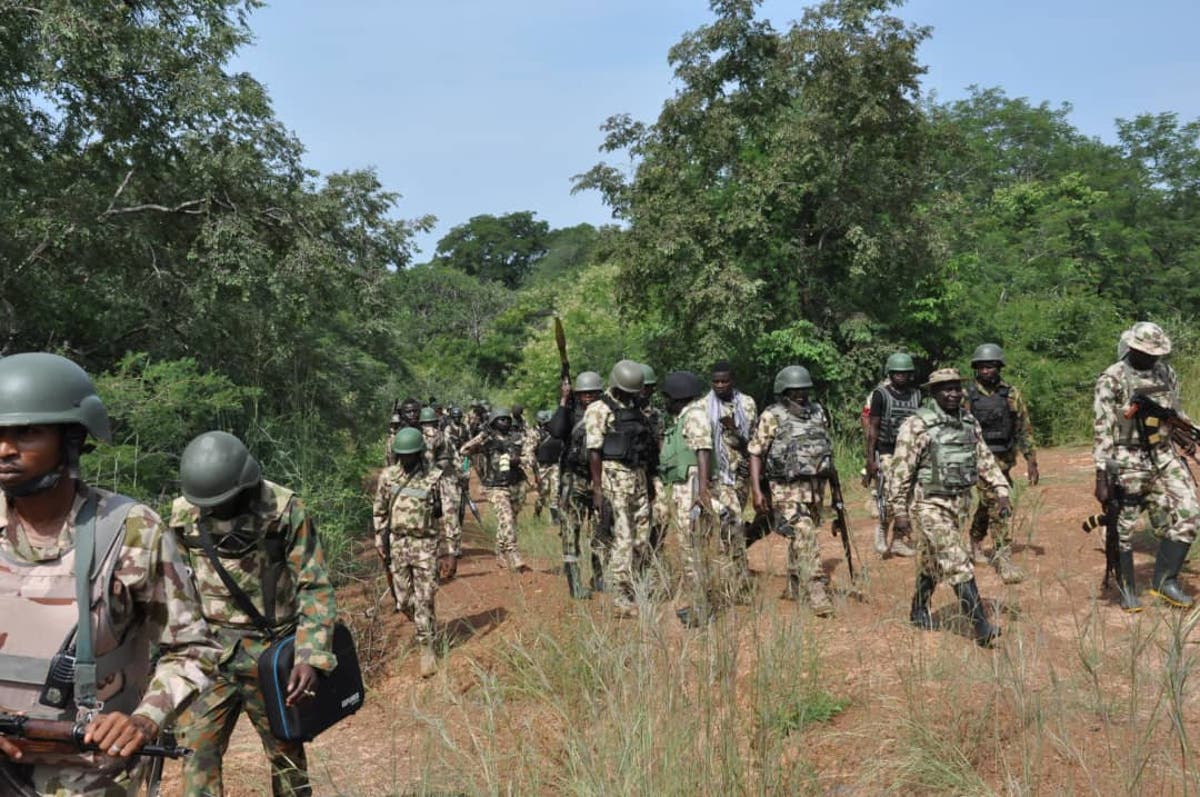
Troops Rescue 16 Kidnap Victims, Nab Terrorist Logistics Suppliers
ShareThe Nigerian Army says its troops have rescued 16 kidnapped victims, apprehended suspected terrorist logistics suppliers and informants, and recovered...
Army Commissions Ten Unit SNCOs Quarters in Gusau
ShareFrom Ifeanyichukwu Nwannah, Gusau. In a continuous effort to improve the welfare and living conditions of Nigerian Army personnel, the...


Zenith Bank Recognised As Africa’s Best Bank & Nigeria’s Best Bank At The Euromoney Awards For Excellence 2026
ShareBy Gemini Zenith Bank Plc has been named “Africa’s Best Bank” and “Nigeria’s Best Bank”, the latter for the second...


OPay Unveils Tech Engine, Eyes One Billion Users
ShareFinancial technology giant, OPay, has pulled back the curtain on the complex engineering infrastructure driving its payment ecosystem, revealing a...

NAICOM Lauds Senate on Passage of National Insurance Regulatory Commission Bill
ShareBy Tony Obiechina, Abuja The National Insurance Commission (NAICOM) has commended the Senate leadership for the successful passage of the...
AU Constitution Must Be Reviewed to Empower Sanctions Against Xenophobia And Other Forms Of Discrimination
ShareBy Isaac Asabor The AU derives its authority from the Constitutive Act of the African Union, which outlines the powers...

Dangote Refinery Resumes Petrol Loading in Naira
ShareBy David Torough, Abuja Dangote Petroleum Refinery has resumed gantry loading of Premium Motor Spirit (PMS), also known as petrol,...