
OPINION
WHO IS FOOLING WHO?


Saying that the recent happening in the country and the prompt
attention of the Federal Government is commendable will amount to
nothing other than an understatement. The government deserve an
accolade for the display of intelligence in trying to prevent the
impending civil war which has been hovering over the country in the
past few months.
However, the intelligence displayed seems misdirected, too malicious
and bias due to the fact that even though the country is wallowing in
insecurity which has its stem in the North, the federal government has
been quite inactive and incompetent in dealing with the issue of Boko
Haram which has been terrorizing the country for more than a decade,
causing havoc and kidnapping people’s children especially female
children in secondary schools.
from the government; why have they been able to put the likes of
Nnamdi Kanu to order within a twinkle of an eye but yet to
incapacitate the peril of Boko Haram?
That aside, the Fulani herdsmen have appeared to be a worse menace in
our society today due to the rate of killings perpetrated by them and
the effect of their actions on the Agricultural sector in the country.
They do not just destroy farm produce, they steal, kill, kidnap
innocent villagers and demand for exorbitant ransom. For the record,
these herders also possess the dreaded weapon; Ak-47 with which they
render people’s lives lifeless. How intelligent has the government
been in curbing or putting an end to this?
Many pictures of the Fulanis in possession of guns like Ak-47 while
being celebrated by their leaders has been surfacing on the social
media. Should whatever seems good for the goose not also be good for
the gander? There has been many reported cases of the herders causing
havoc, there has been many cases of death, children becoming orphans
and wives becoming widows, all thanks to the gruesome brutality of
these same herders but it is quite unfortunate that the Department of
State Services (DSS) and other security agencies in the country have
either turned a blind eye or have just chosen not to be intelligent in
matters as such.
It is quite interesting to see the intelligence of the DSS surfacing
when it got to tracking down someone who has only been protesting
peacefully in different states. The DSS was on a mission to kill him.
They vandalized properties and killed some of the people they met. The
accused has been protesting openly against the invasion of the
herdsmen in Yoruba land and this makes the level of the brutality
questionable because it portrays more of revenge than the prevention
of secession. It also appears like a threat to the whole Yoruba nation
while serving as a cautionary picture to other tribes, which are
against the herdsmen and their cows.
How indeed credible is the taking of innocent souls by the DSS? How
many people has the man killed? How many people reported being
kidnapped or malevolently manipulated by him? There is a need to
remind ourselves that we are no longer in the military regime where
peoples rights and freedom are tampered with. According to the
Universal Declaration of Human Rights listed by United Nations General
Assembly,” Everyone has the right to freedom of opinion and
expression; this right includes freedom to hold opinions without
interference and to seek, receive and impart information and ideas
through any media and regardless of frontiers”
It takes bravery to protest against an incompetent Government but now
that the Federal government is bent on silencing the people with
violence and unfounded accusations, it looks more like tyranny than
security of people’s lives and properties.
It has also been reported that the DSS stole 2million naira and that
got many people wondering if that was part of the exercise or just
another case of stylish stealing on the part of the law enforcement
agents. Are individuals not allowed to possess their hard-earned money
anymore in the country? Things have indeed fallen apart as people’s
lives are less valuable than that of cows!
People are no longer allowed in the country to protest peacefully as
it is now seen as rebellion against the government. The death of those
youths who were killed at the toll gate still remains fresh in the
people’s memories yet numerous lives have been lost after then with
the law enforcement agents debunking the truth about being involved.
Where exactly are we heading to?
Gone are the days when journalists enjoy their freedom of speech.
These days reverse is the case as they are being kidnapped, killed and
confined for indefinite reasons. We have moved to a time whereby if
the government can possibly have an access to the people’s thoughts,
they will be prosecuted.
There is no other bad leadership than a bias leadership! The recent
happenings in the country shows that the government have the ability
to curb the issue of insecurity especially the menace of the herdsmen
but has only decided to be silent about it.
A competent and accountable government has nothing to fear. If the
Nigerian government has been favorable and accountable to the promises
made before getting into power, there would have been no need for the
people to protest or try to secede in the first place but looking at
the rate of unemployment which has push majority of the Nigerian
youths into condemnable acts such as internet fraud, prostitution, and
the likes coupled with the level of insecurity, poverty and the
government’s partiality, the people are left with no other choice than
to clamor for secession .
Why is the government interested in fishing out the sponsors of Nnamdi
Kanu and Sunday Igboho but has not yet shown any iota of interest in
fishing out the brain behind Boko Haram? How come the herdsmen are
found in the possession of Ak-47 and the government has not for once
thought about how they got the guns? Why has the government chosen to
hunt down people who are just protecting the interest of their people
with the help of the uniformed men who don’t feel bothered by the
insecurity of the citizens of the country?
The efforts of the government should be appreciatively acknowledged
and the fact that the presidency is eventually awakening to its
responsibilities is worthy of kudos. Need I mention that the DSS will
be more than capable in handling and tackling the insurgence of Boko
Haram? It is high time the DSS went in search of the insurgents
considering the level of intelligence displayed and its promptness in
tackling issues related to such!
In effect, the government needs to awaken to the fact that brutality
can only aggravate the issue on ground because if people are
perpetually killed and their properties destroyed while a particular
tribe keeps getting favored and avenged, how many people will be left
for the other tribes? it may likely get to a stage that the other
tribes will eventually join forces and voice out in unison and the
unprecedented may eventually happen. The government needs to know that
it can only take the people away from the folk but can never take the
folk away from the people.





By Dorcas Jonah
In the Nigerian culture, extended families and communities play a crucial role in care-giving, instilling values, and supporting the development of children.
This cultural heritage of community parenting emphasises shared responsibility in raising children.
But in contemporary Nigeria, this age-long practice is facing enormous challenges due to modernisation.
In scrutinising this trend, some parents are of the view that community parenting helps in instilling morals and curbing social vices among children and youths, while others believe it is outdated.
Some parents are of the belief that their children are their responsibility; so they do not tolerate others correcting their children.
By contrast, others say that community parenting, when done with good intentions, can help raise a better society.
Mr Peterson Bangyi, a community leader in Dutse Makaranta, said that community parenting was the bedrock of raising a child.
He said the adage: “it takes a village to raise a child”, remained a powerful principle in contemporary society.
According to him, by Nigeria’s cultural norms and values, a child is owned by everyone; therefore, the grandparents, aunts, uncles, and neighbours actively contribute to raising children.
“This approach fosters a sense of belonging and ensures children grow up with diverse role models.”
Bangyi said that the extended families practiced by more communities were the backbone of parenting.
“But modernisation has taken away this practice as most families do not want people to come close to their children,’’ he said.
Mrs Monica Umeh, a mother of two, emphasising on the importance of community parenting, said that it played significant role in shaping her upbringing as a child and young adult.
Umeh advised that when correcting other people’s children, it is essential to do so with love and good intentions, without any form of bitterness.
“I am a strong advocate of community parenting as long as it is done with love and good intentions.
“I believe no parent can single-handedly raise a child without the support of others,’’ he said.
Mr Temitope Awoyemi, a lecturer, said that community parenting was crucial and could not be over-emphasised.
He said that community parenting helped society in inculcating strong moral values in children and youths, adding that modern life could be isolating for parents.
Awoyemi said that strong community support networks had been shown to lower parental stress levels and promote a more optimistic approach to raising children.
“It also ensures that a child receives guidance and correction from various adults, providing a broader, more consistent moral and social baseline that might be missed by parents who are busy with work.
“Community parenting encourages collaborative, interdisciplinary support from various community members and agencies in addressing a child’s developmental needs comprehensively.
“It focuses on prevention of long-term problems and celebrating individual strengths,’’ he said.
Awoyemi said that as the society continued to evolve, community parenting could adapt to ensure children benefitted from both cultural roots and contemporary innovations.
Mr Fortune Ubong, a cultural enthusiast, attributed the increasing crime rate in Nigeria to lack of community parenting that had extended to schools, and government institutions.
According to him, community parenting remains the foundation of every child’s moral upbringing.
“Most parents are now focused on earning a living and improving their lifestyle, in the process abandoning their primary duty of molding and guiding their children; this is where community parenting plays a greater role,” he said.
However, Mrs Joy Okezia, a businesswoman, said that given the recent developments in the country, correcting a child should be the sole responsibility of their parents.
Okezia said that she preferred to correct her children herself as she knew them better than anyone else.
She also noted that with the rising insecurity in the country, intervening to correct a child could pose a significant risk to the person.
Mrs Ijeoma Osita, a civil servant, also shared Okezia’s view, saying that a child’s behaviour was shaped by their family upbringing.
She said that if a child was not taught to love and respect others at home, an outsider would have little impact in correcting such a child.
Osita emphasised that parents should in still in their children the values of love and respect regardless of their status or background.
According to her, a child brought up with good values is less likely to misbehave well.
She cited the Holy Bible, saying, that says: “Train up a child in the way they should go, and when they are old, they will not depart from it’’.
Osita said that community parenting remained a vital aspect of Nigerian culture, promoting shared responsibility and resilience among families.
He opined that while modernisation posed challenges, blending traditional practices with modern strategies offered a promising path forward.
Observers say robust community connections are linked to better social-emotional development, academic achievement, and overall well-being for children.
They say that in modern society, amidst the digital world, economic instability, and busy work schedules, parents face pressures, making community support systems fundamental.
All in all, stakeholders are of the view that combining traditional community parenting with modern childcare – integrating technology, play-based learning, and skill acquisition – will produce well-rounded children.(NAN)

FEATURES
Victor Okoli: The Young Nigerian Tech Founder Building Digital Bridge Between Africa and America
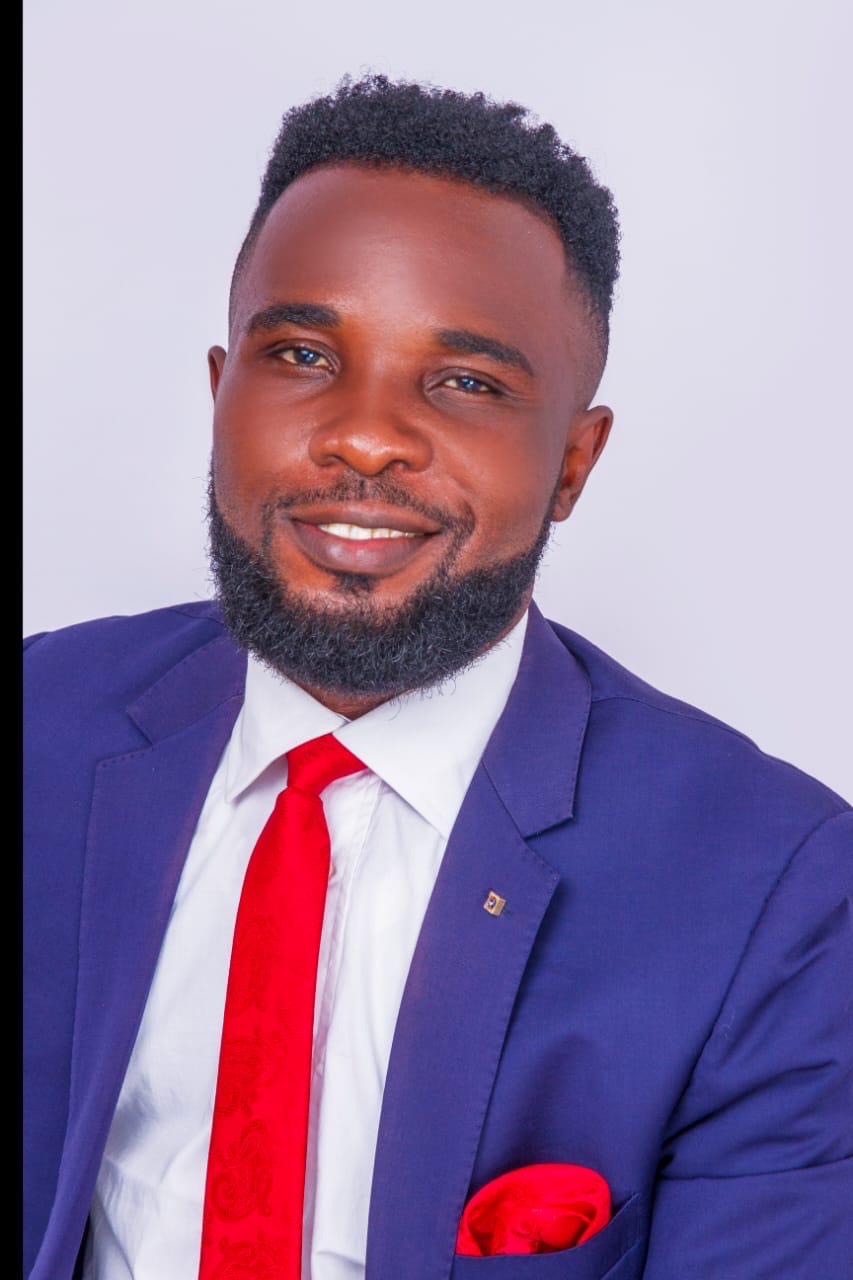
Victor Chukwunonso Okoli, founder of Vnox Technology Inc. (USA) and Vnox Limited (Nigeria), is steadily emerging as one of the most promising new voices in global travel-tech. His mission is clear: bridge the technological gap between Africa and the United States, redefine global travel systems, and empower a new generation of skilled youths through innovation-driven opportunities.
In a statement issued in Onitsha, Anambra State, by Vnox Limited (Nigeria), the company emphasized Okoli’s growing influence as a Nigerian international graduate student contributing meaningfully to U.
S. innovation. His rising travel-technology platform, FlyVnox, currently valued at an estimated $1.7 million, is positioning itself as a competitive player in the global travel ecosystem.Okoli explained that Vnox Technology was founded to “train, empower more youths, create global employment opportunities, and drive business growth through our coming B2B portal inside the FlyVnox app.” The platform’s new B2B system aims to support travel agencies, entrepreneurs, and businesses across Africa and the diaspora—giving them access to modern tools, previously inaccessible technologies, and global opportunities.
Several young men and women are already employed under the expanding Vnox group, with more expected to join as the brand grows internationally.
Born and raised in Eastern Nigeria, Okoli’s early life exposed him to the realities and frustrations faced by international travelers and diaspora communities. After moving to the United States for graduate studies, he transformed those experiences into a bold technological vision—building systems that connect continents and create seamless mobility for users worldwide.
At the center of that vision is the FlyVnox app, a modern airline-ticketing platform built with global users in mind. Combining American engineering precision with African mobility realities, FlyVnox offers international flight search, multi-currency support, secure payments, transparent pricing, and a clean, intuitive interface.
Beyond FlyVnox, Okoli has built a growing tech ecosystem under Vnox Technology Inc., which oversees several innovative ventures, including: Vnox TravelTech Solutions LLC (FlyVnox App), VnoxPay (fintech), VnoxShop / Zyrlia (e-commerce)
VnoxID / Nexora (digital identity and smart business card solutions)
Vnox Limited (Nigeria) anchors African operations, media services, and talent development—ensuring the brand remains rooted in its home continent even as it grows globally.
Okoli’s work has broad significance for both Africa and the United States. He represents the powerful impact of immigrant entrepreneurship on global competitiveness—creating new jobs, driving innovation, strengthening U.S.–Africa commercial ties, and contributing to the development of practical, scalable technologies.
The statement concludes that Vnox Technology is a brand to watch. As FlyVnox gains international traction and the Vnox group expands its footprint, Victor Okoli stands as a symbol of a rising generation: African-born, globally minded, and building technologies that connect and serve the world.

By Sunday Ayami
Nigeria, Africa’s most populous nation and largest economy, in Africa continues to face complex security challenges. These issues threaten national stability, economic growth, and the wellbeing of its citizens. The security landscape is shaped by a combination of terrorism, banditry, separatist agitations, communal conflicts, and organized crime.
The Boko Haram insurgency, active since 2009, remains a significant threat, mainly in Borno, Yobe, and Adamawa states.
Although the group has suffered territorial losses, its splinter faction, the Islamic State West Africa Province (ISWAP), remains potent. Frequent attacks target both civilians and security personnel. The humanitarian crisis continues, with millions displaced and persistent food insecurity.Armed bandit groups operate extensively in Zamfara, Kaduna, Katsina, Niger, and Sokoto states. These groups engage in mass abductions, cattle rustling, and extortion. Kidnappings for ransom have become commonplace, affecting schoolchildren, commuters, and even local officials. The government has launched multiple military operations, but violence persists.
Competition over land and water resources between sedentary farmers and nomadic herders has intensified, especially in Benue, Plateau, and Nasarawa states. These clashes often escalate along ethnic and religious lines, resulting in hundreds of deaths and displacement.
Although major militant activities in the Niger Delta have subsided since the 2016/17 resurgence, oil theft, pipeline vandalism, and environmental degradation continue to undermine the economy and fuel local grievances.
The Indigenous People of Biafra (IPOB) continue to agitate for independence, often clashing with security forces. Their armed wing, the Eastern Security Network (ESN), has been implicated in attacks on government facilities and security checkpoints. The region continues to experience periodic unrest and enforced sit-at-home orders.
Urban centers grapple with armed robbery, cult violence, and organized crimes, while piracy and maritime crime remain concerns in the Gulf of Guinea, threatening maritime trade.
The Nigerian government has adopted a multi-pronged approach to tackle security issues, including: Multiple campaigns such as “Operation Hadin Kai” in the Northeast and “Operation Whirl Punch” in the North-central target insurgent and criminal groups. Attempts at police reform and increased funding for security agencies have been implemented with mixed results.Efforts to negotiate with some groups or offer amnesty, particularly in the Niger Delta. Partner within ECOWAS and with Western countries enhance intelligence sharing and maritime security operations.
Despite these efforts, challenges remain: underfunding, corruption, interagency rivalry, inadequate equipment, and low public trust hamper effectiveness.
Over 3 million internally displaced persons (IDP).



Hong Kong votes in Election as City Mourns Deadly Fire
ShareHongkongers are voting in an election seen as a test of public sentiment following a deadly fire that angered some...


PDP Crisis: Wike Camp Moves to Conduct Fresh Congresses, Convention
ShareBy Laide Akinboade, Abuja The factional Board of Trustees (BoT) of the Nyesom Wike tendency in the Peoples Democratic Party...

Is Community Parenting Still Relevant?
ShareBy Dorcas Jonah In the Nigerian culture, extended families and communities play a crucial role in care-giving, instilling values, and...
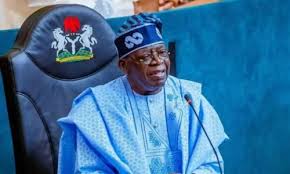

Tinubu’s Ambassadors Should Undergo Rigorous Senatorial Scrutiny
ShareMore than two years after terminating the services of all ambassadors, appointed by the previous administration; precisely on September 2,...


Former Liverpool Co-owner Hicks Dies at 79
ShareFormer Liverpool co-owner Tom Hicks has died at the age of 79. The American, who owned the club alongside George...


NGX Says Reforms Set to Strengthen Nigeria’s Investment Climate
ShareChairman, Nigerian Exchange Group (NGX), Dr Umaru Kwairanga, said ongoing regulatory reforms are positioning țhe nation’s capital market to attract...


Adebayo, Obi Have Capacity, Knowledge Determination to Lead Nigeria – Pastor Ituah Ighodalo
SharePastor Ituah Ighodalo is a prominent man of God who supritends Trinity House, a non denominational Christian fellowship centre. He...


SDP Leader, Adebayo Celebrates Tanko Yakasai at 100
ShareBy Mike Odiakose, Abuja The National leader and former presidential candidate of the Social Democratic Party (SDP), Prince Adewole Adebayo,...


PDP BoT Vows to Restore Confidence, Holds
ShareBy Laide Akinboade, Abuja The Peoples Democratic Party (PDP) Board of Trustees (BoT), Wike’s fraction on Sunday, vowed to restore...


LP Reps Accuse Tinubu, APC of Choosing 2027 over Citizens’ Security, Welfare
ShareBy Ubong Ukpong, Abuja The Labour Party Caucus in the House of Representatives has accused President Bola Tinubu and his...