
Foreign News
WHO Recommends ‘Lifesaving’ Drugs for Severely Ill COVID-19 Patients

The World Health Organisation (WHO) has added interleukin-6 receptor blockers, to its list of treatments for critically ill COVID-19 patients.
This is contained in a statement on Wednesday.
The world health body stated that the update was the findings from a prospective and a living network meta-analysis initiated by WHO, the largest such analysis on the drugs to date.
“Data from over 10, 000 patients enrolled in 27 clinical trials were considered.
“These are the first drugs found to be effective against COVID-19 since corticosteroids were recommended by WHO in September 2020.’’
According to the global health body, patients severely or critically ill with COVID-19 often suffer from an overreaction of the immune system, which can be very harmful to the patient’s health.
“Interleukin-6 blocking drugs – tocilizumab and sarilumab – act to suppress this overreaction.
“The prospective and living network meta-analyses showed that in severely or critically ill patients, administering these drugs reduce the odds of death by 13 per cent, compared to standard care.
“This means that there will be 15 fewer deaths per thousand patients, and as many as 28 fewer deaths for every thousand critically ill patients.’’
It further stated that the odds of mechanical ventilation among severe and critical patients were reduced by 28 per cent, compared with standard care.
This, according to WHO, translates to 23 fewer patients out of a thousand needing mechanical ventilation.
Clinical trial investigators in 28 countries shared data with WHO, including pre-publication data.
Researchers worldwide compiled and analysed the data. With the support of these critical partnerships, WHO has been able to issue a rapid and trustworthy recommendation for the use of interleukin-6 receptor blockers in severe and critical COVID-19 patients.
The UN correspondent of the News Agency of Nigeria (NAN) quoted WHO Director-General, Dr Tedros Ghebreyesus, as saying, that these drugs offer hope for patients.
“The drugs offer hope for patients and families who are suffering from the devastating impact of severe and critical COVID-19.
“But IL-6 receptor blockers remain inaccessible and unaffordable for the majority of the world.
“The inequitable distribution of vaccines means that people in low- and middle-income countries are most susceptible to severe forms of COVID-19.
“So, the greatest need for these drugs is in countries that currently have the least access. We must urgently change this.”
To increase access and affordability of these life-saving products, WHO calls on manufacturers to reduce prices and make supplies available to low- and middle-income countries, especially where COVID-19 is surging.
WHO also encourages companies to agree to transparent, non-exclusive voluntary licensing agreements using the C-TAP platform and the Medicines Patent Pool, or to waive exclusivity rights.
In addition, WHO has launched an expression of interest for prequalification of manufacturers of interleukin-6 receptor blockers.
Prequalification of innovator and biosimilar products aims to expand the availability of quality-assured products and to increase access through market competition and reduce prices to meet urgent public health needs. (NAN)




By Eze Okechukwu, Abuja
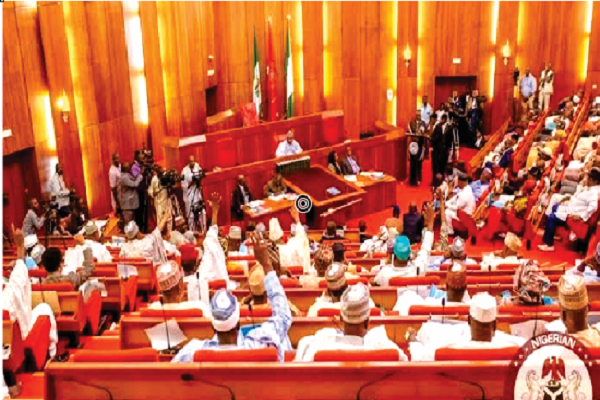
The Senate yesterday ordered mandatory health screening for every international passenger arriving Nigeria airports, seaports, land borders as Ebola resurfaces in the Democratic Republic of Congo with a scare case reported in the FCT.
The resolution followed an urgent motion by Senator Francis Fadahunsi, who warned that with Lassa fever already ravaging states, Nigeria cannot afford another outbreak.
“Protecting our entry points is far cheaper than managing Ebola,” Fadahunsi told the chamber.
Lawmakers insisted screening must be total and indiscriminate — no exemptions based on nationality or departure country because infected travellers can transit through safe-listed nations.
Senator Diket Plang raised the stakes further, demanding immediate funding for NCDC and Port Health Services, including release of withheld funds and emergency budget.
Senate President Godswill Akpabio said the Federal Government has started releasing Ebola response funds but ordered relevant committees to track every kobo.
“Ascertain whether the funds were released and judiciously utilised. Any outstanding debt must be released by the Finance Ministry without delay,” Akpabio directed.
At least 72 civilians who had been prospecting for gold in a border region of Sudan have been killed in air strikes, a regional rights group said.
Emergency Lawyers, based in the Sudanese capital, Khartoum, said jets targeted the so-called artisanal miners at a popular gold mining site on Saturday.
Neither the Egyptian government nor the de facto Sudanese authorities have so far commented.
Cairo has previously faced accusations of deadly strikes on gold prospectors as part of a crackdown on illicit activity along its southern border.
Emergency Lawyers noted the previous alleged attacks and said they represented not only a violation of Sudan’s sovereign territory but demonstrated the government’s lack of control over the region.
“The deliberate targeting of unarmed civilians violates international humanitarian law and the right to life,” it said in a statement on Sunday. “These acts may constitute war crimes.”
It noted that its death toll was provisional and could rise.
The Paris-based Sudan Tribune reported that the death toll could far exceed the number reported by Emergency Lawyers, citing a survivor of Saturday’s attack who said many more people had been injured.
Eyewitnesses said the attack began around 06:00 local time (04:00 GMT), with the aircraft firing more than five missiles directly at the miners’ camps, destroying them and excavation pits with people still inside, the newspaper wrote.
The Sudan Tribune reported claims in June that Egyptian forces had used drones and artillery to target artisanal mining sites in the same region, killing several, after sporadic incidents of Egyptian border guards of burning equipment, torching temporary shelters, and firing live ammunition to disperse mine workers.
Days later, Egypt’s border agency announced that it and the military had begun a sweeping security campaign along the border to foil illegal migration, drug smuggling and illegal mining.
At the same time, Sudan’s de facto leader announced an investigation into the alleged strikes, which were said to have killed dozens.
Gold lies at the core of the border tensions.
Sudan’s ongoing civil war has led to a surge in artisanal mining – and often risky practice conducted by civilians with rudimentary tools and without official permission – particularly in remote areas near its borders.
Gold-rich areas lie along porous borders in terrain historically associated with cross-border smuggling routes, with artisanally mined gold potentially feeding into those channels.
Egypt’s border force said in June that it had seized 86 tonnes of gold ore along with amateur prospecting equipment.
Artisanal mining has also reportedly continued in Sudan’s conflict zones and smuggled gold may be a source of income for armed insurgent groups.
This has raised concerns of illicit Sudanese gold undermining the legitimate Egyptian gold market.
Several German fighter jets will take part in the Northern Atlantic Treaty Organisation (NATO) annual nuclear defence exercise this week as troops from 17 countries take part in the Steadfast Noon drill.
The German Air Force said three Tornado jets will take part in the exercise hosted by Italy, which starts Tuesday and runs for about a week and a half.
The jets are normally stationed in Büchel in the German state of Rhineland-Palatinate.
NATO has not revealed the exercise scenario but said its scale would be comparable to last year’s drill, which involved around 2,000 personnel and more than 70 aircraft.
Last week, NATO’s head of nuclear policy, Nassima Barrows, said the exercise was designed to demonstrate the alliance’s readiness and ability to defend its territory.
No real nuclear weapons will be used, she added.
NATO said the exercise was not linked to current events or directed at any specific country.
Military experts say the drills, held regularly in October, include practising the safe transport of weapons from underground storage facilities to aircraft and mounting them on fighter jets.
Only practice bombs without real nuclear warheads are used during the drills.




NiMet Predicts Dust Haze, Thunderstorms Nationwide
ShareThe Nigerian Meteorological Agency (NiMet) has predicted dust haze and thunderstorms across the country from Monday to Wednesday. NiMet’s weather...


INEC Debunks Claims of Remote BVAS Log-Out, Lost Election Results
ShareBy Orjime Moses, Abuja The Independent National Electoral Commission (INEC) has dismissed claims that presiding officers can be remotely logged...
Needless Diplomatic Brawl
ShareNigeria and South Africa do not need another quarrel. They have had too many already — xenophobic attacks, trade disputes,...


Governor Hyacinth Alia and the Case for Continuity: Consolidating the Gains of Development, Institutional Renewal and Workers’ Welfare in Benue State
ShareBy Elijah Terdoo Ikpanor The question of continuity in governance is ultimately a question of performance, direction, accountability and the...


Tinubu Orders Release of 78 Suspects over Abuja Convoy Attack
ShareBy Laide Akinboade, Abuja The Federal Capital Territory (FCT) Police Command has commenced the release of 78 suspects arrested in...


Daily Asset at 10: Adeniyi, Alia, Bala Mohammed Top Awards List
ShareBy David Torough, Abuja DAILY ASSET Newspaper has unveiled an impressive list of distinguished Nigerians and institutions selected for its...


Kohol tasks NUBESS Leaders on Service, Accountability, Legacy
ShareBy David Torough, Abuja The founder of Menroi Rural Priority Organisation, Professor Kohol Iornem has challenged leaders of the National...
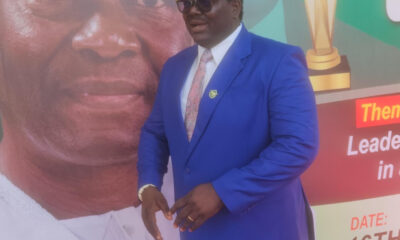

Stakeholders Celebrate Zikism at 7th Nnamdi Azikiwe Annual Award Lecture in Abuja.
ShareBy Raphael Atuu, Abuja As Barrister Henry Okeke Says The gathering provided another opportunity for Nigerians to reflect on the...
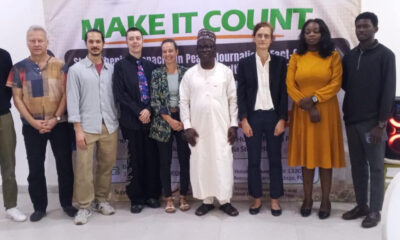

2027 Elections: CHRICED Trains 36 Journalists To Combat Fake News, Promote Peaceful Polls
ShareBy Orjime Moses Abuja As Nigeria prepares for the 2027 general elections, the Resource Centre for Human Rights and Civic...
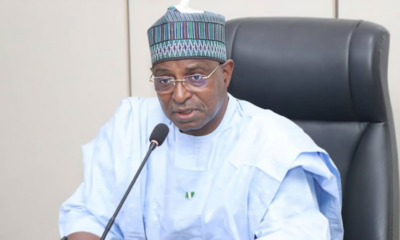

Livestock Ministry Defends Abuja Headquarters Acquisition, Insists Due Process Was Followed
ShareBy Raphael Atuu, Abuja The Federal Ministry of Livestock Development has defended the acquisition of its headquarters building located along...