
NEWS
Why Bello should have Appeared in Court–Judge


A Federal High Court, Abuja, on Friday granted the application by the Economic and Financial Crimes Commission (EFCC) for the former Governor of Kogi, Alhaji Yahaya Bello, to appear in court for his trial.
Justice Emeka Nwite, in a ruling, held that the former governor ought to appeared before the court before making any application.
He insisted that even if the arrest warrant was illegally obtained, the defendant (Bello) should have still shown up in court.
It would be tracked that the judge had, on April 23, fixed today for the ruling on the former governor’s application to set aside the arrest warrant against him.
The EFCC’s lawyer, Rotimi Oyedepo, SAN, had, on April 17, moved the ex-parte application for the arrest warrant.
But Bello’s counsel, Adeola Adedipe, SAN, on April 23, prayed the court to set aside the arrest warrant against their client
.
He canvassed that the arrest warrant had become unnecessary since their lead counsel, Abdulwahab Mohammed, SAN, had accepted the service of the charge on behalf of the ex-governor.
He argued that the arrest warrant order, having been made before the charge ought to be set aside suo motu (on its own accord, without any request by the parties involved).
The senior lawyer argued that contrary to the submission of the lawyer who appeared for EFCC, Kemi Pinheiro, SAN, that the ex-governor must be in court first before any application could be entertained being a criminal case.
He said that the anti-graft agency also made an application on April 18 after the warrant arrest was issued to EFCC on April 17 and that the court granted it.
The lawyer submitted that the arrest warrant was issued in favour of the EFCC by the court in violation of fair hearing to their client.
He noted that the complainant made an application for substituted service on 18th day of April after the arrest warrant had been issued on 17th day of April and today, my noble lord granted it.
“The court must satisfy itself that the defendant (Bello) will not be prejudiced in fairness if the warrant of arrest continues to hang on his neck, having been made before service of the charge contrary to Section 394 of ACJA,” Adeola argued.
He argued that justice should be a three-way traffic; that is, justice to the prosecution, the defendant and the public.
He said for Bello to appear in court, he must have the notion that he would get justice.
Adedipe also argued that the EFCC was an unconstitutional body because its establishment was not ratified by the 36 states of the federation.
He said that for the EFCC to become a constitutional body, the 36 states of the federation must ratify the law establishing it as against the current position, that the EFCC Establishment Act was unilaterally ratified by the Federal Government.
He, therefore, asked the judge to vacate the arrest warrant against the former governor.
But Pinheiro vehemently opposed the application.
The senior lawyer argued that for the arrest warrant to be vacated, the former governor must be arraigned and take his plea in compliance with Section 396 (2) of the Administration of Criminal Justice Act (ACJA), 2015.
Delivering the ruling on Friday, the judge agreed with the argument of the EFCC.
He said that the order of court subsisted until it is set aside, even if there is irregularity.
The judge said Yahaya Bello’s staying away amounted to disregard to the sanctity of the court.
“Therefore, the application by the counsel for the defendant cannot be moved unless the defendant is present in court.
“Bello should come to court in his own not through EFCC for arraignment on the next adjourn date,” the judge declared.
Meanwhile, shortly after the ruling, Mohammed, who appeared for the former governor, informed the court of a motion on notice filed on May 9.
He said the motion prayed the court to stay further hearing of the alleged money laundering suit filed against Bello until the Court of Appeal decides a pending case relating to same matter.
The senior lawyer said the anti-graft agency had, by a motion ex-parte, got an order of the Appeal Court stopping the contempt proceedings filed by the ex-governor against the agency at the High Court sitting in Lokoja.
He said the appellate court had already fixed May 20 to hear the case.
He said it would be important the Federal High Court, Abuja awaits the outcome before going further with the trial.
But the EFCC’s lawyer, Oyedepo, disagreed with Mohammed’s submission.
In a short ruling, Justice Nwite refused Mohammed’s application.
The judge said that the matter had generated controversy all over the world and was unnecessary.
Reacting, Mohammed responded that the former governor was not afraid to come to court but was only afraid of his life.
Justice Nwite, however, said that Bello should not be misguided but should be advised to come and answer to the alleged charge.
“It is just a charge. It has not been proven. Counsel, it is your duty to bring him and you prepare yourselves.
“We thank lordship. We will take your admonition to him because that is just his fear,” Mohammed said.
He assured that efforts would be made to contact the former govenor to appear in court in the next adjourned date.
Justice Nwite consequently adjourned the matter until June 13 for arraignment.(NAN)
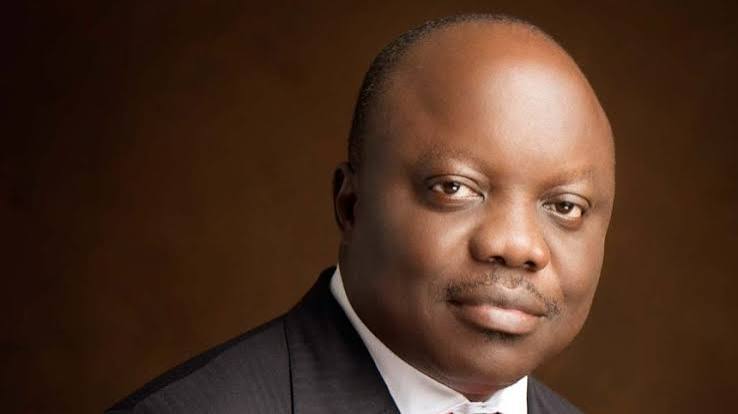
From Francis Sadhere, Delta
Former Governor of Delta State, Dr. Emmanuel Eweta Uduaghan, has died.
Uduaghan, who governed the state from 2007 to 2015, reportedly passed away in the morning of Monday, October 19, 2026.
His death was announced in a statement signed by Toju Anire Uduaghan on behalf of the family, which described his passing as a devastating loss to the family, Delta State and Nigeria.
The family said the former governor was a beloved father, brother, uncle and patriarch whose life and service touched many people across the state and the country.
“His passing has left us devastated. Words can hardly express the depth of our sorrow at the loss of a man who meant so much to our family and whose life and service touched countless others across Delta State and Nigeria,” the statement said.
Uduaghan held several key positions in the Delta State Government before becoming governor. He served as Commissioner for Health from 1999 to 2003 and Secretary to the State Government from 2003 to 2007.
He subsequently emerged as governor in 2007 and remained in office until 2015, during which the family said he demonstrated commitment to the human and infrastructural development of the state.
The family described his death as a profound loss, noting that he was a source of strength, a father figure and a respected elder whose memories and legacy would remain cherished.
“We are grateful to Almighty God for his life, his service, and the legacy he leaves behind,” the statement added.
The family prayed for the repose of his soul and divine comfort for relatives, friends, associates, former colleagues and others mourning his death.
“Your memory will forever remain in our hearts, and your legacy will endure in the lives of those you touched,” the family said in its farewell message.
Uduaghan’s death marks the loss of a former leader who occupied prominent positions in Delta State’s political and administrative history.
The family concluded its announcement with a prayer for his peaceful repose, saying, “May your gentle soul rest in perfect peace. Amen.”
The statement was signed by Toju Anire Uduaghan on behalf of the family.

By Tambaya Julius, Abuja
The Nigeria Customs Service (NCS) has opened a review process for applicants disqualified during its recent recruitment screening, following complaints from candidates who made the shortlist but were denied entry into the training college.
The Comptroller-General of Customs, Bashir Adewale Adeniyi, ordered a case-by-case review after meeting with some of the affected applicants, according to a statement by the Service.
The NCS disclosed that 397 applicants were flagged during the screening over issues relating to substance abuse, physical fitness, medical records, age and submitted documents.
It clarified that the substance-abuse category excluded cigarette and alcohol use. Some other applicants were disqualified over irregularities discovered in their selection process.
The Service explained that making the final shortlist did not guarantee enlistment, as candidates were required to pass several stages of screening, including document verification, physical fitness and endurance tests, medical examinations, age checks and drug screening.
Affected applicants have been asked to submit their details and complaints to helpdesk@customs.gov.ng for assessment. Those seeking a review will undergo fresh screening, the Service said.
It added that the review would not automatically qualify any applicant for admission into the training college, stressing that all candidates must meet the prescribed recruitment requirements.
The NCS also warned that applicants found to have engaged in criminal conduct, including certificate fraud, could be referred to the appropriate authorities for investigation and prosecution.
The Service urged aggrieved candidates to use the designated email address to submit their complaints, saying the review was intended to address genuine concerns while preserving the credibility of the recruitment exercise.
It maintained that recruitment standards would not be compromised, given the Customs Service’s responsibilities for border protection, revenue collection, national security and public safety.

By Tambaya Julius, Abuja
The World Bank has urged the Federal Government and state governments to establish a sustainable social protection system, warning that Nigeria’s N658.9bn cash transfer programme needs wider coverage, adequate payments and regular disbursements to provide meaningful relief to vulnerable households.
As of September 2026, the Federal Government had disbursed N658.
9bn to 10.46 million poor and vulnerable households through direct cash transfers, using biometric and digital verification to identify beneficiaries and deliver payments.The bank, however, said the programme must move beyond emergency interventions to a reliable system backed by regular government funding.
The recommendation was contained in its latest Nigeria Development Update, titled ‘Beyond the Federal Purse: How Higher Revenues Shaped State Priorities’.
According to the report, the effectiveness of cash transfers depends on the number of households reached, the value of payments and how consistently beneficiaries receive them.
The bank called for dedicated budget allocations at both federal and state levels, with increased funding from domestic resources to ensure continuity and reduce dependence on temporary interventions.
It also stressed the need for stronger coordination between the two tiers of government to improve the delivery and monitoring of social assistance programmes.
The report said a predictable, adequately funded social protection system would help vulnerable Nigerians cope with economic pressures and improve household welfare.
Mean while, President Bola Tinubu has received the United Nations’ proposed 2027 budget, valued at about $14 billion, from Nigeria’s Permanent Representative to the global body, Jimoh Ibrahim, who described the presentation as a historic milestone for the country, which is chairing the UN General Assembly’s Fifth Committee on Administrative and Budgetary Matters for the first time in 66 years.



Former Delta Governor Uduaghan Dies at 70
ShareFrom Francis Sadhere, Delta Former Governor of Delta State, Dr. Emmanuel Eweta Uduaghan, has died. Uduaghan, who governed the state...


Customs Opens Review for Disqualified Recruits, Flags 397 Applicants
ShareBy Tambaya Julius, Abuja The Nigeria Customs Service (NCS) has opened a review process for applicants disqualified during its recent...


World Bank Tasks FG, States on Sustainable Cash Transfers
ShareBy Tambaya Julius, Abuja The World Bank has urged the Federal Government and state governments to establish a sustainable social...


NDLEA Nabs 85-year-old Woman, Seizes 407kg Cannabis
ShareThe National Drug Law Enforcement Agency (NDLEA) has arrested an 85-year-old grandmother and five other suspected drug traffickers during coordinated...

Economy would’ve Collapsed without Tinubu’s Reforms, Says Shettima
ShareVice President Kashim Shettima has said Nigeria’s economy would have collapsed had President Bola Tinubu not taken what he called...


House of Reps Seeks 90-Day Fuel Reserve for Nigeria by 2027
ShareFrom Rabiu Sanusi, Kano The House of Representatives has backed plans to increase Nigeria’s strategic petroleum reserve from 20 days...

56,000 Candidates Register for 2026 Private WASSCE
ShareThe West African Examinations Council (WAEC) said no fewer than 56,000 candidates registered for the 2026 West African Senior School...


JAMB Warns Varsities Against Issuing Admission Letters
ShareThe Joint Admissions and Matriculation Board (JAMB) has warned universities against issuing admission letters to candidates, insisting that only admissions...
Beyond Survival: Building A Healthier Nigeria For A Longer Life
ShareBy Yussuf Mubaraq Damilare What does it mean to live a long life if access to basic medical care remains...


Jigawa to Increase Corps Members Allowance – Namadi
ShareThe Jigawa government has announced plans to increase monthly allowance for the National Youth Service Scheme (NYSC) members posted to...