
Health
World Leukemia Day: Poverty, Unemployment Reasons for Inadequate blood donation — NGO

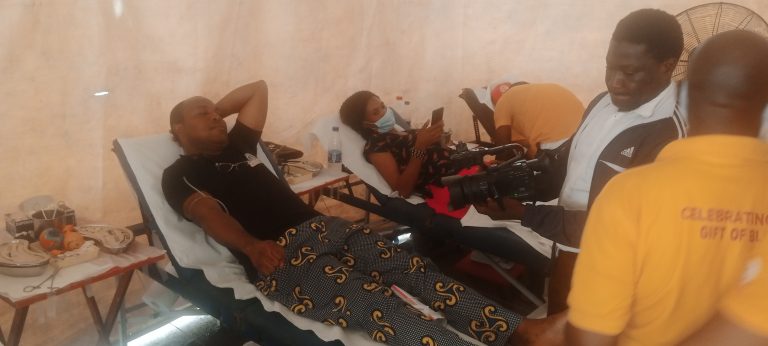
The Timilehin Leukemia Foundation (TLF), an NGO, on Thursday described poverty, unemployment and unfavorable economic situations as factors responsible for inadequate blood donation among Nigerians.
The Founder of TLF, Mrs Janet Oyedele, made the assertion in an interview with the News Men in Lagos, at a free blood donation exercise held at the Mechanic and Spare Parts Village, Agindingbi, Ikeja.
The free blood donation exercise was held to mark the 2021 World Leukaemia Day with the theme “Each One, Each Ten.
Every Sept.4 has been declared as World Leukaemia Day and the 2020 report says Leukaemia, a type of cancer, has caused over 300,000 deaths across the world.
The report also said that over 437,000 people across the world are diagnosed with leukemia each year, which is over 1,000 people every day.
Oyedele noted that more Nigerians would have loved to participate in the exercise but the economic hardship had made people not to be interested in such a life-saving exercise.
“One of the major factors mitigating against the interest of people in donating blood is poverty. The high rate of poverty among Nigerians is alarming and makes it difficult to approach them.
“Someone who is not sure of food will not be willing to donate blood, how can we approach such a person to donate his blood? Another factor is unemployment.
“Many don’t earn good salaries to take care of themselves or sometimes their meagre salaries are not paid promptly, such individuals will see blood donations as something big.
“Those people we refer to as average Nigerians are the ones in the good numbers to donate blood but unfortunately, they are the ones impoverish and malnourish to donate blood,” she said.
Oyedele said that in spite of the challenges of having people donate blood, the NGO is on the mission of campaign to have about one million Nigerians donate their blood freely.
“For us in TLF, we want to embark on this life saving exercise which is blood donation, with a target to sign up one million Nigerians for blood donations.
“We want to achieve this so that many Nigerians can walk in to our hospital and get the blood free of charge, this is achievable with good support from government and private organisations.
“In the hospital, a pint of blood goes for N25,000 and for a leukemia patient, he needs about two to three pants of blood in a day, how can they afford thus without adequate blood?
“We want to encourage all Nigerians to please help save the lives of many not the leukemia patients alone but all those that are in need of blood, the critically ill patients in our hospitals,” she said.
Oyedele called on private organisations to support life-saving exercise as they are supporting other reality shows.
“We are appealing to our private organisations to also look into the way of life-saving exercise like free blood donation and support it as they are supporting the reality shows like “Big Brother Naija.
“We cannot leave all on the table of the government to do; we all have responsibility as citizens to also care for ourselves and not waste money on shows that have no impact in the lives of the citizens.
“We also want to appeal to the government as a matter of urgency to help resolve the doctors strike so that our hospitals can be functional again. Some of us have nowhere to go.
“The health sector should be one of the priority of the government, their salaries and entitlement must be paid as at when due because health workers are life savers of the country,” she said.
One of the brand support of the TLF free blood donation exercise, Fidson Pharmaceutical, makers of Ferobin Blood tonic, through its Brand Manager, Over-the-Counter Products, Tunde Balogun, urged Nigerians to support the initiative.
“We need to support a life-saving cause like this because this is what our conglomerate stands for, and we also want to encourage Nigerians to donate blood freely.
“We also want the government to adequately strengthen the health sector by supporting public health in terms of adequate infrastructure, access to medical treatment and address the frequent strike by the doctors.
“It is only healthy citizens that can be productive to the economy,” he said.
Many people turned up for the blood donation exercise. (NAN)




The Niger State Private Health Facilities Agency (NiSPHFA) has sealed 12 unregistered Islamic medicine stores in Minna and a health facility in Katcha Local Government Area (LGA).
The Executive Chairman of NiSPHFA, Dr.
Abdullahi Suleiman, disclosed this while receiving members of the Islamic and Prophetic Medicine Practitioners’ Association of Nigeria (IPMPAN) in Minna.The enforcement is part of the agency’s renewed efforts to protect residents from unsafe healthcare practices and ensure compliance with minimum standards.
Suleiman said the facilities were sealed over alleged non-compliance with regulatory standards.
According to him, the enforcement is not aimed at persecuting healthcare providers but at ensuring residents have access to safe, quality, and standard-compliant healthcare services.
“Our responsibility is to protect the people by ensuring that anyone providing healthcare services operates within the required standards,” he said.
He urged genuine alternative medicine practitioners to register with NiSPHFA, saying registration would enable the agency to identify operators, monitor their activities, and protect residents from unsafe products and practices.
Suleiman also announced plans to organise a trade fair for verified alternative medicine practitioners to promote legitimate practices and improve public confidence in alternative healthcare.
He emphasised the need for practitioners to maintain minimum standards of hygiene, sanitation, safe preparation and storage of medicines, proper packaging, and infection prevention.
“Practitioners should refer patients whose conditions are beyond their capacity to appropriate health facilities. Such referrals will help reduce avoidable health risks,” he said.
The chairman said sustained enforcement, stakeholder collaboration, and improved compliance would enable NiSPHFA to safeguard residents and promote a safer, more accountable, and quality-driven healthcare system across the state.
He said the NiSPHFA enforcement team inspected 10 health facilities in Katcha local government and identified various irregularities requiring improvement.
Suleiman said the affected facilities were issued 21-day notices to correct the identified deficiencies.
“One of the facilities inspected was sealed for non-compliance with established standards,” he said.
He added that the agency also secured the support of the local government area in identifying and addressing facilities operating with irregularities.
IPMPAN Chairman, Abdullahi Haske, commended the state government for establishing NiSPHFA.
He pledged the association’s cooperation in ensuring that its members complied with regulatory requirements.
Stakeholders have called for improved implementation, tracking and accountability of health sector budgets to strengthen healthcare delivery and advance Universal Health Coverage (UHC) in Kaduna State.
They made the call during an engagement on strengthening participatory budget processes, health budget tracking and advocacy on Saturday in Kaduna, with emphasis on the 2027 budget process and implementation of the Annual Operational Plan (AOP) for the health sector.
Seth Luke, a Civil Society Coach on strengthening participatory budget processes under the Open Government Partnership (OGP) Kaduna, said the engagement was aimed at strengthening the capacity of OGP Technical Working Groups and state and local government accountability mechanisms to effectively participate in budget processes and advocacy.
Seth said the engagement was particularly focused on the health sector, including tracking the implementation of the Annual Operational Plan as the state commenced preparations for the 2027 budget.
“We want to see how we can track the implementation of the Annual Operational Plan for the health sector and, from our findings, bring out recommendations around improving funding and other areas that require attention,” he said.
He said the government needed to prioritise health financing beyond budgetary allocation by ensuring effective implementation of approved programmes and projects.
According to him, budget allocation represents government plans based on expected revenue, but available resources should be prioritised toward activities capable of improving healthcare and service delivery at the grassroots.
Seth urged participants to use the knowledge and findings from the engagement to engage relevant government stakeholders on improving health financing and budget implementation.
He also encouraged them to extend the knowledge gained to other sectors and continuously engage government on budgeting, accountability and service delivery.
Similarly, Garba Mohammed, Co-Chair of the Kaduna Maternal Accountability Mechanism (KADMAM), said the engagement was aimed at reviewing health budget performance against key indicators linked to maternal mortality reduction and child survival.
Mohammed said participants examined first and second quarter performance, particularly in areas such as family planning, Maternal, Newborn and Child Health (MNCAH), nutrition, malaria, immunisation and essential medicines.
He said family planning interventions largely involved commodities at the primary healthcare level, while MNCAH activities remained largely donor-dependent.
Mohammed commended the Kaduna State Government for meeting the Abuja Declaration benchmark of allocating at least 15 per cent of its annual budget to health.
He, however, expressed concern over gaps in the implementation of some critical health budget lines, stressing that allocation alone was not enough to improve health outcomes.
“We have looked at the budget allocation, and Kaduna State has met the 15 per cent Abuja Declaration benchmark. We commend the state for that. However, there are still issues around budget performance in critical health indicators,” he said.
He said the findings would be used to identify advocacy priorities and engage key government decision-makers, including the Ministry of Health, Planning and Budget Commission, Ministry of Finance and other relevant authorities.
Mohammed said participants were expected to understand the relevant health budget lines and their implementation status and use the knowledge to undertake evidence-based advocacy in their respective organisations.
Meanwhile, Yusuf Guje, Executive Director, Civic Impact for Sustainable Development Foundation (CISDF), and a participant at the programme, told the News Agency of Nigeria (NAN) that the engagement was timely in strengthening the capacity of civil society and accountability mechanisms.
Guje said the programme would deepen participants’ capacity in budget tracking, project monitoring and social auditing, particularly within the health sector.
He described the health sector as a critical pillar of development, saying civil society organisations had an important role to play in complementing government efforts through effective monitoring and accountability.
He said CSOs needed to strengthen their ability to analyse budgets, track expenditure and visit healthcare facilities to determine whether appropriated and released funds were being properly utilised.
“Civil society needs to really improve on how effectively we analyse the budget, how we track the spending, and go down to the various facilities to see how well the money appropriated and released is being utilised,” Guje said.
He said effective monitoring would help determine the extent to which communities benefited from government investments in healthcare.
According to him, Kaduna State’s commitment to Universal Health Coverage could only be strengthened through sustainable health financing and effective accountability mechanisms.
Guje described CSOs as representatives of communities that often lacked the knowledge, skills and platforms required to engage government on public policies and resource allocation.
He therefore urged civil society actors to continuously strengthen their capacity to represent citizens effectively, particularly in health financing advocacy and accountability.
“As civil society, we need to remain committed to holding the government accountable where necessary and tracking the entire health financing process,” he said.
Guje said the ultimate objective of budget tracking and social accountability was to ensure value for money in public expenditure on health.
He added that effective monitoring of public finances would contribute to improved healthcare delivery and better health outcomes at the grassroots. (NAN)
Cross River Government has made enrolment in the state Health Insurance Scheme compulsory for all civil and public servants in the state.
The Head of Service, Bassey Okon, announced this in a circular dated Sept.
3, following the official relaunch of the Formal Sector Enrolment Programme of the Cross River State Health Insurance Agency.According to the circular in Calabar, at the weekend, the directive takes immediate effect.
Okon stated that the policy was meant to ensure that all the civil and public servants had access to affordable, quality, and timely healthcare services, while strengthening the welfare and productivity of the state workforce.
He directed all the civil and public servants to enroll in the scheme and comply with the registration and documentation requirements of the agency.
The circular also introduced a mandatory requirement for officers to attach valid health insurance enrolment cards to official correspondences relating to personnel matters.
“Correspondences concerning promotion, confirmation of appointment, loan applications, study leave, training or sponsorship, transfer or secondment, as well as other personnel-related requests or benefits, would not be processed without the attachment of a valid health insurance enrolment card,” it stated.
To facilitate the enrolment process, the government established enrolment points at the Office of the Head of Service, New Secretariat, Calabar, and the Ministry of Health, Old Secretariat, Calabar.
Okon directed all Heads of Ministries, Departments, and Agencies (MDAs) to ensure that officers under their supervision were duly informed about the circular and made to comply with the enrolment requirement without delay.
He also urged concerned officers to take advantage of the designated enrolment points for guidance and assistance and to complete their enrolment as required.
He further directed all the heads of the MDAs to bring the contents of the circular to the attention of all civil and public servants under their supervision. (NAN)




BBNaija Season 11: Keivo Becomes Second Housemate to be Disqualified
ShareKeivo has become the second Big Brother Naija housemate to be disqualified from Season 11. This follows his physical altercation...


Mofe-Damijo Envisions Bright Future for Nigeria at 66
ShareVeteran actor and public speaker, Richard Mofe-Damijo, has expressed optimism about Nigeria’s future, describing the country as a work in...


My Wife Paid $20k for Her Surgery Herself, Peller Fires Back at Carter Efe
ShareNigerian content creator and streamer, Peller, has fired back at Carter Efe after the streamer compared their relationships while praising...


I Didn’t Want to be in the Spotlight – Tems
ShareGrammy-winning Nigerian singer Temilade Openiyi, popularly known as Tems, has revealed that despite wanting musical success, she was uncomfortable with...
Nigeria at 66: Which Way Nigeria?
ShareBy Tochukwu Jimo Obi Sixty six years after independence, Nigeria should be asking itself a question that can no longer...

Nigeria at 66: Booming Banks, Struggling Nation, Where Is the Promised Prosperity?
ShareBy Blaise Udunze As Nigeria celebrates 66 years of independence, it must ask whether the country has delivered the prosperity...


Nigeria at 66: Leaders are Human, But Accountability is Non-negotiable
ShareBy Aderonke Ojediran As Nigeria marks its 66th Independence anniversary, the debate over leadership, public trust and accountability remains central...


Oborevwori Orders Julius Berger to Fix Washed-Out East-West Road at Agbarho
ShareFrom Francis Sadhere, Delta Delta State Governor, Rt. Hon. Sheriff Oborevwori, has directed Julius Berger Nigeria Plc to immediately commence...


Independence: Kefas Announces N2.5bn Interventions, Clemency for 24 Inmates
ShareFrom John Lamma, Jalingo Taraba State Governor, Dr. Agbu Kefas, has announced fresh interventions worth ₦2.5 billion to support vulnerable...


Nigeria at 66: Tinubu Sees ‘Promised Land’, Atiku, Obi Differ
ShareBy David Torough, Abuja President Bola Tinubu on Thursday used Nigeria’s 66th Independence Anniversary address to declare that the country...