
NEWS
Wuye/Wuse Flyover 85% Completed, Ready in May – Wike


The Minister of the Federal Capital Territory (FCT), Mr Nyesom Wike, says the Wuye/Wuse Flyover is 85 per cent completed and will be inaugurated in May.
Wike stated this in Abuja on Saturday, after inspecting the project, along with the Vice-President’s residence and 11-kilometre (km) six lane dual carriage expressway linking Airport Expressway to Kuje.
Wike added that the road from Kuje to Airport Expressway, when completed, would open the area for transformative economic growth and development.
The minister, who equally visited the vice-president’s residence being handled by Julius Berger, expressed optimism that the project would be completed in May.
“I must commend the various contractors, the Arab Contractors and Julius Berger.
“The first site we went to is almost 85 per cent completed, that is, one of those interchanges in Wuye District. The contractors are keeping faith with their commitment to handover the project by May.
“Then we also went to Kuje to inspect the six-lane road of about 11km. The road from the Airport Road down to Kuje will open that area of the Area Council.
“The last time when I went to flag off one of the rural roads, we didn’t see much about the contractors, and I did say that the contractors are not serious.
“Going back there today, I am very impressed with the level and quality of work,” he said.
Speaking at the official residence of the vice-president, the minister said the contractors were at the stage of electrical installations, adding that a lot of changes would be seen in the next few weeks.
“We were at the VP’s residence which is being handled by Julius Berger and like I said, they have made further commitment that by May, they are going to hand it over.
“They are known for quality, and we are financing them well,” the minister said.
Wike reiterated that no ongoing project in the FCT would be abandoned, adding that the projects were considered as priority and have been included in the FCT’s 2024 statutory budget to ensure adequate funding. (NAN)
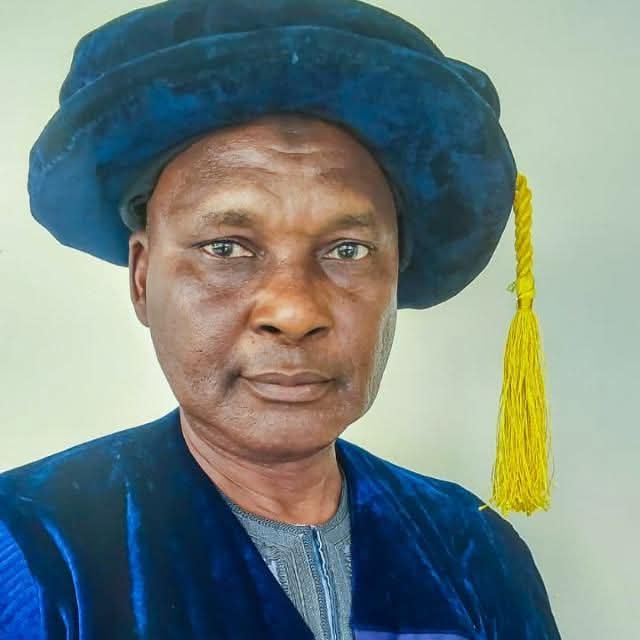
From Joseph Amedu, Lokoja
A Professor of History at the Federal University, Lokoja, Suberu Ochi Abdulrahaman, has raised the alarm over the prevailing political illegality bedeviling Nigeria insisting that leaders in the system should endeavor to obey the laws of the land and do the right thing that would move the nation forward.
Professor Abdulrahaman made the observation while delivering the 45th Inaugural Lecture Series of the University at its Felele Campus, in Lokoja, on Wednesday.
Professor Abdulrahaman in his Lecture titled, Persisting Illegalities in Nigeria’s Political Space: Who is to Blame? A Historical Discourse on Power, Institution and Democratic Governance, noted that political illegality which ranges from electoral fraud, arbitrary use of executive power for manipulation and intimidation to sponsorship of thuggery and violence in the system, amongst others, can only be overcome if leaders in governance work in accordance with the nation’s constitution.
According to the Inaugural lecturer “The resistance of political illegalities is neither accidental nor the responsibility of a single institution or generation.
“It is the cumulative product of colonial administrative legacies, prolonged military
authoritarianism, weak institutional development, political opportunism, inadequate civic engagement, and failures of ethical
Leadership.
“History teaches us that no nation develops sustainably when public institutions are weakened by impunity, when constitutional rules are subordinated to personal interests, or when political power is exercised without accountability.
“Equally, history reminds us that societies are capable of renewal when they choose to strengthen institutions rather than personalities, uphold the rule of law rather than arbitrary power, and promote justice above expediency.
“Accordingly, the challenge before Nigeria is not simply to conduct periodic elections or enact additional legislation.
The greater challenge is to cultivate a democratic culture in which constitutionalism becomes habitual, public office is regarded as a sacred trust, institutions command public confidence, and citizens
actively defend democratic values.
“Political leaders must recognise that authority derives its legitimacy not merely from electoral victory but from faithful obedience to the Constitution and unwavering commitment to the public good.
“Institutions must be empowered to function independently, impartially, and professionally.
” Citizens must reject every form of political illegality, whether manifested through vote buying, political
violence, corruption, or indifference to injustice”
The Vice Chancellor of the University, Professor Gbenga Solomon Ibileye in his welcome address, disclosed that his administration will continue to give Inaugural Lecture Series topmost priority as it offers opportunity for where the public is highly equipped with relevant knowledge on contemporary issues affecting the society.
He described Professor Suberu Abdulrahaman as an accomplished historian who has made his mark in his academic field.

Zenith Bank Plc will on Aug. 25 host the 10th edition of its International Trade Seminar, focusing on strategies to unlock Nigeria’s non-oil export potential and accelerate economic growth.
This was according to a statement by the bank on Wednesday in Lagos.
The bank said the seminar with the theme “Unlocking Value and Harnessing Growth in Non-oil Export”, will bring together policymakers, regulators, exporters, manufacturers, investors and other stakeholders.
The bank said the virtual event would examine ways to move Nigeria beyond raw commodity exports by developing competitive value chains, expanding market access and improving trade infrastructure and financing.
It said the discussions would also focus on how businesses could leverage the African Continental Free Trade Area (AfCFTA) to access regional markets and deepen intra African trade.
The seminar will feature the Secretary General of the AfCFTA Secretariat, Mr Wamkele Mene and Chief Executive Officer of Plot Enterprise Ghana Ltd., Patricia Poku Diaby.
Other speakers include the immediate past President of the African Export Import Bank (Afreximbank), Prof. Benedict Oramah and Abba Bello, Managing Director of the Nigerian Export Import Bank (NEXIM Bank).
Also to speak are: Mr Adewale Adeniyi, Comptroller General of the Nigeria Customs Service; and Ms Aderinola Shonekan, Director, Trade and Exchange Department, Central Bank of Nigeria.
The event will also feature representatives of the Nigerian Investment Promotion Commission (NIPC), Nigerian Export Promotion Council (NEPC) and leading private sector companies.
Zenith Bank said the discussions would provide practical perspectives on export financing, customs and port efficiency, regulation, market access and the competitiveness of Nigerian businesses.
The bank said AfCFTA would be a major focus, given its potential to connect Nigerian businesses to a continental market of more than one billion people.
According to the bank, Nigerian enterprises must strengthen their value chains and competitiveness to fully benefit from the opportunities created by regional integration.
It said the International Trade Seminar had, over the years, provided a platform for government, regulators, businesses and financial institutions to discuss challenges and opportunities in Nigeria’s trade ecosystem.
The bank said the 10th edition would seek practical answers to how Nigeria could derive greater value from its non-oil exports and translate its productive capacity into sustainable economic growth.
The seminar will be streamed live on Zoom, YouTube, Instagram, Facebook, X and TikTok.
The bank urged interested participants to register through its website. (NAN)
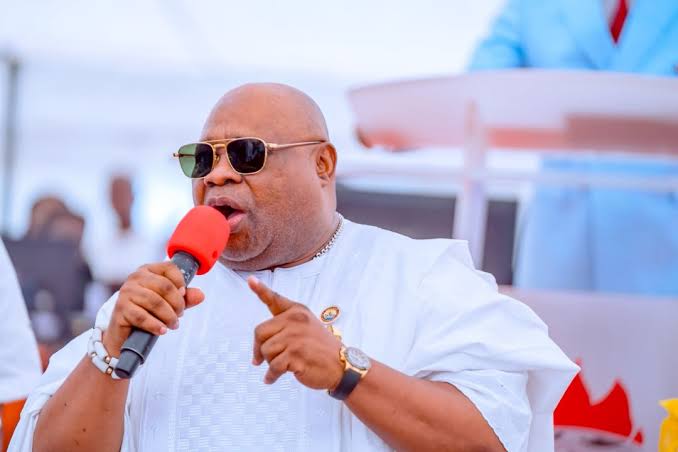
From Ayinde Akintade, Osogbo
Tension gripped Osogbo, the Osun State capital, on Wednesday after suspected gang members attacked the convoy of Governor Ademola Adeleke shortly after his visit to the palace of the Ataoja of Osogbo, Oba Jimoh Oyetunji, in an incident that left one person dead.
The shooting occurred hours after Adeleke received his Certificate of Return from the Independent National Electoral Commission (INEC), following his victory in the August 15 governorship election.
Adeleke had arrived at the Ataoja’s palace at about 3:15pm in a convoy of about 20 vehicles after leaving the INEC office in Osogbo.
He was received by the traditional ruler, to whom he reportedly presented his Certificate of Return.The meeting ended with prayers, after which the governor and his close aides left the palace hall through an exit reserved for the monarch and his wives.
According to eyewitnesses, gunfire erupted moments later as suspected attackers arrived in an unregistered Sienna space bus through the Ita-Olokan axis and allegedly opened fire around the palace.
Security personnel attached to the governor responded, leading to an exchange of gunfire that lasted between 12 and 15 minutes. The attackers were subsequently forced to retreat from the area.
The police, however, later disclosed that the incident may have been triggered by an attempt to gain access to music star David Adeleke, popularly known as Davido, who accompanied the governor to Osogbo.
Osun State Police Public Relations Officer, Abiodun Ojelabi, said preliminary investigations indicated that members of the Eye Confraternity were allegedly after Davido.
According to Ojelabi, one Adebayo Taoreed, popularly known as “Small Rugged,” an ex-convict and suspected member of the confraternity, allegedly attempted to gain access to Davido but was resisted by members of his security team.
The confrontation, he said, attracted other suspected gang members in the vicinity, who allegedly blocked the palace entrance and obstructed the movement of the governor’s convoy.
The police spokesman said the suspects later left the area but allegedly shot 60-year-old Tajudeen Yusuf at Ita-Olokan.
Yusuf was rushed to the University Teaching Hospital, Osogbo, where he was pronounced dead by doctors.
The development marked a sharp turn in an otherwise celebratory day for Adeleke, who had earlier received his Certificate of Return amid cheers from supporters.
Speaking at the presentation ceremony, the governor promised to work harder to improve the welfare of residents and expressed concern over the loss of lives during political activities.
“No election, political office or ambition is worth the life of a single citizen,” Adeleke said, while recalling victims of electoral violence.
He also announced plans by the Adeleke family, through the Springtime Development Foundation, to provide scholarships up to university level for children and dependants of those killed in electoral violence. The state government, he added, would establish a ₦500 million Election Violence Victims Endowment Fund.
Meanwhile, the shooting around the Ataoja’s palace sent traders, residents and other members of the public fleeing for safety. Witnesses said some shops were hurriedly shut as gunshots rang out.
A trader near the palace, identified as Munirat, said the attackers damaged part of the palace gate during the confrontation and later moved towards the Osogbo Central Mosque before escaping through the Ita-Olokan axis of the Osogbo-Ilesa Road.
Osun State Commissioner for Information and Public Enlightenment, Kolapo Alimi, earlier confirmed the attack on the governor’s convoy, saying the governor’s security personnel successfully repelled the assailants.
The police have commenced a full-scale investigation and intensified efforts to identify and arrest the fleeing suspects.
The Commissioner of Police (Election), Osun State Command, CP Samuel Etaifo, condemned the killing and urged residents to remain calm and avoid taking the law into their own hands.
As of the time of filing this report, security personnel remained deployed around the palace and adjoining streets, while the incident continued to generate tension in the state capital.



Don Raises the Alarm Over Political Illegality in Nigeria, Proffers Solutions
ShareFrom Joseph Amedu, Lokoja A Professor of History at the Federal University, Lokoja, Suberu Ochi Abdulrahaman, has raised the alarm...


FG Releases Emergency Medical Numbers, Urges Nigerians to Dial 112
ShareThe Federal Government has urged Nigerians to dial 112 during emergencies requiring urgent medical assistance, while releasing state emergency call...


Sanwo-Olu Awards LASU best Graduates N20m Each
ShareLagos State Governor, Babajide Sanwo-Olu, on Wednesday awarded N20 million each to LASU’s best graduating students for the 2024-2025 and...

Oyo Declares Thursday Work-free for Isese Day
ShareOyo State Governor, Seyi Makinde has declared Thursday a work-free day in commemoration of Isese Day, a celebration of the...

ICPC Begins Tracking of N1bn FG Projects in Osun
ShareIndependent Corrupt Practices and Other Related Offences Commission (ICPC) said it has commenced the tracking of more than N1 billion...

NPC Launches 4,011 Centres for Nationwide Digital Birth, Death Registration
ShareThe National Population Commission (NPC) has established 4,011 functional registration centres across the country as part of efforts to bring...

Nigeria Can’t Build $1trn Economy without Women’s Participation – Shettima
ShareVice-President Kashim Shettima says Nigeria’s ambition to build a one-trillion-dollar economy cannot be achieved without the full economic participation of...


NNPC Urges PENGASSAN to Strengthen Regulatory Discipline in Oil Sector
ShareThe Group Chief Executive Officer (GCEO), Nigerian National Petroleum Company (NNPC) Ltd., Bashir Ojulari, has urged PENGASSAN to strengthen regulatory...


Dangote Marks Youth Day, Strengthens Skills, Social Footprint at Obajana
ShareDangote Cement Plc, Obajana, has marked International Youth Day with a renewed commitment to advancing youth development through its array...


Zenith Bank Targets Non-oil Export Boom with 10th Trade Seminar
ShareZenith Bank Plc will on Aug. 25 host the 10th edition of its International Trade Seminar, focusing on strategies to...