
Business News
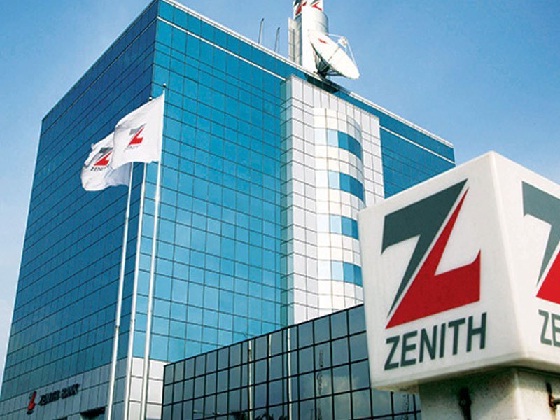
Zenith Bank Unveils Easy Online Dubai Application

By Mark Mayah, Lagos
Zenith Bank Plc has introduced a new feature on its internet banking platform that allows customers apply for Dubai Visa and make the associated Visa fee payment effortlessly.
According to the bank, the new offering is aimed at creating a more convenient and efficient way for Nigerians to apply for Dubai Visa, as a large number of people travel there several times each year.
Customers simply need to log on to the Zenith Bank Internet Banking Platform, select the Dubai Visa tab under the payment menu, fill out their personal information, upload a passport photograph, 6 months bank statement and international passport data page with a minimum of 6 months’ validity from proposed travel date and submit their application.
The Visa fees would be instantly charged to the customer’s account and he/she would be notified of the status of his/her visa application within 36 hours.
Zenith Bank Plc is recognized as one of the most innovative financial institutions in Nigeria and was voted the most customer-focused bank in Nigeria for the Retail and SME segments in the 2018 KPMG Annual Banking Industry Customer Satisfaction Survey (BICSS).
Meanwhile, Economic experts have lauded the Central Bank of Nigeria (CBN) on its plan to put forex restriction on imported dairy products to the country.
Some economic experts who spoke with the News Agency of Nigeria (NAN) in Abuja on Sunday said the move would boost economy of the country.
The CBN Governor, Mr Godwin Emefiele announced the plan to put forex restriction on dairy products during the last Monetary Policy (MPC) meeting held on July 23 in Abuja.
Emefiele said the planned policy to put restriction on sale of forex for the importation of milk from the Nigerian foreign exchange market was aimed at promoting local production of milk in the country.
Reacting, a financial expert, and Managing Director of Cyber1 Systems Network International, Mr Momoh Aliyu said the policy was good and would boost the economy.
Aliyu explained that backward integration had always been the Federal Government’s dream on foods and beverages.
He said currently, Nigeria Brewery was heavily investing in backward integration by empowering farmers to produce grains locally.
“With the Nigeria population and its rate of consumption of dairy products, it is long over due to enhance and encourage local productions of dairy products for economic and health reasons.
“Base on statistic released by CBN Nigeria currently spends between 1.2billion dollars and 1.5 billion dollars annually for diary importation, this value alone is enough to enhance dairy production’s infrastructures, research and local subsidy.
“From what I know, animal scientists in Nigeria have been carrying out some researches, this is the time to use their findings to assist this planned policy for local production of milk” he said.
Aliyu added there was never a right time in economic and nation building hence the right time was always now.
He said President Muhammadu Buhari’s administration had always been in the forefront of local production, hence the need for all Nigerians to support him and promote domestic products.
Another economic expert, Mr Tope Fasua, also commended CBN for the proposed policy, adding that the policy would help reposition the sub-sector.
“We cannot be laissez faire in everything. We do have a problem with cattle rearing and I believe this may help in addressing the problem.
“It shouldn’t be too much of a big deal to produce milk in Nigeria. The CBN may also not have to put everything in place before the ban is affected.
“Food, shelter, clothing and internal security are irreducible minimums we must produce for ourselves and if we do, we can double our economy” he said.
He urged private sector players in the country to get involved and bridge the gaps by supporting the policy.









The Court on Friday ruled in the Bank’s favour on all issues and granted all its prayers.
United Bank for Africa (UBA) Plc has secured a significant legal victory in its debt recovery proceedings against Stallion Group, following a court judgment which upheld the Bank’s position on all issues submitted for determination.
In a sweeping decision, delivered by by Justice Daniel Osiagor of the Federal High Court sitting in Ikoyi, Lagos on Friday, the Court granted all the reliefs sought by UBA, affirming the validity of the appointment of a Receiver/Manager, the enforceability of the mortgage security and the liability of the guarantors.
The Court observed that the Defendants did not dispute the existence of their indebtedness to the Bank but challenged the amount claimed. It further held that the reconciliation of accounts between the parties did not extinguish or negate the underlying indebtedness.
In a major affirmation of UBA’s enforcement rights, the Court upheld the appointment of the Receiver/Manager and confirmed his entitlement to take possession of the mortgaged property and seek appropriate protective orders.
The Court also dismissed objections raised by the 12th Defendant, holding that it had failed to establish any proprietary rights over the mortgaged property. Consequently, its consent was not required for the creation of the mortgage, and its objections were rejected.
Significantly, the Court restrained the Defendants from diverting receivables due to them from government agencies, thereby reinforcing the Bank’s ability to protect its recovery interests.
The judgment also affirmed the liability of the guarantors, strengthening UBA’s legal position in pursuing recovery of the outstanding obligations.
The decision represents a comprehensive victory for UBA, with the Court resolving all issues in the Bank’s favour and granting all the reliefs sought.
The ruling is particularly significant for the enforcement of creditors’ rights in Nigeria, underscoring the legal validity of properly constituted security arrangements and the authority of duly appointed receivers to enforce creditors’ interests.
It also reinforces the principle that disputes over the precise amount of an outstanding debt do not, by themselves, invalidate the underlying indebtedness or prevent creditors from exercising their lawful recovery rights.
The judgment marks a major milestone in UBA’s efforts to recover its exposure to Stallion Group and safeguard the interests of the Bank and its stakeholders.

By Tony Obiechina, Abuja
The Budget Office of the Federation has reaffirmed the integrity of Nigeria’s newly enacted Tax Reform Acts, cautioning against what it described as governance by speculation and unverified claims following allegations of post-passage alterations.
In a statement on Wednesday, the Budget Office said it had taken note of concerns raised by the Minority Caucus of the House of Representatives, stressing that the sanctity of the law is central to constitutional democracy and not a mere procedural formality.
According to the Office, any suggestion that a law could be altered after debate, passage, authentication, and presidential assent without due process would strike at the core of the Republic and undermine citizens’ right to be governed by transparent and stable laws.
However, it warned that democratic integrity is also endangered by the careless amplification of unverified claims. “A nation cannot be governed by insinuation or sustained on circulating documents of uncertain origin,” the statement noted, adding that public confidence, once shaken by speculation, is often difficult to restore.
The Budget Office emphasized that both government and citizens share a common interest in truth, clarity, and due process, noting that public finance depends heavily on trust in the legality and clarity of fiscal laws. It welcomed the decision of the National Assembly to investigate the allegations, describing institutional inquiry, not conjecture as the appropriate response to claims of illegality.
On public access to the law, the Office agreed that Nigerians and the business community are entitled to clear and authoritative texts of all laws they are required to obey. It clarified, however, that the authenticity of legislation is determined by certified legislative records and official publication processes, not by informal or viral reproductions.
The statement also underscored the importance of separation of powers, warning that claims suggesting Nigeria is being governed by “fake laws,” if not backed by established facts, risk eroding confidence in democratic institutions.
At the same time, it stressed that legislative scrutiny should not be dismissed by the executive, noting that oversight is a constitutional duty, not an act of hostility.
From a fiscal perspective, the Budget Office said legal certainty is essential for revenue projections, macroeconomic stability, budget credibility, and investor confidence. While it is not the custodian of legislative records, it maintained that uncertainty around operative tax provisions directly affects economic planning.
To restore confidence, the Office proposed a set of measures, including the publication of verified reference texts in a single public repository, orderly access to Certified True Copies for stakeholders, clear public explanations where discrepancies are alleged, and strict alignment of all implementing regulations with authenticated legal texts.
Addressing calls for suspension of the tax reforms, the Budget Office cautioned against allowing prudence to slide into paralysis. It argued that properly implemented tax reform is necessary to reduce dependence on borrowing and inflationary financing, while easing indirect burdens on vulnerable citizens.
“Where clarification is required, it must be provided; where correction is required, it must be effected; where investigation is required, it must proceed,” the statement said, adding that governance and reform should not be stalled by unresolved conjecture.
The Office concluded by describing taxation as a democratic covenant that binds citizens and the state, insisting that compliance depends on transparency and trust. It called on political actors to protect institutions as much as positions, urging citizens and businesses to rely on verified sources and resist the spread of unauthenticated information.
The statement was signed by Tanimu Yakubu, Director-General of the Budget Office of the Federation, who reaffirmed the agency’s commitment to fiscal transparency, institutional integrity, and reforms that advance national prosperity while safeguarding citizens’ rights.
By Jennifer Enuma, Abuja
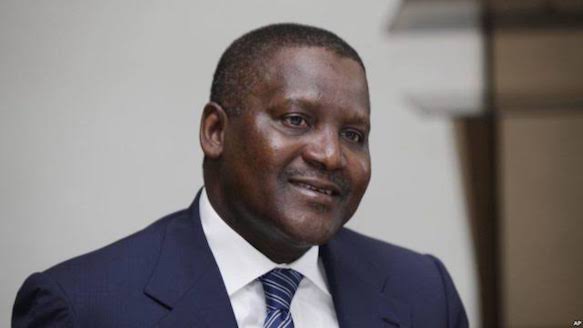
President Bola Tinubu has congratulated Alhaji Aliko Dangote, the President of Dangote Group, on his appointment to the World Bank’s Private Sector Investment Lab, a body tasked with promoting investment and job creation in emerging economies.
In a statement by Special Adviser on Media and Publicity, Bayo Onanauga, the President described the appointment as apt, given Dangote’s rich private sector experience, strategic investments, and many employment opportunities created through his Dangote Group.
The Dangote Group became one of Africa’s leading conglomerates through innovation and continuous investment.
Dangote Group’s business interests span cement, fertiliser, salt, sugar, oil, and gas. However, the $20 billion Dangote Petroleum Refinery and Petrochemicals remains Africa’s most daring project and most significant single private investment.
“President Tinubu urges Dangote to bring to bear on the World Bank appointment his transformative ideas and initiatives to impact the emerging markets across the world fully” the statement said.

The World Bank announced Dangote’s appointment on Wednesday, as part of a broader expansion of its Private Sector Investment Lab. The lab now enters a new phase aimed at scaling up solutions to attract private capital and create jobs in the developing world.
The CEO of Bayer AG, Bill Anderson, the Chair of Bharti Enterprises, Sunil Bharti Mittal, and the President and CEO of Hyatt Hotels Corporation, Mark Hoplamazian, are on the Private Sector Investment Lab with Dangote.
The World Bank said the expanded membership brings together business leaders with proven track records in generating employment in developing economies, supporting the Bank’s focus on job creation as a central pillar of global development.




UBA Wins N156bn Debt Recovery Case Against Stallion Group
ShareThe Court on Friday ruled in the Bank’s favour on all issues and granted all its prayers. United Bank for...


Senator Abba Moro: It is Time to Go Home
ShareBy Cleopas Agada For seven years in the National Assembly, what has Benue South actually felt? For a man who...


NCDs Fastest-growing Disease Burden in Nigeria — Pate
ShareThe Coordinating Minister of Health and Social Welfare, Prof. Muhammad Pate, said Non-Communicable Diseases (NCDs) have become one of the...
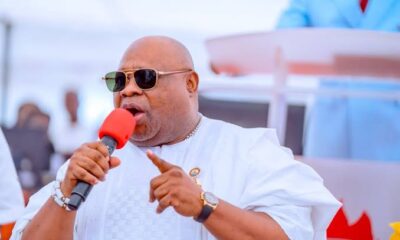

2027: Adeleke Inaugurates Aare Asejere’s Campaign Council
ShareFrom Ayinde Akintade, Osogbo The Governor of Osun State, Senator Ademola Adeleke, yesterday charged newly inaugurated members of the Osun...

INEC Seeks Stakeholders’ Collaboration for Credible, Peaceful Elections
ShareThe Independent National Electoral Commission (INEC) has reaffirmed its commitment to strengthen collaboration with the National Orientation Agency (NOA), security...
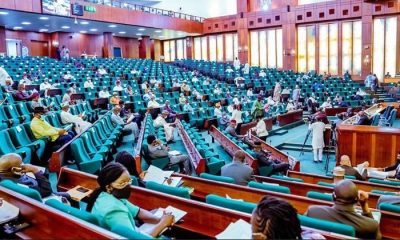

Reps Reject Child Marriage, Demand Protection of Girl Child
ShareBy Ubong Ukpong, Abuja The House of Representatives on Thursday unanimously called for urgent and coordinated actions to protect Nigerian...


Court Awards N125, 000 Cost against Odumodublvck
ShareAn Abuja High Court on Wednesday awarded N125, 000 against a rapper, Tochukwu Ojogwu, popularly known as “Odumodublvck”, for asking...


Hunger Changed My Mind, Timini Egbuson on Embracing YouTube movies
ShareNollywood actor Timini Egbuson has reflected on his changing perception of YouTube movies, joking that he might have struggled financially...


Peller Announces Livestream with Peter Obi
SharePopular Nigerian TikTok streamer, Hamzat Adelaja, popularly known as Peller, has announced an upcoming livestream with the presidential candidate of...

Nigeria’s inflation drops from 15.39 Per Cent to 14.63 Per Cent in September
ShareBy Tony Obiechina, Abuja The National Bureau of Statistics (NBS) on Thursday disclosed that Nigeria’s inflation has eased from 15.39...