
POLITICS
Zoning Arrangement will Jeopardise Abia PDP Chances in 2023, says Party Chieftain

A Peoples Democratic Party (PDP) chieftain in Abia, Chief Charles Ogbonna, says the zoning of the 2023 governorship slot to two senatorial districts portends doom for the party. The party strangely zoned the slot to both Abia Central and North Senatorial Districts, simultaneously.
Ogbonna said in an interview with newsmen in Umuahia that the zoning arrangement would reverse the party’s political fortunes in the state.He said: “The zoning of the governorship by PDP has raised some undesirable dust in the state for sometime now. “Today, PDP has become a house of commotion, where things are not working well. “The way things are going today, they will destroy the party.
My fear is the consequence of such actions. “Calculating the voting pattern of Abia electorate, it means that the unexpected is going go happen.”“The consequence will be for people to join the opposition.“In a situation, where somebody does what he likes, then the people will engage in protest votes during the elections.”He said that prominent members of PDP in the state, including the former Senate President, Sen. Adolphus Wabara, former NDDC Chairman, Chief Onyema Ugochukwu, and former Secretary to the State Government, Dr Eme Okoro, had separately spoken in favour of power shift to Abia north.
Ogbonna, who claimed to have joined PDP in 1998, said, “the party belongs to all of us and I have greater stake than most of those behind the controversial zoning.”He threatened that the intention behind the PDP zoning pattern to facilitate the emergence of Gov.
Okezie Ikpeazu’s kinsman from the Ngwa axis of Abia central would be sabotaged.He cautioned those supporting the emergence of another Ngwa man to succeed Ikpeazu to remember the true result of the 2015 governorship election and voting pattern across the various sections of the state.
The PDP chieftain, therefore, advised other political parties, especially the All Progressives Congress and All Progressives Grand Alliance, to ensure they nominated their candidates from Abia north.
He recalled that the governorship position in the state had rotated in sequence, beginning from Abia north in 1999 with former Gov. Orji Kalu. “After Abia north, power shifted to Abia Central with Sen. Theodore Orji, and later, it went to Abia South Senatorial District. “Power has rotated on the basis of senatorial districts in Abia as in other states and all the districts have enjoyed good relationship,” he said.
He said that following the sequence, a meeting of the defunct Bende bloc “insisted that power must shift to Abia north, where it began in 1999”.Ogbonna, a former Commissioner under Ikpeazu, said that Abia people were not happy with the present administration because of the appalling state of infrastructure.
He said that the state lacks basic infrastructure and social amenities, arguing that Umuahia, the capital city, “looks like a glorified village”.He expressed worry that Ebonyi, which was carved out of Abia in 1991, “has overtaken Abia”, given its massive infrastructure development.
According to him, those politicians paying solidarity visits to Ikpeazu are political jobbers, sychophants and praise-singers. “They are simply hungry and looking for patronage because there is no single project going on in Abia to warrant such visits,” he said.
Ogbonna, who reportedly poured libation in his house, while praying that power would never go back to the Ngwa bloc, said the action was in line with his belief and conviction.“I am a traditionalist and I believe in pouring libation. I believe in my ancestors and it has been working for me. “I believe that the small, small gods do errands for the big God. “Libation is a way of asking god to do something for me. It is left for it to do it or not.
“This was not the first time I had poured libation. Libation is a way of life. It does not mean I do not go to Church,” he said. He further reacted to the backlash that greeted the action, saying: “I did it when Okezie was contesting election to become governor in 2015, nobody protested and he won. “I also poured libation when the suit challenging his election got to the Supreme Court, yet nobody protested and he won,” Ogbonna said. (NAN)

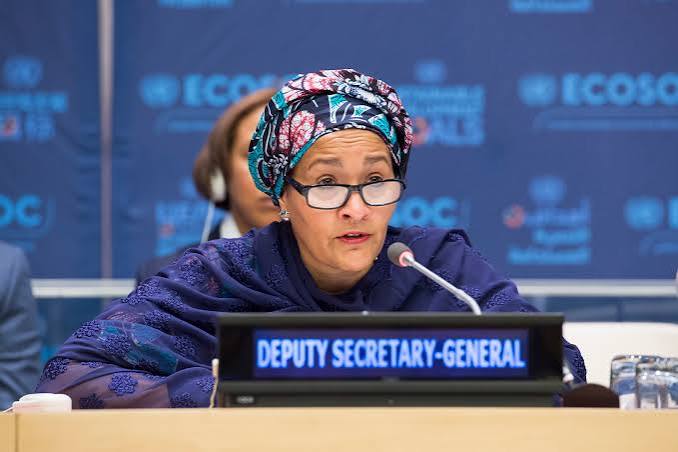
UN Deputy Secretary-General Amina Mohammed, has called for stronger intelligence sharing, public trust and responsible use of emerging technologies to strengthen Africa’s fight against terrorism and violent extremism.
Mohammed made the call in virtual remarks at the High-Level African Lessons Learned Forum on Counter Terrorism Cooperation, Intelligence Sharing and Emerging Technologies in Abuja on Monday.
She said terrorism continued to devastate families and communities across Nigeria’s North-East, the Lake Chad Basin, the Sahel and parts of East and Southern Africa.
“In Nigeria we know the cost of this scourge, the toll it is taking on families and communities across the North-East and the Lake Chad Basin,” she said.
Mohammed said the violence was claiming lives, displacing communities, disrupting economic activities and undermining development in vulnerable areas.
“Behind each of these numbers are people whose hopes for their children are no different from our own,” she said.
She welcomed the forum’s practical approach to examining successful counter-terrorism strategies, identifying failures and sharing lessons across countries.
The UN deputy secretary-general identified trust, emerging technology and community-centred interventions as critical priorities for strengthening counter-terrorism cooperation.
“Intelligence sharing begins with trust. That means trust between agencies, between nations and countries, and between the state and its people,” she said.
She said communities were more likely to share information when security institutions were accountable, justice was accessible and human rights were respected.
She stressed that trust was essential to building effective partnerships between citizens and security agencies in preventing terrorist attacks.
On emerging technologies, Mohammed warned that terrorist groups were adapting rapidly and exploiting artificial intelligence and synthetic media for recruitment and propaganda.
She noted that the same technologies could support early warning and prevention if deployed with appropriate safeguards and effective oversight.
She cautioned that military operations alone would not bring an end to terrorism, urging governments to complement security measures with rehabilitation, reintegration, justice and community support.
She cited Nigeria’s Operation Safe Corridor and similar programmes as examples of efforts to help individuals leave armed groups and rebuild their lives.
According to her, sustainable reintegration requires justice for victims and adequate support for communities receiving former associates of armed groups.
The UN official also called for greater investment in young people through education, decent employment and accessible public services.
She said addressing the needs of vulnerable populations was particularly urgent, with only four years remaining to achieve the 2030 Agenda for Sustainable Development.
“The United Nations stands with you. We will continue supporting solutions that Africa designs and leads,” she said.
Mohammed expressed hope that the lessons shared at the forum would strengthen cooperation and produce tangible improvements in the lives of communities affected by terrorism.
In his remarks, the European Union (EU) Ambassador to Nigeria, Mignot Gautier, announced 20 million euros in non-lethal military equipment to support the Nigerian Armed Forces in the fight against terrorism.
Gaitier said the support approved under the European Peace Facility (EPF), was designed to respond to Nigeria’s needs in tackling terrorism.
“Last week, the EU announced its decision to use for the first time the EPF to support the Nigerian armed forces in their fight against terrorism with 20 million euros of non-lethal equipment,” the ambassador said.
He added that the latest support complemented the EU’s longstanding assistance to the Multinational Joint Task Force (MNJTF) operating around the Lake Chad Basin.
According to him, the EPF has provided a total of 285 million euros in support of the multinational force over several years.
The ambassador reaffirmed the EU’s commitment to strengthening counter-terrorism cooperation with Nigeria, the African Union and other African partners.
He said terrorism and violent extremism required coordinated international responses, stronger intelligence sharing and sustained partnerships among security agencies and judicial institutions.
“Intelligence sharing is crucial and involves secure channels between agencies and the judicial system,” he emphasised.
The Country Representative, United Nations Office on Drugs and Crime (UNODC), Cheikh Touré, called for African-led counter-terrorism strategies, warning that terrorist groups were increasingly exploiting cross-border networks, organised crime and emerging technologies.
Touré said Africa had become a major centre of global terrorism, with the Sahel accounting for more than half of all terrorism-related deaths worldwide.
He said four of the five countries responsible for nearly 70 per cent of global terrorism deaths in the previous year were African: Burkina Faso, Nigeria, Niger and the Democratic Republic of the Congo.
Touré said terrorist groups were strengthening cross-border operations, collaborating with organised criminal networks and exploiting improvised explosive devices, drones, digital platforms and artificial intelligence.
He cautioned against adopting international counter-terrorism practices without considering the specific needs and institutional capacities of African countries.
“The groups we confront cross borders with a fluency that too often exceeds our own. Our response therefore must be equally fluent and be African-led,” he said.
He reaffirmed UNODC’s commitment to working through African institutions and regional frameworks, including the African Union, ECOWAS and the Abuja Process.
The forum brings together African and international stakeholders to discuss intelligence sharing, emerging technologies, counter-terrorism financing and strategies for preventing and countering violent extremism.

By Catherine Agbo
In the unfolding drama of Nigerian political discourse, few things excite the commentary circuit quite like a prominent figure stepping decisively into the political arena.
The recent media frenzy surrounding the activities of the High Chief Government Ekpemupolo-led PBAT Door-to-Door Movement is a classic study in selective outrage.
Ekpemupolo, popularly known as Tompolo, is the Grand Patron of the movement.
From editorial columns in national dailies to online commentary, critics have been relentless in dishing out opinions about the group’s activities targeted at mobilising support for President Bola Tinubu’s re-election campaign.
Yet, beneath the righteous indignation lies a fundamental misinterpretation of constitutional rights and democratic principles.
The narratives being spun across several opinion pieces, such as those asking why Tompolo should be actively involved in partisan politics or phoney groups labelling his endorsement as “deceptive,” are all built on shaky foundation.
Critics point to his role as a major security stakeholder in the Niger Delta and argue that a person of his background should remain politically passive or detached from party politics. Others question the deployment of operational vehicles and logistics to coordinators of the movement across states for the campaign, framing legitimate political mobilisation as an overreach.
However, this wave of criticism ignores a fundamental truth, that Nigeria is a constitutional democracy governed by the rule of law.
Section 39 and 40 of the 1999 Constitution of the Federal Republic of Nigeria (as amended) guarantee every citizen the right to freedom of expression and the right to peaceful assembly and association.
These rights are not reserved exclusively for career politicians, armchair intellectuals, or media commentators, they belong to every Nigerian citizen in equal measure.
Critics who have raised the alarm over campaign spending have also conveniently ignored the provisions of Nigeria’s statutory electoral framework.
The way I see it, High Chief Ekpemupolo has not gone against the Electoral Act 2026 in any way.
The Electoral Act 2026 sets clear financial caps on direct spending by individual candidates and limits on direct monetary donations to political parties or candidates’ accounts.
It also limits the amount a donor can make to a candidate or political party to N500 million.
The Electoral Act 2026 does not, however, specify, mandate, or place any financial spending ceiling for independent third-party support groups, non-governmental movements, or citizen-led mobilisation platforms.
Because the law contains no statutory cap on what an independent group can spend to mobilise voters, logistically equip its coordinators, or advocate for a candidate, Tompolo’s support group operates entirely within the legal limits of the Nigerian electoral law.
To invent non-existent legal infractions simply to tar a political support group is a disingenuous exercise in bad faith.
Tompolo has not been indicted by any court of competent jurisdiction, nor has he violated any law of the land by supporting a presidential candidate of his choice.
He has not been found wanting in any legal measure whatsoever for exercising his democratic suffrage and organising a political support group.
To, therefore, suggest that he should sit on the sidelines while other private citizens and influencers exercise their constitutionally guaranteed right to endorse and fund candidates is to demand a double standard that borders on hypocrisy.
Political association in a democratic society is rooted in choice, conviction, and interest.
If Tompolo believes that the current administration’s policies, particularly in stabilised oil production, maritime security, infrastructure, increased allocation to states, security, especially the State Police bill which 25 state Houses of Assembly have already approved, among others, align with the long-term prosperity of his constituency and the nation, he is within his full constitutional rights to persuade others to share that vision.
Mobilising grassroots support at the ward, household, and polling-unit levels through peaceful door-to-door engagement is the very essence of citizen participation in governance. It is political organising at its most fundamental level.
Those rushing to judge him prematurely are mistaking political enthusiasm for wrongdoing.
A citizen’s choice to donate campaign vehicles, set up organisational structures, and hold political rallies across different geopolitical zones is standard practice in presidential politics globally. In democratic climates, such actions are celebrated as evidence of civic investment and grassroots empowerment. Why should a different standard be constructed when the participant happens to be an influential opinion leader like Tompolo?
The online backlash and critical editorials reveal a deeper prejudice.
Nigeria’s democracy matures when citizens participate freely without fear of unwarranted public trial by the media.
The PBAT Door-to-Door Movement is operating entirely within the boundaries of civil political engagement and statutory electoral law. Rather than attacking the messenger, critics would do well to focus their energy on robust policy debates, engaging the electorate on ideas rather than seeking to curtail the lawful rights of individuals.
Tompolo has broken no law, breached no electoral act provision, and violated no constitutional mandate. He is simply exercising his fundamental right as a free citizen of Nigeria to associate, express his preference, and campaign for the candidate he trusts to lead the country. The misplaced outrage and hasty judgments filling opinion pages ought to be laid to rest.
In a free nation, the right to choose belongs to everyone and Tompolo is no exception.
Agbo, a strategic and development communication expert writes from Abuja.
By Tony Obiechina, Abuja
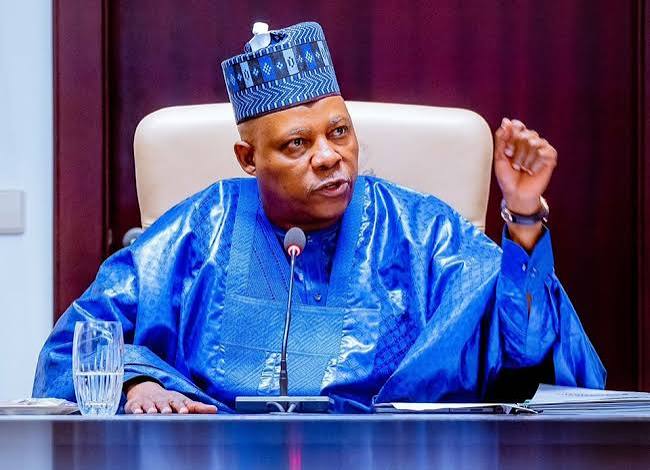
Vice-President Kashim Shettima has criticised the presidential candidate of the Nigeria Democratic Congress (NDC), Peter Obi, saying he has nothing to offer Nigerians beyond what he described as questionable statistics and his opposition to restoring petrol subsidy.
Shettima made the remarks at the 32nd Nigerian Economic Summit, where he acknowledged Obi’s position on subsidy removal but questioned the substance of his economic proposals.
Kashim Shettima accused Peter Obi of relying on “bogus” or “dubious” statistics and incoherent economic prescriptions rather than practical solutions suited for Nigeria’s unique demographic and economic realities.
“I respect Peter Obi for having the courage to say he’s not going to restore the petrol subsidy, but beyond spouting some statistics, Mr Peter Obi has absolutely nothing to offer.
“He was surviving on various statistics. So, I call on you, the crème de la crème of the Nigerian economic community, to support us,” the Vice-President said.
In his opening remarks at the summit, the minister of Finance and coordinating minister of the economy Taiwo Oyedele disclosed that the Federal Government is proposing mandatory impact assessments for major economic policy changes in a move to curb policy reversals, restore investor confidence and ensure government decisions translate into productive investment, decent jobs and higher household incomes.
Under the proposed Nigeria Economic Policy Oyedele said policymakers would be required to demonstrate the problem a proposed intervention seeks to solve, the evidence supporting it, who stands to benefit, who bears the cost and the conditions for ending the policy.
According to him, “Our challenge has never been a shortage of ambition or good ideas. It has been the absence of an enduring economic philosophy, consistent policymaking, and disciplined implementation.”
Describing policy uncertainty as an invisible tax on businesses, the minister said the proposed framework was designed to establish enduring economic principles that would survive successive administrations, rather than become another development plan or the economic manifesto of a particular government.
The proposal comes as the private sector intensifies pressure on the government to move beyond macroeconomic stabilisation and demonstrate tangible improvements in productivity, employment, purchasing power and living standards following successive economic reforms.
On trade protection, Oyedele cautioned against using tariffs to shield inefficient businesses indefinitely from competition, saying trade policy should help local industries become competitive rather than entrench inefficiency.
“A tariff must serve as a runway for local industry to take off, never a permanent shelter from competition,” he said.
The draft framework will be opened for public consultation from November 27, 2026, with Nigerians invited to respond to 17 questions through the Federal Ministry of Finance’s website.
Following consultation and validation, the document is expected to proceed to the Federal Executive Council for approval and the National Economic Council for endorsement.
Oyedele said the government also planned to introduce an annual national economic scorecard, to be published on or before October 1, to track indicators including real wages, productive employment and poverty.
The scorecard is intended to shift the measurement of economic performance beyond aggregate GDP growth towards improvements in household incomes, employment opportunities and business productivity.
“GDP growth matters, but per capita income matters even more,” the minister said.
He identified enterprise as the engine of growth, open but fair markets and coordination across government institutions as the framework’s guiding principles”.
Minister of Budget and Economic Planning, Senator Abubakar Bagudu, has reaffirmed President Tinubu’s commitment to sustaining Nigeria’s economic reform programme, stating that the administration remains determined to maintain the reform trajectory, improve implementation, and address the challenges facing households and businesses.
“For those of us serving under the President and Vice President, the instruction has been clear: we must stay the course,” he said at the 32nd Nigerian Economic Summit (NES#32), which began on Monday in Abuja under the theme “Growth that Works: Delivering Jobs, Productivity and Shared Prosperity”.
Opposition politicians, including the African Democratic Congress presidential candidate, Alhaji Atiku Abubakar, had promised to restore the petrol subsidy to reduce the rising cost of living.
However, Bagudu said that would turn back the clock and erode the gains of the reforms that stabilised the economy and put the country on a growth path.
He recalled that the President had taken deliberate steps to ensure the continuity of the reforms, noting that at a National Economic Council meeting in October 2025, the President presented a memorandum on their sustainability.
According to him, the discussion acknowledged differing opinions on the reforms and the need for a framework to ensure their continuity.
Bagudu stressed that sustaining the reforms would not preclude necessary policy adjustments to respond to prevailing economic realities and to improve implementation.
He reiterated the administration’s position, saying, “There will be no return to the fuel subsidy and the economic distortions associated with the previous system.”
The minister emphasised that the priority now is to consolidate the progress made, tackle the challenges facing Nigerians and ensure that the benefits of economic growth are more widely shared.
“The task before us is to sustain progress, improve implementation, address the challenges facing households and businesses, and ensure that economic growth translates into jobs, productivity and shared prosperity for Nigerians,” he said.
He said the Tinubu administration is investing in agriculture, manufacturing, infrastructure, digital technology and human capital to achieve inclusive, sustainable economic growth.
Commending the Nigerian Economic Summit Group (NESG) for sustaining a platform for constructive engagement among government, the private sector, organised labour, academia, civil society and development partners, he noted that the Summit offers an important opportunity to examine the country’s economic challenges, assess ongoing reforms and develop practical recommendations to accelerate national development.
Bagudu explained that the Renewed Hope Agenda aims to reposition the Nigerian economy for sustainable growth by addressing longstanding structural distortions, strengthening the foundations for investment and expanding productive activities.
He emphasised that the ultimate objective is to build a resilient economy that creates opportunities, improves livelihoods and delivers tangible benefits to Nigerians.
He highlighted improvements in key macroeconomic indicators and increased revenue accruing to the Federal, State and Local Governments, noting that the additional resources available to subnational governments present an opportunity to expand infrastructure, improve public services and advance development priorities.
According to the minister, the distribution of increased revenue across the federation reflects President Tinubu’s commitment to fiscal federalism and to the effective functioning of the three tiers of government. He emphasised that stronger coordination among federal, state and local authorities is essential to converting available resources into measurable development outcomes.
While acknowledging progress, Bagudu stressed that Nigeria must sustain its reform efforts, strengthen domestic production and mobilise greater investment to realise its ambition of building a one-trillion-dollar economy by 2030.
He noted that achieving this target would require improved productivity, stronger private-sector participation, expanded industrial capacity and a more competitive business environment.
He also acknowledged the economic pressures facing households and businesses, emphasising that reforms must be accompanied by effective implementation, responsive policy adjustments, and interventions that protect vulnerable populations, support domestic production, and improve livelihoods.
He maintained that the success of the reform programme would ultimately depend on its ability to create opportunities and translate economic gains into better living conditions.
On grassroots economic development, Bagudu highlighted the Renewed Hope Ward Development Plan, which aims to identify and unlock productive opportunities across Nigeria’s 8,809 wards.
He explained that the initiative aims to identify the distinctive economic strengths of communities and to develop targeted interventions that stimulate local production, increase household incomes and create employment. Communities with potential in agriculture, fishing, livestock, textiles and other productive activities, he said, require support tailored to their specific needs, resources and opportunities.
According to the minister, unlocking economic potential at the ward level would broaden the foundations of national growth, strengthen local economies, and ensure that development opportunities extend beyond major urban centres to communities across the country. He stressed that a more inclusive growth strategy must recognise local communities’ productive capacity and create pathways for them to participate meaningfully in the national economy.
Agriculture, he noted, remains central to economic diversification, food security and employment generation, emphasising the importance of access to farm inputs, agricultural financing, mechanisation, irrigation and stronger agricultural value chains, alongside the National Agricultural Mechanisation Policy and the National Agricultural Mechanisation Investment Strategy.
Bagudu stressed that increasing agricultural production must go hand in hand with improvements in processing, storage, transport, distribution and market access. He explained that these interventions are necessary to reduce post-harvest losses, improve food availability and affordability, raise farmers’ incomes and create sustainable opportunities for agribusinesses and rural communities.
He also emphasised the importance of manufacturing in promoting local value addition, creating skilled employment and reducing dependence on imported goods. In this regard, he cited the Nigeria Industrial Policy 2025 and the Nigeria First Policy as part of efforts to strengthen domestic production, deepen local supply chains and improve the competitiveness of Nigerian enterprises.
Beyond agriculture and manufacturing, the Minister identified digital technology, financial services and trade as sectors with considerable potential to boost productivity, foster innovation and expand economic opportunities.




Ogbodo Seeks FG, Benue Intervention in Deplorable Otukpo–Obi–Oju Road
ShareBy David Torough, Abuja An illustrious son of the Igede nation, medical doctor, author and Medical Director of Lydia Memorial...


Kane Wins 2026 Ballon d’Or, Ends 25-year Wait for England
ShareHarry Kane has become the first English player in 25 years to win the prestigious Ballon d’Or after emerging victorious...

Five Die in Niger Governor’s Convoy Crash
ShareFrom Dan Amasingha, Minna A journey along the Minna–Bida Road ended in tragedy on Monday when five people reportedly lost...


CAN Condemns Threats killing Believers in Viral Video Online
ShareBy Laide Akinboade Abuja The Christian Association of Nigeria (CAN), on Tuesday, has condemned in the strongest terms a disturbing...

SharePoverty: Households Spend 120 Per Cent Income on Food, Says Oyedele By Tambaya Julius Some Nigerian households spend up to...


FG Panel Proposes N1.4bn Compensation for Families of 37 Niger Minners
ShareBy Tambaya Julius, Abuja A Federal Government investigative panel has described the deaths of 37 suspected illegal miners in the...

Again, Tinubu Seeks Senate Approval for $20.52bn, €1.045bn External Loans
ShareBy Tambaya Julius, Abuja President Bola Tinubu has asked the National Assembly to approve a supplementary external borrowing plan of...

2027: FOOG Women Coordinator Urges Nigerians to Support Tinubu’s Re-election Bid
ShareBy Francis Sadhere, Warri Chief (Mrs) Esther Orighomisan Okotie-Eboh, Coordinator of Felix Omagbemi Ogbe Group (FOOG) Women Support Group for...
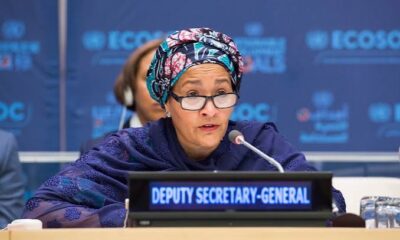

UN, EU Seek Trust, Technology to Strengthen Africa’s Counter-Terrorism Fight
ShareUN Deputy Secretary-General Amina Mohammed, has called for stronger intelligence sharing, public trust and responsible use of emerging technologies to...


University of Agriculture, Orerokpe Bill, Passes Third Reading in Senate
ShareThe University of Agriculture, Orerokpe Bill, sponsored by Senator Ede Dafinone, representing Delta Central Senatorial District, has passed through its...