
POLITICS
2027: Doguwa Dismisses Kwankwaso’s Ambition as Hallucination

By Ubong Ukpong, Abuja
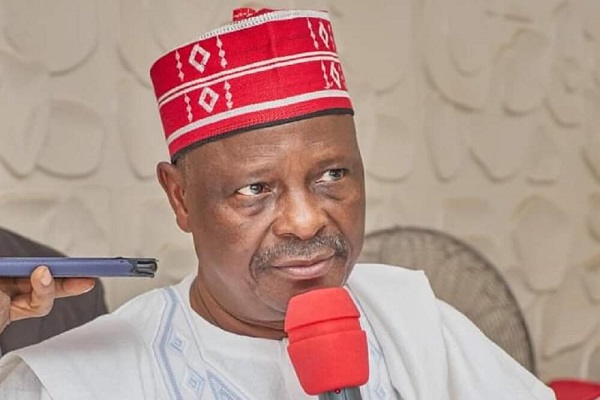
Chairman, House of Representatives Committee on Petroleum Resources (Upstream), Rt. Hon. Alhassan Ado Doguwa has dismissed as Hallucination, the comments of Rabiu Musa Kwankwaso of the New Nigerian Peoples Party (NNPC), that Nigerians will sack President Bola Tinubu of the All Progressives Congress (APC) at the 2027 polls.
Kwankwaso, while speaking at a political gathering in Kano recently said Nigerians, especially Northerners, were tired of the APC and would change it in the 2027 Presidential election.
Reacting via a statement he personally released at the Weekend, in Abuja, to House of Representatives Correspondents, Doguwa said Kwankwaso was yet to recover from the defeat he suffered in the hands of President Bola Ahmed Tinubu during the 2023 presidential election, hence, “he is hallucinating about 2027.
”Doguwa, who represents Tudun Wada/ Doguwa Federal Constituency of Kano State, said Kwankwaso should stop the hallucinations and face his imminent retirement from the political scene in 2027.
“At a political gathering on Thursday, my colleague in the House of Representatives in the 3rd Republic, Kwankwaso, took his hallucination to the moon when he said Nigerians are tired of APC and will change it in 2027. As we all know, President Bola Ahmed Tinubu is not leaving any stone unturned in his quest to return our country to the path of progress and prosperity for the benefit of all,” he said.
Doguwa, a ranking lawmaker in the House of Representatives, said President Tinubu took over the mantle of leadership in the country 16 months ago when the economy was in terrible shape in all spheres.
He said that since assuming office on May 29, 2023, President Tinubu has been working genuinely to correct the fiscal misalignments, the bane of the country’s economic downturn.
Under President Tinubu, Doguwa said the country has attracted foreign direct investments worth more than $30 billion in 16 months. He said President Tinubu has paid a forex backlog of $7 billion and cleared the ways and means of over N30 trillion he inherited from the last administration.
“President Tinubu reduced the debt service ratio from 97 to 68 per cent and kept our foreign reserve at $37 billion. Only this week, the Economic Stabilisation Bills have been transmitted to us in the National Assembly to stimulate our productive capacity and create more jobs and prosperity in the country,” he said.
In the area of security, he said the government has eliminated over 300 Boko Haram and bandit commanders, including Kachalla Halilu Sububu, who terrorised the people in Sokoto, Zamfara, Katsina and Kaduna for over five years.
“A fresh air is already permeating the North West in view of the onslaught against these bandits. Our people are now returning to their farms. We pray for a bumper harvest. We are also grateful to the President for establishing the North West Development Commission to hasten up the reconstruction and rebuilding of our geopolitical zone, which is the food basket of our country,” he said.
He expressed optimism that in a few months, the hardship being faced in the country will fizzle out as the president’s numerous interventions bear fruits.
The lawmaker urged Kwankwaso to free, and stop remote controlling the Kano State governor, Abba Kabir Yusuf, saying, “The disgruntled NNPP government has already lost focus and fell out with the good people of Kano State. No matter the noise Kwankwaso makes, the APC in Kano is already poised to unseat the kangaroo NNPP government in Kano State come 2027 following the non-performance, loss of people’s confidence and breach of electoral confidence of the NNPP.”
Doguwa also said that Kwankwaso lacked the morality to speak for the people of the North, adding that his assertion was only a whimsical statement applicable to himself.
By David Torough, Abuja
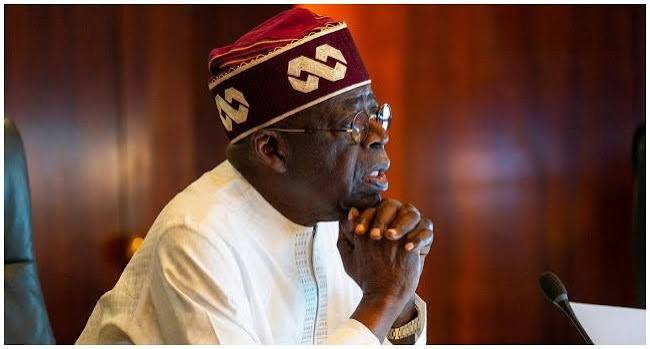
President Bola Tinubu has signed the Appropriation (Amendment) (No. 4) Bill, 2025, extending the implementation period of the 2025 budget from September 30, 2026, to December 31, 2026.
The amendment was passed by the Senate and the House of Representatives on Tuesday, September 29, 2026, before being transmitted to the President for assent.
According to a statement issued on Wednesday by Bayo Onanuga, Special Adviser to the President on Information and Strategy, the extension will give Ministries, Departments and Agencies (MDAs) additional time to complete ongoing capital projects.
The statement said the move would ensure that funds already appropriated are fully utilised without disrupting critical government programmes.
“The extension gives Ministries, Departments and Agencies more time to complete ongoing capital projects,” the statement said.
“It ensures that funds already appropriated are fully put to work for Nigerians, without disrupting critical programmes.”
Tinubu also commended the leadership and members of the National Assembly for what the statement described as the prompt consideration of the amendment.
The president said the development demonstrated continued cooperation between the Executive and Legislative arms of government in the interest of the country.
The amendment therefore allows the Federal Government to continue implementing the 2025 budget until December 31, 2026, instead of the earlier September 30 deadline.
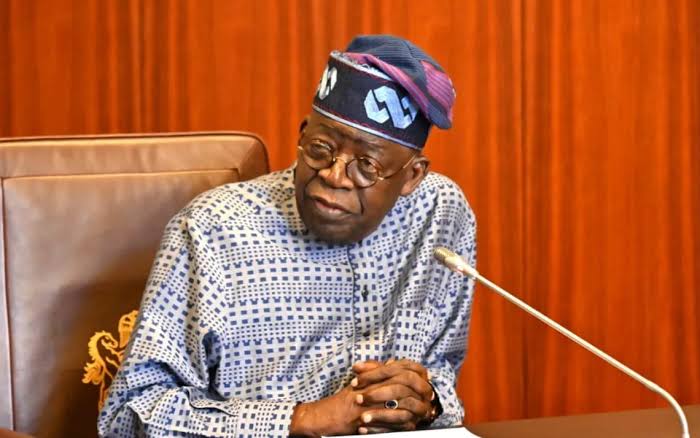
President Bola Tinubu has submitted the 2026 Statutory Budget Proposal of the Niger Delta Development Commission (NDDC) to the House of Representatives for consideration and passage.
This is contained in a letter dated Aug.
20, 2026, addressed to the Speaker of the House of Representatives, Rep. Abbas Tajudeen and read by the Deputy Speaker, Rep. Benjamin Kalu at plenary on Tuesday in Abuja.In the letter, Tinubu said that the budget was prepared by the Minister of Niger Delta Development in line with the provisions of Section 121 of the 1999 Constitution.
According to him, the proposal was based on the NDDC’s revenue and expenditure forecasts and it aligned with the fiscal and developmental policies of the Federal Government and the Renewed Hope Agenda.
He said that the proposal also took into consideration the 2024–2026 Economic Recovery Growth Plan as well as key assumptions of the 2026 Appropriation Act of the Federal Government.
The President said the NDDC had prioritised programmes aimed at improving youth empowerment, energy and power supply, education, industrial and enterprise development, health and security.
He also listed increased agricultural productivity among the commission’s priorities, saying the interventions were intended to lift a significant number of citizens out of poverty.
Tinubu urged the House to give the proposal consideration and ensure its timely passage.
“I look forward to the timely passage of the 2026 Statutory Budget Proposal of the NDDC by the House of Representatives,” he said. (NAN)
By David Torough, Abuja
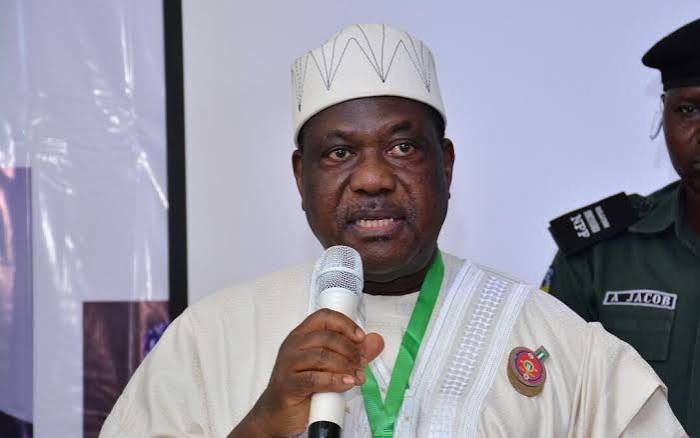
The Secretary to the Government of the Federation, Sen. George Akume, has charged Ministries, Departments and Agencies (MDAs) to translate the findings of the 2026 Transparency and Integrity Index (TII) into concrete improvements in their operations in order to strengthen accountability and public trust.
He gave the charge while delivering the keynote address at the presentation of the 2026 Transparency and Integrity Index held at the Auditorium of the Federal Ministry of Finance, Abuja.
The SGF said the administration of President Bola Tinubu, remains committed to open, accountable and responsible governance, stressing that public institutions must ensure that their policies, programmes and actions are transparent, visible and understandable to Nigerians.
According to him, the Index has become a vital instrument for assessing accountability, openness and ethical standards across government institutions, while providing MDAs with clear benchmarks to identify areas of strength and gaps requiring improvement.
He urged heads of MDAs to integrate the findings and indicators of the Index into strategic planning, performance management, budget priorities, procurement processes, staff training and digital disclosure rather than allow the report to become another document left unused.
“The report should not sit on the shelf and should inform management decisions, budget priorities, procurement processes, staff training, digital disclosure, and how you communicate with the public,” he said.
Akume emphasised that transparency should be viewed as an institutional asset rather than an administrative burden, noting that integrity must be embedded in the procedures and culture of public institutions through clear policies, proper record-keeping, effective oversight, ethical leadership and consequences for wrongdoing.
He further tasked MDAs to take advantage of technology by ensuring that their websites and data portals provide accurate, timely and user-friendly information, including current budget, contract and service information, to enable citizens to effectively engage government and track the utilisation of public resources.
The SGF explained that the 2026 TII assesses public institutions in five critical areas comprising fiscal transparency, open procurement and contracting, human resources and inclusion, control of corruption and citizens’ engagement, adding that the initiative complements existing public service reforms, anti-corruption measures and Nigeria’s Open Government Partnership commitments.
He noted that the ultimate objective of transparency and integrity should go beyond institutional rankings to building public institutions that Nigerians can understand, engage with and hold accountable, while safeguarding public resources and improving service delivery.
“The Federal Government remains fully committed to this goal. We will continue building institutions that are transparent, accountable, professional and responsive to the needs of the people,” the SGF said.
Akume commended the Bureau of Public Service Reforms (BPSR) and the Centre for Fiscal Transparency and Public Integrity (CeFTPI) for sustaining the initiative, while calling for stronger collaboration among government, civil society, professional bodies, development partners and the media in strengthening transparency and bringing corruption to its knees.



Nigeria at 66: Booming Banks, Struggling Nation, Where Is the Promised Prosperity?
ShareBy Blaise Udunze As Nigeria celebrates 66 years of independence, it must ask whether the country has delivered the prosperity...


Nigeria at 66: Leaders are Human, But Accountability is Non-negotiable
ShareBy Aderonke Ojediran As Nigeria marks its 66th Independence anniversary, the debate over leadership, public trust and accountability remains central...


Oborevwori Orders Julius Berger to Fix Washed-Out East-West Road at Agbarho
ShareFrom Francis Sadhere, Delta Delta State Governor, Rt. Hon. Sheriff Oborevwori, has directed Julius Berger Nigeria Plc to immediately commence...

Independence: Kefas Announces N2.5bn Interventions, Clemency for 24 Inmates
ShareFrom John Lamma, Jalingo Taraba State Governor, Dr. Agbu Kefas, has announced fresh interventions worth ₦2.5 billion to support vulnerable...

Nigeria at 66: Tinubu Sees ‘Promised Land’, Atiku, Obi Differ
ShareBy David Torough, Abuja President Bola Tinubu on Thursday used Nigeria’s 66th Independence Anniversary address to declare that the country...

NDIC Warns Nigerians against Patronising Unlicensed Banks
ShareBy Tony Obiechina, Abuja The Nigeria Deposit Insurance Corporation (NDIC) has appealed to Nigerians to keep their savings in licensed...
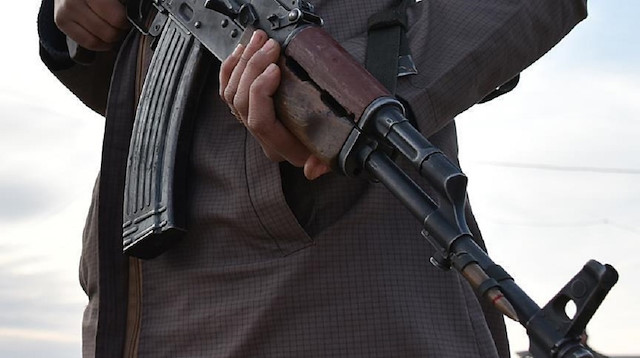
Gunmen Raid Three Houses, Kill Man, Abduct Eight in Kaduna
ShareBy David Torough, Abuja Suspected bandits have killed a resident and abducted eight people who remain in captivity during an...


From Reform to Shared Prosperity: The Real Test of Nigeria’s Economic Recovery
ShareProf Uche Uwaleke President Bola Ahmed Tinubu’s 66th Independence Anniversary address, delivered against the backdrop of persistent economic hardship and...

Insecurity: FCTA Completes Ushafa, Saburi Divisional Police Headquarters, 10 Underway
ShareBy Laide Akinboade, Abuja In order to boost security, the Federal Capital Territory Administration (FCTA) on Wednesday said it has...
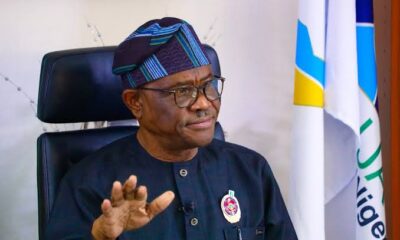

2027: I ‘ll Resign As Minister If Tinubu Loses FCT, Rivers – Wike
ShareBy Laide Akinboade, Abuja The Minister of the Federal Capital Territory (FCT), Nyesom Wike, has declared that he will step...