
NEWS
Nigerians Using Social Media to Instigate Violence, Buhari Laments

By Mathew Dadiya, Abuja
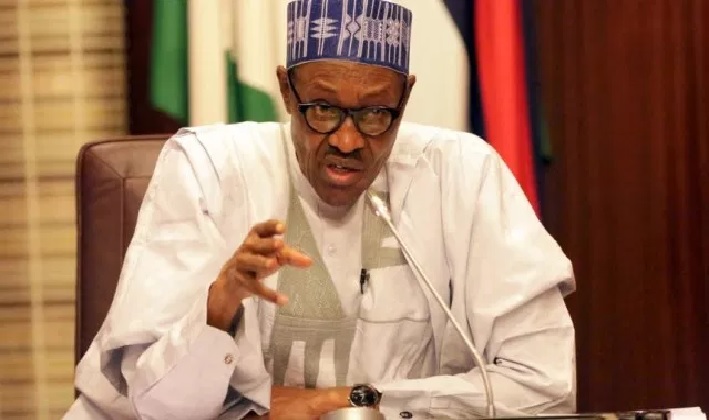
President Muhammadu Buhari has said that technology has been abused as a tool for instigating violence, instead of its good intent.
The President made the assertion on Friday, when he received in audience the Chairman and Board members of the Federal Radio Corporation of Nigeria FRCN, at the State House, Abuja.
The President said: “Generally, technology has been enabler for good.
However, in recent times, we are seeing this platform more and more being used to instigate violence and hate.“Nowhere is this disturbing trend more apparent than in the various media platforms, where fake news is gaining momentum and is being used to divide and destabilise communities and indeed nations around the world.
“We see images being manipulated to give legitimacy to lies. We hear voices on radio preaching falsehood and hatred. We also read stories that are already sponsored by individuals who stand to gain at the expense of truth, peace and harmony,” he said.
The Nigerian leader said that despite all these, the powerful weapon that can counter such manipulations is truth.
“Like I mentioned a few months ago, at the World Economic Forum in Jordan, since digital information age is borderless, this means we must be ready to respond with the best weapon we have; truth,” he said.
The president therefore, urged journalists to save their profession by tackling the growing trend of fake news.
“Journalism as a profession is primarily based on being truthful. With the growing increase in fake news, the future of your profession is under threat and therefore you must be ready to correct this and safeguard your professionalism and reputation,” the President advised.
The President charged the FRCN to proactively develop programmes based on truth, facts and broader national interest.
“You should also have strategies to react to fake information and sensitise our citizens not to believe stories at face value especially when the source is unknown or not credible, where supporting facts are not available.”
Commenting on the requests presented by the FRCN Board, the President advised the Corporation to make a formal presentation through their supervising ministry.
In his remarks, the Board Chairman of FRCN, Aliyu Hayatu, advocated more funding for the broadcast outfit, in order to compete favourably with its equals.
“It should be noted here, Mr President, that powerful foreign countries such as Germany, China, Britain France and the US, spend the equivalent of billions of Naira of their tax payers’ money to broadcast in local Nigerian languages.
“Only recently the British government set aside about two hundred and seventy million pounds sterling, the equivalent of one hundred and thirty-five billion naira, to enable the BBC expand and boost its foreign languages broadcast. As part of this expansion, the BBC is now broadcasting in lgbo, Yoruba and Pidgin English, in addition to the well establish Hausa language broadcast which has now been on, for well over fifty years.
“The sponsors of these foreign broadcast outfits are not competing with each other in broadcasting to Nigerians for immediate gains in terms of Naira and Kobo. The competition is for the soul and mind of Nigerians. The regrettably disturbing result is that because of the very weak transmission capability of particularly, the FRCN, Nigerians are left with no option but to listen more and more to these foreign radio broadcasts,” he said.
He pledged FRCN’s unwavering support for the success of the current administration’s next level agenda.







By Ebuka Ukoh
Blurb: While acknowledging that marriage is a legitimate social goal, this piece ultimately calls for a shift in public spending from transient ceremonies to the foundational conditions that enable couples to achieve lasting economic independence and thrive beyond their wedding day.
Keywords: Public policy, Nigeria, governance, economic development, social welfare, marriage, government spending.
Culture has a way of shaping how societies understand responsibility.
I grew up in Lagos in a family whose roots are in southeastern Nigeria.
One phrase I heard repeatedly in Igbo whenever an adult man displayed a pattern of irresponsibility was, “Let’s find him a wife.” Let that sink.The inherent assumption was striking! Marriage was presented not as the union of two prepared adults, but as the solution to a man’s unfinished maturity. It was as though responsibility could be outsourced to an unsuspecting woman.
I do not share that view today, but I have often reflected on what it reveals about the expectations we have placed on women for generations. Too often, we have expected wives to complete the work that families, communities, and society never did.
Elsewhere in Nigeria, the conversation takes a different form but raises equally important questions. The recent mass wedding programme in Kano has once again placed marriage at the centre of public policy. This time, however, the question is not whether a wife can reform a man. It is a question of whether the government should be financing weddings. At the same time, millions of Nigerians continue to struggle with the far more fundamental challenges of poverty, education, healthcare, unemployment, and economic opportunity.
Let me be clear. There is nothing wrong with marriage. Strong marriages build strong families, and strong families strengthen society. There is also nothing wrong with helping vulnerable citizens. The real question is whether a wedding ceremony is the most effective public investment the government can make in the lives of young couples. Public policy should be judged not by how memorable a ceremony is, but by whether it leaves citizens better off years after the applause has faded.
Reports indicate that approximately ₦1.5 billion was allocated to support 1,500 weddings. Broken down, that amounts to roughly ₦1 million per couple. Every naira the government spends is also a decision not to spend it elsewhere. Economists call this opportunity cost. Public policy is therefore not only about what we choose to fund, but also about what we choose to leave unfunded. That number deserves reflection.
Imagine placing ₦1 million in front of a young couple and asking a simple question. Should it pay for one day? Or should it help build the next thirty years? The answer says everything about how we understand development. A wedding lasts a day. A marriage lasts a lifetime. Governments should certainly care about families. But governments strengthen families less by paying for ceremonies than by creating the conditions under which marriages can flourish. Decent jobs, affordable healthcare, quality education, safe communities, functional schools, access to credit, housing, reliable electricity, security, and opportunities for young couples to build stable lives together.
Weddings begin marriages. Institutions sustain them. The greatest investment the government could make is not in wedding ceremonies but in preparing young people for marriage itself. Financial literacy, conflict resolution, parenting education, reproductive health, vocational skills, and employment support are all investments that strengthen families long after the wedding celebration ends. A successful marriage depends on far more than a successful wedding.
Families struggle
Nigeria remains home to one of the world’s largest populations of people living in multidimensional poverty. It also has one of the world’s largest populations of out-of-school children. Thousands of young people graduate each year into an economy unable to absorb their talents. Families struggle with inflation, rising food prices, inadequate healthcare, and uncertain livelihoods. Against that backdrop, governments must constantly ask themselves a difficult question. What public problem are we trying to solve? If the objective is poverty reduction, then the policy should reduce poverty. If the objective is youth empowerment, then policy should increase employability and entrepreneurship. If the objective is stronger families, then policy should strengthen the economic foundations upon which healthy families are built.
A government’s budget is more than a financial document. It is a moral document. It reveals what a government believes is urgent, what it values most, and what it is willing to postpone. Supporting marriage is a legitimate social goal. But supporting marriage is not the same as supporting married people. There is a difference. Helping a couple celebrate their wedding is one thing. Helping them survive their first five years of marriage is another. Which investment is more likely to reduce poverty? Which investment is more likely to improve child welfare? Which investment is more likely to create lasting economic stability? Those are the questions public policy should answer. There is another concern that deserves careful reflection.
Politics of mass wedding
Images from the ceremony showed many of the groomsmen wearing clothing bearing a political party’s logo. Whatever the explanation, public welfare programmes should always avoid creating the perception that assistance is linked to partisan identity. Public resources belong to every citizen, irrespective of political affiliation. Programmes funded with public money should strengthen confidence in government, not raise avoidable questions about political neutrality. This conversation is ultimately about something much bigger than a single programme in a single state. It is about the difference between relief and development. Relief responds to today’s problem. Development reduces tomorrow’s. Relief is important. Development is indispensable. No nation has ever escaped poverty by investing primarily in weddings/ceremonies. Countries transform themselves by organising themselves better and investing in people. By educating children. By creating jobs. By expanding opportunities. By supporting entrepreneurs. By strengthening healthcare. By building institutions. By preparing young people not merely for weddings, but for life.
Support marriages or married couples?
Imagine if every couple leaving that ceremony also received vocational training, business startup support, financial literacy education, health insurance, access to affordable housing, and ongoing mentorship for the first five years of marriage. Imagine if the celebration became the beginning of economic independence rather than a substitute for it. That would be a different conversation. That would be nation-building. The question, therefore, is not whether the government should support marriage.
It should, the question is how. Because public policy should not simply produce beautiful wedding photographs. It should produce flourishing families. One day, the decorations will come down. The music will stop. The guests will return home. The cameras will disappear. What will remain is the marriage itself. And that is where the real work begins.
The government should be there too, not merely on the wedding day. But in the years that follow, we will create the conditions in which every family has the opportunity not merely to celebrate, but to thrive. Simply put, they should invest less in ceremonies and more in the conditions that make celebration sustainable.
When history looks back on this moment, I hope it remembers not the number of government-funded weddings but the number of families it helped flourish. The true measure of public policy is not whether it creates memorable ceremonies, but whether it creates better lives.
Mr Ukoh, a PhD student and coauthor of Built By The Ancestors, writes from his base in New York, the United States.

The All Progressives Congress (APC) has won all the 13 chairmanship and 171 councillorship seats in the Aug. 22 Local Government elections held in Ebonyi State.
No other political party participated in the council elections.
Chairman, Ebonyi State Independent Electoral Commission (EBSIEC), Patrick Enyi, announced the results in Abakaliki on Sunday, saying that APC candidates won all the contested seats.
The chairmen-elect include Osborne Umahi, son of the Minister of Works, David Umahi, for Ohaozara Local Government Area.
Others are Peace Agwu, Ishielu; Paul Ituma, Ohaukwu; Friday Nwuhuo, Ezza North; Chinedu Mkpuma, Ezza South; Chidi Nwode, Ikwo; Timothy Nwachi, Afikpo North; and Ikechukwu Ogbofia, Onicha.
Others are Michael Anyim, Ivo; Chief Simeon Onuoha, Edda; Helen Aduga, Izzi; Chidiebere Alo, Abakaliki; and Chibueze Odigwe, Ebonyi Local Government Area.
Enyi said all the APC candidates emerged winners in their respective constituencies and were duly returned as chairmen and councillors.
He described the elections as peaceful, free and fair, and congratulated the winners.
Peoples Democratic Party (PDP) and the All Progressives Grand Alliance (APGA) in Ebonyi rejected the Aug. 22 elections, describing the exercise as a “mono-party poll” allegedly conducted in defiance of subsisting court judgments.
The PDP State Publicity Secretary, Darlington Onwe, said the party considered the exercise “not an election at all.”
Onwe alleged that EBSIEC and the state government had failed to ensure genuine participation by all registered political parties.
He argued that the exercise was unconstitutional and incapable of conferring legitimacy on any candidate who emerged from it. (NAN)
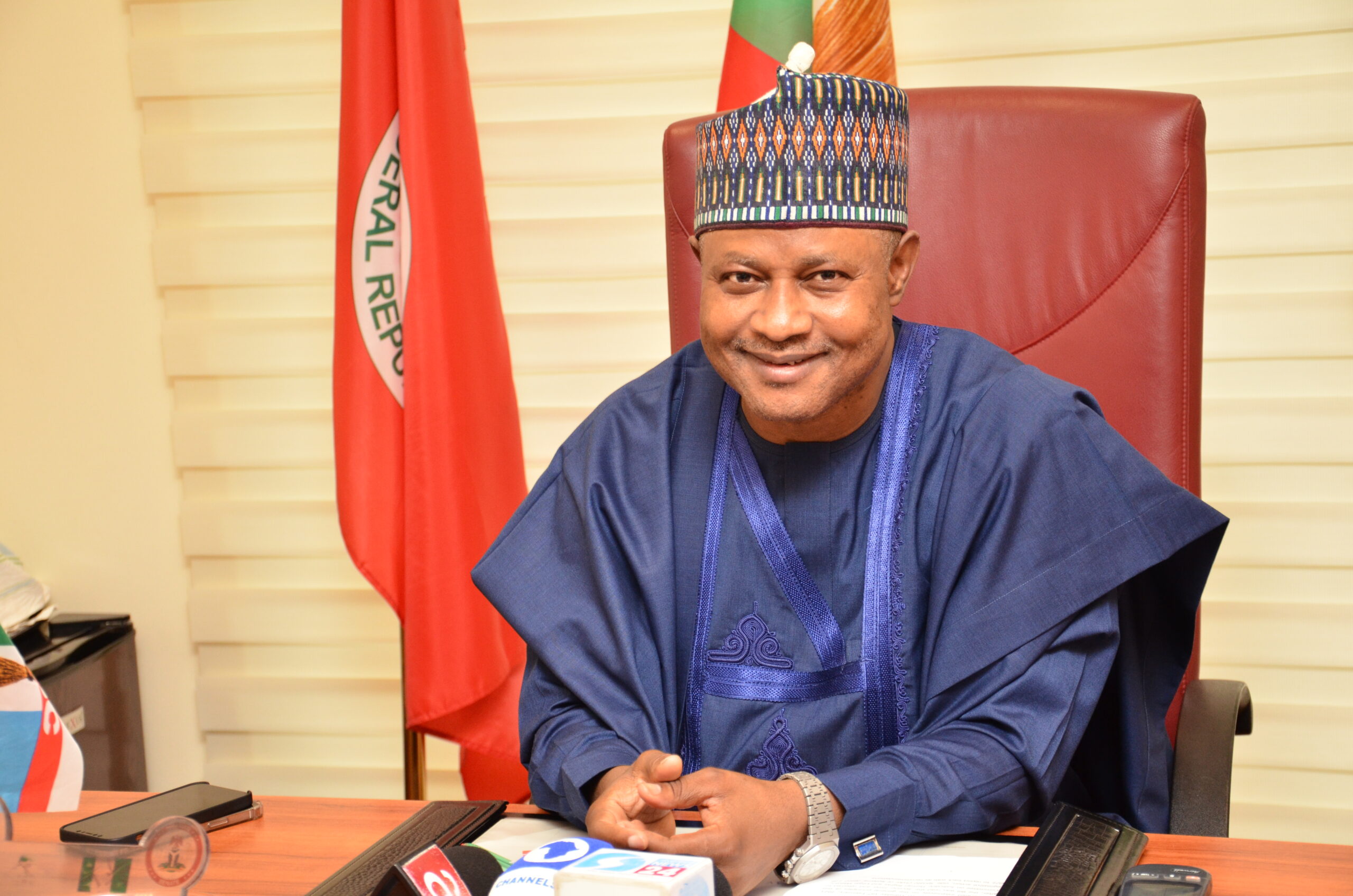
The Capacity Movement Project 2027 has commended the Presidency and Kaduna State Governor, Senator Uba Sani, for the appointment of its Chairman, Board of Trustees, Ambassador Yerima Usman Shettima, as Deputy Director, Labour Union Relations II in the APC Presidential Campaign Council.
In a statement issued on Sunday and signed by its Director-General, Media and Publicity, Muhammad Ayuba, the National President of the movement, Shehu S.
Sado, said the appointment was a well-deserved recognition of Ambassador Shettima’s contributions to national development.“The leadership of the Capacity Movement Project 2027, under the watch of its National President, Shehu S.
Sado, has expressed profound appreciation to the Presidency for the confidence reposed in the movement through the appointment of Ambassador Yerima Usman Shettima,” the statement said.Sado also expressed appreciation to Governor Uba Sani for his role, dedication and commitment towards the appointment.
According to him, Governor Sani has continued to demonstrate exceptional leadership and commitment to recognizing capable individuals who can contribute meaningfully to the development of Kaduna State and Nigeria.
He described Ambassador Shettima as a committed stakeholder in youth empowerment, peacebuilding and democratic advancement.
The National President further reaffirmed the movement’s commitment to support the All Progressives Congress, APC, at all levels ahead of the 2027 general elections.
“The Capacity Movement Project 2027 remains resolute in its commitment to campaign, advocate and mobilise support for the APC and its candidates at all levels, while promoting credible leadership, good governance and sustainable development across the country,” Sado stated.
He said the movement will continue to provide a platform for grassroots mobilisation and political participation, particularly among young people and women, in support of the party’s vision.
The statement congratulated Ambassador Shettima on the appointment and assured the APC leadership of the movement’s unwavering commitment to achieving electoral success in 2027.


Beyond Kano Mass Wedding: What Should Governments Truly be Funding?
ShareBy Ebuka Ukoh Blurb: While acknowledging that marriage is a legitimate social goal, this piece ultimately calls for a shift...


APC Sweeps Ebonyi LG Polls, Wins 13 Chairmanship Seats
ShareThe All Progressives Congress (APC) has won all the 13 chairmanship and 171 councillorship seats in the Aug. 22 Local...

Capacity Movement Hails Tinubu, Uba Sani over Shettima’s Appointment
ShareThe Capacity Movement Project 2027 has commended the Presidency and Kaduna State Governor, Senator Uba Sani, for the appointment of...
Bayelsa Receives Twon-Brass Draft Constitution
ShareFrom Mike Tayese, Yenagoa The Bayelsa State Government has received the final draft copy of the constitution of Twon-Brass Kingdom...

Oborevwori Pledges Infrastructure, Power Support to Boost Delta’s Agricultural Investments
ShareFrom Francis Sadhere, Delta Delta State Governor, Rt. Hon. Sheriff Oborevwori, has pledged stronger government support for genuine farmers and...

Tinubu to Chair Africa Minerals Summit in New York
SharePresident Bola Tinubu is set to lead a fresh continental push to stop Africa’s mineral wealth from leaving the continent...


SEC Proposes N30m Registration Fee, N2bn Capital Requirement for Digital Asset Firms
ShareBy Tony Obiechina, Abuja The Securities and Exchange Commission (SEC) has proposed a N30 million registration fee and a minimum...


Nine Die in Niger Collision, 15 Survive Kano-Zaria Trailer Crash
ShareBy Dan Amasingha, Minna At least nine people were reportedly killed in a road crash along the Kutigi–Mokwa–Bida road in...


Troops Kill 40 Terrorists, Rescue Seven Kidnap Victims in Nationwide Offensive
ShareBy David Torough, Abuja Nigerian troops have neutralised 40 suspected terrorists, rescued seven kidnapped victims, foiled attacks and recovered a...

OnTiv Professionals Rejects Proposed Ranching Pilot in Benue, Demands Resettlement of Displaced Communities
ShareBy David Torough, Abuja The OnTiv Professionals Association (OPA), Abuja, has rejected the Federal Government’s proposed national ranching pilot scheme...