
NEWS
FG to Complete 250km Benin-Asaba Highway Reconstruction in 30 Months – Umahi

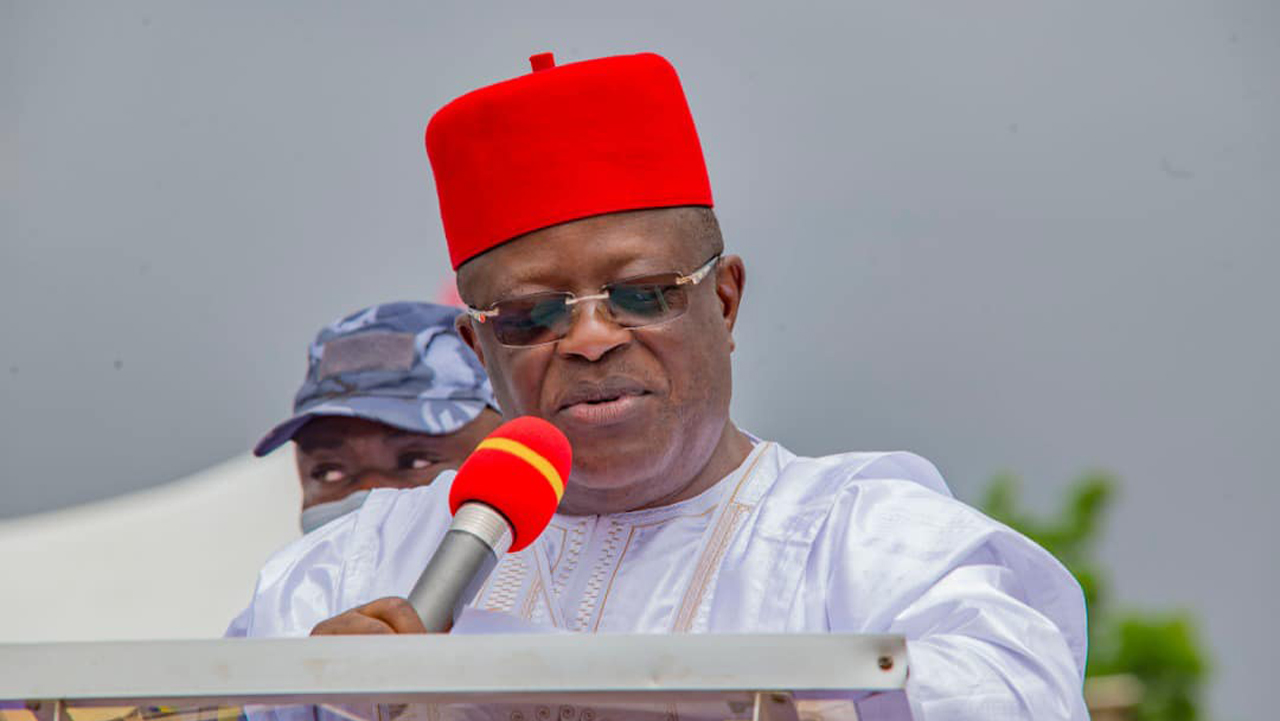
From Joseph Ebi Kanjo, Benin
The Minister of Works, David Umahi has disclosed that the reconstruction of the 250km Benin-Asaba Highway is expected to be completed within 30 months.The Minister made the disclosure during the flagging off ceremony at Kilometre 15, Iguomo junction along the highway on Sunday.
He said, “This construction is like a cashless programme. We will not see the money but the work will keep going on”.”This project is 125 kilometres by 2, that is 250 kilometres. It will have solar lights and the Federal Government is not putting in any money,” he added.Umahi emphasized the importance of infrastructure development.”We need good infrastructure in this country. Infrastructure is the foundation upon which every other programme thrives.”The project is to be funded through a Public Private PartnershipOn his part, Governor Monday Okpebholo, who represented President Tinubu at the occasion, called the road a legacy project.He noted that “Edo State is now becoming like Lagos in terms of infrastructural development.”Delta State Governor Sheriff Oborevwori, represented by his deputy, Sir Monday Onyeme, thanked the President for his efforts.He described the Benin-Asaba road as “a critical infrastructure that connects the Eastern and Western regions of Nigeria.”He appealed to the Minister of Works, Umahi, to modify the initial project design, which was planned to terminate at Summit Junction, Asaba Delta State.He requested that the road be extended to the Onitsha Bridge, noting that this adjustment would provide greater economic benefits and improve connectivity for travelers moving between the South-South, South-East, and other regions of the country.Adeniran Ajakaye, Managing Director of African Plus Partners, revealed that the road from Benin City’s King Square to the Benin bypass will be a 10-lane carriageway with 5 lanes on each side.Federal Ministry of Works Permanent Secretary Olufunso Adebiyi described the event as “a significant milestone in the president’s renewed hope agenda.”He noted that the highway is “a crucial link between the Southern and Northern regions of Nigeria” that is “vital to trade and other economic activities.”The Benin-Asaba 125KM Road Project is funded by the Benin-Asaba Expressway Concession Company Limited, managed by Africa Plus Partners Nigeria Limited Consortium (APPNL).The project seeks to improve transportation efficiency, enhance trade, and provide a safer road network while implementing an Environmental and Social Management Plan (ESMP) to minimize environmental risks and protect local communities.
By David Torough, Abuja
Nigeria’s healthcare sector received a major boost on Friday as Dangote Cement Plc commissioned a multimillion naira hospital in Obajana, Kogi State.
The commissioning ceremony also featured the conferment of traditional chieftaincy titles on the Group Managing Director of Dangote Cement Plc, Arvind Pathak, the Plant Director of the Obajana Plant, Azad Nawabuddin, Head of Social Performance, Wakeel Olayiwola, General Manager Social Performance, Obajana, Ademola Adeyemi, Head Human Resource and Admin and Dangote Packaging Limited, Bashir Uba.
Pathak was conferred with the prestigious title of Mayegun of Obajana Kingdom, while Nawabuddin and Olayiwola received the traditional titles of Babagunwa and Adeyanju, respectively.
Ademola was honoured with the title of Imokan of Obajana, while Bashir was installed as the Eri-Oba of Obajana Kingdom.The new hospital is part of the company’s Corporate Social Responsibility (CSR) programme designed to improve access to quality healthcare for residents of Obajana and neighbouring communities.
The Bajana of Obajana, Idowi Isenibi, described the project completion as a dream come true, adding that his community will protect the facility and the equipment, and ensure that it serves the purpose.
Speaking at the ceremony, the Acting Plant Director of Dangote Cement Plc, Obajana Plant, Panjala Sreedhar, said the project was conceived after extensive consultations and community needs assessments that identified healthcare as a major priority.
He explained that the Cottage Hospital was built to provide comprehensive primary and secondary healthcare services, reducing the burden on residents who previously travelled long distances to access medical treatment.
According to him, the facility is equipped with male, female and children’s wards, private wards, consulting rooms, a meeting room, 19 sanitary facilities, digital blood pressure monitoring devices, a dedicated borehole water supply and other essential medical infrastructure.
He expressed confidence that the hospital would improve maternal and child healthcare, strengthen healthcare delivery and enhance the overall wellbeing of residents in Obajana and surrounding communities.
Sreedhar noted that Dangote Cement has consistently invested in education, healthcare, infrastructure, youth empowerment and livelihood programmes across Obajana, Oyo, Iwaa, Apata and Jakura communities through continuous engagement with stakeholders.
He announced that the company has also approved additional projects, including ICT centres for Oyo and Iwaa communities, electrification projects in Jakura, vocational and skills acquisition programmes for youths, perimeter fencing of the Obajana Cultural Heritage Site and fencing of the UBE Secondary School in Apata.
The Acting Plant Director reaffirmed the company’s commitment to sustaining strong partnerships with its host communities and creating shared value through impactful development projects.
He also appreciated Governor Ahmed Usman Ododo for providing an enabling environment for businesses to thrive, saying the administration’s support has contributed significantly to the growth of Dangote Cement’s operations in Kogi State.
Speaking on behalf of Governor Ododo, the Special Assistant on Corporate Social Responsibility, Hon. Paul Sunday, commended Dangote Cement for its sustained investments in community development and urged the company to provide medical personnel to operate the facility pending the deployment of health workers by the local government.
Chairman of Lokoja Local Government Council, Hon. Abdullahi Adamu, described the hospital as a major intervention that would improve healthcare access for residents, urging members of the community to make effective use of the facility.
Adamu also appealed to Dangote Cement to sustain its support for local security outfits, particularly vigilante groups operating within the Obajana community, to further strengthen peace and security.
The Obaro of Kabba and Chairman of the Okun Traditional Council, His Royal Majesty Oba Solomon Owoniyi, praised the company for delivering the healthcare project, noting that although a general hospital would have been preferable, the Cottage Hospital remained a significant contribution to community development.
The royal father urged the people of Oworo land to take ownership of the facility by ensuring its proper maintenance while pledging the support and cooperation of the host community.
Group Head, Socio-Performance, Dangote Cement Plc, Wakeel Olayiwola, said the cordial relationship between the company and its host communities made the project possible, adding that the company had taken note of the observations and requests made by stakeholders.
Olayiwola disclosed that since 2025, Dangote Cement has expanded its Corporate Social Responsibility programmes beyond its immediate host communities, assuring residents that the company would continue to undertake projects that improve lives and support sustainable community development.
General Manager Social Performance, Obajana Plant, Ademola Adeyemi, said the company has several other programmes lined up for execution as CSR and those contained in the Community Development Agreement (CDA).
He appreciated the traditional leaders for the titles conferred on management staff, saying it will spur the company to do more, as it enjoys peaceful relations.

The Police in Delta has arrested four suspects over alleged armed robbery and cultism in separate operations across the state.
This is contained in a statement by the Command’s Public Relations Officer, Bright Edafe, on Tuesday in Asaba.
Edafe said that on July 14, a joint team of Police operatives and members of the Civilian Anti-Cult group mobilised and trailed a suspected armed robbery gang on the Asaba Benin Expressway.
He said that the suspects, Stephen Danladi, 29 and Jude Christian, 26, were subsequently arrested.
“A search of the suspects led to the recovery of two locally made pistols.
“Preliminary interrogation yielded further intelligence, which led operatives to Issele-Asagba and Ogwashi-Uku, where one Jerry Egenus of Atuma-Iga, Oshimili North Local Government Area was arrested for alleged gun running and receiving stolen property,” Edafe said.
He said that investigations revealed that the suspects were allegedly linked to a series of armed robbery incidents in Okpanam, Asaba and adjoining areas.
“The suspects and recovered exhibits are in custody and investigation is ongoing,” the command’s spokesman said
Edafe also said that in a sustained fight against cultism, operatives of Ogwashi-Uku Police Division responded to a distress call at the Polytechnic area, where a suspected cult member, 24, was arrested.
The statement said the “non-student suspected to be a member of the Eiye confraternity was arrested on July 10.
“Recovered from the suspect were one locally made pistol, three live cartridges, one expended cartridge and one dagger knife.
“The suspect and the recovered exhibits are in police custody, while investigation is ongoing,” he said.
The spokesperson quoted the Commissioner of Police (CP) Yemi Oyeniyi as reiterating the command’s commitment to sustaining intelligence-led and proactive policing aimed at dismantling criminal networks, combating cultism and proliferation of illegal firearms in the state.
Oyeniyi urged residents of the state to continue supporting the Police with timely, credible and actionable information.
The CP assured that the command would do all in its efforts to safeguard lives and property throughout the state.

By Monday Priscillia Ogheneyole
Corruption remains one of the greatest challenges facing Nigeria today. Despite numerous efforts by governments, anti-corruption agencies, and civil society organizations, the problem continues to grow and affect every aspect of national life.
Corruption refers to the abuse of entrusted power for personal gain. It includes bribery, embezzlement, fraud, favoritism, nepotism, and the misuse of public resources. The rising rate of corruption in Nigeria has become a serious concern because it hinders development, weakens institutions, and reduces public trust in government.Nigeria is richly blessed with natural resources, especially crude oil, gas, and vast agricultural land.
However, the benefits of these resources have not been fully enjoyed by the majority of citizens. One major reason for this situation is corruption. Funds meant for development projects are often diverted into private pockets. As a result, many communities lack good roads, quality healthcare facilities, clean water, and functional schools. Corruption has prevented the country from achieving its full potential despite its enormous wealth.One of the major causes of corruption in Nigeria is poverty. Many citizens struggle to meet their daily needs and may become vulnerable to corrupt practices in order to survive. Low wages and poor working conditions in some sectors also encourage workers to seek illegal means of supplementing their income. In addition, unemployment, especially among young people, has created an environment where some individuals engage in fraudulent activities and other forms of corruption.
Another factor contributing to the rise of corruption is weak institutions. Although Nigeria has agencies such as the Economic and Financial Crimes Commission (EFCC) and the Independent Corrupt Practices Commission (ICPC), challenges such as political interference, inadequate funding, and slow judicial processes often limit their effectiveness. When corrupt individuals are not punished promptly, others are encouraged to continue engaging in similar activities without fear of consequences.
Political corruption is another significant problem in Nigeria. During elections, vote buying, election rigging, and misuse of public funds are common allegations. Some politicians see public office as an opportunity for personal enrichment rather than service to the people. Public resources that should be used for infrastructure, healthcare, and education are sometimes mismanaged or stolen. This behavior undermines democracy and weakens public confidence in leadership.
The effects of corruption on the Nigerian economy are devastating. Corruption discourages both local and foreign investors because it creates uncertainty and increases the cost of doing business. Investors are often reluctant to operate in environments where bribery and lack of transparency are widespread. Consequently, economic growth slows down, job opportunities become limited, and poverty levels increase. The nation’s resources are wasted, and development projects are either abandoned or poorly executed.
Corruption also affects the education sector. Funds allocated for schools, teaching materials, and infrastructure may be misappropriated, resulting in inadequate learning facilities. Students sometimes encounter corrupt practices such as examination malpractice and bribery. These actions compromise the quality of education and produce graduates who may lack the skills and knowledge required for national development.
The healthcare sector is equally affected by corruption. Money intended for hospitals, medical equipment, and essential drugs may be diverted for personal gain. This leads to poorly equipped health facilities, shortages of medicines, and inadequate healthcare services. Many citizens suffer because they cannot access quality medical care, while preventable diseases continue to claim lives.
Furthermore, corruption contributes to insecurity in Nigeria. When funds meant for security agencies are mismanaged, the ability of these agencies to combat crime and terrorism is weakened. Corruption within law enforcement institutions can also allow criminals to escape justice. This creates an environment where crime flourishes and citizens feel unsafe.
To address the rising rate of corruption, several measures must be taken. First, anti-corruption agencies should be strengthened and allowed to operate independently without political interference. The judicial system should ensure that corruption cases are handled swiftly and fairly. Those found guilty should face appropriate punishment regardless of their social or political status.
Second, transparency and accountability should be promoted in government activities. Public officials should be required to declare their assets, and government spending should be closely monitored. The use of technology in public administration can help reduce opportunities for corruption by minimizing human interference in financial transactions.
Third, citizens must play an active role in combating corruption. People should refuse to offer or accept bribes and should report corrupt activities whenever they occur. Educational institutions, religious organizations, and the media should continue to promote values such as honesty, integrity, and accountability.
In conclusion, the rising rate of corruption in Nigeria poses a serious threat to national development, economic growth, and social progress. It affects every sector of society and deprives citizens of the benefits of the country’s resources. Combating corruption requires the collective efforts of government, institutions, and citizens. With strong leadership, effective laws, transparent governance, and a commitment to ethical values, Nigeria can reduce corruption and build a more prosperous and equitable society for future generations.




Dangote Cement Commissions Multi-million Naira Hospital in Kogi
ShareBy David Torough, Abuja Nigeria’s healthcare sector received a major boost on Friday as Dangote Cement Plc commissioned a multimillion...

Police Arrest Four Suspects over Alleged Armed Robbery, Cultism in Delta
ShareThe Police in Delta has arrested four suspects over alleged armed robbery and cultism in separate operations across the state....

DHQ Engages Military Veterans, Reaffirms Commitment to Welfare, Pension Reforms
ShareBy David Torough, Abuja The Defence Headquarters (DHQ) has held a one-day strategic retreat with the leadership of various military...

2027: We’ll Ensure Benue Returns to its Past Glory – Akume
ShareBy David Torough, Abuja As the 2027 general elections draw nearer, the Secretary to the Government of the Federation (SGF),...

Nigerian Army at 163: Legacy of Sacrifice, Service and Transformation
ShareBy Sumaila Ogbaje When officers, soldiers and defence stakeholders gathered in Port Harcourt for the Nigerian Army Day Celebration (NADCEL)...


The Battle before the 2027 Ballots
ShareBy Dakuku Peterside By the time Nigerians file into polling units in 2027, the most consequential battle for the nation’s...

The Rising Rate of Corruption in Nigeria
ShareBy Monday Priscillia Ogheneyole Corruption remains one of the greatest challenges facing Nigeria today. Despite numerous efforts by governments, anti-corruption...


#NBADecides2026: What Future for an Independent Bar?
ShareBy Chidi Anselm Odinkalu Three score and three years ago, a defining dispute erupted in the old Western Region of...

FG Reviews Economic Reforms, Unveils Advisory Committee
Share By Tony Obiechina, Abuja The Federal Government on Tuesday inaugurated a Ministerial Advisory Committee to provide independent, evidence-based reviews...


Suspected Herders Invade Benue Community Again, kill Youth Leader, Injure Scores
ShareBy Attah Ede, Makurdi Fresh violence erupted in Otukpo Local Government Area of Benue State yesterday as gunmen suspected to...