
Oil & Gas
SPE Seeks Intelligent Operations to Boost Oil Output

Chairman of the Society of Petroleum Engineers Nigeria Council, Francis Nwaochei, has called for resilience, strategic coordination and disciplined execution to reposition Nigeria as a dominant force in the global oil market.
Nwaochei made the call ahead of the 2026 Oloibiri Lecture Series and Energy Forum (OLEF), scheduled to hold on April 9 at the Petroleum Technology Development Fund (PTDF) Tower in Abuja.
The 2026 edition has the theme “Beyond the Three Million Barrels Target: Harmonising Digitalisation, Capital and Policy Frameworks for Intelligent Operations and Asset Optimisation”.
It will focus on moving Nigeria’s production drive from aspiration to implementation.
He said geopolitical tensions and supply chain disruptions had exposed vulnerabilities in global energy systems while creating leadership opportunities for resource-rich nations like Nigeria.
“Global instability underscores the importance of disciplined planning in our petroleum industry. But it also presents Nigeria with a unique opportunity to lead,” he said.
According to him, Nigeria’s ambition to exceed three million barrels per day is achievable, but only through innovation, disciplined capital deployment and smarter institutional coordination.
“Easy production is no longer an option. Only intelligent operations will deliver sustainable growth,” he added.
Nwaochei noted that crude oil output directly affects public revenue, foreign exchange stability, infrastructure financing and overall economic confidence, stressing that production levels ultimately influence the cost of living.
He said surpassing the three-million-barrel threshold was fundamental to strengthening fiscal stability, supporting domestic refining, unlocking gas resources for power and industry, and reinforcing Nigeria’s credibility as a dependable global supplier.
However, he cautioned that ambition without structural alignment would falter.
“When approval processes are slow or mandates overlap, investment momentum weakens. Unclear fiscal terms deter capital.
“Real progress depends on aligning digital innovation and funding with efficient and transparent policies,” he said.
Nwaochei explained that OLEF 2026 would centre on three pillars: financing, policy alignment and asset optimisation — with discussions expected to address implementation of Nigeria’s petroleum industry framework, fiscal stability and investor confidence.
He added that the forum would also examine ways to strengthen indigenous operators through improved access to financing and technology partnerships, as well as unlock value from idle wellbores.
The chairman highlighted the transformation underway in the downstream segment, driven by the emergence of the Dangote Refinery and a growing network of modular refineries.
He said expanded domestic refining capacity could reshape fuel supply dynamics, employment levels, pricing structures and foreign exchange management, but stressed that investments in pipelines, storage and gas-to-liquids projects remained critical.
Nwaochei reaffirmed the council’s commitment to facilitating technical dialogue and providing data-driven insights to support informed decision-making.
“Unlike ceremonial conferences, OLEF 2026 is structured as a working forum designed to produce concrete recommendations capable of shaping regulatory reviews, investment strategies and national planning.
“Nigeria’s energy future must be competitive, resilient and sustainable. We must balance innovation with strong regulation, investment with stability, and ambition with disciplined execution,” he said.

The Petroleum Technology Development Fund (PTDF) has commenced the second phase of interviews for the 2026/2027 PhD award under its Overseas Scholarship Scheme (OSS), targeting 2,102 PhD applicants across Nigeria.
Speaking during the screening on Monday in Abuja, Dr.
Bello Mustapha, Deputy General Manager, Education and Training, PTDF said the ongoing exercise followed the completion of MSc interviews conducted in four centres nationwide.According to him, Abuja accounts for 912 candidates, scheduled for interviews over a five-day period, out of the 2,102 shortlisted nationwide.
Mustapha said the selection process followed the Federal Character principle, ensuring that candidates compete within their respective states, with top-performing applicants emerging based on merit.
He said the number of successful candidates to be awarded scholarships would depend strictly on budgetary provisions, with final decisions to be made by PTDF management after the interview process.
The PTDF official also disclosed that while the UK remains a destination for MSc scholars, the Fund has domesticated its PhD programme through a split-site arrangement involving partner universities, with candidates spending part of their study period abroad.
“Other countries participating in the scheme include Malaysia, Germany and France.
“The fund received over 30,000 applications for both MSc and PhD programmes, from which about 5,800 candidates were shortlisted for interviews,’’ he said.
The delegation from the Federal Character Commission (FCC) was on ground to monitor the ongoing PTDF 2026/2027 Scholarship selection for fairness
During the monitoring visit, the State Coordinator of the commission, John Uchara, accompanied by the Commissioner representing Benue State, Prof. Eugene Aleba, lauded PTDF for demonstrating compliance with federal character principles in the ongoing exercise.
Uchara said the commission’s presence was to ensure transparency, equity, and balance in the process, noting that the oversight was necessary to address concerns about marginalisation and imbalance in national opportunities.
“The exercise is open to candidates from all states of the federation, reinforcing inclusiveness in the selection process.
“Our duty is to ensure that what is being done here reflects the federal character principles, to avoid complaints from any part of Nigeria.
“From what we have seen, there is serious compliance with the principles. However, the final assessment will be based on the overall intake and how well it reflects national balance,” he said.
The FCC official, while reaffirming its commitment for continuous monitoring to ensure fairness and transparency, urged PTDF to consider expanding the scope of the programme to accommodate more qualified applicants.
A panelist at the ongoing interviews, Prof. Bashir Aliyu, from Modibbo Adama University, Yola, described the quality of candidates as highly impressive, noting that the process was progressing smoothly and transparently.
“We have started the interviews very well, and the exercise is progressing smoothly with candidates demonstrating strong academic and research potential.
“The panel focuses primarily on assessing the overall quality of candidates, including their academic background, research capacity, and the relevance of their proposed PhD work to national development.
“We look at their first degree, their master’s performance, their ability, and the quality of the work they present, especially in terms of innovation, potential for patenting, and usefulness to the country,” he explained.
He said while preliminary screening such as verification of academic records and credentials had already been conducted by PTDF, the panel’s role was to evaluate the strength and originality of candidates’ PhD proposals, as well as their professional conduct and research experience.
On the integrity of the process, Aliyu disclosed that PTDF has put in place robust verification mechanisms, including document authentication and checks on publications, to ensure only credible candidates are selected.
Tanko Fwadwabea, a Chemical Engineer, said his proposed PhD research focused on process simulation for blue hydrogen production, with the goal of adding value to Nigeria’s vast natural gas resources while reducing carbon emissions.
He expressed optimism that the scholarship opportunity would enable him to realise his research ambitions and contribute meaningfully to Nigeria’s energy future.
A returning candidate, Cornelia Collins-Onoha, a geosciences-based researcher while expressing optimism said her proposed PhD study focused on the spread and persistence of antimicrobial-resistant genes in aquatic environments, particularly in communities affected by oil pollution.
“I was here in 2025 but didn’t make the final list. However, I remain hopeful that this time around it will work out. This year, the process is prompter and more structured,” she said.
Collins-Onoha expressed confidence that her research and determination would contribute meaningfully to both environmental sustainability and public health in Nigeria.
Analysts have warned of significant crude oil price hikes which would further erode global economic prospects.
Top grade Brent crude could surge to $200 a barrel if the Iran conflict drags on through the end of June and the Strait of Hormuz remains largely closed to shipping traffic, Macquarie strategists warned in a note.
These fears were echoed by Egyptian President Abdel Fattah al-Sisi, who warned at an energy conference in Cairo that supply disruptions and rising prices could push oil above $200 per barrel, calling such projections realistic rather than exaggerated.
Egypt, which maintains close ties with the U.
S. and Gulf states, has condemned Iran’s attacks on Gulf Arab nations and is actively supporting diplomatic efforts to prevent a broader regional conflict.Macquarie laid out two scenarios for the oil market. In the more likely case, assigned a 60 per cent probability, the war winds down soon, prices fall relatively quickly from current levels near $108 a barrel, and the economic damage remains contained.
But in the second scenario, which Macquarie puts at a 40 per cent chance, the disruption proves far more durable, with consequences the strategists describe as historically unprecedented.
“With the global economy much less oil-intensive than 50 years ago, we would not be surprised if that would require historically high real prices ($200) for a time,” strategists led by Peter Taylor said in the note.
The scale of the supply disruption is already striking. With the Strait of Hormuz mostly closed, Macquarie estimates around 13% of global oil production will be shut in by end of March, a hit already larger than the peak seen in either of the 1970s oil shocks or the first two Gulf Wars. In 2025, the world consumed almost 105 million barrels per day of oil and products.
Emergency stockpiles held by IEA members over 1.2 billion barrels would provide some buffer, but the strategists note these can only be released slowly. Some countries in Asia are already facing physical shortages of diesel and jet fuel.
“If the Strait were to stay closed for an extended period, prices would need to move high enough to destroy an historically large amount of global oil demand,” the strategists wrote.
Should prices reach $200, the team projects that talk would quickly turn to global recession, with growth slowing by around one percentage point relative to 2025. Central banks would face a stagflationary environment with weak growth alongside elevated inflation with echoes of the 1970s.
In the U.S., the Fed would be confronted with near-zero or negative employment growth alongside rising prices, according to Macquarie.
That said, the strategists suspect a full global recession could be narrowly avoided, partly because governments would likely step in to subsidize energy costs, as several already have. Japan and Italy have already moved in that direction.
Overall, Macquarie’s base case remains a relatively swift resolution. With around 15% of global oil supply at risk of being held back indefinitely, the economic incentive to reach a deal is enormous.
“It is that reality that underpins our view that a deal must eventually be made,” the strategists said.

Sri Lanka has issued guidelines to government institutions on the prudent use of fuel and energy amid possible disruptions to fuel imports caused by escalating tensions in the Middle East.
The Office of the Commissioner General of Essential Services issued the guidelines to ministry secretaries, provincial and district secretaries, and heads of government and statutory institutions and called for measures to reduce fuel and electricity consumption across the public sector.
Officials have been advised to avoid using individual vehicles to commute to work and instead use public transport or group transport whenever possible, according to the office.
Government institutions have also been instructed to prepare daily transport plans to reduce the number of vehicles used for field duties.
The guidelines set out steps to conserve electricity and energy, including maximising natural lighting, reducing the use of air conditioning by relying more on electric fans, and limiting elevator use by encouraging people to take the stairs.
Local government authorities have been directed to switch off street lights during unnecessary hours and temporarily turn off street lighting in non-high-security areas as a precautionary measure, the office said.
The guidelines further encourage heads of institutions to allow staff to work remotely where technological facilities are available instead of requiring physical attendance.
The office urged all public officials to act responsibly, set an example for the public, and extend maximum support to national energy conservation and security efforts.


Nigeria’s Hidden Killings: One-Man Rule Looms – Adebayo
ShareIn a searing and emotionally charged interview, a presidential aspirant and leader of the Social Democratic Party recounts his harrowing...
Heading Towards Elections with Democracy on Crutches
ShareBy Chidi Amuta Nigerian politicians have once again carried out another successful coup against the people. They have fired up...

2027: Ahmadiyya Leader Sees Hope in Adewole Adebayo if Youths Organise
ShareBy Mike Odiakose, Abuja The Amir and National Head of the Ahmadiyya Muslim Jama’at of Nigeria, Alatoye Abdulazeez, has urged...


OGD 2027 : Why Ogun East Must Produce a Ranking Senator
ShareBy Prince Taiwo Nodiru All over the world, especially in the nations where democracy thrive, the legislative assignments are germane...


Nigeria To Host 5th High Level Ministerial Meeting On AMR
ShareBy Laide Akinboade, Abuja Nigeria said it has concluded arrangement to host the 5th high level ministerial meeting on Antimicrobial...

Sule Inaugurates N2.8bn Loko Township Roads
ShareNasarawa State Governor, Abdullahi Sule has inaugurated a 3.2-kilometre Loko Link and Township Roads project worth N2.8 billion in Nasarawa...


2026 Unity Cup: Don’t Exclude NPFL Players from Eagles, Ekpo Tells Chelle
ShareFormer Nigerian international Friday Ekpo has advised Super Eagles head coach Eric Chelle not to exclude players from the Nigeria...

Cameroon Separatists Pause Fighting Ahead Pope Visit
ShareAnglophone separatists in Cameroon have announced a period of “safe travel passage” and halted fighting ahead of Pope Leo XIV’s visit to the conflict‑hit region this week. Leaders...

Over 2,000 PhD Candidates Jostle for PTDF Overseas Scholarship
ShareThe Petroleum Technology Development Fund (PTDF) has commenced the second phase of interviews for the 2026/2027 PhD award under its...
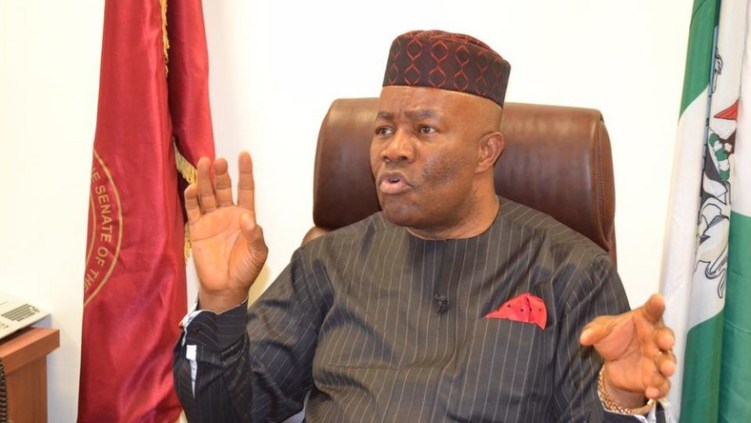
Akpabio Ties Worsening Insecurity to Gang up Against Tinubu
ShareBy Eze Okechukwu, Abuja The Senate President, Godswill Akpabio has linked the worsening insecurity across the country to a gang up by opposition politicians,...