
NEWS
Buhari Swears – in Ministers, Creates Three New Ministries


By Mathew Dadiya, Abuja
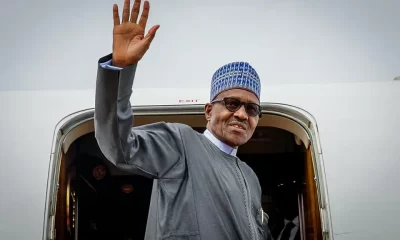
At last, President Muhammadu Buhari Wednesday, inaugurated a new cabinet for his second term in office, three months after his inauguration on May 29, 2019.
The President commenced the event with the administering of oath of office on the reappointed Secretary to the Government of the Federation (SGF), Mr Boss Mustapha, and the 43 Ministers who are now part of the Federal Executive Council (FEC).
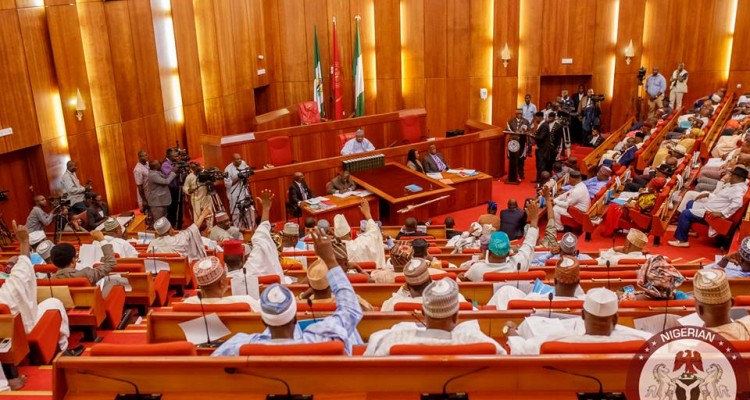
The swearing in ceremony took place at the Aso Council Chambers of the Presidential Villa with Vice-President Yemi Osinbajo, Senate President Ahmed Lawan; Deputy Speaker of House of Representatives, Idris Wase; All Progressives Congress (APC) national chairman, Adams Oshiomhole; and senior presidency officials in attendance.
It was also witnessed by family and friends of the new ministers; APC national leader, Bola Ahmed Tinubu; Governor Kayode Fayemi of Ekiti State; Governor Gboyega Oyetola of Osun State; the Chief of Defence Staff and military service chiefs, as well as the Inspector-General of Police.
Also present was the embattled Head of Service of the Federation, Mrs. Winifred Oyo-Ita, who is being investigated over an alleged N3billion fraud by the Economic and Financial Crimes Commission.
She had been absent from public functions in the past few days, particularly the induction retreat organised for the incoming ministers in Abuja, at which she was listed as one of the resource persons.
President Buhari in his remarks, charged the ministers to work closely and harmoniously with fellow cabinet members as well as with the Permanent Secretaries in their respective Ministries.
This, he said, has become necessary considering the fact that, the task of moving the country to the Next Level requires dedication, focus, and collective efforts.
He reminded them of his earlier charge to channel cabinet memos through the SGF and requests for meetings and presidential matters through his Chief of Staff, Abba Kyari.
Buhari warned that failure to follow appropriate vertical and horizontal channels of communication in the work of the cabinet among them would be sanctioned with requisite repercussions.
The President said: ”The core objectives of this Administration are to improve security, achieve diversified, inclusive economic growth and fight corruption. I am convinced that we can build a buoyant economy that supports inclusive growth and creates broad-based prosperity for every Nigerian – one that will absorb the two million Nigerians entering the labour market each year, as well as reduce the backlog of over 20 million unemployed or underemployed Nigerians.
”We must also intensify efforts to reduce internal security threats and eliminate corruption at all levels so as to ensure that our citizens have a safe and corruption-free environment where they can live and conduct their businesses, without fear and intimidation.
All these are only possible if we are relentless about delivering on the priorities that are vital to our overall objectives – and on the specific actions and targets that have been identified to guide policy direction and implementation as specified in our roadmap.
We have also agreed on the appropriate Key Performance Indicators and deliverables to be achieved in the road map on Government priorities – 2019 – 2023.
”I am pleased to note that at the end of the retreat, we have agreed and prioritized the key strategic initiatives required to drive socio-economic growth in our country, which must be accomplished, because the people of Nigeria expect nothing less from us.
”Our primary business over the next four years is to work together towards delivering the results that the people of Nigeria expect from us. We have a great opportunity as an Administration to build on the progress already made in order to fundamentally shift Nigeria’s trajectory on the path of steady growth and development.
”While recognizing the existing challenges, and the urgent need to surmount them, we must not fail to note the progress we have made since inception.
”Our economic policy, which is the Economic Recovery and Growth Plan, is still robust and on course with the necessary policies and initiatives to sustain the country’s exit from recession, engender growth and promote the value chain of infrastructural development. We believe that we can sustain our legacies and developmental strides if they are based on sustainable policies and good governance.”
While assigning portfolios to the Ministers, Buhari announced three new Ministries, namely Ministry of Police Affairs, which he had scrapped in 2015; Ministry of Special Duties and International Affairs; as well as Ministry of Humanitarian Affairs and Disaster Management.
The Ministers who were sworn-in in groups of fives and three, making a total of nine batches; were seven female and 36 male Ministers as screened and cleared by the Senate last month.
Meanwhile, a one-minute silence and special prayer were observed in honour of late Mr. Tijani Yusuf, the President’s Senior Special Assistant on General Duties, who died two weeks ago; before the new Ministers took a group photograph with the President.

The Ministers and their portfolios as announced by President Buhari at the ceremony are: Dr. Ikechukwu Ogah (State, Mines & Steel); Mohammed Musa Bello (FTC); Godswill Akpabio (Niger-Delta); Chris Ngige (Labour & Employment); Sharon Ikeazor (State, Environment); Adamu Adamu (Education); Maryam Katagun (State, Industry)
Timipre Sylva (State, Petroleum); George Akume (Special Duties); Mustapha Shehuri (State, Agriculture); Goddy Jedy Agba (State, Power); Festus Keyamo (State, Niger-Delta); Ogbonnaya Onu (Science); Osagie Ehanire (Health); Clement Ike (State, Budget); Richard Adebayo (Industry); Geoffrey Onyeama (Foreign Aff.); Ali Isa Pantami (Communication); Emeka Nwajiuba (State, Education); Suleiman Adamu (Water Res.)
Zainab Ahmed (Finance, Budget and National Planning); Muhammad Mahmood (Environment); Sabo Nanono (Agriculture); Bashir S. Magashi (Defence); Muhammad Buhari (Petroleum); Sen. Hadi Sirika (Aviation); Abubakar Malami (Justice); Ramatu Tijjani (State, FTC); Lai Mohammed (Information)
Gbemisola Saraki (State, Transport); Babatunde Fashola (Works & Housing); Adeleke Mamora (State, Health); Mohammed H. Abdullahi (State, Science & Tech.); Zubair Dada (State, Foreign Aff.); Olamilekan Adegbite (Mines & Steel); Tayo Alasoadura (State, Labour); Rauf Aregbesola (Interior); Sunday Dare (Youth & Sports); Paulen Talen (Women)
Rotimi Amaechi (Transport); Maigari Dingyadi (Police Aff.); Sale Mamman (Power); Abubakar D. Aliyu (State, Works & Housing); Sadiya Umar Faruk (Humanitarian, Disaster Management & Social Development).



From Mike Tayese, Yenagoa
The organisers of Nigeria’s biggest grassroots football spectacle, the Bayelsa Governor’s Football Tournament, popularly known as the Prosperity Cup, have expressed deep sorrow over the tragic boat mishap that occurred near Oweikorogha Community in Southern Ijaw Local Government Area of Bayelsa State.
The unfortunate incident reportedly occurred while the victims were travelling to Ukubie Community to attend a burial ceremony when the unfortunate incident happened.
In a condolence message on behalf of the Central Organising Committee (COC), the Director General of the tournament, Ono Akpe, described the incident as a painful tragedy that has plunged the affected families, the people of Southern Ijaw and the entire state into mourning.
Akpe said the tragedy was particularly heartbreaking, considering that the victims were on their way to pay their last respects to a departed loved one when the unfortunate incident occurred.
The Prosperity Cup Director General extended the heartfelt condolences of the COC to the families of the victims, praying that God grants them the strength and fortitude to bear the irreparable loss.
He also expressed sympathy with the people of Southern Ijaw, noting that the unfortunate incident calls for collective compassion, solidarity and support for the affected families and communities.
Akpe called on well-meaning individuals and stakeholders to remember the bereaved families in their thoughts and prayers as they navigate this difficult period.
The Prosperity Cup family joins the government and people of Bayelsa State in mourning the victims, praying for the peaceful repose of their souls and divine comfort for their families and all those affected by the tragedy.
By Laide Akinboade, Abuja
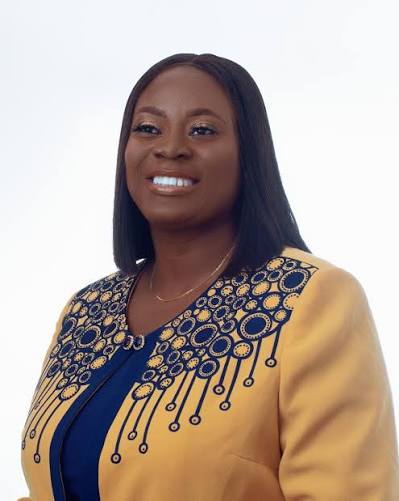
Director-General of Nigeria’s National Agency for the Control of AIDS (NACA) is Dr. Temitope Ilori, on Monday, revealed that 20% of people living with Human Immunodeficiency Virus (HIV), Acquired IMMUNODEFICIENCY Syndrome (AIDS), do not know their status.
Ilori stated this while briefing journalists ahead of the 2026 World AIDS Day commemoration, in Abuja.
This year’s theme is, “Ending AIDS: Start with Access, Equity, Ownership and Sustainability”.
She noted that Nigeria is yet to achieve the Joint United Nations Programme on HIV/AIDS (UNAIDS) 95-95-95 HIV targets, as only 80 per cent of people living with HIV in the country know their status, while 90 per cent of those diagnosed are receiving treatment.
She also disclosed that 95 per cent of people receiving HIV treatment have achieved viral suppression, acknowledging that significant gaps remain in diagnosis and treatment coverage.
The NACA boss, however, added that the above figures demonstrated progress in identifying people living with HIV, linking them to treatment and ensuring that they remained on care, but stressed that more efforts were needed to close existing gaps.
She noted that Nigeria was intensifying efforts to expand HIV testing, treatment and prevention services, particularly among populations with limited access to healthcare.
She identified equitable access, national ownership and sustainable financing as critical to achieving the country’s HIV prevention and treatment objectives.
It stressed that access to HIV prevention tools, testing kits, treatment and care must not be determined by people’s location, gender, age or economic status.
According to her, people in rural and hard-to-reach communities must enjoy the same opportunities to access HIV services as those in urban centres.
She said the government also called for stronger measures to address stigma and discrimination, which continue to discourage some people from seeking HIV-related healthcare services.
On financing, the official said Nigeria was working towards increased budgetary allocations at the national, state and local government levels to strengthen domestic ownership of the HIV response.
She noted that changing global health financing arrangements made it necessary for Nigeria to reduce its dependence on external donors through predictable domestic resource mobilisation, stronger state-level financing and more efficient utilisation of available resources.
She added that plans to integrate HIV prevention, testing and treatment into the broader primary healthcare system and the national health insurance framework to sustain the gains recorded over the years.
On preventing mother-to-child transmission, she disclosed that early infant diagnosis coverage among HIV-exposed infants increased from 15 per cent in 2022 to 66 per cent in 2025.
Thousands of pregnant women, mothers and infants were also reportedly reached with HIV testing and treatment services in the past year.
She reiterated the commitment of the government in ensuring that no child is born with HIV.
She said among other milestones, Nigeria developed and launched an HIV Prevention Plan based on a whole-of-society approach to reducing new infections.
It also developed the 2026–2030 National Strategic Plan, which has been cascaded to the 36 states and the Federal Capital Territory, with states developing their respective strategic plans to guide implementation.
She further disclosed that it had completed the 2026 Integrated Biological and Behavioural Surveillance Survey (IBBSS), designed to generate evidence on HIV prevalence, risk behaviours and access to services among key populations.
It said the findings would support evidence-based planning and targeted interventions.
At the occasion, the National Coordinator of the National AIDS and Sexually Transmitted Infections Control Programme (NASCP), Dr. Adebola Bashorun, while giving his welcome address, reaffirmed the government commitment to eliminating HIV in Nigeria by 2030.
He also appealed for increased domestic funding, improved access to innovative prevention tools and stronger collaboration among government agencies and development partners.
He said the annual commemoration, observed since 1988, provides an opportunity to assess progress, address challenges and strengthen efforts towards ending AIDS as a public health threat by 2030.
Bashorun, who conveyed the goodwill messages of the Coordinating Minister of Health, Professor Muhammad Ali Pate, and the Minister of State for Health, Dr. Iziaq Adekunle Salako, stressed that access, affordability and equity were critical to achieving the target. He noted that medical innovations would have limited impact if Nigerians could not afford or access them, calling for improved insurance coverage, free services where necessary and stronger public-private partnerships.
He highlighted the need to expand access to innovative HIV prevention methods, including injectable and oral pre-exposure prophylaxis (PrEP). He also disclosed that approximately 80 per cent of people living with HIV in Nigeria were currently receiving treatment, expressing optimism that coverage would improve as the government intensifies efforts to ensure universal access to treatment and prevent new infections, particularly among young people and children.
The NASCP coordinator also called for stronger Prevention of Mother-to-Child Transmission (PMTCT) interventions through an integrated triple-elimination approach targeting HIV, viral hepatitis and sexually transmitted infections. He said the strategy would promote a coordinated implementation framework, in line with the health sector’s Sector-Wide Approach (SWAp), which seeks to harmonise planning, budgeting and reporting.
Bashorun emphasised that increased domestic resource mobilisation was essential to sustaining HIV interventions and reducing dependence on external funding. He assured that the Federal Ministry of Health, working with agencies such as the National Agency for the Control of AIDS (NACA), the Nigeria Centre for Disease Control and Prevention (NCDC) and development partners, would intensify efforts towards achieving the 2030 target. “2030 is the date, and we will definitely eliminate HIV in Nigeria by 2030,” he said.
The Joint United Nations Programme on HIV/AIDS (UNAIDS) Country Director, Tina Boonto, in her goodwill message urged the Federal Government (FG), and stakeholders to intensify HIV prevention, testing and treatment interventions to accelerate efforts towards ending AIDS as a public health threat by 2030.
A UNAIDS representative disclosed that more than 1.5 million people living with HIV in Nigeria were accessing antiretroviral drugs (ARVs), but noted that significant gaps remained in the country’s response.
She disclosed that Nigeria records approximately 64,000 new HIV infections annually, stressing the need to reduce the figure to fewer than 5,000. She also expressed concern that only 61 per cent of HIV-positive pregnant women were receiving antiretroviral treatment, while mother-to-child transmission remained at 20 per cent. She identified declining external funding, stigma, discrimination and unequal access to healthcare services as major challenges requiring urgent attention.
Highlighting the importance of community participation, he cited a UNAIDS-supported initiative in Mararaba, Nasarawa State, where local mothers support pregnant women through counselling, HIV testing, treatment adherence and antenatal care.
She reaffirmed UNAIDS’ commitment to supporting Nigeria’s HIV response, stressing that stronger partnerships, sustainable domestic financing and improved access to prevention and treatment services were critical to achieving the 2030 elimination target.
By Isaac Asabor
Since the All-Progressives Congress (APC) assumed political leadership of Nigeria in 2015, the country has witnessed two presidential administrations, several policy declarations, numerous reform programmes and countless political promises.
Yet, as the country approaches another general election in 2027, one uncomfortable question deserves serious national consideration: What exactly has changed in the lives of ordinary Nigerians?This question is particularly important because the APC came to power in 2015 on the strength of an elaborate promise of change.
Its campaign was built around the expectation that a new political leadership would rescue Nigeria from the perceived failures of the Peoples Democratic Party (PDP), which had governed the country for 16 years.Nigerians were promised improved security, economic prosperity, employment opportunities, reliable electricity, infrastructural development and a decisive war against corruption. The party’s message resonated with millions of voters who believed that changing the political leadership would translate into a fundamental transformation of the country.
Eleven years later, however, the distance between those promises and the everyday experiences of citizens raises legitimate questions about the meaning of the change Nigerians were promised.
Indeed, the emergence of President Muhammadu Buhari in 2015 was celebrated as the beginning of a new political era. His administration enjoyed considerable goodwill, particularly because of his reputation as a former military head of state who had repeatedly presented himself as an uncompromising opponent of corruption.
Unfortunately, the expectations that accompanied his emergence were not sufficiently matched by the results of his administration.
The economy experienced recession, unemployment remained a serious national concern, inflation eroded household purchasing power, and insecurity spread across several parts of the country. Banditry, terrorism, kidnapping and communal violence became persistent threats to lives, livelihoods and national stability.
Electricity supply remained unreliable, while the country’s dependence on imported petroleum products exposed the economy to external shocks and foreign exchange pressures.
Although the Buhari administration eventually left office in 2023, many of these problems were not only unresolved but had become more deeply entrenched.
Consequently, the emergence of President Bola Tinubu was accompanied by another wave of expectations. His Renewed Hope Agenda was presented as an opportunity to correct previous mistakes, restore economic confidence and reposition Nigeria for sustainable development.
Yet, more than three years into the Tinubu administration, Nigerians are still grappling with many of the same structural challenges that confronted them under Buhari.
Granted, the removal of the petrol subsidy, foreign exchange reforms, tax restructuring and other economic measures represent significant policy departures from previous arrangements. The government has also pointed to improvements in GDP growth, foreign reserves and other macroeconomic indicators as evidence that its reforms are beginning to produce results.
However, economic growth figures and foreign reserve accumulation cannot, by themselves, constitute sufficient evidence of successful governance when millions of households continue to struggle with the cost of food, transportation, accommodation, healthcare and education.
What does economic recovery mean to a family that can no longer afford three decent meals daily? What is the practical value of improved foreign reserves to a small business owner whose operating costs have become almost unbearable? What does GDP growth mean to an unemployed graduate who has spent years searching for a meaningful job?
These are not questions that government officials should dismiss as politically motivated criticism. They are legitimate questions arising from the lived experiences of citizens.
The argument that Nigerians must endure present economic difficulties because reforms require time is also becoming increasingly difficult to sustain. Reforms are not ends in themselves. Their justification lies in the benefits they ultimately deliver to the people.
Indeed, the APC cannot indefinitely ask Nigerians to evaluate its performance through the promises of tomorrow while avoiding accountability for the realities of today.
More troubling is the continuity of Nigeria’s security challenges. Eleven years after the APC promised to defeat terrorism and restore confidence in the country’s security architecture, communities in different parts of the federation continue to live under the threat of attacks, kidnappings and displacement.
Farmers cannot confidently access their farmlands in some areas, businesses operate under security uncertainties, and families continue to worry about the safety of their loved ones.
It is difficult to reconcile this reality with the assurances that the country is moving towards a more secure future.
The electricity sector provides another illustration of the country’s disappointing governance trajectory. Despite successive promises of improved power supply, millions of Nigerians and businesses remain dependent on generators and alternative energy sources.
This situation has consequences beyond household inconvenience. It increases production costs, discourages investment, undermines industrial competitiveness and makes Nigerian businesses less capable of competing with counterparts in countries where electricity supply is more dependable.
Similarly, the fight against corruption, which featured prominently in the APC’s 2015 campaign, remains an important test of the party’s credibility. Nigerians are entitled to demand transparency, consistency and accountability in the management of public resources, irrespective of the political affiliation or status of those involved.
The perception that political loyalty sometimes receives more attention than institutional accountability undermines public confidence in the anti-corruption campaign.
Perhaps one of the most disturbing manifestations of this continuity is the country’s political culture. Politicians continue to move between political parties, often without sufficiently explaining how their ideological convictions or governance philosophies have changed.
Former critics of the APC have become its supporters, while some founding members have expressed dissatisfaction with the direction of the party. Such developments reinforce the impression that political calculations and the pursuit of power frequently take precedence over clearly defined ideological commitments.
The movement of politicians from one party to another is not necessarily evidence of wrongdoing. However, when political defections occur without corresponding explanations of policy differences or governance convictions, voters are left wondering whether Nigeria’s political parties represent genuinely different visions or merely competing platforms for accessing political power.
This is particularly relevant as opposition parties explore coalition arrangements ahead of the 2027 elections. Their proposed unity should not be celebrated merely because it presents an opportunity to challenge the APC. Nigerians have suffered enough from political experimentation to deserve something more substantial than another alliance built principally around the ambition of defeating an incumbent government.
The opposition must demonstrate that it has learnt from the failures of previous administrations. It must articulate credible alternatives on security, electricity, economic management, education, healthcare, employment creation and institutional accountability.
Changing the occupants of government offices without changing the philosophy and practice of governance will only reproduce the same disappointments under different political identities.
This is why the APC’s argument for continuity deserves particularly close scrutiny. Its supporters contend that the Tinubu administration should be allowed to consolidate its reforms rather than return the country to what they describe as unsustainable policies of the past.
But continuity cannot become an excuse for escaping accountability. Neither should the fear of returning to previous economic arrangements be used to discourage Nigerians from demanding better leadership.
After all, the APC has governed Nigeria since 2015. It cannot indefinitely campaign against the failures of the PDP while presenting itself as a political newcomer still waiting for an opportunity to demonstrate its capacity.
The party has had more than a decade to establish a distinguishable record of governance. Its performance must therefore be judged against the promises it made, the resources available to it and the conditions under which ordinary Nigerians live.
Former President Goodluck Jonathan’s warning about the possibility of post-election instability in 2027 also deserves attention. Political intolerance, electoral violence, thuggery and declining public confidence in democratic institutions cannot be treated as peripheral concerns. Democracy becomes endangered when citizens lose faith in the ability of the political system to deliver meaningful change through peaceful and credible elections.
Ultimately, Nigeria’s problem is not simply that one political party has governed for too long. It is that the country has struggled to translate successive changes in political leadership into fundamental improvements in governance.
The APC promised change in 2015. Buhari’s administration failed to sufficiently deliver on that promise. Tinubu subsequently promised renewed hope, but the ordinary Nigerian is still waiting for that hope to become a tangible reality.
This is not to suggest that nothing has happened in Nigeria since 2015. Governments have undertaken projects, introduced policies and implemented reforms. Rather, the argument is that the fundamental conditions that made Nigerians demand change in 2015 remain stubbornly present, despite eleven years of APC leadership.
The 2027 elections must therefore be about more than political alliances, presidential ambitions, defections and campaign slogans. They must provide Nigerians with an opportunity to interrogate the country’s governance record and demand a credible alternative built around measurable results.
Whether the APC retains power or an opposition coalition succeeds at the polls, the country needs a fundamental departure from politics as usual.
Nigerians do not need another promise of change that eventually becomes an excuse for continuity of failure. They need leadership that understands that political power is a responsibility, not an entitlement; that economic reforms must improve human welfare; and that public office must be measured by the quality of lives it transforms.
Until that happens, the uncomfortable conclusion will remain difficult to dispute: Since 2015, Nigeria may have changed presidents, political slogans and economic policy directions, but it has not sufficiently changed the character and outcomes of governance.
Eleven years after the APC promised change, Nigerians are still waiting for the change they voted for.


Prosperity Cup Organizers Mourn Bayelsa Boat Mishap Victims
ShareFrom Mike Tayese, Yenagoa The organisers of Nigeria’s biggest grassroots football spectacle, the Bayelsa Governor’s Football Tournament, popularly known as...


HIV/AIDS: 20 Per Cent of People Living with Don’t Know Their Status – FG
ShareBy Laide Akinboade, Abuja Director-General of Nigeria’s National Agency for the Control of AIDS (NACA) is Dr. Temitope Ilori, on...


INEC Tasks Media on Fight against Electoral Misinformation Ahead 2027
ShareBy Orjime Moses, Abuja The Independent National Electoral Commission (INEC) has urged journalists, media organisations and social media users to...
No Plans to Increase Electricity Tariff – Tegbe
ShareThe Minister of Power, Joseph Tegbe has assured Nigerians that there will be no increase in electricity tariffs in 2027,...
FCCPC Shuts Lagos Estate Firm over Property Breach
ShareThe Federal Competition and Consumer Protection Commission has shut the business premises of Meridian Park Real Estate Company in Lagos...


CBN, NCC Raise the Alarm over AI-powered Attacks
ShareThe Central Bank of Nigeria (CBN) and the Nigerian Communications Commission (NCC) have raised the alarm over the growing threat...
Since 2015, Nigeria Has Changed Governments, Not Its Governance
ShareBy Isaac Asabor Since the All-Progressives Congress (APC) assumed political leadership of Nigeria in 2015, the country has witnessed two...

Tiv People Must Not Become Strangers In Their Ancestral Homeland – SAN
ShareVows legal, political action against alleged encroachment on Tiv territories By Orjime Moses, Abuja A Senior Advocate of Nigeria (SAN),...

Hakimin Garki – Shakwope Congratulates Sa’peyi of Garki on Elevation to Second-Class Chief
ShareBy Raphael Atuu, Abuja The Hakimi of Garki Shakwope, TPL. Chief. Hon. Ambassador Stephen Shekwonce Yakubu, has congratulated the Sa’peyi...

TAJBANK, Lagos Sign MoU on Infrastructure Financing
ShareBy Tony Obiechina, Abuja TAJBank Limited on Monday signed a tripartite Memorandum of Understanding (MoU) with the Lagos State Government...