
FEATURES
We Have Made Undeniable Progress: President Bola Tinubu’s Second Anniversary Speech

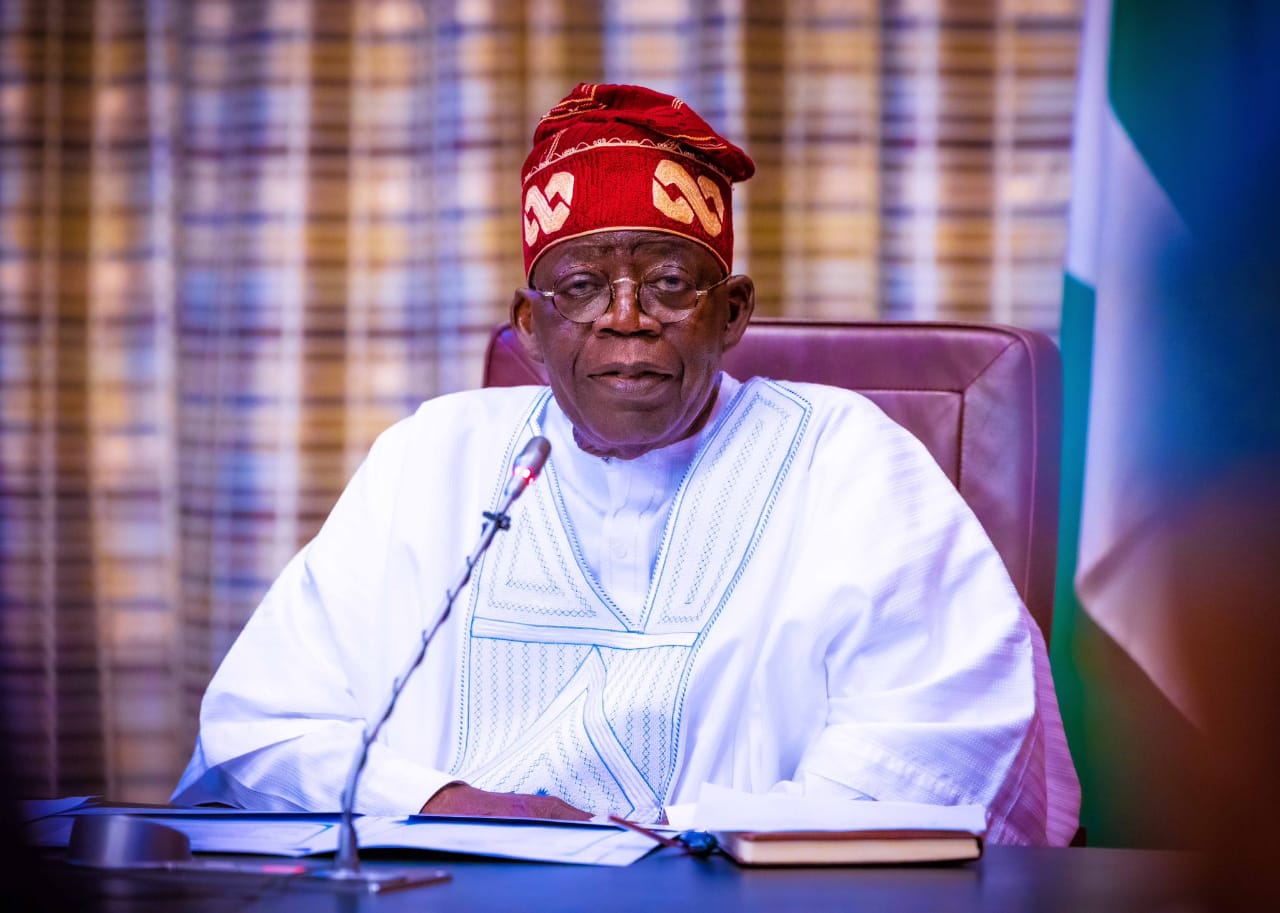
Fellow Nigerians, as we mark the second anniversary of our administration, I salute your resilience and undaunted spirit. Two years ago, you entrusted me with the sacred responsibility to lead our nation at a time of historic challenges. Together, we have faced these headwinds with courage and determination.
The economic and general situation of the country I inherited required that we redirect the country’s affairs with a bold and new vision.
I immediately implemented two necessary policies to stop our country from further drifting into the precipice. It was apparent that if the federal government and the other two tiers of government must remain viable and cater to the citizens’ welfare, we must do away with decades-long fuel subsidies and the corruption-ridden multiple foreign exchange windows. The two were no longer sustainable and have become a chokehold on our nation’s neck, strangling our nation’s future.While our administration has implemented the reforms to restore and reinvigorate our national economy and strengthen our social fabric as a strong and united country, I must thank my fellow citizens for your unrelenting support and belief in the grand vision we share to uplift our nation and renew our collective hopes and aspirations.
We are halfway through the journey that began 24 months ago. Today, May 29, 2025, offers our administration the opportunity to share again how far we have gone and our progress in steering our country along the critical path of socio-economic development.
When we embarked on this journey, propelled by a burst of hope and abiding faith in Nigeria’s unity and progress, I made a pledge before God and fellow countrymen and women to confront Nigeria’s challenges head-on by rebuilding trust, fostering prosperity, and restoring our nation’s economic health. Today, I proudly affirm that our economic reforms are working. We are on course to building a greater, more economically stable nation.
Under our Renewed Hope Agenda, our administration pledged to tackle economic instability, improve security nationwide, reduce corruption, reform governance, and lift our people out of poverty.
While implementing the reforms necessary to strengthen our economy and deliver shared prosperity, we have remained honest by acknowledging some of the difficulties experienced by our compatriots and families. We do not take your patience for granted. I must restate that the only alternative to the reforms our administration initiated was a fiscal crisis that would have bred runaway inflation, external debt default, crippling fuel shortages, a plunging Naira, and an economy in a free-fall.
Despite the bump in the cost of living, we have made undeniable progress.
Inflation has begun to ease, with rice prices and other staples declining. The oil and gas sector is recovering; rig counts are up by over 400% in 2025 compared to 2021, and over $8 billion in new investments have been committed. We have stabilised our economy and are now better positioned for growth and prepared to withstand global shocks.
In 2025, we remain on track with our fiscal targets. Gross proceeds per barrel from crude oil are broadly aligned with our forecasts as we intensify our efforts to ramp up production. Our fiscal deficit has narrowed sharply from 5.4% of GDP in 2023 to 3.0% in 2024. We achieved this through improved revenue generation and greater transparency in government finances. In the first quarter of this year, we recorded over N6 trillion in revenue.
We have discontinued Ways & Means financing, which has been a major contributor to high and sticky inflation. The NNPC, no longer burdened by unsustainable fuel subsidies, is now a net contributor to the Federation Account. We are also achieving fuel supply security through local refining.
Our debt position is improving. While foreign exchange revaluation pushed our debt-to-GDP ratio to around 53%, our debt service-to-revenue ratio dropped from nearly 100% in 2022 to under 40% by 2024. We paid off our IMF obligations and grew our net external reserves by almost 500% from $4 billion in 2023 to over $23 billion by the end of 2024.
Thanks to our reforms, state revenue increased by over N6 trillion in 2024, ensuring that subnational governments can reduce their debt burden, meet salaries and pension obligations on a timely basis, and invest more in critical infrastructure and human capital development.
One of our administration’s most impactful achievements is our bold tax reform agenda, which is already yielding results. By the end of 2024, our tax-to-GDP ratio rose from 10% to over 13.5%, a remarkable leap in just one year. This was not by accident. It results from deliberate improvement in our tax administration and policies designed to make our tax system fairer, more efficient, and more growth-oriented.
We are eliminating the burden of multiple taxation, making it easier for small businesses to grow and join the formal economy. The tax reforms will protect low-income households and support workers by expanding their disposable income. Essential goods and services such as food, education, and healthcare will now attract 0% VAT. Rent, public transportation, and renewable energy will be fully exempted from VAT to reduce household costs further.
We are ending the era of wasteful and opaque tax waivers. Instead, we have introduced targeted and transparent incentives supporting high-impact manufacturing, technology, and agriculture sectors. These reforms are not just about revenue but about stimulating inclusive economic growth.
There is a deliberate focus on our youth, who a friendlier tax environment for digital jobs and remote work will empower. Through export incentives, Nigerian businesses will be able to compete globally. Our National Single Window project streamlines international trade, reduces delays, and enhances Nigeria’s competitiveness.
To promote fairness and accountability, we are establishing a Tax Ombudsman, an independent institution that will protect vulnerable taxpayers and ensure the system works for everyone, especially small businesses.
Most importantly, we are laying the foundation for a more sustainable future by introducing a new national fiscal policy. This strategic framework will guide our approach to fair taxation, responsible borrowing, and disciplined spending.
These reforms are designed to reduce the cost of living, promote economic justice, and build a business-friendly economy that attracts investment and supports every Nigerian. Together, we are creating a system where prosperity is shared, and no one is left behind.
We have breathed new life into the Solid Minerals sector as part of our efforts to diversify the economy. Revenue has increased phenomenally, and investors are setting up processing plants as the sector dumps the old pit-to-port policy and embraces a new value-added policy.
We have also repositioned our health sector despite all odds.
Over 1,000 Primary Health Centres are being revitalised nationwide. An additional 5,500 PHCs are being upgraded under our Renewed Hope Health Agenda. We are establishing Six new cancer treatment centres. Three are ready. We offer free dialysis services in pilot tertiary hospitals and subsidise the service in others. Under the Presidential Maternal Health Initiative, over 4,000 women have undergone free cesarean sections. Lastly, we have expanded Health Insurance Coverage from 16 million to 20 million within two years.
As a result of our bold and deliberate policies, the economy is growing stronger again. Real GDP rose by 4.6% in Q4 2024, with full-year growth of 3.4%. This is one of the strongest in a decade.
Without a responsive and reliable national security infrastructure that can protect lives and properties, our economy will not perform optimally, and those who seek to harm us will impair and disrupt our way of life. Our administration is committed to the security and safety of our people. For our government, protecting our people and their peaceful way of life is the utmost priority.
Since I assumed our country’s leadership, our administration has improved collaboration among security agencies, increased intelligence-driven operations, and better ensured the welfare of our armed forces and security personnel. I use this opportunity to salute the courage and everyday sacrifice of our service men and women. We may not always witness the tremendous efforts they make to keep us safe, but we benefit every day from the results of their dedication. Even if we do not thank them often enough, they willingly face danger so we can go about our lives freely and without fear.
Our military, police, and intelligence agencies are committed to always responding to emerging security threats and new challenges because it is the patriotic duty they owe a grateful nation.
Amid the new security challenges, we can report some successes. In some areas of the northwest, hitherto under the control of bandits, our gallant armed forces have restored order, reducing and eliminating threats to lives and livelihoods. With the success achieved, farmers are back tilling the land to feed us. Highways, hitherto dangerous for travellers, have become safer. Our security agencies have succeeded many times in rescuing the abducted citizens from the hands of their tormentors. I promise you, we shall remain vigilant, as I told security chiefs during the last meeting to up their game and collaborate to end this plague of evil men. Every Nigerian deserves to live without fear.
Outside of Security, we have prioritised human capital development as a central pillar of our national development strategy.
To this end, we have significantly expanded access to quality education through infrastructure investments and the student loan scheme to support indigent students in tertiary institutions. Through the Renewed Hope Health initiative, our administration has begun equipping health facilities and deploying skilled personnel to unserved areas. We are also strengthening our response to public health threats and implementing targeted social investment schemes.
Our youth empowerment initiatives include access to funds, skill development, and creating employment opportunities. Through our MSME support, we empower the next generation and bridge inequality. In our mission to empower the next generation, we have taken bold steps to place young Nigerians at the heart of national development. Nowhere is this more evident than at the National Agency for Science and Engineering Infrastructure (NASENI), where the current management is making giant strides. NASENI has embraced a digital-first approach, introduced real-time dashboards, and implemented end-to-end e-procurement through its Unified ERP System—setting a new governance benchmark for public institutions.
Through bold, high-impact programmes like Innovate Naija, Irrigate Nigeria, the Asset Restoration Programme, and the Renewable Energy and Innovation Park in Gora, NASENI drives inclusive industrialisation at scale. From assembling electric vehicles and reviving idle assets to launching Africa’s most advanced Rapid Diagnostic Kit Factory and training female drone engineers through the NASCAV programme, these initiatives are creating jobs, restoring dignity to work, and opening up a future of possibilities for our youth. This is the movement we promised—a government of action powered by the energy and innovation of young Nigerians.
Agriculture and food security are top priorities of our Renewed Hope Agenda. We have launched aggressive initiatives to boost local food production, support farmers, and stabilise food prices. We have also invested in mechanised farming by procuring thousands of tractors, other farming tools, and fertilisers.
Under the Renewed Hope Agenda, the federal government has continued with major road construction and rehabilitation projects across all geopolitical zones, from the Abuja-Kaduna-Zaria-Kano Dual Carriageway, the 9th Mile-Oturkpo-Makurdi Road, the Lagos-Calabar Coastal Highway, Abuja-Lokoja-Benin Road, Enugu-Onitsha Expressway, Oyo-OgbomosoRoad, Sokoto-Badagry Road, Enugu-Port Harcourt Expressway, Second Niger Bridge Access Road to Bodo-Bonny Road among hundreds of ongoing road projects across the country.
We have launched initiatives to improve electricity generation by upgrading generation and transmission infrastructure and investing in off-grid solar energy to power our homes, business premises, industries, schools and hospitals.
In the spirit of democracy and national renewal, we are preparing to welcome the world to Nigeria soon for the Motherland Festival. This landmark gathering will spotlight our rich heritage, dynamic creative industries, and the vibrant energy of our people. It will showcase Nigeria’s beauty through tourism, culture, and innovation, inviting the world to rediscover our nation.
The Nigerian diaspora plays a vital role in our national transformation. Their expertise, investment, and global perspective are key to shaping the future we seek. In recognition, the government has introduced policies like the diaspora bond and the non-resident Bank Verification Number to make it easier for Nigerians abroad to invest, engage, and contribute meaningfully to the country’s progress.
The Motherland Festival will bring together voices from across the continent and the diaspora in a decisive moment of unity and purpose, affirming that Nigeria is not only a leader in Africa but a committed global partner ready to engage, inspire, and lead.
Once again, I acknowledge the sacrifices many Nigerians have made and continue to make as we reposition our country, not just for today but for generations yet unborn. Our journey is not over, but our direction is clear. So is our resolve to tackle emerging challenges. By the Grace of God, we are confident that the worst is behind us. The real impact of our governance objectives is beginning to take hold. The future is bright, and together, we will build a stronger, more inclusive Nigeria that we can all be proud of.
Thank you all, and May God continue to bless the Federal Republic of Nigeria.
PRESIDENT BOLA AHMED TINUBU,
ASO ROCK, ABUJA
29/5/2025
By Rotimi Ijikanmi
For four days, the road into Benue became a moving test of perception, with a presidential media team traversing routes once feared for attacks, without incident.
The Renewed Hope Ambassadors Presidential Media Team, led by Mr Bayo Onanuga, the Special Adviser to the President on Information and Strategy, embarked on the journey on Aug.
5.The mission was to inspect Federal Government and state infrastructure projects across Nasarawa and Benue states, but the journey also offered an opportunity to test prevailing narratives about insecurity.
The journey also unfolded against sustained Federal Government efforts under President Bola Tinubu to strengthen security nationwide through expanded deployments, intelligence, recruitment and inter-agency coordination.
The team travelled from Abuja to Makurdi, then ventured into interior communities and remote locations where reports of attacks by bandits, kidnappers and other criminal elements had previously generated concerns.
No fewer than 40 senior editors,, social media handlers, cameramen, photographers and other support staff members from the Presidential Villa joined the journey, making the convoy a sizeable travelling media contingent.
Among the officials were Mr Tunde Rahman, Senior Special Assistant to the President on Media and Special Duties; Mr Tope Ajayi, Senior Special Assistant on Media and Publicity, Director in the Villa Media Unit, Mr Abiodun Oladunjoye.
Others included Mr Abdulaziz Abdulaziz, Senior Special Assistant on Print Media; Mr Otega Ogra, Senior Special Assistant on Digital Media; and Ms Linda Akhigbe, Senior Special Assistant on Strategic Communication.
The first leg of the journey provided an immediate indication of changing conditions along the Abuja-Makurdi corridor, where improved road infrastructure has transformed travel on sections once associated with delays and hazards.
The reconstructed highway now offers wider lanes, improved shoulders, safer overtaking opportunities and better traffic flow, reducing motorists’ exposure to isolated bottlenecks and prolonged stops.
The road, a major gateway linking the Federal Capital Territory with Benue and the South-East, carries passengers, agricultural produce, fuel, livestock and other goods across the region.
The journey continued beyond Makurdi to Taraku Mill in Gwer East Local Government Area, Otobi Water Works and Treatment Plant, Benue Brewery and other infrastructure sites.
These locations, some situated away from major urban centres, offered another opportunity to assess the security situation beyond the main highways.
The team also inspected the ongoing 258-kilometre Makurdi-Otukpo-Enugu highway and travelled through the Aliade-Oju axis, areas where insecurity had previously affected movement and economic activities.
At Buruku, the team visited the ongoing bridge project across the Katsina-Ala River, a location historically associated with dangerous river crossings and significant loss of lives.
Mr Raymond Aondoakura, Chairman of Buruku Local Government, said almost 200 people had reportedly died in boat mishaps on the river within three years.
The ongoing bridge, therefore, represents more than infrastructure.
It is expected to eliminate a dangerous crossing, improve movement and connect communities previously constrained by geography and inadequate transportation links.
For the presidential media team, however, the significance of the journey extended beyond the projects inspected.
It provided an opportunity to experience directly a security environment often portrayed as uniformly dangerous across Benue and other parts of the North Central.
For four days, the team travelled through several locations without an attack or security incident, an experience that appeared to contrast with perceptions of pervasive insecurity.
The experience does not mean security challenges have disappeared from Benue, but it suggests that the situation may be more nuanced than broad descriptions of the state as entirely unsafe.
Across the North-West, the Tinubu’s administration has sustained Operation Fansan Yamma and intensified joint operations against bandit camps and kidnapping networks in Zamfara, Sokoto, Katsina, Kebbi and neighbouring states.
Gov. Hyacinth Alia has also pointed to improving security as evidence of changing conditions, particularly the gradual return of displaced residents to their ancestral communities.
During a media chat with the team, Alia disclosed plans to close some Internally Displaced Persons’ camps because occupants had voluntarily returned to their homes in order to farm.
The governor said 15 IDP camps had been established following attacks and displacement, but improved security was enabling many residents to return and rebuild their livelihoods.
He said security agencies, traditional institutions and residents were monitoring developments across the state, while the government continued working with international organisations to achieve durable returns.
The changing security picture is also reflected in renewed economic activity, as government revives abandoned industries and improves roads connecting farms, markets and production centres.
At Taraku, the government is reviving a N70 billion mill that had remained moribund for about 40 years, with the facility expected to process soybean, maize and animal feed.
The mill’s General Manager, Mr Terngwu Kyuve, said the facility could create no fewer than 2,000 direct and indirect jobs when fully operational.
Such investments require security because factories cannot thrive where workers, investors, farmers and transporters fear travelling to production locations.
Similarly, improved roads are helping farmers move produce faster, reducing journey times and limiting the prolonged exposure to isolated stretches that can heighten vulnerability.
The evidence from the road journey, therefore, points to a gradual change rather than a complete victory over insecurity.
Benue still faces security challenges, but improved roads, increased movement, government intervention and returning residents suggest that the state’s security narrative is evolving.
For the presidential media team, the four-day journey became an unconventional field test and evidence that the state is moving beyond its troubled past.
The experience also underscored the connection between security and development.
Roads, bridges, industries and economic opportunities can strengthen communities while reducing isolation that often creates vulnerabilities.
As the convoy returned after traversing highways, bridges, industrial sites and interior communities without incident, one conclusion stood out: Benue’s security story may no longer be as bleak as commonly portrayed.(NAN)
By David Torough
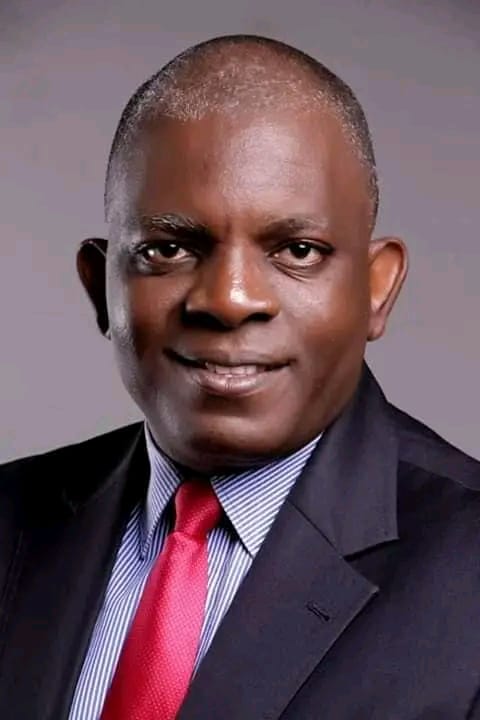
It has become very safe, perhaps, to conclude that the Executive Secretary and Chief Executive Officer(CEO) of Nigerian Shippers’ Council(NSC), Dr. Pius Akutah is the only maritime agency head who has become not only media but stakeholder-friendly.
He is easily accessible and gives ears to complaints while being ready to receive visitors on short notice.
He does not discriminate. It does not presuppose that he is not busy with schedules. It simply means that he understands what leadership entails.In Nigeria, any agency CEO that has bills before the National Assembly, awaiting passage is worth being sympathized with because he has no time of his, and must always be on his or her toes to source unbudgeted or budgeted funds to service the nauseating financial demands of the legislators on both chambers.
Therefore, Dr. Akutah deserves all the sympathy he can get for choky schedules with external and internal office demands.
Navigating the passage of the Council’s Nigerian Port Economic Regulatory Agency(NPERA) Bill at the National Assembly, only is time consuming not to talk of the Minister’s attention and his immediate constituency’s calls.
Surprisingly, with a plane to catch at the airport for an international trip, he found it rewarding to hold a media lunch with Maritime Editors and Reporters, penultimate Saturday in Ikeja, Lagos.
He gives account of his brief stewardship since assuming office, putting paid to the insinuation that the Council has been in comatose as a result of an unfounded story of a political ambition. He presents in financial terms the intervention of the Council in the port industry, while laying bare the future outlook of the agency.
The report is good enough for personal assessment of the agency. We present the full report unabridged. Enjoy it.
Since assuming office in November 2023, the Management of the Nigerian Shippers’ Council (NSC), “Under my leadership, has pursued a focused reform agenda to strengthen the Council’s role as Nigeria’s Port Economic Regulator and reposition it as a modern, efficient and globally competitive institution”.
Guided by the Renewed Hope Agenda of His Excellency, President Bola Ahmed Tinubu, GCFR, and the policy direction of the Honourable Minister of Marine and Blue Economy, His Excellency Adegboyega Oyetola, CON, the Council has delivered measurable progress in economic regulation, consumer protection, trade facilitation, digital transformation, institutional renewal and stakeholder engagement.
Within the period under review, the Council protected over ₦90.60 billion and US$1.348 million in economic value for Nigerian shippers and the national economy.
This includes preventing ₦86.06 billion in unjustified demurrage payments and securing savings of ₦4.54 billion and US$1.348 million through Alternative Dispute Resolution(ADR) and regulatory interventions.
The Council also achieved major institutional milestones, including the passage of the Nigerian Port Economic Regulatory Agency (NPERA) Bill by both Chambers of the National Assembly, approval of its statutory funding mechanism through the 2025 Appropriation Act, active participation in the National Single Window Project and resolution of key issues delaying implementation of the International Cargo Tracking Note (ICTN).
These reforms are improving regulatory certainty, reducing the cost of doing business and supporting the Federal Government’s vision of building a US$1 trillion economy by 2030.
Key Achievements at a glance include: Prevented over ₦86.06 billion in unjustified demurrage payments, Saved Nigerian shippers more than ₦4.54 billion and US$1.348 million through ADR and regulatory interventions, Received 558 complaints and resolved 295 commercial disputes, Harmonised bonded terminal invoice charges from 18 charge categories to six, Facilitated passage of the NPERA Bill, now awaiting Presidential Assent, Secured statutory funding for the Council for the first time since 1978, Advanced implementation of the National Single Window and ICTN, Deployed the Enterprise Content Management System and introduced the Leadership and Succession Planning Project and Substantially concluded preparations for the 18th International Maritime Seminar for Judges.
The passage of the NPERA Bill by both Chambers of the National Assembly represents a landmark reform in Nigeria’s maritime sector.
Once assented to, the legislation will establish an independent Port Economic Regulator with enhanced powers to regulate tariffs, service standards, competition and commercial conduct, thereby strengthening transparency and investor confidence across the port industry.
Another significant milestone is the approval of the Council’s statutory funding mechanism, captured in the 2025 Appropriation Act for the first time since the Council’s establishment in 1978.
This provides a sustainable framework for effective regulation, with collection to be integrated into the National Single Window platform.
The Council has actively supported the National Single Window Project, which is expected to simplify cargo clearance, improve coordination among government agencies and reduce the time and cost of doing business at Nigerian ports.
Similarly, outstanding issues delaying implementation of the ICTN have been resolved. Once operational, the ICTN will strengthen cargo visibility, improve trade intelligence, enhance supply chain security and support regulatory compliance.
As Nigeria’s Port Economic Regulator, the Council has continued to promote fairness, transparency and efficiency in port operations through effective economic regulation and consumer protection.
During the period under review, the Council reviewed and approved tariff requests for shipping companies, terminal operators and Inland Dry Ports after rigorous regulatory assessment.
It also continued to confirm the reasonableness of freight rates, charter party fees and vessel demurrage for foreign exchange transactions, as well as freight charges on export cargoes, thereby supporting transparency and helping to curb capital flight.
To improve pricing transparency, terminal operators were directed to publicly display approved tariffs, while shipping companies were required to establish holding bays outside the ports to facilitate the return of empty containers and reduce congestion along port access roads.
The Council also abolished unauthorised surcharges introduced by some shipping lines, developed minimum service standards for shipping companies and terminal operators, and collaborated with the Nigerian Ports Authority and the Federal Ministry of Marine and Blue Economy to assess compliance with Port Concession Agreements and Key Performance Indicators.
A major achievement was the prevention of over ₦86.06 billion in unjustified demurrage payments through regulatory oversight.
The Council also harmonised bonded terminal invoice charges, reducing charge categories from 18 to 6, thereby eliminating duplication and improving billing transparency.
Through stakeholder engagement and collaboration with key regulatory agencies, including the Federal Competition and Consumer Protection Commission and the Nigeria Customs Service, the Council has deepened compliance and reinforced confidence in Nigeria’s port regulatory framework.
The Council also facilitated a landmark Collective Bargaining Agreement between the Maritime Workers’ Union of Nigeria and employers in the shipping industry, resulting in a new ₦200,000 minimum wage for junior workers after almost two decades of negotiations. Discussions on an agreement for senior staff are at an advanced stage.
Alternative Dispute Resolution(ADR) remains one of the Council’s most effective mechanisms for protecting Nigerian shippers and reducing the cost of doing business.
Between the fourth quarter of 2023 and the second quarter of 2026, the Council received 558 complaints, resolved 295 cases and secured savings exceeding ₦4.54 billion and US$1.348 million.
The disputes covered container deposits, demurrage, detention charges, terminal charges, cargo claims, export fraud and related commercial matters.
The Council also concluded out-of-court settlements involving APM Terminals Nigeria Limited, CMA CGM and Maersk Nigeria Limited in matters arising from charges paid above approved tariffs.
These interventions protected Nigerian shippers, reduced litigation and reinforced confidence in the Council’s dispute resolution framework.
The Council continues to promote an integrated multimodal transport system through the development of Inland Dry Ports, Vehicle Transit Areas and Border Information Centres.
Operational Inland Dry Ports in Kaduna, Kano and Funtua continue to improve cargo movement, support customs operations and stimulate economic activity in inland regions.
Vehicle Transit Areas complement this strategy by supporting orderly movement and temporary storage of imported vehicles outside congested port environments.
The Border Information Centre Programme is also being expanded. Following the completion of the Idiroko Centre in Ogun State, work is advancing on new Centres in Jigawa, Benue, Borno and Kebbi States, while existing Centres along Nigeria’s major border corridors are being upgraded.
Following the destruction of the Jibia Centre by a heavy rainstorm in June 2026, the Council prioritised its reconstruction as part of its infrastructure renewal programme.
To provide more sustainable facilities, the Council has commenced engagement with State Governments for land to develop permanent Border Information Centre complexes.
These facilities will improve trade information services, strengthen regulatory coordination and support legitimate cross-border trade under the African Continental Free Trade Area, while reducing logistics bottlenecks and positioning Nigeria as a preferred maritime and logistics hub in West and Central Africa.
Council has continued to implement internal reforms aimed at building a modern, technology-driven and high-performing regulatory institution.
A major milestone is the deployment of the Enterprise Content Management System, which has transformed records and document management through the digitisation of thousands of legacy files, automation of workflows, improved document security and faster retrieval of official records.
This has reduced dependence on paper-based processes and improved operational efficiency.
The Council has also strengthened its Performance Management System by aligning individual targets with institutional goals, while prioritising local and international training, professional certification, workforce planning and competency-based deployment.
A key initiative introduced during the period is the Leadership and Succession Planning Project, designed to identify and prepare future leaders for critical management positions.
This is supported by the Middle Management Leadership Retreat, which is equipping emerging leaders with strategic, managerial and leadership competencies.
Staff welfare has also been enhanced through timely promotion exercises, confirmation of appointments, career progression, recognition of long-serving officers, retirement appreciation programmes and improved communication between Management and staff.
As part of preparations for the transition to NPERA, Management has undertaken organisational restructuring, reviewed departmental functions, strengthened HR governance, updated HR policies and reinforced compliance with Public Service Rules.
The Nigerian Shippers’ Council remains committed to strengthening maritime jurisprudence as a foundation for a modern, efficient and globally competitive maritime industry.
In July 2024, the Council successfully hosted the 17th International Maritime Seminar for Judges in Abuja under the theme, “Navigating the Intersection of Admiralty Law and Environmental Sustainability: Charting a Course for Nigeria’s Blue Economy.”
The seminar brought together judicial officers, maritime law practitioners, regulators, academics and industry stakeholders to deliberate on emerging legal issues affecting the maritime sector.
Building on that success, the Council is fully prepared to host the 18th International Maritime Seminar for Judges, scheduled to hold from 22 to 24 July 2026 in Abuja.
Organised in collaboration with the National Judicial Institute and the Nigerian Maritime Law Association, the seminar will bring together Justices of the Supreme Court, Court of Appeal, Federal and State High Courts, senior maritime law practitioners, academics, regulators and maritime experts from Nigeria and other African countries.
Invitations have also been extended to the Chief Justices of Ghana, The Gambia, Sierra Leone, Liberia and Kenya.
The seminar will promote legal certainty, support harmonisation of maritime business laws, strengthen investor confidence and advance the implementation of the African Continental Free Trade Area.
Preparations have been substantially concluded, with venue, logistics and faculty arrangements in place.
Going forward, the Nigerian Shippers’ Council will continue to deepen port economic regulation, strengthen consumer protection, accelerate digital transformation, expand trade facilitation infrastructure and promote multimodal transport.
“The Council will support the implementation of the National Single Window and the International Cargo Tracking Note, while consolidating the transition to the Nigerian Port Economic Regulatory Agency once the NPERA Bill receives Presidential Assent.
“Priority will also be given to the development of permanent Border Information Centre facilities, leadership development, succession planning, workforce transformation and stronger collaboration with stakeholders across the maritime value chain.
“Our objective is clear: to build a transparent, efficient and globally competitive port economic regulatory system that protects Nigerian shippers, promotes fair competition, improves port efficiency, attracts investment and supports Nigeria’s emergence as the leading maritime and logistics gateway in West and Central Africa,” Akutah stated.
The achievements recorded since November 2023 demonstrate the Nigerian Shippers’ Council’s commitment to effective regulation, institutional excellence, trade facilitation and national economic development.
“The Council is entering a new phase of institutional growth. Our focus is not only to regulate the port environment, but to help build a more transparent, competitive and investment-friendly maritime economy that delivers measurable value to businesses, consumers and the nation.
“We will continue to work closely with government, industry stakeholders, development partners and the media to sustain these reforms and ensure that Nigeria fully harnesses the enormous opportunities in the Marine and Blue Economy.
“The Council deeply appreciates the enduring partnership of the maritime media. Your role in informing the public, educating stakeholders and promoting accountability remains vital to the growth of the maritime sector.
“We remain committed to transparency, constructive engagement and continued partnership as we work together to build a stronger, more competitive and globally respected maritime economy for Nigeria,” Akutah Concluded.
By Tambaya Julius, Abuja
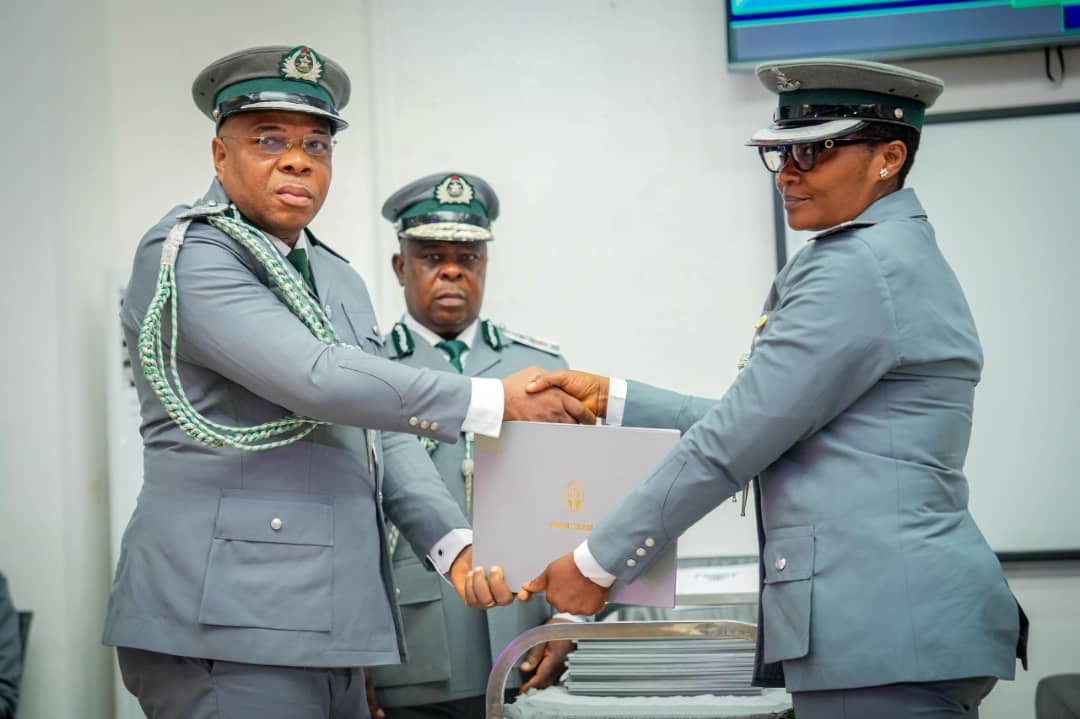
The Nigeria Customs Service (NCS) has graduated 50 officers from the Nigeria Customs Command and Staff College (NCCSC), Gwagwalada, with two officers from the Service’s National Public Relations Unit emerging as the Overall Best and Second Best Graduating Students in Senior Course 14/2026.
A major highlight of the graduation ceremony, held at the Ahmed Makarfi Hall of the College on Friday, 26 June 2026, was the emergence of Chief Superintendent of Customs Ridwan Yusuf as the Overall Best Graduating Student and Chief Superintendent of Customs Nuruddeen Sa’idu as the Second Best Graduating Student.
Both officers serve in the Service’s Public Relations Unit.In his message to the graduating officers, the Comptroller-General of Customs, Adewale Adeniyi, represented by the Commander, Training and Doctrine Command (TRADOC), Deputy Comptroller-General of Customs Sulaiman Chiroma, congratulated them on completing one of the Service’s most demanding professional training programmes.
DCG Chiroma charged the officers to uphold the highest standards of professionalism, discipline and courage, saying, “To whom much is given, much is expected. On behalf of the Comptroller-General of Customs, I urge you to remain mission-focused and continue to serve the nation with honesty, integrity and dedication.”
Earlier, the Commandant of the College, Assistant Comptroller-General of Customs Duwoh Gaura, reaffirmed the institution’s commitment to producing competent officers in line with the Comptroller-General’s vision of a more efficient, technology-driven and professional NCS.
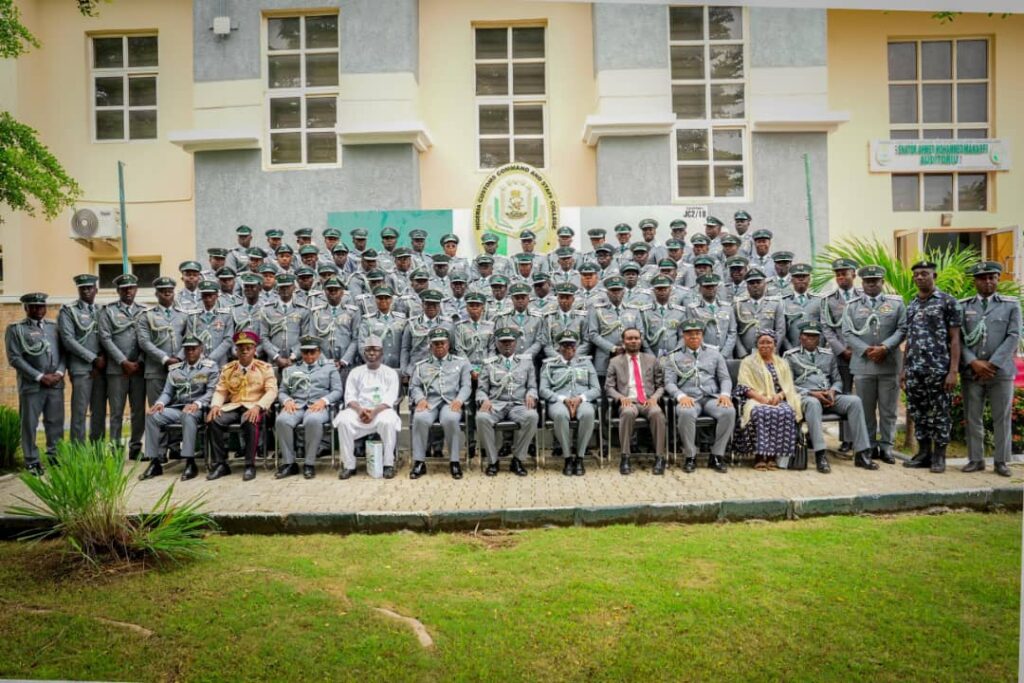
The graduation marked another milestone in the Service’s commitment to developing highly skilled officers capable of meeting the evolving demands of Customs administration and border management.
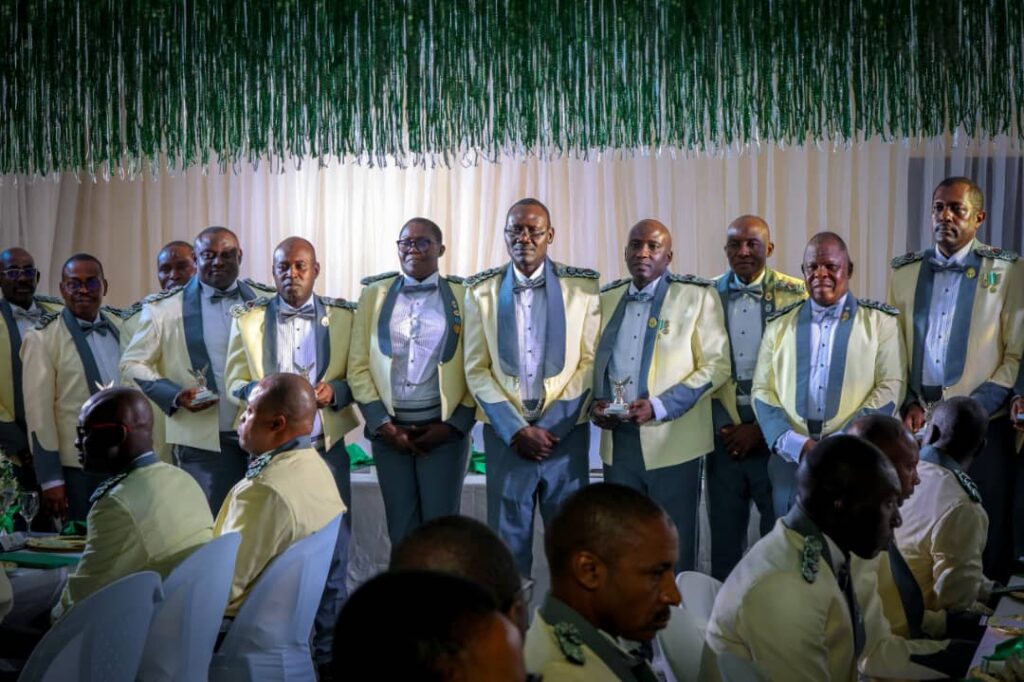
The College had earlier, on Wednesday, 24 June 2026, held a Regimental Dinner at the NCCSC Hotel, Gwagwalada, in honour of the graduating officers. The event was attended by members of the Service’s Management Team, senior officers and guests. It was graced by the Comptroller-General of Customs, Adewale Adeniyi, represented by DCG Sulaiman Chiroma.


Electricity Distributors’ Association Decries Outstanding Debts by MDAs
ShareThe Association of Nigerian Electricity Distributors (ANED) has raised concerns over outstanding electricity debts owed by government Ministries, Departments and...

Afreximbank Records 30 Per Cent Rise Net Income for First Half 2026
ShareThe African Export-Import Bank (Afreximbank) and its subsidiaries (the Group) recorded a 30 per cent increase in net income to...


CBN Sells N700bn Treasury Bills in Second August Auction
ShareBy Tony Obiechina, Abuja The Central Bank of Nigeria (CBN), on behalf of the Debt Management Office (DMO), has offered...


Niger FRSC Records 234 Crashes, 110 Deaths in Seven Months
ShareFrom Dan Amasingha, Minna Ten people have been killed and several others injured in a fatal road crash involving a...

Fuel Subsidy War Deepens as Presidency, Atiku Clash Again over Policy
ShareBy David Torough, Abuja The political battle over Nigeria’s petrol subsidy regime has intensified, with the Presidency and former Vice-President...

The Man Behind ‘The Ultimate Commander’: A Birthday Tribute to Ambassador Osita Offor
ShareBy David Torough, Abuja Ambassador Osita Offor, popularly known as “The Ultimate Commander,” is being celebrated today for his vision,...
Peace on Paper, Peril in Practice: Why 2027’s Elections Remain at Risk
ShareBy Dakuku Peterside There is something reassuring about the ritual of political rivals gathering beneath the same roof and signing...


2027: Bawa Urges APC Leaders, Supporters on Unity
ShareBy Tambaya Julius, Abuja The Senior Special Assistant (SSA) to the Nasarawa State Governor on Greater Karu Development Control Agency...
NCS Lilypond Export Command Gets New Acting CAC
ShareThe Nigeria Customs Service (NCS), Lilypond Export Command, has appointed Deputy Comptroller Olusola Salako as its Acting Customs Area Controller...

Oyebanji Reappoints Retired Ekiti Accountant-General
ShareEkiti State Governor, Biodun Oyebanji, on Tuesday approved the appointment of Titilayo Olayinka as the new Accountant General of the...