
Business News
Africa Targets $1.3bn Extra Tax – ATAF

By Mathew Dadiya, Abuja
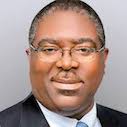
The Chairman of African Tax Administration Forum ( ATAF), Tunde Fowler has said that the continent has made extra $300 million in two years adding that over $1billion was underway from already assessed taxes.
Fowler disclosed this on Tuesday, in Uganda at a conference on how Africa could increase its revenue yields and free itself of dependence on foreign aids, loan and handouts.
The FIRS boss spoke alongside the Executive Secretary of African Tax Administration Forum, Logan Wort and specialists in the taxation of digital and online arm of African and global economy.
Fowler called on Africa to pay more attention on how to stem Illicit Financial Flows (IFF), taxing rights of Africans who consume goods produced in different parts of the world, online tracking of all such transactions, and how to sustain capacity building programmes of tax authority staff in order to stem the financial hemorrhaging on the continent which he said the Thambo Mbeki report puts at over $ 60 billion dollars close to seven years ago.
The Chairman of the Federal Inland Revenue Service, FIRS, also called for support from African leaders on how to influence global discussions both through policy formulation, technical inputs and how the continent can navigate new technologies to provide sufficient scope to modernise and increase efficiencies in tax administration.
Fowler told the conference that the emergence of ATAF as a distinctly African tax intellectual and professional house has been yielding quantifiable returns for the continent: “Our contribution as members to a truly African organisation has led to some notable successes at the global level.
“ATAF Council consciously and consistently encourages active participation in standard setting. ATAF regularly participates in OECD and technical committees’ work and as an example was UN able to effect changes to Transfer Pricing Guidelines that give African countries a vital source of revenue.
“We believe that this engagement not only ensures that solutions relevant to the continent are adopted, but that the subsequent delivery of tailor-made programmes to members help customise these. At the end of 2019, ATAF has 24 active programmes across our membership. They report that these programmes led to the collection of over USD300 million additional tax over the past 2 years; with additional assessments of over USD1 billion. The Council will therefore continue to actively support the secretariat to acquire sufficient human and other resources to sustain these gains going forward.
The ATAF Chairman, who is also the Chairman of the Joint Tax Board (JTB) noted that many African countries are working on improving tax-to-GDP ratios, and according to the African Tax Outlook aim for an average of 18%. However, increasing tax rates is challenging from a policy and social development perspective. Therefore a strong mix of tax policy and tax administration decisions remains relevant in order to leverage these technological advancements.
Fowler noted that the HLP Report estimates that over $60 billion is lost to the continent annually and this figure has since grown from 2014 estimates. Global Financial Integrity (GFI) estimates South Africa alone lost $37-billion, which amounts to $7.4-billion a year – in potential government revenue due to trade mis-invoicing between 2010 and 2014.
Wort noted that Africa is and will continue to lose a huge slice of the revenue that should accrue to it if the continent fails to pay attention to almost over 139 million face book and 500 million mobile phone users and the online digital transaction set to contribute US$110 billion to Africa’s GDP, next year.
The trio and a Professor Anne Ogutu of the African Tax Institute, who spoke on the challenge of taxing digital economy, warned that in a world, where the economy is no longer obeying the tax rule of where you reside as a basis for levying tax, where consumers and at times taxpayers and businessmen are stateless, there has to be a radical review of tax policy and practice in Africa if the continent is not to loose out from the global digital economy.



By Jennifer Enuma, Abuja
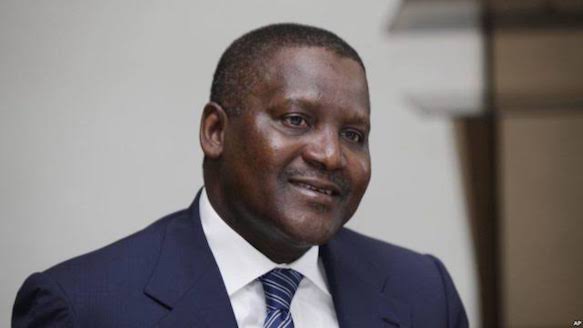
President Bola Tinubu has congratulated Alhaji Aliko Dangote, the President of Dangote Group, on his appointment to the World Bank’s Private Sector Investment Lab, a body tasked with promoting investment and job creation in emerging economies.
In a statement by Special Adviser on Media and Publicity, Bayo Onanauga, the President described the appointment as apt, given Dangote’s rich private sector experience, strategic investments, and many employment opportunities created through his Dangote Group.
The Dangote Group became one of Africa’s leading conglomerates through innovation and continuous investment.
Dangote Group’s business interests span cement, fertiliser, salt, sugar, oil, and gas. However, the $20 billion Dangote Petroleum Refinery and Petrochemicals remains Africa’s most daring project and most significant single private investment.
“President Tinubu urges Dangote to bring to bear on the World Bank appointment his transformative ideas and initiatives to impact the emerging markets across the world fully” the statement said.

The World Bank announced Dangote’s appointment on Wednesday, as part of a broader expansion of its Private Sector Investment Lab. The lab now enters a new phase aimed at scaling up solutions to attract private capital and create jobs in the developing world.
The CEO of Bayer AG, Bill Anderson, the Chair of Bharti Enterprises, Sunil Bharti Mittal, and the President and CEO of Hyatt Hotels Corporation, Mark Hoplamazian, are on the Private Sector Investment Lab with Dangote.
The World Bank said the expanded membership brings together business leaders with proven track records in generating employment in developing economies, supporting the Bank’s focus on job creation as a central pillar of global development.
By Joel Oladele, Abuja
The Nigeria Customs Service (NSC) has generated an impressive N1,751,502,252,298.05 in revenue during the first quarter of 2025.
The Comptroller-General (CG) of the Service, Bashir Adeniyi, disclosed this yesterday, during a press briefing in Abuja.
According to Adeniyi, the achievement not only surpasses the quarterly target but also marks a substantial increase compared to the same period last year, reflecting the effectiveness of recent reforms and the dedication of customs officers across the nation.
“This first quarter of 2025 has seen our officers working tirelessly at borders and ports across the nation.
I’m proud to report we’ve made real progress on multiple fronts—from increasing revenue collections to intercepting dangerous shipments,” Adeniyi stated.He attributed this success to the reforms initiated under President Bola Tinubu’s administration and the guidance of the Honourable Minister of Finance and Coordinating Minister of the Economy, Olawale Edun.
The CG noted that the revenue collection for Q1 2025 exceeded the quarterly benchmark of N1,645,000,000,000.00 by N106.5 billion, achieving 106.47% of the target. This performance represents a remarkable 29.96% increase compared to the N1,347,705,251,658.31 collected in Q1 2024.
Adeniyi highlighted the month-by-month growth, noting that January’s collection of N647,880,245,243.67 surpassed its target by 18.12%, while February and March also showed positive trends.
“I’m pleased to report the Service’s revenue collection for Q1 2025 totaled N1,751,502,252,298.05.
“Against our annual target of N6,580,000,000,000.00, the first quarter’s proportional benchmark stood at N1,645,000,000,000.00. I’m proud to announce we’ve exceeded this target by N106.5 billion, achieving 106.47% of our quarterly projection. This outstanding performance represents a substantial 29.96% increase compared to the same period in 2024, where we collected N1,347,705,251,658.31.
“Our month-by-month analysis reveals even more encouraging details of this growth trajectory,” Adeniyi said.
In addition to revenue collection, Adeniyi said the NCS maintained robust anti-smuggling operations, recording 298 seizures with a total Duty Paid Value (DPV) of ₦7,698,557,347.67.
He stated that rice was the most seized commodity, with 135,474 bags intercepted, followed by petroleum products and narcotics.
“From rice to wildlife, these seizures show our targeted approach,” Adeniyi remarked, noting the NCS’s commitment to combating smuggling and protecting national revenue.
Adeniyi also highlighted key initiatives, including the expansion of the B’Odogwu customs clearance platform and the launch of the Authorized Economic Operators Programme, which aims to streamline processes for compliant businesses. The NCS’s Corporate Social Responsibility Programme, “Customs Cares,” was also launched, focusing on education, health, and environmental sustainability.
Despite these achievements, the CG noted that the NCS faced challenges, including exchange rate volatility and non-compliance issues. Adeniyi acknowledged the need for ongoing adaptation and collaboration with stakeholders to address these challenges effectively.
Looking ahead, the NCS aims to continue its modernization efforts and enhance service delivery, ensuring that it remains a critical institution in Nigeria’s economic and security landscape.
“Results speak louder than plans; faster clearances through B’Odogwu, trusted traders in the AEO program, and measurable food price relief from our exemptions. We’ll keep scaling what works,” he concluded.
 |
By Tony Obiechina Abuja
The Nigeria Sovereign Investment Authority (NSIA) yesterday disclosed that its net assets grew from N156bn in 2013 to N4.35 trillion in 2024.
Similarly, the Authority has remained profitable for 12 consecutive years, leading to cumulative retained earnings of N3.
74 trillion in 2024.Managing Director and Chief Executive Officer of NSIA, Aminu Umar- Sadiq made these disclosures at a media engagement in Abuja, highlighting its audited financial results for the 2024 fiscal year.
According to him, the results underscored the resilience of the authority’s investment strategy and the strength of its earnings, driven by a well-diversified revenue base and robust risk management practices, despite a challenging global macroeconomic and geopolitical environment.
Total operating profits, excluding share of profits from associates and Joint Venture (JV) entities, increased from N1.17 trillion in 2023 to N1.86 trillion in 2024, driven by the strong performance of
NSIA’s diversified investment portfolio, infrastructure assets, gains from foreign exchange movements, and derivative valuations.
In addition, Total Comprehensive Income (TCI), inclusive of share of profits from associates and JV entities, reached N1.89 trillion in 2024, reflecting a 59 per cent increase from N1.18 trillion in 2023.
Core TCI (excluding foreign exchange and derivative valuation gains) rose by 148 per cent to N407.9 billion in 2024 compared to N164.7 billion in 2023, supported by robust returns on financial assets measured at fair value through profit and loss, including collateralised securities, private equity, hedge funds, and Exchange-Traded Funds (ETFs).
Umar-Sadiq said the authority’s outstanding financial performance in 2024 reflected the “strength of our strategic vision, disciplined execution and unwavering commitment to sustainable socio-economic advancement.”
He said, “By leveraging innovation, strategic partnerships and sound risk management, we have not only delivered strong returns but also created value for our stakeholders
“As we move forward, we remain focused on driving economic transformation, expanding opportunities, scaling transformative impact and ensuring long-term prosperity for current and future generations of Nigerians.”
The CEO reaffirmed the authority’s commitment to managing the country’s SWF, and delivering the mandates enshrined in the NSIA Act.
He said NSIA remained poised to continually create long-term value for its stakeholders by delivering excellent risk-adjusted financial results, developing a healthy and well-diversified portfolio of assets and large-scale infrastructure projects, and enhancing the desired social outcomes.
He noted that NSIA was committed to its mandate of prudent management and investment of Nigeria’s sovereign wealth.
“In adherence to its Establishment Act, NSIA prioritises transparency, disclosure, and effective communication with all stakeholders and counterparties,” he said.
He pointed out that in the year under review, a new board, led by Olusegun Ogunsanya as Chairman, was appointed by President Bola Tinubu, in accordance with the provisions of the NSIA Act.
The new board will provide strategic direction and oversight, in addition to playing a pivotal role in critical decision making.
He remarked that under the guidance of the Board, the Authority will retain focus on its primary mandate of creating shared value for all stakeholders based on its continued adoption of corporate governance practices.
“NSIA prides itself an investment institution of the federation established to manage funds in excess of budgeted oil revenues and its mission is to play a pivotal role in driving sustained economic development for the benefit of all Nigerians through building a savings base for the Nigerian people, enhancing the development of the county’s infrastructure, and providing stabilisation support in times of economic misadventure,” he added.


Finding Joy in Old Age: The Renewed Hope Intervention
ShareBy Bridget Tikyaa Getting to the life journey of a senior citizen should ordinarily be a source of pride, a...


CBN Revokes Licenses of Aso Savings, Union Homes Savings, Loans
ShareBy Tony Obiechina, Abuja The Central Bank of Nigeria (CBN) has revoked the operational licences of Aso Savings and Loans...

Dangote Petitions ICPC, Accuses NMDPRA Boss of Corruption, Abuses
ShareBy David Torough, Abuja President of the Dangote Group, Alhaji Aliko Dangote, has petitioned the Independent Corrupt Practices and Other Related Offences Commission...

NDIC Liquidates Aso Savings, Union Homes, Pays N2m Deposits
ShareBy Tony Obiechina, Abuja The Nigerian Deposit Insurance Corporation (NDIC) exercised its appointment as the liquidator of Aso Savings and...


Reps Launch Nationwide Probe into Drug Abuse, Trafficking Crisis
ShareBy Ubong Ukpong, Abuja The House of Representatives has commenced a nationwide investigation into Nigeria’s worsening drug abuse and trafficking...

Clement Koko Assumes Office as CIPPON President
ShareBy David Torough, Abuja Clement Koko has been inaugurated as the President and Chairman-in-Council of the Chartered Institute of Professional...

Thousands of Drivers Wrongly Fined for Speeding Since 2021
ShareThousands of drivers could have speeding fines cancelled after a fault saw some cameras falsely triggered on English A roads...


UK Unemployment Rate Rises to 5.1 Per cent
ShareThe UK unemployment rate in the three months to October has increased to 5.1%, according to official figures. That marked...


French Court Sentences Ex-DR Congo Rebel, Politician to 30 Years in Jail
ShareA French court has sentenced a former rebel leader and politician from the Democratic Republic of Congo to 30 years...


EEDC Explains Recent Decline in Power Supply across South-East
ShareThe Enugu Electricity Distribution Company (EEDC) has attributed the recent decline in power supply across the South-East to low electricity...