
Metro
Aisha Buhari Lays Foundation of AFLPM Secretariat in Abuja


The President, African First Ladies Peace Mission (AFLPM) and Nigeria`s first lady, Aisha Buhari, on Monday laid the foundation of a befitting secretariat for the African First Ladies Peace Mission to provide office accommodation for a conducive working condition for members of staff of the mission.
Mrs Buhari who led other African First Ladies to the foundation-laying ceremony of AFLPM Secretariat shortly after she was elected President of the Mission in Abuja, pledged to commit her time and resources to sustainable peace conflict resolution on the continent.
The first lady who acquired about 2.7 hectares of land for the development of the Permanent Secretariat of AFLPM in Abuja, said the mission was created 26 years ago to promote peace on the continent.
“As you are all aware, 26 years ago the African First Ladies Resolution instituted a peace mission with the aim to examine peace and security situations of our continent.
“The objective of the mission was to mobilize resources to mitigate incidents of conflicts and complex humanitarian emergencies in Africa.
“I therefore want to use this medium to encourage African women to take advantage of every given opportunity to advance the course of peace making, peace building and conflict resolution as our contribution to rebuilding Africa,“ she said.
Mrs Buahari, who was accompanied to the venue of the foundation-laying ceremony by the visiting African first ladies as well as former first ladies of Nigeria, including Patience Jonathan and Maryam Abacha, said the mission will only achieve its objectives if there is peace and commitment among members states.
Mrs Buhari was accompanied to the foundation laying ceremony by the first ladies Sierra Leone, Ghana, Congo Brazzaville, Sao Tome and Principe as well as representatives of Zimbabwe, Cote d’Ivoire, Mauritania, Liberia and Namibia (NAN)








By Raphael Atuu, Abuja
The Federal Government of Nigeria has successfully validated the National Roadmap for the Veterinary Services in Nigeria (2026–2036), setting a bold course to modernise animal health systems, strengthen food security, and enhance public health outcomes nationwide.
The three-day validation workshop, held in Abuja from April 28th – 30th, 2026, was convened by the Federal Ministry of Livestock Development with support from development partners, including GALVmed and IKORE.
Declaring the workshop open, the Minister of Livestock Development, Idi Mukhtar Maiha, stressed the urgency of strengthening veterinary systems in the face of emerging global health threats.
“This roadmap provides a clear, forward-looking vision to build a modern, resilient, and globally compliant veterinary system that supports livestock productivity, protects public health, and facilitates safe trade,” the Minister stated.
The Permanent Secretary, Federal Ministry of Livestock Development, Dr. Chinyere Ijeoma Akujobi, highlighted persistent systemic challenges undermining service delivery at the sub-national level.
“Several systemic issues continue to limit effectiveness, including gaps in manpower distribution, weak surveillance systems, and underperforming veterinary laboratories due to inadequate infrastructure and resources,” she stated.
In his remarks, the Senior Special Assistant to the President on Livestock Development, Idris Ajumobi, reaffirmed the administration’s commitment to implementation of the roadmap through strategic investments and institutional strengthening.
Welcoming participants earlier, the Chief Veterinary Officer of Nigeria, Dr. Samuel Anzaku, noted that the roadmap is a product of extensive consultation and offers practical strategies and measurable targets to transform the sector.
Development partners commended Nigeria’s leadership and ambition in repositioning the livestock sector. Speaking on behalf of the Food and Agriculture Organization (FAO), Dr. Otto Vianney Muhinda reaffirmed international support.
He said, “FAO is pleased with the clear vision and ambition demonstrated by Nigeria in the livestock sector. We stand ready to support the Ministry in mobilizing global expertise and resources to achieve its transformative goals.”
On his part, the President of the Nigerian Veterinary Medical Association, Dr. Moses Arokoyo, described the roadmap as a defining moment for the profession, adding that “to remain effective, we must invest urgently in infrastructure, funding, and speed of response. This roadmap has helped us identify these priorities clearly.”
Subnational leaders also pledged alignment with the national agenda. The Commissioner for Livestock Development, Plateau State, Dr. Sunday Akpa, noted, “The vision behind the creation of the Ministry is already inspiring action across states. Together, we are laying the foundation for a stronger livestock sector in the years ahead.”
Taking ownership of the document, the Dean of Directors of Veterinary Services, Dr. Ibrahim Muhammad Bello, stated: “We are the implementers of this roadmap, and we are fully committed to translating its vision into action across all states.”
The workshop also recorded the presence of the Honourable Minister of State for Agriculture and Food Security, Senator Dr. Aliyu Sabi Abdullahi, Permanent Secretaries, Directors of the Ministry, heads of key institutions, Directors of Veterinary Services from all 36 states and the Federal Capital Territory, alongside other senior government officials, development partners, academia, and industry leaders.
Participants engaged in extensive technical sessions, including presentations on public-private partnerships, disease surveillance, animal identification and traceability, red meat value chain development, and emerging disease risks such as avian influenza.
At the conclusion of deliberations on Thursday, stakeholders adopted key resolutions aimed at revitalising veterinary services. These include strengthening institutional capacity, establishing sustainable funding mechanisms, enhancing disease surveillance and reporting systems, developing a coordinated national vaccination strategy, and expanding public-private partnerships across the livestock value chain.
The roadmap also prioritises digital transformation, workforce development, and the institutionalisation of the One Health approach to address the interconnected challenges of animal, human, and environmental health.

Members of the Non-Academic Staff Union of Educational (NASU) and Associated Institutions and the Senior Staff Association of Nigerian Universities (SSANU) have declared a nationwide strike to commence on Friday, May 1.
The university workers under the aegis of Joint Action Committee (JAC) explained that their decision became imperative following the federal government’s failure to conclude ongoing renegotiations and present a fresh offer on allowances.
The two affiliate unions of Nigeria Labour Congress, conveyed their decision in a letter dated April 30, 2026, signed by NASU General Secretary, Peters Adeyemi, and SSANU President, Mohammed Ibrahim, and addressed to the Minister of Education, Tunji Alausa.
“We write to acknowledge receipt of your correspondence and to equally appreciate the Minister of Education for withdrawing the contentious letter,” the union leaders said, referring to the earlier circular on a 30 per cent increase in the Consolidated Non-Teaching Tools Allowance.
Metro
Stakeholders Urge FG, Benue Govt to Partner NGOs to End Violence, Discrimination Against Girls
By Julius, Tambaya Abuja
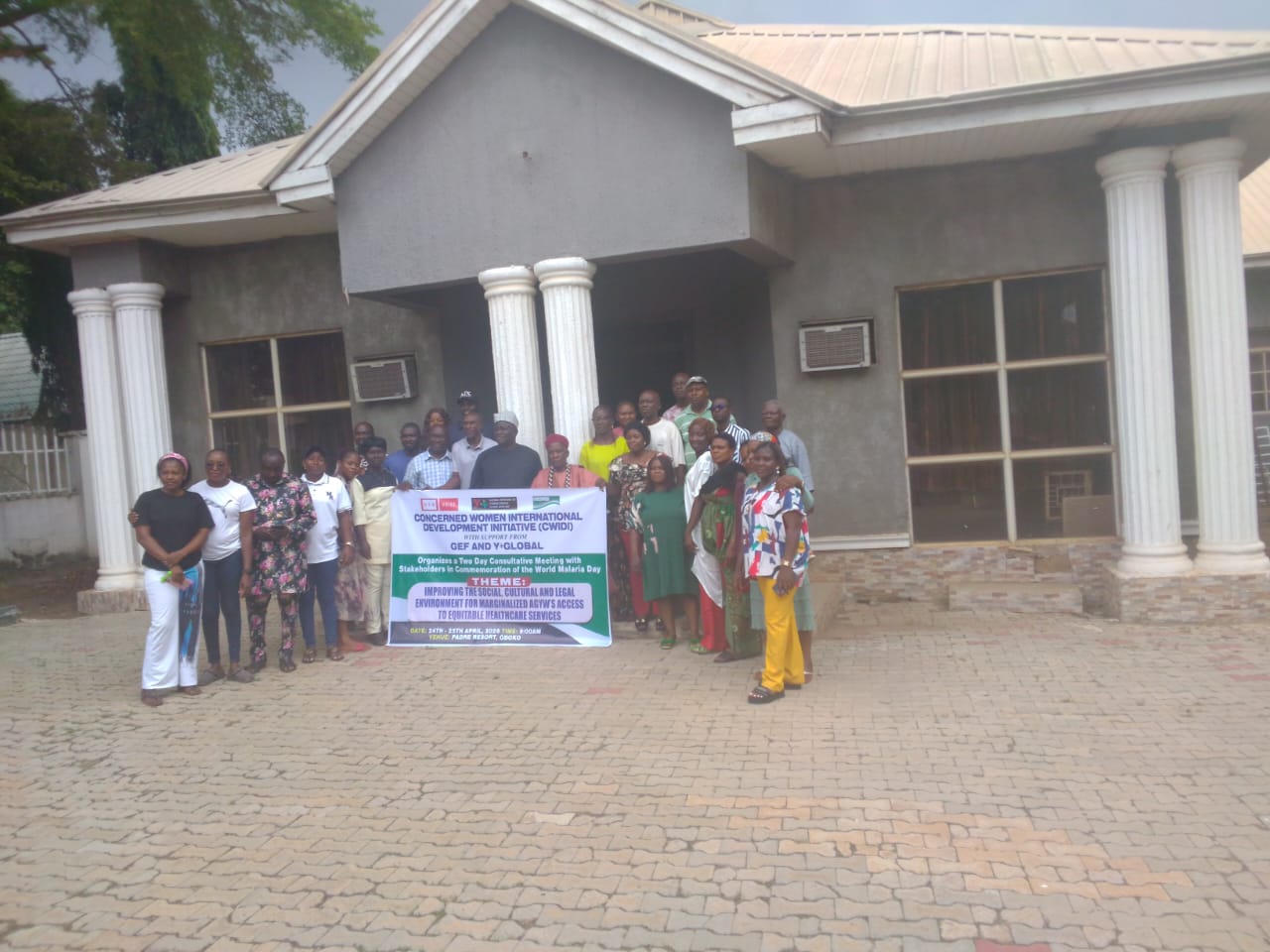
Stakeholders have called on the Federal and the Benue State Governments to strengthen collaboration with non-governmental and civil society organisations to tackle marginalisation, harmful practices, and discrimination against Adolescent Girls and Young Women,AGYW, in communities.
The appeal was made by the District Head of Gboko South, HRH Akpam Abeke, who spoke on behalf of stakeholders at a two-day consultative meeting organised by the Concerned Women International Development Initiative, CWIDI, with support from GEF and Y+ Global.
The meeting, held at Padre’s Resort in Gboko to commemorate World Malaria Day, was themed: “Improving the Social, Cultural and Legal Environment for Marginalised Adolescent Girls and Young Women’s Access to Equitable Healthcare Services.
”Participants included community and religious leaders, law enforcement agents, legal and health professionals, policymakers, and educators.
The meeting aimed at deepening stakeholders’ awareness of the multiple health challenges confronting marginalised Adolescent Girls and Young Women,AGYW, particularly their heightened vulnerability to HIV, tuberculosis, malaria, and sexual and reproductive health issues,also focused on identifying harmful cultural and social practices that exacerbate their exposure to health risks, stigma, and discrimination.
Participants further examined ways to strengthen community understanding of the rights of AGYW, especially their right to access safe, non-discriminatory, and equitable healthcare services, while building collective commitment to sustained actions that promote a safe, supportive, and enabling environment for their health and wellbeing.
They observed that inadequate awareness of gender-based violence, limited access to justice, and poor healthcare services continue to hinder the effective implementation of laws designed to protect AGYW.
The stakeholders expressed optimism that the programme would deepen understanding of the challenges faced by AGYW and strengthen support systems to help survivors overcome trauma.
They called for stricter enforcement of child protection laws, increased community awareness of gender-based violence, improved access to equitable healthcare, and prompt reporting of abuse cases, urging government to provide economic support to families to enable them to educate their children and secure sustainable livelihoods.
Commending the organisers, the monarch noted that the meeting had shed light on previously under-recognised challenges affecting AGYW and assured that insights gained would inform policy and community actions.
He added that stakeholders would cascade the knowledge through town hall meetings, community associations, and church platforms, while urging CWIDI to expand the initiative to reach more rural communities.
In a presentation titled “Legal Rights and Protection for AGYW: Educating Stakeholders on the Rights of AGYW Including Protection from Violence, Discrimination and Barriers to Healthcare,” Barrister Blessing Ityohuun highlighted that AGYW aged 10–24 face multiple challenges driven by gender inequality, poverty, harmful social norms, early marriage, and limited access to sexual and reproductive healthcare.
She outlined key legal frameworks protecting AGYW, including Sections 33 and 42 of the 1999 Constitution, the Child Rights Act (2003), the Violence Against Persons (Prohibition) Act (2015), the Trafficking in Persons Act (2015), the Convention on the Elimination of All Forms of Discrimination Against Women,CEDAW, and the African Charter on Human and Peoples’ Rights.
Ityohuun, who is also the Chairperson of FIDA, Benue State Chapter, urged stakeholders to promote awareness and utilisation of these laws, further calling on governments at all levels to strengthen legal frameworks, align national laws with international standards, criminalise all forms of gender-based violence, and improve access to justice.
She stressed that effective implementation of laws remains critical to safeguarding the rights and wellbeing of AGYW.
Also speaking, Dr. Laadi Swende, in a presentation titled “Addressing HIV, Tuberculosis, Malaria and Sexual and Reproductive Health Rights in Low Resource Settings,” described the diseases as leading causes of illness and death among AGYW.
She advocated for integrated, youth-centred health approaches that address structural inequalities while ensuring access to quality services, noting that success depends on sustained political commitment, adequate funding, and meaningful engagement of young women.
Swende emphasised that malaria, tuberculosis, HIV, and sexual and reproductive health issues are interconnected and should be addressed through coordinated policy and advocacy efforts, urging government to strengthen health systems to provide confidential, non-judgmental, and accessible services tailored to adolescents.
In her remarks, the Executive Director of CWIDI, Becky Gbihi, said the initiative aimed to raise awareness on child abuse and other challenges affecting marginalised AGYW, advising stakeholders to sensitise communities and promote the rights of young women.
She explained that the programme also equipped participants with knowledge to support AGYW in reducing health risks associated with malaria, tuberculosis, and HIV/AIDS, while addressing stigma and discrimination in healthcare and justice systems.
Gbihi added that stakeholders were trained to guide victims on where and how to report cases of gender-based violence.

Kogi Community Marks Annual Festival, Calls for Unity amongst Indigenes
ShareFrom Joseph Amedu, Lokoja The Odo-Ape community in Kabba-Bunu Local Government Area of Kogi state came alive last Saturday as indigenes at home and abroad gathered...


Spain Deploys over 13,000 Officers for Pope’s June Visit
ShareSpain will deploy more than 13,000 police officers to stave off “Multiple” potential threats to Pope Leo XIV’s visit from June 6 to 12, the interior minister said on Monday. The pope is due to...
Nigeria Validates 10-Year Roadmap to Transform Veterinary Services
ShareBy Raphael Atuu, Abuja The Federal Government of Nigeria has successfully validated the National Roadmap for the Veterinary Services in Nigeria (2026–2036), setting a bold course to modernise animal health...


JAMB Schedules May 11 Policy Meeting to Determine 2026 UTME Cut-Off Marks
ShareThe process for the 2026/2027 tertiary admissions cycle is set to begin in earnest as the Joint Admissions and Matriculation...


Jigawa, Kano, Katsina Top List of Out-of-school Children
ShareJigawa, Kano and Katsina, have been identified as states with the highest number of out-of-school children crisis as UNICEF stressed that urgent investment in early...


NNPCL Signs Fresh Contract for Completion of PH, Warri Refineries
ShareThe Nigerian National Petroleum Company Limited (NNPCL) has signed a Memorandum of Understanding (MoU) with two Chinese companies, Sanjiang Chemical...
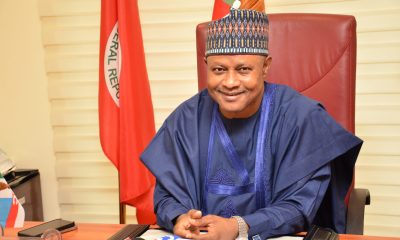

Kaduna Inaugurates Disarmament, Demobilisation, C’ttee to Enhance Security
ShareFrom Agbo Emmanuel, Kaduna Governor Uba Sani has inaugurated the Kaduna State Disarmament, Demobilisation and Reintegration(DDR), Peace and Security Committee,...

PDP: Turaki – led NWC Takes Charge, Sales Presidential Form for N100m
ShareBy Johnson Eyiangho, Abuja The Peoples Democratic Party (PDP) has unveiled a N100 million price tag for its 2027 presidential...


Stop killings, Ease Suffering before 2027 Elections, Cleric Urges FG
ShareBy Raphael Atuu, AbujaThe founder of Dominion Chapel International Churches, Archbishop JohnPrasie Daniel, on Sunday urged the Federal Government to...
Workers’ Day: Labour Leaders Urge Tinubu to Strengthen Partnership with Unions
ShareBy Raphael Atuu, Abuja Labour leaders and stakeholders across Nigeria have called on President Bola Ahmed Tinubu to deepen collaboration...