
Uncategorized
Benue PDP Brands Campaign Vehicles without Atiku’s Picture


From Jude Dangwam, Jos and Johnson Eyiangho, Abuja
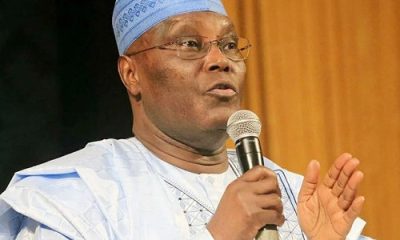
There appears to be no end in sight for the crisis rocking the main opposition party- the Peoples Democratic Party (PDP) at the national level, as the Benue State chapter of the Party, has officially unveiled its branded campaign vehicles without the picture of the party’s presidential candidate, Atiku Abubakar.
Benue State is under the control of Governor Samuel Ortom, one of the G-5 governors demanding the sack of the party’s National Chairman, Dr.
Iyorchia Ayu.It was gathered that the branded buses were distributed to all the party’s campaign coordinators across the 23 Local Government Areas of Benue State.
None of the over 30 buses spotted had the image of Atiku printed on it.
The vehicles, which have been making rounds on social media platforms, have the pictures of the State Governor, Samuel Ortom, who is a senatorial candidate of the party and those of some other party candidates in the State.
However, the picture of Atiku was not included, which might be a further testimony to the resolve by Ortom and other aggrieved PDP governors (G5) who have vowed not to support Atiku’s presidential ambition except the PDP National Chairman, Iyorchia Ayu steps down and is replaced by a southerner.
Recall that governor Ortom had two weeks ago, during the banquet organised by the State for the visiting G-5 governors, threatened not to support Atiku in his presidential campaign.
“Benue people are being killed daily and you want me to be quiet and be a slave to Fulani? It is better that I die. Anyone supporting Atiku in Benue is an enemy of the State,” he said.






The Transmission Company of Nigeria (TCN) has announced an annual preventive maintenance of its 330/132 Kilo Volt (kV) at Ajaokuta Transmission Substation.
It said that the maintenance was scheduled to take place on Tuesday from 9am to 4pm.
The management of the company announced this on its X handle in Abuja on Tuesday.
According to TCN, the exercise will enable its crew to carry out preventive maintenance on the 162 MegaVolt Ampree (MVA), 330/132kV power transformer, associated switchgear and ancillary equipment in the substation.
It said that the Abuja Electricity Distribution Company (AEDC) would be unable to off-take electricity to its customers in Ekirin, Omuo, Ibillo, Akoko, Ogala, Ikare, Magongo, Okene Town, Ayere, Kabba and environs during the period.
”Similarly, Benin Electricity Distribution Company (BEDC) will be unable to off-take electricity to its customers in Okpella Town, BUA Cement Company, West African Fertiliser Company, Dibeks Milling Company, and Edestein Company.
”Other areas to be affected include the Freedom Group Company, Ososo, Uluoke, Iyora, Apana, Okpekpe, Arigidi, Ikare Town, Lampese, Igara, Oka and environs,” it said.
The company said that power supply would be restored to the affected areas upon completion of the exercise.
It also apologised for the inconvenience the planned maintenance would cause affected electricity customers, and appreciated their understanding and cooperation.(NAN)
Nigeria has commenced local production of next-generation dual-active ingredient insecticide-treated mosquito nets to strengthen malaria prevention and domestic manufacturing.
The Ministry of Health and Social Welfare said this in a statement on its official X handle recently.
According to the statement, the facility, Health Textiles Nigeria FZE, wholly owned by Vestergaard Sàrl, is the first in Nigeria to manufacture dual-active ingredient insecticide-treated nets.
It said that the facility would produce PermaNet® Dual, a mosquito net designed to address the growing challenge of insecticide resistance and prequalified by the World Health Organization (WHO) in 2023.
At full scale, the facility is expected to produce about 10 million nets annually and create more than 600 jobs, the statement said.
It said about 80 employees had already been recruited and were undergoing training in manufacturing excellence, product quality, occupational health and safety and regulatory compliance.
The Coordinating Minister of Health and Social Welfare, Prof. Muhammad Pate, said the development aligned with the Nigeria Health Sector Renewal Investment Initiative (NHSRII).
Pate said the initiative focused on unlocking the healthcare value chain through investment, local production and stronger domestic capacity.
“This investment demonstrates what is possible when government policy, private-sector investment and technology transfer come together to unlock Nigeria’s healthcare value chain.
“The commencement of local production also strengthens our capacity to produce essential health products and supports a more resilient health system,” Pate added.
He commended Vestergaard for investing in local manufacturing, describing the commencement of production as an important step in malaria prevention.
The statement said that the establishment of Health Textiles Nigeria followed a 2024 Memorandum of Understanding between Vestergaard and the Presidential Initiative for Unlocking the Healthcare Value Chain (PVAC).
The agreement was aimed at strengthening local production capacity for essential health products, according to the statement.
The National Coordinator of PVAC, Dr Abdu Mukhtar, said the development demonstrated how investment, technology transfer and government policy could translate into productive capacity and skills development.
He said the training of Nigerian professionals and commencement of production represented the type of outcome the initiative sought to replicate across other healthcare value-chain segments.
Vestergaard Chief Executive Officer, Amar Ali, said the company was pleased to commence production in Nigeria and appreciated the Federal Government’s support.
He said the facility combined Vestergaard’s manufacturing expertise with Nigerian talent to produce dual-active insecticide-treated nets locally.
The development comes as Nigeria continues to bear a substantial share of the global malaria burden, the statement said.
According to the statement, WHO estimates that malaria caused 282 million cases and 610,000 deaths globally in 2024.
It said the African Region accounted for the overwhelming majority of malaria cases and deaths recorded globally during the period.
The statement said that Health Textiles Nigeria was expected to fulfil its first commercial orders in the coming months, expanding Nigeria’s capacity to produce the malaria prevention commodity locally.
Also, domestic production must be supported by strong quality assurance, regulatory oversight and safety standards.
It said the federal government would continue supporting strategic investments, technology transfer and skills development to strengthen Nigeria’s healthcare value chain.(NAN)
By Chido Onumah
The security-sector results recorded in the third quarter of 2026 provide a useful window into the changing character of Nigeria’s national security environment and the growing importance of coordination, prevention, intelligence, public trust and a whole-of-society approach.
Terrorism, banditry, kidnapping, illicit arms trafficking, drug trafficking, human trafficking, organised and financial crime, cyber-enabled threats and climate-related emergencies increasingly intersect in ways that demand a broader understanding of national security.
The experience of recent months reinforces an important lesson: no single institution can secure Nigeria on its own.
Effective national security requires intelligence, military and law-enforcement capabilities, but it also requires effective border management, financial intelligence, emergency preparedness, strategic communication, community engagement and strong cooperation among institutions and citizens.The security outcomes recorded across government institutions in July and August illustrate this evolving approach.
During the period, the Armed Forces of Nigeria conducted 7,062 security operations nationwide, neutralising 1,487 terrorists and insurgents, arresting 354 suspects and rescuing 777 kidnapped victims. Troops recovered firearms, ammunition and Improvised Explosive Devices while also undertaking dialogue, peacebuilding and stakeholder engagements.
These figures are significant. Behind every rescued hostage is a family reunited; behind every intercepted weapon is the possibility that a violent crime has been prevented; and behind every dismantled criminal network are communities given an opportunity to recover.
The Nigeria Police Force (NPF) similarly recorded important operational gains. Intelligence-led operations resulted in the arrest of 1,334 suspects and the rescue of 383 kidnapped victims. Police recovered 175 firearms and more than 3,790 rounds of ammunition while disrupting kidnapping, armed robbery, cultism and gunrunning networks.
The Department of State Services (DSS) complemented these efforts through intelligence-driven operations targeting arms trafficking, terrorism, kidnapping and other threats. Its interventions disrupted illicit supply chains, facilitated hostage rescues and contributed to convictions for serious security offences.
Taken together, these developments demonstrate why intelligence-sharing and operational coordination remain central to our national security architecture.
Following the Weapons, Drugs and Money
Nigeria’s security response increasingly recognises the importance of addressing the enabling systems that sustain violence.
One of these is the proliferation of illicit small arms and light weapons.
On 30 July, the National Centre for the Control of Small Arms and Light Weapons (NCCSALW), Office of the National Security Adviser (ONSA), publicly destroyed 1,419 illicit weapons, bringing the number destroyed by the Centre since 2022 to more than 19,000. The Centre also received thousands of illicit, obsolete and decommissioned weapons from security agencies.
A particularly important example of inter-agency cooperation occurred in August when the Nigeria Customs Service (NCS) handed over 399 intercepted firearms and hundreds of firearm components to the Centre. Such cooperation demonstrates how border enforcement, intelligence and arms-control institutions can function as interconnected parts of a national security system.
The National Drug Law Enforcement Agency (NDLEA) provides another example. Between July and August, the Agency conducted 2,298 targeted operations, arrested 3,705 suspects, secured 471 convictions and seized almost 54,000 kilogrammes of illicit drugs. It also secured court orders freezing accounts containing more than ₦9.8 billion linked to cartel operations.
These interventions matter because organised crime does not exist in isolated compartments. Drug trafficking, arms trafficking, terrorism, kidnapping, money laundering and human trafficking frequently depend on overlapping networks of financiers, facilitators, transporters and criminal entrepreneurs.
That is why financial intelligence has become increasingly important.
The Nigerian Financial Intelligence Unit (NFIU) continues to deepen cooperation with security and law-enforcement institutions to identify the financial structures supporting organised crime and terrorism. The principle is straightforward: criminals may conceal their identities, move across borders or change their methods, but criminal enterprises require money.
Following that money can reveal financiers, facilitators, beneficiaries and assets that might otherwise remain hidden.
Security Beyond the Battlefield
National security is also about protecting society against threats that may not immediately resemble conventional security challenges.
The Nigeria Immigration Service’s work on border security, irregular migration and trafficking illustrates this broader perspective. During the reporting period, the Service rescued trafficking victims, identified persons of interest and dismantled elements of a fraudulent transnational organised-crime syndicate.
Similarly, the National Agency for the Prohibition of Trafficking in Persons (NAPTIP) intensified operations against human trafficking and online exploitation, securing convictions and rescuing suspected victims. Particularly concerning is the increasing use of social media, encrypted messaging applications and fraudulent online employment platforms to recruit Nigerians into trafficking and cybercrime networks.
The security environment is changing, and our institutions are adapting accordingly.
Climate-related emergencies provide another dimension. During July and August, the National Emergency Management Agency (NEMA) intensified flood preparedness and early-warning activities while providing relief assistance to 24,625 households, representing approximately 147,750 people.
The Agency also activated its National Emergency Operations Centre to strengthen information management, coordination and decision-making during the flood season.
This, too, is national security.
A devastating flood can destroy livelihoods, displace communities, deepen poverty and intensify competition over scarce resources. Disaster preparedness should therefore not be regarded merely as humanitarian intervention. It is an investment in national resilience.
The Federal Road Safety Corps (FRSC) and Federal Fire Service (FFS) provide similar examples of institutions whose work contributes directly to human security. Road crashes, fires and other emergencies claim lives, destroy livelihoods and damage national assets.
During the period under review, the Federal Fire Service responded to 426 incidents, saved 585 lives and protected property valued at approximately ₦108 billion. The FRSC, meanwhile, intensified highway enforcement, emergency rescue operations and cooperation with law-enforcement agencies.
These efforts remind us that national security ultimately has a human face.
The Information Environment Matters
There is another arena in which Nigeria must continue to strengthen its capabilities: the information space.
Modern security operations take place simultaneously on the ground and in the information environment. Terrorists, criminal organisations and other malicious actors understand the power of narratives. Rumours, manipulated images, fabricated videos and deliberately misleading information can create panic, inflame communal tensions, complicate security operations and weaken confidence in institutions.
This is why strategic communication cannot be treated as an afterthought to security operations.
During July and August, Defence Headquarters issued 137 press releases and identified and countered 13 items of misinformation. The NDLEA issued 27 official statements, undertook 36 broadcast engagements and countered dozens of misinformation items. The FRSC similarly responded to misinformation affecting its operations.
These efforts reflect a growing institutional recognition that credible information is itself a national security asset.
As I have argued in engagements with the media and security stakeholders, we must continually balance the public’s right to know with legitimate national security considerations. Security institutions have a responsibility to communicate quickly, accurately and transparently. Journalists have an equally important responsibility to verify sensitive information and ensure that reporting does not inadvertently compromise operations, inflame tensions or endanger lives.
Recent engagements involving ONSA, security institutions, media executives and defence correspondents have similarly emphasised responsible reporting: delivering news and information that is factually accurate while remaining mindful of its potential impact on individuals, communities and the nation. They have also underscored the importance of professional capacity-building and timely access to credible security information.
Strategic communication must therefore be understood not as propaganda or an attempt to suppress legitimate criticism, but as the systematic provision of timely, accurate and credible information, accompanied by meaningful engagement with citizens and stakeholders.
Public trust is fundamental. Where credible official information is absent or unnecessarily delayed, speculation and misinformation quickly occupy the vacuum. Once institutional trust is lost, even accurate information may struggle to gain acceptance.
Security as Shared Responsibility
Perhaps the most important lesson from the security efforts of recent months is the value of collaboration.
The handover of intercepted weapons from Customs to NCCSALW; cooperation between the NFIU and law-enforcement agencies; joint rescue operations involving security agencies and communities; coordination between NEMA, state institutions and the Armed Forces; and partnerships between the NDLEA and international agencies all demonstrate that institutional silos are increasingly inadequate for contemporary security challenges.
Collaboration, however, must extend beyond government.
Traditional rulers, religious leaders, journalists, civil society organisations, businesses, academics, technology companies, youth and community organisations all have important roles in strengthening national resilience. Security in the 21st century requires this wider whole-of-society partnership.
Communities are particularly important. They often possess the earliest information about suspicious movements, emerging tensions, radicalisation, criminal recruitment and other warning signs. Building trust between citizens and security institutions therefore strengthens early warning, improves intelligence and enables earlier intervention.
This is also why civil society engagement must remain integral to national security policy. Civil society organisations can provide early warning, facilitate dialogue, strengthen accountability and connect institutions with communities that may otherwise feel excluded from formal structures.
A whole-of-society approach does not diminish the constitutional responsibility of the state to provide security. Rather, it recognises that government performs that responsibility more effectively when institutions cooperate and citizens have the confidence and opportunity to contribute.
The objective must therefore be a national security system that is preventive as well as responsive; intelligence-driven rather than merely reactive; coordinated rather than fragmented; and people-centred rather than institution-centred.
There will be difficult days, and there will be setbacks. National security cannot credibly be measured only by operational successes. It must also be assessed by our capacity to learn from failures, anticipate emerging threats, protect vulnerable communities and continually improve the institutions entrusted with public safety.
The evidence from our security and public-safety institutions nevertheless demonstrates significant institutional capacity, courage and resilience.
Our responsibility is to strengthen that capacity, improve coordination, communicate more effectively and deepen the partnership between government and citizens.
Security is ultimately not something government simply delivers to society from above. It is something institutions and citizens must build together.
And that shared responsibility may prove to be one of Nigeria’s most enduring security advantages.
Chido Onumah is Special Adviser to the National Security Adviser on Strategic Communication and Civil Society Liaison.




Police, Varsity Deepen Security Pact against Cultism, Campus Threats
ShareThe Cross River Police Command and the University of Cross River State (UniCross) have resolved to deepen their collaboration to...

Police Rescue Two Kidnap Victims, Arrest Three Suspects in Ondo
ShareThe Police Command in Ondo State said it has rescued two kidnapped victims and arrested three suspects at Isua-Akoko in...
Musa Tasks MOD Staff on Security Consciousness, Pledges Enhanced Civilian-military Synergy
ShareBy Tony Obiechina, Abuja The Minister of Defence, Gen Christopher Musa has charged personnel of the Ministry to remain vigilant,...

Army Expansion to Boost Security, Economic Growth — COAS
ShareBy David Torough, Abuja The ongoing expansion of the Nigerian Army will strengthen the military’s operational capacity and help create...

TCN Announces Annual Maintenance at Ajaokuta Transmission Substation
ShareThe Transmission Company of Nigeria (TCN) has announced an annual preventive maintenance of its 330/132 Kilo Volt (kV) at Ajaokuta...
Badagry Deep-Seaport to Boost Maritime, Commercial Activities – BACCIMA
ShareThe Badagry Chamber of Commerce, Industry, Mines and Agriculture (BACCIMA) said the proposed Badagry Deep-Seaport will strengthen the area’s position...


Abia Targets UNESCO Recognition of Heritage Sites
ShareThe Abia Government has elevated selected cultural and natural sites to state heritage and monuments as part of efforts to...
Nigeria Cuts Local Petroleum Refining Cost through Crude Swap Initiative
ShareThe Federal Government is firming an initiative that will boost oil and gas swap plan, embedded with a regulator-mandated netting...


NNPC Deepens Transformation Initiative to Turn Nigeria into Global Gas Hub
ShareThe Nigerian National Petroleum Company Limited (NNPC Ltd.) said it is activating multiple pathways aimed at transforming Nigeria into a...
Pi-CNG & EV Warns against Unauthorised, Illegal Conversions
ShareThe Presidential Initiative on Compressed Natural Gas and Electric Vehicles (Pi-CNG & EV) has warned motorists against the use of...