
Education
Book Review: Testimony to Courage


Title: Testimony to Courage
Author: edited by Chido Onumah and Frederick Adetiba
Publisher: Cappa & Omega Co.Reviewer: Chidi Odinkalu
Introducing A People Defined by Hierarchies
Nigeria is a country defined by hierarchies in which everyone is expected to fit neatly into a box.
These hierarchies are many and multi-dimensional. They vary in both shape and size and we have signature tunes for sign-posting them. You know a generational put-down when it’s uttered. When you hear, “Am I your mate?” or “your time will come”, it doesn’t matter if you are already sixty-something year-old grand-parent. “Where are you from?”, is a marker for geographical hierarchy that easily also conflates multiple sign-posts of ethnicity, religion, race and even presumed political persuasion. “You no know say you be woman?!” assumes lessons in propriety are exclusive to one gender. It is Nigerian to accept these hierarchies and their implications without question. To not subscribe to this is to subvert something widely considered essential to the Nigerian identity. It’s an invitation to trouble.Our Nigerian hierarchies and accompanying boxes of identity even find expression in our sartorial preferences. They’re also canaries for prejudice and for competing claims of exception. Those who don’t fit into these boxes are worse than mere outliers. They could also end up as outcasts. Civic ecumenism in Nigeria is thus at once endangered but fascinating. It’s both vice and virtue. In this, art imitates form. A Nigerian who appears to embody these virtues could end up being both endangered and, simultaneously, a subject of considerable fascination. Notoriety is their reward. The best-known exemplar of this is Fela— he was so notorious, he did not need the luxury of a surname; so admired, everyone believed they knew him on intimate, first name terms.
Neither Faint of Heart nor “Agbero” Bourgeoisie
This is not a fate for the faint of heart. After all, we are Nigerians, the largest community in Africa. Just about any fraction of us against one person would be an army. Even in a world now dominated by fatuous obsession with seconds of infamy, no one dares to embrace an army’s worth of ire just for the sake of cheap popularity or fame. It takes conviction and courage to go against Nigerian hierarchies and all that they entail.
This is the point of Testimony to Courage. It is a collection of “Essays in Honour of Dapo Olorunyomi”, another Nigerian who, like Fela, is descended from a lineage of Christian missionaries and, also like Fela, is now best known by an edited form of his first name as “Dapsy”. Those of us too animated by Nigerian hierarchies to feel so intimate with our Egbon would take liberty to preface “Dapsy” with “Oga”. You know this cognomen has passed the test of acceptance when it receives the reluctant approval of the ideologically fastidious Biodun Jeyifo, Emeritus Professor and Dapsy’s teacher, who would have voted it down because “it sounds like and rhymes with ‘Popsy’ and ‘Momsy’, two of the most overused terms of the special argot or vocab of the over-pampered offspring of our national bourgeoisie.” But he is prepared to grant an exception to its use for one of his favourite students because “there is nothing in (Dapsy’s) character and his sensibility that smacks of the moral and social universe of our agbero bourgeoisie.”
A Conclave of Witnesses to Civic Ecumenism
The book is at once about a man, his life’s passions, and about courage as a civic virtue. Courage, on its own could be both virtue and vice. As an end in itself, it is meaningless. It only makes sense as a means and its elevation to virtue assumes the existence of a larger goal into whose service it is pressed with consistency. Three of Dapsy’s abiding passions—Nigeria, other people and truth – receive substantial attention in the book. It’s easy to stray into one, some or all of these and forget about the book. Yet, a review of the book would be bereft without these.
Testimony to Courage hews close to the man in its ecumenism and disregard of Nigerian hierarchies. It contains 91 essays, 90 of which are relatively short. The exception, predictably by essayist, Odia Ofeimun, occupies all of 34 pages. These are clustered into three different parts that supposedly capture the essence of Dapsy’s life, work and values. Part 1, containing 33 essays, is devoted to his “Journalistic Exploits”. Part two contains 26 essays and deals with his “Activism and Democratic Struggle”. The 32 essays in part three are devoted to his “Legacy” of “Investing in the Future”. The categories are far from neat. Three additional essays are published as prologue, preface and introduction. They are all worth reading and highly readable.
The contributors include senior citizens above 80 and young people in their 20s; senior politicians on the one hand and citizens, some of whom hold them in barely concealed contempt, on the other; pastors and atheists; Christians, Muslims and traditional worshippers; men, women and every gender in between. At one end of the generational spectrum of authors are people like Akin Olorunyomi, Dapsy’s elder brother who was there when he was born and named in 1957, Wole Soyinka, after whom Dapsy has built one of the institutions that has become his hallmark, and Ropo Sekoni, an Emeritus Professor, who was Dapsy’s lecturer in the university over 40 years ago. At another end you have contributors like Omotola Aderinsola, who confesses to having known Dapsy for “less than a year”, and Farooq Kperogi, who has never met Dapsy in person. With a few exceptions, the editors manage to distil from this conclave of witnesses a rich and highly readable variety of insights about man, virtue and country. The rulers of Nigeria have quite a lot to learn from the civic ecumenism of the book and of its subject for, true to Dapsy’s inclinations, it cannot be said of this book that any part of Nigeria is marginalized in it!
Constancy and Coincidence; Dissonance and Diversity
This rich variety makes it somewhat difficult to be too categorical about the book. Testimony to Courage is broadly characterized by transcendental themes, some in dialogue with others. These are themes of constancy and coincidence; dissonance, diversity, and even the divine. It also offers a deep trove of information on Dapsy from the biographical to the aesthetic, which provide both context and interpretation for the deep strain of conviction and courage that he is known for.
Let’s begin with the biographical. We learn from the book that Dapsy was born in Kano to parents who lived in Keffi, but whose origins were in Okun-land. His grandfather was an ordained Baptist Minister and his parents were of the missionary persuasion. There is evidence of a deep pedigree that is emblematized in his birth names: Oyedapo (royalty has merged); Oyekunle (home filled with royalty); Adeniran (crown belongs to family). For a man who belongs to that rare species born adult, the irony is telling that this book formally gets launched on 27 May, usually marked in Nigeria as “Children’s Day”. His brother, Sola Olorunyomi, narrates, for instance, that Dapsy was wont to defy wearing a bib around the dining table at home with the refrain “do I look like a kid!?” For his sins, his younger sister, Adenike Odebiri narrates, his mother shipped him off to boarding school at four so as to “give her peace in the house.” He ended up going to a Koranic school in what is today Zamfara State and attending six different primary schools in six years. By the time he was finished with secondary school, Dapsy had lived in Bauchi, Gusau, Ilorin, Keffi, Makurdi, Mubi, Zaria, becoming proficient along the way in English, Fulfulde, Hausa, Yoruba as well as in the Bible and the Qur’an. He would later go to Ife for his undergraduate studies and then Yola for his compulsory national service. It’s no coincidence that his other endearments are “Mallam” or “Almajiri”.
The theme of coincidence and trouble is constant in Testimony to Courage. Dapsy’s mother did not have a monopoly of inventive ways to manage his penchant for trouble. Senior Advocate of Nigerian (SAN), Femi Falana, narrates that at the University of Ife, where they were editorial collaborators in a campus magazine, The Voice, the authorities banned the journal. In Dapsy’s professional biography, the rendezvous with reportorial immolation appears with unceasing regularity. As editor of another campus newspaper, The Rapport, he reportedly published a factually accurate story of how “a senior lecturer marched a female student into the hall to conduct a special examination for her”, outside the examination schedule. Unable to fault the story nor contain the furore caused by it, the university authorities had the magazine banned. As a reporter with African Concord, he wrote a story about the cynical sclerosis of the Ibrahim Babangida regime in April 1992 that got the regime angry. When they could not get the magazine to withdraw the story, the regime had the Concord group shuttered. That led to the founding of The News and Tempo stable under Gen. Sani Abacha but, “before long, both magazines were proscribed by the discredited dictator.” They set about looking for him and when they could not find him, they even closed down his family life by arresting his wife, Ladi, and child!
Dapsy would later join forces with Dele Olojede at Next, which became so successful in investigative and enterprise journalism it had to be “rested”. Vanguard Editor, Eze Anaba, mourns Next as “a brilliant initiative that came too early.” His latest enterprise, Premium Times, has not been without its own share of troubles but the digital revolution now provides some inoculation against similar pretensions to martial decapitation of journalistic irritation. The point of Testimony to Courage, however, is the constancy of Dapsy’s commitment to truth even in the face of a rampant cemetery of publishing titles that testifies to the official conspiracy against it.
There is an easy point of consensus in Testimony to Courage. As co-editors, Chido Onumah and Frederick Adetiba sum up in the introduction, “one thread run across everyone’s experience of Dapo Olorunyomi—his extraordinary humanity.” This “extraordinary humanity” often expresses itself in unusual generosity that “shows total disregard for personal comfort, privilege or position”. The word “bohemian” appears in more than a few places in the book, evidence of an attribute about which, Idowu Obasa complains, “makes people who are modestly conscious of these things appear very vain and self-centered.”
Far from a bookend, this kind of dispute over the nature and limits of virtue is a major theme of the dissonance that is evident in Testimony to Courage. There is an illuminating dialogue in the book between medium, message, values and means. The various authors, for instance, can’t seem to agree even on what Dapsy does and where he has made his mark. Odia Ofeimun believes that the book is by “media activists” about a man who has been at the cutting edge of “investigative journalism”. Yet most of the articles arguably centre not on his journalism but on his activism, humanism and institution building. Later in the book, Ofeimun would admit to many more dimensions to Dapsy’s narrative, acknowledging him also as a leading student activist and a “civil society stalwart.” In his own words, Dapsy is quoted as describing himself as being engaged in “content production enterprise”, from which vintage he sees publication merely “as a platform.” All this is not unconnected, of course, with the disruptive impact of the digital revolution on journalism, free expression and activism producing much more information without necessarily improving enlightenment. The resulting “assembly line” journalistic value-chain makes it impossible to shut down publishing today as the military did before.
With so much dissonance on such fundamentals, Testimony to Courage is naturally in diversity of viewpoints and insights on matters big and small. For instance, two contributors to the book include recent Osun State Governor, Rauf Aregbesola and former Lagos State Governor, Bola Ahmed Tinubu, whose self-image is as agents of good. Yet two of the contributions describes their class as part of “the rampant power they had criticized in the past” and as now representing the “compromised bowels of the decadent institutional structures that were the object of the strictures” of Dapsy’s work.
This diversity is replicated on even minutiae. Nobel Laureate, Wole Soyinka (Kongi), describes Dapsy as “mild-looking”. For those inclined to think of the subject on this account as mild and retreating, Elor Nkereuwen counters that she found him “loud and boisterous”, an attribute, she makes clear, she doesn’t like. Omotola Aderinsola even found him “slightly pot-bellied”. From their keypads, however, what would otherwise appear negative manage to come out almost as endearments. Confirming this, they both confess to how they are separately drawn to him as a peerless mentor. The dialogue between Kongi, Omotola Aderinsola and Elor Nkereuwen is also a record of an inter-generational conversation mediated by Nigeria’s hierarchies. Is it possible that the man who is required to be mild-mannered before his elders can also be boisterous before his Aburos? What this says about what matters to the different generations is one of the subliminal under-currents of Testimony to Courage. It falls to Waziri Adio, caught as he is between the generational hierarchies, to reconcile the appearances of contradiction in a man who is “at once understated and forceful, playful and serious, unassuming and cerebral, carefree and caring; approachable and cerebrally intimidating.”
Testimony to Courage is more than just a collection of feel-good testimonials. It is a very serious and multi-disciplinary contribution to contemporary political economy, history, civic activism, security and media studies, with some spell-binding vignettes. Dare Babarinsa tells of the arrogant perfunctoriness with which Ibrahim Babangida made himself “President” instead of military “Head of State”, as his predecessors were known.
In another section, we learn that pioneer chairman of the Economic and Financial Crimes Commission (EFCC), Nuhu Ribadu, whom Dapsy would serve as Chief of Staff, was, in an earlier life during the reign of General Abacha, his tormentor, as a minion of Zakari Biu, the powerful ex-Police Commissioner who was one of Abacha’s security Commissars. In that capacity, Ribadu was one of the security men who kept tabs on Dapsy. He confesses that to this day, he still has “Dapo’s passport recovered from those days.” It must now be a collector’s item.
In one of fate’s bitchier twists, Ribadu himself, from Adamawa, in north-east Nigeria, was forced into exile after his EFCC tenure, on which journey Dapsy became his Ebenezer. To smuggle him across Nigeria’s land borders for that escape, he had to be dressed up in “a fitting Yoruba dress… with a matching Buba.” It remained for him to find an equally fitting Yoruba name. So, they gave him the name “Bayo”. His otherwise uneventful march into exile was punctuated at the border with Benin Republic where the Gendarmes thundered: “Arretez! Ou allez vous?” To which his minder, no doubt prompted by the spirit (to use a Nigerianism), responded without missing a beat: “Porto-Novo. Mon ami va rencontrer sa fiancée! stern questions from armed Gendarmes, who knew the height men could go to have a rendezvous with a lover across the border.”
That lover, of course, is freedom, a lover the contours of whose intimacies and assignations with Dapsy are chronicled in every page of Testimony to Courage. The pieces are crafted with wit, humour, profound depth of recall, clarity mostly and, surely for a Nigerian book, occasional bombast. For example, Omoniyi Ibietan indulges in a spot of “totalizing the phenomenology of my encounter with Dapsy, his intentionality…”, a line that would feel entirely natural in Ene Henshaw’s This is Our Chance or, indeed, in Uanhenga Xitu’s, The World of Mestre Tamoda. A relatively brief index should ordinarily help readers navigate the book although it could easily have been more helpful if it had been more extensive. Navigation would have been helped, also, by indicating the names of contributors against their entries in the table of contents. Without that, locating particular authors or sections in the book can be cumbersome. If only to correct this, among other goals, this book deserves a second edition. When it happens, that edition could also offer an opportunity to such important and close collaborators of Dapsy’s as Bayo Onanuga, Babafemi Ojudu, Seye Kehinde and even Ifeanyi Uddin, to meet editorial and production deadlines.
The Courage to Re-Make Our World
Unsurprisingly for a book whose principal protagonist is a descendant of Christian missionaries who has survived arrest, detention, torture, exile, and critical illness, to inch beyond the earthly landmark of three scores, Testimony to Courage genuflects before the divine with elements of a thanksgiving. One contributor who confesses to not knowing whether Dapsy is “a Christian or a Muslim or both” nevertheless pronounces him “an embodiment of God Almighty.”
In a country where “those who are least deserving get the loudest accolades” while “some who are deserving get their recognition after their death”, Testimony to Courage is evidence that the supplication for civic canonization does not always have to await earthly mortality. Sometimes, a generation must acknowledge its best in order to encourage many more not to give up on virtue. At the personal level, I suspect it may offend against Dapsy’s natural modesty to be held up to such high admiration or become the object of such elevated fascination. He may yet be persuaded to accept with some reluctance, however, that it’s a price worth paying for the cause of recruiting more people to his inestimable passion for humanity and for a country that works for all who care to call it their own.
Reflecting Dapsy’s inclination to take the long view, it falls to Idowu Obasa to put the remarkable narrative encapsulated in between the covers of the book into perspective. Obasa recalls that Dapsy’s many run-ins with power “led to what appeared to be permanent exile in the USA” but admits that he “cannot fail to thank God for the fact that if he had not run away to the USA those many years ago, we may have lost him two years ago.”
Herein lies the strongest message of the book—the man of courage who lives to tell the tale is usually the one who takes a long view. The courage to which this book testifies is of a more fundamental variety than that of a media practitioner or of an investigative journalist. It is about the courage to seek to re-make society away from the hierarchies that make demi-gods of a few, tarnish the other with toxic prejudice and diminish opportunities for everyone. It is a courage born of educated curiosity and underpinned by the inexactness of an experimentalist. It is courage of the wayfarer’s variety defined by a journey on which the destination may be known but the route unclear. It is this uncommon courage that Dapsy continues in different forms to embody.






Candidates seeking admission into Nigerian tertiary institutions can now upload and verify their O’Level results from the comfort of their homes, following a new initiative by the Joint Admissions and Matriculation Board (JAMB).
Under the new arrangement, candidates will no longer need to visit Computer-Based Test (CBT) centres solely to upload their Senior Secondary School Certificate Examination (SSCE) results, as JAMB will verify the results directly with the examination bodies, beginning with the West African Examinations Council (WAEC).
In a statement on Monday in Abuja, JAMB’s Acting Director, Public Affairs and Protocol, Dr.
Fabian Benjamin, said the Board would continue to deploy technology and collaborate with examination and government agencies to simplify its services and make them more accessible to candidates.According to him, the initiative was part of its renewed commitment to making its services “easier, faster, safer and more convenient” for candidates.
He said the integration of its e-Facility platform with examination bodies would enable candidates’ results to be verified against the records of the issuing bodies before being downloaded into their profiles.
The new system is also expected to address problems associated with manual O’Level result uploads, including misplaced or mixed-up paper results, presentation of fraudulent or unverified certificates and errors in the manual entry of subjects and grades.
The examination body said the initiative would particularly ease pressure on CBT centres during periods of high patronage and help reduce the effect of network challenges and long queues.
The statement reads: “Consequently, candidates can now upload their O’Level results from the comfort of their homes, while the Board undertakes the verification of such results directly with the issuing examination bodies.
“The initiative is part of the Board’s renewed commitment to making services easier, faster, safer and more convenient for candidates. By using technology to reduce unnecessary visits to CBT centres, queues and manual processes, JAMB is putting candidate ease of service delivery at the centre of its operations.
“The new arrangement also addresses challenges associated with manual O’Level result uploads, including misplaced or mixed-up paper results, presentation of unverified or fraudulent results, and errors in the manual entry of subjects and grades. Through the integration of JAMB’s eFacility platform with examination bodies, results can now be verified directly against the examination body’s records before being downloaded into the candidate’s profile.”
To use the new service, candidates are required to visit its website, enter their National Identification Number (NIN) and select the number of examination sittings and relevant examination body or bodies.
After providing their email address and GSM number, candidates are required to pay for the verification using a debit card or bank transfer before entering their examination number, examination series and examination year.
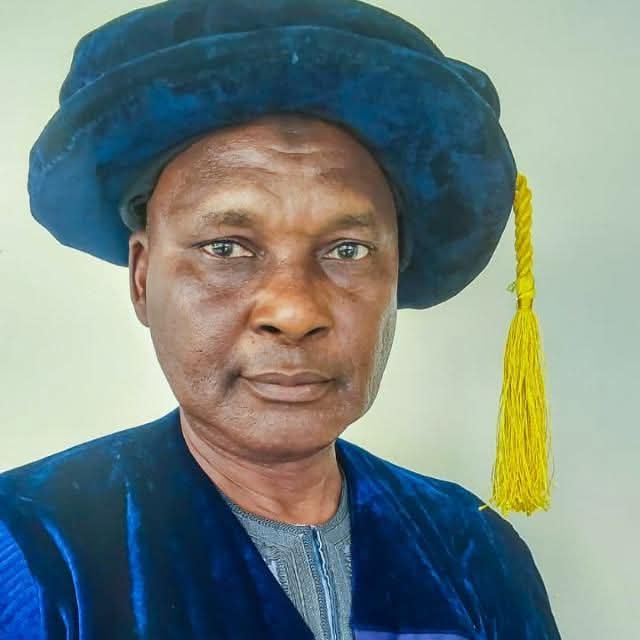
From Joseph Amedu, Lokoja
A Professor of History at the Federal University, Lokoja, Suberu Ochi Abdulrahaman, has raised the alarm over the prevailing political illegality bedeviling Nigeria insisting that leaders in the system should endeavor to obey the laws of the land and do the right thing that would move the nation forward.
Professor Abdulrahaman made the observation while delivering the 45th Inaugural Lecture Series of the University at its Felele Campus, in Lokoja, on Wednesday.
Professor Abdulrahaman in his Lecture titled, Persisting Illegalities in Nigeria’s Political Space: Who is to Blame? A Historical Discourse on Power, Institution and Democratic Governance, noted that political illegality which ranges from electoral fraud, arbitrary use of executive power for manipulation and intimidation to sponsorship of thuggery and violence in the system, amongst others, can only be overcome if leaders in governance work in accordance with the nation’s constitution.
According to the Inaugural lecturer “The resistance of political illegalities is neither accidental nor the responsibility of a single institution or generation.
“It is the cumulative product of colonial administrative legacies, prolonged military
authoritarianism, weak institutional development, political opportunism, inadequate civic engagement, and failures of ethical
Leadership.
“History teaches us that no nation develops sustainably when public institutions are weakened by impunity, when constitutional rules are subordinated to personal interests, or when political power is exercised without accountability.
“Equally, history reminds us that societies are capable of renewal when they choose to strengthen institutions rather than personalities, uphold the rule of law rather than arbitrary power, and promote justice above expediency.
“Accordingly, the challenge before Nigeria is not simply to conduct periodic elections or enact additional legislation.
The greater challenge is to cultivate a democratic culture in which constitutionalism becomes habitual, public office is regarded as a sacred trust, institutions command public confidence, and citizens
actively defend democratic values.
“Political leaders must recognise that authority derives its legitimacy not merely from electoral victory but from faithful obedience to the Constitution and unwavering commitment to the public good.
“Institutions must be empowered to function independently, impartially, and professionally.
” Citizens must reject every form of political illegality, whether manifested through vote buying, political
violence, corruption, or indifference to injustice”
The Vice Chancellor of the University, Professor Gbenga Solomon Ibileye in his welcome address, disclosed that his administration will continue to give Inaugural Lecture Series topmost priority as it offers opportunity for where the public is highly equipped with relevant knowledge on contemporary issues affecting the society.
He described Professor Suberu Abdulrahaman as an accomplished historian who has made his mark in his academic field.
Academic Staff Union of Universities (ASUU) has authorised 20 federal and state universities across Nigeria to commence varying degrees of industrial action.
The decision was reached during a critical National Executive Council (NEC) meeting held in Abuja between August 8 and 9, 2026.
ASUU National President, Prof.
Christopher Piwuna, disclosed this at the weekend, expressing the union’s deep frustration over the “haphazard implementation” of the landmark December 2025 FGN-ASUU Agreement.The union warned that a full-scale resurgence of campus unrest is now inevitable.
Regarding the 20 approved universities facing looming strikes, the NEC resolved to grant permission for industrial action once individual institutions successfully satisfy internal union requirements.
The affected institutions include: Adekunle Ajasin University, Akungba (AAUA); Nasarawa State University, Keffi (NSUK); Ibrahim Badamasi Babangida University, Lapai (IBBUL); University of Medical Sciences, Ondo (UNIMEDO); Gombe State University (GSU), Gombe; Plateau State University (PLASU), Bokkos; Emmanuel Alayande University of Education (EAUED), Oyo; Ambrose Alli University, Ekpoma (AAUE); Olusegun Agagu University of Science and Technology (OAUSTECH), Okitipupa; Abia State University (ABSU), Uturu; University of Education and Entrepreneurship (UEE), Akamkpa; Kaduna State University (KASU), Kaduna.
Others are Aliko Dangote University of Science and Technology (ADUSTECH), Wudil; Northwest University, Kano (NWUK); Enugu State University of Science and Technology (ESUT), Enugu; Imo State University (IMSU), Owerri; Niger Delta University (NDU), Wilberforce Island; University of Africa, Toru-Orua (UAT); Bayelsa Medical University (BMU), Yenagoa; and Taraba State University (TSU), Jalingo.
ASUU also disclosed that the implementation status of universities within the Lagos Zone is currently under review, with separate declarations expected in due course.
Speaking on the core grievances driving the crisis, ASUU noted that while Vice-Chancellors at the federal level face severe challenges due to underfunded monthly salary bills, the situation at the state level is considerably worse.
According to the union, only about 10% or fewer of state governors have openly endorsed the new salary package established in December 2025.
The rest were accused of “playing the ostrich” and passing financial burdens onto Governing Councils that lack the funding to back them.
The union also explicitly blamed officials within the Federal Ministry of Finance and the Office of the Accountant-General of the Federation. These bodies are accused of deliberately stalling promotion arrears, dragging their feet on monthly salary releases, and illegally withholding the remittance of academics’ deductions to their respective Pension Fund Administrations (PFAs).
Furthermore, ASUU raised concerns over the unpaid, withheld three-and-a-half months’ salaries dating back to the 2022 nationwide strike. While ASUU initially praised President Bola Tinubu for releasing four months of those salaries, the refusal to remit the balance has left a “strong bitter taste.”
The union also condemned the prolonged delays in paying the 25/35% wage award and outstanding promotion arrears to its members.
Meanwhile, ASUU issued a stern warning regarding the recent harassment of its branch leaders and members by Vice-Chancellors at ESUT, IMSU, and ABSU.
The NEC declared that it will strictly refuse to call off any industrial action in these specific institutions until all forms of victimization stop completely.
Beyond the immediate academic crisis, the NEC reviewed the worsening socio-political and economic landscape of Nigeria.
The union strongly condemned the ongoing atmosphere of pre-election violence, political killings, and economic instability as the country approaches upcoming election cycles, noting that these existential threats directly undermine the living and working conditions of everyday Nigerians and university lecturers alike.
Despite praising the mediation efforts of Senator Lanre Tejuoso, the Chairman of the Implementation Monitoring Committee (IMC), ASUU maintains that it will stop at nothing to enforce the full scope of the agreement.
The union has announced that it will convene an emergency NEC meeting in the next few weeks to appraise the situation. If the government fails to act swiftly to clear outstanding financial entitlements and halt the harassment of lecturers, a wider, coordinated national academic shutdown may follow.




JAMB Breaks New Ground, Allows Home Upload of O’Level Results
ShareCandidates seeking admission into Nigerian tertiary institutions can now upload and verify their O’Level results from the comfort of their...
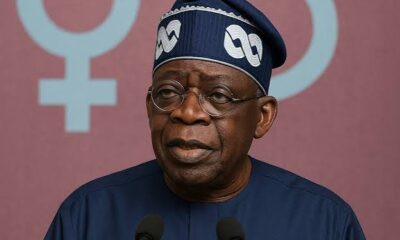

Tinubu Mourns Ogogo, Extols His Creative Legacy
SharePresident Bola Tinubu has condoled with the family, friends and colleagues of veteran Nollywood actor, filmmaker and screenwriter Taiwo Hassan,...


Nigeria Upgrading its Digital, Intelligence-led Border Management System — NIS
ShareNigeria is strengthening its border management architecture through digital technology, biometric identity systems, intelligence sharing and stronger collaboration with border...
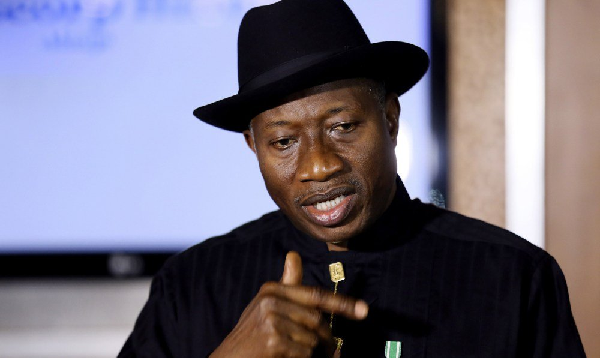
ShareGoodluck Jonathan Advises Leaders to Invest in Youths, Industry Former President of Nigeria, Dr. Goodluck Jonathan, has called on leaders...


First Quarter Pension Contributors Rise by 143,248 – PenCom
ShareThe National Pension Commission (PenCom) said cumulative Retirement Savings Account (RSA) registrations under the Contributory Pension Scheme (CPS) rose by...


Police Honour 10 Fallen Officers, Disu Vows to Crush Banditry
ShareBy Elijah Oguche, Abuja The Nigeria Police Force (NPF) on Monday honoured 10 officers of the Special Intervention Squad (SIS)...


Petrol Imports Rise as Local Supply Plunges 21 Per Cent
ShareBy Tony Obiechina, Obiechina Nigeria’s reliance on imported petrol increased in July as domestic refinery supplies fell sharply, reversing some...


NCS, WCO, UK Intensify Anti-Corruption Drive, Strengthen Customs Integrity
Share By Tambaya Julius, Abuja The Nigeria Customs Service (NCS), in collaboration with the World Customs Organisation (WCO) and the...
Bayelsa Receives Twon-Brass Draft Constitution
ShareFrom Mike Tayese, Yenagoa The Bayelsa State Government has received the final draft copy of the constitution of Twon-Brass Kingdom...
Nigeria’s Reforms Must Now Deliver Jobs, Higher Incomes – CPPE
ShareCentre for the Promotion of Private Enterprise (CPPE) has urged the Federal Government to shift its economic reform focus from...