
COVER
Broadcast Media: Buhari Approves Stiff Penalties for Code Breach

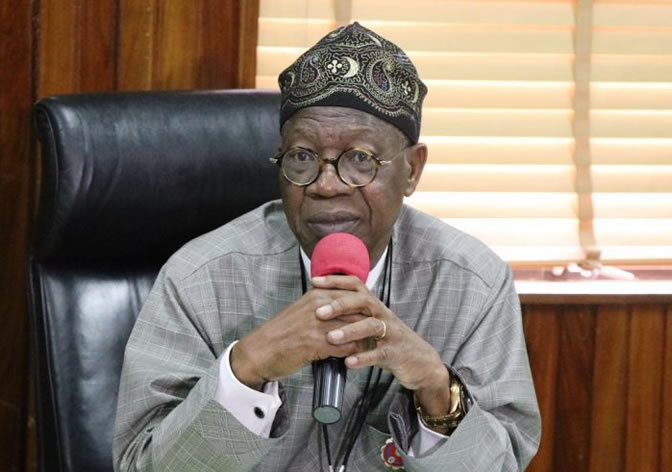
President Muhammadu Buhari has approved the review of the National Broadcasting Code and extant broadcasting laws to reflect stiffer penalties for violators.
The President has also endorsed the implementation of reforms to end all forms of monopoly detrimental to the actualisation of the immense potential of the broadcast industry.
The Minister of Information and Culture, Alhaji Lai Mohammed disclosed this on Thursday, in Abuja while inaugurating the National Broadcasting Commission (NBC) Reform Implementation Committee.
Specifically, the Minister said the President approved the upward review of fines from N500,000 to N5 million for breaches
relating to hate speeches, inciting comments and indecency.
He said the President also approved that willful repeat of infractions on three occasions after levying fine on a station should attract suspension of license.
The minister said Buhari also approved the upgrade of breach of political comments relating to hate speeches and divisive comments to ”Class A” offence in the Broadcasting Code.
Other approvals by the President according to the Minister include: “Amendments of the NBC Act to enable NBC license WebTv and radio stations, including foreign broadcasters beaming signals into Nigeria
“Recruitment of more monitoring staff for the NBC. At the moment, there are only about 200 Staff monitoring about 1,000 radio and television stations.
“Deployment of adequate monitoring equipment and technologies for the NBC and enhancement of welfare packages of NBC staff to avoid their compromise in the line of duty’.
The President, according to the minister, said that the reviewed code must also ensure the Independence of the NBC from political interference in the exercise of its regulatory powers, particularly with respect to the
issuance and withdrawal of broadcasting license.
Mohammed said the decisions were sequel to the deliberations at the Federal Executive
Council (FEC) of March 27, on the unprofessional and unethical conduct of some broadcast stations, especially before and during the last general elections.
” The President directed me to institute an inquiry into the conduct of the stations and
report back to the Council
“Consequently, I inaugurated a five-member committee on Wednesday, April 10th 2019 with the following terms of reference:
“To find out to what extent the NBC was able to effectively carry out its regulatory role before and during the 2019 general elections.
” Recommend measures that could strengthen the NBC’s regulatory role and make it more effective.
“The committee submitted its report on April 24th 2019, with 26 recommendations, and I subsequently forwarded the report to Mr.
President, who has since approved them,” he said.
The minister, therefore, charged the reform implementation committee to carry out a thorough job that will re-position the NBC as a effective and efficient regulator.
‘We are now at the implementation stage, hence I have appointed seven ‘wise’ men and woman to design the framework for the
implementation,” he said.
The minister said that the terms of reference of the committee included the implementation of the recommendations of the committee on the NBC reforms as approved by the President.
He said the committee should immediately commence work on all statutory, legal and regulatory framework for further legislative action on the review of the NBC Act by the National Assembly.
The minister tasked the committee to immediately establish and publicise a new sanctioning, fines and penalty regime that is in line with international best practice.
He said the new penalty regime would also help to promote professionalism and serve as a deterrent to erring practitioners against misconduct, especially hate speech, violence and spread of fake news.
Mohammed tasked the committee to establish and publish a new regulation for the licensing of Web or Internet and International broadcasters in Nigeria.
He said the committee should immediately assess and propose equipment, materials and training needed to make the NBC a modern and well-positioned regulator
‘ The committee should liaise with relevant agencies to ensure the provision of the
manpower needs of the Commission to enable it function optimally
“It should work out the modalities for a competitive and reasonable salaries, wages and other welfare needs of the staff of the Commission
“Establish necessary protocols for the establishment or appointment of professionals or technocrats (non-partisan personality) to run the agency, and appointment into the board of the NBC”
The Minister also directed the committee to end all forms of monopoly detrimental to the actualization of the immense potential of the broadcast industry.
The minister gave the committee chaired by Prof. Armstrong Idachaba, Director of Monitoring of the NBC, six weeks to submit its report.
Other members of the committee are, Sir Godfrey Ohuabunwa, Acting Chairman of the Broadcasting Organisations of Nigeria (BON),
Mr Agbo Ndubuisi, Board Member, NBC and Mr J.K. Ehicheoya, Director, Legal Services in the Ministry.
Others are, Hajia Binta Bello, Secretary, Association of Local Governments of Nigeria Mr. Ibrahim Jimoh, Director of Administration, Federal Radio Corporation of Nigeria and Mr. Joe Mutah, Chief Press Secretary to the minister who will serve as the Secretary. (NAN)







By Tony Obiechina, Abuja
The Federal Government has reaffirmed its commitment to strengthening Nigeria’s bilateral relations with Germany, with renewed focus on economic cooperation, investment promotion, energy partnerships, and the effective implementation of existing agreements.
Minister of Budget and Economic Planning, Senator Abubakar Atiku Bagudu, made this statement during a visit to the Ministry in Abuja on Monday by the Ambassador of the Federal Republic of Germany to Nigeria, Stefan Rössel.
The minister welcomed the ambassador and his delegation, expressing Nigeria’s appreciation for Germany’s longstanding partnership and support for the country’s economic reform programme, particularly in the early stages of implementation.
He recalled that when German Chancellor Olaf Scholz visited Nigeria, the Federal Government was pursuing significant economic reforms that required support from international partners, including Germany, the World Bank, the International Monetary Fund and the European Union.
The minister said Germany’s support has contributed to Nigeria’s progress in its reform efforts, adding that the country remains grateful for the cooperation and assistance it has received from its development partners.
He also acknowledged Germany’s role in facilitating high-level engagements between the two countries, particularly in trade, investment and energy cooperation, noting that discussions during the Nigerian President’s visit to Germany advanced talks on key energy agreements.
Senator Bagudu further commended Germany’s commitment to multilateral cooperation and international engagement, emphasising the importance of sustained partnerships to address evolving global economic and political challenges.
He noted that Nigeria and Germany had built a strong foundation for bilateral cooperation over the years, with significant opportunities to expand their partnership in areas that support economic growth and development.
The minister disclosed that discussions had covered cooperation involving €25 million and €300 million in export credit guarantees, identifying these as important areas for continued engagement as Nigeria seeks to expand investment opportunities and strengthen its capacity to utilise available resources effectively.
According to him, Nigeria’s reform efforts have created an opportunity to place greater emphasis on attracting investment, strengthening productive capacity, and translating international partnerships into tangible economic outcomes.
He assured the German ambassador that the ministry was prepared to work closely with the German government and its relevant institutions to deepen bilateral relations and broaden areas of mutual interest.
Earlier, Ambassador Rössel expressed appreciation for the warm reception he received, describing the relationship between Nigeria and Germany as strong and longstanding.
The ambassador, who arrived in Nigeria a few weeks ago, reaffirmed Germany’s commitment to building on the partnership’s achievements and to exploring opportunities for further cooperation.
He acknowledged that both countries were operating in an increasingly complex global environment characterised by evolving strategic, political and economic challenges.
Despite these circumstances, Ambassador Rössel expressed confidence that the longstanding relationship between Nigeria and Germany would provide a solid foundation for addressing emerging issues and sustaining mutually beneficial cooperation in the years ahead.
He also welcomed the ministry’s readiness to continue working with Germany, noting the importance of maintaining established partnerships while adapting to evolving circumstances.
In her remarks, the Minister of State for Budget and Economic Planning, Dr Doris Uzoka-Anite, congratulated Ambassador Rössel on his appointment, welcomed him to Nigeria, and expressed the ministry’s readiness to collaborate with him and with relevant German agencies.
She emphasised the importance of translating bilateral agreements and shared commitments into practical outcomes, noting that effective implementation remained critical to achieving the partnership’s objectives.
Dr Uzoka-Anite assured the ambassador that the ministry would continue to facilitate collaboration and support efforts to ensure joint initiatives progressed efficiently and delivered meaningful results.
The Permanent Secretary of the Federal Ministry of Budget and Economic Planning, Dr Deborah Odoh, also welcomed the German delegation, describing Germany as a reliable partner whose technical expertise, knowledge exchange and experience had contributed to Nigeria’s development.
She said the ministry expects the ambassador’s tenure to create further opportunities to strengthen cooperation and to advance the longstanding relationship between the two countries.
The courtesy visit reaffirmed Nigeria and Germany’s shared commitment to sustaining bilateral engagement, deepening economic cooperation, and exploring opportunities for expanded investment and development collaboration.

By Laide Akinboade, Abuja
As part of efforts to reposition the newspaper for optimum corporate performance, the management of Asset Newspapers Limited, Publishers of DAILY ASSET, has announced the appointment of David Torough as the Editor of the Abuja-based national daily.
A statement by the management said the appointments were part of the company’s new strategy to further penetrate the various states in the country and raise its readership and patronage.
“DAILY ASSET is widely acceptable across the country and to maintain our leadership position, we need to increase management presence, hence the need to create new Bureau offices in some locations outside Abuja and Lagos,” the statement quoted the Publisher/ Editor-in-Chief, Dr Cletus Akwaya to have said.
In a statement yesterday, Publisher and Editor-in-Chief of the fast-growing daily, Dr. Cletus Akwaya said the appointment was part of the new strategy to properly situate the paper for better productivity.
“DAILY ASSET has a commitment with the Nigerian people. We are determined to weather the storm and give Nigerian readers a Newspaper that satisfies their yearnings and reading pleasure and we can only do that with the right set of professionals,” the statement said.
Akwaya, a former Commissioner of Information from Benue State said the difficult times being faced by Nigerians posed a great challenge to the media as the people deserved credible information with which to make choices.
“We have a bond with the people, to offer credible information at all times in the best tradition of the Nigerian Press and on this scale of objectivity, truth and fairness, we pledge to remain steadfast no matter the challenges,” Akwaya was quoted to have said.
He said the newspaper will maiantin its daily print run and circulation to all states of the federation and urged advertisers to take advantage of the deep penetration of the Daily Asset brand to send their messages.
Torough, the new Editor has had a steady rise in the Newspaper in the last five years.
A graduate of Mass communication of the Benue State University, Makurdi, Torough joined the company in 2022 as Benue State Correspondent. He was spotted for his brilliance and redeployed to Abuja the following year and promoted to Deputy News Editor. He was subswuently named Deputy Editor of the paper, a position he held until the recent appointment.
Torough has attended several journalistic workshops and trainings to properly equip himself for the task ahead.
The statement also said the Management named Eze Okechukwu as Deputy Editor.
Before his elevation as Deputy Editor, Eze has been Deputy Politics Editor and DAILY ASSET Newspaper correspondent covering the Senate, having joined the organization in 2021.
Born on March 10, 1975, Eze holds a Masters Degree in Mass Communication from the Enugu State University of Science and Technology.
Eze began his journalism career with Daily Star, Enugu and later worked with Daily Trust Newspaper, Abuja as sports reporter.
Aside from his journalistic excellence, he has a great deal of passion for sports.

From Ngutor Dekera, Kaduna and Aliyu Askira, Kano
Northern governors and traditional rulers yesterday called for the suspension of mining activities across the region for six months, blaming illegal mining for worsening insecurity in many states.
The resolution was contained in a communiqué issued after a joint meeting of the Northern States Governors’ Forum and the Northern Traditional Rulers’ Council held at the Sir Kashim Ibrahim House, Kaduna. The meeting, chaired by the Gombe State Governor and NSGF Chairman, Muhammadu Yahaya, had in attendance the 19 northern governors and chairmen of the 19 states’ traditional councils.The Forum expressed concern over the escalating violence in parts of the North, including the killings and abductions recently recorded in Kebbi, Kwara, Kogi, Niger, Sokoto, Jigawa and Kano states, as well as renewed Boko Haram attacks in Borno and Yobe.“The Forum extends its deepest condolences and solidarity to the governments and good people of the affected states,” the communiqué said, noting that the attacks on schoolchildren and other citizens had become “unacceptable tragedies” that required urgent collective action.It commended President Bola Tinubu for what it described as the Federal Government’s “firm response” to recent abductions and insurgency threats, especially the rescue of some abducted pupils.The governors also saluted security agencies for their sacrifices on the frontlines.“We resolved to renew our support for every step taken by the President and Commander-in-Chief to take the fight to insurgents’ enclaves in order to end the criminality,” the Forum stated.A major highlight of the meeting was the North’s renewed push for the establishment of state police, with governors and traditional rulers insisting that decentralised policing had become inevitable.“The Forum reaffirms its wholehearted support and commitment to the establishment of state police,” the communiqué added, urging federal and state lawmakers from the region to “expedite action for its actualisation.”On illegal mining, the governors said criminal mining networks were fuelling violence and providing resources for armed groups.As a corrective measure, they asked Tinubu to direct the Minister of Solid Minerals to impose a six-month suspension of mining activities in order to allow for a full audit and revalidation of licences.“The Forum observed that illegal mining has become a major contributory factor to the security crises in Northern Nigeria. “We strongly recommend a suspension of mining exploration for six months to allow proper audit and to arrest the menace of artisanal illegal mining,” it said.To strengthen the fight against insecurity, the governors also announced the creation of a regional Security Trust Fund.Under the proposed arrangement, each state and its local governments will contribute ₦1bn monthly, to be deducted at source under an agreed framework.They said the fund would help provide sustainable financing for joint operations, intelligence-driven interventions and coordinated security responses across the region.At the end of the meeting, the Forum reaffirmed its commitment to unity and collective responsibility.“Only through unity, peer review and cooperation can we overcome the pressing challenges before us,” it declared.The Forum agreed to reconvene on a date to be announced.Meanwhile, Nigeria’s worsening security crisis took a grim turn on Monday as bandits launched fresh attacks in Kano State, abducting 25 villagers, even as the Federal Government raced to secure the release of more than 300 Catholic school children kidnapped in Niger State.In the early hours of Monday, armed bandits invaded Unguwar Tsamiya—popularly called Dabawa—in Shanono Local Government Area of Kano State, whisking away nine men and two women after shooting into the air and assaulting residents. The attackers also rustled two cows.A resident lamented the community’s helplessness: “We cannot do otherwise; most of us cannot leave because we have nowhere to go. This is our place, our land and everything is here.”The assault came less than 24 hours after a similar attack on Yan Kamaye in Tsanyawa LGA, a community along the volatile Katsina border.In Niger State, National Security Adviser Nuhu Ribadu has assured distraught families of St. Mary’s Co-Education School, Kontagora that the more than 300 students and staff abducted on November 21 will return home “soon.” Ribadu, who led a high-level federal delegation to the school on Monday, said the abductees are safe, though he offered no specifics on their location or the status of rescue operations.According to Daniel Atori, spokesman for the Catholic bishop overseeing the school, the NSA reassured officials: “The children are where they are and will come back safely.”The St. Mary’s attack is part of a worrying resurgence of mass kidnappings reminiscent of the 2014 Chibok schoolgirls’ abduction. Security analysts warn that banditry has evolved into a “structured, profit-seeking industry,” with hundreds of Nigerians abducted in November alone.The Kontagora school abduction occurred the same week 25 girls were kidnapped in Kebbi State—victims who authorities say have since been rescued through “non-kinetic” means. About 50 of the St. Mary’s hostages have also managed to escape.Ribadu’s delegation, which included the Minister of Humanitarian Affairs and the Director-General of the Department of State Services (DSS), reaffirmed the government’s commitment to securing the freedom of all abducted citizens.As communities from Kano to Niger continue to bear the brunt of these violent incursions, the escalating spate of kidnappings underscores the urgent national demand for a more decisive and coordinated security response.


Tinubu’s Re-election: Don’t Allow Repeat of 2023, Tompolo Tells Lagos
ShareLeader of the PBAT Door-to-Door Movement, Government Ekpemupolo, has advised the people of Lagos State not to allow a repeat...
Bayelsa Starlets Academy Set for FC Prague Test
ShareFrom Mike Tayese, Yenagoa Bayelsa Starlets Academy will like to strengthen their campaign in the ongoing N-Youth League when they...

FG Strengthens Mortgage, Land Systems for Affordable Housing
ShareBy Raphael Atuu, Abuja The Federal Ministry of Housing and Urban Development has advocated for stronger land, mortgage and institutional...


Osun Signs MoU with Companies to Boost Industrialization
ShareFrom Ayinde Akintade, Osogbo The Osun State Government under the leadership of Governor Ademola Adeleke has signed two separate Memoranda...


Abuja Motorists Decry Continuous Increase in Petrol Price
ShareSome motorists in the Federal Capital Territory (FCT) have raised concerns over the continuous increase in the price of Premium...


CBN Maintains Deadline for Local Data Storage
ShareThe Central Bank of Nigeria has ruled out an extension of the 1 January 2027, deadline for financial institutions to...
FG, Norway Partner on Satellite Surveillance to Combat Illegal Fishing
ShareThe Federal Government has assured Norway of Nigeria’s participation in the Blue Justice Initiative to strengthen satellite surveillance of its...


Niger Delta Deserves More than 13 Per Cent Derivation, Says Obasanjo
ShareFrom Mike Tayese, Yenagoa Former President of Nigeria, Chief Olusegun Obasanjo, on Monday, advocated an increase in the 13 per...

PDP Lawyers Give INEC Three-day Ultimatum to Publish Pantami’s Name
ShareLawyers to the Peoples Democratic Party and its Gombe State governorship candidate, Professor Isa Ali Ibrahim, have given the Independent...
FG Urges Defence Correspondents to Project Nigeria Positively
SharePermanent Secretary, General Services, Office of the Secretary to the Government of the Federation (OSGF), Dr. Ibrahim Kana, has urged...