
Foreign News
COVID-19 Delta Variant in 98 Countries, Continues to Mutate, WHO warns

World Health Organisation (WHO) Director-General, Tedros Ghebreyesus, on Friday, urged leaders to push back against the daunting new COVID-19 surges, with increased vaccination efforts and public health measures.
Ghebreyesus warned that with Delta variant was quickly becoming the dominant strain in many countries, saying: “we are in a very dangerous period of the pandemic’’
“In those countries with low COVID-19 vaccination coverage, terrible scenes of hospitals overflowing are again becoming the norm.
But no country is out of the woods yet,” said Ghebreyesus, at his bi-weekly press conference.The director-general explained that the Delta variant was ‘dangerous’ and continued to evolve and mutate, and thus requiring constant evaluation and careful adjustment of the public health response.
“Delta has been detected in at least 98 countries and is spreading quickly in countries with low and high vaccination coverage,” he warned.
In addition, the WHO chief explained that there were essentially two ways for countries to push back against the new COVID-19 surges.
“Public health and social measures like strong surveillance, strategic testing, early case detection, isolation and clinical care remain critical.
“As well as masking, physical distance, avoiding crowded places and keeping indoor areas well ventilated,” he said.
The second way, said the director-general, was through the global sharing of protective gear, oxygen, tests, treatments and vaccines.
“I have urged leaders across the world to work together to ensure that by this time next year, 70 per cent of all people in every country are vaccinated.
“This is the best way to slow the pandemic, save lives, drive a truly global economic recovery and prevent further dangerous variants from getting the upper hand.
“WHO is calling on leaders to vaccinate at least 10 per cent of people as soon as possible, in all countries, to ensure that health workers and those most at risk are protected.’’
According to him, ensuring this would effectively end the acute stage of the pandemic and save a significant number of lives.
“It’s a challenge but we know it’s possible because already three billion vaccines have been distributed.
“It is within the collective power of a few countries to step up and ensure that vaccines are shared, manufacturing is increased and that the funds are in places to purchase the tools needed.”
Answering journalists’ questions, WHO’s technical leader for COVID-19 response, Dr. Maria Van Kerkhove, reminded that the virus had been evolving since it first emerged.
“It is what viruses do. The variants of concern that we are tracking are currently four: Alpha, Beta, Gama and Delta.
“They will continue to evolve: there will be more mutations, there will be more variants detected, and some of those will be variants of concern,” she said.
The UN correspondent of the News Agency of Nigeria (NAN) quoted Kerkhove as saying that there were now ‘sub lineages’ of the Delta variant that experts were currently tracking and countries would do well to expand their genomic sequencing efforts. (NAN)




Oil prices rose past $100 (£74) a barrel on Wednesday after further strikes in the conflict between the US and Iran and continuing Houthi attacks in Saudi Arabia.
In back and forth attacks, the US hit five Iranian tankers in reprisal strikes after Tehran targeted one of its warships.
Brent crude – which is the global benchmark for prices – has not been as expensive since the end of July, when a ceasefire between Iran and the US collapsed.
Yemen’s Iran-backed Houthi movement also attacked oil facilities in Saudi Arabia on Tuesday and have been targeting tankers in the Red Sea.
Brent crude did dip back down to $99.90 a barrel, but any fresh flare-ups in the Middle East could see it pushed higher again.
Tit-for-tat strikes between Iran and the US have escalated in the past week, more than six months after conflict broke out when the US and Israel launched attacks on Iran on 28 February.
Oil prices have fluctuated wildly since the war began, and pressure on the industry has been exacerbated by wider regional instability.
Before the conflict Brent crude had been priced at about $70 (£52) a barrel.
But the war has seen the effective closure of the Strait of Hormuz, which carries 20% of the world’s oil and liquefied natural gas (LNG).
The rising costs have sparked huge price leaps in petrol around the world for motorists at the pumps.
The US strikes on the five Iranian tankers saw four in the Gulf of Oman linked to Iran’s Revolutionary Guards Corps (IRGC) hit as well as another near Kharg Island.
Tehran responded by launching missiles at a US base in Jordan – most of which were shot down – and said it attacked two US vessels and eight oil tankers in the Strait of Hormuz.
The Houthis and Saudi Arabia have also been exchanging strikes since July after their own informal ceasefire unravelled.
On Monday the Houthis accused Saudi Arabia of bombing a prison in al-Hazm and killing 11 people.
Then on Tuesday the Saudi authorities said Houthis had struck civilian and economic sites in the cities of Abha, Khamis Mushait, Jazan and Najran.
The latest round of escalation comes after Iran targeted a US warship with ballistic missiles, which Centcom said were “successfully evaded”. It added that no American troops were harmed during the attacks.
In response, the US said that the five Iranian oil tankers it targeted were “part of a multi-billion-dollar shadow network that funds the IRGC and its regional proxies”.
One of the ships it had struck, the M/T Riesco, sunk in the Gulf of Oman, Centcom later said, posting a video on X of the damaged vessel.
Kharg Island – where one Iranian tanker was attacked in the latest round of US strikes – hosts Iran’s main terminal for exporting oil.
Some 90% of the country’s crude oil passes through the island in the Gulf, transported through pipes from the mainland.
Also on Tuesday, Yemen’s Iran-backed Houthi movement attacked energy facilities and civilian infrastructure in Saudi Arabia, injuring 73 people, according to Saudi authorities.
The drone and missile attack caused fires at oil facilities and installations that led to a temporary halt in operations, Saudi Arabia’s military and energy ministry said.
When asked by reporters about the latest tit-for-tat strikes between the US and Iran, US Secretary of State Marco Rubio on Tuesday said the situation was “pretty straightforward”.
“Iran continues to try to hit US naval ships. And, for every time they do that or try to do that, they’re going to lose tankers. And I think you’ll see that again today,” Rubio told reporters during a trip in Colombia.
The US strikes on Tuesday came hours after Iran’s Navy claimed it had seized an uncrewed US submarine in the Strait of Hormuz.
US Navy Capt Tim Hawkins, a spokesperson for Centcom, said that the “underwater drone operated by US forces malfunctioned more than a day ago” and was used to survey regional waters “in support of ongoing operations”.
The defective drone was “an older model that neither collected sensitive data nor carried any classified sonar or radar equipment”, he said, adding that US operations in regional waters were ongoing.
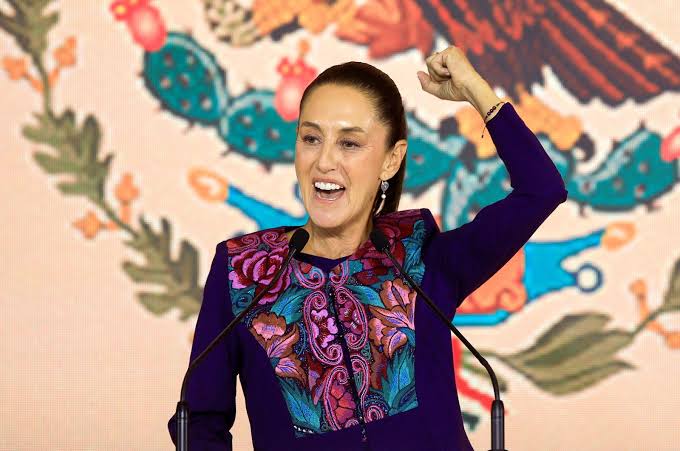
The United States must do its part in the fight against drug trafficking, Mexican President Claudia Sheinbaum said, following recent revelations of corruption at the U.S. Drug Enforcement Administration.
“We insist that they have a very important part to play over there and they shouldn’t just keep pointing the finger at Mexico,” Sheinbaum said at a press conference in the National Palace.
She said Mexico has succeeded in slashing the flow of fentanyl into the United States by more than 70 per cent, a figure acknowledged by U.
S. authorities.She added that the United States is also where the distribution of drugs and money laundering take place on a massive scale due to the high rate of drug consumption.
Sheinbaum also noted that Sara Carter, director of the U.S. Office of National Drug Control Policy, has acknowledged that drug abuse in the United States is a public health issue.
In May, Carter’s office released a document in which the U.S. federal government acknowledges the need for a national public health policy to address drug addiction.
Earlier this year, Carter visited Mexico and expressed interest in the Mexican government’s initiatives aiming to tackle the root causes of violence and prevent drug use.
Study says 12 per cent of Australian adolescents had used e-cigarettes in their lifetime and almost six per cent had used tobacco.
The study, published by the Australian and New Zealand Journal of Public Health also said that 3.
5 per cent had used nicotine pouches on Wednesday.According to the survey by the journal 1,848 students aged 14-18 across the Australian states of New South Wales, Queensland and Western Australia have put their health at risk using a range of different nicotine products.
More than two per cent of respondents had used all three products.
Among adolescents who had used nicotine pouches, a newly emerging nicotine product of concern, 82 per cent had also vaped and 71 per cent had smoked cigarettes, the survey showed.
Males reported higher use of nicotine pouches and cigarettes than females, it said, adding that nicotine pouch use was reported by 4.8 per cent of males, compared with 1.5 pe rcent of females.
Meanwhile, tobacco cigarette use was reported by 6.9 per cent of males and 4.1 per cent of females.
The study shows the need for targeted strategies to prevent teenage nicotine addiction and to support young people to quit, said lead author Lauren Gardner, a senior research fellow at the University of Sydney.
“Many teens who have used one nicotine product have also tried others,” Gardner said.
The researcher added that the findings showed the need for prevention strategies addressing “shared risk factors for nicotine use more broadly, rather than focusing on just vaping or smoking.”
Public health experts said the findings highlight the need for governments to protect young people from nicotine products, crack down on illegal sales and fund evidence-based prevention campaigns.




Talata Mafara Attack: ISN Demands Intelligence Overhaul, Special Courts to Crush Banditry
ShareBy David Torough, Abuja The Institute of Security, Nigeria (ISN) has called for a fundamental overhaul of Nigeria’s approach to...


Lagos Court Nullifies Onise of Ise Installation, Orders Withdrawal of Staff of Office
ShareBy David Torough, Abuja The Lagos State High Court sitting in Lagos has set aside and nullified the purported installation...
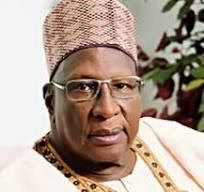

Former PDP National Chairman, Bamanga Tukur is dead
ShareFrontline business magnet and former National Chairman of Peoples Democratic Party(PDP), Alhaji Bamanga Tukur is dead. He was aged 90....

NAICOM, NCAA Partner to Strengthen Air Travellers’ Protection
ShareThe National Insurance Commission (NAICOM) and the Nigeria Civil Aviation Authority (NCAA) have signed a Memorandum of Understanding (MoU) to...

Customs Seizes N43.5bn Narcotics, Drones, Expired Goods at Apapa Port
ShareThe Nigeria Customs Service (NCS) has intercepted narcotics, controlled pharmaceuticals, drones and expired goods valued at N43.5 billion at the...


IPMAN Tasks Marketers on Local Refineries for Product Sourcing
ShareThe National President of the Independent Petroleum Marketers Association of Nigeria (IPMAN), Alhaji Abubakar Shettima, has urged independent petroleum marketers...


CBN Bags NES Distinguished Organisation Award for Economic Reforms
ShareBy Tony Obiechina, Abuja The Central Bank of Nigeria (CBN) has received the Nigerian Economic Society’s (NES) Distinguished Organisation Award...


2027: Information Minister Urges Niger APC Leaders to Back Tinubu’s Reforms
ShareBy David Torough, Abuja The Minister of Information and National Orientation, Mohammed Idris, has urged APC leaders in Niger State...


Police Arrest Two Suspected Car Snatchers in Delta
ShareThe Delta State Police Command has arrested two suspected car snatchers and recovered a Toyota Camry in the state. The...


Otti Highlights Seven Investment Priority Sectors in Abia
ShareAbia State Governor, Alex Otti has highlighted seven priority sectors and investment opportunities to drive industrialisation and economic development in...