
OPINION
Early Power Games in Nasarawa Politics and Zoning

By Adebisi Mohammed
AHEAD of the 2027 governor election in Nasarawa State, the tussle over who will occupy the Government House is already underway, leaving many surprised.The astonishment stems from the fact that the incumbent governor, Abdullahi Sule, who assumed office on May 29, 2019, is two years into his second term, which will certainly come to an end in 2027.
In March 2023, Sule was re-elected, having polled a total of 347, 209 votes to defeat his closest opponent David Ombugadu of the Peoples Democratic Party, PDP, who got 283,016 votes. With two years left to accomplish his electoral promises, observers worry that not only will the noise surrounding who gets the All Progressives Congress, APC, ticket distract the governor, but the issue of the method that would be used in deciding the area from which the APC flagbearer and, possibly, the next governor would emerge.Will the process be free, fair and devoid of bias? Will leadership qualities such as financial prudence, integrity, vision and the ability to make sound decisions be the deciding factors? Or will zoning and power rotation take precedence?These questions were answered just a few days ago during a stakeholders’ meeting of the APC in Nasarawa West senatorial zone held in Keffi.Former governor of Nasarawa, Abdullahi Adamu, who provided what he thought was the answer, left stakeholders in shocked: He stated that zoning would be a determining factor in choosing the APC’s standardbearer.The former senator said: “Keffi zone governed for eight years, Lafia for twelve. Akwanga is currently serving its second and final term. Therefore, the western (Keffi) zone should produce the next governor in 2027. What we want is the stability of the state. What we want is that the rotation that we are doing has helped the state to maintain political stability. Anybody who is working to destabilize that is working to destabilise Nasarawa State. We must say no.”Just as he spoke in favour of the zoning arrangement, the Speaker, Nasarawa State House of Assembly, Mr Danladi Jatau, also saw reason in his point of view.Like Adamu, Jatau said the essence of the meeting was for the zone to see what belongs to it come 2027.He said: “We want to thank God because this zone has been the zone that always determines the victory of politics since 1999. We are looking at it since 2007. We left it for other zones. We believe it is our turn in 2027. We will get it right if we don’t have betrayers amongst us. We have exercised patience enough and we believe with our unity and our struggle, as we have supported other zones, it is their turn to support us.”But stakeholders are not too happy with their calls for zoning, thereby resulting in jeers and questions about what the future holds for Nasarawa South.The pushback has assumed a frightening dimension, sparking discussions about the need for the APC to jettison zoning or rotation for meritocracy and a genuin level-playing field.Critics argue that although zoning was originally conceived to promote equity and national inclusion in Nigeria, it is now, in some instances, being used as a tool for political entitlement and a means to scheme out individuals from Nasarawa South.Many who have analysed the issue claimed that since return to civil rule in 1999, Nasarawa West (Keffi) zone had governed the state for eight years, Nasarawa South (Lafia) zone had 12 years and Nasarawa North (Akwanga) zone, where Sule, who would be completing eight years in 2027, have all ruled, leaving out Nasarawa South.Given past records in the state, observers also stated that the sudden resurrection of the zoning mantra is not about equity, but a smokescreen to eliminate strong contenders.According to them, the song of “zoning to Keffi is strategic, not sincere, a desperate move to sideline one of Nigeria’s most respected law enforcement professionals, former Inspector General of Police, Mohammed Adamu.”For instance, the State Coordinator of the Youth Wing Movement for MAAL, Hasan Ogiri Doma, described Adamu’s remark as “a calculated shortcut for individuals who lack the structure or political will to earn the trust of the entire state. There is no constitutional provision nor any binding political agreement that mandates zoning in Nasarawa State.”He said leadership should be earned based on merit, capacity and a track record of service, not on sentimental appeals to geography. “The people of Nasarawa have consistently demonstrated maturity in choosing leaders based on consensus and performance, not coercion,” Doma said.Sharing his thoughts, public affairs analyst, Mr Ladan Idi, also expressed sadness over the matter, and asked if the people of Nasarawa South would ever be loved enough to be considered in the state’s political arrangements.He said: “Before now, I was in support of the power to be shifted to Keffi Zone, but I withdrew due to marginalisation of the Nasarawa South.“For example, in terms of federal and state appointments, Keffi zone has the following appointments: DG of humanitarian, Chairman Federal Mortgage Bank, Chairman Nigerian Security and Exchange Commission, a minister, Chairman of Public Complaints Commission.“At the state level. They have a Speaker of the state House of Assembly, state accountant general, secretary to the state government. Government should come out and tell us the sin of the people of Nasarawa South.“During the gubernatorial election, Nasarawa South gave more votes than any other zone. The political bigwigs from Nasarawa South were demoralised afterwards.“If really the government of Nasarawa state needs the support of the people of Nasarawa South to support the government’s choice of candidate from keffi zone, government should make sure to balance the appointments or else we will equally support one of our brothers from Nasarawa South.”While it is too early to predict whether the powers that be would yield to the advice of observers, it is obvious that the hues and cries of those who believe they are being treated unfairly would not end soon. Even as their outcry continues, one thing is certain: the next election would determine whether Nasarawa would become a state where every citizen feels a sense of belonging and ownership, and not one divided by selfish power blocs.The incumbent, Sule, has made it clear that he has the right to determine who succeeds him. Bring back man of wisdom, it is expected that fairness would guide his decision.Mohammed, a policy consultant writes from Abuja
By Tochukwu Jimo Obi
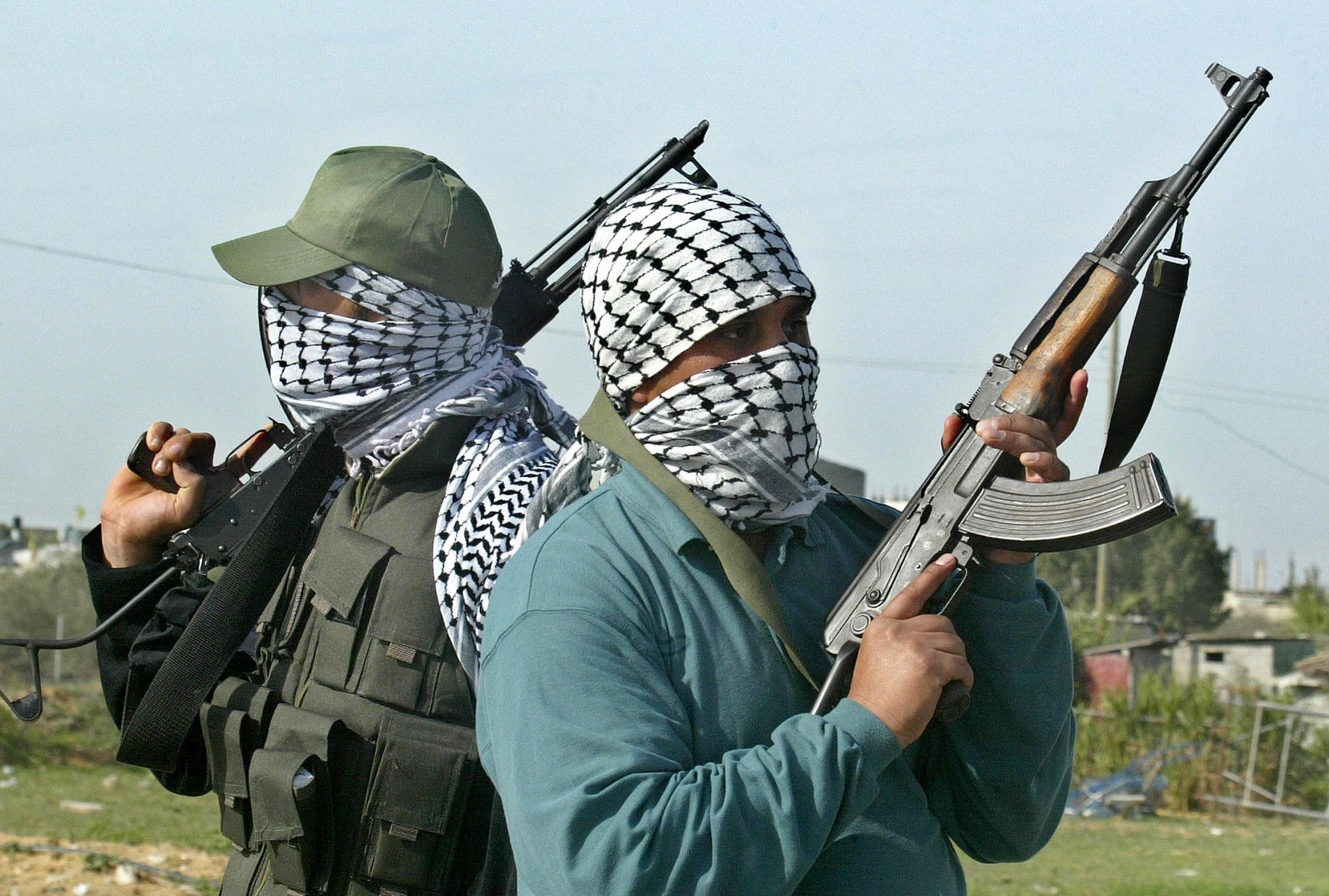
The recent kidnapping of students and teachers in Oriire Local Government Area of Oyo State has once again exposed the frightening state of insecurity confronting Nigeria. Condemnations have continued to trail Friday’s bandits’ attack on three schools in the area, where an unspecified number of students and teachers were abducted, while two persons were reportedly killed.
The tragedy has left families devastated and communities gripped by fear, as another painful chapter is added to the growing list of violent attacks across the country.The attack, which occurred on May 16, saw armed bandits storm the community and abduct staff, students, and pupils from three schools; Community Grammar School, Baptist Nursery and Primary School, and L.
A. Primary School. Eyewitness accounts revealed that the attackers operated for hours without resistance, moving freely through the area while terrified residents watched helplessly. The incident has raised serious concerns about the safety of schools and the preparedness of security agencies to respond swiftly to emergencies.Worst of all, one of the teachers kidnapped during the attack was reportedly beheaded by the terrorists, a horrifying development that has deepened public outrage. Such brutality underscores the dangerous evolution of criminal activities in Nigeria, where terrorists and bandits now operate with alarming boldness and cruelty. The gruesome killing has further strengthened calls for urgent and decisive action from government authorities at all levels.
This unfortunate incident of school attacks is happening yet again despite repeated assurances from security agencies that schools across the country are safe. Nigerians have continued to hear promises of improved intelligence gathering, stronger patrols, and enhanced protection for vulnerable communities, yet attacks persist with devastating consequences. The contradiction between official assurances and the reality on the ground has weakened public confidence in the nation’s security architecture.
Another disturbing trend is that insecurity is rapidly spreading into the South-West region, an area once considered relatively safer compared to other parts of the country. Reports of Lakurawa terrorists and other armed groups establishing footholds in parts of the region have heightened fears that criminal networks are expanding their operations unchecked. The Oyo school kidnapping has therefore become more than a local tragedy; it is a warning sign that no region in Nigeria can afford to feel immune from terrorism and banditry.
Every now and then, government officials continue to assure citizens that security agencies are on top of the situation, yet many innocent people are still being killed and abducted with little or no arrests made afterward. More troubling is the fact that these attacks reportedly lasted for over two hours without any intervention from security operatives. This glaring security failure leaves Nigerians asking difficult but necessary questions about the nation’s emergency response capabilities.
How could terrorists, moving in large numbers on motorbikes, invade communities, abduct many people, and still escape without being tracked, stopped, or pursued effectively? What then are the military aircraft and advanced security equipment acquired with public funds meant for if they cannot be quickly deployed during emergencies? These are questions that citizens deserve answers to, especially as insecurity continues to consume lives and livelihoods across the country.
The Oyo incident has once again strengthened arguments for the establishment of state police across Nigeria. It is now obvious and evidently clear that the country’s centralized security structure requires urgent decentralization, similar to what operates in many secure nations around the world. State policing, if properly regulated and managed, could improve intelligence gathering, rapid response, and community-based security operations, particularly in rural areas that are often neglected under the current system.
It is no longer enough for leaders to merely condemn these attacks without taking concrete and sustained actions to secure the nation. President Bola Tinubu, as Commander-in-Chief of the Armed Forces, must urgently engage all stakeholders in the security sector, including international partners where necessary, to ensure that these terrorists are decisively defeated.
Government must also ensure that budgeted funds meant for security agencies, especially for the purchase of military hardware and equipment, are fully released and properly utilized. Beyond military action, authorities must intensify efforts to prevent the recruitment of vulnerable youths into criminal and terrorist groups. Nigerians are tired of mourning innocent victims. These killings must stop.
Tochukwu Jimo Obi, a concerned Nigerian writes from Obosi Anambra state.
By Fortune Abang
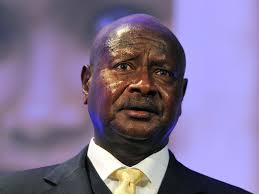
Uganda’s President Yoweri Museveni, 81, sworn in for a seventh term after nearly four decades in power, has once again intensified debate over gerontocracy and political succession in Africa.
Museveni, who first assumed office in 1986, has now extended his rule into a fifth decade, making him one of the world’s longest-serving heads of state.
His latest mandate, expected to run until 2031, follows the January 2026 election in which he secured about 71.65 per cent of the vote, according to official results, defeating opposition leader Robert Kyagulanyi, popularly known as Bobi Wine.
His continued stay in power has been enabled by key constitutional changes over time, including the removal of presidential term limits in 2005 and the abolition of the presidential age ceiling in 2017, reforms that effectively removed legal restrictions on tenure.
Across Africa, analysts say Uganda reflects a broader governance pattern in which long-serving leaders consolidate authority over extended periods.
Comparable examples often cited include Cameroon’s Paul Biya, in power since 1982, and Congo-Brazzaville’s Denis Sassou Nguesso, who first assumed office in 1979, both of whom have also presided over decades of uninterrupted or repeatedly renewed rule.
While Museveni’s supporters argue that his leadership has provided continuity and relative stability in a region frequently affected by conflict, critics say prolonged incumbency has gradually narrowed political competition and weakened institutional independence.
Uganda has maintained a degree of internal stability and played active roles in regional diplomacy and security operations in East and Central Africa.
Supporters point to these outcomes as evidence that long-term leadership can deliver policy continuity and state cohesion.
However, opposition voices and analysts argue that stability has come at a democratic cost, pointing to declining electoral competitiveness, constrained civic space and increasing centralisation of power around the executive.
The debate intensified after the removal of presidential term limits in 2005, followed by the scrapping of the age ceiling in 2017, which together removed two major constitutional barriers to leadership rotation.
These changes have been widely cited by governance analysts as pivotal in reshaping Uganda’s democratic structure.
In the January 2026 election, Museveni again defeated Bobi Wine, who garnered roughly 24.7 per cent of the vote, amid allegations from the opposition of irregularities and political repression during the electoral process.
Supporters of Museveni argue that his long rule has enabled economic transformation, infrastructure development and strengthened Uganda’s role in regional diplomacy.
Some regional leaders, including Burundi’s President Évariste Ndayishimiye, have previously described him as a stabilising figure in East Africa, crediting Uganda with supporting peace processes and regional cooperation.
Yet, critics argue that prolonged rule risks institutional stagnation, where governance structures become overly dependent on individual leadership rather than strong, independent institutions.
Analysts warn that this can weaken succession systems and limit democratic renewal.
A foreign policy analyst, speaking anonymously, said prolonged leadership can normalise “institutional dependence on individuals rather than systems,” arguing that such conditions undermine long-term democratic consolidation.
“No nation can sustainably develop when power remains concentrated in the same hands for decades while institutions fail to mature independently,” he said.
Beyond Uganda, Africa continues to record some of the world’s longest-serving leaders, reinforcing concerns about generational turnover in governance.
In several of these systems, electoral competition remains limited and constitutional reforms have often coincided with extended presidential tenure.
Foreign affairs commentator Collins Nweke argues that the central issue is not age itself, but accountability and leadership renewal, noting that political systems weaken when succession is delayed or constrained.
Other analysts emphasise the importance of civic awareness and institutional safeguards, particularly term limits, which they describe as critical tools for preventing excessive concentration of power.
A diplomat, also speaking on condition of anonymity, called for stronger electoral transparency mechanisms, including credible voter registration systems, independent election management bodies, and robust domestic and international observation frameworks.
An academic, who spoke on condition of anonymity, said stronger civic awareness could help societies resist unconstitutional tenure elongation.
“When citizens are politically informed and organised, sit-tight ambitions lose legitimacy and public support,” he said.
Museveni’s seventh term therefore reflects a wider continental tension between political continuity and democratic renewal, raising questions about whether African democracies are evolving toward stronger institutions or settling into prolonged cycles of personalised rule.
For supporters, his leadership represents stability in a volatile region.
For critics, it signals the entrenchment of gerontocracy and weakening democratic competition.
Between these positions lies a structural challenge that extends beyond Uganda; whether institutions in African states are strong enough to outlast individuals and guarantee orderly political succession. (NAN)
By Bart Nnaji
Africa’s energy journey is often portrayed as a stark choice between climate responsibility and development. In reality, the continent faces a more nuanced challenge: finding a fair, gradual energy transition that matches its unique needs and ambitions.
Technology and innovation can drive this change, helping secure affordable and sustainable energy for all.In the coming decades, Africa’s population is expected to soar to nearly 2.5 billion. Cities will grow. Industries will expand. Digital connections will multiply. The demand for energy will increase significantly.
Right now, expecting Africa to abandon fossil fuels overnight is neither realistic nor fair. In the near future, fossil fuels remain crucial for base power that is reliable, and affordable. In particular, natural gas is key transition fuel that will remain the base power solution for the next decade. Africa must not embrace renewable energy primarily when they have abundance of fossil fuel for their industrialization as other emerging and emerged nations have done. A just energy transition recognises these realities and seeks ways to build cleaner, more resilient systems over time.Technology as the Enabler of Africa’s Energy Future
Exciting new technologies are already reshaping Africa’s energy landscape:
Decentralised solutions, like mini-grids, off-grid solar, and batteries, bring electricity to places traditional grids can’t reach. By 2030, these distributed renewables could provide most new connections in underserved communities.
Smart grids and AI-driven management can reduce waste. They help utilities serve people better.
Modern batteries ensure that solar and wind energy can be delivered steadily, even when the sun isn’t shining or the wind isn’t blowing.
Decentralised approaches are essential to Africa’s path toward universal energy access. While technology is not a fix-all solution, it is a crucial enabler of efficiency, resilience, and affordability, shaping Africa’s energy future.
African entrepreneurs are leading much of this change. They’re developing solutions that meet local needs, such as pay-as-you-go solar, community-run mini-grids, and mobile payment platforms. These innovations don’t just bring power; they create jobs, build skills, and reap economic benefits for the continent.
But innovation alone isn’t enough. Investment is critical. According to the International Energy Agency, Africa needs about $90 billion annually to achieve a successful energy transition, but current funding falls short. Governments can help by setting clear, supportive policies that attract investment and make projects more affordable. Organisations like the African Development Bank say grid investment must rise dramatically, and clean energy spending should double by 2030 to keep up with growing demand.
From Energy Access to Economic and Human Impact
Reliable energy is more than just a technical necessity – it’s what fuels industrial growth. Picture the continent’s factories buzzing with activity, transport networks connecting people and goods, and data centres powering a vibrant digital economy.
Expanding decentralised solutions brings light to places that have been left in the dark for too long. It’s about giving children a place to study at night, helping clinics store vaccines safely, and empowering entrepreneurs to launch new businesses.
Of course, none of this works in isolation. Supportive policies, strong regulations, and partnerships between governments and private companies are essential. When African countries harmonise their rules and work together, they can create bigger markets. This draws even more investment and innovation.
Ultimately, Africa’s energy transition must be shaped by Africans themselves. The path forward is about collaboration, pragmatism, and investing in homegrown solutions. Africa’s mobile phone revolution showed the world how quickly the continent can leapfrog old systems. The same can happen with energy; by embracing flexible, tech-driven models that serve today’s and tomorrow’s needs.
Now is the time to come together to act boldly and invest in Africa’s energy future. By uniting efforts, we can turn potential into progress, ensuring resilient, inclusive, and sustainable energy for generations to come. Let’s power Africa’s future, together.
Prof. Bart O. Nnaji FAS, FA Eng. CON, NNOM – Founder/Chairman, Geometric Power Limited and former Nigerian Minister of Power



Julius Berger Records Strong Growth Ahead 56th AGM
ShareBy Mike Odiakose, Abuja Construction giant, Julius Berger Nigeria PLC, has reported strong financial performance for the 2025 financial year,...


COAS Urges Media to Lead Fight Against Fake News, Dominate Information Space
ShareBy David Torough, Abuja The Chief of Army Staff (COAS), Lieutenant General Waidi Shaibu, has called on media professionals to...

State Police Debate: Adebayo’s Four-Year-Old Position Resonates
ShareBy Mike Odiakose, Abuja As Nigeria moves closer to renewed constitutional conversations around the creation of state police, comments made...

Gov Alia signs Benue electricity bill into law, promises steady power supply, employment
ShareFrom Attah Ede, Makurdi Benue State Governor, Rev. Fr. Hyacinth Alia, on Monday, gave assent to the Benue State Electricity Law. The governor signing the law described it as a landmark piece...

SWAN, Anambra FA Resolve over Two-year Feud
ShareThe Sports Writers Association of Nigeria (SWAN), Anambra State Chapter, and the Anambra State Football Association (AnSFA) have officially resolved their two-year-old feud. This was contained in a...

Tinubu Swears-in Power, Foreign Affairs Ministers
SharePresident Bola Tinubu on Monday swore-in two newly appointed ministers, Joseph Tegbe as Minister of Power and Sola Enikanolaiye as Minister of State for Foreign Affairs. The swearing-in ceremony took place...
Kebbi Extends Retirement Age for Medical, Vet Doctors to 65
ShareThe Kebbi State Executive Council has approved the extension of the retirement age for medical and veterinary doctors in the state civil service from 60 to 65 years, in a move...

WAEC Warns Schools, Supervisors against Candidate Extortion
ShareThe West African Examinations Council (WAEC) has warned schools and supervisors against extorting candidates through unauthorised charges, describing the practice as unethical and illegal. The...

Nigeria’s Trade Surplus Rises 341 Per Cent to N7.55tn in 2026 Q1 – NBS
ShareBy Tony Obiechina, Abuja Nigeria’s total imports value stood at ₦13,619.33billion in the first quarter of 2026, representing a 18.17%...


Labour Party Drags INEC to Court over Enugu North By-election
ShareFrom Sylvia Udegbunam, Enugu and Yagana Ali, Yola Political activities intensified across the country on Monday as the Labour Party...