
POLITICS
Edo Guber: Shettima Wants Voters to Elect APC


Vice President Kashim Shettima has implored voters in Edo to vote for the candidate of All Progressives Congress (APC), Sen. Monday Okpebholo, in the Sept. 21 governorship election.The Spokesman of the Vice-President, Stanley Nkwocha, in a statement, said Shettima spoke on Saturday at the grand finale of the APC gubernatorial campaign, held in Benin.
The Vice President noted that voting for the candidate of the APC would give birth to a state that would be functional. According to him, Edo at the moment needs a strategic thinker, a builder, and a man of the people who can rally the people of the state.” Whether you are a civil servant or a trader, whether you are Esan or Afemai, whether you are a Christian or a Muslim, whether you are young or old, male or female, our expectations are the same.” We all seek the same thing – a functional Edo State, a state that can provide opportunities for all of you to thrive.” What unites us most is not our differences but our collective desire for a nation that works, a state that meets our needs,” Shettima told the mammoth crowd at the campaign ground.The Vice President highlighted the recent improvement in revenue allocation to all tiers of government.He called on the people of Edo to vote massively for the APC in order to benefit from the wind of positive change.” I assure you that this is the best time to be a governor in Nigeria. The economic reforms of the past year, though tough, have laid the groundwork for better opportunities ahead.” With increased allocations to the states, your incoming government has more resources to bankroll programmes and projects that benefit you.”Shettima noted that the candidate of the APC in the Sept. 21 Edo governorship polls, Sen. Okpebholo, was most qualified to assume the leadership of the state.” What Edo State needs is a strategic thinker, a builder, a man of the people, a man who can rally the great people of Edo State.” Edo State needs a man who will open his doors to the people, hear their cries and lead with the fear of God.” Edo does not need a man who knows it all. Edo needs a man who feels the pulse of his people, knows where it hurts, and has a story to tell in terms of where he is coming from.“Edo needs a compassionate leader, one who is in tune with the yearnings and aspirations of Edo people.” Edo needs a leader with the tenacity and knack for radical change and influence.” Let me sum it up by quoting Ronald Reagan, the 40th President of the United States, who said ‘The greatest leader is not necessarily the one who does the greatest things.” He is the one that gets people to do the greatest things.‘” Therefore, in Sen. Monday Okpebholo and his deputy, Mr Dennis Idahosa, we have two gentlemen who will walk the talk.” They will complement each other. The humility that has brought them thus far will also manifest in their governing of Edo State.” With these two grassroots politicians and distinguished public servants, Edo will witness a positive redefining and reshaping of governance,” he said.Shettima assured that President Bola Tinubu was working hard to bring more relief to victims of flood disasters across the country.He noted with confidence that with unity of purpose, Nigeria can overcome its present challenges, lamenting the recent devastating floods in Borno, Niger and other states of the federation.“Let me assure you that our government is working around the clock to bring relief to the affected communities.” We are mobilising resources, coordinating relief efforts and putting in place measures to mitigate the impact of future floods.“This is not the time for politics but a time for unity and compassion. As we rebuild, we do so with the strength of our shared humanity and the firm belief that together, we can overcome any adversity.”Earlier, President of the Senate, Godswill Akpabio, urged the people of Edo to vote for the APC, in the forthcoming election, in order to reap more dividends of democracy.He disclosed that already, N212 billion had been appropriated for the reconstruction of the Auchi-Benin road, which he said when completed, would boost economic activities in Edo State.” The presence of many governors and other dignitaries here shows our unity of purpose towards helping Edo State to take a new direction.” We have governors from the North, East, South and West here present. Joining the party in the centre will be good for the development of Edo State. I have confidence in the candidate and his running mate.” They are a young team that will help secure the future of Edo State,” he said.Also, the National Chairman of APC, Dr Abdullahi Ganduje, said the people of Edo have suffered in the last eight years and they needed to be liberated.He declared that Sen. Okpebholo was the right person to lead the state to the promised land.” In the last eight years, Edo State has suffered and the state is now downgraded in terms of infrastructure, security, and general development.” Benin should have the outlook of a modern city but today, it is looking for a person who will uplift the state. Monday is the person to do so.”Gaduje later received decampees from the opposition Peoples Democratic Party (PDP), including a former Senator, the governorship candidate of Action Alliance for Edo and the Organising Secretary of the Labour Party in the state.Gov. Bassey Otu of Cross River State, who is the Chairman of the APC National Campaign Council for Edo 2024, told the people of Edo that it was time to change direction and build on the legacies of Sen. Adams Oshiomhole.According to him, this is with a view to improving the lives of the people of the state.On his part, Oshiomhole, decried the poor performance of the outgoing governor of Edo, saying the state had not witnessed development in the last eight years.” Governance is about development; our roads and other infrastructure are dilapidated. ”For his part, the APC governorship candidate for Edo, Okpebholo appealed for support to change the tide in the state.“We will give loans to our farmers through cooperatives; we will also give soft loans to market women.” We will employ over 5,000 teachers within my first 100 days in office. We will build health Centres across the 192 wards in Edo and we will declare a state of emergency on education,” he promised. (NAN)
By David Torough, Abuja
Former Group Chief Executive Officer of the Nigerian National Petroleum Company Limited (NNPCL), Mele Kyari, has denied allegations that ₦210 trillion was missing from the company’s financial records, insisting that the disputed figures represent accounting entries and not evidence of stolen or diverted funds.
Kyari made the clarification on Tuesday when he appeared before the Senate Committee on Public Accounts, chaired by Senator Ibrahim Dankwambo (PDP, Gombe North), to respond to audit queries raised over NNPC’s financial statements covering 2017 to 2023.
The former NNPC chief, who led the company from 2019 to 2025, maintained that no money was lost under his leadership, describing the controversy surrounding the ₦210 trillion as a misunderstanding of standard accounting procedures.
“I wish to confirm that nothing was lost. It is simply not possible that such an amount could have been lost under my care and leadership. The matter relates to accounting entries, which have nothing to do with any financial loss. They are bookkeeping issues, and I believe the appropriate explanations have been provided in my report,” he told the lawmakers.
The ₦210 trillion figure under investigation comprises approximately ₦103 trillion in accrued expenses and ₦107 trillion in sundry receivables, both flagged by the Office of the Auditor-General of the Federation.
Explaining the discrepancies, Kyari said accrued expenses represent obligations owed by NNPC to other parties, while receivables are funds owed to the company by third parties. He argued that the two categories are separate accounting items that must be treated independently and should not be added together and interpreted as missing public funds.
He insisted that the explanations contained in his written submission addressed the issues raised by the auditors, urging the committee to consider the entries within their proper accounting context.
Kyari also dismissed allegations that NNPC spent ₦5 billion on changing its name from the Nigerian National Petroleum Corporation to the Nigerian National Petroleum Company Limited following the enactment of the Petroleum Industry Act, 2021.
He explained that the incorporation process cost approximately ₦2.99 billion, representing statutory payments made to government institutions, including the Corporate Affairs Commission and the Federal Inland Revenue Service.
According to him, NNPC initially made the payment on behalf of the Federation and subsequently charged the amount to the government’s revenue account through what was formerly referred to as the NAPIMS account.
He maintained that the transaction was a legitimate accounting entry and not expenditure incurred for merely changing the company’s name.
The former GCEO also apologised for failing to honour previous invitations by the Senate committee, including an earlier sitting scheduled for June 10, attributing his absence to ill health and family-related circumstances.
He told the lawmakers that he had been in and out of hospital on medical grounds, explaining that his failure to appear was not intended to undermine the authority of the National Assembly.
Defending his stewardship of the national oil company, Kyari said his administration inherited an organisation that had struggled with financial losses but subsequently transformed it into a profitable enterprise.
He recalled that NNPC recorded a loss of about $803 billion in 2018, a year before he assumed office as Group Managing Director in 2019. He said his administration embarked on restructuring and operational reforms that resulted in sustained profitability for the first time in the company’s history.
Kyari also highlighted the publication of NNPC’s financial records as one of the major milestones of his administration, describing the move as a significant departure from the company’s previous practice.
However, the committee chairman, Dankwambo, said the lawmakers would subject Kyari’s explanations and supporting documents to further scrutiny before reaching any conclusion.
He explained that the former GCEO’s submission would be circulated among committee members for detailed examination, adding that Kyari and other relevant officials could be invited again if further clarification became necessary.
“We shall interrogate the figures submitted by the former GMD to know whether to invite him again. For now, he has responded to the two issues relating to his leadership of NNPC during the period under review,” Dankwambo said.
Kyari’s appearance followed months of controversy over the Senate’s investigation into unresolved audit queries involving NNPC’s financial records between 2017 and 2023.
The investigation had generated tensions between the former oil company chief and lawmakers after he allegedly failed to honour several invitations to appear before the committee.
The committee’s demand for his appearance followed a motion by Senator Victor Umeh, representing Anambra Central, amid growing frustration over his repeated absence.
Senator Adams Oshiomhole had also insisted that Kyari must personally account for his stewardship, urging the committee to consider issuing an arrest warrant to compel his appearance.
The Senate, however, subsequently clarified that no committee could issue, authorise or execute an arrest warrant outside the provisions of the Legislative Houses (Powers and Privileges) Act and without the express approval of the Senate President.
The Red Chamber also distanced itself from Oshiomhole’s description of NNPC as “a bunch of criminals and thieves”, stressing that the remarks did not represent the official position of the Senate.
With Kyari having presented his defence, attention has now shifted to the committee’s examination of the documents and explanations submitted by the former GCEO.
The outcome of that review is expected to determine whether the disputed ₦210 trillion entries have been adequately explained or whether further investigations and invitations will be necessary.
By Eddy Ochigbo, Abuja
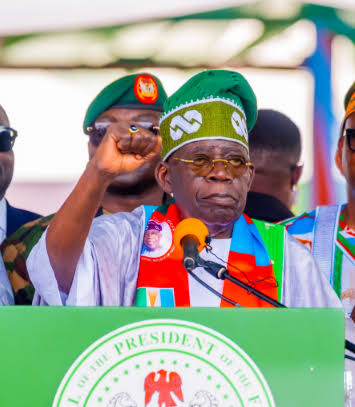
The All Progressives Congress (APC) has unveiled an ambitious four-pillar manifesto for President Bola Tinubu’s proposed second term, promising to consolidate ongoing economic reforms, tackle insecurity, expand infrastructure and translate policy gains into improved living conditions for Nigerians between 2027 and 2031.
The 109-page document, titled Renewed Hope Agenda 2.
0, was unveiled on Tuesday at the Shehu Musa Yar’Adua Centre, Abuja, under the theme, “Translating Reforms to Shared Prosperity.”The manifesto outlines a policy roadmap built around four strategic pillars: Secure and Resilient Nation; Better Quality and More Affordable Life for Every Nigerian; Energy, Infrastructure and Economic Growth; and Effective and Accountable Governance.
The party said the framework represents a consolidation of the administration’s original eight-point Renewed Hope Agenda, with emphasis on making the benefits of its economic reforms more tangible to households, businesses and communities.
Speaking at the unveiling, the APC Presidential Campaign Council spokesperson and Minister of Solid Minerals Development, Dr. Dele Alake, described the manifesto as a strategic blueprint for transforming Nigeria’s economy and improving citizens’ welfare.
Alake commended Tinubu for what he described as the courage to implement far-reaching economic reforms despite the difficulties associated with them, expressing confidence that the long-term benefits would outweigh the immediate challenges.
“Kudos to President Bola Ahmed Tinubu for courageously implementing the reforms against all odds. The resultant benefits would be gargantuan,” he said.
The Minister of Industry, Trade and Investment and Deputy Director of the Directorate of Manifesto Development, Dr. Jumoke Oduwole, said the central objective was to ensure that Nigerians began experiencing measurable benefits from the ongoing reforms between now and 2031.
She explained that the policy framework was designed to translate economic adjustments into improved livelihoods, increased productivity and inclusive opportunities.
In his message contained in the manifesto, Tinubu said his administration had taken difficult decisions since assuming office in 2023, including the removal of petrol subsidy, foreign exchange reforms and tax adjustments, describing them as necessary steps towards strengthening the country’s economic foundations.
He, however, acknowledged that the next phase must focus on delivering practical improvements in the daily lives of Nigerians.
“The coming years must focus on tangible improvements: the food on our tables, the power in our homes, the security of our families, and the dignity of meaningful work,” the President said.
Under the first pillar, Secure and Resilient Nation, the APC pledged to recruit an additional 78,000 security personnel, comprising 28,000 military personnel and 50,000 police officers, to strengthen the country’s security architecture.
The party also promised to establish and equip four additional Army divisions in Makurdi, Ilorin, Jalingo and Benin City, expand police recruitment towards a ratio of one officer to 400 citizens, introduce body cameras and digital policing systems, complete electronic surveillance of mapped borders and strengthen community policing.
The second pillar focuses on improving the quality of life through affordable housing, healthcare, education, employment and social protection.
The manifesto targets the construction of 200,000 affordable housing units through the Tinubu Mass Social Housing Scheme, mortgage financing and private-sector partnerships across the country’s 774 local government areas.
It also promises to recruit 20,000 additional trained teachers, halve the number of out-of-school children by 2031 and expand access to quality education, particularly in rural communities.
In healthcare, the APC pledged to increase health insurance coverage to 40 per cent of Nigerians, reduce out-of-pocket healthcare expenditure from 71 per cent to below 50 per cent and expand functional primary healthcare centres to cover 90 per cent of the target.
On employment, the party promised to halve youth unemployment by 2031, provide skills training for two million young people and expand digital literacy programmes to reach 30 million Nigerians.
The third pillar, Energy, Infrastructure and Economic Growth, places electricity supply, industrialisation, agriculture and transportation at the centre of the proposed second-term economic programme.
The APC projected an annual economic growth rate of six per cent and promised to scale available electricity generation towards 10,000 megawatts, accelerate electricity metering and strengthen transmission and distribution networks.
It also pledged to expand clean energy access to underserved communities, establish at least one flagship industrial hub in each of the six geopolitical zones, more than double non-oil export earnings and create one million export-linked jobs for young Nigerians through talent and services exports by 2030.
The party further promised to complete priority road, rail, port and airport projects to improve trade, reduce transportation costs and stimulate economic activities.
In agriculture, it proposed reducing post-harvest losses by 50 per cent through improved storage, processing and distribution infrastructure, while lowering the cost of transporting food across states.
The manifesto also prioritises investment in irrigation, agricultural research and mechanised farming as part of efforts to boost food production and reduce food prices.
Under the fourth pillar, Effective and Accountable Governance, the APC promised to strengthen the justice system, fight corruption, improve public service delivery and deepen local government autonomy.
The party pledged to extend digital case management to magistrate courts and complete the digitalisation of court processes nationwide by 2029.
It also promised to publish allocations to all 774 local government councils, establish clear performance standards and move federal ministries and agencies towards end-to-end digital public services.
To ensure accountability, the manifesto proposed that every commitment should have a baseline, target, cost, responsible official and reporting date, with progress made available through a public delivery tracker.
“A manifesto is only as strong as the promises a citizen can check,” the document stated, promising annual progress reports and independent verification of implementation.
The APC also identified four measures for delivering its commitments, including recovering public resources, completing existing projects before commencing new ones, attaching measurable targets to promises and enabling citizens to monitor performance.
Meanwhile, Tinubu has reinforced his campaign promises on electricity, employment and the cost of living, declaring that his administration would provide reliable power and strengthen the industrial base if returned to office in 2027.
The President made the pledge on Tuesday while addressing supporters at the APC presidential campaign rally in Dutse, the Jigawa State capital.
He promised to prioritise support for nano, micro, small and medium-sized enterprises, expand employment opportunities and introduce policies to reduce the financial burden on households.
“We will lower the cost of living. We will provide reliable power, not the whole privatisation that is not working. We will provide you with reliable power in Nigeria,” Tinubu said.
He also pledged to sustain the removal of petrol subsidy while continuing government intervention programmes, including the Nigerian Education Loan Fund.
The President further promised that funds recovered by the Economic and Financial Crimes Commission from financial irregularities would be channelled into NELFUND to support students seeking access to higher education.
In agriculture, he promised to establish six mechanised farming service centres across the country’s six geopolitical zones and increase investment in irrigation and agricultural research to boost productivity and food supply.
The promises broadly align with the manifesto’s emphasis on electricity, industrial growth, employment, food security and improved living standards.
At the Abuja unveiling, the Minister of Information and National Orientation, Mohammed Idris, urged Nigerians to acknowledge the administration’s efforts in addressing the country’s economic and security challenges.
Citing improvements along the Abuja-Kaduna Expressway, Idris said the security situation on the corridor had improved significantly compared with previous years when commuters faced persistent threats from kidnappers and terrorists.
He argued that such developments deserved recognition, despite criticisms of the administration’s handling of insecurity.
The manifesto also presented economic indicators as evidence of progress since 2023, including foreign reserves of $55.3bn as of September 2026, gross domestic product growth of 4.43 per cent in the second quarter of 2026 and inflation of 14.63 per cent in September 2026.
It further claimed that N18.72tn was shared among the three tiers of government through the Federation Account Allocation Committee in the first half of 2026, compared with N6.76tn in the corresponding period of 2023.
Tinubu acknowledged that the administration’s work remained unfinished and appealed to Nigerians to support the proposed next phase of its programme.
“The work is far from complete, and I ask once more for your partnership. Let us turn these hard-won reforms into lasting prosperity and build the Nigeria of our highest aspirations,” he said.
The APC maintained that its 2027–2031 agenda would focus on converting economic stabilisation into measurable improvements in household welfare, national security, infrastructure, employment and inclusive development.
The proposed second-term programme, however, will ultimately be judged by the extent to which its ambitious targets translate into tangible results for Nigerians.
By David Torough, Abuja
The Independent National Electoral Commission (INEC) has removed 1,608,660 confirmed invalid registrations from Nigeria’s voter register following a nationwide clean-up exercise ahead of the 2027 general elections, while identifying 54 officials across 10 states for possible disciplinary action and prosecution over alleged registration irregularities.
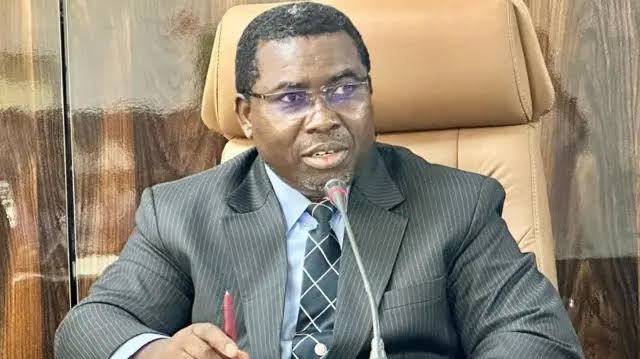
INEC Chairman, Professor Joash Amupitan (SAN), disclosed this on Monday in Abuja while briefing journalists on the outcome of the review of the Preliminary Register of Voters generated from the 2025/2026 Continuous Voter Registration (CVR) exercise.
The commission also confirmed the removal of 873 additional records belonging to deceased persons, bringing the total number of deceased voters’ records removed to 1,749, including 876 identified during an earlier stage of the exercise.
Amupitan said INEC received 11,088,238 registration records from the three phases of the CVR exercise. Its Automated Biometric Identification System (ABIS) initially flagged 1,545,052 records for further examination, although he stressed that being flagged did not automatically render a registration invalid.
According to him, 1,277,052 registrations were confirmed invalid and excluded before the preliminary register was displayed to the public. Following complaints, claims and objections submitted during the nationwide display exercise between October 9 and 15, another 268,000 cases underwent adjudication.
Of these, 217,722 were found to be invalid and removed, while 50,278 were cleared and retained.
Further screening identified an additional 113,886 invalid registrations, bringing the number of invalid records removed after the public review to 331,608. Together with the 1,277,052 previously excluded entries, the exercise resulted in the removal of 1,608,660 invalid registrations.
The chairman explained that the removal of deceased voters’ records was treated separately from the invalid-registration figure.
The clean-up followed widespread public concerns over the integrity of the preliminary register, with Nigerians and civil society organisations drawing attention to suspected multiple registrations, unusual names, manipulated photographs, including images allegedly generated using artificial intelligence, and entries belonging to deceased persons.
Amupitan acknowledged that the findings exposed weaknesses in the registration process, some of which dated back several years.
He noted that the national register had evolved through successive registration and continuous voter registration exercises since 2011, involving different technologies, operational arrangements and quality standards. Consequently, some of the irregularities currently attracting public attention relate to historical records captured between 2011 and 2023 rather than exclusively to the latest registration exercise.
He said the commission had also uncovered deliberate attempts by some personnel to circumvent established registration procedures, including the misuse of provisions designed to accommodate exceptional registration circumstances, particularly those relating to persons with disabilities.
The 54 officials identified across 10 states are being investigated for alleged complicity, with INEC promising appropriate administrative sanctions and possible prosecution where criminal conduct is established.
On the controversy surrounding suspected AI-generated photographs in the register, the chairman said the commission had identified cases of manipulated images and was introducing additional safeguards to prevent a recurrence.
He disclosed that INEC had directed its Director of Information and Communication Technology to discontinue external webcam-based image uploads for voter registration, insisting that photographs must henceforth be captured through an approved application.
The commission has also approved a comprehensive Artificial Intelligence Governance Framework to regulate the responsible deployment of AI in its operations. The framework, developed in collaboration with partners, including the Institute for Security Studies and the British High Commission, has undergone peer review and received INEC’s approval.
Amupitan further disclosed that security agencies were conducting independent investigations into the irregularities, adding that cases involving suspected criminal offences would be referred to the appropriate law enforcement authorities.
He said INEC was strengthening its information technology infrastructure and cybersecurity systems ahead of the 2027 elections.
Despite the scale of the irregularities uncovered, the chairman maintained that existing electoral safeguards, particularly the Bimodal Voter Accreditation System (BVAS), would help prevent multiple accreditation and voting.
He explained that voters would be required to appear physically at their designated polling units for biometric authentication through fingerprint or facial recognition, with the system designed to verify identities and prevent multiple accreditation.
The chairman also cautioned that the latest clean-up should not be interpreted as a complete resolution of all integrity concerns surrounding the national register, noting that historical irregularities would require sustained attention.
He said INEC had resolved to address outstanding duplications in the historical register, directing that entries already flagged through public complaints and obvious cases identified internally should be removed after proper verification.
Amupitan also advised voters who discovered that their names were missing from their current polling locations to check their previous registration centres, explaining that some people who relocated registered afresh instead of formally transferring their existing registrations. In such cases, biometric screening could invalidate the new registration while leaving the original record at the former location.
Meanwhile, the chairman said the commission was yet to receive the formal court order directing him to appear as a defence witness in the ongoing criminal trial of activist and African Action Congress presidential candidate, Omoyele Sowore.
A Federal High Court sitting in Abuja had issued a subpoena directing Amupitan to produce electoral documents relating to President Bola Tinubu’s 1999 Lagos State governorship election and the 2023 presidential election.
The documents are connected to Sowore’s trial over his description of the President as a criminal.
Amupitan said INEC would study the subpoena and comply with its provisions upon formal receipt.
On the controversy surrounding the Federal High Court judgment on the leadership of the African Democratic Congress (ADC), involving former Senate President David Mark and former Vice President Atiku Abubakar’s political ambitions, the INEC chairman said the commission was yet to receive and examine the relevant court processes.
He maintained that INEC would not act on reports circulating on social media, insisting that certified court documents must first be obtained and studied before the commission determines its position.
The chairman also addressed calls for early voting arrangements for journalists and electoral officials who may be unable to vote on Election Day because of official assignments.
He said early voting was not currently recognised under the existing electoral law, explaining that previous efforts to secure legislative backing for the proposal through amendments to the Electoral Act had not received the necessary support from the National Assembly.
He, however, expressed support for continued advocacy on the issue, noting that journalists and electoral personnel should also have the opportunity to exercise their voting rights.
INEC said final reconciliation, quality assurance and publication checks were ongoing, with the cleaned-up Final Register of Voters scheduled for publication on December 15, 2026, in line with the Electoral Act, 2026.



Customs CG Tasks Officers on Discipline, Integrity
ShareBy Tambaya Julius, Abuja The Comptroller-General of the Nigeria Customs Service (NCS), Bashir Adewale Adeniyi, has called on officers and...

Bayelsa Deputy Gov Tasks Nigerians on Effective Service
ShareFrom Mike Tayese, Yenagoa The Deputy Governor of Bayelsa State, Dr. Peter Akpe, has urged Nigerians to make selfless service...
CIPPON Urges FG to Protect Nigerian Printing Industry
ShareBy David Torough, Abuja The Chartered Institute of Professional Printers of Nigeria (CIPPON) has renewed its call on the Federal...

Mbah Declares Emergency on Nsukka-Adani Road
ShareFrom Sylvia Udegbunam Enugu Enugu State Governor, Peter Mbah has declared an emergency on the Nsukka-Adani Road, describing it as...


Oborevwori Mobilises Support for Tinubu, APC 2027 Victory
ShareFrom Francis Sadhere, Delta Delta State Governor, Rt. Hon. Sheriff Oborevwori, has called for massive support for President Bola Ahmed...
Growing Threat to Opposition Politics and Democracy
ShareBy Pius Mordi Democracy thrives on competition, tolerance, freedom of expression and the willingness of those in power to accommodate...

NCDMB, NLNG Commit $9m to Endowment of Professorial Research Chairs in Six Varsities
ShareFrom Mike Tayese, Yenagoa The Nigerian Content Development and Monitoring Board (NCDMB) and the Nigeria LNG Limited (NLNG) have launched...

2027: Obi Visits Benue, Vow to Unite Nigeria if Elected
ShareFrom Attah Ede, Makurdi The presidential candidate of the Nigeria Democratic Congress (NDC), Peter Obi, has vowed to unite Nigeria,...

Wike Targets Tourist Destination Status for Apo-Karshi Road
ShareBy Laide Akinboade, Abuja The Minister of the Federal Capital Territory (FCT), Nyesom Wike, has announced plans to transform the...


Alt Bank Appoints Gul Khan as Managing Director
ShareThe Alternative Bank Ltd (Alt Bank) has appointed Gul Khan as its new Managing Director, following approval by the Central...