
Business News
Electronic Offering Will Address e-Dividend issues – SEC

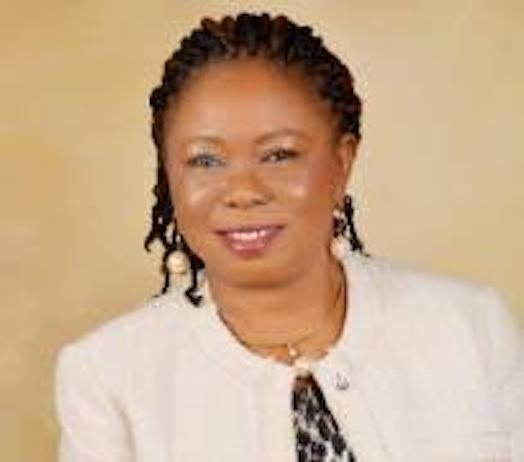
Acting Director General, Securities and Exchange Commission (SEC), Ms Mary Uduk spoke to journalists on the outcome of the Second Capital Market Conference (CMC) held recently in Lagos. Our correspondent, Tony Obiechina filed the excerpts.
What are some of the activities the SEC has participated in to attract more investors and deepen the market?
Between the 2nd CMC held in August and now, the Commission has organized and participated in a number of events of which we informed the market at the meeting.
Such events include our collaboration with the University of Lagos in organizing a two-day conference on “Leveraging the capital market for economic growth and development”, on September 11 and 12, 2019.
The event served as a convergence for industry experts, the SEC and the academia to forge a partnership that would aid the conduct of relevant research towards innovative solutions in our market.This was followed by the Commodities Round-Table held in October, 2019, with over 170 key stakeholders in attendance. This roundtable served as a platform to secure the buy-in of these stakeholders, as well as the perspective of policy makers towards improving the commodities ecosystem. As you are aware, Nigeria has a lot of potentials in the commodity space and the capital market can be used as a platform to achieve these.
Another key highlight of our activities within the period was the convening of the Inaugural West African Capital Market Conference with the theme “Positioning West Africa capital market to achieve sustainable and real economic growth through integration and sound regulation. The event which held from October 27-29, 2019 in Abidjan, Ivory Coast, featured resource persons on infrastructure and sustainable financing, Capital Market Integration, FinTech, Investor Protection, amongst others.
In addition, we launched the FinTech Roadmap for the Nigerian Capital Market during the Nigeria FinTech Week in October 2019. The event buttressed the Commission’s resilience to adopt and guide the industry towards innovation.
Following an amendment to Rule 61 (2) of the SEC Rules, the Commission has issued directives to facilitate effective compliance with the amendments on operations of nominee accounts by capital market operators. We enjoin all CMOs to familiarize themselves and comply with this new rule.
To improve capital formation and investment from savings, we also informed the market that the Honorable Minister of Finance, Budget and National Planning has approved the composition of a National working group on Saving Scheme. The Inauguration of the group will be undertaken by the Honorable Minister in the near future.
In terms of our Investor Education efforts, you are aware of the initiative towards including Capital Market Studies in the curricula of Basic and Senior Secondary Schools. Having infused the capital market content into this curriculum, the next phase of our work is to develop the Teachers’ Guides. We have equally constituted a steering committee for the Universities’ curriculum.
The CMC just held its last meeting for the year 2019. What are some of the highlights of the meeting?
At the meeting, the various Technical Committees provided updates on their activities and I would like to provide you with some of the highlights.
In the presentation made by the Commodities Trading Ecosystem Committee, we were informed about the ongoing collaboration with the Standards Organization of Nigeria to review applicable standards as well as the schedule of a capacity building session for personnel of the Federal Ministries of Finance, Budget & Planning, Trade & Investment and Agriculture. The Committee is also having engagements with relevant corporates and state governments to secure their buy-in on current initiatives in the ecosystem. Going forward, the Committee is proposing to meet with the Nigeria Sovereign Investment Authority (NSIA) on the status of the Nigerian Commodities Exchange (NCX) and work with the Nigerian Incentive-Based Risk Sharing System for Agricultural Lending (NIRSAL) to develop some agricultural-based financial instruments.
The Multiple Subscription Committee presented the status of its ongoing engagement with the Central Bank of Nigeria (CBN) and Committee of Heads of Banking Operation to display multiple accounts regularization banners in the banking halls all over the country. The Committee also reported that CMOs have commenced the filing of report on regularized accounts with the Commission, on a quarterly basis. Given the relevance of this exercise and the need to create more awareness, the Committee requested for an extension of the deadline of multiple accounts regularization.
Also, the presentation by the e-Dividend Committee showed that the number of shareholders enrolled on the e-DMMS platform has increased to 2,820,065 at the end of the 3rd Quarter of 2019. Further updates were given concerning the ongoing efforts at integrating the Direct Cash Settlement (DCS) and the e-DMMS mandate forms, as well as the engagement with the CBN on the inclusion of e-DMMS charges among allowable bank charges.
Also, the Non-interest Finance Committee presented the importance of granting the PFAs the permission to invest a given percentage of a willing contributor’s Retirement Savings Accounts in Non-Interest capital market products. Updates were equally given on the progress made in the collaboration with the Debt Management Office (DMO) to develop a short term non-interest instrument.
The meeting received further updates from the presentation of the report of the Market Liquidity Technical Committee, as well as the final report of the Block Chain and Virtual Assets Committee.
We had extensive discussions on these Technical Committees’ presentations and comments were also received on the presentations of Self-Regulatory Organizations (SROs) and the Observer Groups.
What were some of the resolutions reached?
Registrars are to discontinue the practice of requesting for confirmation of bank signature during the E-DMMS process. CMOs are to display awareness campaign banners of e-DMMS at their offices and Venue of Annual General Meetings (AGM). Capital market operators should also work with the Commission to share awareness information on their social media platforms.
SEC to review the request from the Association of Stock broking Houses of Nigeria (ASHON) for extension of time for compliance on the transfer of complete investor data among operators such as Brokers, Registrars and CSCS. Upon completion, the position of the Commission will be communicated to the relevant parties.
The Commission to engage the National Pension Commission (PENCOM) on modalities which would permit Pension Fund Administrators (PFAs) to participate in Securities Lending. The Commission to develop rules and regulations on warehouse receipts within the current legal framework.
What new strategies is the Commission looking for new ways of tackling unclaimed dividends?
Issue of unclaimed dividends is legacy issue. They happened way back in the past. Right now you will not get unclaimed dividends from new issues. Part of the problem of unclaimed dividend has to do with identity management which we are doing all we can to educate the public on and engaging the various stakeholders to be able to get a lot of the information that we require. Since then, items like BVN has been added to help in identity management. The capital market is also taking advantage of it. The CSCS and the registrars are working together to ensure that more information from the legacy shareholders are being collected to be able to update their information and get them to be able to claim their dividends.
Of recent, there has been a lot of engagements with shareholders on this issue. The registrars don’t have direct interface with shareholders, they deal directly with stockbrokers. But there is a committee comprising of SEC, the registrars, the stockbrokers, the issuing houses, the CSCS and NSE working on that in addition to the e-dividend management. The committee has come up with a resolution which was adopted at the last CMC meeting. Part of the resolutions is that stock brokers will update information in respect of their client.
They are legacy issues, remember that before 2008, we had a lot of Nigerians who bought shares in the capital market and at that time we did not have BVN numbers. Even some of them did not provide their account numbers. What was agreed was that we would update information of such shareholders. That information will be transmitted to the CSCS who will update their own information and send them to the registrars. Which means we will not address the legacy issues by the time brokers update that information. What was also agreed was that there will be no transaction in respect of any account that information is not updated. We also talked on the issue of compliance and enforcement which has to do with conduct of capital market operators. It was agreed that there will be zero tolerance and the brokers will be given a time frame. We hope that by the time that information are updated, the issue of unclaimed dividends will be resolved.
Also going forward, the Commission has approved the rule in respect of electronic offering and we believe that by the time we commence that, it will address that. Before you can complete the application, the system will validate your account number, the system will not accept incomplete application. We believe that in addition to the e-dividend mandate, these other initiatives that the Commission is doing with other stakeholders will address the issue of unclaimed dividends.
What is the SEC doing to attract retail investors?
We have various initiatives in place all geared towards attracting retail investors to the market. We are interacting with them in a lot of ways like the social media, educational materials, excursions to the Commission, enlightenment campaigns among others. We are also interacting with them through the new curriculum that we are coming up with for Capital Market Studies in secondary schools.
Of recent, we interacted with the army, even for us it was an eye opener. They came out in their numbers and we intend to do more. We have a department in the Commission where students from all over the country come to the Commission for interactions.
We try to engage all sectors of the country; we believe that we need to develop this market. That is why we have both short term and long term plans. What we are doing with the universities are research based conferences, issues that will be very key to the market are brought to the fore. We just completed one with the University of Lagos and other universities have indicated their interest in such programmes too. People are aware that there are safety nets in the capital market when you invest in funds because your risks are diversified. For all the northern states, we look at ethical funds and we are doing to do roundtable discussions there in collaboration with the state governors.
In the coming months, we will see a high growth in the capital market with all these sensitizations.
The shareholders’ associations can be a force for good, and we recognise their importance. But we want to see them play positive roles in good corporate governance of the companies that they invest in. we want to see more positive contributions from them.
What is the Commission doing to curb delisting?
Issue around delisting we look at it from two perspectives: voluntary delisting and regulatory delisting. What are we doing as regulators to influence and encourage more listings in the market? We had a committee and that committee has made recommendations and we are at implementation stage now. What we are doing is to look at how to encourage listing based on sector approach. What one sector needs, may be different from what another sector needs. We are engaging with them and have itemised issues and now implementing. We are trying to see that we encourage listing via incentives.
We are also trying to address the issue of time to market so that they are not discouraged as they are converging to come to the market, so that they are able to raise the funding within the shortest time possible. We are still having engagements with them, we are getting more companies listing, you are aware of all the listings we have had this year.
Can you throw more light on Modalities on securities lending?
We have a committee which has been engaging all institutional investors that have substantial holding of equities. The essence of having this securities lending is to actually deepen our market. All of us are contributing to our pensions accounts and these are being investing in equities. What they do is to buy and hold, they don’t sell. So the essence of securities lending is to give room for them to make money so that the profit can then be added to what contributors would get. We have a framework which has been approved and we are encouraging them to go into securities lending. They are being encouraged to lend out these securities, they make money out of it. We are encouraging the market players to go into securities lending by meeting these institutional investors, Pencom is the largest local institutional player in our market. They will lend out these securities and make money out of it, at the end of the contract, they get their money back. Instead of holding on to their securities, they are making money out of it.
We are engaging Pencom and discussing to see how they can come up with their guidelines for it to happen. Another institutional investor we are engaging is AMCON, all these are being done to deepen our market.
Where are we on dematerialisation of the exchange?
We have the framework properly put out for demutualization of any exchange at the moment. What we are doing presently is to review the application by the NSE and after review we will get back to them. This is a milestone in the annals of the Nigerian capital market and the process has to be thorough. We just received a feedback from the upon our letter to them. It is on course and the SEC will do what it needs to do to ensure that the process is very transparent.
Any updates on enforcement on Ponzi schemes?
We are working on the cases that we have at hand and they will be charged to court soon. They are everywhere and we are taking good actions to ensure that innocent Nigerians are not defrauded of their hard earned money. The cases are being prepared right now, and also establishing a process and structure. once we are done with that, they will be charged to court
When is the current deadline for multiple accounts regularisation?
There is no definite timeline for now, we have left it open. In due course we will have a meeting to review the success. In those days of plenty in the capital market, there were a lot of abuse where people used multiple names to buy shares. Many of them do not even remember the names they used at that time and therefore asking them to come forward to regularise their shares is difficult. Some of them probably do not know where the documents are. Some of them, maybe the very big ones are probably afraid of prosecution and that is why we said we have given amnesty.
The issue of timeline for this kind of thing, we believe should be stepped down for now just to be able to give people enough time to look for their documents and then come and regularise their shares in order to reduce unclaimed dividends in the market.
If Bankers confirmation will no longer be required, what will investors now be expected to bring?
We feel that once you complete the e-dividend mandate form which will be taken to the bank to verify that you are the account holder, you don’t need another banker’s confirmation. That is just a duplication of duties. You can even go to the banks, fill the e-dividend registration form, the bank will verify the account number and signature and they will send it to the registrar. So we don’t think any other confirmation is needed since the information is coming from the bank.
Nominees account, what level of compliance?
We had issues in respect of nominee accounts and those issues have to do with transparency and actually it was even the market and the central bank that raised the issue. So we now looked at the rules in respect of nominee account and even the rules in respect of nominee companies. We then issued a circular that anybody operating nominee companies should come to the Commission for one-off registration and after that they will be filing quarterly returns in respect of nominee accounts.


By Tony Obiechina, Abuja
The Budget Office of the Federation has reaffirmed the integrity of Nigeria’s newly enacted Tax Reform Acts, cautioning against what it described as governance by speculation and unverified claims following allegations of post-passage alterations.
In a statement on Wednesday, the Budget Office said it had taken note of concerns raised by the Minority Caucus of the House of Representatives, stressing that the sanctity of the law is central to constitutional democracy and not a mere procedural formality.
According to the Office, any suggestion that a law could be altered after debate, passage, authentication, and presidential assent without due process would strike at the core of the Republic and undermine citizens’ right to be governed by transparent and stable laws.
However, it warned that democratic integrity is also endangered by the careless amplification of unverified claims. “A nation cannot be governed by insinuation or sustained on circulating documents of uncertain origin,” the statement noted, adding that public confidence, once shaken by speculation, is often difficult to restore.
The Budget Office emphasized that both government and citizens share a common interest in truth, clarity, and due process, noting that public finance depends heavily on trust in the legality and clarity of fiscal laws. It welcomed the decision of the National Assembly to investigate the allegations, describing institutional inquiry, not conjecture as the appropriate response to claims of illegality.
On public access to the law, the Office agreed that Nigerians and the business community are entitled to clear and authoritative texts of all laws they are required to obey. It clarified, however, that the authenticity of legislation is determined by certified legislative records and official publication processes, not by informal or viral reproductions.
The statement also underscored the importance of separation of powers, warning that claims suggesting Nigeria is being governed by “fake laws,” if not backed by established facts, risk eroding confidence in democratic institutions.
At the same time, it stressed that legislative scrutiny should not be dismissed by the executive, noting that oversight is a constitutional duty, not an act of hostility.
From a fiscal perspective, the Budget Office said legal certainty is essential for revenue projections, macroeconomic stability, budget credibility, and investor confidence. While it is not the custodian of legislative records, it maintained that uncertainty around operative tax provisions directly affects economic planning.
To restore confidence, the Office proposed a set of measures, including the publication of verified reference texts in a single public repository, orderly access to Certified True Copies for stakeholders, clear public explanations where discrepancies are alleged, and strict alignment of all implementing regulations with authenticated legal texts.
Addressing calls for suspension of the tax reforms, the Budget Office cautioned against allowing prudence to slide into paralysis. It argued that properly implemented tax reform is necessary to reduce dependence on borrowing and inflationary financing, while easing indirect burdens on vulnerable citizens.
“Where clarification is required, it must be provided; where correction is required, it must be effected; where investigation is required, it must proceed,” the statement said, adding that governance and reform should not be stalled by unresolved conjecture.
The Office concluded by describing taxation as a democratic covenant that binds citizens and the state, insisting that compliance depends on transparency and trust. It called on political actors to protect institutions as much as positions, urging citizens and businesses to rely on verified sources and resist the spread of unauthenticated information.
The statement was signed by Tanimu Yakubu, Director-General of the Budget Office of the Federation, who reaffirmed the agency’s commitment to fiscal transparency, institutional integrity, and reforms that advance national prosperity while safeguarding citizens’ rights.
By Jennifer Enuma, Abuja
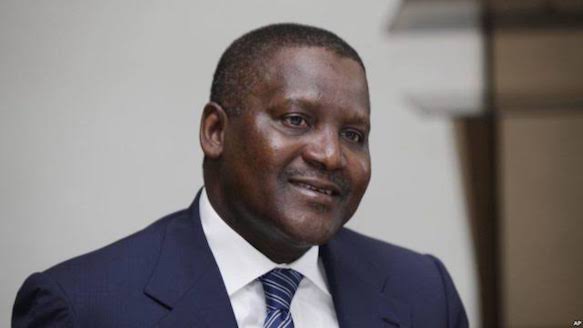
President Bola Tinubu has congratulated Alhaji Aliko Dangote, the President of Dangote Group, on his appointment to the World Bank’s Private Sector Investment Lab, a body tasked with promoting investment and job creation in emerging economies.
In a statement by Special Adviser on Media and Publicity, Bayo Onanauga, the President described the appointment as apt, given Dangote’s rich private sector experience, strategic investments, and many employment opportunities created through his Dangote Group.
The Dangote Group became one of Africa’s leading conglomerates through innovation and continuous investment.
Dangote Group’s business interests span cement, fertiliser, salt, sugar, oil, and gas. However, the $20 billion Dangote Petroleum Refinery and Petrochemicals remains Africa’s most daring project and most significant single private investment.
“President Tinubu urges Dangote to bring to bear on the World Bank appointment his transformative ideas and initiatives to impact the emerging markets across the world fully” the statement said.

The World Bank announced Dangote’s appointment on Wednesday, as part of a broader expansion of its Private Sector Investment Lab. The lab now enters a new phase aimed at scaling up solutions to attract private capital and create jobs in the developing world.
The CEO of Bayer AG, Bill Anderson, the Chair of Bharti Enterprises, Sunil Bharti Mittal, and the President and CEO of Hyatt Hotels Corporation, Mark Hoplamazian, are on the Private Sector Investment Lab with Dangote.
The World Bank said the expanded membership brings together business leaders with proven track records in generating employment in developing economies, supporting the Bank’s focus on job creation as a central pillar of global development.
By Joel Oladele, Abuja
The Nigeria Customs Service (NSC) has generated an impressive N1,751,502,252,298.05 in revenue during the first quarter of 2025.
The Comptroller-General (CG) of the Service, Bashir Adeniyi, disclosed this yesterday, during a press briefing in Abuja.
According to Adeniyi, the achievement not only surpasses the quarterly target but also marks a substantial increase compared to the same period last year, reflecting the effectiveness of recent reforms and the dedication of customs officers across the nation.
“This first quarter of 2025 has seen our officers working tirelessly at borders and ports across the nation.
I’m proud to report we’ve made real progress on multiple fronts—from increasing revenue collections to intercepting dangerous shipments,” Adeniyi stated.He attributed this success to the reforms initiated under President Bola Tinubu’s administration and the guidance of the Honourable Minister of Finance and Coordinating Minister of the Economy, Olawale Edun.
The CG noted that the revenue collection for Q1 2025 exceeded the quarterly benchmark of N1,645,000,000,000.00 by N106.5 billion, achieving 106.47% of the target. This performance represents a remarkable 29.96% increase compared to the N1,347,705,251,658.31 collected in Q1 2024.
Adeniyi highlighted the month-by-month growth, noting that January’s collection of N647,880,245,243.67 surpassed its target by 18.12%, while February and March also showed positive trends.
“I’m pleased to report the Service’s revenue collection for Q1 2025 totaled N1,751,502,252,298.05.
“Against our annual target of N6,580,000,000,000.00, the first quarter’s proportional benchmark stood at N1,645,000,000,000.00. I’m proud to announce we’ve exceeded this target by N106.5 billion, achieving 106.47% of our quarterly projection. This outstanding performance represents a substantial 29.96% increase compared to the same period in 2024, where we collected N1,347,705,251,658.31.
“Our month-by-month analysis reveals even more encouraging details of this growth trajectory,” Adeniyi said.
In addition to revenue collection, Adeniyi said the NCS maintained robust anti-smuggling operations, recording 298 seizures with a total Duty Paid Value (DPV) of ₦7,698,557,347.67.
He stated that rice was the most seized commodity, with 135,474 bags intercepted, followed by petroleum products and narcotics.
“From rice to wildlife, these seizures show our targeted approach,” Adeniyi remarked, noting the NCS’s commitment to combating smuggling and protecting national revenue.
Adeniyi also highlighted key initiatives, including the expansion of the B’Odogwu customs clearance platform and the launch of the Authorized Economic Operators Programme, which aims to streamline processes for compliant businesses. The NCS’s Corporate Social Responsibility Programme, “Customs Cares,” was also launched, focusing on education, health, and environmental sustainability.
Despite these achievements, the CG noted that the NCS faced challenges, including exchange rate volatility and non-compliance issues. Adeniyi acknowledged the need for ongoing adaptation and collaboration with stakeholders to address these challenges effectively.
Looking ahead, the NCS aims to continue its modernization efforts and enhance service delivery, ensuring that it remains a critical institution in Nigeria’s economic and security landscape.
“Results speak louder than plans; faster clearances through B’Odogwu, trusted traders in the AEO program, and measurable food price relief from our exemptions. We’ll keep scaling what works,” he concluded.
 |


Electricity Distributors’ Association Decries Outstanding Debts by MDAs
ShareThe Association of Nigerian Electricity Distributors (ANED) has raised concerns over outstanding electricity debts owed by government Ministries, Departments and...
Afreximbank Records 30 Per Cent Rise Net Income for First Half 2026
ShareThe African Export-Import Bank (Afreximbank) and its subsidiaries (the Group) recorded a 30 per cent increase in net income to...


CBN Sells N700bn Treasury Bills in Second August Auction
ShareBy Tony Obiechina, Abuja The Central Bank of Nigeria (CBN), on behalf of the Debt Management Office (DMO), has offered...


Niger FRSC Records 234 Crashes, 110 Deaths in Seven Months
ShareFrom Dan Amasingha, Minna Ten people have been killed and several others injured in a fatal road crash involving a...

Fuel Subsidy War Deepens as Presidency, Atiku Clash Again over Policy
ShareBy David Torough, Abuja The political battle over Nigeria’s petrol subsidy regime has intensified, with the Presidency and former Vice-President...


The Man Behind ‘The Ultimate Commander’: A Birthday Tribute to Ambassador Osita Offor
ShareBy David Torough, Abuja Ambassador Osita Offor, popularly known as “The Ultimate Commander,” is being celebrated today for his vision,...
Peace on Paper, Peril in Practice: Why 2027’s Elections Remain at Risk
ShareBy Dakuku Peterside There is something reassuring about the ritual of political rivals gathering beneath the same roof and signing...


2027: Bawa Urges APC Leaders, Supporters on Unity
ShareBy Tambaya Julius, Abuja The Senior Special Assistant (SSA) to the Nasarawa State Governor on Greater Karu Development Control Agency...
NCS Lilypond Export Command Gets New Acting CAC
ShareThe Nigeria Customs Service (NCS), Lilypond Export Command, has appointed Deputy Comptroller Olusola Salako as its Acting Customs Area Controller...

Oyebanji Reappoints Retired Ekiti Accountant-General
ShareEkiti State Governor, Biodun Oyebanji, on Tuesday approved the appointment of Titilayo Olayinka as the new Accountant General of the...