
BUSINESS
Elon Musk Acquires Twitter for $44bn


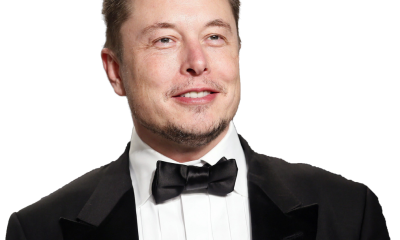
World’s richest man, Elon Musk has reached an agreement to acquire Twitter for approximately $44 billion, the company said.
According to the Associated Press (AP), Musk, the outspoken Tesla CEO, the world’s wealthiest person, had said he wanted to buy Twitter because he thinks it’s not living up to its potential as a platform for “free speech.
”He said Twitter needed to be transformed as a private company in order to build trust with users and do better at serving what he calls the “societal imperative” of free speech.
Twitter said it would become a privately held company after the sale is closed.
“Twitter has a purpose and relevance that impacts the entire world,” its CEO Parag Agrawal said in a tweet. “Deeply proud of our teams and inspired by the work that has never been more important.”
Musk describes himself as a “free-speech absolutist,” although he hasn’t been exactly clear what he means by that. In a recent TED interview, the billionaire said he’d like to see Twitter err on the side of allowing speech instead of moderating it. He said he’d be “very reluctant” to delete tweets and would generally be cautious about permanent bans. He also acknowledged that Twitter would have to abide by national laws governing speech in markets around the world.
The shares of Twitter, which has over 40 million Nigerians on its platform, were up 4.5 per cent in pre-market trading in New York at $51.15.
Musk, a prolific Twitter user, has said it needed to be taken private to grow and become a genuine platform for free speech.
The 50-year-old entrepreneur, who is also CEO of rocket developer SpaceX, has said he wanted to combat trolls on Twitter and proposed changes to the Twitter Blue premium subscription service, including slashing its price and banning advertising.
The billionaire, a vocal advocate of cryptocurrencies, has also suggested adding dogecoin as a payment option on Twitter.
He had said Twitter’s current leadership team was incapable of getting the company’s stock to his offer price on its own, but stopped short of saying it needs to be replaced.
“The company will neither thrive nor serve this societal imperative in its current form,” Musk said in his offer letter last week.
Up to the point Musk disclosed a stake in Twitter in April, the company’s shares had fallen about 10 per cent since Parag Agrawal took over as CEO from founder Jack Dorsey in late November.
The deal came just four days after Musk unveiled a financing package to back the acquisition. This led Twitter’s board to take his offer more seriously and many shareholders to ask the company not to let the opportunity for a deal slip away, Reuters reported on Sunday. Before Musk revealed the financing package, Twitter’s board was expected to reject the bid, sources had said.
The sale represented an admission by Twitter that Agrawal was not making enough traction in making the company more profitable, despite being on track to meet ambitious financial goals the company set for 2023. Twitter’s shares were trading higher than Musk’s offer price as recently as November.
Musk unveiled his intention to buy Twitter on April 14, and take it private via a financing package comprised of equity and debt.
Wall Street’s biggest lenders, except those advising Twitter, have all committed to provide debt financing.

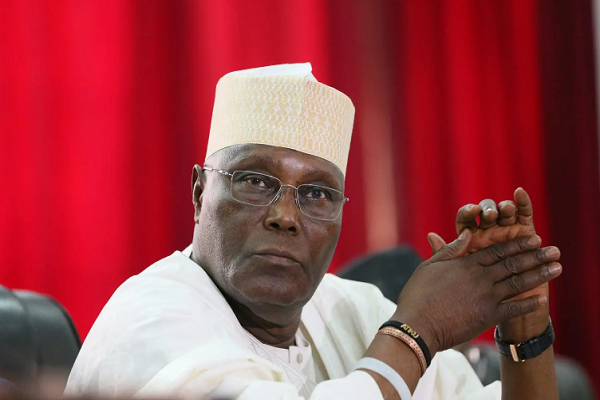
The Federal Government says the call by former Vice President Abubakar Atiku to bring back fuel subsidy will undermine the reforms already undertaken in the petroleum sector.
According to the Federal Government, it will also create legal and fiscal complications, and potentially discourage investment in domestic refining, including the Dangote Refinery and other modular refineries.
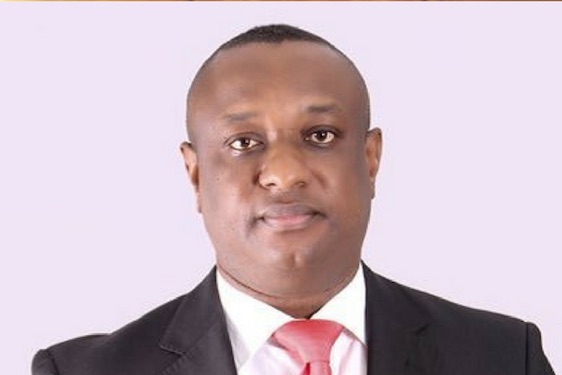
The government’s position was made known by Bayo Onanuga, the Special Adviser to the President on Information and Strategy.
The presidency was reacting to Atiku’s plan to bring back fuel subsidy if elected president come 2027.
Onanuga described the move as retrogressive, fiscally unsustainable and a product of “desperation to win the presidency”.
He said that Nigeria’s petroleum landscape had changed fundamentally since President Bola Tinubu announced the removal of petrol subsidy.
Also, the Minister of Finance and Coordinating Minister of the Economy, Taiwo Oyedele, said the removal of petrol subsidy had generated N15.8 trillion in resources for the federation between June 2023 and December 2025.
According to Oyedele, N5.4 trillion accrued to the Federal Government, while N10.4 trillion has been shared among states and local governments.
Tinubu in his response said that Atiku was ignorant of governance and economy.
The president spoke when he received Gov. Ademola Adeleke of Osun State at the State House recently.
He said that the plan by Atiku to reintroduce petrol subsidy was a demonstration of his high level of ignorance in governance and economy.
Atiku, a major contender for the country’s presidency, had promised to restore petrol subsidy if elected president.
Tinubu had announced the removal of fuel subsidy while taking the oath of office on May 29, 2023.
The decision saw the increase in pump price of petrol from below N200 to above N1.000, leading to increases in transportation, food, and other living costs.
Atiku, who is the presidential candidate of the major opposition party, the African Democratic Congress (ADC), had also supported the removal of petrol subsidy during the 2023 campaigns.
He has however, made the restoration of petrol subsidy a major part of his 2027 campaign, arguing that Nigerians have not seen sufficient benefits from the subsidy removal.
The former vice president alleged that the funds generated from the subsidy removal had not translated to food on the table of Nigerians as well as impacted on their lives.
On the oil and gas sector, he said that a new intervention should be designed around domestic refining, with support capped, budgeted and tied to verifiable production and consumer benefits.
According to him, every barrel of crude allocated under his proposal will be targeted and tracked to ensure that Nigerians benefit from the intervention.
Atiku said that his proposal was not a return to the opaque subsidy regime of the past, but a controlled mechanism that would support Nigerian refineries while ensuring that the benefits of cheaper crude feedstock were transmitted to consumers
A financial expert and President of the Capital Market Academics of Nigeria (CMAN), Prof. Uche Uwaleke, said that the debate should go beyond the immediate attraction of cheaper petrol.
According Uwaleke, Nigeria should be more concerned about the most economically sustainable way to use the country’s scarce public resources to improve the welfare of citizens over the long term.
He said that the old subsidy regime had become an enormous burden on public finances while also creating significant opportunities for arbitrage, smuggling, rent-seeking and other sharp practices.
Prof. Ken Ife, a prominent global financial analyst and development economist, faulted the political rhetoric of simply returning to a blanket fuel subsidy system to lower pump prices.
Ife said that Nigeria could not solve its deep-seated fuel and economic crises through artificial price-slashing at the point of sale.
According to him, returning to the old consumption-driven subsidy regime would re-introduce the distortions, inefficiencies, and massive fiscal leaks that historically crippled the country’s economy.
A civil servant, Ibrahim Abbas, said that Nigerians had expected that the removal of petrol subsidy would provide enough revenue to allow the Federal Government accelerate the development and upgrade of critical infrastructure to boost economic growth.
A retired civil servant, Sule Aliu, said that the economy had been particularly harsh on retirees since 2023 when petrol subsidy was removed. (NAN)
From Francis Sadhere, Delta
Delta State Commissioner for Transport,Cable Marine Jetty to Boost Water Transport, Trade in Asaba has said the newly constructed Cable Marine Jetty in Asaba will significantly improve water transportation, facilitate the movement of goods and passengers and stimulate commercial activities in the area.
Agofure stated this while leading officials of the State Directorate of Transport to inspect the newly constructed jetty at Cable Marine Point, Asaba, Oshimili South Local Government Area of the state.
The inspection was witnessed by the Asagba of Asaba, His Royal Majesty, Prof.
Epiphany Azinge, and his chiefs.The Commissioner said the jetty was constructed by the state government to provide a safe, convenient and functional landing facility for passengers, boat operators and traders who depend on the marine route for their activities.
According to him, the project formed part of the state government’s efforts to strengthen marine transportation infrastructure and provide safer and more efficient means of moving people and goods across Delta State.
He said the facility would not only improve water transportation but also support economic activities within the community by making the movement of goods and people easier and more convenient.
Agofure explained that the project was in line with Governor Sheriff Francis Oborevwori’s MORE Agenda, particularly the administration’s commitment to Meaningful Development.
He said the governor was determined to transform Delta State into a business-friendly environment and tourist destination capable of attracting investment, promoting economic growth and improving the living conditions of residents.
The Commissioner expressed appreciation to Prof. Azinge and his chiefs for inspecting the facility, saying their presence underscored the importance of the project to the people of Asaba and surrounding communities.
He also commended the Ministry of Works for supervising the project and the contractor for executing the construction according to the required engineering standards.
Speaking during the inspection, Prof. Azinge described Cable Marine Point as an important commercial hub where traders from different parts of the state converge to conduct business.
The Asagba recalled that the area had played a significant role in transportation dating back to the 1960s, when vehicles were conveyed from the eastern part of the country to Asaba, from where travellers continued their journeys by road.
He commended the state government for constructing the jetty, noting that the facility would enhance business activities, improve water transportation and provide more comfortable facilities for travellers.
The project contractor said the jetty was designed and constructed to meet required engineering standards, with emphasis on stability, durability and safety.
He expressed confidence that the facility would serve the people effectively for many years if properly maintained and responsibly used.
The inspection, according to the Directorate, was part of its ongoing efforts to improve marine transportation infrastructure and promote safe, efficient and sustainable water transportation in Delta State.
The Owerri Chamber of Commerce, Industry, Mines and Agriculture (OCCIMA) said it is ready to partner journalists to drive economic growth in Imo.
The OCCIMA President, Chief Charles Okeke, said this while addressing newsmen at an interactive meeting in Owerri on Saturday.
Okeke described OCCIMA as a major representative of the organised private sector in the state, stressing the importance of media involvement.
He said journalists would help sensitise the public to the benefits of belonging to the chamber and participating in its programmes.
According to him, the chamber provides a platform for business owners to interact and access available government and international business support interventions.
He said members could also access professional advice from OCCIMA’s business consultants to strengthen their businesses and overcome operational challenges.
Okeke urged business owners to embrace the chamber’s programmes and activities to enable them collectively contribute to the growth of Imo’s economy.
“We have started a movement to make OCCIMA a household name and champion made-in-Imo products.
“We know that with support from the media, we can achieve this,” he said.
Okeke said OCCIMA served as a platform for business advocacy, information, training, networking, market access and investment promotion.
He added that the chamber also promoted public-private collaboration to create an enabling environment for businesses to thrive.
“The media can therefore provide perspectives for businesses to understand and respond to their challenges,” he said.
Okeke said OCCIMA’s membership cut across agriculturalists, industrialists, manufacturers, businessmen and other categories of entrepreneurs.
He reaffirmed the chamber’s commitment to partnering with government and other stakeholders to advance Imo State’s economy.
He also said the chamber remained committed to supporting initiatives aimed at strengthening businesses and promoting locally produced goods.
Okeke urged journalists to work closely with OCCIMA in promoting entrepreneurship, investment and economic opportunities available to businesses across the state. (NAN)




2026 International Democracy Day: Group Tasks NASS on Special Seat Bill
ShareBy Laide Akinboade, Abuja League of Women Votersof Nigeria (NILOWV) on Tuesday, tasks the National Assembly on the quick passage...


Abia Targets UNESCO Recognition of Heritage Sites
ShareThe Abia Government has elevated selected cultural and natural sites to state heritage and monuments as part of efforts to...

TCN Announces Annual Maintenance at Ajaokuta Transmission Substation
ShareThe Transmission Company of Nigeria (TCN) has announced an annual preventive maintenance of its 330/132 Kilo Volt (kV) at Ajaokuta...
When Government has Too Many Voices: The Benue lesson in Power, PR and Public Trust
ShareBy Tom Chiahemen Sometimes, a controversy that appears to be about one thing is really about something else. Former Anambra...
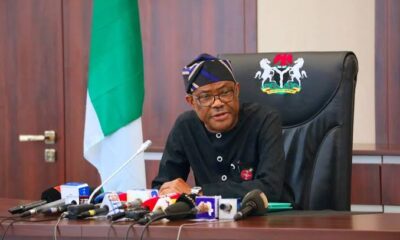

2027: My Support Only for Tinubu Re-election, not APC – Wike
ShareBy Laide Akinboade, Abuja The Federal Capital Territory (FCT) Minister, Nyesom Wike, has reiterated that his support for the reelection...

INEC, African Union Strengthen Electoral Partnership Ahead of 2027 General Elections
ShareBy David Torough, Abuja The Independent National Electoral Commission (INEC) has strengthened its engagement with the African Union (AU) ahead...


NEMA Begins Flood Simulation Exercise for Multi-Stakeholder Preparedness in Benue
ShareFrom Attah Ede, Makurdi In a bid to mitigate the impact of flooding, the National Emergency Management Agency (NEMA) in...

Release My Academic Records, Obi Tells UNN, Other Institutions
SharePresidential candidate of Nigeria Democratic Congress (NDC), Peter Obi, has authorised University of Nigeria, Nsukka (UNN) and other academic institutions...
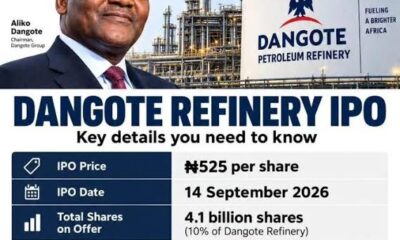

Dangote IPO: A Caution for Short Term Investors amid the Hype
ShareBy Kenechukwu Aguolu With the Dangote Refinery Initial Public Offering (IPO) opening on Monday, September 14, the excitement among Nigerian...

Nigeria’s Inflation Rate Slides to 15.39 Per Cent in August – NBS
ShareBy Tony Obiechina, Abuja The National Bureau of Statistics (NBS) on Tuesday disclosed that headline inflation has eased to 15.39...