
NEWS
Experts Raises Concern over AMR in Nigeria

By Laide Akinboade, Abuja
Experts in the health sector have raised the alarm over the continue increase in Antimicrobial Resistance (AMR) in Nigeria.
Antimicrobial resistance (AMR) occurs when germs (bacteria, virus, or fungus) that cause infections resist the effects of the medicines used to treat them.
These resistant bacteria can spread and may infect people or animals.This comes in form of antibiotics, antiviral, antifungal and antiparasitics.
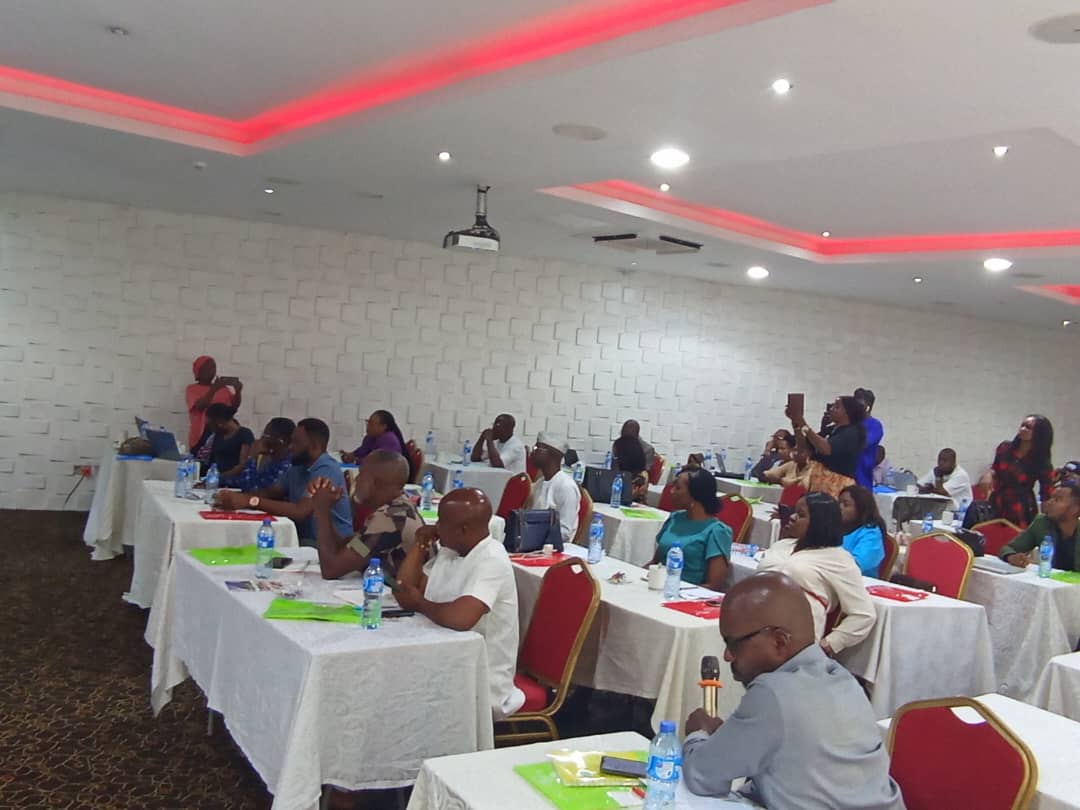
This was revealed at training and capacity building for journalists and Community–Based Organization, CBOs, on antimicrobial resistance phase 11, organized by Flaming Fund country Fund, United Kingdom, UKaid and Management Sciences for Health (MSH).
Among those experts that spoke at the occasion Dr. Akujuobi Igwe, laboratory and reach Director of Rotan medical diagnostic ltd, in his presentation said, 66.8% of Nigerians used anti biotics in the last six months.
“31.3% obtained antibiotics without prescription. Only 8.3% had good knowledge of AMR. 26.1% stopped antibiotics once they felt better.
“A study in northern Nigeria hospitals showed multi drug resistance to bacteria, which shows there is urgent need for regional guidelines and antimicrobial steward program.
“At least 18 bacterial species showed multi drug resistance in food animals.
“All studies on antimicrobial residue in animal products exceeded recommended limits. Significant rise in multi-drug resistant infections among neonates.
“50% of E-Coli, 86% of S-aureus isolates resistant to multiple antibiotics. House flies in hospitals found to carry drug resistance bacteria. Indicates need for improved sanitation and infection control”.
Dr. Mary Alex-Wele, a Consultant clinical microbiologist and Head, Department of Medical Microbiology and Parasitology, from University of Port Harcourt Teaching Hospital, University of Port Harcourt, in her lecture said, Nigeria is ranked 19th highest with Antimicrobial Resistance (AMR), related mortality out of 204 countries surveyed.
She said globally 4.95 million deaths are associated with AMR.
According to her, “Globally 4.5 million deaths associated with AMR, 1.27 million directly attributed to AMR. Expected to double to 10 million deaths a year by 2050.
“Nigeria ranked 19th highest with AMR related mortality out of 204 countries surveyed.263,400 deaths associated with AMR 64,500 deaths directly attributed to AMR.
“US$100 trillion losses to global economy currently. 3.5% reduction in GDP and 3.8% reduction in livestock numbers by 2050”.
Dr. Sati Ngulukun, Director Organisation, National Veterinary Research Institute, NVRI, Vom, Plateau state, in his presentation said the Interagency Coordination Group on AMR outlined key recommendations, including accelerating national response strategies, fostering innovation, enhancing collaboration, and strengthening global accountability. These measures are expected to mitigate the crisis and protect public health.
Recent health data positions AMR among the leading causes of death in Nigeria, surpassing fatalities from respiratory infections, enteric infections, maternal and neonatal disorders, and neglected tropical diseases. While diseases like tuberculosis and malaria remain major concerns, AMR’s silent rise has alarmed healthcare professionals.

By Laide Akinboade, Abuja
The Academic Staff Union of Secondary Schools (ASUSS), Federal Capital Territory (FCT) Chapter, has dissociated itself from the indefinite strike declared by the Nigeria Union of Teachers (NUT), FCT Wing, directing secondary school teachers and education officers to report to their classrooms and proceed with their normal duties.
The union’s stance was made public in a press statement issued on Wednesday by its State Executive Council (SEC) following an emergency meeting to review the industrial action called by the NUT FCT Wing.
Rejecting the stay-at-home order, ASUSS argued that the academic destiny of students should not be compromised over industrial disputes, describing the strike action as premature and detrimental to educational stability in the territory.
Addressing the specific demands raised by the NUT, ASUSS offered counter-positions on the three primary issues driving the dispute.
ASUSS stated that the vacancy requirement remains a statutory provision of the Public Service Rules (PSR) governing establishment control and financial planning, emphasizing that altering career structures requires administrative dialogue rather than coercion.
The union clarified that the administrative framework for affected teachers has already been resolved, noting that the 2025 promotion process is set to run concurrently with the 2026 promotion cycle under the FCT Civil Service Commission, as outlined in circulars released in September 2026.
ASUSS maintained that the redeployment of education agency directors to classrooms falls within management’s statutory prerogative to maintain administrative order.
ASUSS further alleged that the strike action was calculated to disrupt the scheduled 2025/2026 promotion examinations for FCT Education Officers.
In its final directive, the union urged all eligible Education Officers to participate in the upcoming promotion examinations according to the published timetable, while calling on parents and guardians across the FCT to send their children to school, assuring them that academic activities will continue uninterrupted.
Furthermore, the ASUSS FCT Chapter issued specific directives to secondary school principals, vice-principals, and education officers:
“All secondary schools must remain fully open for academic and administrative activities without interruption.
“Ensure that all teachers report to their respective classrooms to execute their normal duties and teach students diligently.
“Disregard any directives or instructions from unauthorized bodies aimed at disrupting the academic calendar.
“Monitor attendance and ensure a safe, conducive learning environment for all students who are innocent victims of unnecessary industrial disruptions.”
A senior lecturer at the Ambrose Alli University, Ekpoma in Edo State, Dr. Matthew Uwuigbe, has died under mysterious circumstances following an alleged sex romp with a sex worker in a hotel in Edo State.
It was learnt that the lecturer lodged in the hotel with the 21-year-old commercial sex worker identified as Angela Defa Jacob.
However, tragedy struck after the university don suddenly slumped and died during the encounter at the hotel located in Mosco area of Ekpoma, Esan West Local Government Area of Edo State.
The Edo State Police Public Relations Officer (PPRO), Eno Ikoedem, confirmed the incident on Tuesday.
She disclosed that three persons have been arrested in connection with the incident.
The command spokesperson said, “On October 5, 2026, at about 8 pm, the command received a report that Matthew Uwuigbe, a lecturer at Ambrose Alli University, Ekpoma, had lodged at a hotel in Ekpoma and engaged the services of a 21-year-old sex worker, Angela Defa Jacob.
“He subsequently sent the woman to purchase water for him, and upon her return, she found him lying dead in the room.”
She added that the hotel owner, the manager and the sex worker have been detained over the incident as investigation continues.
Ikoedem said the corpse of the victim has been deposited at the Oriaifo Memorial Hospital mortuary.

Yiaga Africa said 84 per cent of Nigerians intend to vote during the 2027 general elections, urging political parties to mobilise citizens to ensure they vote in spite of insecurity, distrust and vote buying threat to turnout.
Yiaga Africa Board Chairman, Hussein Abdul said this on Wednesday while unveiling its third National Voting Intentions Survey, based on interviews with 2,470 Nigerians across 36 states and FCT.
He said, Yiaga’s third voters’ intention study examines Nigerians’ readiness, motivations and expectations ahead of the 2027 general elections.
Abdul said insecurity, fears of election-related violence and low confidence in INEC, judiciary and security agencies could influence citizens’ decisions to vote.
He said the findings were not verdicts, but wake-up calls requiring INEC, security agencies, political parties, civil society organisations and other stakeholders to address identified concerns.
Abdul urged political parties to mobilise voters and strengthen civic education, saying low turnout undermines democracy in spite of more than 100 million registered voters.
The findings showed that 61 per cent of the respondents’ feared violence could prevent them from voting, rising to 78 per cent in the North-East, while 83 per cent wanted improved security.
The survey showed declining trust in INEC, with only 34 per cent confident of credible elections, while 63 per cent had little or no confidence in judicial resolution of electoral disputes.
It said 54 per cent disapproved of the President’s performance, while 71 per cent rated the economy poorly, with 49 per cent seeking leadership change as a voting motivation.
The report urged government and security agencies to strengthen election security, while INEC, judiciary, parties, media and civil society should improve credibility, voter confidence and combat vote buying.
Speaking on the report, Safiya Bichi, Head, Knowledge Management and Learning, Yiaga Africa, said: “Nigerians have not given up on democracy, but wanted votes to count.
Bichi said they see elections as their duty and they believe their votes can make a difference.
“What stands between that willingness and the ballot box is fear, distrust and money.
“Low turnout in Nigeria is a conversion problem, not an apathy problem and the responsibility for fixing it lies with the institutions and actors who control security, credibility and logistics.” Bichi said.
In a panel discussion featured at the launch, Ene Obi, Executive Director, Ene Obi Centre for Development said Nigeria would get it right and there would be more confidence if citizens vote and guard their votes.
The panel discussion was focused on ‘Intensions, Commitments and Pathways to Increasing Turnout’.
“We need to encourage citizens to go out and vote because this is their country, for civil society we are not worried about who wins but about the process, because the process must be fair and transparent.
“We must also take cognisance of those in the IDP camps and the areas they call ungovernable.”
Also speaking at the panel discussion, Chief Ezenwa Nwagwu, Executive Director Peering Advocacy and Advancement Center in Africa (PAACA), called on the media to highlight the positive side of the report of 84 per cent willing to vote.
He also called for investment in political reforms and not only electoral reforms, adding that the values and attitudes of politicians also affect election integrity.
Speaking on behalf of INEC, Victoria Efa-Mesi, Director Voter Education and Publicity called on Nigerians to do the right thing at all times, affirming that INEC was prepared for the 2027 elections.(NAN)


ASUSS Opposes NUT Strike in FCT, Urges Teachers to Ignore Stay-at-home Directive
ShareBy Laide Akinboade, Abuja The Academic Staff Union of Secondary Schools (ASUSS), Federal Capital Territory (FCT) Chapter, has dissociated itself...
Edo Varsity Lecturer Dies after Sex Romp in Hotel
ShareA senior lecturer at the Ambrose Alli University, Ekpoma in Edo State, Dr. Matthew Uwuigbe, has died under mysterious circumstances...

Over 84 Per Cent Nigerians willing to Vote During 2027 Elections – Yiaga
ShareYiaga Africa said 84 per cent of Nigerians intend to vote during the 2027 general elections, urging political parties to...


PNC 2026: NCDMB, DMG Affirm Collaboration with Bayelsa, Unveil New Activities
ShareFrom Mike Tayese, Yenagoa As preparations intensify for the 2026 edition of the Practical Nigerian Content (PNC) Forum, slated for...


Tinubu’s $700 Billion Mineral Resources Deal With America at Whose Interest?
ShareBy Hajia Hadiza Mohammed For some time now the hottest issue of debate in the Nigeria media space has been...


Atiku’s Production Subsidy: Has politics overtaken economics?
ShareBy Kayode Oladele Alhaji Atiku Abubakar, former Vice President of Nigeria and presidential candidate of the African Democratic Congress, (ADC),...

2027: Governors’ Backing Boosts Tinubu’s Chances, says Presidency
ShareBy Tambaya Julius, Abuja The Presidency has said the growing number of governors backing President Bola Tinubu has strengthened his...


Security Operatives Rescue 20 Abducted NYSC Members in Imo
ShareBy Tambaya Julius, Abuja Security operatives have rescued 20 members of the National Youth Service Corps (NYSC) who were abducted...

Nigeria’s Oil Reforms will Unlock $50bn Deep Offshore Investments – Tinubu
SharePresident Bola Tinubu said recent reforms in Nigeria’s oil and gas sector are designed to unlock up to 50 billion...
Ododo Condoles Families of NAF Personnel, Armed Forces Over Ondo Crash
ShareFrom Joseph Amedu, Lokoja Kogi State Governor, Ahmed Ododo has commiserated with the families of the Nigerian Air Force personnel...