
NEWS
Federal Civil Servants Decry Prolonged Delay in Minimum Wage Implementation

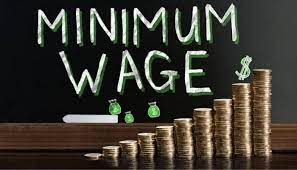
Federal Civil Servants in the FCT, have decried prolonged delay in implementation of the new minimum wage of N70,000 even as the economic condition of Nigerians continue to worsen,The living standard of Nigerians had continued to deteriorate since President Bola Tinubu announced the removal of fuel subsidy on petroleum products on May 29, 2023.
The liberalisation of the exchange rates windows in June, through floatation of the Naira, also exacerbated the economic situation, leading to a long negotiation between the organised labour and the Federal Government. However on July 19, both parties settled for N70,000 new minimum wage.The Federal Government had also, earlier announced a 25 per cent and 35 per cent wage adjustment in salaries of certain categories of workers on the consolidated salary structures.The wage increase which was supposed to take effect from January till now had neither been paid nor the minimum wage of N70,000 implemented at the end of August.Findings, however, revealed that Edo, Adamawa, Osun, Taraba, Enugu and Ebonyi states have commenced payment of the N70,000 new minimum wage to their civil servants.Consistent checks with the Office of the Accountant-General of the Federation, the Federal Ministry of Finance and Economic Planning and the National Salaries, Incomes and Wages Commission have not yielded any response.Mrs Maimuna Tijani, a Civil Servant, said that the delay in implementing the new minimum wage and the wage increase was frustrating and unfair.According to her, civil servants are already struggling to make ends meet, and the government’s failure to follow through on its promises only worsens the situation.”It shows a lack of commitment to improving the welfare of citizens.”She said that she had been forced to cut down on non-essential expenses and find additional sources of income, like tutoring.”I am also relying more on family support and community savings schemes to get by during this tough times,” she said.Mr Mathew Afolabi, a teacher, said that though the delay might be due to the economic challenges the government might be experiencing, it was critical to prioritise workers’ welfare.Afolabi said that without a wage increase, the purchasing power of the average teacher had continued to erode, leading to more significant economic problems.”I have started budgeting more strictly and avoiding unnecessary purchases. I am also considering moving to a cheaper area to reduce my rent expenses. It is tough, but I’am trying to stay optimistic,” he said.Mrs Lydia Dimka, a Nurse, expressed disappointment at the delay.”The government has a history of delaying such promises. Unfortunately, it is the average worker who suffers the most, as inflation continues to rise while wages remain stagnant.”I have had to take on extra shifts and some side jobs to supplement my income.”We have also reduced our grocery budget in the family by buying in bulk and choosing cheaper alternatives. We are getting by, but it is definitely challenging,” she said.Ms Chioma Ufodike said that the delay was a clear indication that the government was out of touch with the realities faced by the average Nigerian worker.Ufodike said if the government understood the daily struggles, this wage increase would have been implemented immediately,” she said.Ufodike added that she had resorted to “carpooling” and using public transport more often to save on fuel costs.“Additionally, I have cut down on social activities and non-essential spending. It is not ideal, but it is the only way to cope right now,” she said.Mrs Seido Terso, a Journalist said that the delay was unacceptable.Terso said that she had been trying to save as much as possible by cooking at home and avoiding eating out.”I am also trying to sell unused items to make extra money. It has been a difficult adjustment, but I am managing.”The delay shows a lack of respect for workers who have been patiently waiting for the wage increase.”The government needs to take swift action before things get worse for everyone,” she said.Meanwhile, an economist, Dr Chijioke Ekechukwu, has said that the solution for Nigerians was not in implementing the minimum wage only.According to Ekechukwu, the solution is to ensure that the inflation rate reduces, exchange rate moderates, fuel prices reduce, employment opportunities are created, and criminality and banditry reduced.“That way, even if the minimum wage is not achieved, Nigerians will still be able to manage the economic situation.“As a country, however, we must be seen to be meeting and fulfilling our promises in order to be trusted both now and in the future,” he said.Meanwhile, in spite of the hardship already being faced by Nigerians, the Nigerian Petroleum Corporation Ltd. (NNPCL) on Tuesday shockingly directed an increase in pump price of petrol from about N568 per litre to about N855 per litre.However, the Nigeria Labour Congress (NLC) has called for the immediate reversal of the new increase in pump price of petrol.The President of the NLC, joe Ajaero, said that the congress felt a deep sense of betrayal by the increase in the pump price of petrol.He said that one of the reasons for accepting N70,000 as national minimum wage was the understanding that the pump price of petrol would not be increased.“The government gave the options of either N250,000 minimum wage and a rise in the pump price between N1,500 and N2,000 or N70,000 minimum wage and retaining pump price of N568 – N617 per litre.”We opted for the latter because we could not bring ourselves to accept further punishment on Nigerians.”But here we are, barely one month after and with government yet to commence payment of the new national minimum wage, confronted by a reality we cannot explain.“It is both traumatic and nightmarish,” Ajaero said. (NAN)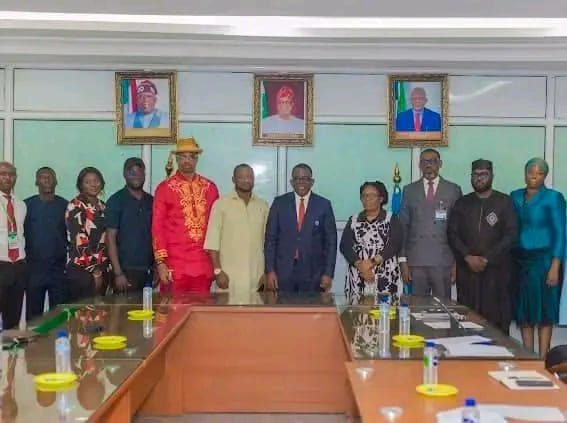
By David Torough, Abuja
The Nigerian Ports Economic Regulatory Agency (NPERA), has reiterated its commitment to transparency, accountability and responsible management of public resources as it settles into its new role as Nigeria’s port economic regulator.
The Director-General/Chief Executive Officer of NPERA, Dr.
Akutah Pius, stated this when he received a delegation from the Civil Society Coalition for Transparency and Good Governance (CSCTGG), led by its Executive Director, Comr. Success Uko, on a courtesy visit to the Agency’s Abuja Liaison Office.Akutah said the Nigerian Shippers’ Council had transitioned into NPERA under the new legal and regulatory framework, positioning the Agency to provide stronger economic regulation of Nigeria’s port sector.
He assured the delegation that NPERA remained committed to responsible management of public funds in the discharge of its statutory responsibilities, as well as promoting regulatory practices that enhance confidence and efficiency in the maritime sector.
The DG/CEO said the Agency would give due consideration to the Coalition’s request for collaboration and take appropriate formal steps to explore areas of partnership that align with NPERA’s mandate.
Earlier, the Executive Director of CSCTGG, Comr. Success Uko, said the Coalition was seeking a working relationship with NPERA to promote transparency, accountability, public awareness, stakeholder participation and good governance in the maritime sector.
Uko described NPERA as a critical stakeholder in Nigeria’s transport and maritime sector, noting that effective regulation and access to accurate information were important to improving service delivery and strengthening public confidence.
He said the Coalition had developed initiatives focusing on transparency, accountability, good governance and community development, and sought NPERA’s support towards their implementation and wider impact.
According to him, the proposed collaboration would also promote greater awareness among shippers, importers, exporters, transport operators and other stakeholders about policies, procedures, rights and responsibilities within the maritime sector.
He assured NPERA of the Coalition’s readiness to support legitimate programmes and initiatives of the Agency that are consistent with its statutory mandate.

The Independent National Electoral Commission (INEC) has appealed to political parties, candidates and voters to ensure peaceful conduct before, during and after the 2027 general election.
Resident Electoral Commissioner (REC) of INEC in Ondo State, Dr Mutiu Agboke, made the appeal at a major stakeholders meeting on Thursday at the commission’s offices at Akure South and North Local Government Area of the state.
Political parties, security agencies, traditional rulers, religious leaders, NYSC members, National Association of Transport Owners (NATO) and other drivers union, among others were present.
Agboke, who visited the traditional ruler of Iju and Ita-Ogbolu in Akure North Local Government Area, said the stakeholders meeting became necessary to ensure the forthcoming election was free, fair and credible.
According to him, credible elections are a collective responsibility and that security, traditional institutions and transport unions all play a critical role in protecting voters, officials and election materials.
The REC, who said INEC would remain neutral and transparent, warned that the commission would not tolerate partisan leaning, vote-buying, intimidation or any act capable of undermining the credibility of the poll.
“This advocacy is for the commission and our major stakeholders to be on the same page because our expectation is to let votes count.
“The recent elections conducted by INEC are enough proof to show that people’s votes determine the direction of who wins.
“Meanwhile, we don’t want them to engage in violence, nobody should allow him or herself or wards to be used for violence and desist from engaging in vote buying.
“It is only votes lawfully cast and duly counted would determine winners,” he said.
He, therefore, assured that INEC officials had been trained to adhere strictly to the Electoral Act and its guidelines, while the commission’s doors remained open for questions and clarifications to avoid misinformation.
Agboke reiterated INEC’s promise of neutrality, saying that preparations for the 2027 general elections had already begun in earnest.
According to the REC, the success recorded in recent by-elections in the state will be built upon to deliver free, fair and inclusive polls that reflect the will of the people.
In their separate responses, Oba Idowu Faborode, The Ogbolu of Ita-Ogbolu; Oba Amos Farukanmi, The Okiti of Iju and religious leaders, pledged to sensitise their subjects and congregations on non-violence.
Also, Dr Gbenga Jemiloye, Akure South Local Government Chairman of All Progressive Congress (APC), applauded the commission for the meeting, saying it showed INEC was ready for the election.
The security agencies and drivers union assured of adequate deployment across the state, while the transport unions committed to timely movement of personnel and materials.(NAN)

By David Torough, Abuja
The management and staff of DAILY ASSET have announced the death of the newspaper’s Political Editor, Mike Odiakose, who passed away in the early hours of Thursday at the Federal Medical Centre, Keffi, following a brief illness.
Odiakose, aged 63, was described by the management of DAILY ASSET as an accomplished journalist, who served with dedication across various media organisations in Nigeria before joining the newspaper two years ago.
In a statement personally signed by the Publisher and Editor-in-Chief of DAILY ASSET, Dr.
Cletus Akwaya, the newspaper expressed sadness over the death of the veteran journalist, saying he would be deeply missed by his colleagues and members of the wider media community.“Management and Staff of DAILY ASSET regret to announce the sudden passing of our Political Editor, Mr Mike Odiakose in the early hours of today (Yesterday), following a brief illness at the Federal Medical Centre Keffi,” the statement said.
The management noted that Odiakose’s contributions to journalism extended beyond DAILY ASSET, where he worked for two years, having previously served with dedication in several media organisations across the country.
He is survived by his wife and children.
The newspaper prayed for the peaceful repose of his soul and offered its condolences to his family, colleagues and associates.
“May his gentle soul rest in perfect peace. Amen,” the statement added.



NPERA Deepens Transparency, Accountability in Port Sector
ShareBy David Torough, Abuja The Nigerian Ports Economic Regulatory Agency (NPERA), has reiterated its commitment to transparency, accountability and responsible...


Troops Rescue Wounded Civilians, Recover 117 Cows, Stolen Vehicle in Zamfara
ShareBy David Torough, Abuja Troops of Sector 2, Operation FANSAN YAMMA, have recorded a series of operational successes in Zamfara...

Minister Warns Envoys against Unguarded Comments Ahead 2027 Elections
ShareThe Minister of Foreign Affairs, Ambassador Bianca Odumegwu-Ojukwu, has warned foreign diplomatic missions against making unguarded comments, disparaging remarks or...
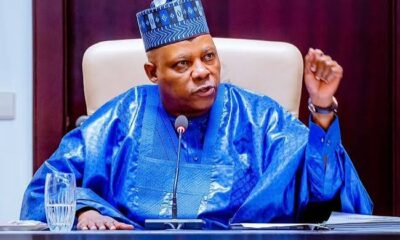

Shettima Holds Northern Governors in High Regard, Aide Clarifies
ShareSenior Special Assistant to the President on Media and Communications, Stanley Nkwocha, said Vice President Kashim Shettima holds northern governors...


World Bank Mobilises $112bn Private Capital in FY26
ShareThe World Bank Group said it mobilised a record 112 billion dollars in private capital in fiscal year (FY) 2026,...


Oluremi Welcomes FOPSHAN’s Endorsement of Tinubu for Second Term
ShareThe First Lady, Sen. Oluremi Tinubu on Thursday in Abuja, welcomed the endorsement of the President for a second term...


Why APC Govs Oppose Wike — Tinubu’s Ex-spokesman
ShareA former South-East spokesman to President Bola Tinubu, Denge Onoh, has attributed the growing face-off between the Minister of the...
Nigeria, State Capture and the Implications on 2027 Elections
ShareBy Uche Igwe An interesting trend is going on in Nigeria in the name of democracy. Many observers have noticed...
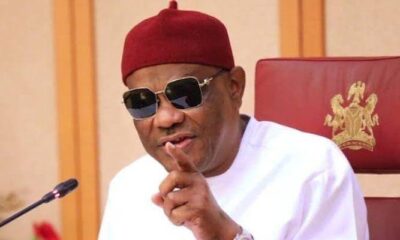

Wike, His Rainbow Coalition and the Politically Lazy Governors
ShareBy Hajia Hadiza Mohammed Nyesome Wike, the current Minister of the Federal Capital Territory (FCT) will go down in Nigeria...

2027: INEC Appeals for Peaceful Conduct, Promises Neutrality
ShareThe Independent National Electoral Commission (INEC) has appealed to political parties, candidates and voters to ensure peaceful conduct before, during...