
Health
FG Inaugurates Committee on Health Insurance

By Laide Akinboade, Abuja
The Federal Government has inaugurated a ministerial committee for the provision of health insurance for retirees and about 15 million elderly persons in the country.
Consequently, government is to develop a framework for health insurance for elderly persons in the country.
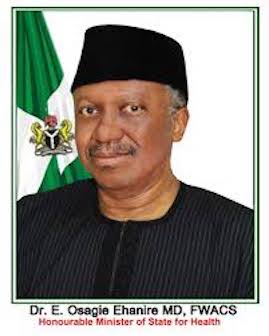
Minister of Health, Dr.
Osagie Ehanire, who disclosed this in Abuja, said the COVID-19 pandemic had made it obvious that about 80 per cent of older persons have pre-existing medical conditions requiring regular medications and depending solely on a pension allowance that is barely enough to meet basic household needs, they experience an extra burden that defeats the essence of pension and may fall into depression.Ehanire noted that the move underscored the resolve and commitment of President Muhammadu Buhari to improve access to healthcare and promote the wellbeing of ageing citizens of our country through provision of health insurance.
“The President subscribes to the view that elders who have served their country be treated with respect and dignity and commits to investing in older persons in recognition of the contribution they continue to make to family, community and nation.
“This aligns with global best practices in health care for older persons. Older persons with intergeneration links are a force for socioeconomic growth with institutional memory and experience to shepherd Youths and advise on growth opportunities.
Health and Wellbeing are crucial to older persons’ independence and autonomy and critical to maintaining inclusion and participation in community affairs.
“Nigeria is a signatory to many global commitments on health, a particular one of which is the pursuit of Universal Health Coverage for healthier lives and wellbeing of citizens of all ages, in accordance with the President’s vision to “Leave No One Behind” in pursuit of health related Sustainable Development Goals No 3.
‘The elderly and retirees of 60 years and above, make up six to seven per cent, being 15 million out of Nigeria’s population, and the size of some countries.
The elderly may be facing glaring health challenges, over and beyond the wear and year of aging, and additional strain from financial challenges and psychosocial issues of adjusting to a retiree’s life. Sooner than later, problems of cognition set in slowly,” he said.
In his remarks, Minister of State for Health, Dr. Olorunimbe Mamora, said that provision of health insurance for the elderly WAs part of efforts to improving the quality of life of older persons in the country to ameliorate challenges associated with old age.
He noted that Nigeria has more than five million people of over 60 years of age and providing health insurance for this category of citizens will improve our health indices will improve and accelerate the quest to attain Universal Health Coverage in the country.
Presenting an overview of the proposed insurance for the elderly, Executive Secretary of the National Health Insurance Scheme, Prof.
Mohammed Nasir Sambo, said that the agency had developed a comprehensive matrix to cover all Nigerians with health insurance adding that the NHIS will work out modalities for the new initiative because it includes retirees fro the Federal, states and local governments as well as retires from the private sector.






By Laide Akinboade, Abuja
The Federal Government (FG), on yesterday confirmed one case of Ebola disease in the Federal Capital Territory (FCT), following laboratory confirmation.
Minister of Health and Social Welfare, Prof.
Muhammad Ali Pate, stated this while briefing journalists in Abuja.He said the patient, a woman, who was from Uganda, was admitted in Abuja and the diagnosis has been confirmed.
The statement reads, “The patient, a woman who recently arrived in Nigeria on an international flight from Uganda, was admitted to a private hospital in the FCT, where she received care for several days before the diagnosis was confirmed.
She is currently in isolation and receiving medical care.“The Federal Minister of Health and Social Welfare and NCDC are working closely with the FCT Health Services Secretariat and other relevant authorities to contain the infection and prevent further spread..
“Contact tracing has commenced with 44 close contacts identified presently, with public health teams identifying and monitoring people who may have been exposed, including healthcare workers, patients, caregivers and travel contacts. Surveillance has been intensified, and the hospital is receiving immediate support to strengthen infection prevention and control measures.
“The FG calls on all public and private healthcare facilities nationwide to be on high alert. Healthcare workers must maintain a high index of suspicion, promptly identify and isolate suspected cases, observe strict infection prevention and control measures, and immediately report suspected cases to public health authorities.
“What Nigerians Should Know and Do
Ebola spreads through direct contact with the blood or body fluids of someone who is sick with the disease or has died from it, or through contact with contaminated materials. A person with Ebola cannot spread the disease before symptoms begin”.
The Federal Government therefore advised residents to remain calm but vigilant.
“Remain calm but vigilant. There is no need for panic. Practise regular hand hygiene and avoid contact with the body fluids of anyone suspected to have Ebola.
Watch for symptoms, including fever, severe weakness, headache, vomiting and diarrhoea, particularly following possible exposure.
“Report any possible exposure immediately, even if you feel well. If you develop symptoms, avoid close contact with others and call public health authorities for guidance before visiting a healthcare facility.
” Cooperate with public health teams. Anyone contacted during contact tracing, including relevant airline passengers, should provide the necessary information and follow public health advice.
“Avoid rumours and stigma. Share only verified information from official health authorities” .
The Minister recalled, “Our Assurance to Nigerians. Nigeria successfully contained Ebola in 2014, and we have the experience and public health systems to respond to this case. However, containing Ebola requires everyone to play their part.
“The Federal Government, FCT authorities and other partners are working together to protect healthcare workers, patients and the wider public. Investigations are ongoing, and we will continue to provide accurate and timely information.
” We urge Nigerians to remain calm, stay vigilant and cooperate with public health authorities. Early detection, prompt reporting and everyone’s cooperation are critical to preventing further spread.
“The Government of Nigeria through the Presidential Taskforce on EVD and NCDC will continue to provide updates.
NCDC free call centre is available 24 hours a day, seven days a week. For information or to report a suspected case, please call NCDC toll-free number 6232″.

By Laide Akinboade, Abuja
The Benue State House of Assembly has passed into law a landmark legislation aimed at eliminating tuberculosis (TB) and protecting persons affected by the disease from discrimination and human-rights violations.
The legislation, known as the Tuberculosis Elimination, Human Rights Protection and Anti-Discrimination Law of Benue State, 2026, was passed into Law during Thursday plenary presided over by Speaker, Rt.
Hon.Berger Alfred Emberga, MNIQS, RQS, following consideration of the report of the House Standing Committee on Health and Human Services.The committee, chaired by Hon. Matthew Damkor, Ph.D., said the legislation was necessary to provide a comprehensive legal framework for tuberculosis prevention, diagnosis, treatment, care and control across the state.
The law also seeks to safeguard the rights of persons affected by Tuberculosis (TB), including their rights to dignity, healthcare, privacy, information, employment, education and social protection.
In its report, the committee identified several areas of the original Bill that required amendment, particularly provisions relating to federal laws and institutions, implementation responsibilities, screening and isolation, enforcement mechanisms, offences and penalties.
The committee recommended the removal of provisions purporting to amend federal legislation, particularly the Employees’ Compensation Act, 2010, noting that such amendments were inappropriate for state legislation.
It also recommended that references to federal institutions as implementing authorities be replaced with relevant Benue State institutions, while allowing for lawful collaboration with federal authorities.
The committee further recommended that the Commissioner for Health and Human Services, through the Ministry of Health and relevant state agencies, be clearly designated to coordinate the implementation of the law.
On the protection of fundamental rights, the House called for clearer safeguards in provisions dealing with TB screening, isolation and restriction of movement, including informed consent, confidentiality, medical necessity, proportionality and the use of the least restrictive measures.
It also recommended the establishment of an accessible mechanism for receiving complaints, addressing discrimination and providing remedies to persons whose rights may have been violated under the law.
The House further urged relevant agencies to ensure that offences and penalties under the legislation are clearly defined, proportionate and enforceable.
After considering and adopting the committee’s recommendations clause-by-clause, the bill was read for the third time and subsequently passed into law by the Speaker, Rt. Hon. Emberga following a unanimous consideration and adoption by members.
The Tuberculosis Law which was sponsored by Hon. Dr. Simon Gabo of Mata State Constituency and others, is expected to strengthen Benue State’s response to tuberculosis and provide a stronger legal framework for protecting persons affected by the disease from stigmatization, discrimination and other rights violations.
Meanwhile, Civil Society Organisations, Lawyers Alert and Media Health and Rights Initiative of Nigeria, MHR, have commended the Benue State House of Assembly for taking steps to strengthen the state’s response to tuberculosis, and protect the rights of persons affected by the disease.
In a joint statement, the President of Lawyers Alert, Rommy Mom and the Executive of MHR, Alu Azege said the Bill brings health and human rights dimensions of TB into legislative conversation in the state.
The Niger State Private Health Facilities Agency (NiSPHFA) has sealed 12 unregistered Islamic medicine stores in Minna and a health facility in Katcha Local Government Area (LGA).
The Executive Chairman of NiSPHFA, Dr.
Abdullahi Suleiman, disclosed this while receiving members of the Islamic and Prophetic Medicine Practitioners’ Association of Nigeria (IPMPAN) in Minna.The enforcement is part of the agency’s renewed efforts to protect residents from unsafe healthcare practices and ensure compliance with minimum standards.
Suleiman said the facilities were sealed over alleged non-compliance with regulatory standards.
According to him, the enforcement is not aimed at persecuting healthcare providers but at ensuring residents have access to safe, quality, and standard-compliant healthcare services.
“Our responsibility is to protect the people by ensuring that anyone providing healthcare services operates within the required standards,” he said.
He urged genuine alternative medicine practitioners to register with NiSPHFA, saying registration would enable the agency to identify operators, monitor their activities, and protect residents from unsafe products and practices.
Suleiman also announced plans to organise a trade fair for verified alternative medicine practitioners to promote legitimate practices and improve public confidence in alternative healthcare.
He emphasised the need for practitioners to maintain minimum standards of hygiene, sanitation, safe preparation and storage of medicines, proper packaging, and infection prevention.
“Practitioners should refer patients whose conditions are beyond their capacity to appropriate health facilities. Such referrals will help reduce avoidable health risks,” he said.
The chairman said sustained enforcement, stakeholder collaboration, and improved compliance would enable NiSPHFA to safeguard residents and promote a safer, more accountable, and quality-driven healthcare system across the state.
He said the NiSPHFA enforcement team inspected 10 health facilities in Katcha local government and identified various irregularities requiring improvement.
Suleiman said the affected facilities were issued 21-day notices to correct the identified deficiencies.
“One of the facilities inspected was sealed for non-compliance with established standards,” he said.
He added that the agency also secured the support of the local government area in identifying and addressing facilities operating with irregularities.
IPMPAN Chairman, Abdullahi Haske, commended the state government for establishing NiSPHFA.
He pledged the association’s cooperation in ensuring that its members complied with regulatory requirements.




Wasted Years In The Printing Profession: Can Clement Koko’s Bold Leadership Usher In A New Dawn?
ShareAfter Years of Leadership Crises and Missed Opportunities, the New CIPPON President, Clement koko Takes the Battle to Paper Manufacturers...

Adeniyi, JAMB Registrar Seek Operational Synergy
ShareBy Tambaya Julius, Abuja The Nigeria Customs Service (NCS) and the Joint Admissions and Matriculation Board (JAMB) are considering areas...


NLC Suspends FCT Indefinite Strike
ShareThe Nigeria Labour Congress (NLC), Federal Capital Territory (FCT) Council, has suspended its indefinite strike and directed all affected workers,...


APC Dismisses Alleged Plot to Assassinate Atiku
ShareThe All Progressives Congress (APC) Presidential Campaign Council (PCC) has dismissed allegations that the Federal Government is plotting to assassinate...
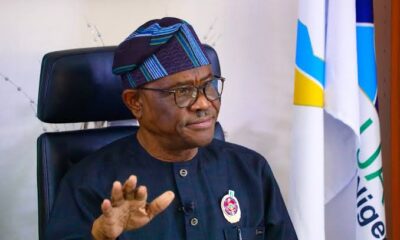

2027: We’ll Deliver Rivers, FCT for Tinubu – Wike
ShareBy Laide Akinboade, Abuja The Minister of the Federal Capital Territory (FCT), Nyesom Wike, has declared that the All Progressives...


Tinubu’s Three Bills and the Burden of Government
ShareBy Tom Chiahemen A government that asks its citizens to endure the pain of economic reform must demonstrate a corresponding...
DMO Raises N2.02trn As FGN Bond Yields Rise To 17.29 Per Cent
ShareBy Tony Obiechina, Abuja Yields on Federal Government of Nigeria (FGN) bonds increased by as much as 50 basis points...

Anxiety Grips FCT Residents As FG Confirms Ebola Disease Case
ShareBy Laide Akinboade, Abuja The Federal Government (FG), on yesterday confirmed one case of Ebola disease in the Federal Capital...


Again, Tinubu Rules Out Return to Petrol Subsidy Regime
ShareBy Tambaya Julius, Abuja President Bola Ahmed Tinubu has ruled out a return to petrol subsidy, insisting that his administration...


Former Delta Governor Uduaghan Dies at 70
ShareFrom Francis Sadhere, Delta Former Governor of Delta State, Dr. Emmanuel Eweta Uduaghan, has died. Uduaghan, who governed the state...