
Business Analysis
Manufacturers, Households Resort to Sachet Products for Survival

Nigerian households have never had it so bad; since the outset of coronavirus, otherwise known as COVID-19, on Feb. 27, 2020, many of them have been agonising over how to make ends meet.
The coronavirus, which soon assumed pandemic level, left in its wake job losses, salary cuts and a growing army of unemployed youths, negatively impacting incomes of many households.
The coronavirus pandemic apart, Nigerian households have also been reeling under the effect of double-digit inflation, which has whittled their purchasing power.
Indeed, a report of the National Bureau of Statistics (NBS) said the inflation rate for the month of June, rose from 16.
82 per cent in April 2022 to 17. 71 per cent, its highest level in 11 months, driven by surging prices of foodstuffs.Consequently, households are now devising different survival strategies for survival; many of them no longer buy goods in bulk, preferring cheaper alternatives and buying in piecemeal.
Manufacturers of essential commodities, who are currently experiencing dwindling sales, have responded by devising means of reaching the average households whose incomes have been negatively impacted by the combined effects of the coronavirus pandemic and inflation.
Many manufacturers soon switched from jumbo packs to smaller packs and sachets to give the average income households access to essential commodities.
It is now common to see products such as milk, toothpaste, tomato paste, disinfectants, gins, among others, in smaller packs and sachets in supermarkets, corner shops and other retail outlets.
Mrs Ayishat Reuben, a full-time housewife at Canal View Estate, Okeafa, Isolo, Lagos State, said manufacturing companies had made life easier by coming up with such products that average Nigerians could afford.
“The beauty of these smaller products is that they have the same content as the ones in bigger containers, and they are affordable and life savers.
“My three children in primary school do not lack breakfast because with N300, I buy a sachet of Milo and bread for them,” she said.
Mr Malcolm Ojong, a former staff of National Museum, Lagos, believes that many Nigerian families are now buying sachet products as they are cheaper and more affordable.
“Everything I use in my house, I buy in sachets and at low prices; companies have made life easier for me and my family,” he said.
Mrs Adanne Udi, a former staff of Tiddler International School, Egbe, Lagos State, said she was happy that manufacturers started producing essential commodities in smaller packs.
“It is as if manufacturing companies knew my suffering and decided to begin the production of smaller products; I cook ‘moi-moi’ and make pap, which I sell with sachet liquid milk.
“Since I started this trade, I have made more money to feed my family than when I was in school.
“I sell the tin milk as well, but people don’t buy it as much as they buy the packet milk because is more affordable,” she said.
Mr George Mbam, Chief Executive Officer of Green Baskit, said the introduction of products in smaller packs and sachets was to give more people access to value they could afford.
He said his company would offer more products that would be affordable to low income families whose purchasing power had been eroded.
“At Green Baskit, we make healthy African Snacks, and doing this ethically out of the natural ingredients, we use means that our price points would ordinarily be above the buying power or the low-income earners.
“For example, a pack of our Donkwa Balls Snacks goes for N850, and a pack of our dried fruits and nuts mix (Nutty Fruity Mix) goes for N1,650 and some people consider these prices to be too high for them.
“The only way we can make our products accessible and affordable to these categories of people is to make value packs that come in smaller and much more affordable sachets,” said Mbam.
He said his company was working on smaller packs: “This way, we are able to offer healthy snacks at a lower price point, while still keeping the quality high enough that we can be confident in our product.
“The brand mission of Green Baskit is to make healthy African snacks accessible, affordable and acceptable to everyone.
“I believe ‘sachetisation’ is one of the ways through which we can achieve this mission and we are doing a lot of work towards this,” Mbam said.
Mr Francis Ofonime, Executive Manager of Homemade Soya Choco, said the current rate of inflation, particularly on food items, had made many families not eat healthy and well.
“Seeing the situation, I decided that in my company I would not produce items that I would not be able to sell; I would rather produce what the poor can also benefit.
“If I take you to our store, you would not find any jumbo pack of 450g Homemade Soya Choco, which I used to produce and sell at N4,000 in time past.
“This is because it takes a longer time to sell; I have since started producing a value pack of 150g, which sells for N1,000.
“This repackaging of goods into smaller quantities has made life easier for many households because it is portable and affordable for people who do not have the resources to buy the jumbo packs,” he said.
Ofonime, however, urged the federal government to free millions of poor Nigerians from poverty and build a new economic system that would work for everyone, not just a fortunate few.
Meanwhile, Prof. Hassan Oaikhenan of the Department of Economics, University of Benin, Benin-City, said economic policies that were aimed at dealing with inflation would only work when the enabling environment for the production of goods and services was put in place.
According to him, it is the responsibility of the government to put the much-needed enabling environment in place.
“For me, therefore, addressing the bottlenecks that stand in the way of a productive real sector of the economy is the logical first step that needs to be taken to curtail inflation in the economy.
“There is also need to address the pervasive problem of insecurity, which has served to stifle agricultural production by peasant farmers, given that such activities play a significant role in moderating the prices of foodstuffs.
“Infrastructural bottlenecks such as dilapidated roads serve to raise the cost of transportation of food items, a major driver of the inflationary situation. There is an overriding need to address this.
“Given the exchange rate depreciation and rising inflation, deriving from the hugely import-dependent nature of the economy, it becomes imperative for policy makers to implement policies geared towards reversing the dwindling exchange rate of the naira.
“This calls for pragmatic efforts to beef up domestic production for consumption and export; there are no quick fix solutions to the undesirable trend in the prices of goods and services.
“Accordingly, the government should address the problem of inflation in the economy, a problem that has the undesirable potential to assume a monstrous dimension that could end up making the Nigerian Naira to go the way of the Zimbabwean dollar,” Oaikhenan said.
Expectations are rife that the federal government will ultimately engineer a new business clime that will reverse the undesirable trend of rising inflation that has withered the income of many households.
Until that happens, the average Nigerian consumers, and manufacturers of household products have found a meeting point in sachet products. Call it a marriage of convenience, and you might just be right. (NAN)






By Joel Oladele, Abuja
The Nigeria Customs Service (NSC) has generated an impressive N1,751,502,252,298.05 in revenue during the first quarter of 2025.
The Comptroller-General (CG) of the Service, Bashir Adeniyi, disclosed this yesterday, during a press briefing in Abuja.
According to Adeniyi, the achievement not only surpasses the quarterly target but also marks a substantial increase compared to the same period last year, reflecting the effectiveness of recent reforms and the dedication of customs officers across the nation.
“This first quarter of 2025 has seen our officers working tirelessly at borders and ports across the nation.
I’m proud to report we’ve made real progress on multiple fronts—from increasing revenue collections to intercepting dangerous shipments,” Adeniyi stated.He attributed this success to the reforms initiated under President Bola Tinubu’s administration and the guidance of the Honourable Minister of Finance and Coordinating Minister of the Economy, Olawale Edun.
The CG noted that the revenue collection for Q1 2025 exceeded the quarterly benchmark of N1,645,000,000,000.00 by N106.5 billion, achieving 106.47% of the target. This performance represents a remarkable 29.96% increase compared to the N1,347,705,251,658.31 collected in Q1 2024.
Adeniyi highlighted the month-by-month growth, noting that January’s collection of N647,880,245,243.67 surpassed its target by 18.12%, while February and March also showed positive trends.
“I’m pleased to report the Service’s revenue collection for Q1 2025 totaled N1,751,502,252,298.05.
“Against our annual target of N6,580,000,000,000.00, the first quarter’s proportional benchmark stood at N1,645,000,000,000.00. I’m proud to announce we’ve exceeded this target by N106.5 billion, achieving 106.47% of our quarterly projection. This outstanding performance represents a substantial 29.96% increase compared to the same period in 2024, where we collected N1,347,705,251,658.31.
“Our month-by-month analysis reveals even more encouraging details of this growth trajectory,” Adeniyi said.
In addition to revenue collection, Adeniyi said the NCS maintained robust anti-smuggling operations, recording 298 seizures with a total Duty Paid Value (DPV) of ₦7,698,557,347.67.
He stated that rice was the most seized commodity, with 135,474 bags intercepted, followed by petroleum products and narcotics.
“From rice to wildlife, these seizures show our targeted approach,” Adeniyi remarked, noting the NCS’s commitment to combating smuggling and protecting national revenue.
Adeniyi also highlighted key initiatives, including the expansion of the B’Odogwu customs clearance platform and the launch of the Authorized Economic Operators Programme, which aims to streamline processes for compliant businesses. The NCS’s Corporate Social Responsibility Programme, “Customs Cares,” was also launched, focusing on education, health, and environmental sustainability.
Despite these achievements, the CG noted that the NCS faced challenges, including exchange rate volatility and non-compliance issues. Adeniyi acknowledged the need for ongoing adaptation and collaboration with stakeholders to address these challenges effectively.
Looking ahead, the NCS aims to continue its modernization efforts and enhance service delivery, ensuring that it remains a critical institution in Nigeria’s economic and security landscape.
“Results speak louder than plans; faster clearances through B’Odogwu, trusted traders in the AEO program, and measurable food price relief from our exemptions. We’ll keep scaling what works,” he concluded.
 |
By Tony Obiechina Abuja
The Nigeria Sovereign Investment Authority (NSIA) yesterday disclosed that its net assets grew from N156bn in 2013 to N4.35 trillion in 2024.
Similarly, the Authority has remained profitable for 12 consecutive years, leading to cumulative retained earnings of N3.
74 trillion in 2024.Managing Director and Chief Executive Officer of NSIA, Aminu Umar- Sadiq made these disclosures at a media engagement in Abuja, highlighting its audited financial results for the 2024 fiscal year.
According to him, the results underscored the resilience of the authority’s investment strategy and the strength of its earnings, driven by a well-diversified revenue base and robust risk management practices, despite a challenging global macroeconomic and geopolitical environment.
Total operating profits, excluding share of profits from associates and Joint Venture (JV) entities, increased from N1.17 trillion in 2023 to N1.86 trillion in 2024, driven by the strong performance of
NSIA’s diversified investment portfolio, infrastructure assets, gains from foreign exchange movements, and derivative valuations.
In addition, Total Comprehensive Income (TCI), inclusive of share of profits from associates and JV entities, reached N1.89 trillion in 2024, reflecting a 59 per cent increase from N1.18 trillion in 2023.
Core TCI (excluding foreign exchange and derivative valuation gains) rose by 148 per cent to N407.9 billion in 2024 compared to N164.7 billion in 2023, supported by robust returns on financial assets measured at fair value through profit and loss, including collateralised securities, private equity, hedge funds, and Exchange-Traded Funds (ETFs).
Umar-Sadiq said the authority’s outstanding financial performance in 2024 reflected the “strength of our strategic vision, disciplined execution and unwavering commitment to sustainable socio-economic advancement.”
He said, “By leveraging innovation, strategic partnerships and sound risk management, we have not only delivered strong returns but also created value for our stakeholders
“As we move forward, we remain focused on driving economic transformation, expanding opportunities, scaling transformative impact and ensuring long-term prosperity for current and future generations of Nigerians.”
The CEO reaffirmed the authority’s commitment to managing the country’s SWF, and delivering the mandates enshrined in the NSIA Act.
He said NSIA remained poised to continually create long-term value for its stakeholders by delivering excellent risk-adjusted financial results, developing a healthy and well-diversified portfolio of assets and large-scale infrastructure projects, and enhancing the desired social outcomes.
He noted that NSIA was committed to its mandate of prudent management and investment of Nigeria’s sovereign wealth.
“In adherence to its Establishment Act, NSIA prioritises transparency, disclosure, and effective communication with all stakeholders and counterparties,” he said.
He pointed out that in the year under review, a new board, led by Olusegun Ogunsanya as Chairman, was appointed by President Bola Tinubu, in accordance with the provisions of the NSIA Act.
The new board will provide strategic direction and oversight, in addition to playing a pivotal role in critical decision making.
He remarked that under the guidance of the Board, the Authority will retain focus on its primary mandate of creating shared value for all stakeholders based on its continued adoption of corporate governance practices.
“NSIA prides itself an investment institution of the federation established to manage funds in excess of budgeted oil revenues and its mission is to play a pivotal role in driving sustained economic development for the benefit of all Nigerians through building a savings base for the Nigerian people, enhancing the development of the county’s infrastructure, and providing stabilisation support in times of economic misadventure,” he added.

By Cletus Akwaya
Call it Dangote Republic and you would not be wrong, for that is what it means in real sense.
The ultra-modern Dangote Refinery and Petrochemical complex located at the Lekki Free Trade Zone in Lagos is the World’s Engineering wonder.
A guided tour for top Media executives in the country by the President, Dangote Industries Group himself, Alhaji Aliko Dangote on July 14, provided a rare privilege and opportunity to appreciate the project that has emerged as the World’s largest single train petroleum refinery.
Dangote, the Kano-born business mogul and Africa’s richest man, whose vision for the industrial transformation of Nigeria led to the initiation of this project is certainly a fulfilled person, having accomplished such a gargantuan task in the spelt of just about 10 years.
The refinery, which is built and equipped with the latest technology in the industry. It is a behemoth sitting on a huge land space of 2, 735 hectares, approximately seven times, the size of Victoria Island, the octane section of Lagos, which has become the abode for the very rich in the nation’s commercial nerve – centre over the decades.
The land was provided by the Lagos state government after the payment of $100million dollars by the Dangote Group as cost of the land.
The edifice didn’t come easy as the engineers had to reclaim 65million cubic metres of sand through dredging of the Atlantic coastline to pave way for the construction of the refinery and its accompanying facilities especially the Jetty.
The Dangote refinery is not a stand-alone project as it has a coterie of associated industries and infrastructure making it a self-reliant complex.
For instance, the company has a fully developed port (jetty)for maritime operations for both in-take of crude and discharge of refined products. This perfectly compliments the huge pipeline network that lands into the Atlantic for intake of crude and loading of refined products to ships. Its Jetty, which stretches 9KM into the international waters in the Atlantic Ocean and 12.5 KM from the refinery is perhaps one of the most modern in the world built with sand piles that shield the final landing points from the violent oceanic waves, thus providing for safety and stability of ships, barges and oil tankers.
The complex is accessed by 200KM network of concrete under-lay and well asphalted road network to ease vehicular traffic. The refinery has its dedicated steam and power generation system with standby units to adequately support operations of the various plants in the complex.
It has successfully completed a 435 MW power generating plant for its operations. The power generated from this plant surpasses the entire distribution capacity of Ibadan Electricity Distribution company, which supplies electricity to five states of the Federation including Oyo, Osun, Ondo, Ekiti and Kwara.
The Dangote refinery with a capacity of 650,000 bpd of crude oil is designed to handle the crude from many of the African countries, the Middle East and the US light crude. Its petrochemical plant is designed to produce 77 different high-performance grades of polypropylene, which is the major raw material for numerous industries and other refineries. With a huge refining capacity, Alhaji Dangote said the products from the refinery company would easily meet 100 per cent the needs of Nigeria’s demand for gasoline, diesel, Petrol and Aviation Jet with 56 per cent surplus for export, from which the company projects to earn a princely $25billion per annum from 2025.
The company has facility to load 2,900 trucks with its various products in a day by land and millions of litres of products through the waters depending on where the orders come from. The $25million projected revenue in 2025 could translate to a huge relieve for the nation in dire need of foreign earnings to shore-up the value of the nation’s currency.
The associated industry, the Dangote Fertilizers Limited also situated in the complex utilises the raw materials from petrochemicals to produce different varieties of fertilzers especially Urea, NPK and Amonia grades of fertilizers. Apart from the local market, Dangote is already exporting its fertilizers to other countries including Mexico, a testament to its high quality that meets world standards.
This feta, the President of Dangote industries explained was possible because of the high quality, the company has opted to pursue. In between the refinery and the fertilizers complex lies a 50,000 housing estate, which provided accommodation for the construction workers at the time of construction especially during the COVID-19 lockdowns of 2020, when workers remained encamped on the project site to continue with the work.
What stands out the Dangote Refinery is perhaps not in its sheer size and capacity but in the fact that it is perhaps the only of such projects whose Engineering, Procurement and construction(EPC) was done directly by the company without engaging the world renowned refinery constriction companies like Technip Bechtel (USA)Technip (France)Aker Solutions (Norway)Chiyoda Corporation (Japan)SNC-Lavalin Group (Canada)J. Ray McDermott (USA)JGC Corporation (Japan)Hyundai Heavy Industries (South Korea)Foster Wheeler (USA) and Daelim Industrial Company (South Korea)
“The design of the refinery was handled by dozens of Engineers and technical experts assembled in India and Houston, Texas, USA to execute engineering designs of the refinery,” said Edwin Kumar, the Executive vice President, Oil and Gas for the Dangote Group who midwifed the birth of the refinery complex.
“We didn’t give out contracts to anybody, we bought every single bolt and equipment ourselves and had it shipped into the country,” Dangote explained to his guests.
Part of the equipment imported into the country was the procurement of over 3,000 cranes to handle the evacuation of huge consignments of machinery from the wharf and for subsequent installation at the construction site. The cranes have become an unusual assemblage of such equipment to be found in one place on the African continent.
If there was any doubt that Alhaji Aliko Dangote is Africa’s richest man, the successful completion of the refinery and petrochemical complex at the cost of about $20billion has further confirmed his status as Africa’s leading businessman and entrepreneur.
However, Dangote does not really accept that he is the richest man on the continent,
“When you are rich, you accumulate cash, but when you wealthy, you create wealth” he told the top Media executives on tour of the huge project, explaining that he would rather prefer to be referred to as a “Wealthy man.”
And consistent with his business philosophy, Dangote hinted of plans to list the refinery on the Nation’s stock exchange by the first quarter of 2025. His vision is to avail the public of 20 per cent of the shares so as to ensure participation by Nigerians and even international portfolio investors.
The refinery company and the entire of Dangote Group at the moment provides direct employment to about 20,000 Nigerians and much indirect jobs to Nigerians, making it the highest employer of labour outside the government.
Most interestingly, the highly technical operations of Dangote refinery is operated by over 70 per cent of local manpower who work in the refinery control, centre, the numerous production and quality control laboratories among others. Some of the staff who explained their tasks to the visiting media executives said they were graduates of Engineering and allied disciplines recruited mostly from Nigerian universities and trained in various institutions abroad for periods ranging from sixth months – one year to master refinery operations. Through this strategy, Dangote has ensured transfer of technology to thousands of Nigerian youths.
“We don’t know where they come from as long as they are Nigerians and if they decide to leave and join international oil companies for better job opportunities, we have no problem with that,” Dangote responded to a question on the strategy to retain the technical manpower for stability of the refinery’s operations.
The Dangote Refinery is a Republic of some kind, at least an economic or industrial Republic.
But the man who presides over this ‘industrial empire’, Alhaji Dangote says his only ambition is to boot the nation’s economy and ensure netter life for Nigerians.
“When you import any product into Nigeria, you are importing poverty and exporting our jobs to those countries from where you are importing” Dangote said adding “this is why I want economic nationalism in Nigeria.”
Dangote’s vision even goes beyond Nigeria as he has cement factories and other business concerns in about 13 African countries including Ghana, Ethiopia, Tanzania, Uganda, etc. This signifies his continent-wide dream to transform Africa’s economies.
There has been attempts by some international oil companies to frustrate the successful take-off of the refinery, through over pricing and in some instances outright denial of crude supplies for processing. This made Dangote to commence importation of crude from the US. However, the cheering news that the Nigerian National Petroleum Company Limited (NNPC) has finally approved a supply arrangement has raised hopes that full operations will commence and that the long-awaited Dangote oil products will reach consumers around the country from August.
At last, the Dangote Group may have achieved its objective to serve as the elixir to Nigeria’s industrialisation effort. This is perhaps the greatest legacy of Africa’s richest man to his country of birth.

Nigeria Clinches Bronze in Judo at 4th African Youth Games
ShareTeam Nigeria clinched a bronze medal in judo at the ongoing 4th African Youth Games after winning the 63kg category bout against Zimbabwe. The...

NCDMB Set to Attain 100 Per Cent Local Content in Africa
ShareBy Eddy Ochigbo, Abuja The Nigerian Content Development Management Board (NCDMB) has reaffirmed its determination to increase the current from...


Trump Expands US Travel Ban to Five More Countries
SharePresident Donald Trump has expanded a US travel ban, barring nationals of five additional countries and people travelling on Palestinian Authority-issued documents from entering the US. The White...


Farouk Ahmed, Gbenga Komolafe Resign after Dangote Petition
ShareBy Eze Okechukwu, Abuja President Bola Tinubu has nominated new chief executives for Nigeria’s two foremost petroleum regulatory agencies following the resignation...

NLC Stages Nationwide Strike over Insecurity
ShareLabour Takes Nationwide Protest to Streets over Insecurity The Nigeria Labour Congress (NLC) yesterday led a nationwide protest across major...

Presidency Transmits N43.5trn 2026 Appropriation Bill to Reps
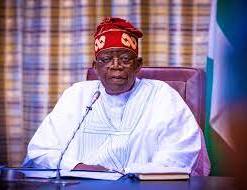
SharePresident Bola Tinubu yesterday, transmitted the appropriation (Repeal and Re-enactment Bill 2024/2025 bill to the House of Representatives for consideration and expected approval...

SMEDAN Unveils MSMEs New Policy in 2026, Targets Funding Expansion
ShareThe Small and Medium Enterprises Development Agency of Nigeria (SMEDAN) said it will deepen business formalisation, expand access to affordable financing and unveil a new national MSMEs policy in 2026....


NCDMB set to Attain 100% Local Content in Africa
ShareBy Eddy Ochigbo The Nigerian Content Development Management Board (NCDMB) has reaffirmed its determination to increase the current from 56%...

The Man Rotimi Makinde: A True Progressive by All Standards
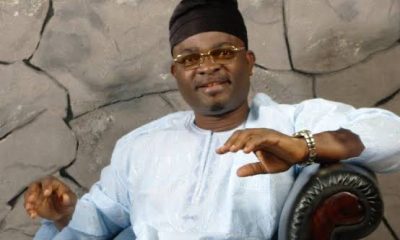
ShareBy Kolapo Ogundare It is impressive to note that many well-meaning Nigerians are now coming out, recounting several good deeds...
FG, NBS Launch Nationwide MICS7 Survey
ShareFrom Francis Sadhere, Delta The Federal Government of Nigeria, through the National Bureau of Statistics (NBS), has officially launched the...