
FEATURES
Medical Negligence: Lagos Justice System Must be Applauded for Orji’s Conviction –Odefa-Wachuku

Following the conviction of Dr Ejike Orji for criminal negligence, Ms Adanma Odefa-Wachuku, a Lawyer and Public Health Advocate, says accolades must be showered upon the Lagos State Criminal Justice system for setting this novel precedence.
According to her, the conviction of Orji for criminal negligence arising from his reckless and dangerous practice of medicine is arguably the first time a registered medical practitioner would be so convicted in Nigeria.
Odefa-Wachuku, who spoke with the press on Tuesday, said the judgement was a watershed in medical jurisprudence in Nigeria.
“It hopefully opens the floodgate for many more successful prosecutions of reckless and negligent doctors who had hitherto carried on with impunity.
“Orji was to be arraigned and tried before the Disciplinary Tribunal in 2021, for the negligent and poor handling of Somtochukwu Ezi-Ashi, his patient.
“However, three attempts were stalled by his absence on a claim of ill health.
“He further stalled the case by filing an enforcement of fundamental right suit against the Tribunal at the High Court of the Federal Capital Territory.’’
While the professional case stalled at the Medical and Dental Practitioners’ Disciplinary Tribunal, the DPP Lagos State continued with the prosecution of the criminal charge against Orji at the Lagos State High Court.
He was re-arraigned in February 2022, on one count of causing grievous bodily harm to Ezi-Ashi, two counts of endangering human life through reckless and negligent acts and three counts of breach of duty of person doing dangerous acts and endangering human life through reckless and dangerous acts in violation of sections 245, 251(1)(e), 209, 211 and 251(1)(e) respectively of the Criminal Law of Lagos State Cap C17 Laws of Lagos State 2015.
On Jan. 20, 2023, the court entered a verdict and convicted Orji on four of the six counts, and he was sentenced to one year in prison on each of the four counts.
Odefa-Wachuku, who wrote an article on the landmark case , “ The Enforceability of A Doctor’s Duty of Care In Nigeria: The Landmark Case of Dr. Ferdinand Ejike Orji’’, chronicles the genesis of the case.
She said the case emanated from a criminal complaint in 2018 against Orji by the parents of one Somtochukwu Ezi-Ashi, 16-year-old boy, who was a high school student in the United States of America at the time.
“He was on holiday at the time. On the 26th of July 2018, while playing basketball, he fell and sustained injury to his left leg, leading to what was later discovered to be a fracture of one of the bones in his left knee joint.
“He was rushed to Excel C Medical Centre in Ikoyi, Lagos, where Dr Ejike Orji, the Medical Director, sedated him.
“He had a police orderly and a basketball coach who accompanied him to pull the limb in opposite directions before he applied fiberglass on the left leg from the thigh to the toe.
“ He did not bother to get the consent of the child’s mother or x-rayed the leg to determine the nature of the fracture before manipulating the limb and applying the cast.
“Rather, the doctor only sent the patient for x-ray at another facility in Surulere, Lagos, after he had applied the cast.’’
She said: “As the effect of the sedative wore off, the patient started complaining of pain and tightness on the leg where the cast was applied.
“His mother called Dr Orji, who had left the hospital before she returned from the X-ray facility with the patient, to complain of her son’s experience but the doctor told her that the pain would stop within two days.
“On the strength of this assurance, the woman went home with the patient only to return to the hospital the next morning with the patient because he could not sleep during the night due to the pain.
“She requested that the cast be removed but Orji only cut open a square hole in the back of the knee and asked them to go home.
“At home the patient’s mother noticed fluid oozing out from the opened space. So, she took him back to the hospital the following day- July 28, 2018.
“The patient was admitted for one day at the hospital and Orji removed part of the cast.
“Yet, there was no improvement as the limb remained swollen. By this time, the patient had lost sensation in the limb.’’
In her article, Odefa-Wachuku said the father of the victim contacted two orthopaedic surgeons to seek their opinion on what to do for the patient.
It turned out that Ezi-Ashi had developed compartment syndrome precipitated by occlusion of blood supply to the limb for more than 48 hours by the tight cast.
“Six surgical interventions had to be carried out on Somtochukwu Ezi-Ashi at Reddington Hospital, Lagos, before he was flown out to the U.S. where he had several other operations to save the limb.
“The limb was saved but he developed foot drop – difficulty lifting the front part of the foot.
“The Police conducted an investigation and submitted to the Lagos State Director of Public Prosecution (DPP) who filed charges against Dr Ejike Orji in the Lagos State High Court.’’
Odefa-Wachuku went further to explain that aside from the criminal complaint to the police, the patient’s mother also lodged a complaint with the Medical and Dental Practitioners’ Investigation Panel in March 2019 against Orji.
According to her, she alleges the conduct of Orji in the management of her son’s condition is that of negligence.
“The panel conducted an investigation of the complaint from March 2019 through November 2020.
“The investigation involved four other doctors at Excel C Medical Centre, including Dr Ifeyinwa Grace – the paediatrician who had hitherto attended to the patient from his childhood.
“And five doctors at Reddington Hospital who attended to the patient, including Dr Ike Nwachukwu who performed the six surgical operations on him at Reddington Hospital.’’
The complainant and the respondents appeared before the panel where they had the opportunity to clarify affidavit depositions and other documentary evidence including the patient’s case notes they had submitted to the panel.
“The record of proceedings of the investigation obtained by the complainant from the panel shows that members of the panel questioned the doctors extensively on the propriety of their actions in the treatment of the patient.
Odefa-Wachuku in her article said the Panel determined that there was evidence of misconduct in a professional respect against Orji and Nwachukwu and referred each of them to the Disciplinary Tribunal for adjudication.
At the Disciplinary Tribunal, the Panel preferred five counts charge against Orji and on Jan. 20, 2023, the court entered a verdict and convicted Orji on four of the six counts.
He was sentenced to one year in prison on each of the four counts.
Odefa-Wachuku said the judgement showed that the prosecution made copious use of the records of the case they were able to obtain by subpoena from the Medical and Dental Practitioners Investigation Panel in marshalling the medical evidence against the defendant.
“They were able to call as witnesses orthopaedic surgeons who participated in the treatment of the victim after he had developed the complication of compartment syndrome.’’
Relating the commitment and dedication of the medical profession to Ezi-Ashi’s case, Odefa-Wachuku, explained in details the demands of the medical profession in her article.
Quoting The Oxford Textbook of Medicine, she said: “Medicine is described as the science and practice of caring for patients, managing the diagnosis, prognosis, prevention, treatment, palliation of their injury or disease, and promoting their health.
“ Medicine encompasses a variety of practices intended to maintain and restore health by prevention and treatment of diseases.’’
According to her, medicine is an essential part of the human experience.
“This is so because the doctor or one of his several professional aides is usually present at some point in the life of a person from the womb to the deathbed.
“ The profession of medicine evolves as humankind evolves and advances.
“ Advances in the biological and physical sciences have been applied to medicine, leading to great improvements in the longevity and quality of life of people on Earth.
“In the course of providing care to their patients, doctors carry out delicate and dangerous procedures that could very easily go awry.
“ They prescribe medication that could produce a plethora of potentially dangerous side effects.
“Mistakes could cause death and life changing consequences.
“Unqualified practitioners, commonly referred to as quacks, cause great harm to hapless persons who access their service.
“They maim, dispossess and even cause death of these unsuspecting members of the public.’’
Odefa-Wachuku said that medicine had been subject of some forms of regulation or the other from antiquity.
“The Hippocratic Oath of antiquity, Avicenna’s Canon of Medicine of the medieval period, and Thomas Parcival’s Medical Ethics of 1803 are attempts at the regulation of the medical profession.
“These were more or less professional mores enforced by professional societies and medical schools.
“ Developments in the modern era have made it necessary for society to make statutory provisions to tightly regulate the profession of medicine to ensure public safety without impinging on doctors’ ability to practice and advance the profession for the benefit of the society.
“The Apothecaries Act passed by the Parliament of the United Kingdom in 1815 exemplifies this.
“The State makes laws, rules and regulations to control the education and training of persons who seek to become doctors, determine the minimum qualification for registration and a strict code of conduct for practitioners of the profession.
“ Aside from the purely professional provisions, the State also makes laws to deal with persons who practice medicine illegally or in a manner that is careless, reckless and causes harm to members of the public.’’
According to Odefa-Wachuku, in Nigeria, the Medical and Dental Practitioners’ Act (MDPA) is the main piece of legislation for the regulation of medicine. The Federal Parliament first enacted it in 1963.
She explained it was repealed and re-enacted in 1988, and amended in 1992.
“The MDPA established the Medical and Dental Council of Nigeria (MDCN) and vested it with the authority to regulate medical education, registration and licensing of medical doctors and promulgation of a code of conduct for the practice of the profession in Nigeria.
“The MDPA also criminalises the practice of medicine in Nigeria by persons who are not registered as medical practitioners.
“The MDPA also established two other professional bodies for the purposes of disciplining persons registered to practice medicine in Nigeria. They are the Medical and Dental Practitioners’ Investigation Panel and the Medical and Dental Practitioners’ Disciplinary Tribunal.
“The Investigation Panel is vested with the mandate of conducting an interim investigation into any case where it is alleged that a doctor misbehaved in a professional respect.
“If for any other reason, the doctor would be subject of proceedings before the Medical and Dental Practitioners’ Disciplinary Tribunal.
“They review allegations of misconduct against doctors that are not criminal in nature with a view to determining if the evidence suggests that the doctor in question actually acted in a manner that violates the code of conduct for doctors.’’
She said if they made the determination that there was such evidence against a doctor, the doctor would be referred to the Disciplinary Tribunal for trial.
“The panel may make an order of interim suspension of a doctor they have investigated if they are convinced that allowing such a doctor to continue practising poses danger to the public.
“ Where the Disciplinary Tribunal gives a guilty verdict, it could mete out three possible sanctions: admonishment, suspension from the profession and outright erasure from the Medical Register.’’
She, however, said that the verdicts of the Disciplinary Tribunal were subject to appeal before the Court of Appeal and ultimately the Supreme Court.
She cited instances where doctors who had been sanctioned by the Disciplinary Tribunal had severally taken advantage of the right of appeal.
“From as early as 1959 when Dr Alakija had the order of the Disciplinary Tribunal for the erasure of his name from the Medical Register upturned by the Supreme Court to 2001 when Dr Okonkwo had a similar order against him upturned.
“These cases and several other similar ones have helped to expand jurisprudence in professional discipline in Nigeria.
“However, the quests for justice by persons who are aggrieved by doctors’ malpractice have remained mostly unfulfilled especially in criminal justice.’’
Odefa-Wachuku noted that the Laws of the Federation of Nigeria have had the Criminal Code Act since 1916 and the Penal Code Act since 1960.
She said that both statutes had provisions against the careless and reckless practice of medicine in the sections dealing with criminal negligence.
“Nigeria’s socio-political history has advanced significantly from what it was in the colonial and early post-independence days and Nigeria is now a federation of 36 states and a federal capital territory.
“ In pursuance of the provisions of the Constitution of the Federal Republic of Nigeria 1999, the state houses of assembly have passed versions of the Criminal Code Act or Penal Code Act as state laws.
“Very prominent among these is the Criminal Law of Lagos State 2015.’’
On the background of all the foregoing, it is very difficult to find any record of a successful conviction of a registered medical practitioner in Nigeria for a criminal offence arising from their practise of the profession.
She said that one of the reasons for this was the fact that medicine is a very highly technical profession which is extremely difficult for non-doctors to comprehend to the extent of being opaque.
“This necessarily makes it a largely self-regulated profession in most parts of the world.
“ It also means that the determination of wrongdoing against a doctor depends on the professional evidence of his peers.
“ This was amply demonstrated in the trial of Michael Jackson’s doctor, Dr Conrad Murray.
“ In June 2009 Dr Conrad Murray, a cardiologist, administered an anaesthetic agent, propofol, as a drip to Jackson at his home to help him sleep and left him without proper monitoring.
“ Propofol is supposed to be administered by anaesthesiologists and critical care specialists.
“ Murray’s specialty, cardiology, did not confer such specialist skills on him. He was charged with involuntary manslaughter. ‘’
She said: “To convict him, the prosecution had to bring doctors who are specialists in anaesthesiology and critical care medicine to testify in court on what the accepted practice was in the United States.
“After a drawn out trial Dr Conrad Murray was convicted and sentenced to four years in jail.
“ His license to practice medicine was revoked by the Texas Medical Board.
“It had been quite difficult to get such evidence in Nigeria until recently in the case of Lagos State vs Dr. Ferdinand Ejike Orji,’’ she said.
Odefa-Wachuku recalled that Orji was asked several questions like what informed his decision to manipulate the limb without first x-raying it to determine the nature of the fracture but his answers were not satisfactory.
She said that copy of the report of the investigation obtained by the complainant showed that
Orji was a general and paediatric surgeon and not an orthopaedic surgeon.
“ Orji applied fiberglass cast on the patient at Excel C Medical Centre before he was sent for X-Ray elsewhere.
“There is no evidence that appropriate consent was sought and obtained from the patient or his parents by Dr Ejike Orji.
“The patient developed swelling and pain on the left leg after the application of the fiberglass cast and when Orji was informed he only made a square opening in the popliteal area to relieve the pain.
“He ultimately converted the cast to back slab after the father of the patient requested him to remove the cast.
“The patient was discharged from Excel C Medical Centre in a worse condition before his parents took him to other hospitals for treatment.’’
Nwachukwu attended to the patient as an orthopaedic surgeon at Reddington Hospital and made a diagnosis of compartment syndrome.
He treated the patient until he was airlifted for further treatment in the US.
Consequently, Odefa-Wachuku urged other states to borrow a leaf from Lagos and stand in the gap for hapless patients who suffered untold physical pain and mental trauma as a result of reckless negligence in the hands of healthcare practitioners.(NAN)







By Rotimi Ijikanmi
For four days, the road into Benue became a moving test of perception, with a presidential media team traversing routes once feared for attacks, without incident.
The Renewed Hope Ambassadors Presidential Media Team, led by Mr Bayo Onanuga, the Special Adviser to the President on Information and Strategy, embarked on the journey on Aug.
5.The mission was to inspect Federal Government and state infrastructure projects across Nasarawa and Benue states, but the journey also offered an opportunity to test prevailing narratives about insecurity.
The journey also unfolded against sustained Federal Government efforts under President Bola Tinubu to strengthen security nationwide through expanded deployments, intelligence, recruitment and inter-agency coordination.
The team travelled from Abuja to Makurdi, then ventured into interior communities and remote locations where reports of attacks by bandits, kidnappers and other criminal elements had previously generated concerns.
No fewer than 40 senior editors,, social media handlers, cameramen, photographers and other support staff members from the Presidential Villa joined the journey, making the convoy a sizeable travelling media contingent.
Among the officials were Mr Tunde Rahman, Senior Special Assistant to the President on Media and Special Duties; Mr Tope Ajayi, Senior Special Assistant on Media and Publicity, Director in the Villa Media Unit, Mr Abiodun Oladunjoye.
Others included Mr Abdulaziz Abdulaziz, Senior Special Assistant on Print Media; Mr Otega Ogra, Senior Special Assistant on Digital Media; and Ms Linda Akhigbe, Senior Special Assistant on Strategic Communication.
The first leg of the journey provided an immediate indication of changing conditions along the Abuja-Makurdi corridor, where improved road infrastructure has transformed travel on sections once associated with delays and hazards.
The reconstructed highway now offers wider lanes, improved shoulders, safer overtaking opportunities and better traffic flow, reducing motorists’ exposure to isolated bottlenecks and prolonged stops.
The road, a major gateway linking the Federal Capital Territory with Benue and the South-East, carries passengers, agricultural produce, fuel, livestock and other goods across the region.
The journey continued beyond Makurdi to Taraku Mill in Gwer East Local Government Area, Otobi Water Works and Treatment Plant, Benue Brewery and other infrastructure sites.
These locations, some situated away from major urban centres, offered another opportunity to assess the security situation beyond the main highways.
The team also inspected the ongoing 258-kilometre Makurdi-Otukpo-Enugu highway and travelled through the Aliade-Oju axis, areas where insecurity had previously affected movement and economic activities.
At Buruku, the team visited the ongoing bridge project across the Katsina-Ala River, a location historically associated with dangerous river crossings and significant loss of lives.
Mr Raymond Aondoakura, Chairman of Buruku Local Government, said almost 200 people had reportedly died in boat mishaps on the river within three years.
The ongoing bridge, therefore, represents more than infrastructure.
It is expected to eliminate a dangerous crossing, improve movement and connect communities previously constrained by geography and inadequate transportation links.
For the presidential media team, however, the significance of the journey extended beyond the projects inspected.
It provided an opportunity to experience directly a security environment often portrayed as uniformly dangerous across Benue and other parts of the North Central.
For four days, the team travelled through several locations without an attack or security incident, an experience that appeared to contrast with perceptions of pervasive insecurity.
The experience does not mean security challenges have disappeared from Benue, but it suggests that the situation may be more nuanced than broad descriptions of the state as entirely unsafe.
Across the North-West, the Tinubu’s administration has sustained Operation Fansan Yamma and intensified joint operations against bandit camps and kidnapping networks in Zamfara, Sokoto, Katsina, Kebbi and neighbouring states.
Gov. Hyacinth Alia has also pointed to improving security as evidence of changing conditions, particularly the gradual return of displaced residents to their ancestral communities.
During a media chat with the team, Alia disclosed plans to close some Internally Displaced Persons’ camps because occupants had voluntarily returned to their homes in order to farm.
The governor said 15 IDP camps had been established following attacks and displacement, but improved security was enabling many residents to return and rebuild their livelihoods.
He said security agencies, traditional institutions and residents were monitoring developments across the state, while the government continued working with international organisations to achieve durable returns.
The changing security picture is also reflected in renewed economic activity, as government revives abandoned industries and improves roads connecting farms, markets and production centres.
At Taraku, the government is reviving a N70 billion mill that had remained moribund for about 40 years, with the facility expected to process soybean, maize and animal feed.
The mill’s General Manager, Mr Terngwu Kyuve, said the facility could create no fewer than 2,000 direct and indirect jobs when fully operational.
Such investments require security because factories cannot thrive where workers, investors, farmers and transporters fear travelling to production locations.
Similarly, improved roads are helping farmers move produce faster, reducing journey times and limiting the prolonged exposure to isolated stretches that can heighten vulnerability.
The evidence from the road journey, therefore, points to a gradual change rather than a complete victory over insecurity.
Benue still faces security challenges, but improved roads, increased movement, government intervention and returning residents suggest that the state’s security narrative is evolving.
For the presidential media team, the four-day journey became an unconventional field test and evidence that the state is moving beyond its troubled past.
The experience also underscored the connection between security and development.
Roads, bridges, industries and economic opportunities can strengthen communities while reducing isolation that often creates vulnerabilities.
As the convoy returned after traversing highways, bridges, industrial sites and interior communities without incident, one conclusion stood out: Benue’s security story may no longer be as bleak as commonly portrayed.(NAN)
By David Torough
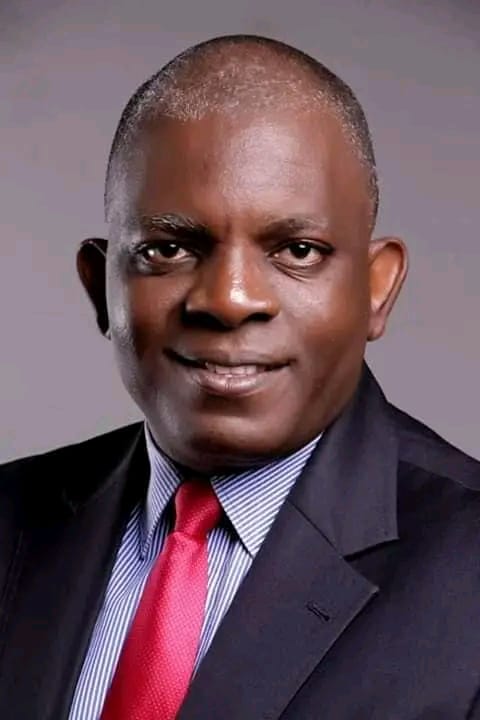
It has become very safe, perhaps, to conclude that the Executive Secretary and Chief Executive Officer(CEO) of Nigerian Shippers’ Council(NSC), Dr. Pius Akutah is the only maritime agency head who has become not only media but stakeholder-friendly.
He is easily accessible and gives ears to complaints while being ready to receive visitors on short notice.
He does not discriminate. It does not presuppose that he is not busy with schedules. It simply means that he understands what leadership entails.In Nigeria, any agency CEO that has bills before the National Assembly, awaiting passage is worth being sympathized with because he has no time of his, and must always be on his or her toes to source unbudgeted or budgeted funds to service the nauseating financial demands of the legislators on both chambers.
Therefore, Dr. Akutah deserves all the sympathy he can get for choky schedules with external and internal office demands.
Navigating the passage of the Council’s Nigerian Port Economic Regulatory Agency(NPERA) Bill at the National Assembly, only is time consuming not to talk of the Minister’s attention and his immediate constituency’s calls.
Surprisingly, with a plane to catch at the airport for an international trip, he found it rewarding to hold a media lunch with Maritime Editors and Reporters, penultimate Saturday in Ikeja, Lagos.
He gives account of his brief stewardship since assuming office, putting paid to the insinuation that the Council has been in comatose as a result of an unfounded story of a political ambition. He presents in financial terms the intervention of the Council in the port industry, while laying bare the future outlook of the agency.
The report is good enough for personal assessment of the agency. We present the full report unabridged. Enjoy it.
Since assuming office in November 2023, the Management of the Nigerian Shippers’ Council (NSC), “Under my leadership, has pursued a focused reform agenda to strengthen the Council’s role as Nigeria’s Port Economic Regulator and reposition it as a modern, efficient and globally competitive institution”.
Guided by the Renewed Hope Agenda of His Excellency, President Bola Ahmed Tinubu, GCFR, and the policy direction of the Honourable Minister of Marine and Blue Economy, His Excellency Adegboyega Oyetola, CON, the Council has delivered measurable progress in economic regulation, consumer protection, trade facilitation, digital transformation, institutional renewal and stakeholder engagement.
Within the period under review, the Council protected over ₦90.60 billion and US$1.348 million in economic value for Nigerian shippers and the national economy.
This includes preventing ₦86.06 billion in unjustified demurrage payments and securing savings of ₦4.54 billion and US$1.348 million through Alternative Dispute Resolution(ADR) and regulatory interventions.
The Council also achieved major institutional milestones, including the passage of the Nigerian Port Economic Regulatory Agency (NPERA) Bill by both Chambers of the National Assembly, approval of its statutory funding mechanism through the 2025 Appropriation Act, active participation in the National Single Window Project and resolution of key issues delaying implementation of the International Cargo Tracking Note (ICTN).
These reforms are improving regulatory certainty, reducing the cost of doing business and supporting the Federal Government’s vision of building a US$1 trillion economy by 2030.
Key Achievements at a glance include: Prevented over ₦86.06 billion in unjustified demurrage payments, Saved Nigerian shippers more than ₦4.54 billion and US$1.348 million through ADR and regulatory interventions, Received 558 complaints and resolved 295 commercial disputes, Harmonised bonded terminal invoice charges from 18 charge categories to six, Facilitated passage of the NPERA Bill, now awaiting Presidential Assent, Secured statutory funding for the Council for the first time since 1978, Advanced implementation of the National Single Window and ICTN, Deployed the Enterprise Content Management System and introduced the Leadership and Succession Planning Project and Substantially concluded preparations for the 18th International Maritime Seminar for Judges.
The passage of the NPERA Bill by both Chambers of the National Assembly represents a landmark reform in Nigeria’s maritime sector.
Once assented to, the legislation will establish an independent Port Economic Regulator with enhanced powers to regulate tariffs, service standards, competition and commercial conduct, thereby strengthening transparency and investor confidence across the port industry.
Another significant milestone is the approval of the Council’s statutory funding mechanism, captured in the 2025 Appropriation Act for the first time since the Council’s establishment in 1978.
This provides a sustainable framework for effective regulation, with collection to be integrated into the National Single Window platform.
The Council has actively supported the National Single Window Project, which is expected to simplify cargo clearance, improve coordination among government agencies and reduce the time and cost of doing business at Nigerian ports.
Similarly, outstanding issues delaying implementation of the ICTN have been resolved. Once operational, the ICTN will strengthen cargo visibility, improve trade intelligence, enhance supply chain security and support regulatory compliance.
As Nigeria’s Port Economic Regulator, the Council has continued to promote fairness, transparency and efficiency in port operations through effective economic regulation and consumer protection.
During the period under review, the Council reviewed and approved tariff requests for shipping companies, terminal operators and Inland Dry Ports after rigorous regulatory assessment.
It also continued to confirm the reasonableness of freight rates, charter party fees and vessel demurrage for foreign exchange transactions, as well as freight charges on export cargoes, thereby supporting transparency and helping to curb capital flight.
To improve pricing transparency, terminal operators were directed to publicly display approved tariffs, while shipping companies were required to establish holding bays outside the ports to facilitate the return of empty containers and reduce congestion along port access roads.
The Council also abolished unauthorised surcharges introduced by some shipping lines, developed minimum service standards for shipping companies and terminal operators, and collaborated with the Nigerian Ports Authority and the Federal Ministry of Marine and Blue Economy to assess compliance with Port Concession Agreements and Key Performance Indicators.
A major achievement was the prevention of over ₦86.06 billion in unjustified demurrage payments through regulatory oversight.
The Council also harmonised bonded terminal invoice charges, reducing charge categories from 18 to 6, thereby eliminating duplication and improving billing transparency.
Through stakeholder engagement and collaboration with key regulatory agencies, including the Federal Competition and Consumer Protection Commission and the Nigeria Customs Service, the Council has deepened compliance and reinforced confidence in Nigeria’s port regulatory framework.
The Council also facilitated a landmark Collective Bargaining Agreement between the Maritime Workers’ Union of Nigeria and employers in the shipping industry, resulting in a new ₦200,000 minimum wage for junior workers after almost two decades of negotiations. Discussions on an agreement for senior staff are at an advanced stage.
Alternative Dispute Resolution(ADR) remains one of the Council’s most effective mechanisms for protecting Nigerian shippers and reducing the cost of doing business.
Between the fourth quarter of 2023 and the second quarter of 2026, the Council received 558 complaints, resolved 295 cases and secured savings exceeding ₦4.54 billion and US$1.348 million.
The disputes covered container deposits, demurrage, detention charges, terminal charges, cargo claims, export fraud and related commercial matters.
The Council also concluded out-of-court settlements involving APM Terminals Nigeria Limited, CMA CGM and Maersk Nigeria Limited in matters arising from charges paid above approved tariffs.
These interventions protected Nigerian shippers, reduced litigation and reinforced confidence in the Council’s dispute resolution framework.
The Council continues to promote an integrated multimodal transport system through the development of Inland Dry Ports, Vehicle Transit Areas and Border Information Centres.
Operational Inland Dry Ports in Kaduna, Kano and Funtua continue to improve cargo movement, support customs operations and stimulate economic activity in inland regions.
Vehicle Transit Areas complement this strategy by supporting orderly movement and temporary storage of imported vehicles outside congested port environments.
The Border Information Centre Programme is also being expanded. Following the completion of the Idiroko Centre in Ogun State, work is advancing on new Centres in Jigawa, Benue, Borno and Kebbi States, while existing Centres along Nigeria’s major border corridors are being upgraded.
Following the destruction of the Jibia Centre by a heavy rainstorm in June 2026, the Council prioritised its reconstruction as part of its infrastructure renewal programme.
To provide more sustainable facilities, the Council has commenced engagement with State Governments for land to develop permanent Border Information Centre complexes.
These facilities will improve trade information services, strengthen regulatory coordination and support legitimate cross-border trade under the African Continental Free Trade Area, while reducing logistics bottlenecks and positioning Nigeria as a preferred maritime and logistics hub in West and Central Africa.
Council has continued to implement internal reforms aimed at building a modern, technology-driven and high-performing regulatory institution.
A major milestone is the deployment of the Enterprise Content Management System, which has transformed records and document management through the digitisation of thousands of legacy files, automation of workflows, improved document security and faster retrieval of official records.
This has reduced dependence on paper-based processes and improved operational efficiency.
The Council has also strengthened its Performance Management System by aligning individual targets with institutional goals, while prioritising local and international training, professional certification, workforce planning and competency-based deployment.
A key initiative introduced during the period is the Leadership and Succession Planning Project, designed to identify and prepare future leaders for critical management positions.
This is supported by the Middle Management Leadership Retreat, which is equipping emerging leaders with strategic, managerial and leadership competencies.
Staff welfare has also been enhanced through timely promotion exercises, confirmation of appointments, career progression, recognition of long-serving officers, retirement appreciation programmes and improved communication between Management and staff.
As part of preparations for the transition to NPERA, Management has undertaken organisational restructuring, reviewed departmental functions, strengthened HR governance, updated HR policies and reinforced compliance with Public Service Rules.
The Nigerian Shippers’ Council remains committed to strengthening maritime jurisprudence as a foundation for a modern, efficient and globally competitive maritime industry.
In July 2024, the Council successfully hosted the 17th International Maritime Seminar for Judges in Abuja under the theme, “Navigating the Intersection of Admiralty Law and Environmental Sustainability: Charting a Course for Nigeria’s Blue Economy.”
The seminar brought together judicial officers, maritime law practitioners, regulators, academics and industry stakeholders to deliberate on emerging legal issues affecting the maritime sector.
Building on that success, the Council is fully prepared to host the 18th International Maritime Seminar for Judges, scheduled to hold from 22 to 24 July 2026 in Abuja.
Organised in collaboration with the National Judicial Institute and the Nigerian Maritime Law Association, the seminar will bring together Justices of the Supreme Court, Court of Appeal, Federal and State High Courts, senior maritime law practitioners, academics, regulators and maritime experts from Nigeria and other African countries.
Invitations have also been extended to the Chief Justices of Ghana, The Gambia, Sierra Leone, Liberia and Kenya.
The seminar will promote legal certainty, support harmonisation of maritime business laws, strengthen investor confidence and advance the implementation of the African Continental Free Trade Area.
Preparations have been substantially concluded, with venue, logistics and faculty arrangements in place.
Going forward, the Nigerian Shippers’ Council will continue to deepen port economic regulation, strengthen consumer protection, accelerate digital transformation, expand trade facilitation infrastructure and promote multimodal transport.
“The Council will support the implementation of the National Single Window and the International Cargo Tracking Note, while consolidating the transition to the Nigerian Port Economic Regulatory Agency once the NPERA Bill receives Presidential Assent.
“Priority will also be given to the development of permanent Border Information Centre facilities, leadership development, succession planning, workforce transformation and stronger collaboration with stakeholders across the maritime value chain.
“Our objective is clear: to build a transparent, efficient and globally competitive port economic regulatory system that protects Nigerian shippers, promotes fair competition, improves port efficiency, attracts investment and supports Nigeria’s emergence as the leading maritime and logistics gateway in West and Central Africa,” Akutah stated.
The achievements recorded since November 2023 demonstrate the Nigerian Shippers’ Council’s commitment to effective regulation, institutional excellence, trade facilitation and national economic development.
“The Council is entering a new phase of institutional growth. Our focus is not only to regulate the port environment, but to help build a more transparent, competitive and investment-friendly maritime economy that delivers measurable value to businesses, consumers and the nation.
“We will continue to work closely with government, industry stakeholders, development partners and the media to sustain these reforms and ensure that Nigeria fully harnesses the enormous opportunities in the Marine and Blue Economy.
“The Council deeply appreciates the enduring partnership of the maritime media. Your role in informing the public, educating stakeholders and promoting accountability remains vital to the growth of the maritime sector.
“We remain committed to transparency, constructive engagement and continued partnership as we work together to build a stronger, more competitive and globally respected maritime economy for Nigeria,” Akutah Concluded.

By Tambaya Julius, Abuja
The Nigeria Customs Service (NCS) has graduated 50 officers from the Nigeria Customs Command and Staff College (NCCSC), Gwagwalada, with two officers from the Service’s National Public Relations Unit emerging as the Overall Best and Second Best Graduating Students in Senior Course 14/2026.
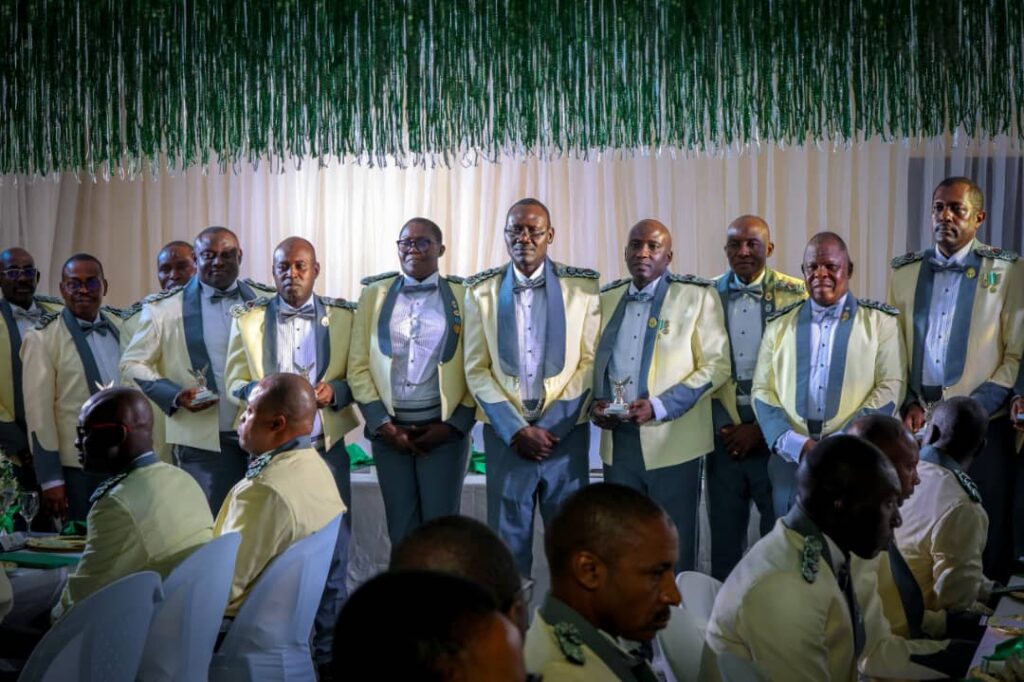
A major highlight of the graduation ceremony, held at the Ahmed Makarfi Hall of the College on Friday, 26 June 2026, was the emergence of Chief Superintendent of Customs Ridwan Yusuf as the Overall Best Graduating Student and Chief Superintendent of Customs Nuruddeen Sa’idu as the Second Best Graduating Student.
Both officers serve in the Service’s Public Relations Unit.In his message to the graduating officers, the Comptroller-General of Customs, Adewale Adeniyi, represented by the Commander, Training and Doctrine Command (TRADOC), Deputy Comptroller-General of Customs Sulaiman Chiroma, congratulated them on completing one of the Service’s most demanding professional training programmes.
DCG Chiroma charged the officers to uphold the highest standards of professionalism, discipline and courage, saying, “To whom much is given, much is expected. On behalf of the Comptroller-General of Customs, I urge you to remain mission-focused and continue to serve the nation with honesty, integrity and dedication.”
Earlier, the Commandant of the College, Assistant Comptroller-General of Customs Duwoh Gaura, reaffirmed the institution’s commitment to producing competent officers in line with the Comptroller-General’s vision of a more efficient, technology-driven and professional NCS.

The graduation marked another milestone in the Service’s commitment to developing highly skilled officers capable of meeting the evolving demands of Customs administration and border management.
The College had earlier, on Wednesday, 24 June 2026, held a Regimental Dinner at the NCCSC Hotel, Gwagwalada, in honour of the graduating officers. The event was attended by members of the Service’s Management Team, senior officers and guests. It was graced by the Comptroller-General of Customs, Adewale Adeniyi, represented by DCG Sulaiman Chiroma.




Rethinking the CBN’s Mandate: Lessons from Malaysia for Nigeria
ShareBy Uche Uwaleke During a recent academic study tour of key financial institutions in Malaysia with some of my PhD...


Tinubu, Shettima not Elected by Muslims Alone, Northern Christian Chair Slams Cleric
ShareChairman of the Northern Christian Association, NCA, Rev. Joseph Hayab, has said President Bola Tinubu and Vice President Kashim Shettima...

Dangote Confident on Group’s Projected $100bn Revenue Target By 2030
ShareAliko Dangote, has expressed confidence in his company meeting estimated revenue growth in the next four years. He said detailed...


Chevron Says Competitive Local Capacity Devt to Define Nigeria’s Energy Future
ShareThe Managing Director of Chevron Nigeria Limited, Jim Swartz, has highlighted key areas that would sustain Nigeria’s energy transition growth...
Reading the Early Signals of Nigeria’s 2027 Presidential Contest
ShareBy Tom Chiahemen In Chinua Achebe’s Things Fall Apart, the wrestling arena was more than a place where strong men...
Dressing, Addressing, and Redressing Nigeria’s Lawyers and Judges
ShareBy Chidi Anselm Odinkalu On 20 June 2011, Willy Mutunga assumed office as the first Chief Justice of Kenya under...


Kyari Charges BOA to Explore Blended Finance, Guarantees to Boost Agric Lending
ShareBy Raphael Atuu, Abuja The Minister of Agriculture and Food Security, Sen. Abubakar Kyari, said the Federal Government is repositioning...

Akume Hails Tinubu’s Infrastructure, Education, Security Achievements
ShareBy David Torough, Abuja The Secretary to the Government of the Federation (SGF), Senator George Akume, has commended President Bola...

Enugu Civil Service Commission Gets New Chairman
ShareFrom Sylvia Udegbunam, Enugu Enugu State Governor Peter Mbah has appointed the former Permanent Secretary, State Ministry of Information, Chris...
FACAN Petitions EFCC over Alleged N150m Fraud, Impersonation in Benue
ShareFrom Attah Ede, Makurdi The Federation of Agricultural Commodity Association (FACAN), Benue State chapter, has petitioned the Economic and Financial...