
OPINION
Miyetti Allah: The Untold Story

Miyetti Allah: The Untold Story
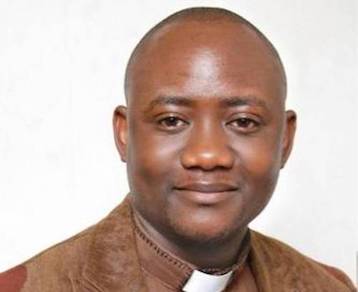
By Justine John Dyikuk
This writer’s knowledge of Miyetti Allah has simply been that of the Miyetti Allah Cattle Breeders’ Association (MACBAN).
Headquartered in Kaduna, the organisation was founded in the early 1970s but became operational in 1979. However, it was not until 1987 that the socio-cultural association which represents the interests of almost 100,000 semi-nomads and nomads in Nigeria, gained wider acceptance as an advocacy group across the country.
In the 1970s membership was drawn from Kaduna and Plateau States. Little wonder then, one Muhammadu Sa’adu who was born in Jos but raised in Kaduna headed the organisation. He was strategic in canvasing for new members to populate the body. Although meetings were irregular, they gradually started having branches in other states. Common themes for the Miyetti Allah group include advocacy for nomadic education and acquiring grazing reserves for members since pastoralists like roving about.
In recent years, the association has been in the eye of the storm. This is largely due to the farmer-header conflicts in the Middle Belt Region and other parts of the country. While their cattle are dear to them like an only child, farmers are equally passionate about their farm produce. The impasse between the duo is occasioned by destruction of crops by herders and killing of cattle by farmers which often leads to mutual attacks. Painfully, between 2010 and 2015, reports have that 6,500 lives were lost and 62,000 others were displaced from their homelands in 850 recorded violent clashes between herdsmen and farmers in the Middle Belt Region of the country.
While Miyyeti Allah continues to promote the welfare of Fulani pastoralists, there is an increase in the incidence of farmer-herder conflicts. In the midst of this, from 2011, cattle rustling became a booming business. These unsavory realities have brought an erstwhile unknown group into limelight. As this consciousness makes sense to one group, it is apparently a scum to others that should be discarded. The activities of the dreaded Fulani-killer herdsmen have not helped the narrative.
The provocative statements of some leaders of the association without query has emboldened them and made many Nigerians circumspect of their activities. Perhaps that is why some people easily paint the Fulani race with the same brush.
Unfortunately, the body language of the government has not authenticated the President’s purportedly plagiarized catchphrase during his 29 May 2015 inaugural speech which says: “I belong to everybody and I belong to nobody.” Otherwise, how would be tell Benue people to go home and live in peace with their neighbours as widely reported in national dailies on 12 March 2018? Why would the Federal Government through the Defence Minister, Mansur Dan-Ali blame the killings in Benue on the anti-grazing law which was enacted by the Benue State House of Assembly on 22 May 2017 as reported in Premium Times of 25 January 2018? Was that a response to MACBAN’s plea with the Federal Government, National Assembly (NASS) and international community to intervene in the Anti-Open Grazing Law operating in Benue? The RUGA Policy and Water Resources Bill tells who is the well beloved child in the matter.
Desertification and conflicts have forced Pastoralists from other countries like Guinea, Mali, Burkina Faso, Sudan, Chad, Niger Republic, Cameroun into the country. The porous nature of our borders is an added incentive to these foreigners who may have little or no links with the native cattle breeders except for ancestral linkages.
The statement by the UK House of Lords which raised a red flag on Fulani headers and other Islamic militia who have continued attacks in northern and central-belt states which was dated 14 September 2020 clarified the matter when it said: “We recognize the important distinction between the Fulani in general (a diverse group of millions of people with hundreds of clans) and the sub-group of well-armed, radicalized Fulani who carry out attacks.” Governor Abdullahi Umar Ganduje of Kano State did not throw caution to the wind when he called on the Federal Government to ban the influx of herdsmen from neighbouring countries into Nigeria.
In an editorial titled “The Miyetti Allah provocations” published on 15 June 2020, The Guardian decried that: “Miyetti Allah Kautal Hore, led by Bello Abdullahi, ordinarily a cattle breeders’ association has morphed into the equivalent of a terrorist organisation operating without let or hindrance in the public space.” It also noted that: “Coincidentally, their sense of self-importance has grown in provocative proportions since the Buhari administration took over in 2015.
Apart from threatening other ethnic groups and stakeholders in the country, in a rather vexatious manner, its leaders recently declared that ‘Nigeria belongs to Fulani’ and that the ‘Fulani will rule forever.’” Abdullahi added that his organisation has concluded arrangements to set up its own security outfit of five thousand men to be deployed across all the states of the federation.
In their separate reactions, Muslim Rights Concern (MURIC), Christian Association of Nigeria (CAN) in the 19 northern states and Abuja and Yoruba World Congress (YWC) condemned the remarks, describing them as capable of disrupting the fragile peace of the nation. The Guardian further lamented that:
“So far, there is no indication that the Federal Government has cautioned the group on the volatility of its statements. This is unfortunate in the extreme.” It decried clannishness which has given Miyetti Allah the gumption to utter provocative statements capable of setting the nation ablaze while emphasizing that by contrast, the now proscribed Indigenous Peoples of Biafra (IPOB) did not threaten the unity of Nigeria as much as the former but got python dance.
Recently, I was at Tilden Fulani market in Toro LGA of Bauchi State to buy some food stuffs. While the over 70 years old (from her looks) petty trader was about handing over what I asked for, I saw her giving an item to another woman who graciously answered: “Miyetti Allah.”
I asked her what that meant and with a generous smile she replied: “Nagode Allah” in Hausa which translates as: “Thank you Lord” in English. At that, the other Fulani woman said, “Who wants to learn Fulfulde at a time that Fualnis are the most hated people!” I was taken aback! Well, for me, there are two interesting parts to this story. One, the generosity of the old woman which is highly commendable and two, the other woman’s disturbing statement which raises questions about identity and the perception of a particular ethnic group by others.
Going forward, we need to return to the drawing board. We need to trace where we got it wrong. Our parents and their forebears lived in peace.
The Fulanis were friendly pastoralists who supplied milk and meat to farmers who in turn donated their farmland to the nomads after harvest for the grazing pleasure of their cattle. The truth is, someone is not telling somebody the truth. Unless we wash our bodies off the debris of ethnic coloration and cover up, criminals would continue to feast on an already bad situation.
These two Fulani women in our story reveal how a simple remark which expresses worry about how a certain group of people are stereotyped can initiative discussions leading to peace and reconciliation in our communities and country. Those who hold a single narrative of Miyetti Allah should remember “The Danger of a single story” as Chimamanda Adichie puts it. God bless the Federal Republic of Nigeria!
Fr. Dyikuk is a Lecturer of Mass Communication, University of Jos, Editor – Caritas Newspaper and Convener, Media Team Network Initiative (MTNI), Nigeria.




By Mukhtar Dambatta
In Nigeria, an accusation of theft can turn a calm crowd into a dangerous mob within minutes.
Someone shouts, “Ole!” “Barawo!” “Onyeoshi!” or “Thief!” and people begin to gather.
Before anyone asks what happened or whether the allegation is true, sticks, stones, and other objects may become weapons.By the time the police arrive, the accused person may already be badly injured or dead.
Jungle justice, or mob violence, is an illegal act where a crowd bypasses the legal system to punish a suspect without a fair trial or formal proof of guilt
The practice has continued in spite of the existence of courts, police and other institutions established to investigate crimes and administer justice.
One of the cases that brought the issue sharply into national focus was the killing of the “Aluu Four”.
In October 2012, four students of the University of Port Harcourt, Chiadika Biringa, Ugonna Obuzor, Lloyd Toku and Tekena Elkanah were attacked and killed in Aluu community, Rivers, after they were accused of stealing.
They were beaten and set ablaze by a mob. Images of the incident circulated widely, prompting public outrage and renewed calls for an end to mob justice.
But similar incidents have continued.
In March 2025, 16 travellers were killed by a mob in Uromi, Edo, after being accused of being kidnappers.
Reports identified the victims as hunters travelling from the South to the North.
President Bola Tinubu condemned the killings and directed security agencies to investigate the incident and prosecute those responsible.
The Uromi killings again raised concerns about what can happen when suspicion and fear replace investigation.
On July 26, 25-year-old Ibrahim Mbaya, popularly known as “Ibee”, was allegedly attacked by a mob in Jos, Plateau, after being accused of stealing an iPhone 12.
He was later taken to the Jos University Teaching Hospital, where he was confirmed dead.
The Police Command in Plateau announced the arrest of suspects in connection with the incident.
Recently, the Inspector-General of Police (I-G), Mr Olatunji Disu, gave a directive that jungle justice would be treated as homicide.
A security advocacy group, the Security Situation Room (SSR) backed the group described mob action as an invitation to anarchy.
The President of SSR, Mr Douglas Ogbankwa, said perpetrators of extra-judicial killings must be held accountable for their actions.
He said that the directive was timely, considering the spate of mob attacks and extra-judicial killings in the country.
“Of course, this directive is timely. Allowing people to resort to strong-arm tactics in solving criminal activities is an invitation to anarchy.
“It is like taking the country to the Hobbesian state of nature, where life was nasty, brutish and short.”
Ogbankwa said the existence of government could be traced to the social contract theory, under which citizens surrendered certain liberties to enable constituted authorities to govern and protect them.
He said allowing individuals to take the law into their hands would undermine the purpose of government and the rule of law.
“The reason we have a government is traceable to the social contract theory, where the people agree to have people who will govern, protect them and take care of their welfare.
“So, if individuals are allowed to have the liberty of taking the law into their hands, then that is simply taking us to the Stone Age without laws,” he said.
The convener noted that every society was governed by laws, adding that the 1999 Constitution of the Federal Republic of Nigeria (as amended) provided lawful avenues for resolving grievances.
He said the Police Act 2020 empowered the police to detect and investigate crimes and arrest those suspected of committing offences within their jurisdiction.
Ogbankwa consequently called for strict adherence to the I-G’s directive, adding that individuals must learn to be personally accountable for their actions or inactions.
On a similar note, a security analyst, Ahmed Umar, said the response to suspected crime should begin with reporting and investigation rather than punishment by a crowd.
“Allowing people to take the law into their own hands could result in the killing of innocent people who might later be found not to have committed any offence,’’ he said.
More so, a legal practitioner, Yusuf Aliyu Yusuf, said an accusation was not the same as proof of guilt.He said the responsibility of determining whether a person had committed a crime belonged to the appropriate institutions established by law.
In his submission, Barau Kawu, a community leader, said communities also had a role to play in preventing mob attacks by discouraging rumours and immediately reporting suspected criminal activities to security agencies.
“Community members should avoid taking action based solely on allegations or information received from others,’’ he said.
Getting an accurate national figure for deaths resulting from jungle justice is difficult.
Human rights organisations and other researchers have documented hundreds of cases over the years, but the actual number is difficult to establish.
Many incidents, particularly in communities far from major towns, may never reach the police, courts or mainstream media.
Analysts say a major factor behind the practice is public distrust of law enforcement institutions.
Where citizens believe that suspects may escape justice or that criminal cases will not be handled effectively, some may become tempted to punish accused persons themselves.
The country’s worsening insecurity has also made people more suspicious of strangers and unfamiliar situations.
Kidnapping, banditry and other violent crimes have affected communities across the country. In such an environment, suspicion can spread quickly.
Section 33 of the 1999 Constitution protects the right to life, subject to the exceptions stated in the Constitution.
The law provides for allegations to be investigated and suspects to be tried in court.
That process cannot be replaced by a crowd.
The danger is that the person being attacked may not even be responsible for the alleged offence.
“A stolen phone may have been misplaced; a misunderstanding may have been mistaken for criminal behaviour; a person may have been wrongly identified.
“Once a mob attack begins, however, there is often little opportunity for the truth to emerge; ending jungle justice will require more than condemning each incident after it happens.
“It will require proper investigations, prosecution of those responsible and greater confidences in the justice system.
“Citizens also need to understand that reporting a suspected crime is different from punishing a suspect.
“The police and courts have the responsibility to investigate allegations and determine guilt according to the law,’’ a social commentator said.
For communities, the challenge is to resist acting on rumours and accusations before the facts are known.
Experts agree that criminal accusations must be legally investigated and tried in court. When justice is taken into the streets, a mere accusation can instantly become an irreversible death sentence.(NAN)
By Dovish Okojie
Whether you are buying food in the market, renting a house, importing goods, securing a contract, or even seeking employment, there is often someone standing between the producer and the consumer, the seller and the buyer, the opportunity and the beneficiary.
In many ways, Nigeria has become a nation of intermediaries and nowhere is this more evident than in the food supply chain.
Across markets, consumers are confronted daily by rising food prices, which has forced many households to adjust their spending habits and dietary choices.When Nigerians ask why food is so expensive, the answers usually point to inflation, fuel costs, insecurity, exchange rate, climate change, poor infrastructure, and government policies.
Yet another recurring explanation often emerges from market conversations and public debates: the activities of middlemen.For many Nigerians, middlemen have become the visible face of an invisible economic problem. Farmers accuse them of exploitation, consumers blame them for price increases, policymakers frequently identify them as contributors to food inflation.
But are middlemen truly the villains of Nigeria’s economic story, or are they merely products of deeper structural failures? The answer is far more complex than many assume. Nigeria’s agricultural sector provides perhaps the clearest illustration of the role intermediaries play in the economy.
Millions of farmers across the country cultivate crops and raise livestock. Yet despite their hard work, many struggle to earn sustainable incomes. At the same time, consumers often complain about the high cost of food. Somewhere between the farmer and the family dinner table lies a long chain of traders, transporters, brokers, wholesalers, aggregators and retailers. Each participant performs a function.
Each adds a cost and seeks a profit. Consequently, by the time a basket of tomatoes harvested in Kaduna reaches a kitchen in Abuja, or a bag of rice produced in Kebbi arrives at a market in Lagos, its price may have increased substantially.
This creates a paradox that defines much of Nigeria’s economic reality: the farmer earns too little, the consumer pays too much, and yet everyone in the value chain insists they are barely surviving. To understand why this occurs, one must first understand the circumstances under which many Nigerian farmers operate.
Imagine a tomato farmer in northern Nigeria. After months of preparing the land, planting, irrigating, applying fertilizer and protecting crops from pests, harvest season arrives. The farmer’s greatest challenge is no longer production but preservation because tomatoes are highly perishable. Without access to cold storage facilities, modern processing centers or efficient transportation networks, harvested produce can begin deteriorating within days. Faced with the prospect of losing an entire harvest, many farmers have little choice but to sell immediately.
That is where the middleman enters the picture. Armed with cash and transportation arrangements, the trader purchases produce directly from farmers, often at prices significantly lower than those eventually paid by urban consumers. Critics argue that this disparity demonstrates exploitation. Supporters counter that the trader assumes risks associated with transportation, spoilage, market fluctuations and storage. In reality, both arguments contain elements of truth.
The middleman is not merely purchasing produce; he is purchasing urgency. He understands that farmers often lack alternatives. The bargaining power therefore rests largely with the buyer rather than the producer.
This imbalance fuels resentment throughout the agricultural sector. Many farmers believe they bear the greatest production risks while receiving the smallest share of profits. Consumers, on the other hand, see food prices rising beyond their purchasing power and conclude that someone in the middle must be benefiting excessively and the middleman becomes the convenient target.
Yet focusing exclusively on middlemen risks overlooking the deeper issues that create opportunities for their dominance. The truth is that middlemen thrive where systems fail.
In countries with efficient agricultural ecosystems, farmers have access to storage facilities, processing plants, organized cooperatives, real-time market information, affordable transportation, and direct access to buyers. These systems reduce dependence on intermediaries because producers possess alternatives.
Nigeria’s situation is markedly different because poor road networks increase transportation costs, inadequate storage facilities contribute to substantial post-harvest losses, insecurity disrupts farming activities and supply routes, rising fuel prices make logistics more expensive, limited access to financing constrains investment across the value chain. These deficiencies create economic gaps that intermediaries step in to fill.
Where storage facilities are absent, traders provide temporary storage. Where transportation networks are unreliable, they organize logistics. Where information is scarce, they become information brokers. Where farmer cooperatives are weak, they aggregate produce from multiple sources.
Economics rarely tolerates a vacuum. Whenever institutions fail to perform essential functions, private actors emerge to fill the void. This reality explains why attempts to eliminate middlemen altogether are unlikely to succeed.
The issue is not their existence but the extent of dependence on them. Indeed, Nigeria’s culture of intermediation extends far beyond agriculture. Real estate agents connect landlords and tenants, procurement contractors connect suppliers and government agencies, clearing agents connect importers and ports, political brokers connect citizens to power structures, recruitment consultants connect employers to job seekers.
In many sectors, Nigerians have become accustomed to operating through intermediaries. This phenomenon reflects both entrepreneurial ingenuity and institutional weakness.
The more difficult a system becomes to navigate, the more valuable those who understand it become. In this sense, the Nigerian middleman is not simply an economic actor. He is a symptom. He represents the inefficiencies embedded within the broader system.
Fortunately, change may already be underway because the rapid growth of digital technology is beginning to challenge traditional patterns of intermediation. Mobile payment platforms, digital marketplaces, agricultural technology solutions and online trading networks are increasingly connecting producers directly with consumers and businesses.
Farmers can now access market information that was once available only to traders, consumers can compare prices across locations, businesses can source products directly from producers, digital platforms are gradually reducing information asymmetry and increasing transparency.
However, technology alone cannot solve Nigeria’s structural problems. A mobile application cannot repair a damaged highway, an online marketplace cannot preserve perishable crops without cold storage, a smartphone cannot eliminate transportation bottlenecks. Technology works best when supported by functional infrastructure.
Ultimately, the debate about middlemen is not merely an economic discussion. It is a conversation about fairness, opportunity and national development. Behind every statistic lies a human story; the farmer struggling to recover production costs, the transporter battling rising fuel prices, the trader managing market uncertainty, the salary earner whose income can no longer sustain a family’s food needs, the mother forced to reduce the quantity or quality of meals she serves her children. Food inflation is not simply a number reported by economists.
It is a lived reality affecting millions of Nigerians every day. Addressing this challenge requires more than blaming intermediaries. It requires rebuilding the systems that make excessive intermediation necessary in the first place.
Nigeria must invest aggressively in rural infrastructure, modern storage facilities, agricultural processing centers, transportation networks and market information systems. Farmer cooperatives should be strengthened, supply chains should become more transparent, and competition should be encouraged across the value chain.
The objective should not be to eliminate middlemen but to ensure that every participant in the chain earns income through genuine value creation rather than through control of access. The Nigerian middleman is often portrayed as a villain.
In reality, he is neither hero nor villain. He is a mirror reflecting the strengths and weaknesses of the economy. Where institutions function effectively, his influence diminishes. Where systems fail, his importance grows.
For too long, public discourse has focused on the symptoms rather than the causes. The high cost of food in Nigeria is not the result of a single actor or group. It is the cumulative consequence of inadequate infrastructure, fragmented markets, information gaps, transportation challenges, post-harvest losses and broader economic pressures.
The path forward therefore lies not in declaring war on middlemen but in building an economy where producers have greater bargaining power, consumers enjoy fairer prices, and intermediaries compete on efficiency rather than scarcity. When that day comes, Nigeria’s farmers will earn more, families will spend less on food, and the nation’s vast agricultural potential will finally translate into shared prosperity. Until then, the middleman will remain exactly what he has always been: a reflection of the Nigeria we have built, and perhaps a reminder of the Nigeria we still need to create.
Dovish Okojie is a Management Consultant, Data Scientist, and Public Affairs Analyst. He writes from Abuja and can be reached through dovishokojie@gmail.com
By Raphael Atuu, Abuja
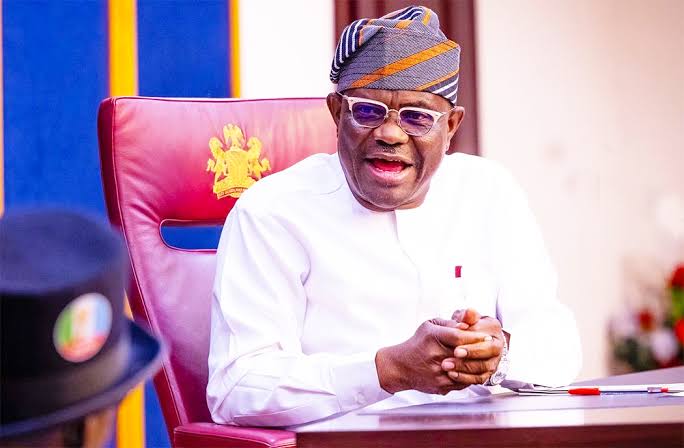
Since assuming office as Minister of the Federal Capital Territory in August 2023, former Rivers State Governor Nyesom Wike has remained one of the most visible and politically consequential figures in Nigeria’s current administration.
His tenure in the FCT has been marked by an aggressive emphasis on infrastructure, the revival of abandoned projects, road construction and administrative reforms.
The Federal Capital Territory Administration itself lists Wike as the incumbent minister, having assumed office in 2023.From the early months of his administration, Wike adopted a project-driven approach, meeting contractors and setting completion deadlines for ongoing road projects.
Contemporary reporting also documented his efforts to strengthen the FCT civil service and secure greater financial flexibility for the administration.Infrastructure as the Measure
One of the defining features of Wike’s tenure has been the scale of attention given to infrastructure.
The minister inherited projects from previous administrations and continued several of them, while also initiating and accelerating others. Roads linking different districts and satellite communities have received particular attention, alongside projects involving healthcare, security, public institutions and urban development.
President Bola Ahmed Tinubu has publicly acknowledged the infrastructure drive in Abuja. In March 2025, the President explained that the decision to remove the FCT Administration from the Treasury Single Account was intended to give the administration greater flexibility and speed in financing development projects. Tinubu specifically credited Wike with presenting the proposal and subsequently driving its implementation.
In July 2026, the Federal Government again defended the TSA exemption, saying it had increased the FCT Administration’s financial flexibility and accelerated infrastructure delivery. At the same event, Tinubu described the scale of infrastructure and urban renewal under Wike as substantial.
These developments have made project delivery one of the central arguments in assessments of Wike’s tenure.
More Than Roads
Wike’s administration has also involved institutional changes.
The FCT Administration has established a Civil Service Commission and created additional administrative structures, while the minister has pushed for reforms intended to make the administration more responsive.
The TSA issue is particularly significant. Rather than simply being a financial technicality, it became part of the broader debate about how the FCT should fund major capital projects. Wike has argued that the change provided the resources and flexibility required to accelerate development, while the Presidency has similarly defended the decision as necessary for faster delivery.
The FCT’s unique constitutional and administrative position also means that the minister operates in a role different from that of an ordinary state governor. According to the FCTA, the President serves as the equivalent of governor of the FCT, delegating administrative powers to the minister, while the National Assembly performs legislative functions for the territory.
The Political Dimension
Beyond infrastructure, Wike’s political activities have attracted perhaps even greater national attention.
The former Rivers governor remains associated with the Peoples Democratic Party while serving in an administration led by the All Progressives Congress. His political position became particularly prominent after members of the former G5 governors supported Bola Tinubu in the 2023 presidential election despite remaining within the PDP political space.
That cross-party positioning has continued into the preparations for 2027.
In 2025 and 2026, Wike promoted what he calls the Rainbow Coalition, a cross-party political arrangement intended to mobilise support for President Tinubu’s re-election. In September 2026, Wike again stated that the coalition was supporting Tinubu but was not an APC organisation and that politicians could retain their individual party identities.
This is where the question of Wike’s political influence becomes particularly relevant.
Where Were the APC Governors?
The emergence of the Rainbow Coalition has also exposed a disagreement between Wike and some APC governors.
In September 2026, the APC Governors Forum stated that the governors remained committed to the APC’s own political structure and would not endorse arrangements that could create divided loyalty or competing structures ahead of the 2027 elections.
Wike, however, has maintained that his coalition has a different objective: mobilising support for Tinubu across party lines while allowing politicians to contest other elections under their respective parties.
That distinction is important. The political argument is no longer simply about whether politicians belong to the APC or PDP. It is increasingly about whether influence can be organised across party boundaries.
A Different Kind of Political Capital
Wike’s political capital comes from several stages of his career: local government administration, service in Rivers State, federal ministerial experience, eight years as Rivers governor and his subsequent role as FCT minister.
His political network has also extended beyond a single political party.
The Rainbow Coalition represents an attempt to translate that network into a broader political structure. Wike has described the coalition as involving politicians from different parties who share a common objective regarding the 2027 presidential election.
There is, however, disagreement over how broad that coalition actually is. In January 2026, the Inter-Party Advisory Council rejected claims that all political parties were part of Wike’s proposed coalition, stressing that individual parties must make their own decisions through their constitutional structures.
That disagreement illustrates the limits as well as the reach of Wike’s political influence.
Performance and Political Alignment
The Wike phenomenon therefore rests on two separate but connected developments.
The first is his record of project execution in Abuja, which has received public commendation from President Tinubu and has been accompanied by significant administrative and financial reforms.
The second is his unusual political position: a PDP figure operating within an APC-led federal government while openly supporting the incumbent president’s re-election.
That combination has made Wike an unusual figure in contemporary Nigerian politics.
Whether his political network will translate into electoral influence in 2027 remains a matter for voters and the political process to determine. What is already clear is that his activities have become significant enough to generate public disagreements with both opposition actors and some members of the ruling party.
For a politician who has spent much of his career operating within the traditional party system, the Rainbow Coalition represents another chapter in Wike’s long-running experiment with political organisation across party boundaries.
And as the 2027 elections approach, the central question may not simply be which party Wike belongs to, but how much influence a politician can exercise while standing between the formal structures of one party and the governing machinery of another.


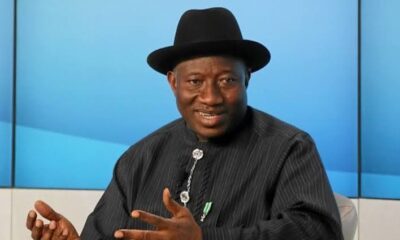

Jonathan Receives Bayelsa East APC Candidates
ShareFrom Mike Tayese, Yenagoa Former President of Nigeria, His Excellency, Dr. Goodluck Ebele Jonathan, has commended the quality, experience and...


2027: Delta APC Inaugurates Support Groups for Tinubu, Oborevwori
ShareFrom Francis Sadhere, Delta The Delta State chapter of the All Progressives Congress (APC) has inaugurated two political support groups...
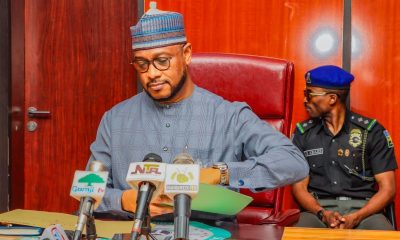

‘Transformative Agenda to Critical Sectors are My Rescue Mission’ – Dauda
ShareFrom Ifeanyichukwu Nwannah, Gusau. Governor Dauda Lawal of Zamfara State, Dauda Lawal has declared that his administration’s rescue mission is...
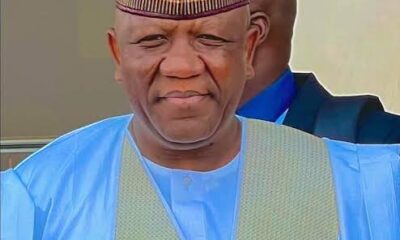

Yari Urges Northerners to Honour Power Rotation, Back Tinubu’s Eight-Years Presidency
ShareFrom Rabiu Sanusi Kano Former Zamfara State Governor and Director-General of the All Progressives Congress (APC) Presidential Campaign Council, Senator...
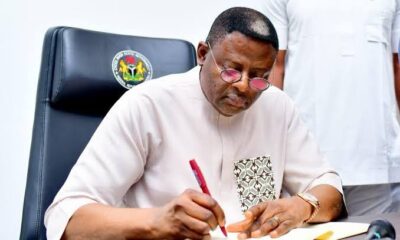

Otu Reinstates 3,000 Sacked LG Workers
ShareFrom Ene Asuquo, Calabar Cross River State Governor, Senator Prince Bassey Edet Otu, has approved the restoration of about 3,000...


First Lady Mobilises Women for Tinubu’s Re-election
ShareNigeria’s First Lady, Sen. Oluremi Tinubu, is set to host more than 20,000 women stakeholders in Abuja today as part...
NAFDAC Seeks International Support to Revive Vaccine Manufacturing in Nigeria
ShareThe National Agency for Food and Drug Administration and Control (NAFDAC) has solicited international partners’ support for establishing vaccine manufacturing...


IOM Empowers IDPs with Skills, Cash in Zamfara
ShareFrom Ifeanyichukwu Nwannah, Gusau Over one hundred residents, persons with disabilities, Internally Displaced Persons (IDPs), and other vulnerable groups in...
Diagnosis at 66: Nigeria’s Healthcare Landscape
ShareBy Racheal Abujah When Nigeria gained independence on Oct. 1, 1960, it held immense promise. Sixty-six years later, healthcare delivery...


Flight Delays, Cancellations: Assessing Nigeria’s Efforts to Improve Air Travel
ShareBy Gabriel Agbeja In spite of arriving on time, checking in, and waiting at the boarding gate, many air travelers...