
COVER
On Constitutionalism: Towards Restructuring of Nigeria

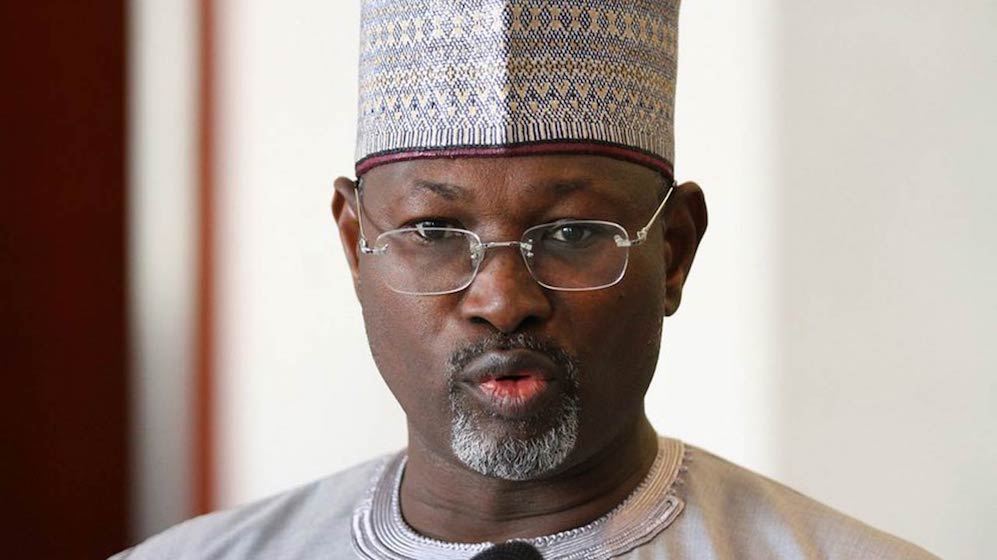
By Attahiru Jega
There is currently an upsurge of passionate demands for “restructuring”, “true federalism” and “actualization of the sovereign state of Biafra”.
These demands are intricately intertwined and interconnected, and so vociferous that they are overheating the polity.
Sooner than later, these matters have to be addressed squarely but dispassionately.
The challenge is on how to address the issue of restructuring the Nigerian federal system without upsetting the apple-chart; that is, how to add value to the structure and systemic efficacy of the federal arrangement, without unleashing instability occasioned by the mobilization of ethnic, regional and religious sentiments and identities.Federalism is supposed to be “a model of political accommodation and power sharing, as well as a cure for micro-nationalism”.
The Nigerian experience has shown that our federal arrangement has not ensured a stable political accommodation and it has not ensured equitable power and resources sharing.
And, instead of curing micro-nationalism, it has fanned the embers of its conflagration.
Some things are clear.
The demands for secession cannot be wished away, and Nigeria’s unity and continued stay as one indivisible country should not be taken for granted. Statements like: “Nigeria’s unity is non-negotiable” or “Nigeria’s continued stay as one country is not negotiable” are factually incorrect, wishful thinking and politically abhorrent to those making the demands; these should therefore be avoided, indeed stopped.
On the other hand, Nigeria has come such a long way since 1914 that it would be easier to renegotiate the strengthening of the federation through devolution of power, resources and responsibilities, than to go the route of “separation” and secession.
Secession and separation from the federal republic of Nigeria has far greater costs and consequences for all concerned (those seeking to separate and those from whom are being separated) than remaining under a restructured federal system. Thus, it is in the enlightened self-interest of Nigeria and all Nigerians to sheath the swords of secession, and wear the garb of political accommodation and appropriate and sincere power and resources sharing.
In any case, there is no perfect federal arrangement anywhere in the world. There is nothing in essence, called “true federalism”. Federalism is a lived experience, continuously changing and seeking for improvement.
No doubt, Nigeria’s need for a “reformed, revitalized, decentralized and democratized federal system” is long over due. We should therefore begin to soberly interrogate some pertinent questions. For example, what should “restructuring” of the Nigerian federation entail?
How can this “restructuring” best be brought about, and through which mechanisms and processes?
Is there anything called “true federalism”? If so what is it?
How should revenues to the federation be collected and shared?
Who should collect them and how? Why Restructuring is Necessary
Three reasons can be adduced as to why some form of restructuring needs to be undertaken, as soon as is possible, in order to improve upon the current nature and operations of the Nigerian federal system; so as to improve the structure and systemic efficacy of the federation.
The 1999 Constitution, which was hurriedly put together and enacted by the General Abdulsalam Abubakar military regime, was not a product of appropriate inclusiveness and consultation. As a result, it has many inadequacies and flaws, from which our brand of federal arrangement suffers. Although some amendments have been effected to the constitution, the key issues affecting the federal structure have not been touched; but they cannot be ignored indefinitely.
A long period of military rule has resulted in the concentration of power and resources in the central and federal government to the disadvantage of the states, which are the federating units. This has in turn made the contest for political power to occupy federal organs very intense, as capturing federal government is perceived as ensuring control of tremendous power, influence and resources.
In an ethno-religiously diverse country, centralization and concentration of power and resources at the center generates conflict-ridden competition for the control of power at the center.
Only a judicious and equitable de-concentration and reallocation of power and resources from the center to the other federating units can de-escalate tension and smoothen hierarchical and horizontal relations in the federation. In reality, the 1999 Constitution has concentrated too much power and resources in the hands of the federal government, as a comparison of the exclusive and residual lists clearly shows; in this regard the uniqueness or exceptional character of the Nigerian federal arrangement is glaring. Powers, which are traditionally the preserve of the federating units (states, regions, provinces) are in Nigeria handed over either exclusively to the federal government, or are shared concurrently by the federal government and the states.
A dispassionate review of the 1999 Constitution would help to resolve many if not all the thorny outstanding issues.
Severe inequities were introduced and entrenched over time, especially on account of the prebendal politics under civil rule, and the divide and rule tactics under military rule, especially the mobilization of ethnicity, religion and other primordial interests by those who hold andp exercise power at the federal level.
The federal character (equalizing or equal opportunity) principle was introduced to address inequities associated with employment into federal establishments. In practice, many challenges have remained with the implementation of the federal character principle.
Recommendations
The following recommendations covering the structure, power sharing and resources and revenue allocation are offered for further reflection.
Nigeria should revert to the two-tier system: Federal and States (Local Government Areas (LGAs) as subsumed under the states).
It would be unrealistic, if not impossible to revert to a regional structure similar to what was in Nigeria’s past history. The pressures that led to the creation of states would not tolerate collapsing or regrouping those states to regions.
Nigeria is probably the only federal system with constitutionally recognized three tiers: Federal, State and Local Government Areas. This aberration was created under military rule. We should revert to a two tier federal system, with LGAs subsumed under states or regions.
Nigeria should have a short federal exclusive list, consisting of Foreign Affairs, National defense and security, Commerce and Currency. We should have a short concurrent list, consisting of Policing, taxation and tertiary education/health. Whatever isn’t listed belongs to the residual powers of the states, on which federal government would have only broad regulatory and incentivizing roles.
Specifically, certain powers and responsibilities, which in most stable federations are invested in the federal government, should continue to be retained by the Nigerian federal government.
These are in respect of national security, defense, armed forces, foreign affairs, currency and monetary policies and commerce (banking, inter-state economic relations, etc.).
All others, except a few like policing and tertiary education/health, which can be on the concurrent list, can be consigned to the states, with regulatory and incentivizing responsibilities reserved for the federal government.
Henceforth, no creation of additional states should be entertained. And no merger of existing states, except by referendum in which two- thirds majority have voted yes. The question of unviability of some of the existing states can be redressed by the decrease in federal revenues, the increase in the share of federally collected revenues to the states; diversified revenue base for the states, good accountable governance and increased capacity and competence by the states in collecting taxes and levies in their jurisdiction.
Local government, structure, processes and funding, should be the responsibility of each state. A state can have power to create more or merge existing local governments, through a referendum in which two-thirds majority have voted yes. But the local government system must be democratic in form and in content, with constitutional guarantees for this.
Under no circumstances should the merger or reconfiguration of existing states into regions as federating units, akin to what obtained in the past, be contemplated. If that is what some romantically refer to as “true federalism”, it is just that: romantic and idealistic and terribly unrealistic in this age and time. Adding regions to the existing components would be unwieldy, expensive and operationally complex if not disruptive; and merging or converting existing states into regions would be even more problematic operationally and politically, and would essentially revive claims and perceptions of marginalization, discrimination and domination, which creation of states had hoped to redress.
Making revenue generation and distribution more judicious and equitable would solve the current challenges of fiscal federalism in Nigeria and make creation of regions unnecessary.
To strengthen the efficacy of the Nigerian federal system, revenue sources need to be diversified; the sharing formula need to be reviewed to devolve more resources to the states; federal tax base should be reduced and that of the states increased; and a more equitable and judicious formula should be introduced in respect of petroleum and solid mineral resources, which should be in favour of the producing states; and also in favour of the states viz-a-viz the federal government.
States should diversify their revenue base, and should pursue other, additional, sources of taxation, especially tenement and property taxation, levies on cigarettes, environmental pollution/degradation, etc., to expand their revenue base. The porous and unaccountable nature of revenue collection at the state and local levels also needs to be sanitized and made more transparent and accountable.
Some percentage increase to petroleum and other minerals’ producing states can be accommodated, up to a maximum of 5%, bringing the total on account of derivation principle to 18%.
The sharing formula between the federal and states governments should be reviewed in favour of state governments. States (inclusive of local governments) should be entitled to a maximum of 60% and the federal government no more than 40%. This is taking into account the recommendation that power and responsibilities be devolved from the federal to the state governments.
Equitable access to services by federal establishments (spread) as well as to employment/recruitment by federal establishments (access) must be guaranteed by policies and in practice to bring to the barest minimum feelings and perceptions of exclusion, marginalization and discrimination on account of region, religion and/or ethnic and communal identities.
The federal character principle needs to be retained and strengthened. Identified challenges in its implementation must be redressed. Other global good practices in affirmative action and securing equality of opportunity, which drive inclusiveness and address marginalization in diverse societies should be identified and adapted (not wholesale adoption!).
Ways and means of making Chapter Two of the Constitution, on Directive Principles of State Policy, justiciable should be explored and entrenched in practice.
Ultimately, we need to realize that mere constitutional provisions do not by themselves ensure a stable and efficacious federal arrangement. These have to be backed by good leadership and good, accountable, responsible and responsible governance, that is guided in practice by the rule of law enshrined in the Constitution.
Therefore, the challenging task of nurturing a democratic political culture and electoral integrity has to be pursued vigorously accompanying the processes of restructuring the federation.
Addressing the imbalances and inequities identifiable in the current Nigerian federal system is long overdue. Better late than never and the time is aptly now. In doing this, we must discard both the wishful thinking that “Nigeria’s unity is non-negotiable” and the idealistic and romantic notions of “ Only on True federalism we stand”.
No federal arrangement is perfect and accepted by all in it. For countries, which are diverse in complex and intricate ethno-religious mosaics, such as Nigeria, federalism is the only game in town, which can be continuously improved upon.
We can do this by removing all the distortions, which have accumulated in our short history, and by bringing and adapting, as value-additions, global good practices from other relatively more stable federal systems.
Learning how countries with more complex diversity than ours, such as India manage to stabilize their federal arrangement, can help us in no small measure to address our own challenges.
By working hard and rationally, scientifically, to remove all the distortions in our federal system we would have a better functioning federation, with only the states as federating units; with local governments subsumed under the states; without creating regions (either in addition to states or by merging states); with substantial devolution of power, responsibilities and resources from the federal government to the states; and with mechanisms of ensuring greater equality of opportunity for all and affirmative action for inclusiveness of the marginalized, minorities and discriminated against groups in the country.
Professor Atahiru M. Jega, Department of Political Science, Bayero University, Kano


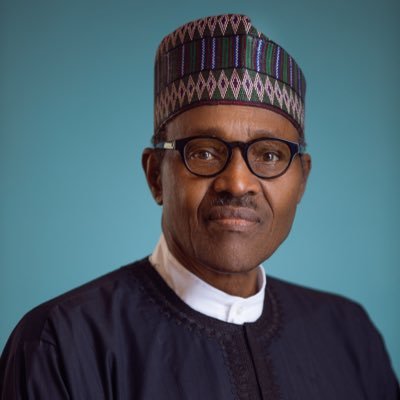


By Laide Akinboade, Abuja
As part of efforts to reposition the newspaper for optimum corporate performance, the management of Asset Newspapers Limited, Publishers of DAILY ASSET, has announced the appointment of David Torough as the Editor of the Abuja-based national daily.
A statement by the management said the appointments were part of the company’s new strategy to further penetrate the various states in the country and raise its readership and patronage.
“DAILY ASSET is widely acceptable across the country and to maintain our leadership position, we need to increase management presence, hence the need to create new Bureau offices in some locations outside Abuja and Lagos,” the statement quoted the Publisher/ Editor-in-Chief, Dr Cletus Akwaya to have said.
In a statement yesterday, Publisher and Editor-in-Chief of the fast-growing daily, Dr. Cletus Akwaya said the appointment was part of the new strategy to properly situate the paper for better productivity.
“DAILY ASSET has a commitment with the Nigerian people. We are determined to weather the storm and give Nigerian readers a Newspaper that satisfies their yearnings and reading pleasure and we can only do that with the right set of professionals,” the statement said.
Akwaya, a former Commissioner of Information from Benue State said the difficult times being faced by Nigerians posed a great challenge to the media as the people deserved credible information with which to make choices.
“We have a bond with the people, to offer credible information at all times in the best tradition of the Nigerian Press and on this scale of objectivity, truth and fairness, we pledge to remain steadfast no matter the challenges,” Akwaya was quoted to have said.
He said the newspaper will maiantin its daily print run and circulation to all states of the federation and urged advertisers to take advantage of the deep penetration of the Daily Asset brand to send their messages.
Torough, the new Editor has had a steady rise in the Newspaper in the last five years.
A graduate of Mass communication of the Benue State University, Makurdi, Torough joined the company in 2022 as Benue State Correspondent. He was spotted for his brilliance and redeployed to Abuja the following year and promoted to Deputy News Editor. He was subswuently named Deputy Editor of the paper, a position he held until the recent appointment.
Torough has attended several journalistic workshops and trainings to properly equip himself for the task ahead.
The statement also said the Management named Eze Okechukwu as Deputy Editor.
Before his elevation as Deputy Editor, Eze has been Deputy Politics Editor and DAILY ASSET Newspaper correspondent covering the Senate, having joined the organization in 2021.
Born on March 10, 1975, Eze holds a Masters Degree in Mass Communication from the Enugu State University of Science and Technology.
Eze began his journalism career with Daily Star, Enugu and later worked with Daily Trust Newspaper, Abuja as sports reporter.
Aside from his journalistic excellence, he has a great deal of passion for sports.

From Ngutor Dekera, Kaduna and Aliyu Askira, Kano
Northern governors and traditional rulers yesterday called for the suspension of mining activities across the region for six months, blaming illegal mining for worsening insecurity in many states.
The resolution was contained in a communiqué issued after a joint meeting of the Northern States Governors’ Forum and the Northern Traditional Rulers’ Council held at the Sir Kashim Ibrahim House, Kaduna. The meeting, chaired by the Gombe State Governor and NSGF Chairman, Muhammadu Yahaya, had in attendance the 19 northern governors and chairmen of the 19 states’ traditional councils.The Forum expressed concern over the escalating violence in parts of the North, including the killings and abductions recently recorded in Kebbi, Kwara, Kogi, Niger, Sokoto, Jigawa and Kano states, as well as renewed Boko Haram attacks in Borno and Yobe.“The Forum extends its deepest condolences and solidarity to the governments and good people of the affected states,” the communiqué said, noting that the attacks on schoolchildren and other citizens had become “unacceptable tragedies” that required urgent collective action.It commended President Bola Tinubu for what it described as the Federal Government’s “firm response” to recent abductions and insurgency threats, especially the rescue of some abducted pupils.The governors also saluted security agencies for their sacrifices on the frontlines.“We resolved to renew our support for every step taken by the President and Commander-in-Chief to take the fight to insurgents’ enclaves in order to end the criminality,” the Forum stated.A major highlight of the meeting was the North’s renewed push for the establishment of state police, with governors and traditional rulers insisting that decentralised policing had become inevitable.“The Forum reaffirms its wholehearted support and commitment to the establishment of state police,” the communiqué added, urging federal and state lawmakers from the region to “expedite action for its actualisation.”On illegal mining, the governors said criminal mining networks were fuelling violence and providing resources for armed groups.As a corrective measure, they asked Tinubu to direct the Minister of Solid Minerals to impose a six-month suspension of mining activities in order to allow for a full audit and revalidation of licences.“The Forum observed that illegal mining has become a major contributory factor to the security crises in Northern Nigeria. “We strongly recommend a suspension of mining exploration for six months to allow proper audit and to arrest the menace of artisanal illegal mining,” it said.To strengthen the fight against insecurity, the governors also announced the creation of a regional Security Trust Fund.Under the proposed arrangement, each state and its local governments will contribute ₦1bn monthly, to be deducted at source under an agreed framework.They said the fund would help provide sustainable financing for joint operations, intelligence-driven interventions and coordinated security responses across the region.At the end of the meeting, the Forum reaffirmed its commitment to unity and collective responsibility.“Only through unity, peer review and cooperation can we overcome the pressing challenges before us,” it declared.The Forum agreed to reconvene on a date to be announced.Meanwhile, Nigeria’s worsening security crisis took a grim turn on Monday as bandits launched fresh attacks in Kano State, abducting 25 villagers, even as the Federal Government raced to secure the release of more than 300 Catholic school children kidnapped in Niger State.In the early hours of Monday, armed bandits invaded Unguwar Tsamiya—popularly called Dabawa—in Shanono Local Government Area of Kano State, whisking away nine men and two women after shooting into the air and assaulting residents. The attackers also rustled two cows.A resident lamented the community’s helplessness: “We cannot do otherwise; most of us cannot leave because we have nowhere to go. This is our place, our land and everything is here.”The assault came less than 24 hours after a similar attack on Yan Kamaye in Tsanyawa LGA, a community along the volatile Katsina border.In Niger State, National Security Adviser Nuhu Ribadu has assured distraught families of St. Mary’s Co-Education School, Kontagora that the more than 300 students and staff abducted on November 21 will return home “soon.” Ribadu, who led a high-level federal delegation to the school on Monday, said the abductees are safe, though he offered no specifics on their location or the status of rescue operations.According to Daniel Atori, spokesman for the Catholic bishop overseeing the school, the NSA reassured officials: “The children are where they are and will come back safely.”The St. Mary’s attack is part of a worrying resurgence of mass kidnappings reminiscent of the 2014 Chibok schoolgirls’ abduction. Security analysts warn that banditry has evolved into a “structured, profit-seeking industry,” with hundreds of Nigerians abducted in November alone.The Kontagora school abduction occurred the same week 25 girls were kidnapped in Kebbi State—victims who authorities say have since been rescued through “non-kinetic” means. About 50 of the St. Mary’s hostages have also managed to escape.Ribadu’s delegation, which included the Minister of Humanitarian Affairs and the Director-General of the Department of State Services (DSS), reaffirmed the government’s commitment to securing the freedom of all abducted citizens.As communities from Kano to Niger continue to bear the brunt of these violent incursions, the escalating spate of kidnappings underscores the urgent national demand for a more decisive and coordinated security response.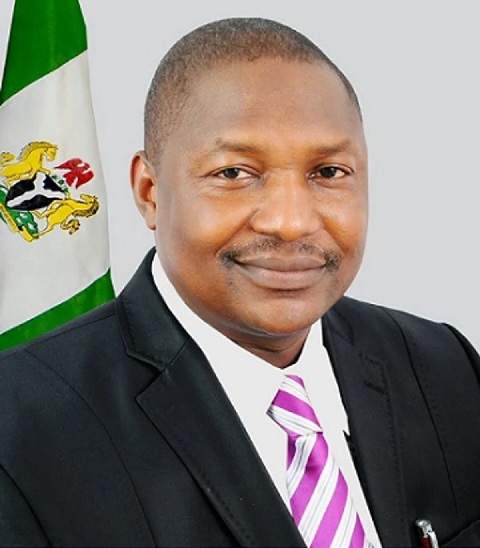
By David Torough, Abuja
The Economic and Financial Crimes Commission (EFCC) said former Attorney‑General of the Federation and Minister of Justice, Abubakar Malami, will face a team of interrogators at its office daily throughout December.
A credible source in the EFCC said on Monday that the daily appearance was part of an ongoing investigation into the whereabouts of an alleged 490 million dollars Abacha loot secured through a Mutual Legal Assistance (MLAT) request. The source said that Malami, who was summoned for interrogation by the EFCC on Saturday, was barred from leaving Nigeria for the next one month.According to the source, one of the conditions for his release on Saturday was that he should report daily to the EFCC Headquarters in Abuja for further interrogation.The source said Malami would have to appear daily at the anti-graft office due to the volume of the investigation and the seriousness of the charges against him.”We seized his passport, it is the normal routine during investigation, but he has to report at the EFCC headquarters in Abuja every day for the next month.”He will be reporting for further investigation throughout December.”He will be reporting every day, starting from Dec. 1st to Dec. 31st.He will appear before the team of investigators for the entire month of December.”He will be reporting to EFCC for investigation for the period because of the volume of the investigation and the seriousness of the charges against him,” the source added.According to the source, a fact sheet on the former minister revealed that Malami had several issues to clarify with the EFCC within the coming weeks.“We have asked him to explain the whereabouts of the $490 million Abacha loot secured through MLAT.“We didn’t say he stole money, but he should account for the loot. This is one of the issues he will clarify to our investigators.”The commission cited the large volume of documents he must review and the need for extensive interviews as reasons for seizing his passport.The source said EFCC would not engage in a war of words but would release its findings after a thorough investigation.Malami, in a statement by his media aide, Mohammed Doka, on Monday in Abuja, however, described the EFCC investigation as a political witch‑hunt.He confirmed he honored an EFCC invitation on Nov. 28, describing the engagement as fruitful and expressing confidence that the probe would vindicate him.Malami described the EFCC’s allegations as baseless, illogical and devoid of substance, insisting they collapse under factual scrutiny.


Former PDP National Chairman, Bamanga Tukur is dead
ShareFrontline business magnet and former National Chairman of Peoples Democratic Party(PDP), Alhaji Bamanga Tukur is dead. He was aged 90....

NAICOM, NCAA Partner to Strengthen Air Travellers’ Protection
ShareThe National Insurance Commission (NAICOM) and the Nigeria Civil Aviation Authority (NCAA) have signed a Memorandum of Understanding (MoU) to...

Customs Seizes N43.5bn Narcotics, Drones, Expired Goods at Apapa Port
ShareThe Nigeria Customs Service (NCS) has intercepted narcotics, controlled pharmaceuticals, drones and expired goods valued at N43.5 billion at the...


IPMAN Tasks Marketers on Local Refineries for Product Sourcing
ShareThe National President of the Independent Petroleum Marketers Association of Nigeria (IPMAN), Alhaji Abubakar Shettima, has urged independent petroleum marketers...


CBN Bags NES Distinguished Organisation Award for Economic Reforms
ShareBy Tony Obiechina, Abuja The Central Bank of Nigeria (CBN) has received the Nigerian Economic Society’s (NES) Distinguished Organisation Award...


2027: Information Minister Urges Niger APC Leaders to Back Tinubu’s Reforms
ShareBy David Torough, Abuja The Minister of Information and National Orientation, Mohammed Idris, has urged APC leaders in Niger State...


Police Arrest Two Suspected Car Snatchers in Delta
ShareThe Delta State Police Command has arrested two suspected car snatchers and recovered a Toyota Camry in the state. The...

Otti Highlights Seven Investment Priority Sectors in Abia
ShareAbia State Governor, Alex Otti has highlighted seven priority sectors and investment opportunities to drive industrialisation and economic development in...


DESTMA Receives 6,642 Applications for Recruitment, Warns Against Fraudsters
ShareFrom Francis Sadhere, Asaba No fewer than 6,642 Deltans have applied for recruitment into the Delta State Traffic Management Authority...

Alia Vows to Transform Benue Industrial Hub
ShareFrom Attah Ede, Makurdi Benue State Governor, Rev. Fr. Dr. Hyacinth Iormem Alia, has declared the Benue 2035 Economic Transformation,...