
COVER
Those Calling for Restructuring Want to Divide Nigeria – Suswam


Senator Gabriel Torwua Suswam (Benue North -East) is the Chairman, Senate Committee on Power. He comes to the Senate with the pedigree of an experienced legislator, having served for two terms as Member of the House of Representatives(1999-2007). The former Governor of Benue State holds strong views on knotty political and economic issues in the country. In this interview with Politics Editor, JUDE OPARA and Acting Business Editor, MATTHEW DADIYA, Suswam, who holds a Ph. D in Law, bared his mind on the state of the nation’s power sector, the performance of the 9th National Assembly and other critical issues in the polity. Excerpts.
Recently you made a public statement on politics in your party. Can you restate your earlier published statement on what your party intends to do as regards issues of presidency and other major political offices of the party as we march towards another election circle?
Well, since the advent of party politics back in 1998, I have belonged to one party, I have been in PDP since I began politics in 1998 before I got elected in 1999, I have not changed party and I intend not to change party, and so I understand the PDP very well. I have also looked at how things are done in the party and so I wasn’t making a statement that was extraordinary.
The PDP in 2019 zoned the office of the president to the North, unfortunately that ambition of having their president from the North was not realized and so the belief is that in 2023 PDP would want to realize that ambition and so there is nothing extraordinary about it. If any person has any superior argument, he can contradict what I have said, I believe that is the normal thing, you say look, I will have things thing, and I have not gotten it and you want to take it away, that does not make any political sense.
So I think the rightful thing for us in PDP is to keep to that (arrangement). Subsequently, when PDP makes a statement that this is the direction we want to go, people will believe in them, but if we keep oscillating that this is zoned to you, even though you didn’t get it, we take it to another place, I don’t think people will be happy with that kind of arrangement. So the right thing is for the PDP to keep faith with what they did in 2019.
There is this clamour for Nigeria to be fine-tuned, some call it restructuring, some say it is true federalism. If you look at how the country was running before the military introduced this unitary system veiled as federalism, so what is your take on the call for a restructured Nigeria so that the clamour for Abuja will reduce. For instance the Ohaneze Ndigbo took you up, when you talked about the PDP zoning arrangement because they felt power should come to them?
Well, it depends on what you define as restructuring
Whether you call it Restructuring or True Federalism, what those demanding for it are saying in essence is; let us go back to what we were practicing before the military intervention, you can call it regional government or as we have them now, states, and also that some of the things we have on the exclusive list should be put in the concurrent list.
You see, devolution of power is not the same thing with restructuring. It is because of lack of understanding of what restructuring is that is creating this problem. For a Yoruba man, restructuring means something different to what it means an Igbo man. The restructuring to an Igbo man means something different from me from the northern part of the country. So we must agree, whether it is devolution of power or restructuring we want.
What do you from the North understand as restructuring?
This talk about restructuring is pure politics and selfishness because this whole project called Nigeria came into being in 1914 and from then, all forms of governments have been tried. We tried the regional government, which was parliamentary system of government, we moved from parliamentary government into a presidential system and we are asking ourselves that we should go back to pre-independence, it means we don’t know what we are talking about. It is either we are making progress or we are not. We have made some substantial progress and then some elites because they felt they cannot access power, they came up with restructuring and once you put them in power, they will no longer talk about restructuring.
That is all. Its just about selfishness, it is not for any genuine concern for the Nigerian project. What I will think will make sense is devolution of powers and that simply means you restructure the fiscal part of the country.
The sharing formula should be fine-tuned so that the states should have more money than the federal government, that is what we need and not restructuring.
There is nothing like restructuring, what we need is devolution of powers, give the states some more powers than they have now and most states can stand on their own, but when you say restructuring, it simply means breaking up the country into different countries and people who are clamoring for that are only looking for a way to carve small enclaves for themselves there and become lords and not for any other reason.
But if we sit down and say look; the sharing formula, let the federal government take may be 30% and states 70%; If you give states more power in terms of what they control from the federal government, that is the kind of thing we should be clamouring and agitating for and not restructuring because it means different things to different people, so it is devolution of powers that people should be asking for and not restructuring.
Today, if an Igbo man becomes president, the Yoruba will say they are marginalized and call for restructuring of the country and once they have it, nobody talks of restructuring, ditto for the North, so there is nothing like restructuring, but devolution of powers is what we should be agitating for and not restructuring. I don’t believe in restructuring.
Let us talk about the situation in Benue. There has been a lot of issues in your constituency, herdsmen and farmers clashes, issues of banditry and insecurity, I know your constituency has been affected in the past with killings and destructions and other untoward things. What have been your efforts to address some of these issues?
The issue of insecurity is a national issue and not limited to any one place. Yes, there have been series of attacks even last night, if I show you my phone, all through the night the herdsmen came last night and attacked some of my villagers in my own immediate village.
In fact two people lost their lives and several of them are in the hospital as I speak to you now. Throughout last night, I didn’t sleep in time; I was communicating with the chairman of the Council.
Now that has become perennial and not just in the state but across the entire country. So what strategy is the government adopting in tackling this menace? That should be the question.
In the Senate, we have put this issue on the front burner almost every day we are sitting and it is not abating because I think the government has not adopted the strategy that can solve this problem and so we will continue to address it, otherwise people may seek for self-help and such will introduce confusion in the society because if now people lose confidence in the legitimacy of government to monopolize violence and address issues that threaten the welfare of the people, then that society becomes a failed state, so I don’t think we should allow ourselves to get to that level, but gradually we are getting to that level where people may seek self-help because government has shown incapacity to address the security challenges in the country. As members of the National Assembly in our individual capacity and collectively, we continue to urge the executive arm of government to be up and doing on its responsibilities.
But in the state, the governor of Benue has done everything humanly possible to address this issue, at one point he was vilified but now every person is engulfed in it and they can now feel the pains of what it means to come under such intense attack.
The herdsmen are controlled by people and so one would expect that the government should be more strategic in identifying the people who control them. Once you are able to do that, it will be easy to control the situation because the clashes between herdsmen and farmers are happening all over the country. The herdsmen carry cattle which is their economy, while the farmers’ economy, which is their farmlands are being trampled upon by the cattle.
So if the government has sworn to protect these two groups, then there must be a way of sitting them down together and identifying what the problem is, that has not been done so everybody is taking laws into their hands and this will continue. It is unfortunate that my constituency is most affected, we have done a lot in trying to mitigate the pains of these people, but it is not abating.
This is a very serious problem that the executive arm of government should do everything to stop otherwise, eventually, if we don’t take time we will have a lot on our hands that will overwhelm everybody.
Can you give us an insight into your pet project of issuing scholarships to some of your constituents, we want to have an idea of what you are doing to mitigate the challenges of your constituents in the last one year as a Senator.
You know, being in the opposition, there is not much you can do in terms of extending patronage to your people, so what I have done is personal to them like students in the Law School are the ones that are targeted because they are vulnerable because the money involved in paying for their school fees and other associated things is so much. So I decided to assist them to pull through Law School. I am doing it as an individual because in the Senate, it is difficult as an opposition member to help people access patronage from government.
I have done quite a lot, I have helped to source places of employment for some people and also in the budget of 2020, there are a couple of projects that we put there hoping that when they begin the implementation of the budget, they will see some signs and dividends of democracy, we are also keeping in touch in them and addressing their personal and community problems.
Considering the current conflict between the Joint Committees on Employment and Labour and the Minister of State for Labour, it seems the legislature wants to dabble into how the executive functions. This was the kernel in the disagreement with Minister Keyamo and we also understand that the National Assembly went into micro-credits being given to people as palliatives for COVID-19 as well as many others, so what is your take in relation to the functions of separation of powers, doesn’t this compromise the oversight on the Executive?
Well, I think your question is contradictory. When you say compromise our oversight, which means we have the power to oversight and in another breadth you talk about compromising our integrity.
Let me say this, the Constitution of the Federal Republic of Nigeria, gives the power of appropriation to the National Assembly and it is in that same way we are vested with the power of oversight. Oversight function, properly defined, gives you the latitude to question and monitor what is going on.
Now in the process of questioning and monitoring, I don’t see how that is dabbling into the workings of other arms of government.
What happened with the Minister of State, Labour is just part of the functions that has been bestowed on the National Assembly that yes, we approved, we appropriated money for an item in the budget and we now said, okay you are going to employ 774,000 persons based on the approval that we have given and we said we will like to have a look at it and you say we should not look at it. If you employ 1,000 persons in my own local government as a Senator of the Federal Republic and you now think I should not know about it, then something is wrong somewhere.
This is the same thing that happened with the Social Investment money where N500 billion was expended and there is no record of it, nobody can identify who and who benefited from that money.
Now they also claimed to have shared N52billion Naira in just a few days and no person has been able to place his or her hand on how N52 billion was shared as palliatives. This is the same system they want to employ now, because if they say they have employed 1,000 in my local government and I look for who benefitted from my local government, I can’t find it. Is it right not to scrutinize?
We insist that we must know each and every person who is going to benefit from that, so I don’t see how that is a problem. In the first place, we approved the money for the programme, so why not allow us monitor its implementation?
There is nothing unusual just that people don’t want to be monitored, they want to embezzle some money, by just putting up some pseudo names and say these are the beneficiaries and you know at that point, it will be difficult for you to say anything. Even the media should ask these pertinent questions, why are they not ready to place everything on the table?
I come from a Constituency that has seven local government areas, it means that they will employ 7,000 persons in these local governments and I don’t know who those persons are. Is it the Minister sitting in the office here, who has never known those places and has never been there, what is the criteria?
They say they have appointed committees, to do what? If as a major stakeholder, I am not qualified to participate and know how it is organized to say look these are my people, I think the media should even question them more.
We have experienced it before, N52 billion was shared and I have continued to ask people from my constituency and no single person has come to testify he got that money, now it is 774,000 and you can imagine how much that would amount to, they just want to share it and say they have shared it to the people, and we are not going to allow that to happen. We have insisted that the process must be transparent and we must be involved so that we can monitor it.





By Laide Akinboade, Abuja
As part of efforts to reposition the newspaper for optimum corporate performance, the management of Asset Newspapers Limited, Publishers of DAILY ASSET, has announced the appointment of David Torough as the Editor of the Abuja-based national daily.
A statement by the management said the appointments were part of the company’s new strategy to further penetrate the various states in the country and raise its readership and patronage.
“DAILY ASSET is widely acceptable across the country and to maintain our leadership position, we need to increase management presence, hence the need to create new Bureau offices in some locations outside Abuja and Lagos,” the statement quoted the Publisher/ Editor-in-Chief, Dr Cletus Akwaya to have said.
In a statement yesterday, Publisher and Editor-in-Chief of the fast-growing daily, Dr. Cletus Akwaya said the appointment was part of the new strategy to properly situate the paper for better productivity.
“DAILY ASSET has a commitment with the Nigerian people. We are determined to weather the storm and give Nigerian readers a Newspaper that satisfies their yearnings and reading pleasure and we can only do that with the right set of professionals,” the statement said.
Akwaya, a former Commissioner of Information from Benue State said the difficult times being faced by Nigerians posed a great challenge to the media as the people deserved credible information with which to make choices.
“We have a bond with the people, to offer credible information at all times in the best tradition of the Nigerian Press and on this scale of objectivity, truth and fairness, we pledge to remain steadfast no matter the challenges,” Akwaya was quoted to have said.
He said the newspaper will maiantin its daily print run and circulation to all states of the federation and urged advertisers to take advantage of the deep penetration of the Daily Asset brand to send their messages.
Torough, the new Editor has had a steady rise in the Newspaper in the last five years.
A graduate of Mass communication of the Benue State University, Makurdi, Torough joined the company in 2022 as Benue State Correspondent. He was spotted for his brilliance and redeployed to Abuja the following year and promoted to Deputy News Editor. He was subswuently named Deputy Editor of the paper, a position he held until the recent appointment.
Torough has attended several journalistic workshops and trainings to properly equip himself for the task ahead.
The statement also said the Management named Eze Okechukwu as Deputy Editor.
Before his elevation as Deputy Editor, Eze has been Deputy Politics Editor and DAILY ASSET Newspaper correspondent covering the Senate, having joined the organization in 2021.
Born on March 10, 1975, Eze holds a Masters Degree in Mass Communication from the Enugu State University of Science and Technology.
Eze began his journalism career with Daily Star, Enugu and later worked with Daily Trust Newspaper, Abuja as sports reporter.
Aside from his journalistic excellence, he has a great deal of passion for sports.

From Ngutor Dekera, Kaduna and Aliyu Askira, Kano
Northern governors and traditional rulers yesterday called for the suspension of mining activities across the region for six months, blaming illegal mining for worsening insecurity in many states.
The resolution was contained in a communiqué issued after a joint meeting of the Northern States Governors’ Forum and the Northern Traditional Rulers’ Council held at the Sir Kashim Ibrahim House, Kaduna. The meeting, chaired by the Gombe State Governor and NSGF Chairman, Muhammadu Yahaya, had in attendance the 19 northern governors and chairmen of the 19 states’ traditional councils.The Forum expressed concern over the escalating violence in parts of the North, including the killings and abductions recently recorded in Kebbi, Kwara, Kogi, Niger, Sokoto, Jigawa and Kano states, as well as renewed Boko Haram attacks in Borno and Yobe.“The Forum extends its deepest condolences and solidarity to the governments and good people of the affected states,” the communiqué said, noting that the attacks on schoolchildren and other citizens had become “unacceptable tragedies” that required urgent collective action.It commended President Bola Tinubu for what it described as the Federal Government’s “firm response” to recent abductions and insurgency threats, especially the rescue of some abducted pupils.The governors also saluted security agencies for their sacrifices on the frontlines.“We resolved to renew our support for every step taken by the President and Commander-in-Chief to take the fight to insurgents’ enclaves in order to end the criminality,” the Forum stated.A major highlight of the meeting was the North’s renewed push for the establishment of state police, with governors and traditional rulers insisting that decentralised policing had become inevitable.“The Forum reaffirms its wholehearted support and commitment to the establishment of state police,” the communiqué added, urging federal and state lawmakers from the region to “expedite action for its actualisation.”On illegal mining, the governors said criminal mining networks were fuelling violence and providing resources for armed groups.As a corrective measure, they asked Tinubu to direct the Minister of Solid Minerals to impose a six-month suspension of mining activities in order to allow for a full audit and revalidation of licences.“The Forum observed that illegal mining has become a major contributory factor to the security crises in Northern Nigeria. “We strongly recommend a suspension of mining exploration for six months to allow proper audit and to arrest the menace of artisanal illegal mining,” it said.To strengthen the fight against insecurity, the governors also announced the creation of a regional Security Trust Fund.Under the proposed arrangement, each state and its local governments will contribute ₦1bn monthly, to be deducted at source under an agreed framework.They said the fund would help provide sustainable financing for joint operations, intelligence-driven interventions and coordinated security responses across the region.At the end of the meeting, the Forum reaffirmed its commitment to unity and collective responsibility.“Only through unity, peer review and cooperation can we overcome the pressing challenges before us,” it declared.The Forum agreed to reconvene on a date to be announced.Meanwhile, Nigeria’s worsening security crisis took a grim turn on Monday as bandits launched fresh attacks in Kano State, abducting 25 villagers, even as the Federal Government raced to secure the release of more than 300 Catholic school children kidnapped in Niger State.In the early hours of Monday, armed bandits invaded Unguwar Tsamiya—popularly called Dabawa—in Shanono Local Government Area of Kano State, whisking away nine men and two women after shooting into the air and assaulting residents. The attackers also rustled two cows.A resident lamented the community’s helplessness: “We cannot do otherwise; most of us cannot leave because we have nowhere to go. This is our place, our land and everything is here.”The assault came less than 24 hours after a similar attack on Yan Kamaye in Tsanyawa LGA, a community along the volatile Katsina border.In Niger State, National Security Adviser Nuhu Ribadu has assured distraught families of St. Mary’s Co-Education School, Kontagora that the more than 300 students and staff abducted on November 21 will return home “soon.” Ribadu, who led a high-level federal delegation to the school on Monday, said the abductees are safe, though he offered no specifics on their location or the status of rescue operations.According to Daniel Atori, spokesman for the Catholic bishop overseeing the school, the NSA reassured officials: “The children are where they are and will come back safely.”The St. Mary’s attack is part of a worrying resurgence of mass kidnappings reminiscent of the 2014 Chibok schoolgirls’ abduction. Security analysts warn that banditry has evolved into a “structured, profit-seeking industry,” with hundreds of Nigerians abducted in November alone.The Kontagora school abduction occurred the same week 25 girls were kidnapped in Kebbi State—victims who authorities say have since been rescued through “non-kinetic” means. About 50 of the St. Mary’s hostages have also managed to escape.Ribadu’s delegation, which included the Minister of Humanitarian Affairs and the Director-General of the Department of State Services (DSS), reaffirmed the government’s commitment to securing the freedom of all abducted citizens.As communities from Kano to Niger continue to bear the brunt of these violent incursions, the escalating spate of kidnappings underscores the urgent national demand for a more decisive and coordinated security response.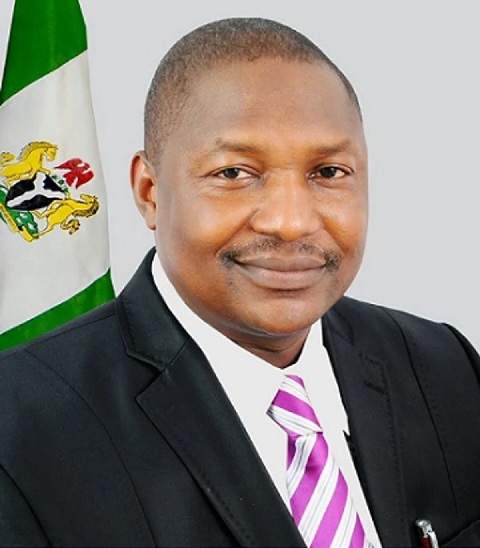
By David Torough, Abuja
The Economic and Financial Crimes Commission (EFCC) said former Attorney‑General of the Federation and Minister of Justice, Abubakar Malami, will face a team of interrogators at its office daily throughout December.
A credible source in the EFCC said on Monday that the daily appearance was part of an ongoing investigation into the whereabouts of an alleged 490 million dollars Abacha loot secured through a Mutual Legal Assistance (MLAT) request. The source said that Malami, who was summoned for interrogation by the EFCC on Saturday, was barred from leaving Nigeria for the next one month.According to the source, one of the conditions for his release on Saturday was that he should report daily to the EFCC Headquarters in Abuja for further interrogation.The source said Malami would have to appear daily at the anti-graft office due to the volume of the investigation and the seriousness of the charges against him.”We seized his passport, it is the normal routine during investigation, but he has to report at the EFCC headquarters in Abuja every day for the next month.”He will be reporting for further investigation throughout December.”He will be reporting every day, starting from Dec. 1st to Dec. 31st.He will appear before the team of investigators for the entire month of December.”He will be reporting to EFCC for investigation for the period because of the volume of the investigation and the seriousness of the charges against him,” the source added.According to the source, a fact sheet on the former minister revealed that Malami had several issues to clarify with the EFCC within the coming weeks.“We have asked him to explain the whereabouts of the $490 million Abacha loot secured through MLAT.“We didn’t say he stole money, but he should account for the loot. This is one of the issues he will clarify to our investigators.”The commission cited the large volume of documents he must review and the need for extensive interviews as reasons for seizing his passport.The source said EFCC would not engage in a war of words but would release its findings after a thorough investigation.Malami, in a statement by his media aide, Mohammed Doka, on Monday in Abuja, however, described the EFCC investigation as a political witch‑hunt.He confirmed he honored an EFCC invitation on Nov. 28, describing the engagement as fruitful and expressing confidence that the probe would vindicate him.Malami described the EFCC’s allegations as baseless, illogical and devoid of substance, insisting they collapse under factual scrutiny.


APC Stakeholders Condemn Killings In Benue, Urge Govt’s Action
ShareBy Elijah Oguche, Abuja Stakeholders of the All Progressives Congress (APC) in Benue State have condemned the worsening State of...

Alleged Forgery: Civil Society Group Urges PDP NWC to Drop Nnaji, Pick Nnamani
ShareBy David Torough, Abuja The Defence for Democracy, has reiterated earlier call on the leadership of the People’s Democratic Party...
Nigerian Army at 163: Legacy of Sacrifice, Service and Transformation
ShareBy Sumaila Ogbaje When officers, soldiers and defence stakeholders gathered in Port Harcourt for the Nigerian Army Day Celebration (NADCEL)...


What the Oyo Situation Teaches about Nigeria’s Emerging Security Doctrine
ShareBy Crispin Oduobuk There are moments when an entire nation seems to breathe again. The announcement on Friday, 10 July...

Fintiri Swears in Newly Elected Council Chairmen
ShareAdamawa State Gov, Ahmadu Fintiri, on Wednesday, swore in 21 newly elected council chairmen to administer the local governments in...
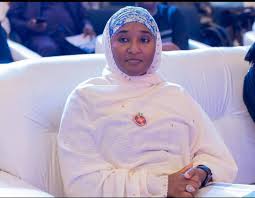

NECO Targets Full CBT Transition as Hitch-free Exam Boosts Confidence
ShareThe Minister of State for Education, Prof. Suwaiba Ahmad has expressed satisfaction with the conduct of the National Examinations Council...


Adeleke’s Call for Visa Ban on APC Stalwarts Sign of Political Jitters, Says Oyebamiji
ShareFrom Ayinde Akintade, Osogbo The governorship candidate of the All Progressives Congress (APC) in the forthcoming gubernatorial election in Osun...


Midnight Social Media Curfew Proposed for UK Teens Aged 16, 17
ShareOlder teenagers in the UK will face an overnight social media curfew, the government has announced – though they will...


UN Forum Participants Discuss Role of Private Sector in Achieving SDGs
ShareThe 2026 UN Global Business Forum on the Sustainable Development Goals (SDGs) has concluded, with participants calling for a greater...
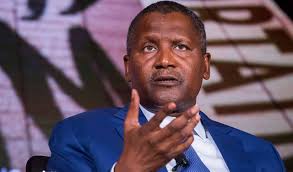

Aliko Dangote: Africa’s Industrialist-in-chief
ShareBy Wale Osofisan Aliko Dangote’s rise from a trader from Kano to the builder of some of Africa’s most important...