
NEWS
New Education Permanent Secretary Assumes Office, Urges Dedication

By Tony Obiechina, Abuja
Abel Olumuyiwa Enitan has assumed duty as the new Permanent Secretary for Education on Thursday, charging staff to be dedicated to duty.
Addressing the staff, Enitan urged the Directors and staff to work diligently in their service delivery to ensure that the nation’s future is safeguarded.
He called on the entire education staff to show greater commitment to the ongoing Re-newed Hope Agenda, underscoring the critical role of the education sector in human capital development.
He also assured the staff that their welfare would be a priority, promising to uphold an open-door policy. He expressed his unwavering dedication to implementing progressive innovations and reforms within the sector.
“I am committed to mobilizing, coordinating, and deploying the available human, financial, and material resources in support of the political leadership of the ministry, with the aim of enhancing the quality of education and establishing a robust educational system that meets the needs of our ever-evolving society, in alignment with Mr. President’s Renewed Hope agenda,” Enitan said in statement issued on Friday by the Director of Press and Information, Folashade Boriowo.
Furthermore, he called for teamwork, collaboration and open communication to foster harmonious working relationships with relevant stakeholders, all in the pursuit of preparing future leaders.
In his parting remarks, Dr. Nasir Sani-Gwazo the outgoing permanent secretary urged both senior officials and staff to work harmoniously with his successor, expressing confidence in Abel Enitan’s leadership.
Dr. Sani-Gwarzo also expressed gratitude for the opportunity to serve in various capacities across different ministries and levels of government, culminating in his position as Permanent Secretary.
The outgoing Permanent Secretary was celebrated by the Directors of the ministry, who marked his 60th birthday with a cake-cutting ceremony, along with felicitations and congratulatory messages for his accomplishments.
By Ubong Ukpong, Abuja
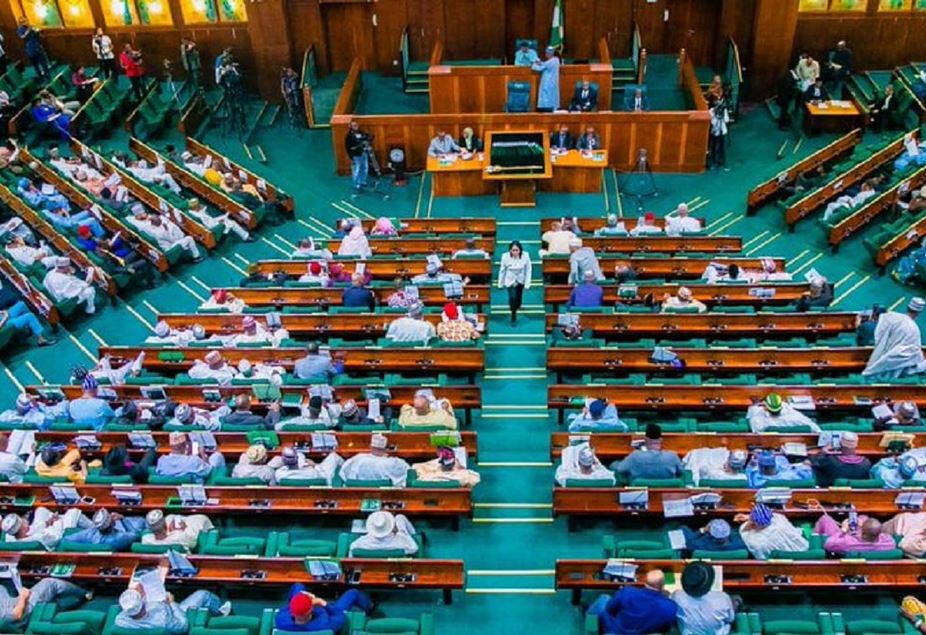
The House of Representatives has commenced a nationwide investigation into Nigeria’s worsening drug abuse and trafficking crisis, pledging to expose systemic failures, hold erring institutions and corporate actors accountable, and recommend sweeping reforms to protect public health and national security.
The probe formally began yesterday in Abuja with the inauguration of an investigative hearing by the House Ad hoc Committee on Drugs, Trafficking, Alcohol and Tobacco Abuse.
Chairman of the committee, Rep. Oluwatimehin Adelegbe, described the scale of substance abuse in the country as a “National emergency,” warning that it now threatens the very fabric of Nigerian society.
“Today, we gather under the mandate of the Nigerian people and under the solemn weight of a crisis that threatens the soul of our nation,” Adelegbe said. “Drug abuse and illicit trafficking are no longer isolated problems; they have become a clear and present danger to our health, security and collective future.”
He said the committee was constituted to uncover the truth behind the growing crisis, identify institutional lapses, and propose far-reaching corrective measures capable of reversing what he called a deeply disturbing trend.
According to the lawmaker, cannabis is now smoked openly on the streets, methamphetamine use is spreading rapidly, and codeine-based cough syrups are sold almost as casually as soft drinks. He added that tramadol 200mg is trafficked with the same sophistication as hard narcotics, while cheap and hazardous alcoholic mixtures are destroying young lives in motor parks, campuses and marketplaces nationwide.
Adelegbe also accused some tobacco companies of exploiting regulatory loopholes to target minors through flavoured products, informal retail channels and misleading marketing practices. He further decried the influx of substandard pharmaceuticals, fake spirits and unregistered products into the country, blaming weak enforcement at ports, airports and land borders, which he said trafficking syndicates routinely exploit.
“Entire communities have been crippled by addiction, crime and preventable deaths. Nigeria is losing too many lives, too many futures, too many families,” he said, stressing that the investigation was not a witch-hunt or an anti-business move.
“We support industries and value investment, but no business model can be allowed to thrive at the expense of Nigerian lives. No profit margin can justify the destruction of our youth,” Adelegbe declared, adding that all stakeholders must cooperate fully with the committee.
Meanwhile, the United Nations Office on Drugs and Crime (UNODC) raised fresh alarm over the scale of drug use in Nigeria, describing the situation as significantly above the global average.
In a memorandum submitted to the committee, the UN agency cited the 2018 Nigeria Drug Use Survey conducted with the National Bureau of Statistics (NBS) and the European Union, which found that 14.4 per cent of Nigerians aged 15 to 64 use drugs. Cannabis was identified as the most commonly used drug, with an estimated 10.6 million users, followed by about seven million users of pharmaceutical opioids such as tramadol and codeine-based cough syrups.
The survey also revealed that nearly three million Nigerians suffer from drug use disorders requiring counselling or medical treatment, with women and girls disproportionately affected by stigma and limited access to care.
UNODC warned that drug use in Africa could rise by 40 per cent by 2030, a trend that could push Nigeria’s drug-using population beyond 20 million, posing what it described as an extreme threat to public health and public security.
Citing findings from the 2025 World Drug Report, the agency noted that cannabis remains the most widely used drug globally, accounting for about 42 per cent of drug use disorder cases, while opioids remain the deadliest, responsible for nearly two-thirds of drug-related deaths worldwide.
To stem the tide, UNODC recommended a balanced, evidence-based approach combining intelligence-led law enforcement with expanded prevention, treatment and harm-reduction services. Its proposals include legislative reforms, defined decriminalisation of possession for personal use, strengthened asset forfeiture and financial investigations, modernised precursor controls, and alternatives to incarceration for low-level, non-violent drug offences.
Also presenting a memorandum, the National Drug Law Enforcement Agency (NDLEA) reaffirmed its commitment to safeguarding Nigeria from illicit drugs and substance abuse. The agency commended the House for its proactive intervention and pledged technical support toward strengthening the National Drug Control Master Plan, while calling for improved legislation, tighter regulation, expanded treatment systems and increased operational resources.
By David Torough, Abuja
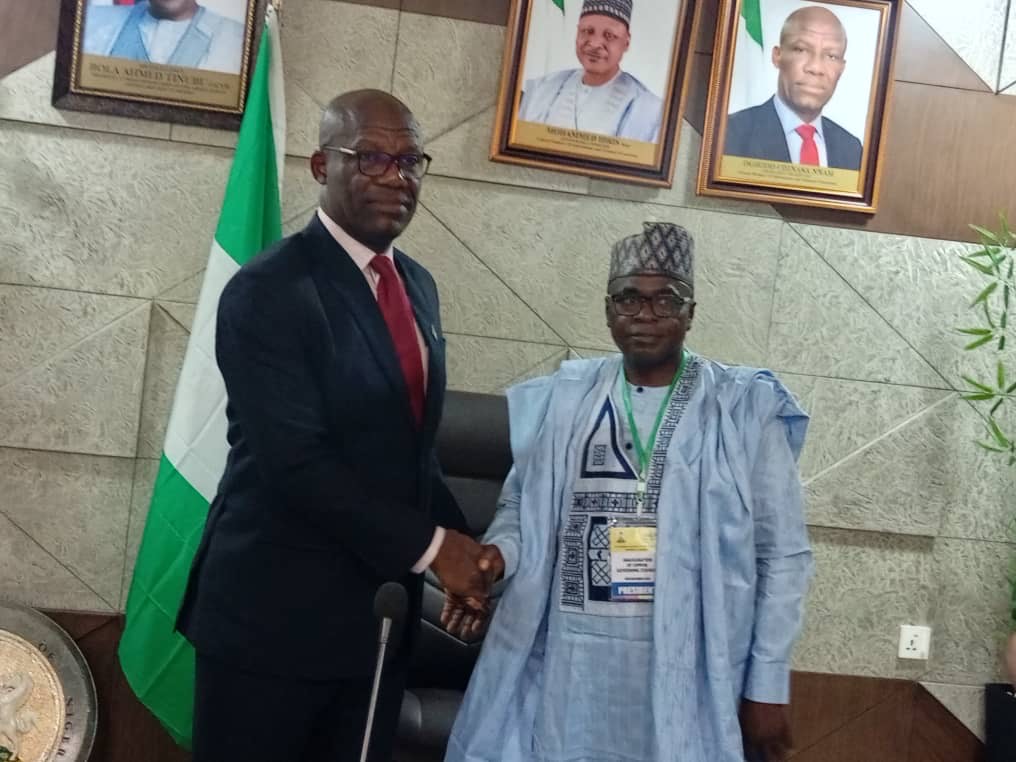
Clement Koko has been inaugurated as the President and Chairman-in-Council of the Chartered Institute of Professional Printers of Nigeria (CIPPON), pledging to reposition the institute as a world-class professional body and drive reforms aimed at strengthening Nigeria’s printing and allied industries.
At the inauguration ceremony of the CIPPON Governing Council, Clement expressed gratitude to the Minister of Information and National Orientation for approving the inauguration after a prolonged legal tussle, describing the move as a demonstration of respect for the judiciary and a boost to the institute’s stability.
He also acknowledged the contributions of past leaders of the institute, particularly the immediate past president, Dr.
Niyi Adesoye, whom he praised for his resilience and steadfast leadership during challenging periods in the institute’s history.Koko said his administration would build on existing foundations while charting a new course for professionalism, innovation and unity within the institute. He outlined key priorities, including advocacy for the creation of the Office of the Printer General of the Federation and similar offices in the 36 states and the Federal Capital Territory, or alternatively a Printers Commission, to provide proper oversight and recognition for the printing industry.
The new CIPPON president also announced plans to push for the inclusion of printing as a recognised creative industry, stressing that printing plays a critical role in economic development and deserves greater government attention. He further disclosed that the institute would work with universities and regulatory agencies to introduce Printing Technology or Printing Management as degree programmes in Nigerian universities to address skills gaps and enhance competitiveness.
As part of efforts to chart a sustainable path for the sector, Koko said CIPPON would convene a national summit within the first quarter of his tenure, bringing together stakeholders, industry players and regulators to discuss the future of the printing industry in Nigeria.
Calling for unity, Clement urged members to put an end to internal litigations, noting that the institute’s enabling law provides for dispute resolution through internal tribunals before recourse to the courts. He appealed to aggrieved members to embrace dialogue, emphasizing that collective unity was essential to moving the institute forward after years of setbacks.
Among other initiatives, he announced plans to expand professional training programmes nationwide, institute annual printing industry awards, publish a comprehensive industry report on challenges and opportunities, and deepen engagement with government and other stakeholders. He also unveiled an annual Alhaji Aderemi Mohammed Lawal Memorial Lecture on continuous printing education to honour the founding president of CIPPON.
The ceremony concluded with a minute of silence in memory of the late founding president, after which Clement formally requested the Honourable Minister to declare him duly inaugurated as President of the Chartered Institute of Professional Printers of Nigeria.

Thousands of drivers could have speeding fines cancelled after a fault saw some cameras falsely triggered on English A roads and motorways.
National Highways said it had found 2,650 wrongful speed camera activations since 2021 due to a delay between cameras and variable speed signs.
Affected drivers will be contacted by police and be reimbursed for any fines while points will be removed from their licences where needed.
Not all camera activations are enforced, so not all of the wrongful activations will have resulted in fines.
National Highways apologised for the error and chief executive Nick Harris said a fix for the issue has been identified.
“Safety is our number one priority.
All drivers should continue observing the posted speed limits as normal. Anyone who has been impacted will be contacted by the relevant police force,” he said.National Highways, which runs England’s motorways, blamed an “anomaly” in how variable speed cameras were interacting with signs on some A roads and motorways.
It meant a delay of around 10 seconds between cameras and relevant variable speed signs, meaning some drivers were incorrectly identified as speeding after the limit had changed.
The body said the 2,650 incidents since 2021 represent fewer than two each day, compared with more than 6 million activations of speed cameras on the affected roads over the same period.
It said the anomaly has impacted 10% of England’s motorways and major A roads.
The fault affects all of the variable speed cameras on smart motorways, and two on the A14 which links the north and the West Midlands to East Anglia.
It is working with police to check activations and promised nobody will now be wrongly prosecuted.
Meanwhile, police forces have stopped issuing fines from variable cameras until they have confidence in their accuracy.
A Department for Transport spokesperson said: “We apologise to anyone who has been affected. Safety was never compromised, and we are working with policing to ensure nobody is incorrectly prosecuted in future.
“Enforcement is still in place, and the public can remain confident that only motorists who break the rules will be penalised.”




Reps Launch Nationwide Probe into Drug Abuse, Trafficking Crisis
ShareBy Ubong Ukpong, Abuja The House of Representatives has commenced a nationwide investigation into Nigeria’s worsening drug abuse and trafficking...

Clement Koko Assumes Office as CIPPON President
ShareBy David Torough, Abuja Clement Koko has been inaugurated as the President and Chairman-in-Council of the Chartered Institute of Professional...
Thousands of Drivers Wrongly Fined for Speeding Since 2021
ShareThousands of drivers could have speeding fines cancelled after a fault saw some cameras falsely triggered on English A roads...


UK Unemployment Rate Rises to 5.1 Per cent
ShareThe UK unemployment rate in the three months to October has increased to 5.1%, according to official figures. That marked...


French Court Sentences Ex-DR Congo Rebel, Politician to 30 Years in Jail
ShareA French court has sentenced a former rebel leader and politician from the Democratic Republic of Congo to 30 years...


EEDC Explains Recent Decline in Power Supply across South-East
ShareThe Enugu Electricity Distribution Company (EEDC) has attributed the recent decline in power supply across the South-East to low electricity...
DMO Takes Sensitisation on Borrowing Guidelines to Northern States
ShareThe Debt Management Office (DMO) said that its World Bank-assisted workshop on borrowing guidelines was designed to intimate subnational entities...


Oborevwori Signs N1.729trn 2026 Budget, Three Other Bills into Law
ShareFrom Francis Sadhere, Delta Delta State Governor, Sheriff Oborevwori on Tuesday signed the 2026 Appropriation Bill of N1.729 trillion, tagged...

NCDMB Oil, Gas Parks Near Completion, Set for 2026 Inauguration
ShareThe Nigerian Content Development and Monitoring Board said its Nigerian Oil and Gas Parks Scheme, established to boost local manufacturing...

Nigeria Tops W’Africa’s Crude Refining as Other Countries Stage Competition
ShareNigeria is expanding its crude refining footprint in the face of apparent asset acquisition and development by other countries in...