
OPINION
Nigeria and the Next National Assembly

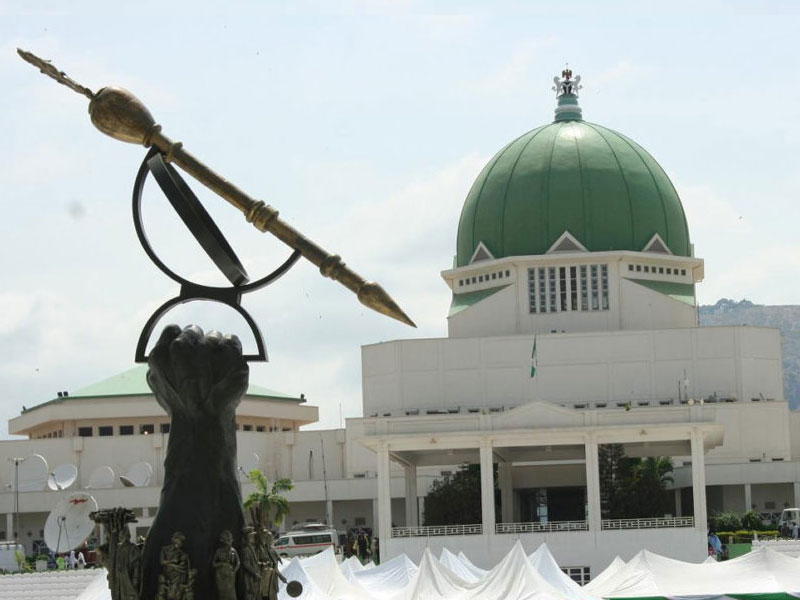
By Ebun-Olu Adegboruwa
Come June 13, 2023 or thereabout, the leadership of the National Assembly will be up for a change, the present set having been elected on June 11, 2019, with Ahmed Lawan (APC) and Femi Gbajabiamila (APC) in charge as President of the Senate and Speaker of the House of Representatives respectively.
They were anointed to take over the leadership of the National Assembly in 2015 following the victory of their political party at the general elections, but that was not to be, as certain influential members of the APC lobbied the opposition lawmakers to upset the applecart, thus throwing forward Bukola Saraki and Yakubu Dogara as leaders instead.
The lobbying in the present dispensation has been very intense, with all manner of permutations and calculations, from zoning to merit, being bandied to canvass support for certain interests. Some have posited that zoning, faith and gender should play major roles in the recruitment process, given the composition of the leadership of the major political parties.
Deliberately and without mincing words, the framers of the Constitution established the Legislature as the First Arm of government, because law is needed to define all other aspects of human existence.
It is thus expected that through its additional powers of approval and oversight functions, the legislature will work to curb the excesses of the executive arm of government, especially in situations where retired politicians have hijacked the democratic process, having in their prime tasted power and are not unwilling to hand over to others. These factors have shot the legislature into national focus, especially the leadership.
The National Assembly is a bicameral legislature consisting of 109 members of the Senate and 360 members of the House of Representatives, modelled after the federal Congress of the United States and meant to guarantee equal representation. In the current 9th National Assembly, the APC has 66 seats in the Senate, PDP 38, NNPP 1 and YPP 1 whilst in the House of Representatives, the APC has 227 seats, PDP 121, APGA 4, NNPP 3, ADC 1 and PRP 1.
Three seats are vacant in the Senate while one seat is vacant in the House of Representatives. In the 10th National Assembly that will be inaugurated in June, APC has 59 senators, PDP 36, LP 8, SDP 2 NNPP 2, APGA 1 and YPP 1. In this composition, the ruling party has 59 senators whilst the opposition parties altogether have 50, which gives renewed strength for diversity. In the House of Representatives, the APC has 162 seats, PDP 102, LP 34, NNPP 18, APGA 4, ADC 2, SDP 2 and YPP 1.
What this has shown is that it is not possible for the ruling party to foist any candidate upon the National Assembly, even though the same scenario played out in the 9th Assembly with the opposition parties unable to pull their weight when it mattered most.
Notwithstanding the seeming plurality of representation, the 9th National Assembly has not been able to assert itself as an autonomous institution, preferring rather to treasure political party affiliation over and above the national interest. In that dispensation, the executive arm of government was always certain of maximum support and approval of all proposals and requests, no matter how unpopular, injurious or backward. In the jurisdiction for which our legislative arm has been patterned, there is the robust system of separation of powers and the doctrine of checks and balances.
The three arms of government are expected to operate independently and complimentarily, not dependent upon or patronizing, in the manner that the 9th Assembly has carried on. No doubt it is good to have a responsible legislature for the purpose of harmonization and development but when it gets to the level where the executive is always right, then such level of dubious cooperation should worry all lovers of true democracy.
A legislature that cannot supervise and check the excesses of the executive is not worth its name at all. Truth is, such an assembly of persons cannot claim to represent anyone, when the chips are down. They represent only themselves, only their interests and their stomachs. However, the 9th Asssembly was able to conclude the process of the amendment of the Constitution and it also gave us the new Electoral Act, with all its booby traps.
Owing largely to the independent mode of its leadership recruitment, the 8th National Assembly under Saraki and Dogara turned out to be one of the best ever, at least in taming the monstrous executive arm. You can imagine what would have happened under Saraki should the Central Bank of Nigeria dream of the calamitous project of Naira redesign or the needless loans that the federal government has embarked upon in its dying days.
It was not business as usual in the National Assembly under Saraki and Dogara, as the legislators asserted their powers to the fullest and held the executive down to follow due process, at all times. As an appointee of the President, you would have to prepare very well for your screening, and ministries and other government agencies had to sit up to defend their budgets and actions.
They were very daring, courageous and they took steps to protect the people from an overbearing executive. It was little wonder then that the ruling party did all its best to ensure that most members of that collective did not return to the 9th National Assembly. But Nigeria has paid dearly for that selfish agenda as the 9th National Assembly operated more like a weeping institution, a clearing house and a reporting Chamber, where elected representatives of the people stoop to beg directors of parastatals to attend public hearings, at times issuing empty threats without any follow-up action and granting virtually all the requests of the executive. Having succeeded in installing its cronies in positions of authority at the National Assembly, the executive has since then embarked upon mindless borrowings, putting our nation at the mercy of shylock imperialists, who whimsically drafted contracts that threaten even our cherished sovereignty, at times in their own language. Yes, it is a National Assembly that prides itself in ‘reporting’ errant serving ministers and heads of parastatals who defy its summons, to the President.
As elected representatives of the people, the National Assembly is expected to assert the will of the people by invoking the relevant provisions of the constitution in the discharge of their statutory responsibilities of law making, supervising the executive arm and also to prevent waste and corruption.
Lawmakers who scramble for constituency projects cannot be in the best position to make laws that will impact the people positively. So much has been invested in the National Assembly in order to guarantee optimum performance and so the leadership of such a crucial organ should not be a matter of political patronage or reward for perceived electoral support.
We cannot afford the misfortune of parading elected representatives who are whipped along the lines of executive preferences, all the time. There has to be a balance of power and of forces, for our nation to ever dream of attaining the expected growth that our leaders have touted so often.
In choosing the leadership of the 10th National Assembly therefore, the most important criteria should be competence, which can also include experience, qualification and indeed reputation.
As the saying goes, the fish gets rotten from the head, so the kind of leaders to be entrusted with the management of the National Assembly is key to our national development. Of course we need to be sensitive to issues of gender parity, faith and indeed zoning, all of which could be accommodated in the primary consideration of merit as indeed it is possible for the right candidate to possess all these features all at once. Although the tradition is for the ranking members-elect of the political party with the highest number to produce the leadership of the National Assembly, it does not have to be along party lines, given that the laws governing the choice of leadership is internal to the legislature.
For instance, the opposition parties, either in the name of “the Greater Majority” or any other forum, can swing the tide if they remain united. In this regard, legislators should be allowed to vote according to their convictions, not vote buying.
The news filtering that certain candidates for the leadership are campaigning with dollars to garner support should be a disqualifying factor, if at all it is true. Security agencies should beam their searchlight on the members-elect to monitor their activities, especially their finances.
We cannot afford to reduce the next leadership of the National Assembly to commercial ventures to be sold to the highest bidders, as once corruption has been laid upon the foundation of that hallowed institution, then we can all predict what would happen in the next four years.
Members-elect are thus enjoined to discountenance the APC contraption of leadership by zoning. I vote for an independent, vibrant and active National Assembly.
Adegboruwa, a Senior Advocate of Nigeria (SAN), writes from Lagos
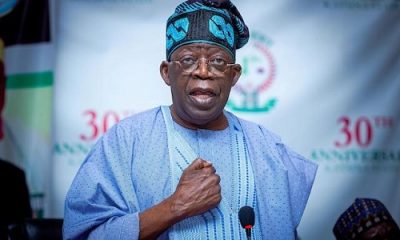




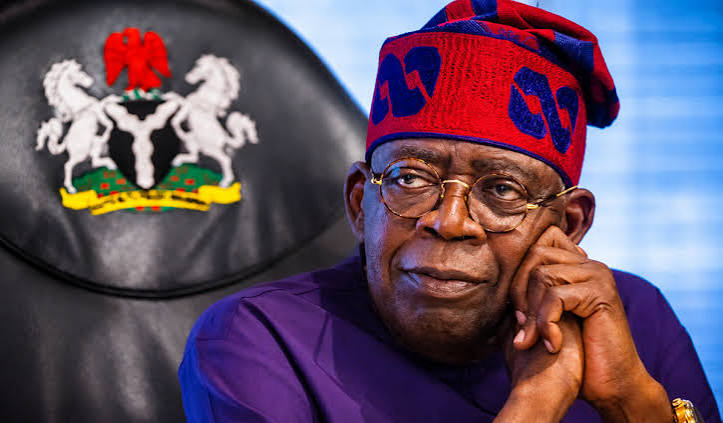
President Bola Tinubu said the World Bank’s October 2026 Nigeria Development Update confirms his administration’s economic reforms are yielding results and strengthening the economy for sustained growth.
This was contained in a statement by the Presidential Spokesperson, Bayo Onanuga, on Sunday in Abuja.
Tinubu welcomed the report, titled ‘Beyond the Federal Purse: How Higher Revenues Reshaped State Priorities’, highlighting improvements in economic growth, revenue generation and fiscal management.
The President noted the World Bank’s finding that Nigeria’s poverty rate had stabilised for the first time since 2019.
He said poverty was expected to decline gradually as economic growth outpaced population growth.
According to the report, the economy grew by 4.2 per cent in the first half of 2026, compared with 3.9 per cent in 2025.
The growth occurred despite the impact of the Middle East conflict, while the World Bank projected average growth of at least 4.4 per cent between 2026 and 2028.
The report showed that inflation declined from 27.6 per cent in January 2025 to 15.2 per cent in December 2025.
However, higher global fuel prices linked to the Middle East conflict slowed the decline, although inflation was projected to ease to about 12 per cent by 2028.
Nigeria’s external position also improved, with its current account surplus reaching 12 billion dollars, representing 7.0 per cent of GDP, in the first half of 2026.
This compared with 8.6 billion dollars recorded in the corresponding period of 2025.
Gross external reserves increased from 45.5 billion dollars at the end of 2025 to 53.8 billion dollars at the end of August 2026.
The report attributed the gains to reforms introduced since 2023, which increased federation revenues by 69 per cent in real terms between 2023 and 2025.
State governments emerged as the largest beneficiaries, with capital expenditure increasing by 151 per cent in real terms over the period.
Much of the additional spending went towards roads, transport, agriculture, energy and housing.
The report noted that 29 of the 33 states shifted spending towards economic infrastructure, while real social spending per capita increased in all but one state.
It also found that internally generated revenue grew in real terms in 31 of 35 states.
Meanwhile, 21 states reduced their debt-to-GDP ratios between 2021 and 2025.
Nigeria’s overall public debt was projected to decline from 40.0 per cent of GDP in 2025 to 38.1 per cent in 2026.
Tinubu said the findings demonstrated the impact of his administration’s decisions to remove the petrol subsidy, unify the foreign exchange market and strengthen fiscal discipline.
“The difficult but necessary decisions to remove the petrol subsidy, unify the foreign exchange market and strengthen fiscal discipline have raised revenues.
“The decisions have also stabilised the economy and created fiscal space for every tier of government to invest in its people. The dividends of reform are becoming visible.
“But more work remains to ensure they fully translate into better living standards for every household, starting with lower food prices and decent jobs for our young people.
“Our administration will stay the course of reform and redouble its focus on inclusive growth under the Renewed Hope Agenda,” he said.
The President said the administration would expand targeted cash transfers, accelerate Compressed Natural Gas (CNG) deployment, raise agricultural productivity and improve access to affordable healthcare and quality education.
“We will continue to expand targeted cash transfers, which have already reached more than 10 million households.
“We will accelerate the deployment of CNG, raise agricultural productivity, and improve access to affordable healthcare and quality education.
“I urge state governments to use their higher revenues more prudently and prioritise projects that improve the living standards of Nigerians, and the health and education of our people,” Tinubu said.
The President commended the Economic Management Team, led by the Minister of Finance and Coordinating Minister of the Economy, state governors and other stakeholders for supporting the reforms.
“I assure Nigerians that the best is yet to come under the Renewed Hope Agenda 2.0, which will accelerate the delivery of shared prosperity for all Nigerians,” he said. (NAN)
Road Crashes: Adamawa to Dualise Girei-Yola Road
The Adamawa Government has set in motion plans to dualise the Girei-Yola road to save lives and properties following increased accidents along the axis.
The Commissioner for Works and Housing, Muhammad Suleiman, who disclosed this in an interview on Sunday in Yola, said the dualisation of the road was among other measures the government planned to curb the frequent crashes on the road.
Suleiman said a committee, comprising the Federal Road Safety Corps (FRSC), Vehicle Inspection Officers (VIOs) and other relevant agencies, was constituted to get to the root of the problem and proffer lasting solutions.
The commissioner said appropriate measures would be implemented following the conclusion of the committee’s report.
According to him, the proposed measures will focus on reducing accidents, while the dualisation of the remaining section of the road will be considered as a long-term solution.
The commissioner said the government had demonstrated commitment to improving road infrastructure and public safety through the construction of major projects in the state capital and local government headquarters
Suleiman said the ministry had also intervened on some federal highways, bridges and other road networks within the state.
On traffic violations around the flyover and the road linking Army Barracks Roads in Yola, the commissioner called for increased public sensitisation to discourage motorists from driving against traffic.
He explained that the road design deliberately reduced the number of U-turns to improve safety, prevent accidents, reduce congestion and ensure the smooth flow of traffic.
He, however, expressed concern that some motorists were abusing the arrangement by driving against traffic instead of using designated U-turns.
“We are starting with sensitisation, and very soon, enforcement will follow. Stringent measures will be taken against traffic violators, particularly those driving against traffic,” he said.
The commissioner further stated that motorists caught driving against traffic could be subjected to psychiatric evaluation to determine their mental fitness to drive.
He said the measure would be introduced after public sensitisation, adding that offenders would also face fines as part of efforts to enforce traffic regulations.
He stressed that the measures were designed to protect road users, reduce accidents and ensure safer movement of vehicles across the state.
Suleiman urged the FRSC and the media to intensify public enlightenment on the dangers and consequences of traffic violations.
The commissioner then appreciated the FRSC for recognising the ministry’s contributions to road safety by presenting an award to him. (NAN)
OPINION
Fuel Price Discount and Monetary Policy Recalibration: Communicating Policy Change Without Undermining Reform Credibility
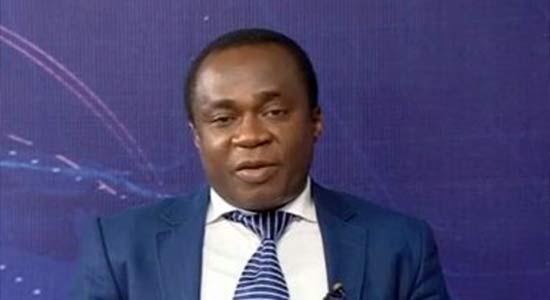
By Uche Joe Uwaleke
Economic reforms are rarely judged solely by their immediate outcomes. They are also assessed by the consistency of the policies that underpin them, the credibility of the institutions responsible for their implementation and, perhaps most importantly, the signals that governments send to investors, businesses, households and the international community.
In an economy such as Nigeria’s, where years of macroeconomic distortions have necessitated difficult but unavoidable policy adjustments, the language used by policymakers to explain their decisions can be almost as consequential as the decisions themselves. This explains why the Federal Government and the Central Bank of Nigeria must be deliberate in communicating recent policy actions that, although intended to alleviate economic pressures, could otherwise be misconstrued as a retreat from the reform agenda.
The September 2026 meeting of the CBN’s Monetary Policy Committee (MPC), at which the Monetary Policy Rate (MPR) was reduced to 23 percent, provides a compelling illustration of this challenge. The reduction, which represents a significant shift in the monetary policy stance, was accompanied by an explanation that the decision should not be interpreted as monetary policy easing but rather as a recalibration intended to bring the policy rate closer to prevailing market realities.
The distinction is crucial not least because a conventional interpretation of a reduction in the policy rate is that the monetary authorities are easing financial conditions to stimulate borrowing, investment and economic activity. By describing the decision as a recalibration, the CBN sought to communicate that the adjustment should be understood within the broader framework of its continuing commitment to price stability and macroeconomic discipline, rather than as evidence of abandonment of the restrictive monetary stance adopted to combat inflation.
There is, of course, an economic dimension to the decision that cannot be ignored. Nigeria’s elevated interest rates have imposed substantial costs on businesses, constrained private-sector investment and made access to credit particularly difficult for small and medium-sized enterprises. A reduction in the MPR can, over time, contribute to lowering borrowing costs, improving credit conditions and supporting productive economic activity. In that sense, the decision has implications for growth and investment that go beyond a technical adjustment to the monetary policy framework. Yet, given the importance of expectations in monetary policy, the CBN has good reason to avoid allowing a reduction in the benchmark rate to be interpreted as an unconditional declaration of victory over inflation or an invitation to resume the kind of monetary expansion that could undermine the progress already achieved.
The challenge for the CBN is therefore to communicate a delicate balance between maintaining the credibility of its anti-inflationary commitment and acknowledging that monetary policy must respond to changing economic conditions. The language of recalibration helps to convey that balance. It suggests an adjustment within an established policy framework rather than a reversal of direction. This is particularly important because the effectiveness of monetary policy depends not only on the level of interest rates but also on the expectations of investors, consumers and financial institutions regarding the future course of policy. If market participants conclude that the CBN is abandoning its commitment to price stability, the resulting change in expectations could weaken the effectiveness of the policy framework, even before any measurable deterioration in inflation occurs.
A similar consideration underlies the Federal Government’s recent announcement of a temporary fuel price discount for commercial vehicles through the Nigerian National Petroleum Company Limited (NNPCL), in response to the rising cost of petrol and the consequent increases in transport fares. Under the arrangement, NNPCL is expected to sell fuel to eligible commercial vehicle operators at cost price, effectively surrendering its margin on the relevant sales.
The Government has been careful to insist that the initiative should not be interpreted as a return to fuel subsidy, which it abolished in May 2023. The removal of the subsidy represented a major departure from a longstanding system of government intervention that imposed substantial fiscal costs, encouraged market distortions and created opportunities for arbitrage and smuggling.
Reintroducing a general fuel subsidy, even under the pressure of legitimate public demands for relief, could raise difficult questions about the durability of that reform. By presenting the new initiative as a targeted discount rather than a restoration of subsidy, the Government seeks to distinguish temporary, narrowly defined relief from a return to the previous system of broad-based price support. The distinction will, however, be credible only if the design, financing, eligibility criteria and implementation of the arrangement are consistent with the explanation being offered.
It would be unfair to suggest that every adjustment to a reform programme constitutes a retreat from reform. Sound economic management requires governments to respond to changing circumstances, correct unintended consequences and protect vulnerable groups against excessive hardship. Reforms are not ends in themselves; their ultimate purpose is to create a more stable, productive and prosperous economy. A monetary authority that refuses to adjust interest rates when economic conditions warrant it would be no more prudent than a government that insists on allowing every increase in transport costs to fall entirely on households, irrespective of the social consequences. The relevant question is not whether policy adjustments are permissible, but whether they are well designed, economically justified, transparent and consistent with the long-term objectives of reform.
This distinction is particularly vital at a time when Nigeria’s economic policy direction is receiving renewed attention from international financial institutions and credit-rating agencies. The World Bank, the International Monetary Fund and global rating agencies have acknowledged the significance of Nigeria’s macroeconomic reforms, including exchange-rate unification, tighter monetary policy and the removal of the petrol subsidy. Fitch Ratings’ recent favourable assessment of Nigeria has also contributed to the wider discussion about the country’s reform trajectory and improving investor confidence.
Such assessments should not be interpreted as a declaration that Nigeria’s economic challenges have been resolved. Inflationary pressures, the high cost of living, elevated financing costs, exchange-rate vulnerabilities and the constraints facing domestic production remain substantial concerns. Nevertheless, positive assessments matter because they influence how international investors, lenders and development partners evaluate Nigeria’s policy credibility and economic prospects.
For an economy that needs substantial domestic and foreign investment to expand productive capacity, create employment and improve living standards, credibility is an economic asset. Investors are more likely to commit capital when they believe that policy decisions are guided by a coherent framework rather than short-term political expediency. They need reasonable assurance that difficult reforms will not be abandoned and that changes in policy will be supported by clear economic reasoning. The confidence generated by reform is therefore not merely a public-relations achievement; it can affect investment decisions, financing conditions and the economy’s ability to attract the capital needed for sustainable growth.
This is why the manner in which recent policy decisions are communicated matters. The CBN’s description of its interest-rate reduction as a recalibration and the Federal Government’s insistence that the fuel discount does not constitute a return to subsidy can be understood as efforts to preserve continuity in the narrative surrounding Nigeria’s reforms.
The proposed fuel discount deserves particular scrutiny because the coexistence of discounted NNPCL sales and market-determined prices at independent filling stations creates conditions that could undermine the programme if implementation is not carefully managed. Price discrimination, in the economic sense, occurs when different buyers are charged different prices for the same or substantially similar product under specified conditions. Such an arrangement can be justified where the beneficiaries are clearly identifiable, the price differential serves a defined public purpose and the seller can prevent those purchasing at the lower price from reselling the product to those who would otherwise pay the higher market price. Without these conditions, a targeted discount can quickly become an opportunity for arbitrage rather than an effective instrument of social protection.
The central risk is that commercial vehicle operators may have an incentive to purchase discounted petrol at NNPCL stations and divert some or all of it to other vehicle owners at prices above the discounted rate. Where the difference between the NNPCL price and the prevailing market price is substantial, the potential gain from resale could become attractive enough to distort the intended pattern of consumption. The beneficiary may find it more profitable to resell discounted fuel than to use it for the commercial transport service for which the discount was designed.
In such circumstances, the Government would be incurring the economic cost of the foregone NNPCL margin without ensuring that the benefit reaches passengers through lower fares. The programme could then become an indirect transfer to intermediaries and opportunistic traders rather than a meaningful intervention in transport costs.
Preventing this outcome requires the Government to design the programme around the realities of Nigeria’s fuel distribution system and the incentives facing market participants. Eligibility must be established through a reliable, verifiable mechanism that identifies legitimate commercial vehicles and distinguishes them from private vehicles and other ineligible users.
Registration should be linked, as far as practicable, to vehicle identification, number plates and the relevant transport or operating permits. A digital verification system could help NNPCL filling stations confirm eligibility at the point of sale and record the quantity purchased against each registered vehicle. The system should also be designed to prevent the same vehicle from obtaining repeated discounted allocations beyond reasonable limits within a specified period.
The discount should be tied to actual fuel consumption for commercial transport rather than treated as an unrestricted entitlement to purchase cheap petrol. Reasonable quantity limits, calibrated to vehicle type and expected operating requirements, would help reduce the risk of bulk purchases and diversion. The details would need to reflect the practical realities of public transport operations, including the needs of buses, taxis and other qualifying commercial vehicles, without creating an unnecessarily cumbersome process that excludes legitimate beneficiaries.
Equally important is the need for effective monitoring and enforcement. NNPCL must be able to account for the volume of discounted fuel supplied, the identity of the beneficiaries and the extent to which the programme is reaching its intended users. The government should conduct regular audits, investigate unusual purchase patterns and impose proportionate penalties for diversion or fraudulent claims. There must also be a clear channel for the public and transport operators to report abuse.
The Government must also consider the geographical distribution of NNPCL filling stations relative to the locations where commercial vehicles operate. If eligible operators must travel considerable distances to obtain discounted fuel, the additional time, fuel consumption and operating costs could erode the benefit of the discount. It could also create congestion at participating stations and provide opportunities for informal resale.
It goes without saying that a programme that reduces the price of petrol at selected locations but imposes significant additional costs on beneficiaries may achieve far less than its headline price suggests. The availability of discounted fuel must therefore be assessed against the actual transport routes, refuelling patterns and operating requirements of the intended beneficiaries.
Another critical issue is the relationship between the discount and transport fares. A reduction in the input cost of commercial transport does not automatically translate into lower fares for passengers. Operators may face other cost pressures, including vehicle maintenance, spare parts, tyres, insurance and financing costs. They may also be reluctant to reduce fares given that the discount is expected to be temporary.
The Government should therefore establish a clear and credible framework for measuring whether the intervention is producing the intended relief, taking account of the different types of commercial transport and the routes on which they operate. Engagement with transport unions, fleet operators and passenger representatives can help establish reasonable expectations, while monitoring prevailing fares before and during implementation can reveal whether the benefits are being passed through to passengers.
The possibility of supply distortions also deserves attention. If discounted fuel is available only at NNPCL stations while independent marketers continue to sell at market-determined prices, demand may become concentrated at participating stations. Long queues, stockouts and delays could increase the effective cost of obtaining the discounted product. Meanwhile, some customers may be tempted to buy at the discounted price and resell elsewhere, particularly where independent marketers’ prices remain higher. These developments could create shortages at participating stations without reducing the overall cost of transport by a corresponding amount. NNPCL will therefore need adequate supply planning, clear procedures for prioritizing eligible commercial vehicles and safeguards against the diversion of discounted stock.
The Government should also be transparent about the fiscal and commercial implications of the arrangement. Selling at cost price and foregoing a commercial margin may not be identical to a conventional budget-funded subsidy, but the intervention still has an economic cost. The foregone margin represents revenue that NNPCL would otherwise have earned, and the opportunity cost should be acknowledged in assessing the programme. The Federal Government should specify the criteria for reviewing it and the circumstances under which it will be modified. Without such clarity, a measure introduced as temporary relief could become an indefinite commitment, gradually weakening the distinction the Government is seeking to preserve between targeted assistance and the former subsidy regime.
All said, Nigeria’s economic reform agenda must be judged by its capacity to restore stability while creating the conditions for inclusive growth. Monetary discipline, exchange-rate reform and the removal of unsustainable subsidies are not valuable simply because they attract favourable assessments from international institutions or rating agencies. Their real justification lies in the prospect of a more efficient economy, a stronger fiscal position, better investment conditions and more sustainable opportunities for employment and production.
But these reforms cannot be sustained indefinitely without attention to the hardship they impose during the adjustment period. The Government must therefore find ways to cushion the most damaging effects of economic change without undermining the incentives, price signals and fiscal discipline that the reforms are intended to establish.
Undoubtedly, Nigeria has invested considerable economic capital in reversing long-standing policy distortions. Preserving the credibility of that effort requires the government to explain adjustments carefully, implement them consistently and demonstrate that short-term relief is compatible with long-term reform. The real challenge is to ensure that the language of policy is matched by the substance of policy, and that every adjustment strengthens rather than weakens confidence in Nigeria’s economic future.
Prof Uche Uwaleke is the Director of the Nasarawa State University Institute of Capital Market Studies and President of the Capital Market Academics of Nigeria

By Uddin Ifeanyi
I am not an accountant, so my opinion on the NNPCL’s recently released 2025 annual financial report is a qualified one. It matters, therefore, that PwC, the audit and assurance firm which signed off on the report, has no doubt that it represents a true and fair view of the corporation’s performance under the country’s reporting standards.
Far more comforting was my former colleague’s response to the report’s release: “Wonderful! While I was working in the bank, as the Corporate Banking Group’s relationship manager for the NNPC, the ‘most recent’ financials we had was about 15 years old”.
That was some 15 years ago. In terms of accountability and public disclosure, then, Nigeria’s most important corporation over the last 49 years is making steady progress.That said, significant parts of the picture of a profitable company undergirded by improving production, which the report tries so convincingly to take, are out of focus. It is a fair argument that the report’s headline profit growth figure appears to overstate the improvement in the corporation’s underlying trading performance. Why this blur? The NNPC Group’s net profit rose by about 33 per cent to ₦7.2 trillion last year, despite a 23 per cent drop in revenue from ₦45.1 trillion in 2024, to ₦34.5 trillion last year.
Gross profit was down by equivalent percentage points to ₦9.4 trillion in the same period. While two different lines, a ₦5 trillion rise in other income, and a ₦1 trillion fall in general and administrative expenses, explain this seeming contradiction, the resulting problem is not that the increase in the corporation’s profit last year did not come from increased sales or gross profits. It is instead included in the answer to the question, “How repeatable will the ‘other income’ performance be in future accounting periods?”
The corporation’s balance sheet is a smorgasbord of paints off a similarly nuanced canvas. With a current ratio of about 0.85, the NNPCL’s short-term assets (₦28.1 trillion) do not quite make up for its short-term liabilities (₦33.2 trillion). With the right timing, depending on the nature of its account payables, and the makeup of its receivables, the corporation ought to be able to easily meet its obligations. This balance sheet structure has one other purpose: it helps make sense of the corporation’s cash pressure.
The group’s cash balance was down from ₦10.3 trillion in 2024 to ₦6.4 trillion by financial year end 2025. This, despite an increase in cash generated from operations to ₦12.9 trillion in 2025 from ₦11.0 trillion the previous year. Trade and other receivables fell from the ₦31.4 trillion at which it printed in 2024, but even at ₦19.7 trillion, last year, it remained substantial.
On the upside, there is plentiful evidence of a production recovery. Still the chorus of “Hallelujahs” are pressed in on two sides by the narrative section of the report’s claim of average crude and condensate production of 1.77 million barrels per day – a five-year high, and the financial highlights’ listing of 565.8 million barrels of crude oil production. On the face of it, annualised, the latter number translates into about 1.55 million barrels per day of production.
My guess is that these two figures address different scopes — i.e. national production as against the NNPCL’s own or equity production. Any which way, the report could have helped make this reconciliation easier. Equal levels of clarity could have been facilitated by tying natural gas production directly to segment revenue, investment returns, and cash generation.
Overall, the NNPCL report indicates considerable operating progress. Operating cash generation is especially impressive. Nonetheless, the dip in revenue and gross profit, the facts that profit growth is almost entirely the result of large other income performance, and that current liabilities swamp current assets, make the headline profit an incomplete gauge of the organisation’s financial strength.
For more than a decade now, the dominant presence in the room when the NNPC’s accounts are discussed is the extent of outgoings on the subsidy for the pump-gate price of petrol. And this is the main reason I paid this much attention to the corporation’s annual report for last year – to see how far the corporation’s numbers corroborate the federal government’s insistence that it has removed the subsidy completely.
How do the numbers stack up? The corporation’s financial statements continue to use categories such as “energy security” and “under-recovery.” These are not exactly identical terms. Energy security expenses may include more than petrol price support.
Interestingly, the NNPCL’s financial statement for 2024 reports ₦8.67 trillion as an “under-recovery” balance. Other coverage in the 2025 statement describes ₦8.67 trillion as a “federation receivable.” Both labels and reporting periods are not interchangeable, but if either means that the corporation continues to cover a gap between petrol’s supply cost and a managed selling price, and records the amount as recoverable from the federation, the economic burden from the fuel subsidy has not disappeared. It has simply been absorbed by the NNPCL or the federation, rather than fully passed on to consumers.
Uddin Ifeanyi, a journalist manqué and retired civil servant, can be reached @IfeanyiUddin.



Pope Leo to Have Surgery after Lump Found on Lung
SharePope Leo XIV has announced he will be operated “in the coming days” after a nodule was found on his...


Motorists Express Worry over Non-access to NNPC Petrol Discount
ShareMany motorists said in spite of the discount in pump price of petrol at the Nigerian National Petroleum Company Ltd...


Tuberculosis: Benue Assembly Passes Law, to Protect Patients from Discrimination
ShareBy Laide Akinboade, Abuja The Benue State House of Assembly has passed into law a landmark legislation aimed at eliminating...

President Tinubu’s 30-Day Fuel “Discount” Cannot Repair the Damage of Subsidy Removal
ShareBy Daniel Nduka Okonkwo The Federal Government has issued a stark warning: restoring petrol subsidies could push the exchange rate...


Troops Neutralize Explosive Devices planted in Zamfara Community
ShareFrom Ifeanyichukwu Nwannah, Gusau The troops of Operation Fansan Yamma (OPFY) have neutralised Explosive Devices Planted along Magami–Hannutara–Dansadau road, Maru,...


Mbah Reaffirms Enugu’s Commitment to Trade, Investment, Industrial Growth
ShareFrom Sylvia Udegbunam, Enugu Enugu State Governor, Dr. Peter Mbah, has reaffirmed his administration’s commitment to creating an enabling environment...


Concerns About the 2027 General Elections
ShareBy Jibrin Ibrahim As the countdown to the 2027 elections reached 100 days this week Tuesday, Joash Amupitan, chairman of...

World Bank Report Confirms Economic Reforms Yielding Results – Tinubu
SharePresident Bola Tinubu said the World Bank’s October 2026 Nigeria Development Update confirms his administration’s economic reforms are yielding results...


Bandits Burn Houses, Business Premises in Niger Border Community
ShareFrom Dan Amasingha, Minna Suspected bandits have attacked Kigbera village in Konkoso Ward, Borgu Local Government Area of Niger State,...


Fuel Price Discount and Monetary Policy Recalibration: Communicating Policy Change Without Undermining Reform Credibility
ShareBy Uche Joe Uwaleke Economic reforms are rarely judged solely by their immediate outcomes. They are also assessed by the...